


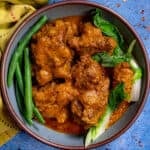
Kare-kare is a Filipino beef stew in a rich peanut sauce with tender oxtail and vibrant vegetables. Serve it with rice and bagoong (shrimp paste) for the authentic finish. Includes easy swaps and pressure cooker option.
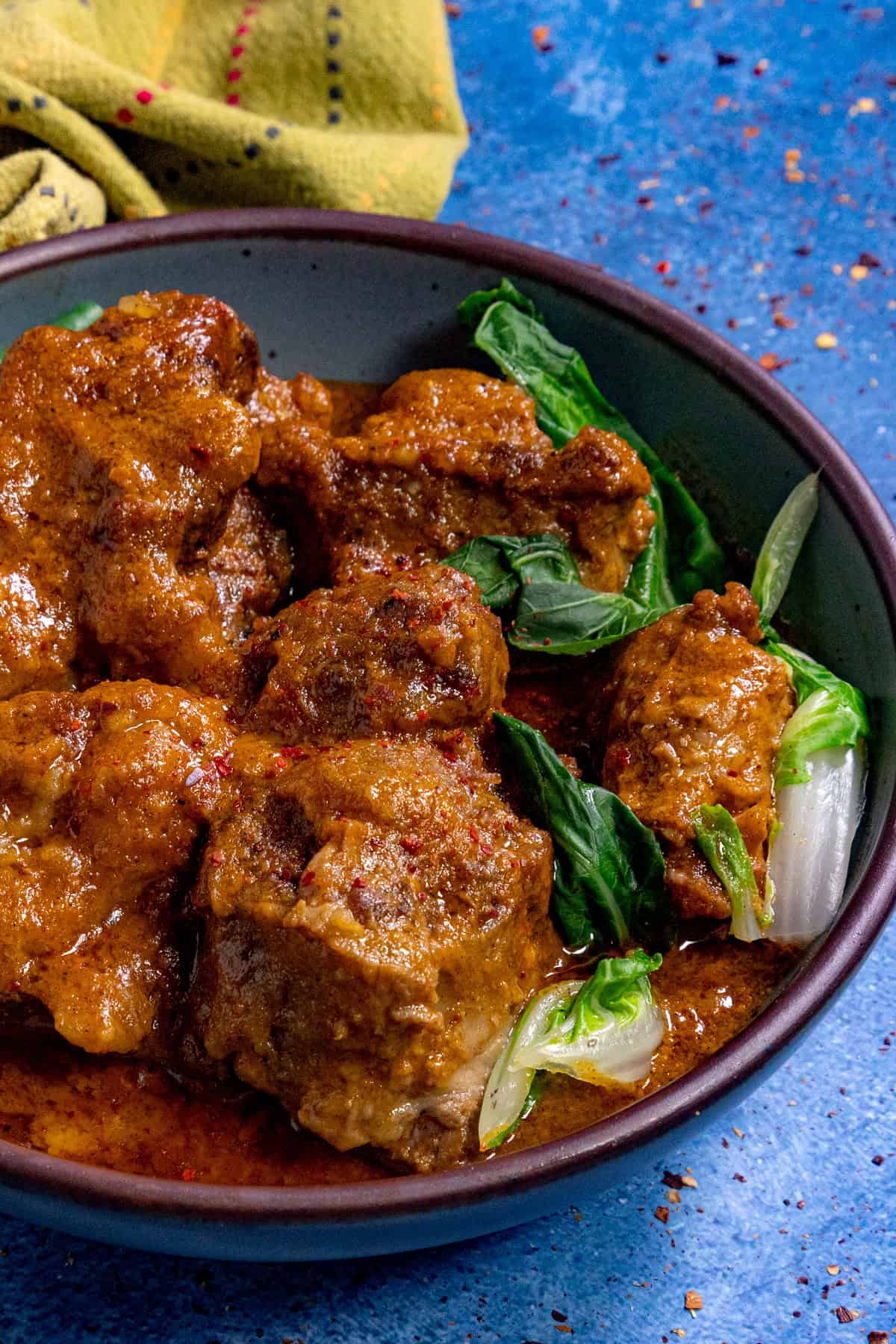
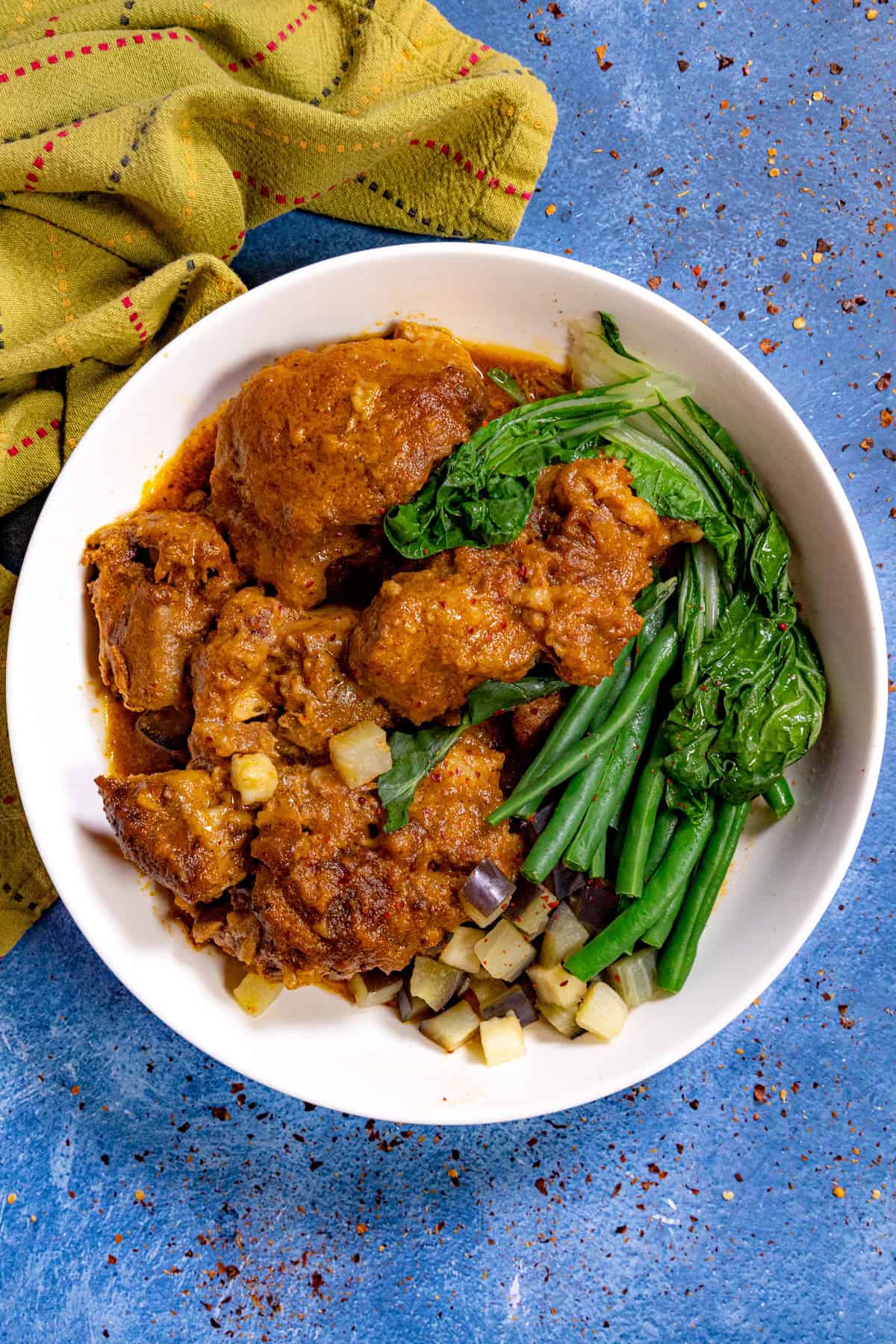
Once you try Kare-Kare, you realize quickly how comforting and unique it is, and also addicting. You can't deny the allure of this Filipino beef stew with fork-tender meat simmered in a rich peanut sauce, especially with steamed rice, veggies on top, and salty, funky bagoong (shrimp paste) on the side.
For this version, I'm using oxtail, which is commonly used for classic flavor, along with toasted rice flour to help thicken the sauce. I'm including easy swap options for the meat and many other ingredients so you can make it at home easily with what you can find.
What is Kare-Kare?
Kare-kare is a traditional Filipino stew known for its peanut-forward sauce and tender meat (often oxtail, sometimes beef shank or tripe). It’s commonly served with vegetables like eggplant, long beans, and bok choy/pechay, and shines when paired with rice and bagoong on the side.
There are other versions, with the same rich peanut sauce sometimes used with chicken, pork, or even seafood in home-cooked variations. We may need to make them all!
I’m always researching and testing beef stews from around the world, and kare-kare is a Filipino classic I’ve been excited to add to my growing collection. I picked up a few helpful technique tips from I Am a Filipino: And This Is How We Cook (Affiliate Link), then tested and refined this traditional-style kare-kare recipe so you can make it at home.
Key Ingredients & Substitutions
- Oxtail. Best for deep beef flavor, and it becomes so tender and rich. Swap: beef chuck or beef shank.
- Peanut Butter. Creamy peanut butter is best for a smooth sauce.
- Rice Flour (Toasted). For thickening. Swap: ground toasted rice, or cornstarch slurry.
- Annatto (Atsuete). Mostly for color. Swap: paprika for color, only if needed.
- Bagoong (Bagoong Alamang). A salty, fermented shrimp paste used in Filipino cooking. It’s traditionally served on the side with kare-kare for stirring into the bowl. Swap: miso paste (1-2 teaspoons per bowl) plus a small splash of fish sauce or soy sauce to taste. I like this brand at Amazon for the strong umami flavor - Buy Bagoong (affiliate link!)
- Vegetables for Serving. Kare-kare is traditionally served with eggplant, long beans (sitaw), and pechay (bok choy), and sometimes banana blossom (puso ng saging). Swaps: use green beans for long beans, baby bok choy or napa cabbage for pechay, and skip banana blossom (or add extra greens/beans) if you can’t find it.
The full ingredients list with measurements is listed in the printable recipe card at the bottom of the post.
How to Make Kare Kare
These are the basic steps for making kare-kare at home. The full instructions are listed in the recipe card below.
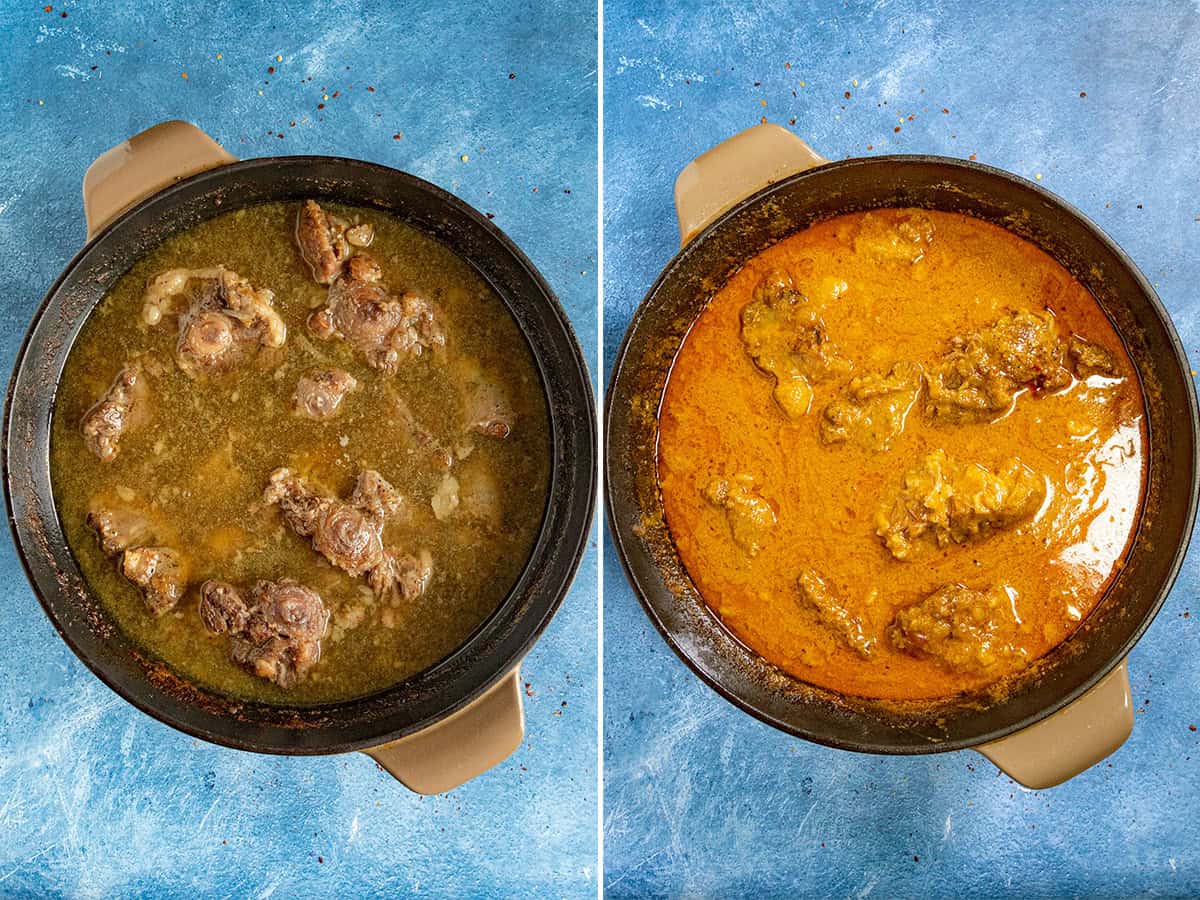
1. Brown the oxtail for flavor, then simmer in liquid until very tender. Reserve the broth.
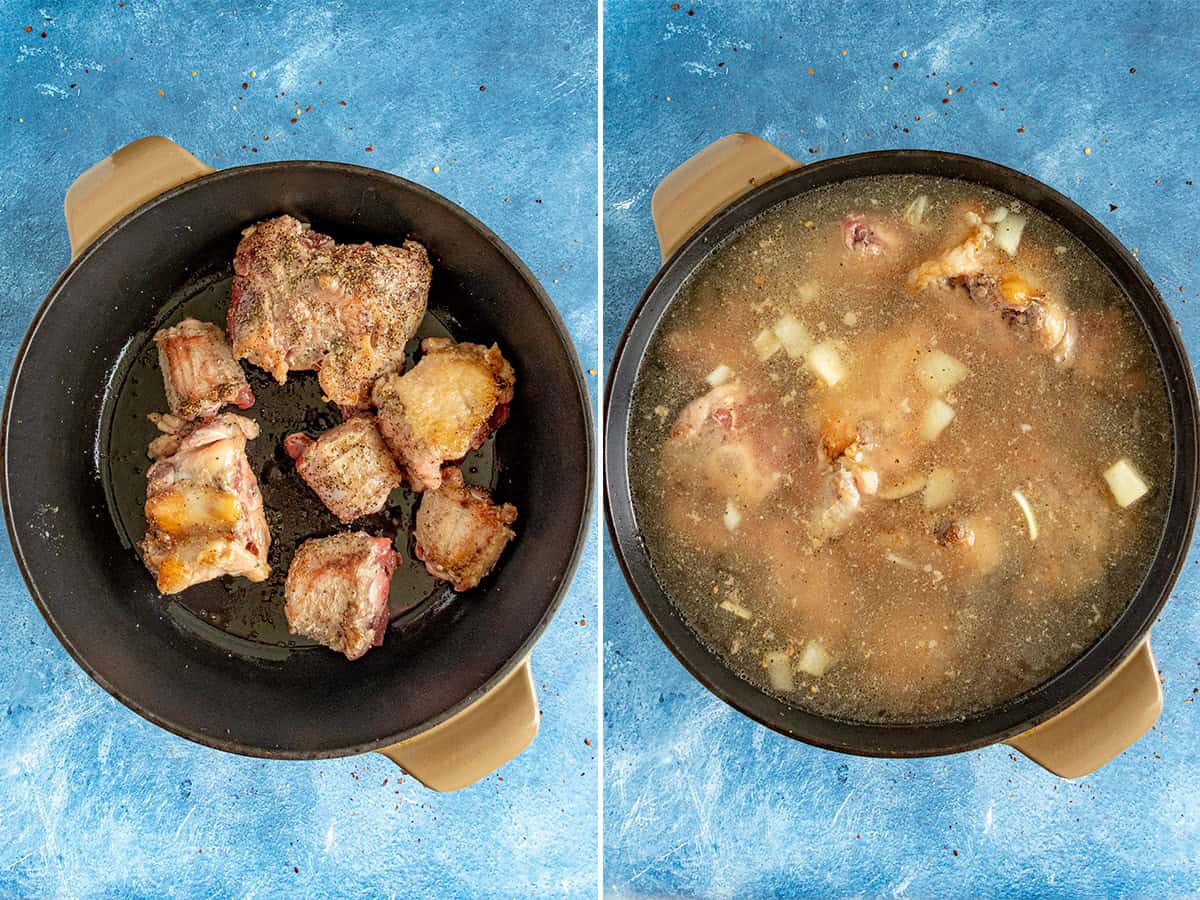
2. Toast rice flour and whisk it into the broth as a smooth slurry along with the peanut butter and annatto to form a rich sauce.
3. Simmer to thicken, then add the tender oxtail back in.
4. Blanch vegetables and serve with rice and bagoong on the side.
Recipe Tips & Notes
- Avoid boiling after adding peanut butter. Keep it at a gentle simmer so the sauce stays smooth. Too much heat can make it a bit grainy.
- Sauce too thick? Add a splash of broth or water and stir until it thins to your preferred consistency.
- Sauce too thin? Simmer a bit longer uncovered, or add a small cornstarch slurry and simmer to thicken. You can also stir in more peanut butter, but that can affect the final flavor.
Serving Kare-Kare
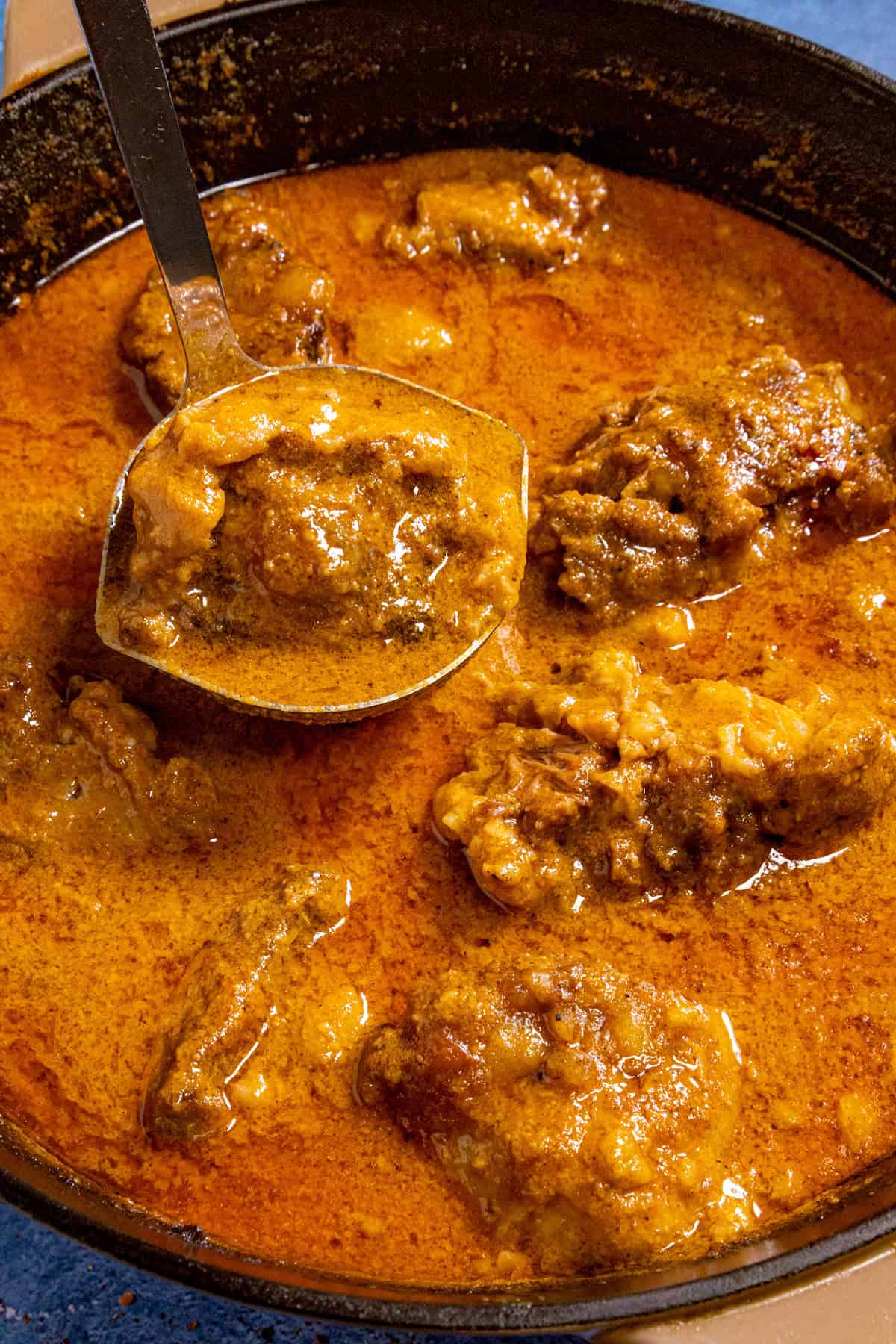
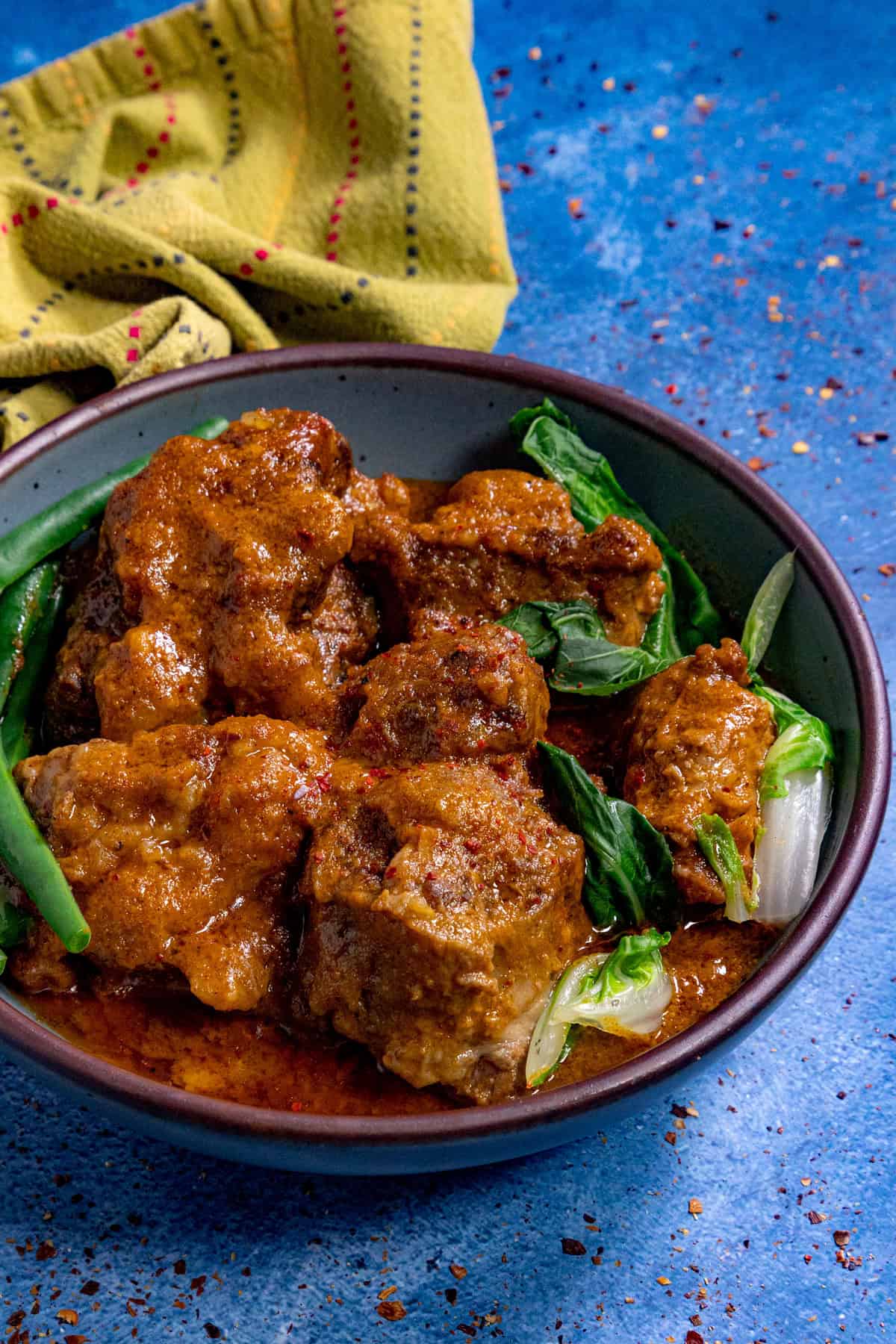
It is traditional to serve the oxtail on the bone. You want the meat very tender, but not so tender it falls off in the pot before serving.
Serve kare-kare with steamed white rice and a little bagoong on the side. You can swirl some into your bowl. You'll want a little bit in every bite.
Want to Spice it Up?
Kare-kare is usually not “hot,” but it takes heat beautifully. Here are a few simple ways to spice it up, your way:
- Stir chili crisp or chili-garlic sauce into your bowl.
- Add sliced bird’s eye chilies or a drizzle of hot chili oil.
- Sprinkle crushed red pepper on top, or a few drizzles of your favorite hot sauce.
Storage & Reheating
Like any stew, kare-kare tastes better the next day, and it freezes very nicely.
- Fridge: Store in a sealed container for up to 4 days.
- Reheat: Warm gently on the stove (or microwave), with a splash of water/broth as needed. The sauce thickens a lot when cold.
- Freeze: You can freeze the stew in vacuum sealed containers for 3 months, but I recommend freezing without the vegetables. Add fresh blanched veg when serving.
Want More Beef Stew Recipes?
Got any questions? Ask away! I’m happy to help. If you enjoy this recipe, I hope you’ll leave a comment with some STARS. Also, please share it on social media. Don’t forget to tag us at #ChiliPepperMadness. I’ll be sure to share! Thanks! — Mike H.
Kare-Kare Recipe (Filipino Oxtail Stew in Peanut Sauce)
Equipment
- 1 Large Pot
Ingredients
Meat & Broth
- 3 pounds oxtail cut into sections (or use 3 lb beef chuck roast, cut into 2-inch chunks - or beef shank)
- Salt and black pepper to taste
- 2-3 tablespoons oil
- 1 medium onion sliced
- 5-6 cloves garlic minced
- 7-9 cups water or unsalted beef stock or as needed (enough to cover the oxtail by 1-2 inches)
- 2 tablespoons fish sauce divided (use 1 tablespoon for simmering, then 1 tablespoon at the end to taste)
Peanut Sauce / Thickener
- ¼ cup rice flour toasted in a dry pan until lightly golden (swap: ½ cup toasted rice, ground; or 2-3 tablespoons cornstarch slurry as a shortcut)
- ¾ to 1 cup creamy peanut butter
- 1 tablespoon ground annatto atsuete powder, plus more as needed for color (swap: annatto seeds infused in hot water/oil; or 1-2 teaspoons paprika for color only)
- 1 tablespoon brown sugar optional (use up to 2 tablespoons if you like it slightly sweeter)
Vegetables
- 1 large Chinese eggplant sliced into thick batons (swap: 1 small globe eggplant, cubed)
- 8 ounces long beans or green beans cut into 2-3 inch pieces
- 1 bunch bok choy/pechay (swap: baby bok choy, or napa cabbage wedges)
For Serving
- Steamed white rice
- Bagoong alamang shrimp paste, on the side
- Crushed toasted peanuts for topping (optional but great)
Instructions
STOVETOP COOKING
- Brown the Oxtail. Season the oxtail with salt and pepper. Heat the oil in a large pot over medium heat. Add the oxtails and brown on all sides, 3-5 minutes per side. Transfer the oxtails to a plate and set aside.
- Make the Broth & Simmer. Add the onion to the pot and cook 4-5 minutes to soften.
- Add the garlic and cook, stirring, 30 seconds, until fragrant.
- Deglaze the pot with ¼ cup stock or water and scrape up the browned bits from the bottom.
- Return the browned oxtail to the pot. Add water/stock to cover the oxtail by 1-2 inches (typically 7-9 cups, but it depends on your pot). Bring to a boil, then skim any foam/scum from the surface.
- Stir in 1 tablespoon fish sauce and black pepper to taste.
- Reduce heat and simmer steadily partially covered 2½-3 hours, until the oxtail is very tender. (If you prefer a thicker stew, keep the lid more open to reduce faster.) If the liquid reduces too much, add up to 1 cup water or stock.
- Turn off heat. Transfer oxtails to a bowl. Reserve the broth (strain if desired for a cleaner stew), and return it to the pot.
- Toast the Rice Flour & Make a Smooth Slurry. In a dry skillet over medium heat, toast the rice flour until lightly golden and nutty-smelling, 3-6 minutes, stirring often.
- Whisk the toasted rice flour with about 1 cup warm broth from the pot in a bowl until smooth, then whisk it back into the pot.
- Finish the Peanut Sauce. Whisk in the peanut butter, annatto, and optional brown sugar until smooth and creamy. Keep the stew at a gentle simmer after adding peanut butter (avoid a hard boil).
- Add the tender oxtail back to the pot and simmer 10-15 minutes to thicken. If it gets too thick, loosen with more broth (or a splash of water).
- Taste and adjust with the remaining 1 tablespoon fish sauce and/or salt as needed.
VEGETABLES
- Bring a large pot of water to a boil.
- Blanch the eggplant 2-3 minutes until just pliable - blanch the beans 1-2 minutes to slightly soften; blanch the bok choy 30 seconds until bright green.
- Drain and set aside. (Shortcut: you can simmer the veggies in the finished sauce just until tender-crisp.)
TO SERVE
- Ladle kare-kare into bowls or deep plates (with steamed rice, if desired). Top with blanched vegetables and serve with shrimp paste (bagoong) and crushed peanuts on the side.
Notes
Nutrition Information
FAQs
Do I have to use oxtail?
No. Oxtail is traditional for kare-kare, but beef chuck or other beef stew meat is an easy swap and still tastes amazing.
What can I use if I can’t find annatto (atsuete)?
Annatto is mostly for color. You can use paprika for color-only, or skip it. The flavor will still be great.
Is bagoong required?
It’s the most traditional way to serve kare-kare, but you can still enjoy the stew without it. I recommend trying a small amount on the side first.
Why toast the rice flour?
Toasting adds a light nutty flavor and helps the thickener blend smoothly into the sauce.
Leave a Reply