


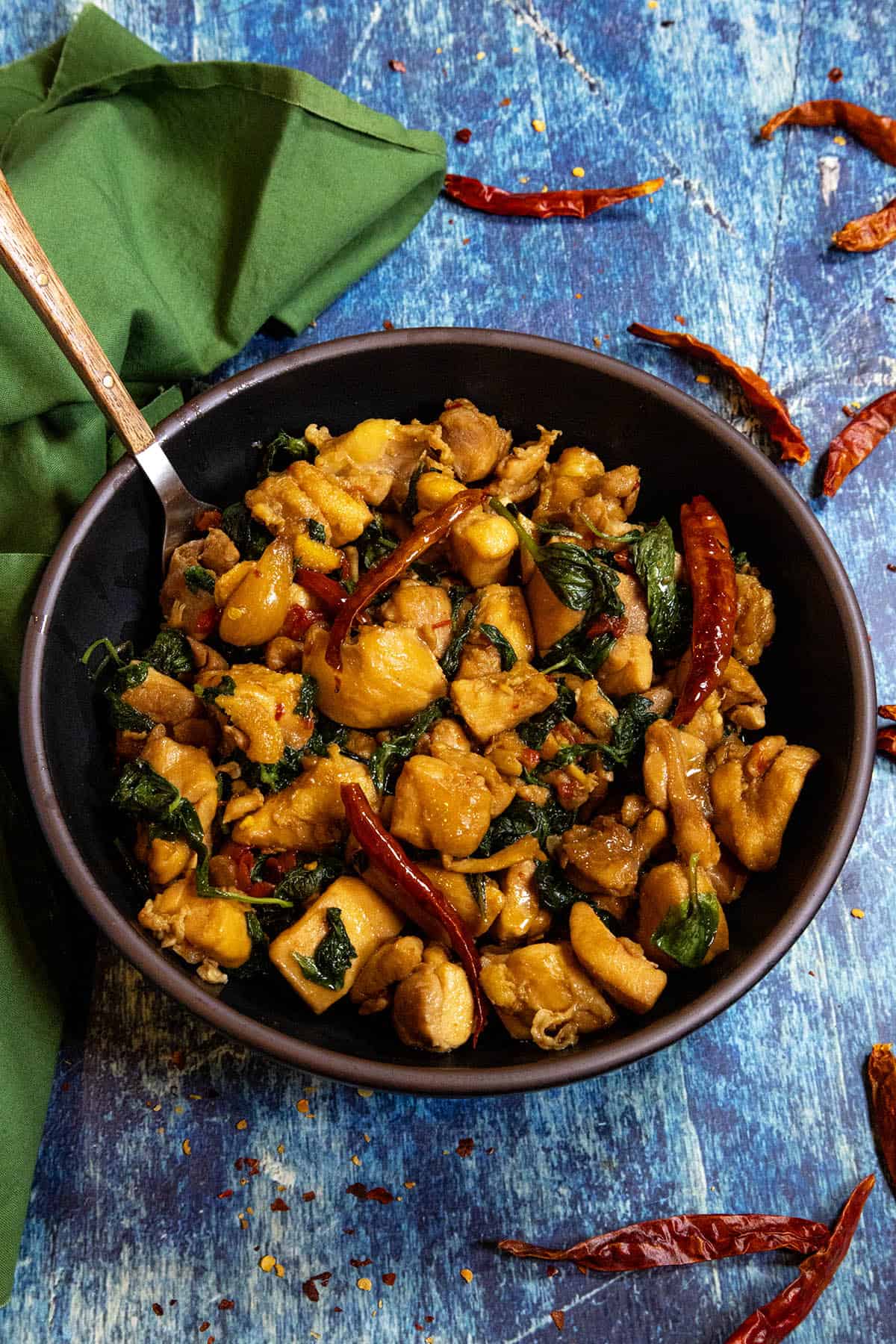
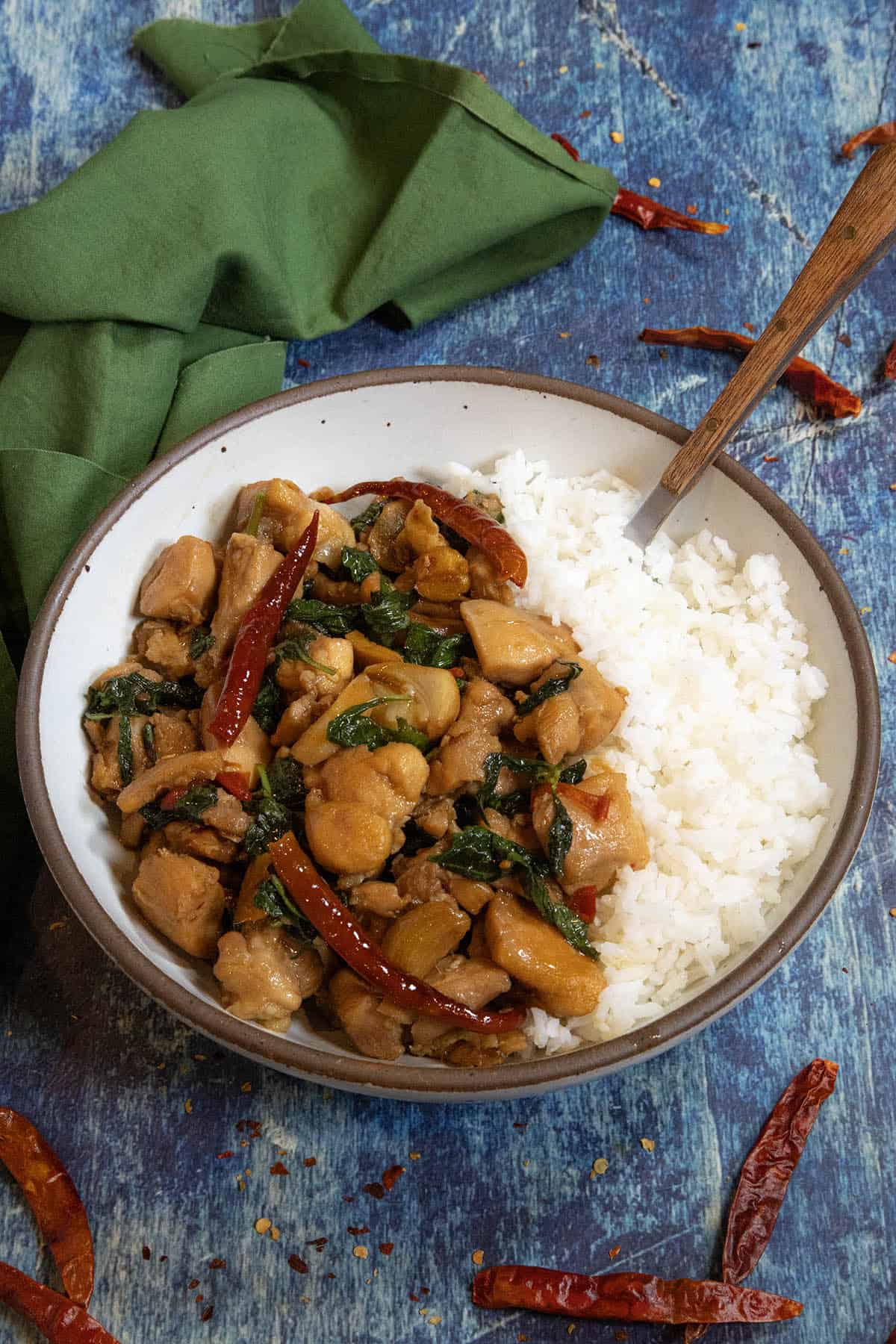
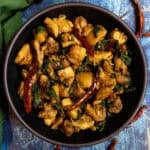
My home-style three cup chicken (san bei ji) uses juicy boneless chicken thighs simmered in soy sauce, rice wine, and sesame oil with loads of whole garlic cloves, ginger, chilies, and a big handful of fresh basil. It's sticky, glossy, and ready in about 30 minutes.
Patty grew a LOT of basil this year, my friends. She loves to garden, and her basil plants are producing like crazy. We both love basil, so I've been on the hunt for recipes that use a whole bunch of it at once, just like my Thai Basil Chicken and other basil stir fries.
Three cup chicken is perfect for this. This classic Taiwanese dish simmers chicken in a savory, sweet sauce with a handful of whole garlic cloves and sliced ginger, then finishes with two big cups of fresh basil. The basil wilts right into the glaze and makes the whole kitchen smell amazing.
Traditionally, cooks make three cup chicken with bone-in chicken, usually wings or chopped thighs and legs. This is my easier home-style version with boneless chicken thighs. It's faster, easier to eat, and just as flavorful. I also add a little oyster sauce, which gives boneless chicken that sticky, glossy finish you usually get from bone-in pieces. This version rocks.
Let's talk about how to make three cup chicken, shall we?
What Is Three Cup Chicken?
Three cup chicken, or san bei ji, is one of Taiwan's most popular dishes. It traces back to Jiangxi province in southern China, but Taiwan made it famous. Taiwanese cooks added the fresh basil that defines the dish today.
The name comes from the three "cups" in the sauce: soy sauce, rice wine, and sesame oil. Older recipes called for a cup of each, but that's way too much for a home batch. Today the "cups" really mean the trio of ingredients, not the measurement.
One of my favorite references for this dish is Carolyn Phillips' cookbook All Under Heaven (affiliate link, my friends), an incredible guide to the regional cuisines of China. Her version uses chicken wings simmered with tons of ginger and garlic. I love it, and I created this weeknight version from her recipe. I think you're going to love it.
Ingredients Needed
The full ingredients list with measurements is listed in the printable recipe card at the bottom of the post.
- FOR THE CHICKEN AND AROMATICS
- Boneless Skinless Chicken Thighs. They stay juicy and tender during the simmer. See below for using bone-in chicken.
- Peanut Oil. For frying the aromatics and chicken. It handles heat well, so you don't burn the delicate sesame oil. Vegetable oil works, too.
- Fresh Ginger. Lots of it, sliced into thin coins. It mellows and turns a little sweet when you fry it.
- Whole Garlic Cloves. Sixteen cloves! Leave them whole. They soften and turn sweet and jammy in the sauce, which you will love. Patty goes crazy for this.
- Dried Red Chilies. Tien tsin chilies or árbol chilies work great.
- Fresh Red Thai Chilies. For vibrant heat. Adjust to your taste.
- Scallions. The whites go in with the sauce, and the greens go in at the end.
- FOR THE SAUCE
- Rice Wine. Taiwanese rice wine (mijiu) is traditional. Shaoxing wine is easier to find and works very nicely. Note that this is rice wine, NOT rice vinegar.
- Soy Sauce. One of the three cups. Regular or light soy sauce works.
- Oyster Sauce. This is my secret for boneless thighs. Carolyn Phillips uses it, too. Just a bit thickens the sauce and gives it a gorgeous gloss.
- Toasted Sesame Oil. For nutty, toasty aroma and flavor. Black sesame oil is popular in Taiwan if you can find it.
- Rock Sugar or Brown Sugar (Optional). Balances the saltiness. Rock sugar is traditional.
- TO FINISH
- Thai Basil. Two packed cups. Thai basil has a licorice note that is just amazing in this dish, and you get to use a lot of it. Italian basil works, too, so use what you've got growing. I've used holy basil, too, and we love it.
- For Serving. Steamed white rice.
Boneless Chicken Thighs vs. Bone-In Chicken
Traditional three cup chicken uses bone-in chicken. Cooks often chop wings or thighs and legs into pieces, then fry and braise them in a clay pot. It's fantastic, but for my home-style version I went with boneless chicken thighs. Here's why I love it, and I think you will, too:
- It's Faster. Boneless thighs cook through in about 10 minutes. Bone-in chicken needs up to 20 minutes, plus more time to reduce the sauce.
- Big Flavor. Thighs have enough fat to stay juicy and rich, so you keep all that deep, savory dark meat flavor.
- Easier to Prep and Eat. No need to chop through bones, or pick around bones at the table. Just bite-size chicken over rice.
Want to go the traditional route? Bone-in works great. Use 2 to 2 1/2 pounds of chicken wings split at the joint, or bone-in thighs chopped into 2-inch pieces. After adding the sauce, cover and simmer for 15-20 minutes until tender, then uncover and reduce the sauce to a glaze.
How to Make Three Cup Chicken (San Bei Ji)
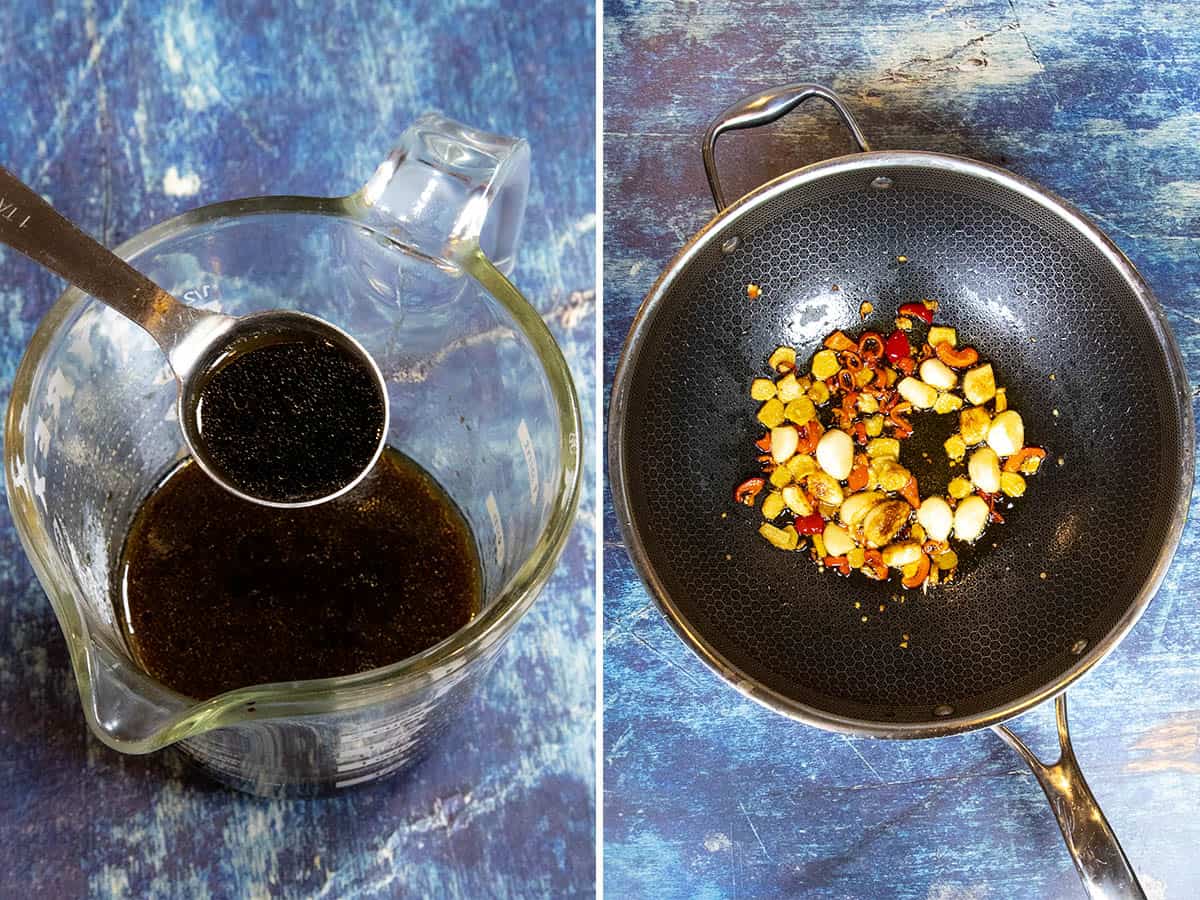
Mix the Sauce. In a small bowl, stir together the rice wine, soy sauce, oyster sauce, 1 tablespoon of the sesame oil, and the sugar, if using. Set it aside.
Fry the Aromatics. Heat the peanut oil in a wok or large skillet over medium heat. Fry the ginger for 2-3 minutes, until the edges curl. Add the garlic and cook for 2 minutes, until golden in spots. Add the dried chilies and cook for 30 seconds.
Stir Fry the Chicken. Raise the heat to medium-high. Add the chicken and stir fry for 3-4 minutes, until the outside turns opaque and lightly browned in places.
Simmer Uncovered. Pour in the sauce and add the fresh chilies and scallion whites. Bring it to a boil, then reduce to a lively simmer. Cook uncovered, stirring often, for 10-12 minutes, until the chicken cooks through and the sauce reduces to a glossy glaze that coats every piece.
Why uncovered? Boneless thighs cook quickly. Leaving the lid off lets the sauce reduce while the chicken cooks, so both finish at the same time.
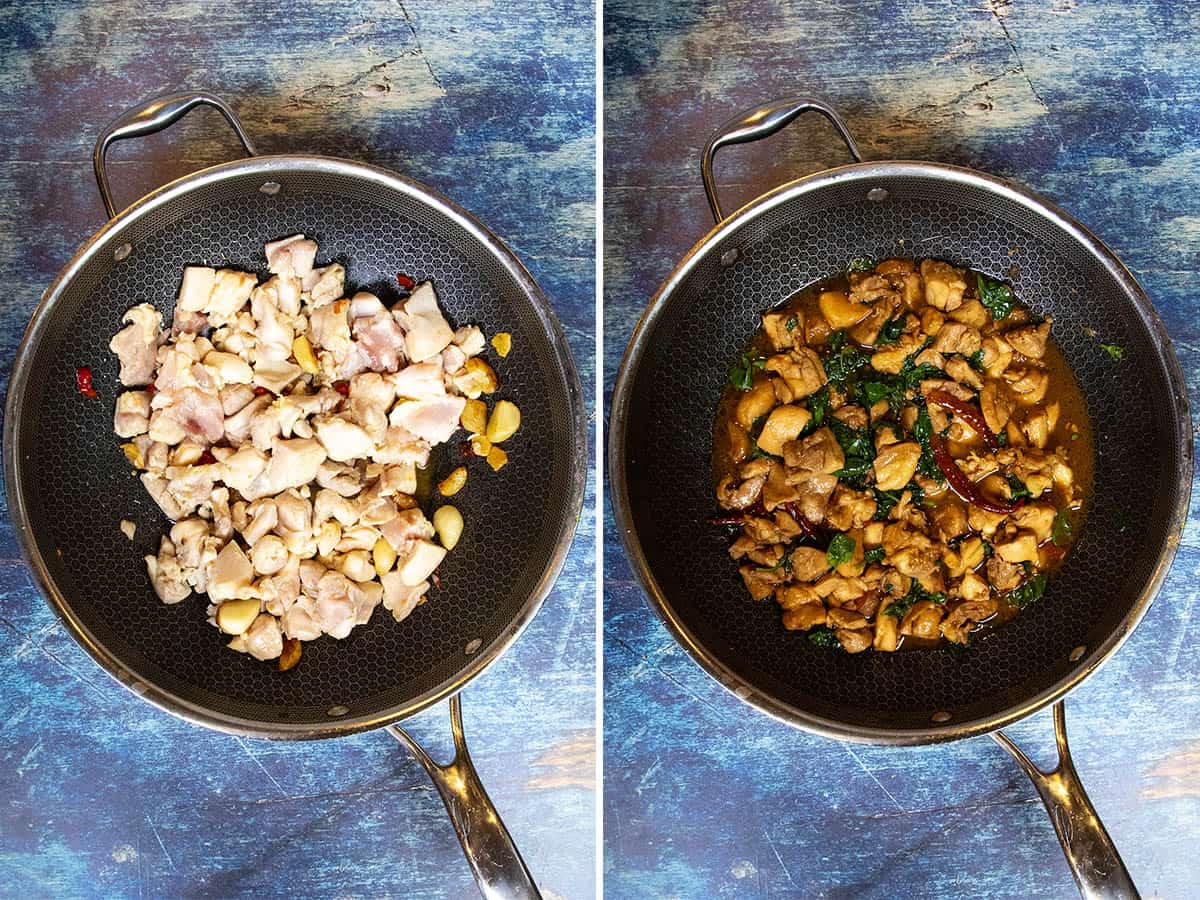
Add the Basil. Turn off the heat. Add the basil, scallion greens, and the last teaspoon of sesame oil. Toss until the basil wilts into the sauce.
Boom! Done! Serve your three cup chicken over steamed rice and enjoy!
Recipe Tips & Notes
- Watch the Glaze. The sauce thickens to a syrupy consistency toward the end of the simmer. Keep stirring so it coats the chicken and doesn't burn. If the chicken finishes before the glaze does, remove the chicken with a slotted spoon and reduce the sauce on its own, then add the chicken back in to warm through.
- Taste Before Adding Sugar. Oyster sauce has a bit of sweetness on its own, so you may need less sugar, or none at all.
- Go Big on Basil. It wilts down to almost nothing, so you can go crazy here. Patty was happily shocked at how much we could use. This is a great recipe for using up a big garden harvest.
- Clay Pot Option. For a restaurant-style finish, cook it in a clay pot and cover it for a minute after adding the basil so the basil steams right into the dish.
How Spicy Is Three Cup Chicken?
Three cup chicken is more aromatic than fiery. The ginger, garlic, and basil are the stars, and the chilies add a nice touch of warmth. As written, it lands at a good medium. Here's how to adjust to your preference:
- Mild. Use 2 whole dried chilies, and skip the fresh Thai chilies. Whole dried chilies add flavor without much heat.
- Medium. As written, with 4-6 dried chilies and 1-2 fresh Thai chilies (50,000-100,000 SHU).
- Hot. Use 3-4 or more fresh Thai chilies, and finish with a spoonful of homemade chili crisp. You can also easily add some of your favorite hot sauce into the sauce before simmering.
I wouldn't push it much hotter than that. Too much heat buries the basil, garlic, and ginger, and those are the whole point of this dish.
Serving
Serve three cup chicken over steamed white rice, which soaks up all of that sticky sauce. Coconut rice is a fun option, too.
Round out the meal with a simple green vegetable, like stir-fried bok choy, garlicky green beans, or a crisp Sichuan-style cucumber salad. And yes, eat the garlic cloves. They're the best part!
Storage
Store leftover three cup chicken in an airtight container in the refrigerator for 3-4 days. Reheat it in a skillet over medium heat with a splash of water to loosen the sauce.
You can freeze it for up to 3 months. The basil darkens after freezing, so toss in a handful of fresh basil when you reheat if you'd like. There is so much basil around here!
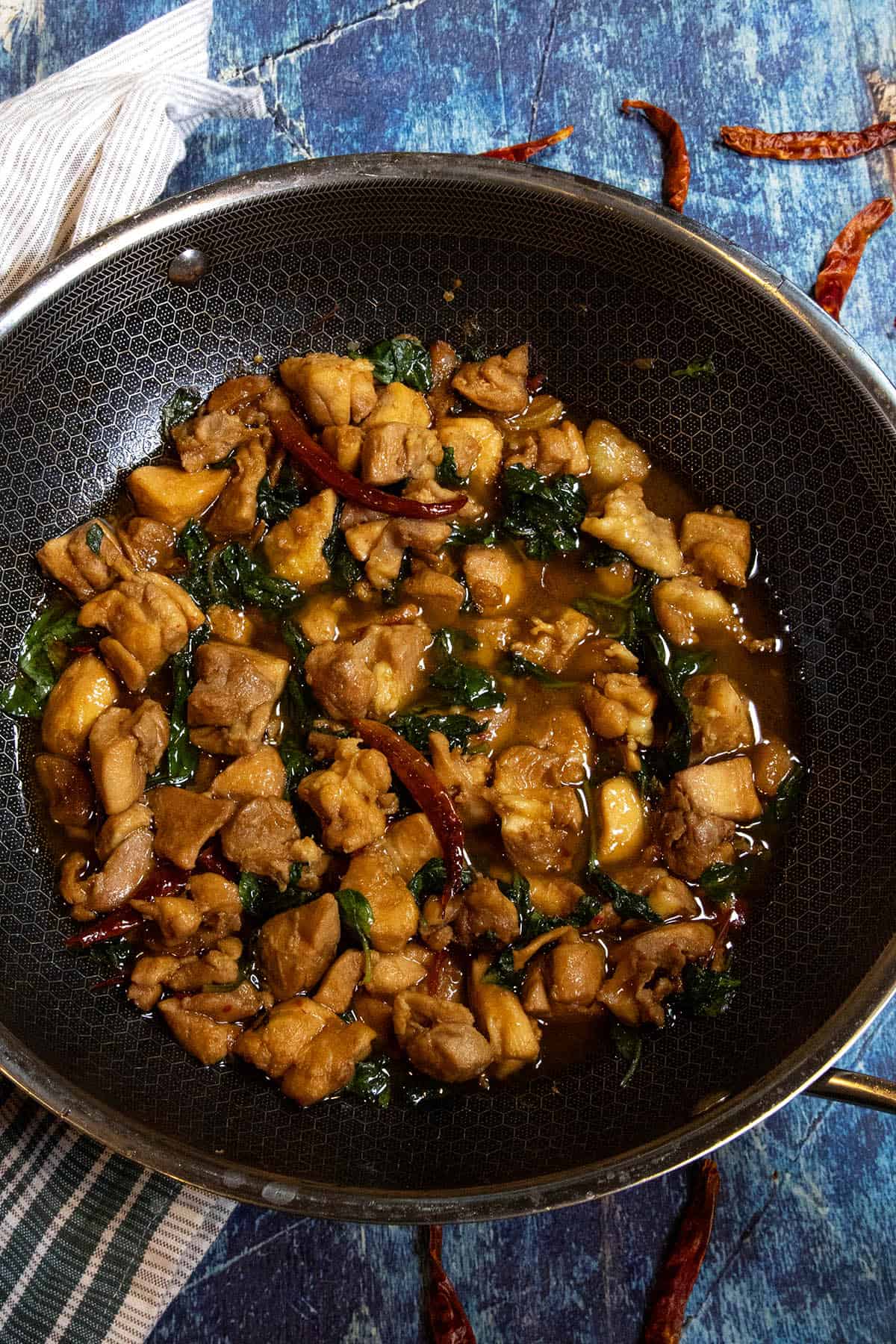
That's it, my friends. I hope you enjoy this three cup chicken. It's a great way to use up a big batch of basil. Let me know if you make it!
Get FLAVOR MADNESS - The Cookbook!
Have you seen my new cookbook FLAVOR MADNESS? Big Flavor Recipes! You absolutely can't miss it. Check it out!
More Basil Stir Fries
More Chinese Chicken Recipes
Got any questions? Ask away! I’m happy to help. If you enjoy this recipe, I hope you’ll leave a comment with some STARS. Also, please share it on social media. Don’t forget to tag us at #ChiliPepperMadness. I’ll be sure to share! Thanks! — Mike H.
Three Cup Chicken (San Bei Ji)
Ingredients
CHICKEN AND AROMATICS
- 2 pounds boneless skinless chicken thighs cut into 1 1/2-inch pieces
- 2 tablespoons peanut oil
- 4- inch piece fresh ginger sliced into thin coins
- 16 garlic cloves peeled and left whole
- 4-6 dried red chilies tien tsin or árbol
- 1-2 fresh red Thai chilies sliced
- 3 scallions cut into 2-inch pieces, whites and greens separated
SAUCE
- 1/4 cup Taiwanese rice wine mijiu or Shaoxing wine
- 3 tablespoons soy sauce
- 1 tablespoon oyster sauce
- 1 tablespoon toasted sesame oil plus 1 teaspoon to finish
- 2 teaspoons to 1 tablespoon rock sugar or brown sugar optional
TO FINISH
- 2 cups packed Thai basil leaves
- Steamed white rice for serving
Instructions
- Stir together the rice wine, soy sauce, oyster sauce, 1 tablespoon sesame oil, and sugar. Set aside.
- Heat the peanut oil in a wok or large skillet over medium heat. Fry the ginger 2 to 3 minutes, until the edges curl. Add the garlic and cook 2 minutes, until golden in spots. Add the dried chilies and cook 30 seconds.
- Raise the heat to medium-high. Add the chicken and stir-fry 3 to 4 minutes, until the outside turns opaque and lightly browned in places.
- Pour in the sauce and add the fresh chilies and scallion whites. Bring to a boil, then reduce to a lively simmer. Cook uncovered, stirring often, 10 to 12 minutes, until the chicken is cooked through and the sauce reduces to a glaze that coats each piece.
- Turn off the heat. Add the basil, scallion greens, and the last teaspoon of sesame oil, then toss until the basil wilts. Serve over rice.
Notes
- Heat Level: For mild, use 2 dried chilies left whole and skip the fresh chilies. For hot, brake the dried chilies open, use 3 to 4 fresh Thai chilies, and finish with a spoonful of chili crisp.
- Bone-In Chicken: Use 2 to 2 1/2 pounds chicken wings (split at the joint) or bone-in thighs chopped into 2-inch pieces. After adding the sauce, cover and simmer 15 to 20 minutes until tender, then uncover, raise the heat, and reduce the sauce to a glaze, 4 to 6 minutes. You can skip the oyster sauce, since the bones add body to the sauce.
- Basil: Italian basil works if you can't find Thai basil. Nutritional information estimated without rice.
- Nutritional information estimated without rice.
Nutrition Information
FAQs
Why is it called three cup chicken?
The name refers to the three main sauce ingredients: soy sauce, rice wine, and sesame oil. Old recipes called for one cup of each, but modern recipes use much smaller amounts. The "three cups" now refers to the trio, not the measurement.
Does three cup chicken use rice wine or rice vinegar?
Rice wine. Taiwanese rice wine (mijiu) is traditional, and Shaoxing wine is a great substitute. Rice vinegar would make the dish sour, so don't swap them.
Can I use bone-in chicken or wings?
Yes. Bone-in chicken is actually more traditional. Use 2 to 2 1/2 pounds of wings or chopped bone-in thighs, simmer covered for 15-20 minutes until tender, then uncover and reduce the sauce to a glaze.
Can I use regular basil instead of Thai basil?
Absolutely. Thai basil is traditional and adds a light licorice flavor, but Italian basil works well. Use whatever basil you have growing.
Is three cup chicken spicy?
Mildly. The chilies add warmth, but ginger, garlic, and basil lead the flavor. You can easily make it milder or hotter by adjusting the chilies.
Leave a Reply