

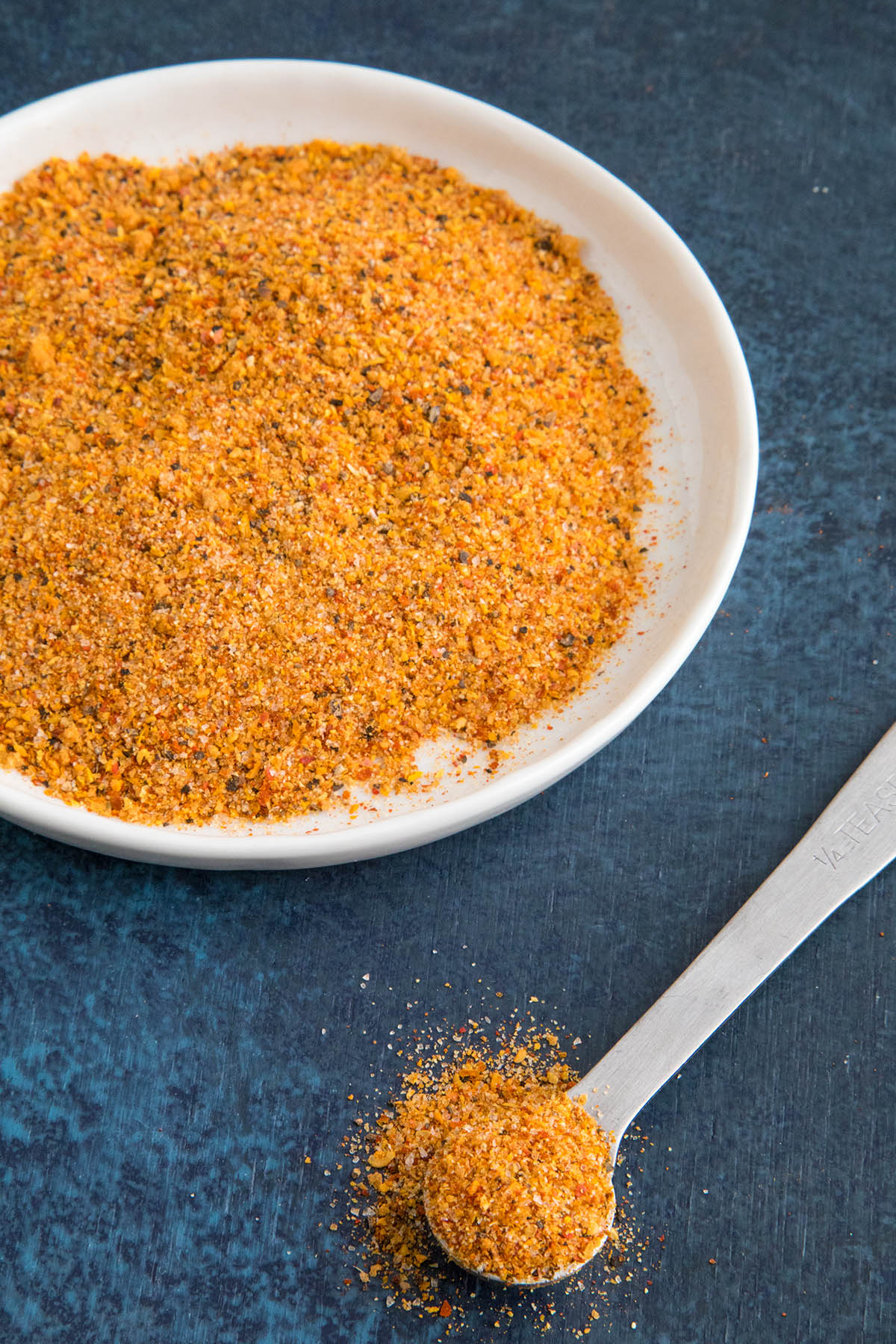
This homemade rib rub recipe is made with classic BBQ spices - brown sugar, smoked paprika, garlic - and real chili pepper heat and flavor with ancho, chipotle, and cayenne. You control the heat level. Just rub it into the meat and get the best dry rub for ribs you've ever made from scratch.
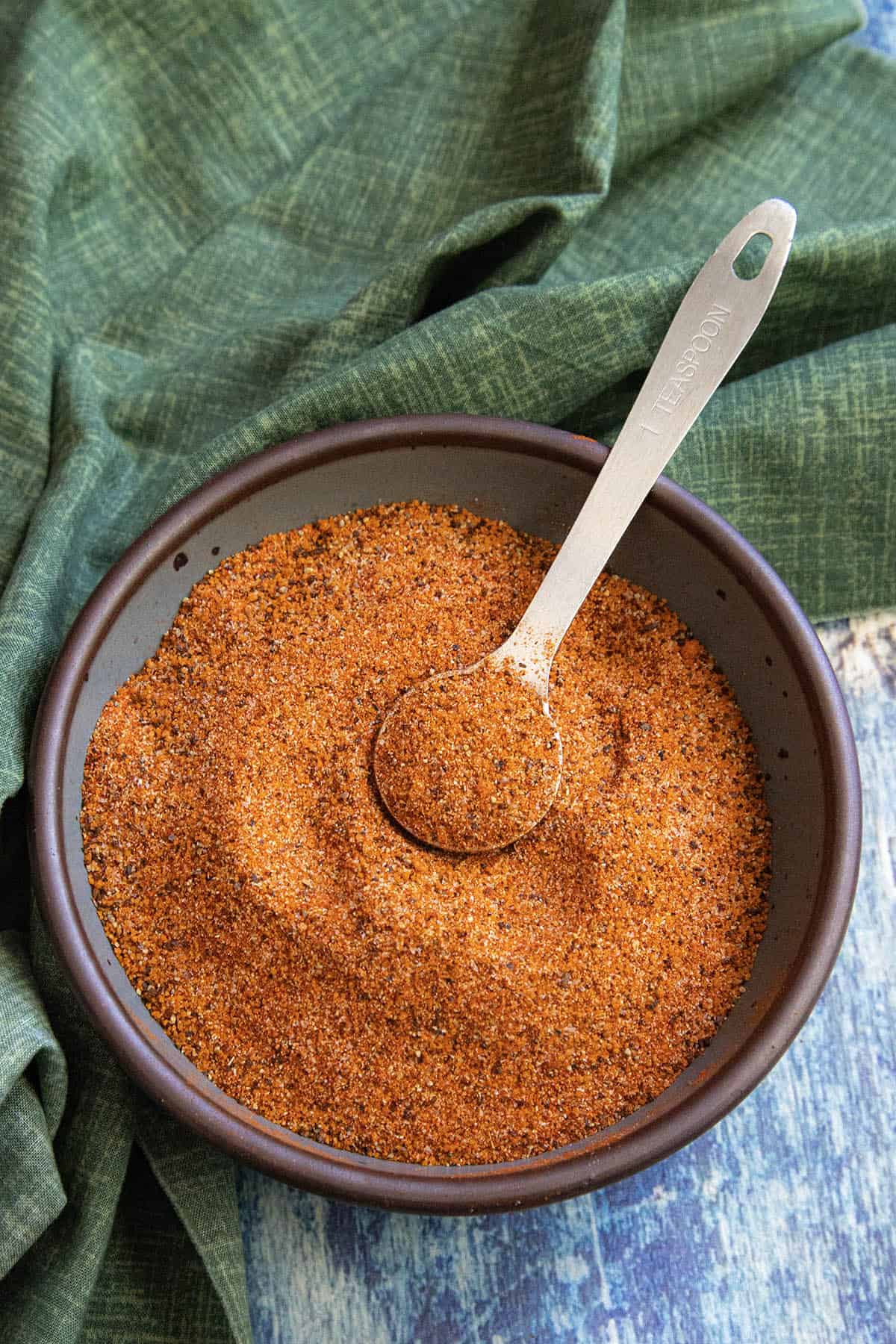
No more need to buy pre-made rib rubs at the store, my friends. This homemade dry rub for ribs takes the classic BBQ spice blend - brown sugar, smoked paprika, garlic, the works - and brings in real chili pepper love you'll never get from store-bought stuff.
You pick the heat level. Mild, medium, or hot. Most recipes treat that part as an afterthought. The base is the same either way, a sweet-savory blend that locks in flavor and works on any cut of ribs you're in the mood for.
I've been making spice blends from chili peppers for decades here at Chili Pepper Madness, and a rib rub is one of the best ways to enjoy them. Let me show you how to do it right.
Ingredients
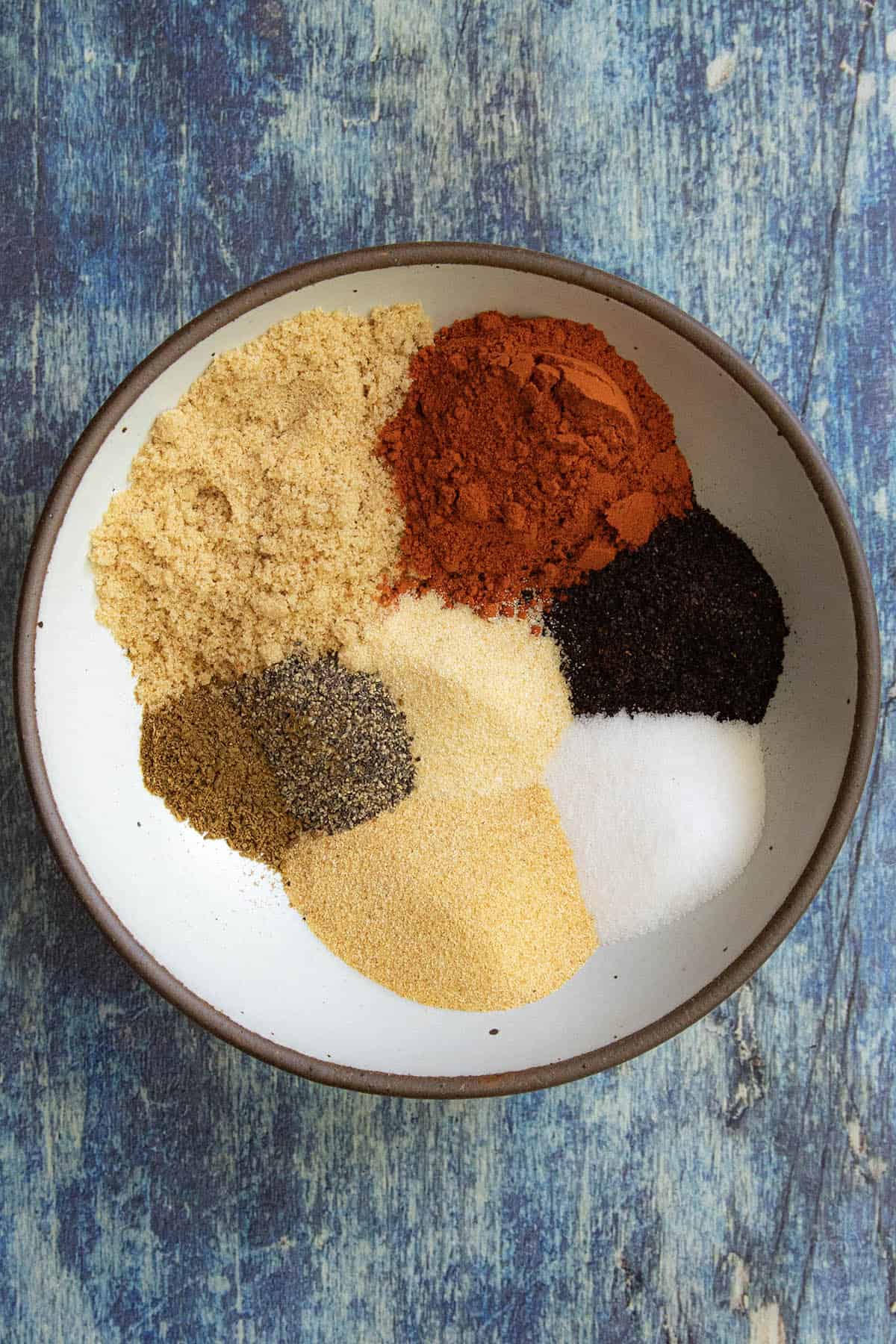
Here's everything in this dry rub for ribs and why they matter:
- Brown sugar. The sweet base. Helps with bark and balances the heat from the peppers. Dark brown sugar gives you a little more molasses flavor if you have it.
- Smoked paprika. Adds wood-fired flavor even if you're cooking in the oven. Regular paprika is fine, but you miss out on that smokiness.
- Ancho chili powder. This is the heart of the CPM difference. Dried poblano, low heat, big flavor. Earthy and slightly chocolatey for complexity without the bite. If you can't find ancho, a general chili powder blend will work, but ancho is worth finding.
- Kosher salt. Seasons the meat and helps the rub penetrate.
- Garlic powder and Onion Powder. Classics.
- Black pepper. Freshly ground is best for more bite.
- Ground mustard. For just a touch of brightness.
- Ground cumin. Warm and earthy. Works especially well with the ancho.
- Chipotle powder (optional, for medium heat). Smoked jalapeño in powdered form to double down on the smoke flavor.
- Cayenne pepper (optional, for hot). Pure heat. Add it last and adjust to your preference.
How to Make This Dry Rub for Ribs
This is a five-minute job. Add everything to a bowl, mix well until it's evenly combined and lump-free, and you're done. The full recipe is in the card below.
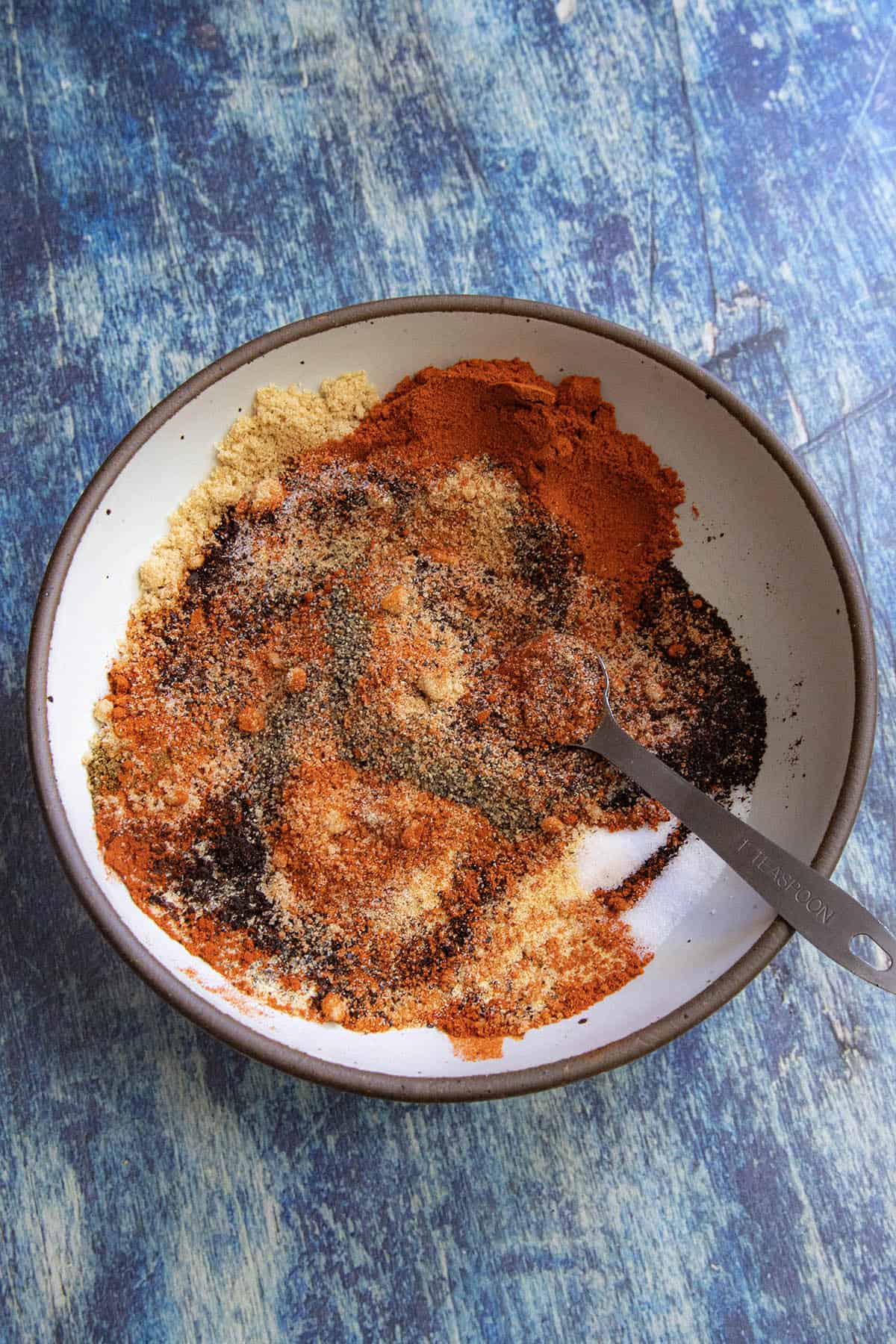
The only thing worth watching - if your brown sugar has clumped up in the bag, break it up before mixing. You want an even distribution across the whole batch, not sugar pockets.
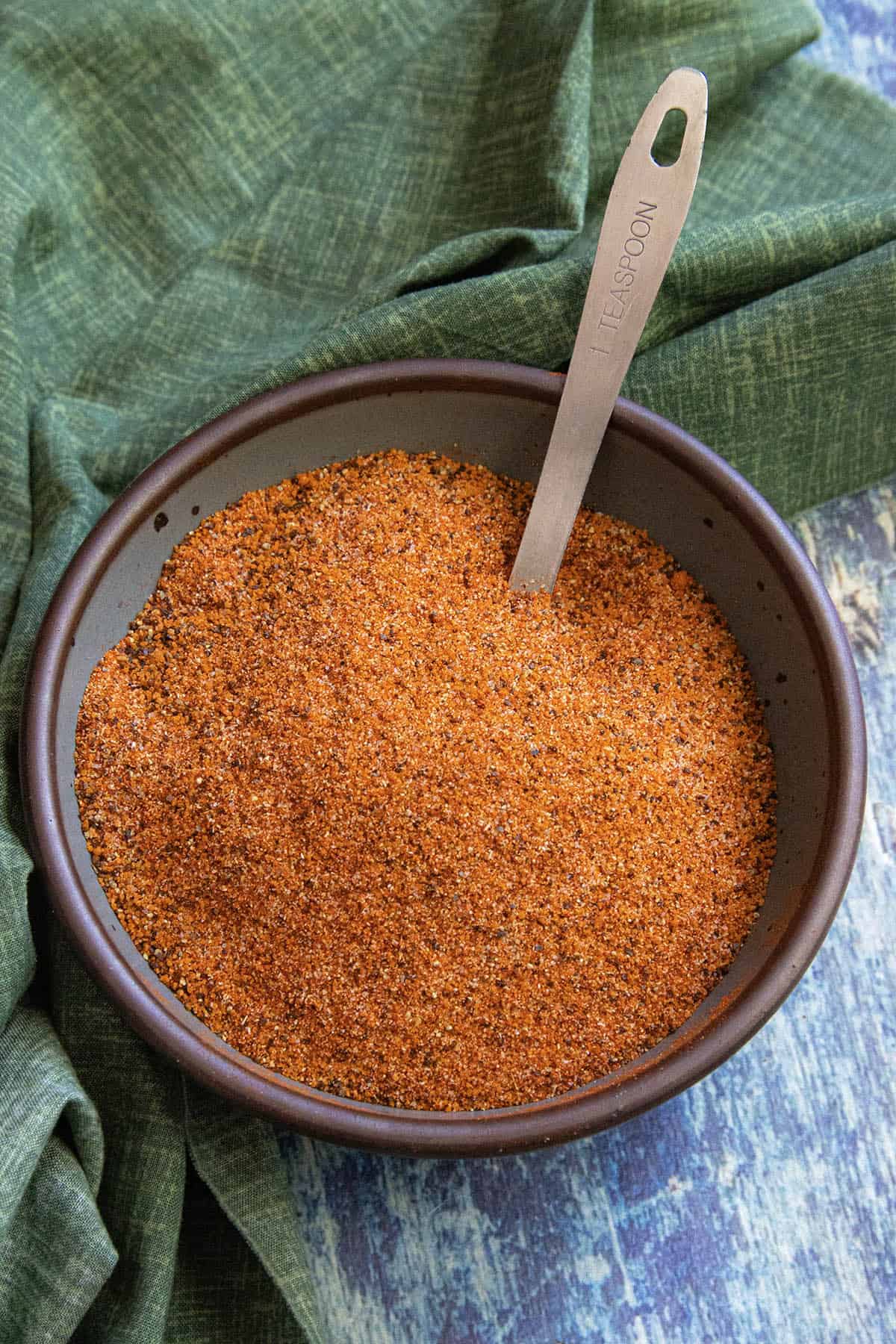
Heat Level Guide
This rib rub recipe has three settings:
- Mild: Just the ancho powder. Earthy, slightly sweet, barely any heat. Great for a crowd that includes kids or people who don't do spicy.
- Medium: Add a teaspoon of chipotle powder. Smoky and warm with a noticeable but not aggressive heat. This is the version I make most often.
- Hot: Add both the chipotle and the cayenne for real heat. You'll know you're eating something spicy.
On the Chili Powders
Ancho is the rub foundation - dried poblano, low heat, big on earthy, slightly chocolatey flavor that makes a rub taste legit. Chipotle adds smokiness on top of smokiness, which is exactly what you want for the smoker or charcoal grill. Cayenne is the heat factor, pure fire, not much else, so adjust as needed.
Want something brighter and fruitier? Swap the ancho for guajillo. Different pepper, totally different personality, definitely worth trying.
How to Apply a Rib Rub
It is best to press the rub into the ribs rather than rubbing it into the meat. Use the palm of your hand to press the rub firmly into the surface of the meat. Rubbing actually pulls the coating off and distributes it unevenly.
Start with about 2 tablespoons per pound of ribs and adjust from there based on how heavily seasoned you want them.
Cover both sides and the edges. Don't skip the bone side.
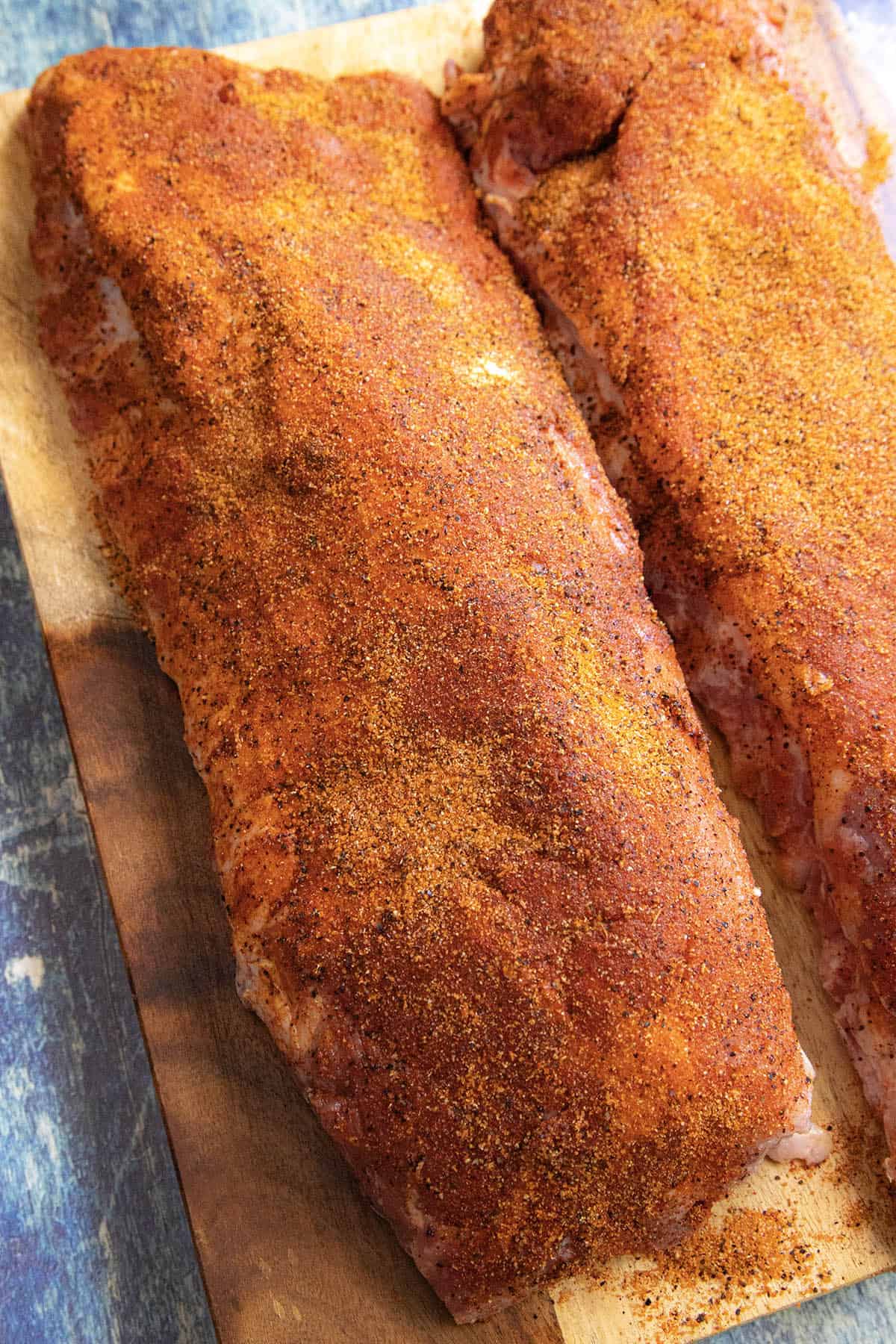
Before you apply anything, make sure the ribs are patted completely dry with paper towels. Moisture won't allow the rib rub to adhere as well and fights against the bark development. Also remove the membrane on the bone side if it's still on. Slide a butter knife under the edge, grab it with a paper towel for grip, and pull it off in one piece.
How Long to Leave the Rub on Before Cooking
Minimum is 30 minutes at room temperature. That gives the salt a little time to start working and helps the rub stick to the ribs.
Overnight in the refrigerator is better. Wrap the rubbed ribs tightly in plastic wrap or foil and let them sit. This gives the salt and spices time to work into the meat for deeper flavor and helps the rub stick so you get better bark when it hits the heat.
Cooking Your Ribs
This rub works with any cooking method.
- Smoker: 225°F to 250°F for 4 to 6 hours depending on the cut. Baby back ribs typically run shorter, spare ribs and St. Louis cut take longer.
- Charcoal or gas grill: Set up for indirect heat. Low and slow is best.
- Oven: 275-300°F, covered tightly in foil for 2.5 to 3 hours, then uncovered for another 30 minutes to set the bark. Finish under the broiler or on a hot grill for a couple of minutes if you want more of a crust.
Best BBQ Sauces for Ribs
Try some of my homemade bbq sauce recipes to make your ribs even better.
- Carolina Mustard BBQ Sauce (Carolina Gold)
- Carolina Vinegar BBQ Sauce
- Mango Habanero BBQ Sauce
- Spicy Honey BBQ Sauce
- Easy Hot Honey BBQ Sauce
- Peach-Bourbon Barbecue Sauce
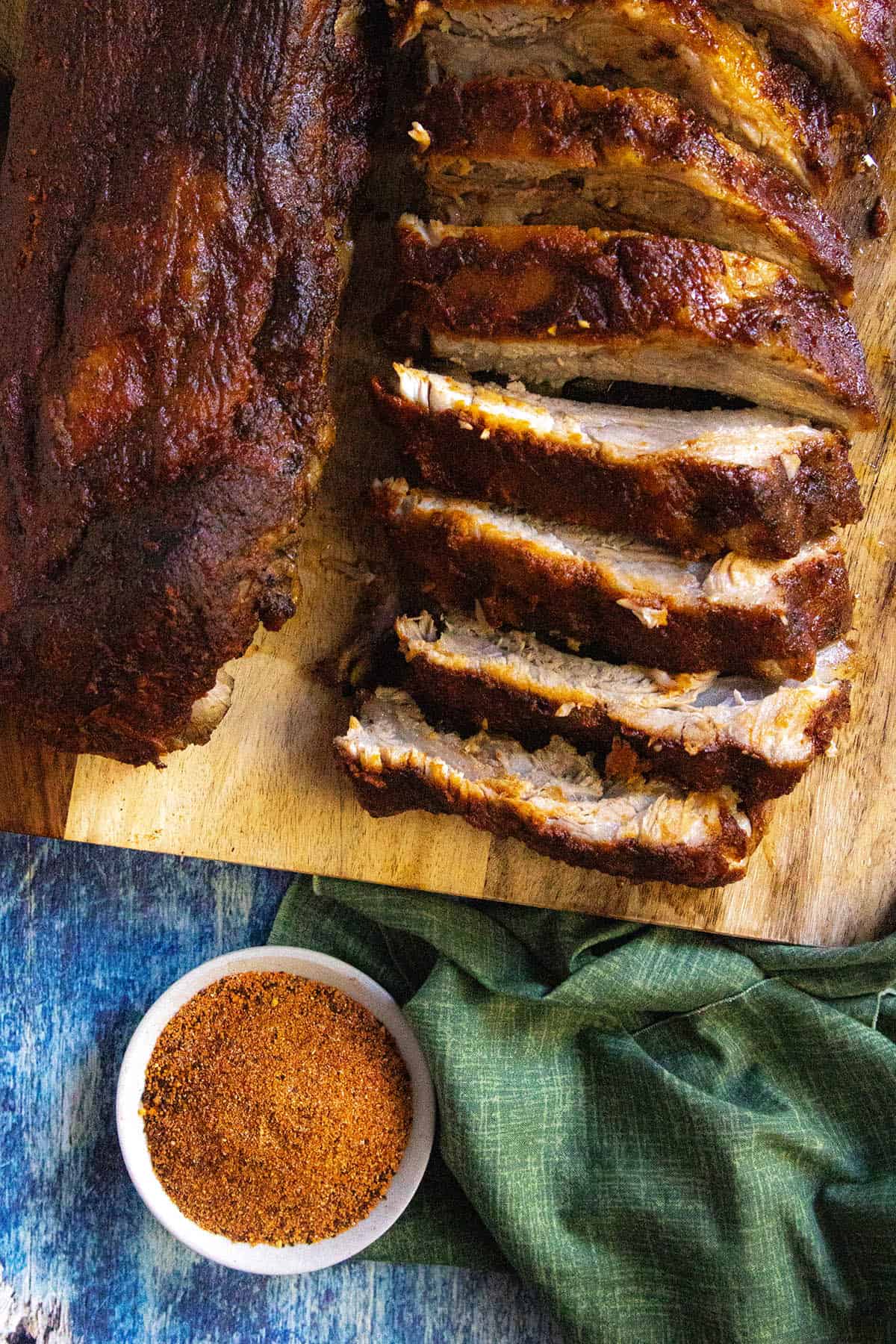
Make It from Fresh Peppers
One of the things that makes this blog different is that I grow my own chili peppers and dehydrate them to make my own powders and blends. It can help you take this rib rub to another level.
I often use a combination of fresh-dehydrated peppers to make versions of this recipe and others. The flavor difference between a fresh-dehydrated chili powder and a grocery store chili powder is real.
If you own a dehydrator and want to go that route, here's how:
- Wash and slice your peppers into quarter-inch rings. Lay them on the dehydrator trays and dry at 125°F for 8 to 10 hours, until they crack when you bend them. Run them through a spice grinder until as fine as possible, sift out the larger pieces, and process those again. Use that fresh-ground powder in place of the ancho or chipotle in this recipe.
- The Magic Bullet works great for small batches. I've been using one for years. If you want to go deeper on this, check out my full guide on how to dehydrate chili peppers and make chili powders, or more generally how to dry chilies.
Please NOTE: I am the author of "The Spicy Dehydrator Cookbook".
Storage
Store in an airtight jar or container at room temperature for up to 3 months. Keep it out of direct sunlight. A spice drawer or pantry shelf works fine.
Make a double or triple batch. Seriously. Once you start putting this on things, you'll go through it fast.
What Else to Use It On
This is a rib rub, but it doesn't have to stay on ribs. I use it on:
- Pork shoulder (whole or pulled)
- Chicken thighs and drumsticks
- Brisket
- Pork chops
- Grilled vegetables, especially corn and zucchini
You'll love it on anything that benefits from a sweet-savory-spicy crust.
More Homemade Seasoning Blends to Try
Try this on your next rack of ribs and let me know what heat level you landed on. If you made it your own with a different pepper or swap, I want to hear about it. Leave a comment below and tag us at #ChiliPepperMadness. I'll be sure to share!
BOOM! That's how you make a homemade rib rub with real chili pepper heat. Enjoy, friends! — Mike H.
Homemade Rib Rub Recipe
Ingredients
- 3 tablespoons brown sugar
- 2 tablespoons smoked paprika
- 1 tablespoon ancho chili powder sub with general chili powder blend
- 1 tablespoon kosher salt
- 1 tablespoon garlic powder
- 1 teaspoon onion powder
- 1 teaspoon black pepper
- 1 teaspoon ground mustard
- 1/2 teaspoon ground cumin
OPTIONAL ADDITIONS
- 1 teaspoon chipotle powder for medium heat
- 1/2 teaspoon cayenne pepper for hot, or to taste
Instructions
- Add all of the ingredients to a bowl. Mix well until everything is evenly combined and lump free.
- Pat your ribs completely dry with paper towels. Remove the membrane from the bone side if it's still on - slide a butter knife under the edge, grab it with a paper towel, and pull it off in one piece. This lets the rub penetrate the meat properly.
- Apply the rub generously to both sides of the ribs, then press it firmly into the meat with your palm. Don't rub it in - pressing keeps the coating intact. Use about 2 tablespoons per pound of ribs as a starting point.
- Let the rubbed ribs sit at room temperature for 30 minutes before cooking, or wrap them tightly and refrigerate overnight. The longer rest gives the salt and spices time to work into the meat for deeper flavor and helps the rub stick so you get better bark when it hits the heat.
- Cook using your preferred method - smoker, grill, or oven. For smoked ribs, 225°F to 250°F for 4 to 6 hours depending on the cut. For oven ribs, 275°F covered in foil for 2.5 to 3 hours, then uncovered for another 30 minutes to set the bark.
Notes
- Mild: Use just the ancho powder. Earthy, slightly sweet, barely any heat.
- Medium: Add chipotle powder. Smoky and warm — my personal go-to.
- Hot: Add both chipotle and cayenne. Real heat, but the ancho keeps it balanced.
Nutrition Information
Frequently Asked Questions
What's the difference between a dry rub and a wet rub?
A dry rub is a blend of dried spices applied directly to the meat. A wet rub incorporates a liquid binder like mustard, oil, or hot sauce. Both work well for ribs. Dry rubs tend to build better bark on smoked or grilled ribs.
How much rub do I use per rack of ribs?
About 2 tablespoons per pound is a good starting point. One full batch of this recipe makes roughly half a cup, which is enough for two full racks.
Do I need to add oil before applying the rub?
Not necessary. The ribs will have enough surface moisture to help the rub stick, especially after patting them dry. Some people use a thin coat of yellow mustard as a binder, which disappears during cooking and just helps the rub adhere.
Can this rub be used on beef ribs?
Absolutely. You may want to dial back slightly on the brown sugar for beef, but the chili pepper blend works great with beef. Beef back ribs and short ribs are both excellent with this rub.
NOTE: This recipe was recently updated to include new information, including recipe updates, serving information, and FAQs. It was originally published on 3/22/18.
Leo says
Good rub BUT Mike's bbq sauce i used to firm it up really over-powered the rub.
Regardless, the meal was fantastic (spares)
Mike Hultquist says
Thanks. Yes, better to enjoy the ribs naked to let the rub flavor truly shine.
Debi says
Okay - this was SO freaking good! I have never been able to pull off a great rib recipe that was this tasty, tender and succulent. So I just stopped bothering. This ticked ALL the boxes! Only change I made was to reduce the rub recipe of brown sugar to 2 TBSP instead of 3.....know it's needed to balance the spices but don't personally don't like the sweetness poking through. What I really liked was the directions - press the spices in - don't smear them. Also, key part was how to remove the membrane so the spices could infiltrate on both sides. I cooked in the oven as prescribed. So tender and flavourful! The last 30 minutes I also smeared these spices into softened butter into fresh corn on the cob & wrapped them up into tinfoil and baked along side the ribs. The corn stayed crispy fresh and blended so well with the ribs. Everything was ready together and texture & flavours were SO good! Love your recipes Mike...but this one taught me that I CAN make some damn good, tasty, tender ribs - and the fresh spiced up buttered corn on the cob just hit the sweet spot to go with it. Thank you!
Mike Hultquist says
This is so great to hear, Debi!!! Very awesome! Thanks so much, and I'm always incredibly happy to be helpful. I appreciate you sharing this.
Jesse Rohwer says
Hey Mike,
You say you use this on zucchini? I would love to hear how you use it and the cooking method this works best with.
I have two Zucchini plants and two yellow summer squash plants that are producing very heavy this year, like ridiculously heavy. Need new ways to eat them.
Mike Hultquist says
Jesse, I use it to sprinkle onto zucchini and other veggies before cooking them. Toss the veggies in a little oil then toss in the rib rub to season them up. Grill, pan cook, bake, roast, it all works. Cook them how you like. Let me know how it turns out.
Larry says
I will try this!
Note on sugar: I have a favorite rub that I've been making for years. When I make a batch, I store it in an airtight pint Ball canning jar. I made a shaker top for the Ball jars and is frustrating how quickly the brown sugar starts to harden into little balls that won't "shake." So, I switched to Turbinado sugar. Granted, dark brown sugar does have more molasses flavor, but I'm not noticing a significant difference in the flavor of my rub. I smoked 3 racks for Father's day and everybody loved them, and the remaining 1/2 pt of rub will still be shakable when I do it again in a few weeks.
Mike Hultquist says
Excellent! Thanks for the input, Larry!
Tammie says
I made the dry rub for my ribs. I let them marinate for about 5 hours in the refrigerator then took out to room temperature for about half hour before cooking in oven at 275 degrees. They turned out excellent with so much flavor. I put the cayenne into the rub too- will keep this rub and try it on veggies too!!! Love it
Mike Hultquist says
Perfection!!! Thanks, Tammie!!
Greg says
Mike,
I made this rib rub last week. I put it on a rack of ribs, let sit in the fridge overnight, then smoked it for about 6 hours over hickory. The ribs came out fantastic! Also, this rub now sits on our table and is our new go-to seasoning that we use on everything!
Mike Hultquist says
Fantastic!! Thanks so much, Greg! I agree, so many uses for this. I appreciate it!
Jay Yarbrough says
The measurements for the peppers are in ounces…is this by weight or volume?
Mike Hultquist says
By weight.
John Shotsky says
Might want to take another look at the Hawaiian peppers....are those amounts reversed?
REPLY: John, nope. Those amounts are correct. Thank you for asking. -- Mike from Chili Pepper Madness.
Jeff from Greenfield Wis says
I love your site - been a lurker for awhile now
This dry rub is right in my wheelhouse - I love dry rubbed ribs
As soon as the temp gets into to 80s here in SE Wis the ribs are on the grill
Thank you for a great recipe
(for me dehydrating peppers - I use the Mic on the lowest setting) Besides I love the smell of Thai and Habs drying
I'm the only one that does though (haha)
Jeff
REPLY: This is great, Jeff. Thanks! -- Mike from Chili Pepper Madness.