


The 7 Pot pepper is a superhot chili pepper from Trinidad, named for the old claim that a single pod can spice up seven pots of stew. It runs about 1,000,000 to 1,200,000 Scoville Heat Units, with a fruity, nutty flavor hiding behind all that fire.
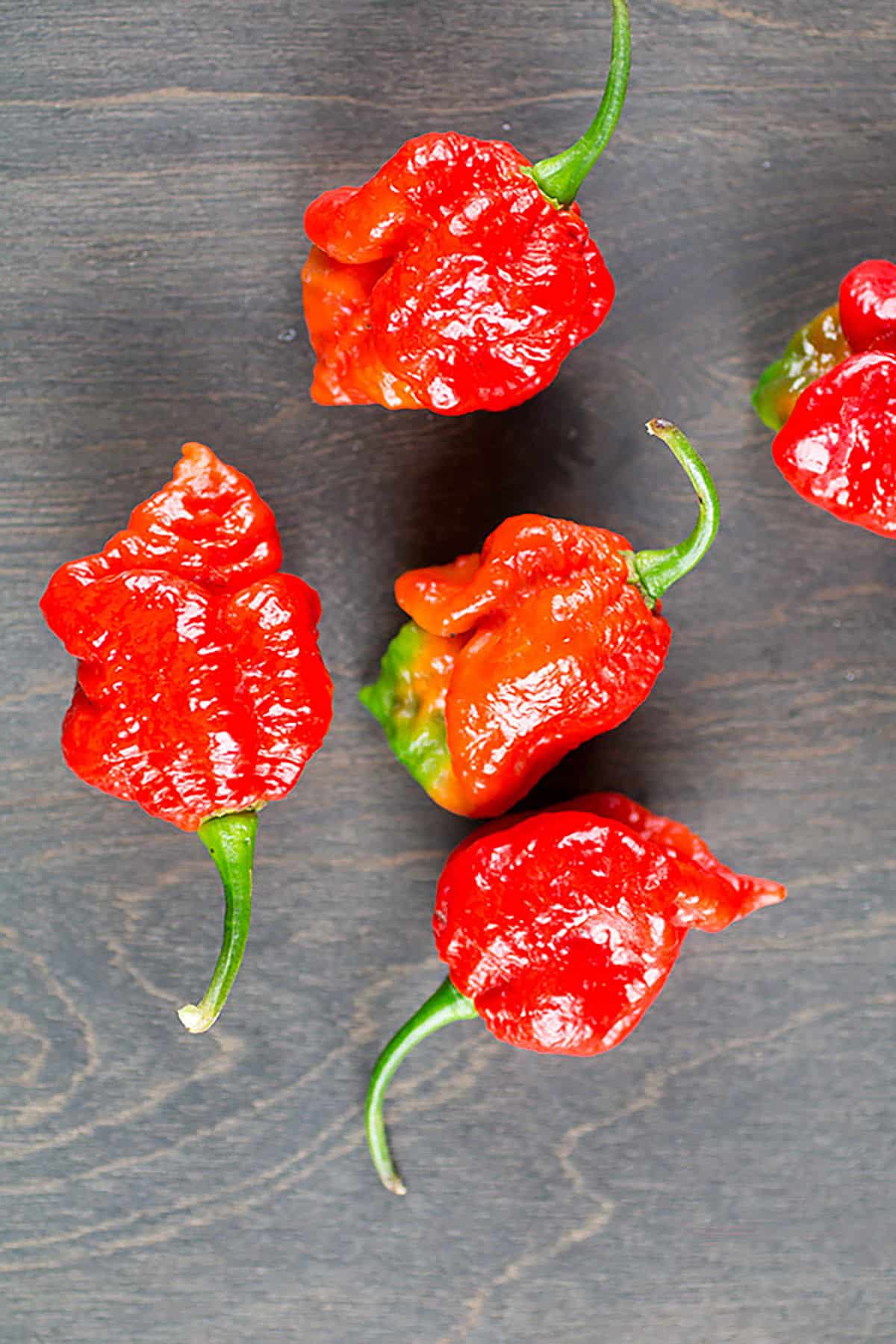
7 Pot Pepper (Trinidad 7 Pot, 7 Pod)
Scoville Heat Units: 1,000,000 - 1,200,000 SHU for most varieties
Species: Capsicum chinense
Origin: Trinidad and Tobago
Jalapeño reference: roughly 200 to 240 times hotter than an average jalapeño
What Is a 7 Pot Pepper?
The 7 Pot is one of the original superhots. It's a Trinidad landrace, which means people on the island grew and saved its seeds for generations before chiliheads around the world ever heard of it. It belongs to Capsicum chinense, the same species as the habanero and Scotch bonnet, and you can taste that family resemblance once you get past the heat.
My longtime mentor Dave DeWitt, the "Pope of Peppers," wrote about how Trinidad became home to a whole group of peppers testing above 500,000 SHU, including the Scorpion, the Moruga and the Seven Pod, which is what he called the 7 Pot. His theory was that Trinidad growers kept saving seeds from the hottest pods, generation after generation, until the island had some of the hottest peppers on the planet.
I started growing 7 pots over 20 years ago. I wanted to grow my own chilies for making hot sauces in my early chilihead days, and they are perfect for making sauces that burst with both heat and flavor.
Why Is It Called a 7 Pot Pepper?
The name comes from the saying that one pod is hot enough to season seven pots of stew. Dave pointed out that this isn't much of a stretch. Cut a million-SHU pod into seven pieces and each piece still packs plenty of heat for a big pot.
You'll also see it called the 7 Pod pepper. Both names are common, and they refer to the same pepper.
How Hot Is the 7 Pot Pepper?
The standard red 7 Pot measures 1,000,000 to 1,200,000 Scoville Heat Units. Here's how that stacks up:
- Jalapeño: 2,500 - 8,000 SHU
- Habanero: 100,000 - 350,000 SHU (the 7 Pot is roughly 3 to 12 times hotter)
- Ghost pepper: around 1,000,000 SHU (same neighborhood)
- Trinidad Moruga Scorpion: about 1,200,000 SHU on average
- Carolina Reaper: up to 2,200,000 SHU
Heat varies from pod to pod and plant to plant. Growing conditions and the specific strain matter a lot, and a few 7 Pot crosses run hotter than the original. The 7 Pot Primo, for example, tested at 1,473,480 SHU.
For me, it's more of a blooming heat. You'll notice the burn right away, but it grows the longer it sits and as you keep eating.
What Does a 7 Pot Look Like?
7 Pots look a lot like habaneros at first glance. The pods are roundish, about 1 1/2 to 2 inches long, and sometimes stretch out a little or form a small tail. The giveaway is the skin, which is bumpy, pimpled and wrinkled like other superhots.
They ripen from green to red. You'll also find yellow, chocolate brown, white, peach, pink and burgundy versions.
What Does a 7 Pot Taste Like?
Underneath the heat, the 7 Pot has the fruity, tropical flavor you'd expect from a Caribbean pepper, with a slightly nutty edge. The flavor comes through, but the heat shows up fast, so you only get a moment with it before the fire takes over.
Personally, I find it more fruity, similar to a ghost pepper, especially when used in sauce making.
7 Pot vs. Trinidad Scorpion
The two are close cousins from the same island and get mixed up all the time, even among growers. Scorpions usually have a more pronounced pointed tail, while 7 Pots tend to be rounder and more habanero-shaped. Heat is in the same range, with the Moruga Scorpion often running a bit hotter.
7 Pot Pepper Varieties
Growers have selected and crossed the 7 Pot for years, so the family is big now. A few of the best known:
- Red Trinidad 7 Pot: the standard red version this page covers.
- 7 Pot Douglah / Chocolate 7 Pot: a dark chocolate-brown 7 Pot, often hotter than the red.
- 7 Pot Barrackapore: a red 7 Pot strain named after a town in Trinidad.
- 7 Pot Primo: a Naga Morich x 7 Pot cross created by Louisiana horticulturist Troy Primeaux.
- 7 Pot Brain Strain: selected from a 7 Pot plant by grower David Cappiello, with especially wrinkled, brain-like pods.
- 7 Pot Jonah: a larger red 7 Pot with similar heat.
- Yellow 7 Pot: a yellow version with a bright, fruity flavor.
- 7 Pot Bubblegum: known for a calyx that turns red as the pod ripens.
- White, Pink and Burgundy 7 Pots: color variants with similar flavor.
A reader once asked me whether the different colored 7 Pots taste different. From my experience, they all share a similar flavor, but the heat can vary quite a bit depending on how they were bred.
How to Use 7 Pot Peppers
A little goes a long way, so start with a sliver and work up.
- Hot sauce: The fruity flavor is perfect for Caribbean-style and tropical fruit hot sauces. See my How to Make Hot Sauce guide.
- Fermented mash: 7 Pots ferment beautifully. See my post on How to Ferment Chili Peppers.
- Chili powder and flakes: Dry them and grind them into a superhot powder.
- Curries, stews and chili: Toss in a whole pod to simmer and pull it out when the heat is where you like it. Try it in Phaal Curry.
- Sweet heat: They're great in Hot Honey and Mango Chutney.
- Pepper vinegar: Use them in Pique for some seriously fiery vinegar.
Handling 7 Pot Peppers Safely
Wear gloves when you cut them, every time. The oils will burn your skin and stay on your hands for hours. Work in a ventilated kitchen, especially if you're cooking or drying them, because the fumes can make you cough. Keep your hands away from your eyes, and wash your cutting board and knife well afterward.
Growing 7 Pot Peppers
7 Pots grow like other superhots, slow and warm. The seeds can take weeks to germinate, so start them indoors 8 to 10 weeks before your last frost, using a heat mat if you have one. The plants need a long, hot season to ripen pods. In warm climates they can live for years as perennials, and many growers overwinter them indoors.
Where to Buy 7 Pot Peppers
Seeds are easy to find online from specialty seed companies. Fresh pods are harder to find. Look at farmers markets and online pod sellers in late summer and fall, when superhots come in. You can also find dried 7 Pot pods and powder online.
Further Related Resources
- Superhot Chili Peppers List
- List of Chili Pepper Types
- Hottest Peppers in the World
- The Scoville Scale
Got any questions? Please let me know. Drop me an email anytime. I'm happy to help. - Mike H.
7 Pot Pepper FAQ
How hot is a 7 Pot pepper?
Most 7 Pot peppers measure 1,000,000 to 1,200,000 SHU. That's about 200 times hotter than an average jalapeño.
Is the 7 Pot hotter than a ghost pepper?
They're in about the same range, around 1 million SHU. Some 7 Pot strains, like the Douglah and Primo, can run hotter.
Is the 7 Pot hotter than the Carolina Reaper?
No. The Carolina Reaper reaches up to 2,200,000 SHU, nearly twice as hot as a typical 7 Pot.
Is it 7 Pot or 7 Pod?
Both. The names are used interchangeably for the same Trinidad pepper.
What can I substitute for a 7 Pot pepper?
A ghost pepper or Trinidad Scorpion matches the heat. For the fruity flavor with less fire, use habaneros or Scotch bonnets, and more of them.
What color are 7 Pot peppers?
The standard 7 Pot ripens red, but varieties come in yellow, chocolate brown, white, peach, pink and burgundy.
NOTE: This post was updated on 10/31/26 with new information, including heat comparisons, flavor notes, the main 7 Pot varieties, how to cook with and grow 7 Pot peppers, and an FAQ section.
Jared Moore says
Why don’t you list the SHU?
Mike Hultquist says
This page was in the middle of updates. I updated the SHU to the typical range of 1-1.2 Million SHU. Thanks, Jared.
Edwina says
I've been reading about 7 Pot Peppers and have just one question I just can't seem to find an answer to. Are there differences between different 7 Pot Peppers, ie White, Pink, Red, etc. I've bought some 7 Pot Pink Peppers and a friend gave me some 7 Pot White Peppers. Are they the same, just different colors?? One hotter than the other?? Different flavors?? I belong to a Facebook group and someone there says they are different but aren't explaining the difference. I just don't get it and it seems to be quite the question that I just haven't been able to find an answer to.
Mike Hultquist says
Edwina, they all have similar flavors from my experience, though the heat levels can vary. It can depend on how it was crossed. A lot of these peppers were selectively bred with other peppers to achieve certain characteristics, like color and heat.
Jared Moore says
The heat and flavour.
Allen Kuusela says
I just got in deep on the Yellow 7 Pots. So good. Remind me somewhat, but not quite of one of my favorites.... the Scotch Bonnet!
Mike Hultquist says
Scotch Bonnets rule! Definitely a favorite.
jonn says
this was super good!! i ate ten and it wasn't even spicey unless my tastebuds died 🙁 lol
Sarah says
Hi!
Used as ingredient in teargas!?!!!!
What have I grown?
I have a 7 pot peach plant growing in my greenhouse producing a fair few of these grenades.
Any suggestions on what the heck to use them in without killing my family?
Cheers Sarah
Michael Hultquist - Chili Pepper Madness says
Yes, Sarah, these are HOT! I'm growing them again this year as well. Some people like to make hot sauce from them, but that's probably too hot for you. You could put one of them into a giant pot of chili and it will heat up the entire pot, of course. I like to dehydrate them then grind them into chili flakes or chili powder. Use sparingly. Really, though, you can use them in any recipe on this site.
jimAND ROSE nashwinter says
got all kinds growing;habs,chile pitins,carolina reapers,jalapenos,plus others?Will be a Very hot summer;going to make some hot ketchup;keep up the great work;
Michael Hultquist - Chili Pepper Madness says
Excellent, thanks!!