


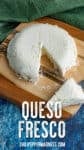
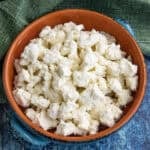
Make homemade queso fresco with just 3 ingredients - milk, an acid, and salt. This easy recipe makes the freshest crumbly Mexican white cheese in about an hour. No rennet needed! Perfect for crumbling over so many hot dishes just before serving. Very easy and VERY fresh!
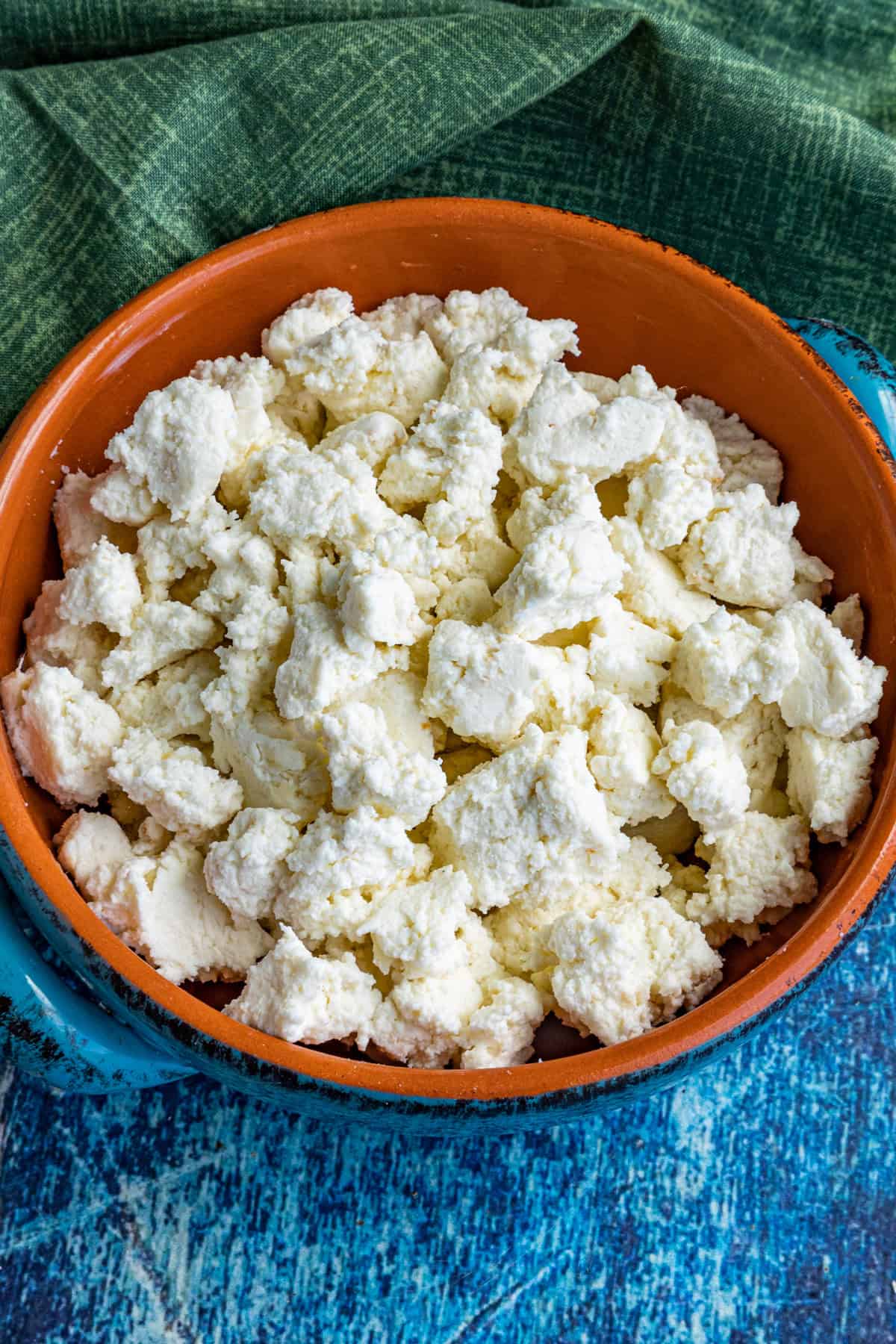
Easy Queso Fresco Recipe
Queso fresco, or “fresh cheese”, is a cheese widely used in Mexican dishes and South American cooking. It adds a touch of texture and freshness to a dish and, because it doesn’t melt like many Mexican cheeses, is ideal for crumbling over hot dishes just before serving. Instead of melting, it softens and becomes creamy without losing shape!
Most commercial queso fresco recipes are made using an enzyme called "rennet" to curdle the milk, but it's very easy to make at home using an acid like vinegar, lemon juice, or lime juice.
It's unaged and very mild with a slightly tangy flavor. Despite being made from milk, it is not rich but rather quite light, with salty-sour notes.
Queso Fresco is meant to be used right away in its crumbly form, perfect for spicy dishes, or it can be pressed with weights to form a cheese that can be fried. Also, yes, fried cheese is absolutely worth drooling over!
Ingredients Needed
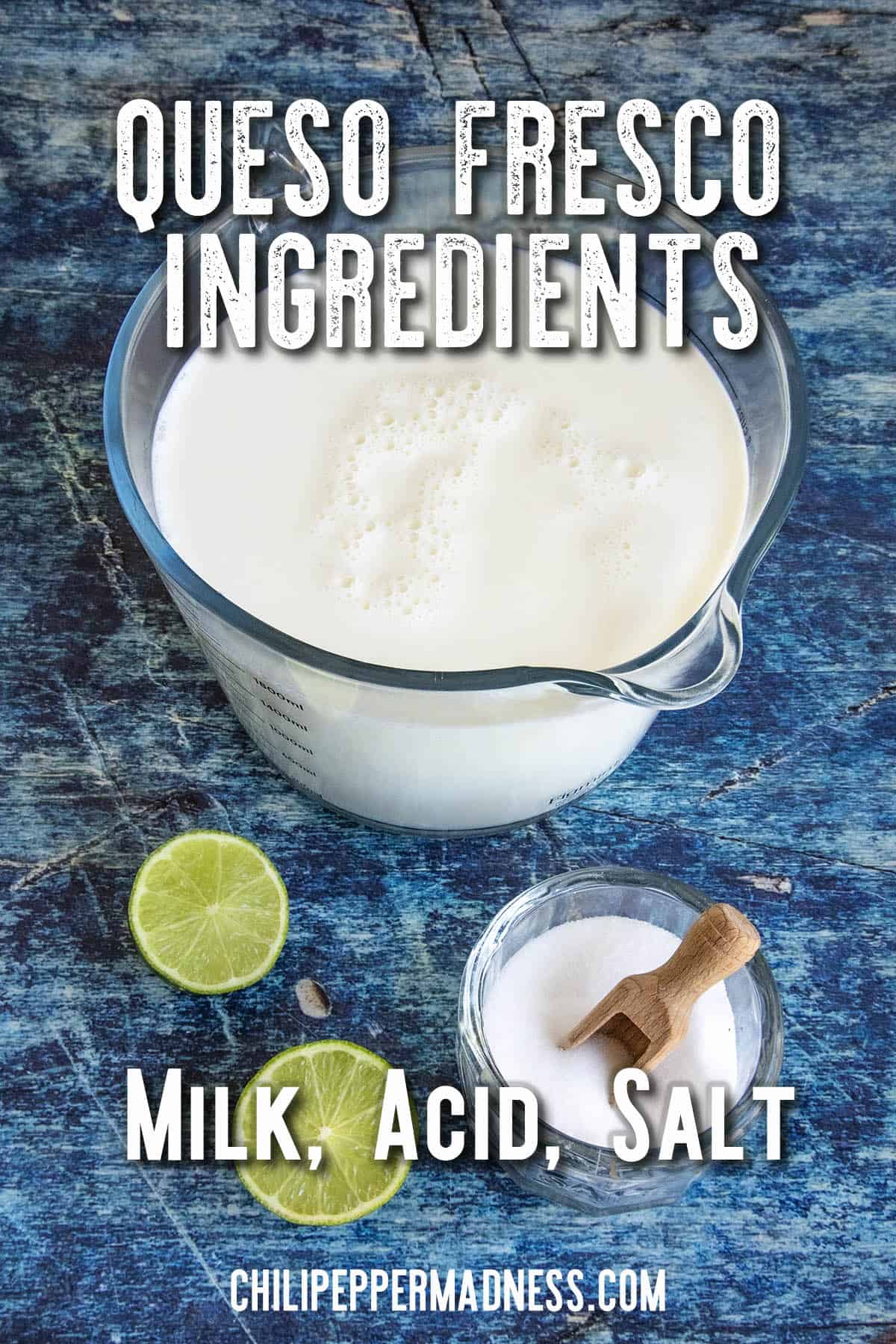
- Milk - Whole milk is great for this. You can use heavy cream or low fat milk, though you'll get more flavor with more fat. It also works with lactos-free milk. The only milk you can’t use is milk labeled ultra-pasteurized.
- Acid - I use vinegar most of the time, though you can use fresh lemon or lime juice if preferred.
- Salt
How to Make Queso Fresco Cheese
Heat the milk. First, heat your milk slowly in a large pot. Don't heat too quickly or you risk scalding the milk, which will result in a burnt flavor. Bring the milk to about 185-190°F when measured with a thermometer. You do not want to bring it to a boil.
Add an acid. Turn off the heat and stir in your acid (vinegar, lemon juice or lime juice) a spoonful at a time. It doesn’t matter which acid you use as the coagulating agent, but lemon or lime juice will impart a bit of citrus flavor in the finished product, so plan accordingly. I prefer lime juice for most applications.
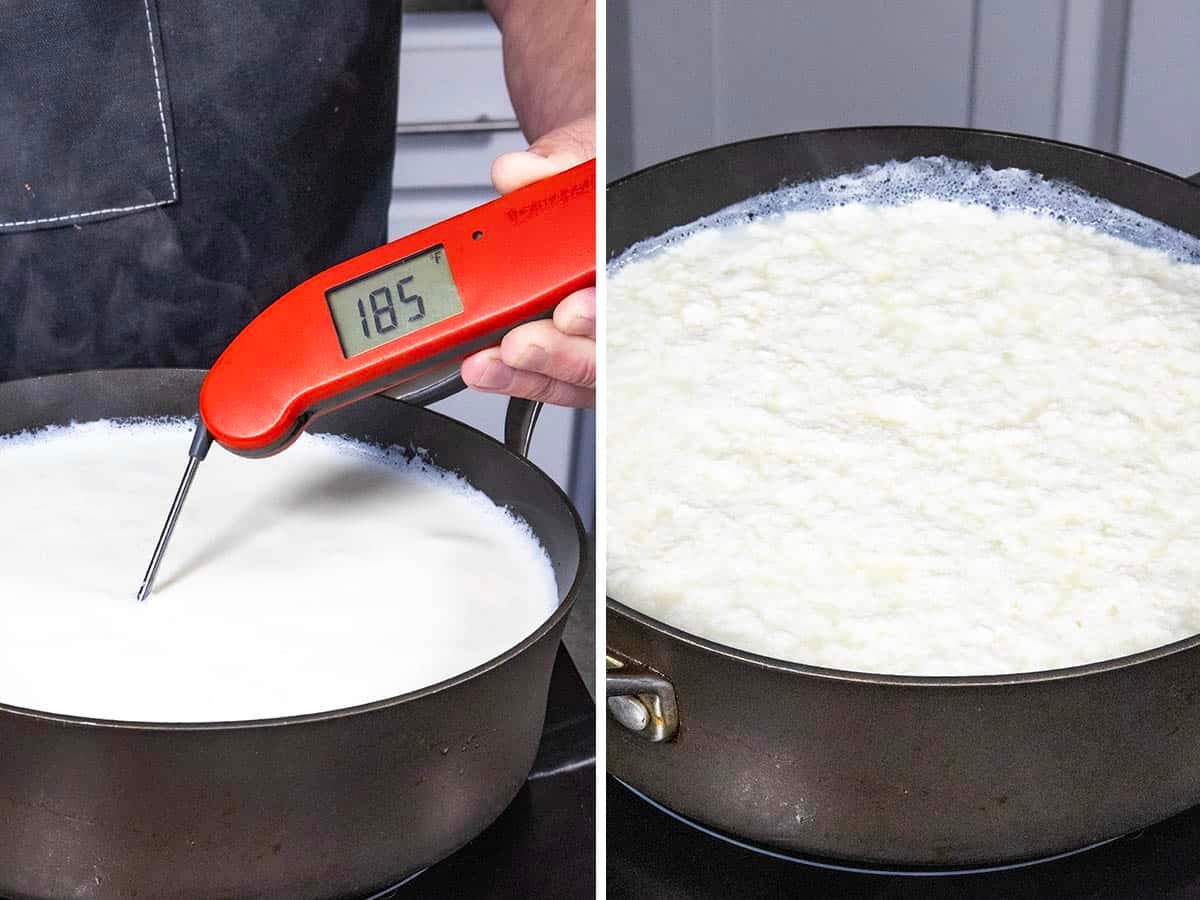
Stir and allow to separate. Stir continuously as you add your acid and watch for curdling to occur. It will be obvious as milk clumps, or “curds”, form and separate from the watery substance, or “whey”. It's difficult to know exactly how much acid you will need, so keep extra on hand and keep adding it a bit at a time in until curdling starts.
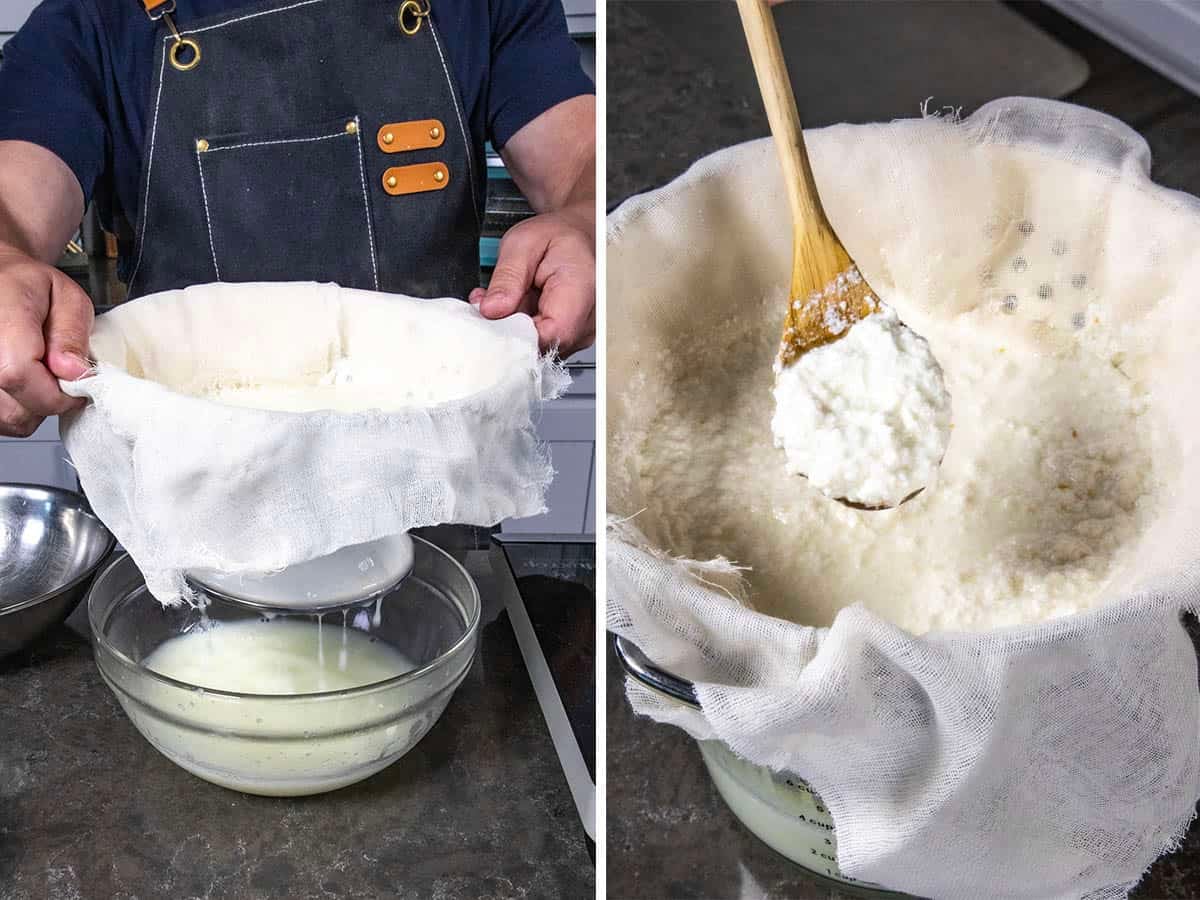
Let it sit. Once the curds form, stop and let the pot sit for about 20 to 30 minutes to complete the process.
Strain the curds from the whey. Next, set a lined colander with cheesecloth over a large bowl and strain the curds from the whey.

Does Queso Fresco Melt?
Queso fresco does not melt the way most cheeses do. When heated, it softens and becomes creamy but holds its shape rather than turning into a smooth liquid. This makes it ideal for crumbling over hot dishes right before serving. It gets soft and silky without disappearing into the food.
The reason is how it's made. Queso fresco is acid-set, meaning the curds form when vinegar or lime juice hits hot milk. That changes the protein structure in a way that prevents full liquefying when heated. Most melting cheeses use rennet, which sets proteins differently.
Can you melt queso fresco with milk?
You can try, but the curds stay grainy instead of blending into a smooth sauce. If you want a melted white queso dip, white American cheese or a mix of Oaxaca and Monterey Jack will give you much better results.
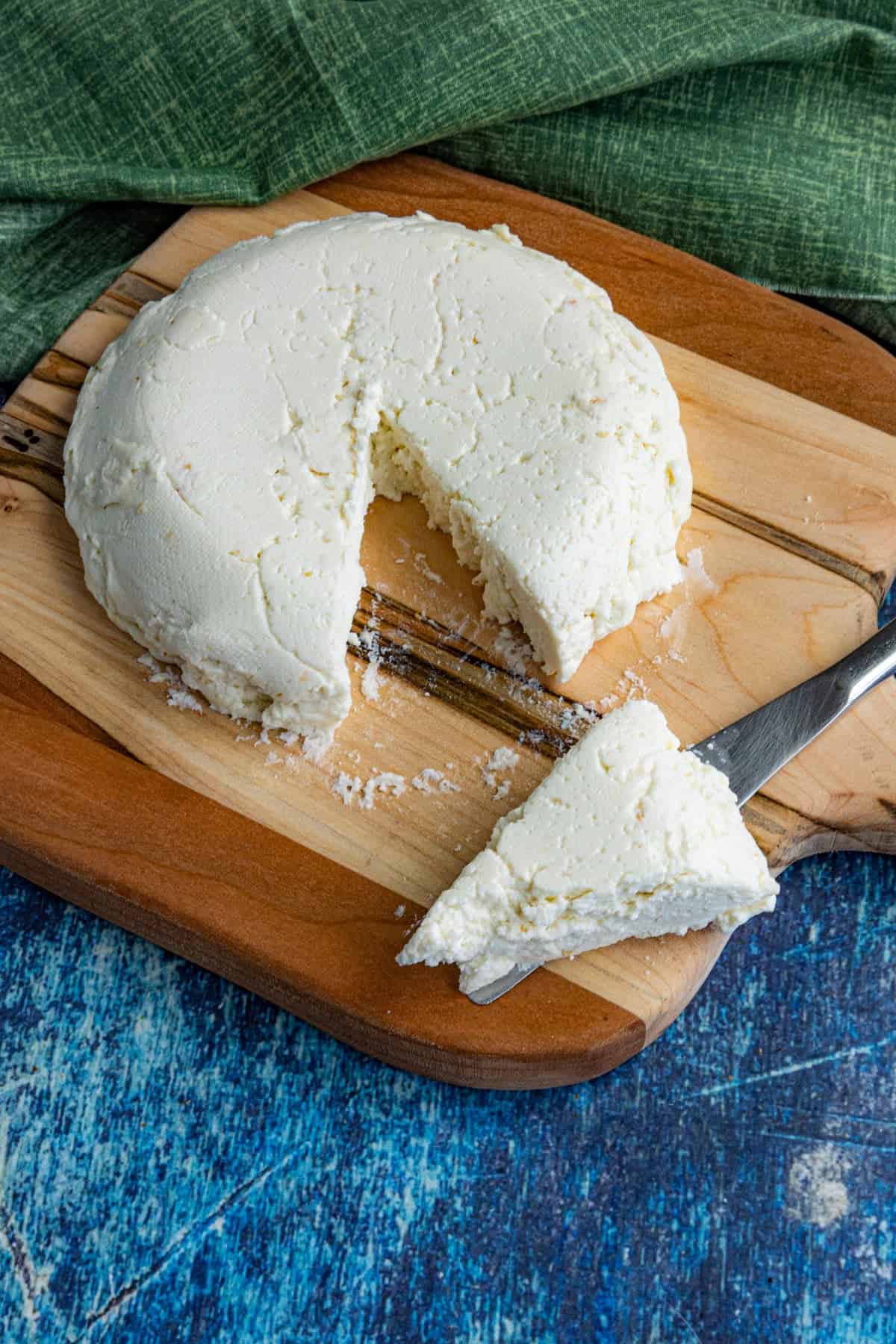
Can you fry queso fresco?
Yes, and it's excellent. Press the cheese until firm, slice it, and fry in a hot pan until golden on the outside, 2-3 minutes per side. It stays soft inside and is great on its own or with spicy dishes.
Recipe Tips & Notes
- Know when to use the cheese. The curds can be used immediately and will be lumpy but somewhat creamy. You can mix in a bit of salt and spread it over breads or crumble it over foods as described above. However, it is best to let it drain for 10-20 minutes for most uses.
- Press to make it firmer. If you’d prefer drier, firmer cheese, wrap up the ends of the cheesecloth and continue to drain an hour or so. You can also place a weight over the top that will press the cheese for several hours, until it is packed and dense.
- Use the whey. You can discard the whey if you’d like, but I like to keep it for other uses. It is ideal for tenderizing meats or for use in starting the fermentation process for foods like pepper mash if you don't heat it too much. Consider freezing it for future use.
Storage
Queso blanco will keep for about a week in the refrigerator, though it is best when used immediately. Be sure to keep it stored in an airtight container.
What to Make With Queso Fresco?
Once you have a batch ready, you'll find uses for it everywhere. I use it most as a finishing touch, crumbled straight from my hand over the top of whatever's coming out of the pan. It's one of those ingredients that makes a dish look and taste finished without much effort.
Here are some of my favorite things to make with it:
- Huevos Rancheros - a classic for a reason
- Chilaquiles Rojos - crumbled over the top right before serving
- Elotes (Mexican Street Corn) - queso fresco is the traditional choice here, not cotija
- Entomatadas (Cheese Filled, Tomato Sauce) - used both inside and crumbled on top
- Pork Chili with Roasted Red Hatch Peppers - the mild cheese against the smoky chili is a great combination
- Black Bean Dip - a generous crumble adds texture and a little tang
- Lamb Vindaloo - the coolness of the cheese against the heat is excellent
- Menemen (Turish Style Scrambled Eggs) - not traditional, but works really well
If you've pressed your queso fresco into a firm block, try pan-frying slices in a hot skillet with a little oil until golden. Serve it with any of the spicy dishes above or eat it straight with a drizzle of hot sauce.

What Cheeses Are Similar to Queso Fresco?
Queso fresco is very similar to queso blanco in texture and flavor and not so creamy like goat cheese. The difference lies only in the curdling process.
It is also similar to feta cheese, which (like queso fresco) is made with rennet, but also brined and aged. Paneer, a staple cheese in Indian cuisine for thousands of years, is essentially the same thing as queso fresco. It is also known as “Farmers Cheese”.
What Type of Milk Should I Use to Make Queso Fresco?
The only milk you can’t use is milk labeled ultra-pasteurized, which will not curdle. Otherwise, you can use any type of milk from the store to make homemade queso blanco.
Original farmers cheese was made with raw cow milk, sheep or goat milk, with cow and goat milk being very popular, but today you’ll most likely need to grab milk from the store.
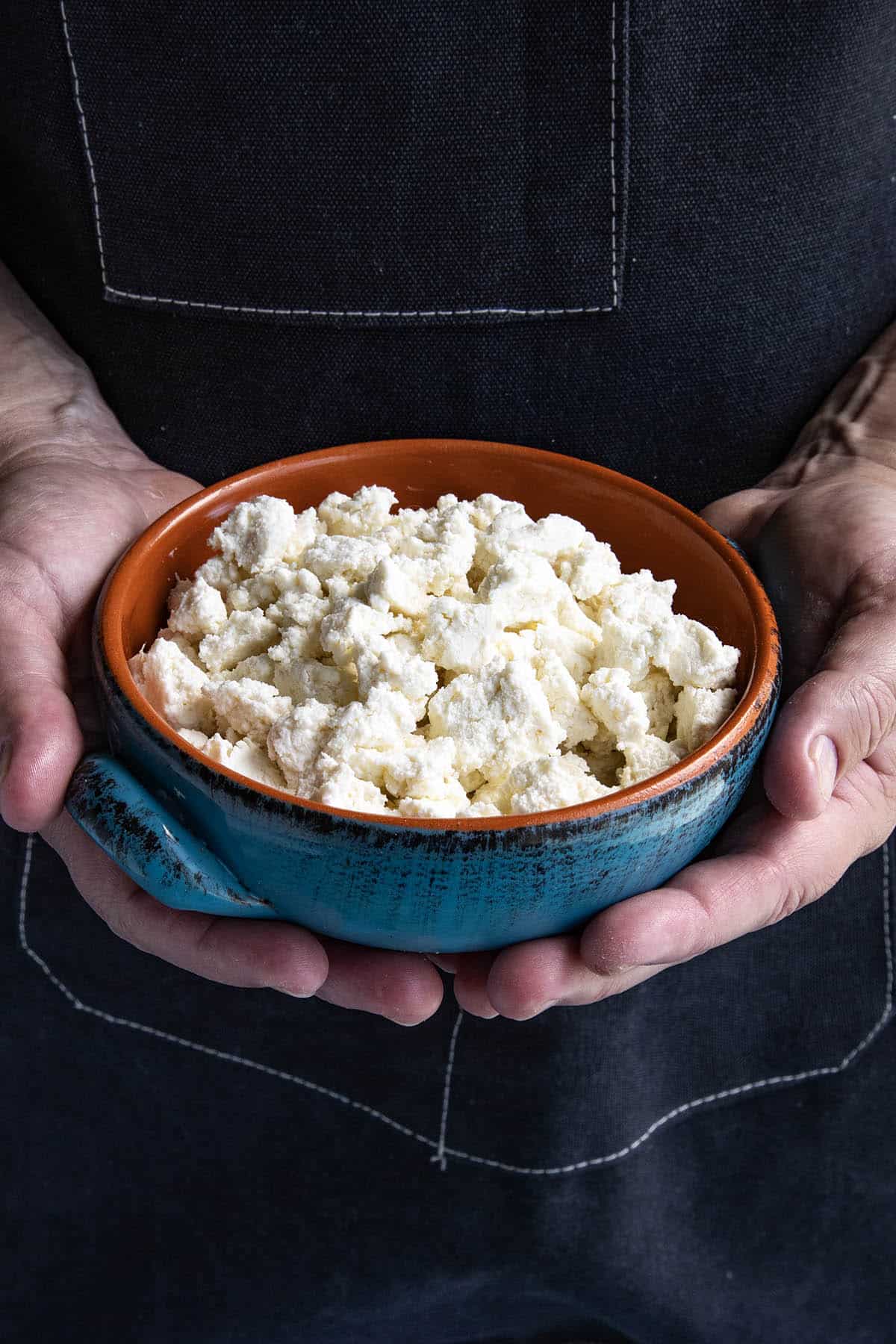
Got any questions? Ask away! I’m happy to help. If you enjoy this recipe, I hope you’ll leave a comment with some STARS. Also, please share it on social media. Don’t forget to tag us at #ChiliPepperMadness. I’ll be sure to share! Thanks! — Mike H.
Queso Fresco Recipe (Queso Blanco)
Ingredients
- 1 gallon milk
- ¼ cup vinegar lemon juice or lime juice
- Salt to taste
Instructions
- Heat the milk slowly in a large pot to 185-190 degrees F.
- Turn off the heat and stir in your acid – vinegar, lemon juice or lime juice – a spoonful at a time, stirring, until curds form and separate from the yellowish whey. Let it sit for 10-20 minutes.
- Set a colander lined with cheesecloth over a bowl and strain the curds from the whey. Discard the whey or keep it for other uses.
- Add salt at this stage, if desired, and stir.
- Stir the curds up a bit and let it drain for 10-20 minutes.
- For firmer cheese, wrap up the ends of the cheesecloth and continue to drain an hour or so. For dense cheese, place a weight over the top of the wrapped cheese (or cheese that has been placed in a cheese mold) that will press it for several hours, until it is packed.
Video
Notes
Nutrition Information
FAQs
What is the difference between queso fresco and queso blanco?
The names are often used interchangeably. Technically, queso blanco is acid-set (vinegar, lemon, or lime juice) while traditional queso fresco uses rennet. The rennet version can actually soften and melt when heated, where the acid-set version holds its shape. The homemade version in this recipe is acid-set, so both names apply.
What can I make with queso fresco?
Use it as a finishing cheese, crumbled over tacos, enchiladas, tostadas, refried beans, elotes, chilaquiles, and huevos rancheros. If it's very fresh and hasn't drained much, mix in salt and herbs and spread it like a soft cheese. Pressed and pan-fried, it makes a great snack alongside spicy dishes.
Is queso fresco the same as paneer or farmer's cheese?
Essentially yes. All three are made by curdling milk with an acid, then straining and pressing. They're fresh, unaged, mild, and rennet-free. Any of them can substitute for the others in a recipe.
How do I store homemade queso fresco?
In an airtight container in the fridge for up to a week, though it's best in the first couple of days. It doesn't freeze well, as the texture goes grainy. The whey, however, freezes great.
Is queso fresco spicy or salty?
Not spicy at all. It's mild with subtle tangy, milky notes, and it actually helps cool down spicy dishes. Salt level is up to you since you add it to taste after straining.
Can I make queso fresco with lactose-free milk?
Yes, as long as it isn't labeled ultra-pasteurized. Lactose-free milk curdles just fine with an acid, and the process works the same way. The finished cheese will be very similar in texture and flavor.
NOTE: This recipe was updated on 4/16/28 to include new information, including FAQs. The recipe was not changed.
John says
What is a good starting amount of kosher salt to add ?
Mike Hultquist says
John, start with 1/4 to 1/2 teaspoon for the whole batch and adjust from there. Best to start small. It's easy to add more, but you can't take it out. Enjoy!
Becky says
Hi Mike!
I am planning on making this for Cinco de Mayo. I am wondering about how much finished cheese this yields. I'm sure it depends on how much you drain/press it but maybe a ballpark guess? I guess I'm thinking about doubling it. Any help is appreciated. Thank you.
Mike Hultquist says
Hi, Becky! This recipe makes about 2.5 cups finished cheese. You can double it pretty easily, though you'll need a larger pot, and you might need to add more acid, just enough to get the curdling process going. Enjoy!
Perry says
Hi Mike, could we get some basic notes/instructions on frying Queso Blanco?
Mike Hultquist says
Perry, yes, Yes — once the cheese is dense per the instructions, slice it about half an inch thick, then fry in a hot oiled pan for 2-3 minutes per side until golden. It won't melt, so it holds its shape beautifully. Great as a snack or alongside spicy dishes. I'll update my FAQs.
Sandy Martinez says
Mike.
I’m sorry.
I just read the other comments and I realize you’ve already answered my question.
I’m trying it!
Thanks for your inspiration!
Sandy
Mike Hultquist says
Surely! Thanks, Sandy!!
Sandy Martinez says
Dear Mike,
Can we use lactose free milk?
Thanks. Sandy
Mike Hultquist says
Sandy, yes, as long as it isn't labeled ultra-pasteurized. Lactose-free milk curdles just fine with an acid, and the process works the same way. The finished cheese will be very similar in texture and flavor. - NOTE: I added this to my FAQs. I appreciate it!
Maria says
Hi, can we make this cheese using plant-based milk or goat milk?
Thanks
Mike Hultquist says
Maria, this works with goat milk, though I have read it doesn't work the same with plant-based milks, though I have not tested that.
JimmyJamesJoBob says
Hi Mike. Do you know if this recipe will work with lactose free milk?
Thanks
James
Mike Hultquist says
Hi, James. Yes, it works with Lactaid and should work with other brands of lactose free milk. Enjoy!