



Peru’s beloved creamy chicken stew, made with tender shredded chicken in a luscious, golden aji amarillo sauce thickened with bread, walnuts and parmesan. It’s mild, comforting and big on flavor, and perfect over rice.
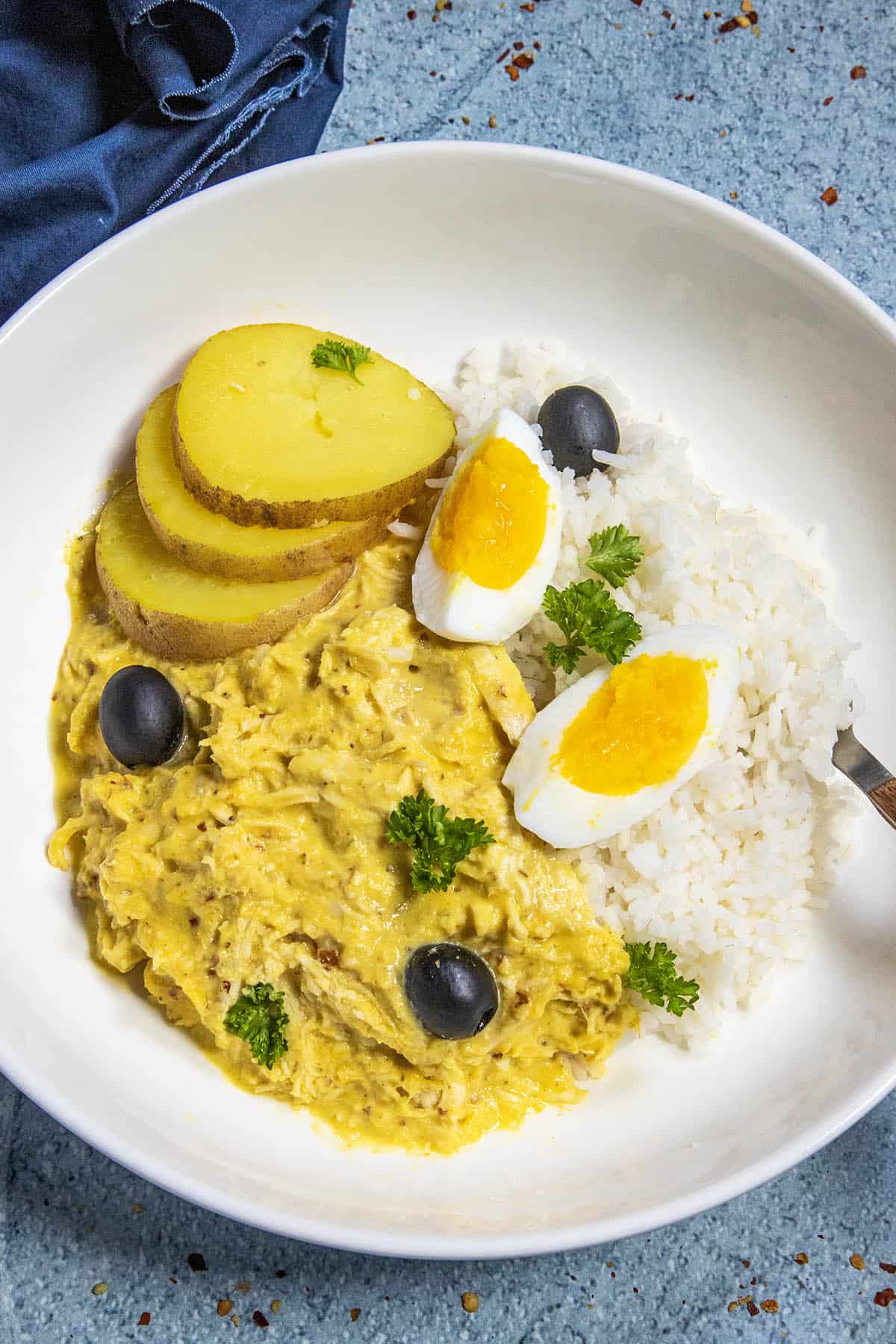
Aji de gallina is one of my very favorite Peruvian dishes, my friends. You got tender shredded chicken simmered in a vibrant sauce made with aji amarillo chilies, bread soaked in evaporated milk, walnuts and parmesan cheese. It's rich, comforting and loaded with flavor.
Patty and I love Peruvian food. It's one of our favorite cuisines, and we're lucky to have several great Peruvian spots near us. This is how I make mine at home. It stays close to the traditional Lima-style stew, with a few optional twists I enjoy and share below. It's fun to switch things up at home.
It's a mild dish, too. The aji amarillo brings bright, fruity flavor and a gentle warmth rather than real heat, so everyone at the table can dig in, though you can spice things up if you want to.
What Is Aji de Gallina?
Aji de gallina is a creamy Peruvian chicken stew. The name translates to "hen's chili," since cooks traditionally made it with a stewing hen. Most food historians trace it back to a colonial-era Spanish dish of shredded meat in a creamy sauce, which became something entirely Peruvian once cooks added aji amarillo chilies to the pot.
In Peru, it's usually served over white rice with boiled potatoes, hard boiled eggs and black olives.
The Cookbook That Helped Me Adapt This Recipe
When I cook Peruvian food, I enjoy Peru: The Cookbook by Gastón Acurio (affiliate link, my friends). It helped me shape this recipe and stay true to the dish. Acurio uses mirasol chili paste for a little extra heat and depth, which is a fantastic idea. I've added it to the recipe notes, along with a couple of my other favorite additions.
Ingredients You'll Need
- Chicken. I use bone-in, skin-on chicken breast and thighs, or a whole chicken. The bones and skin make a richer broth, and that broth goes right into the sauce. Boneless works too (more below).
- Aji amarillo paste. This is the star. I used my homemade aji amarillo paste, and it was perfect here. Store-bought jarred paste works well, and you can also blend your own from frozen whole aji amarillo pods. Learn more about aji amarillo peppers. You can also find it in some grocery stores, or buy my recommended aji amarillo paste online (affiliate link).
- White bread and evaporated milk. The soaked bread thickens the sauce and gives it a velvety texture.
- Walnuts or pecans. Both are traditional. They thicken the sauce as well, add body, and rich nutty flavor.
- Parmesan cheese. Adds a savory touch. See the feta variation below.
- Aromatics and spices. Red onion, garlic, cumin and dried oregano.
- Poaching broth. The broth you make while poaching the chicken.
How to Make Aji de Gallina
Poach the chicken. Gently simmer the chicken with onion, carrot, celery, garlic and a bay leaf. Pull the breast when it hits 165°F and let the thighs go a bit longer. Strain and skim the broth, then shred the chicken.
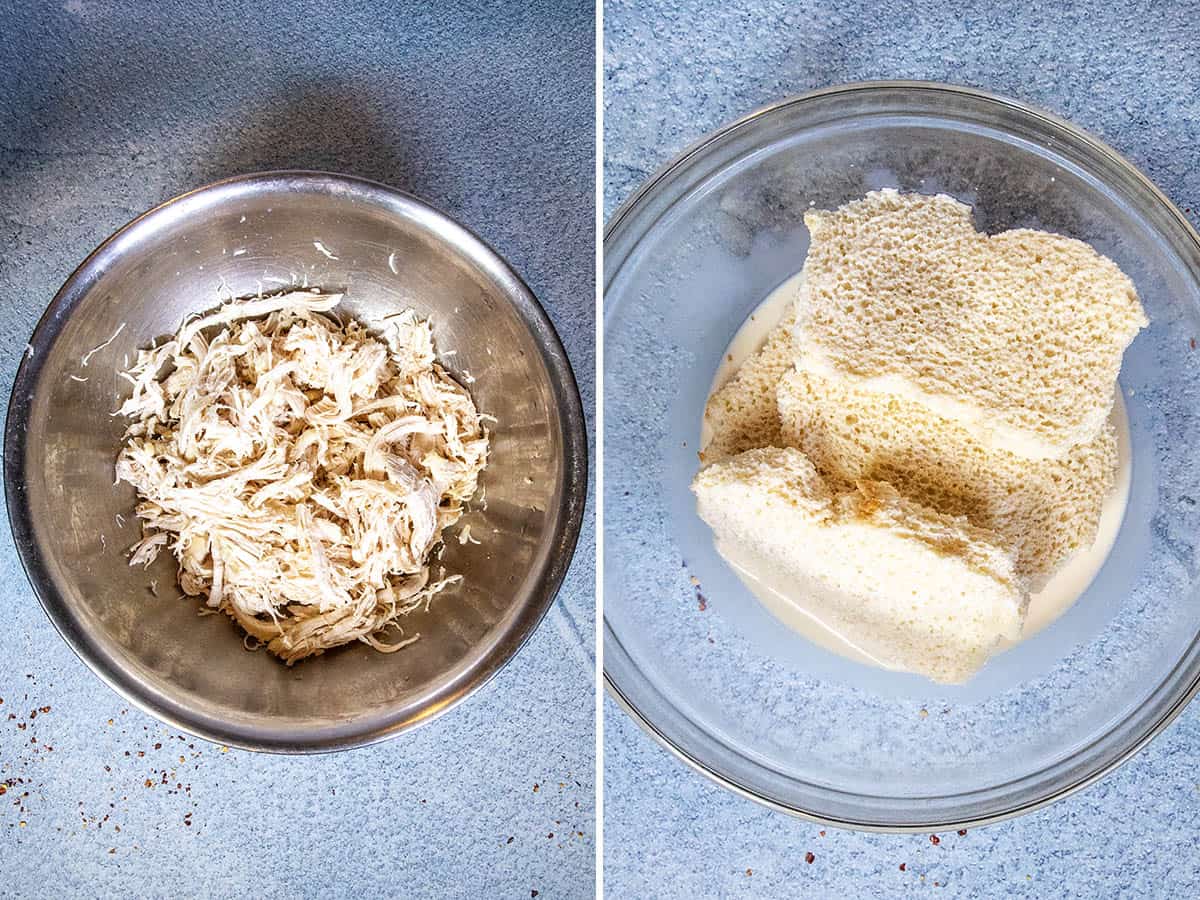
Soak the bread. Tear the bread into the evaporated milk in a small bowl and let it sit for 10 minutes.
Build the aderezo. Cook the red onion low and slow until very soft, then stir in the garlic, aji amarillo paste, cumin and oregano. Cook until the paste darkens and smells toasty. Don't rush this step. It's a big flavor builder.
Blend. Blend the aderezo with the soaked bread, nuts and 1 cup of broth until completely smooth.
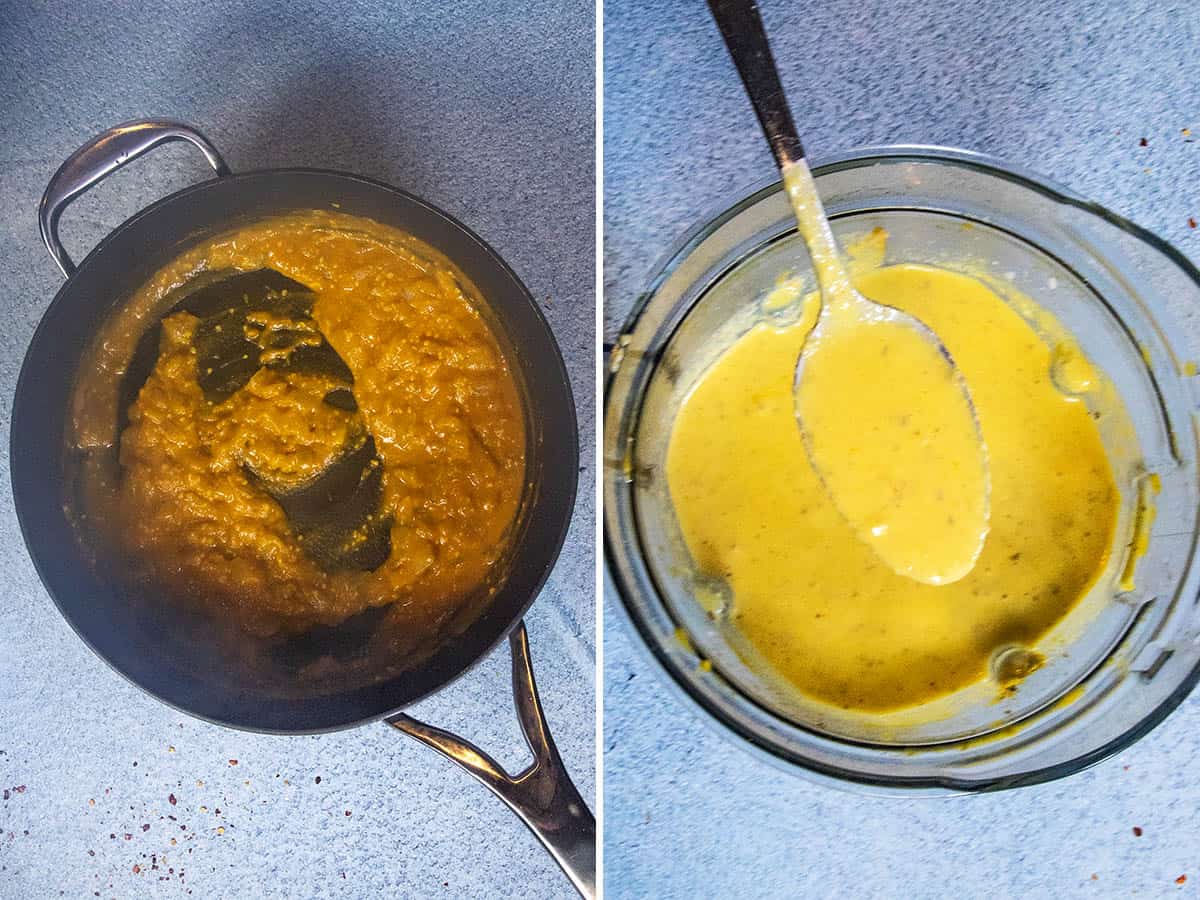
Simmer. Simmer the sauce over medium-low heat, stirring often. Add up to another cup of broth if you'd like it saucier.
Finish. Stir in the chicken and parmesan, simmer a few minutes more, and season to taste.
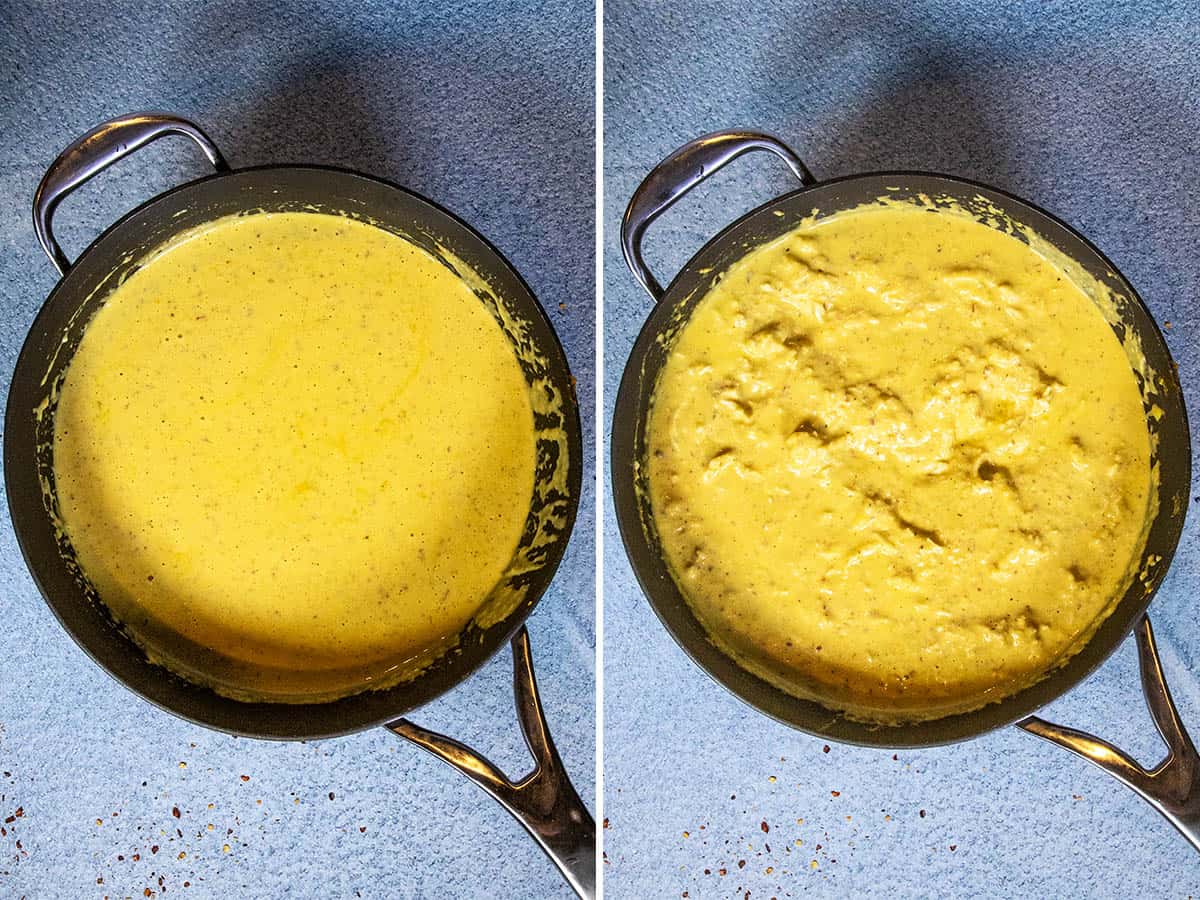
Keep the heat gentle once you add the cheese. Parmesan can turn a bit gummy over high heat, especially if you add extra, which I sometimes like to do.
Bone-In or Boneless Chicken?
I made this with bone-in chicken because it develops a richer broth, and that broth is a big part of the sauce. I also tested it with boneless thighs and breasts, and with breast only. All of them were great.
Chicken breast is quite a bit leaner, but the sauce keeps it moist and full of flavor. If you go boneless, poach it in chicken stock instead of water to make up for the missing bones.
How Spicy Is Aji de Gallina?
Not very. This version is mild but huge on flavor. Aji amarillo chilies are fruity and sunny, with more of a background warmth. Keep in mind that the heat of aji amarillo paste can vary from brand to brand and batch to batch.
Want to add a little extra flavor? Here are my favorite additions:
- Aji panca paste for a smoky depth. It isn't traditional, but I love it.
- Mirasol chili paste for a bit more heat and color, as Gastón Acurio does in Peru: The Cookbook.
- Rocoto paste or a fresh habanero if you want real heat. Rocoto keeps it Peruvian. Learn more about rocoto peppers.
Try It with Feta
For a fun twist, swap the parmesan for crumbled feta. Feta is the cheese in Peruvian huancaina sauce, the creamy aji amarillo sauce in my Papa a la Huancaina. It adds a more tangy quality to the stew.
How to Serve Aji de Gallina
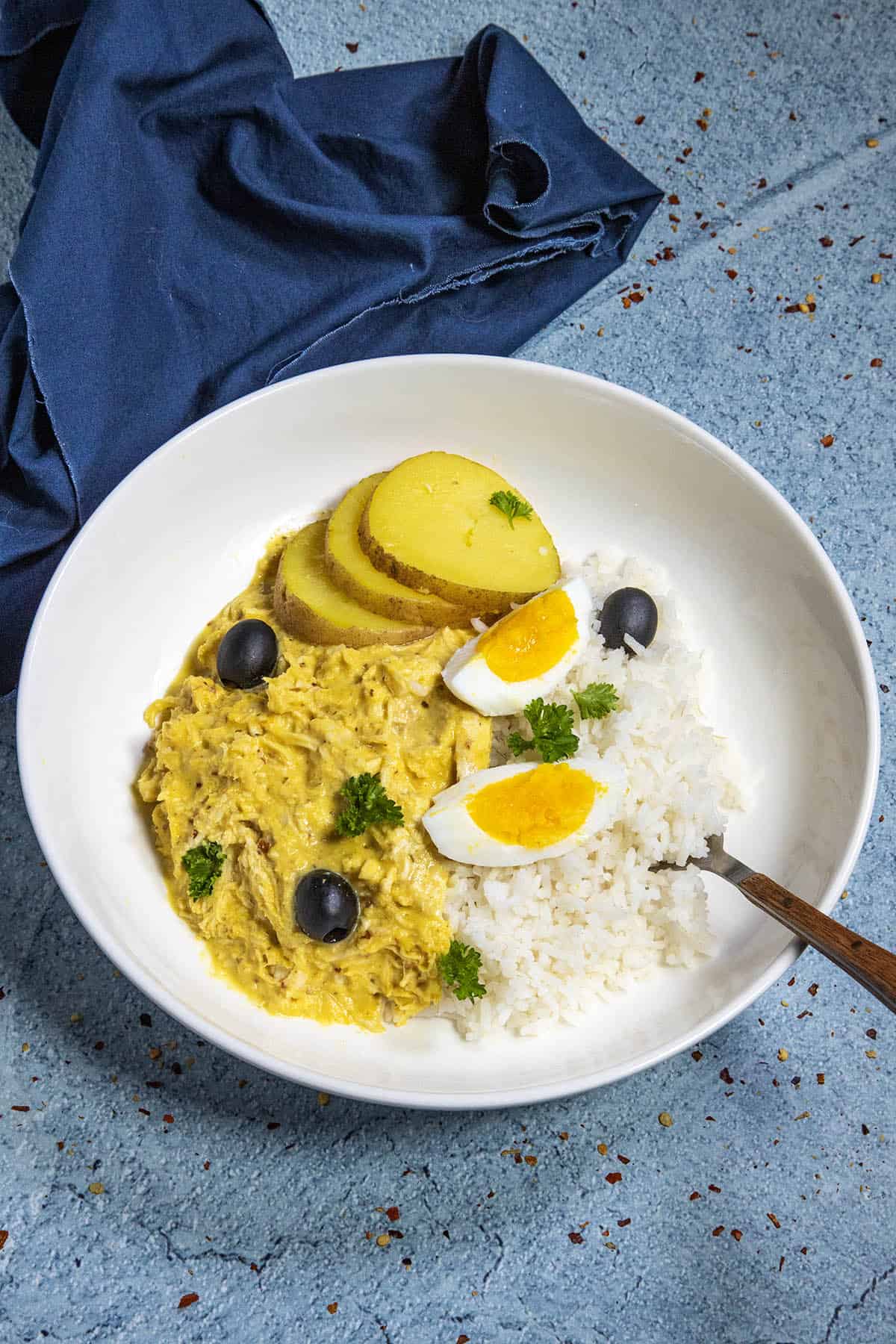
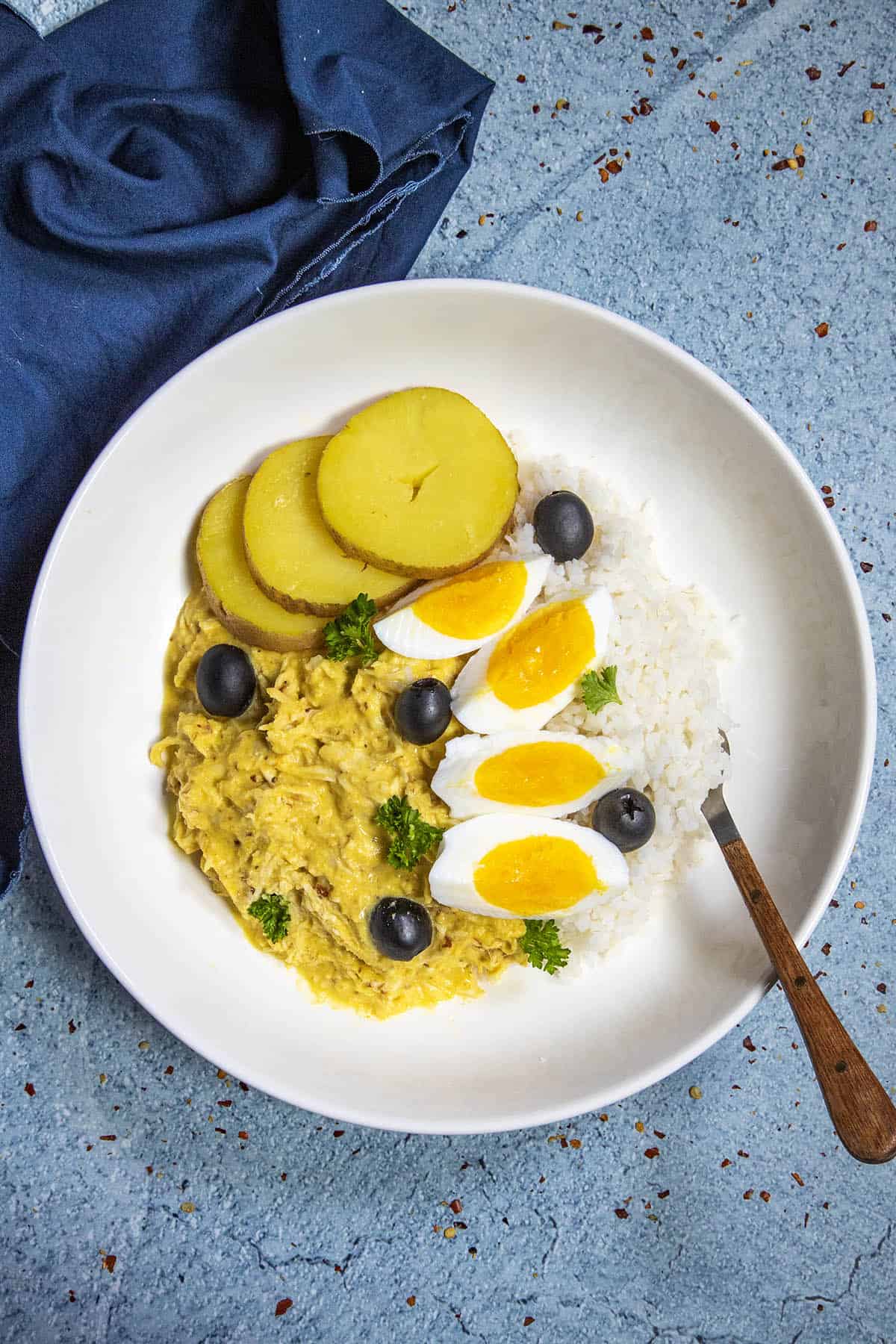
The traditional plate is rice, a generous spoonful of the saucy chicken, sliced boiled potatoes, quartered hard boiled eggs, kalamata or black olives, and fresh parsley.
I like extra eggs and olives with mine. Patty prefers more potato.
Make it a wrap. This is not traditional, but Patty and I love it. A local Peruvian chain near us, Viva Chicken, serves aji de gallina as a wrap, which is my inspiration for this version. Warm a flour tortilla, then layer in rice, potatoes, the chicken, chopped egg, chopped olives and fresh parsley. Roll it up and serve it with my aji amarillo sauce on the side for dipping. It's wonderful.
Make Ahead, Storage and Reheating
- Make ahead. You can make the sauce and the shredded chicken up to 5 days ahead and keep them refrigerated separately. I love doing this and putting the dish together later in the week.
- Storage. Keep leftovers in an airtight container in the refrigerator for up to 5 days.
- Reheating. Reheat very gently over low heat, stirring often, and add a splash of broth or milk to loosen it. High heat can make the parmesan turn gummy.
- Freezing. The shredded chicken freezes nicely. The sauce can be frozen too, but it may turn a little grainy once thawed. A good whisk or a quick blend while reheating helps.
That’s it, my friends. I hope you enjoy this creamy Peruvian chicken stew as much as Patty and I do. Let me know if you make it. I’d love to hear how you made it your own.
More Peruvian Recipes
- Arroz Chaufa (Peruvian Fried Rice)
- Peruvian Chicken (Pollo a la Brasa)
- Lomo Saltado
- Papa a la Huancaina
- Aji Verde (Peruvian Green Sauce)
- Peruvian Squash Stew (Locro de Zapallo)
- Salchipapa
Got any questions? Ask away! I’m happy to help. If you enjoy this recipe, I hope you’ll leave a comment with some STARS. Also, please share it on social media. Don’t forget to tag us at #ChiliPepperMadness. I’ll be sure to share! Thanks! — Mike H.
Aji de Gallina (Creamy Peruvian Chicken Stew)
Equipment
- Large Pot
- Large skillet
- Blender
Ingredients
Chicken and Broth
- 1 bone-in, skin-on split chicken breast about 1 1/4 pounds
- 1 1/2 pounds bone-in, skin-on chicken thighs
- 6 cups water
- 1/2 onion
- 1 carrot
- 1 celery rib
- 2 garlic cloves smashed
- 1 bay leaf
- 1 1/2 teaspoons salt
Sauce
- 5 slices white sandwich bread crusts removed
- 1 can evaporated milk 12 ounces
- 3 tablespoons vegetable oil
- 1 large red onion finely chopped
- 4 garlic cloves minced
- 1/2 cup aji amarillo paste homemade or store-bought
- 1 teaspoon ground cumin
- 1/2 teaspoon dried oregano
- 1/2 cup walnuts or pecans
- 1/2 cup parmesan cheese finely grated
- 1 cup reserved poaching broth plus up to 1 more for a saucier dish
- Salt and white pepper to taste
To Serve
- Cooked white rice
- 1 1/2 pounds yellow potatoes boiled and sliced
- 3 hard boiled eggs quartered
- Kalamata olives
- Fresh parsley
Instructions
- Add the chicken, water, onion, carrot, celery, garlic, bay leaf and salt to a large pot. Bring to a boil, then lower to a gentle simmer. A hard boil makes the meat tough and the broth cloudy. Remove the breast at about 25 minutes, when it reaches 165°F. Keep simmering the thighs until tender, 35 to 40 minutes total.
- Strain the broth and skim off the fat. Let the chicken cool slightly, then shred it, discarding the skin and bones.
- Tear the bread into a bowl, pour the evaporated milk over it and let it sit for 10 minutes.
- Heat the oil in a large skillet over medium-low heat. Cook the red onion for 10 to 12 minutes, until very soft and lightly golden. Add the garlic, aji amarillo paste, cumin and oregano. Cook, stirring, for 3 to 4 minutes, until the paste darkens and smells toasty.
- Add the aderezo, the soaked bread with its milk, the nuts and 1 cup of broth to a blender. Blend until completely smooth.
- Return the sauce to the skillet over medium-low heat. Simmer for 5 to 8 minutes, stirring often, since it scorches easily. For a saucier dish, thin it with up to 1 more cup of broth.
- Stir in the shredded chicken and parmesan and simmer gently for 5 minutes more. Season with salt and white pepper.
- Spoon over rice with the sliced potatoes, eggs, olives and parsley.
Notes
- Boneless swap: Use 2 pounds boneless, skinless chicken (breasts, thighs or a mix). Poach in 6 cups low-sodium chicken stock instead of water to make up for the flavor the bones would add. Simmer until the chicken reaches 165°F, 18 to 22 minutes for breasts and 20 to 25 for thighs. You'll save about 20 minutes, and the sauce will have a little less body. Breast is leaner, but the sauce keeps it moist.
- Leftover or rotisserie chicken (or turkey): Skip the poaching step and shred about 4 cups of cooked chicken or turkey. Use good chicken stock in place of the poaching broth. Turkey is a traditional variation and a great way to use up holiday leftovers.
- Aji amarillo paste: I used my homemade aji amarillo paste. Store-bought works well too. Heat varies by brand and batch.
- Smoky depth: Add 1 tablespoon aji panca paste with the aji amarillo paste. Not traditional, but delicious.
- Mirasol paste: Add 1 tablespoon mirasol chili paste with the aji amarillo paste for a bit more heat and depth.
- Milder: Cut the aji amarillo paste to 1/4 cup and add 1/4 teaspoon turmeric for the yellow the color.
- Hotter: Add 1 seeded fresh habanero or 1 tablespoon rocoto paste to the aderezo. Rocoto keeps it Peruvian.
- Feta variation: Swap the parmesan for crumbled feta, the cheese used in huancaina sauce.
- Make it a wrap: Layer rice, potatoes, chicken, chopped egg, chopped olives and parsley in a warm flour tortilla. Serve with aji amarillo sauce on the side.
- Make ahead: Make the sauce and chicken up to 5 days ahead and store separately in the refrigerator.
- Reheating: Reheat over very gentle heat, stirring often, with a splash of broth or milk. High heat can make the parmesan gummy, especially if you added extra.
- Freezing: The shredded chicken freezes well. The sauce can be frozen but may turn a little grainy.
Nutrition Information

Frequently Asked Questions
How do you pronounce aji de gallina?
It's "ah-HEE deh gah-YEE-nah." In Peruvian Spanish, the double L sounds like a Y.
Is aji de gallina the same as aji de pollo?
Yes. Gallina means hen, which is how the dish was traditionally made. Most cooks today use chicken, so you'll sometimes see it called aji de pollo.
Can I use saltine crackers instead of bread?
Yes. Saltines are a popular shortcut. They dissolve easily into the evaporated milk and blend up nice and smooth. Just go a little lighter on the salt if they are salted.
Can I use regular milk instead of evaporated milk?
Evaporated milk is traditional, and it gives the sauce its rich, slightly sweet body. Half-and-half works well. Regular milk makes a thinner sauce, so you may need less broth.
What can I use instead of aji amarillo paste?
Frozen whole aji amarillo pods, blended into a paste, are the best substitute. Nothing else tastes quite the same, but a yellow bell pepper blended with a little habanero gets you the color and some of the fruitiness.
Can I make aji de gallina with leftover turkey?
Absolutely. Turkey is a traditional variation, and it's a great way to use up holiday leftovers. Shred about 4 cups of cooked turkey or rotisserie chicken, and use good stock in place of the poaching broth.
Leave a Reply