



Bigos is a hearty Polish stew made with a mix of meats simmered with sauerkraut and cabbage until everything turns rich, tangy, and deeply savory. It’s the kind of comfort food that tastes even better the next day, after the flavors have time to mingle.

If you enjoy the old world flavors of stewed cabbage and sauerkraut, you are going to love this Polish stew called Bigos. It is tangy, rich, and deeply comforting.
What is Bigos?
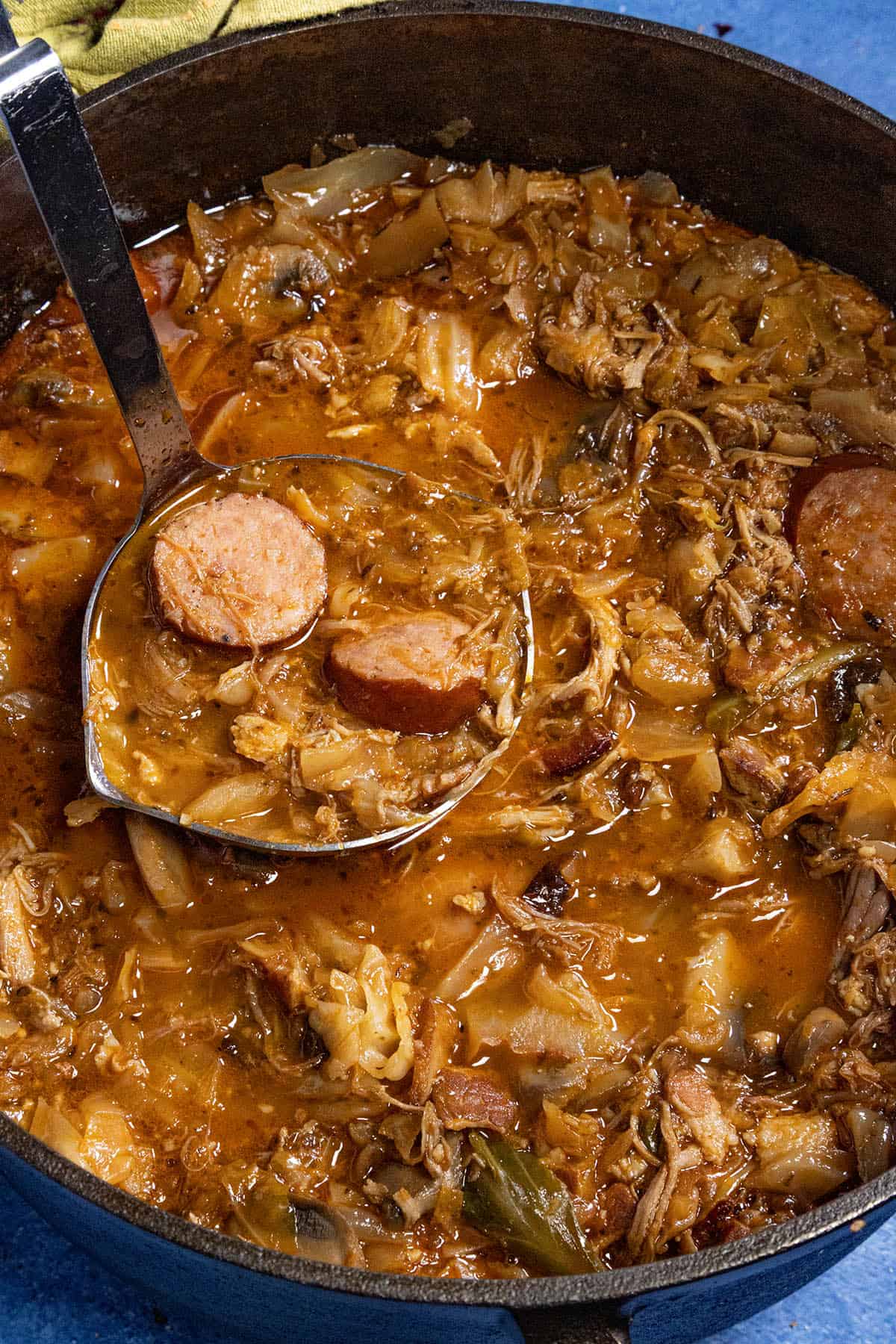
Bigos (Polish Hunter’s Stew) is a traditional Polish slow-cooked stew made with sauerkraut and fresh cabbage, plus a mix of meats (often kielbasa, pork, and bacon or other smoked meats, beef, or veal) simmered until rich, tangy, and satisfying.
Many versions include mushrooms and sometimes prunes for subtle sweetness to balance the rich flavors. It’s a rustic, hearty dish with many variations from family to family. One of its best things about the stew is that it tastes even better the next day after the flavors have time to develop.
It brings me fond memories of growing up in the Chicago area. My mother used to make a simplified version of this dish by tossing sauerkraut, cabbage, and Polish sausage into a pot with some simple seasonings. A quick simmer and dinner was served. This recipe is a more elevated version, and comforting in more ways than one.
Ingredients Needed
Here’s what you’ll need to make a traditional-style bigos (Polish hunter’s stew). Exact measurements are in the recipe card below.
- Bacon. For a smoky rich base, and the drippings build extra flavor.
- Pork shoulder (or pork stew meat, or beef stew meat). Pork is classic, but beef is a common variation in mixed-meat versions.
- Kielbasa (Polish sausage). A key flavor builder for that signature smoky bigos flavor.
- Sauerkraut. Where all the tanginess lives. Reserve a bit of juice so you can adjust the final flavor.
- Green cabbage. Breaks down and adds lot of body and substance to the final stew.
- Onion and garlic. Essential flavor builders.
- Mushrooms. Fresh mushrooms (like cremini or white button) plus dried porcini (optional, but traditional) for extra earthiness.
- Tomato paste. Extra depth, especially when you lightly caramelize it in the pot.
- Seasonings. Bay leaf, paprika, dried marjoram, ground allspice, black pepper, and salt (to taste).
- Dry red wine. Optional, to deglaze the pot and add flavor depth. Stock works great if you prefer no wine.
- Beef stock. Or chicken stock.
- Prunes (optional, but traditional). Prunes are subtly sweet that balance the tangy sauerkraut and other rich flavors nicely.
- Optional add-ins. Juniper berries and/or caraway seeds for extra old-world flavor, which I love.
How to Make Bigos (Polish Hunter’s Stew)
This is a slow-simmered stew, so the process is simple, but each step adds more and more flavor. Here’s how to make it.
- Prep the porcini (if using). Soak the dried mushrooms in hot water until softened. Lift, chop , and reserve the soaking liquid. Strain to remove any grit, then set it aside.
- Cook the bacon. Cook the bacon in a large Dutch oven or heavy pot until the fat renders and the bacon starts to crisp. Remove and set aside.
- Brown the pork. Add the pork pieces and brown on all sides, then remove and set aside.
- Cook the aromatics and mushrooms. Add the onion and cook to soften. Stir in the fresh mushrooms and cook to release their moisture and brown. Add the garlic and cook briefly, just until fragrant.
- Build the base. Stir in the tomato paste and cook for a minute to deepen the flavor. Pour in the red wine (or stock) and scrape up any browned bits from the bottom of the pot - big flavor in those bits!
- Add the stew ingredients. Add the sauerkraut, shredded cabbage, cooked bacon, browned pork, chopped porcini (if using), bay leaf, paprika, marjoram, allspice, black pepper, and prunes (if using).
- Add liquid and simmer. Pour in the stock and a bit of the strained porcini soaking liquid. Bring to a gentle simmer, reduce the heat to low. Cover and cook until the cabbage softens and the flavors meld, stirring occasionally.
- Add the kielbasa near the end. Stir in the sliced kielbasa during the last part of cooking so it heats through and stays juicy.
- Finish and serve. Remove the bay leaf. Taste and adjust with salt, pepper, or a splash of reserved sauerkraut juice if you want more tang. Serve hot.
Recipe Tips & Notes
If you want to take this from great to Babcia-level, here are a few simple upgrades:
- Rinse the kraut. If your sauerkraut is very salty or extra sour, give it a quick rinse under cold water before adding it. You can always add more tang later with a splash of the reserved sauerkraut juice.
- Boost the smoky factor. If you can find smoked plums (suska sechlońska) instead of regular prunes, use them. A smoked pork hock is another great traditional-style ingredient that flavors the stew like you're sitting around the campfire.
- Try the “three-day” rule. Bigos is famous for getting better with time. Some traditional versions are cooled and reheated over multiple days. If you have the patience, cool it completely, refrigerate, then reheat gently the next day (and repeat once more). The color darkens and the flavor gets even better as everything mellows beautifully.
- Add kielbasa near the end. Stir it in during the last 30 minutes so it stays juicy and doesn’t overcook.
What to Serve with Bigos
Bigos is rich, smoky, and hearty, so simple sides are best. Traditional choices include rye bread or crusty bread, boiled or mashed potatoes, or a crisp side like pickles or cucumber salad to balance the experience.
If you want to add a Chili Pepper Madness spin, these recipes pair really nicely:
- Jalapeño Cheddar Dutch Oven Bread - Great for soaking up the flavorful juices and adding a little extra kick.
- Scalloped Potatoes - A warming side if you want to make it a bigger comfort-food meal.
- Spicy Refrigerator Pickles - A tangy, crunchy bite to cut through the richness of the stew.
Storage & Leftovers
One of the best things about bigos is that it usually tastes even better the next day. As it rests, the flavors deepen, mellow, and blend together. Many traditional cooks intentionally make it ahead for that reason.
- Refrigerator: Cool then store bigos in an airtight container in the fridge for up to 4-5 days.
- Reheating: Reheat gently on the stovetop over medium-low heat until warmed through. Add a splash of stock or water if it has thickened too much.
- Freezing: Bigos freezes very well. Let it cool completely, then freeze in airtight containers or freezer bags for up to 3 months. I usually make a larger batch and freeze leftovers.
- Make-ahead tip: If you have time, make it a day ahead and reheat before serving for even better flavor. We always love it more the next day.
That's it, my friends. I hope you enjoy this bigos recipe. I'd love to hear how it turned out for you. Please share your comments and thoughts.
Looking for More Stew Recipes?

Got any questions? Ask away! I’m happy to help. If you enjoy this recipe, I hope you’ll leave a comment with some STARS. Also, please share it on social media. Don’t forget to tag us at #ChiliPepperMadness. I’ll be sure to share! Thanks! — Mike H.
Bigos Recipe (Polish Hunter’s Stew)
Equipment
- Large Pot (or Dutch Oven)
Ingredients
- 8 ounces bacon chopped
- 1 pound pork shoulder or pork or beef stew meat, cut into bite-sized pieces
- 12-14 ounces kielbasa Polish sausage, sliced into rounds
- 2 pounds sauerkraut drained (reserve a little juice)
- 1 small head green cabbage shredded (about 1½-2 pounds)
- 1 large onion chopped
- 3-4 cloves garlic minced
- 1 ounce dried porcini mushrooms optional but traditional, soaked in hot water 20 minutes
- 8 ounces fresh mushrooms sliced (cremini/white button)
- 2 tablespoons tomato paste
- 1 bay leaf
- 1 tablespoon paprika or to taste
- 1-2 teaspoons dried marjoram
- 1 teaspoon ground allspice
- ½ teaspoon black pepper plus more to taste
- 1 cup dry red wine or use stock
- 2-3 cups beef stock or chicken stock, as needed
- 6-8 pitted prunes chopped (optional but traditional)
- Salt to taste
Optional spice add-ins
- 4-6 juniper berries lightly crushed
- 1-2 teaspoons caraway seeds
Instructions
- If using dried porcini - soak the dried mushrooms in hot water for 20 minutes. Lift them out, chop, and save the soaking liquid. Pour the liquid through a fine strainer or coffee filter to remove grit. Set aside.
- Heat a large Dutch oven or heavy pot over medium heat. Add the bacon and cook until it renders and starts to crisp. Scoop out bacon with a slotted spoon and set aside, leaving the drippings in the pot.
- Add the pork pieces to the pot (work in batches if needed). Brown well on all sides - this adds a ton of flavor. Remove browned pork to a bowl.
- Add the onion to the pot and cook 4-5 minutes to soften. Stir in the fresh mushrooms and cook until they release their moisture and start to brown. Add garlic and cook 30 seconds, just until fragrant.
- Stir in the tomato paste and cook 1 minute to caramelize it slightly. Pour in the wine (if using, or 1 cup stock) and scrape up any browned bits on the bottom of the pot.
- Add sauerkraut, shredded cabbage, reserved bacon, browned pork, chopped dried mushrooms, bay leaf, paprika, marjoram, allspice, black pepper, and prunes (if using).
- Pour in 2 cups stock plus ½ cup of the strained mushroom liquid (if you used porcini).
- Bring to a gentle simmer, then reduce heat to low. Cover and cook 1½ to 2 hours, stirring occasionally. Add more stock as needed so it stays saucy, not dry.
- Stir in the sliced kielbasa during the last 30 minutes of simmering so it stays juicy and doesn’t overcook.
- Remove bay leaf. Taste and adjust, and serve.
Notes
- Want it tangier? Add a splash of reserved sauerkraut juice.
- Want it richer? Simmer uncovered 10-15 minutes to thicken.
- Make Ahead (It’s Better Tomorrow). Bigos is famous for improving after a rest. Cool it down, refrigerate overnight, then reheat gently the next day for deeper flavor and texture.
- Serving Suggestions: Rye bread or crusty bread, boiled or mashed potatoes, buttered noodles.
Nutrition Information

Leave a Reply