


Now you can make miso soup at home just like your favorite Japanese restaurant - ready in minutes, clean and comforting, and customizable however you like. Includes an easy instant dashi option plus instructions for making homemade dashi for an authentic, traditional version, as well as a vegetarian dashi option.
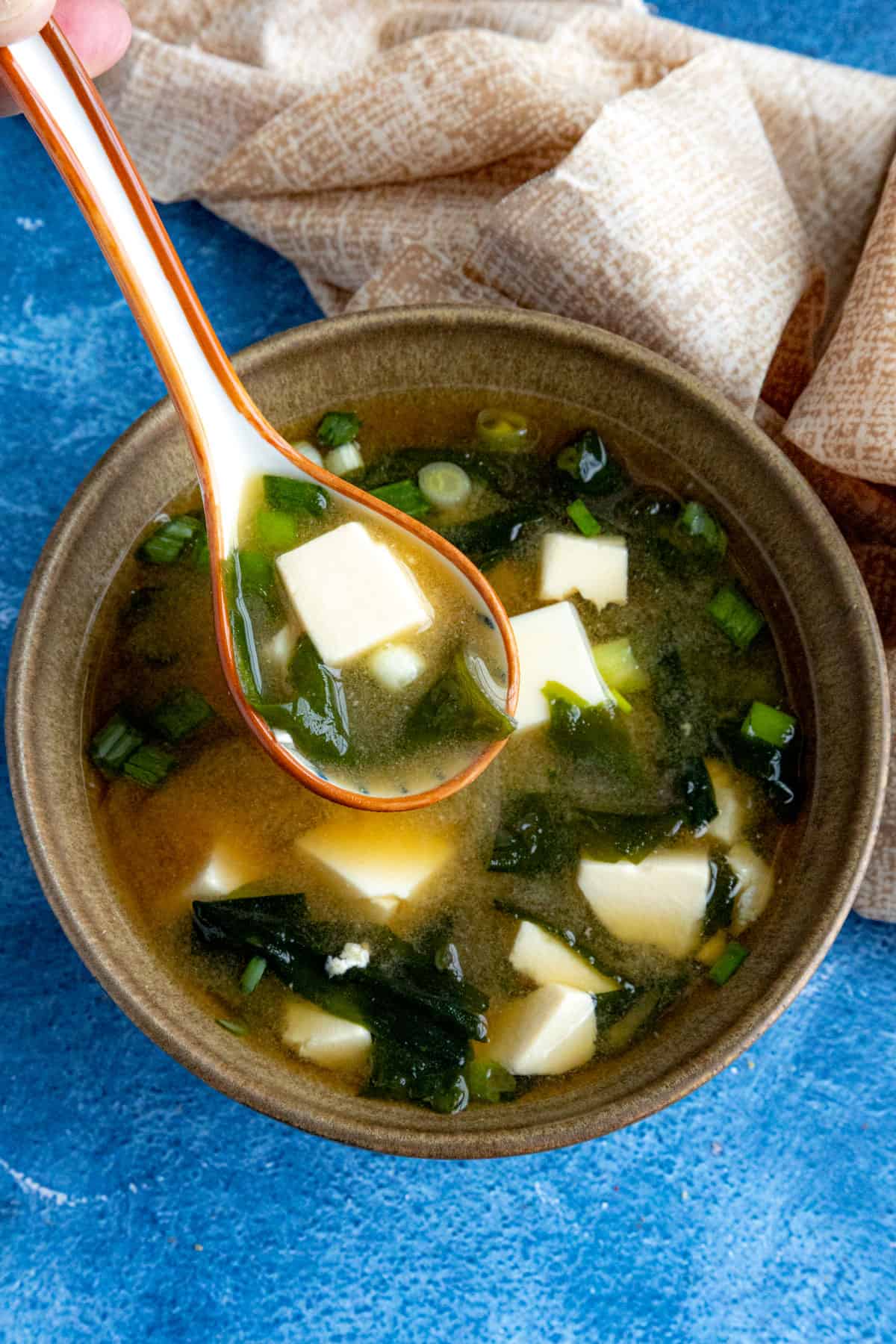
Looking for your next quick and easy soup recipe? Miso Soup is exactly what you need. You can make this umami-rich classic with a handful of simple ingredients, and it's ready in minutes.
My recipe includes very clear steps, extra tips for success, dashi options, and simple ways to make it your own.
What is Miso Soup?
Miso soup is a traditional Japanese soup made with dashi (a savory broth) and miso paste, then finished with simple ingredients like tofu, wakame seaweed, and green onions. It’s a staple of everyday Japanese cooking and is commonly served as a starter or alongside meals.
The flavor is light, comforting, and deeply umami, with richness coming from fermented miso rather than heavy ingredients.

Miso soup is traditionally simple, but it’s also incredibly flexible. You can add vegetables, mushrooms, noodles, seafood, or - CPM-style - chili crisp, fresh chilies, or chili oil to give it extra heat and personality.
Let me show you how to make miso soup at home, restaurant style, with my special tips to make it as easy and successful as possible.
Quick Recipe Tips
- Best Miso. White miso (shiro miso) is most commonly used for everyday miso soup, but I've found that red or mixed miso creates a bolder, saltier broth. Use your favorite.
- Dissolve the Miso First. Whisk the miso with a little hot broth in a bowl before adding it to the pot. This prevents clumps and keeps the soup smooth.
- Don’t Boil the Miso. Always add miso at the end and keep the heat low. Boiling dulls the flavor and can destroy beneficial probiotics.
- Wakame Expands Quickly. Dried wakame grows several times its size when soaked. A little goes a long way.
- Tofu Texture Is Personal. Soft or silken tofu is traditional, but I've found that firm tofu works just fine if that’s what you prefer.
- Taste Before Adding More Miso. Miso varies by brand and salt level. Start with less, then adjust to taste.
Miso Soup Ingredients
The full ingredients list with measurements is listed in the printable recipe card at the bottom of the post.
For the Homemade Dashi
- Water. The base of the broth.
- Kombu (Dried Kelp). For clean, natural umami and a classic dashi flavor.
- Bonito Flakes (Katsuobushi). For the slightly smoky, intense umami of traditional dashi.
- Vegetarian Option: Skip the bonito flakes and use dried shiitake mushrooms with the kombu to make a kombu-shiitake dashi (still very traditional and full of umami).
- Instant Dashi Option: Skip the above and use a packet or jar of instant dashi instead (Amazon affiliate link, my friends).
For the Miso Soup
- Miso Paste. The heart of the soup. White miso (shiro miso) is most traditional for everyday miso soup, but red or mixed miso works great for a bolder broth. Learn more about Japanese miso paste here.
- Tofu. Adds protein (soft/silken is traditional).
- Dried Wakame Seaweed. Adds that classic briny flavor.
- Green Onions. For fresh flavor and color pops to finish.
How to Make Miso Soup
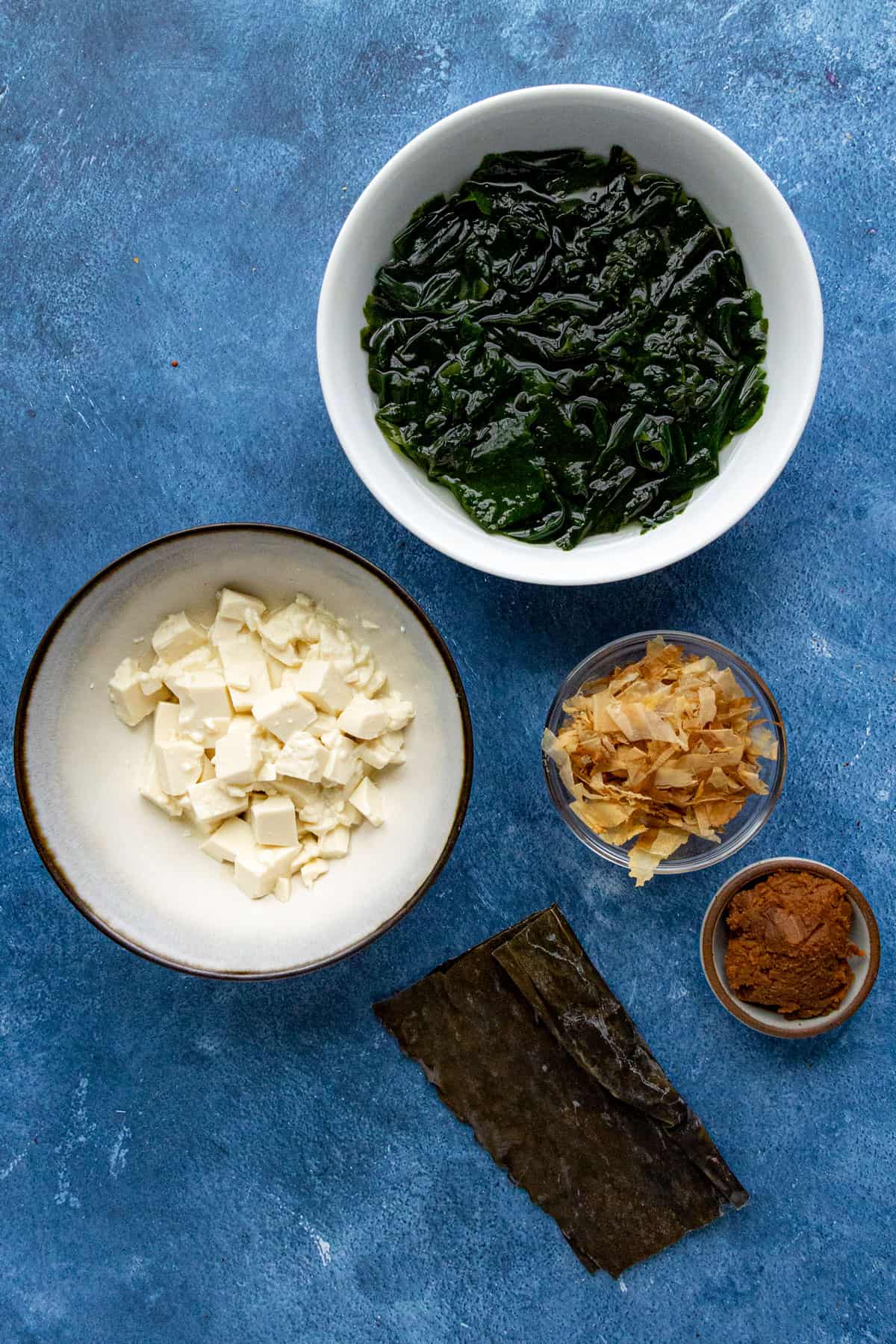
Rehydrate the wakame. Soak dried wakame in cool water for about 5 minutes, then drain and gently squeeze out excess water. Just a couple tablespoons becomes a small bowl's worth quickly after it rehydrates.
Make the dashi (broth). Add kombu to a pot with water and heat gently until just before boiling, then remove the kombu. Add bonito flakes, simmer 30 seconds, turn off the heat, steep 5 minutes, then strain and return the dashi to the pot.
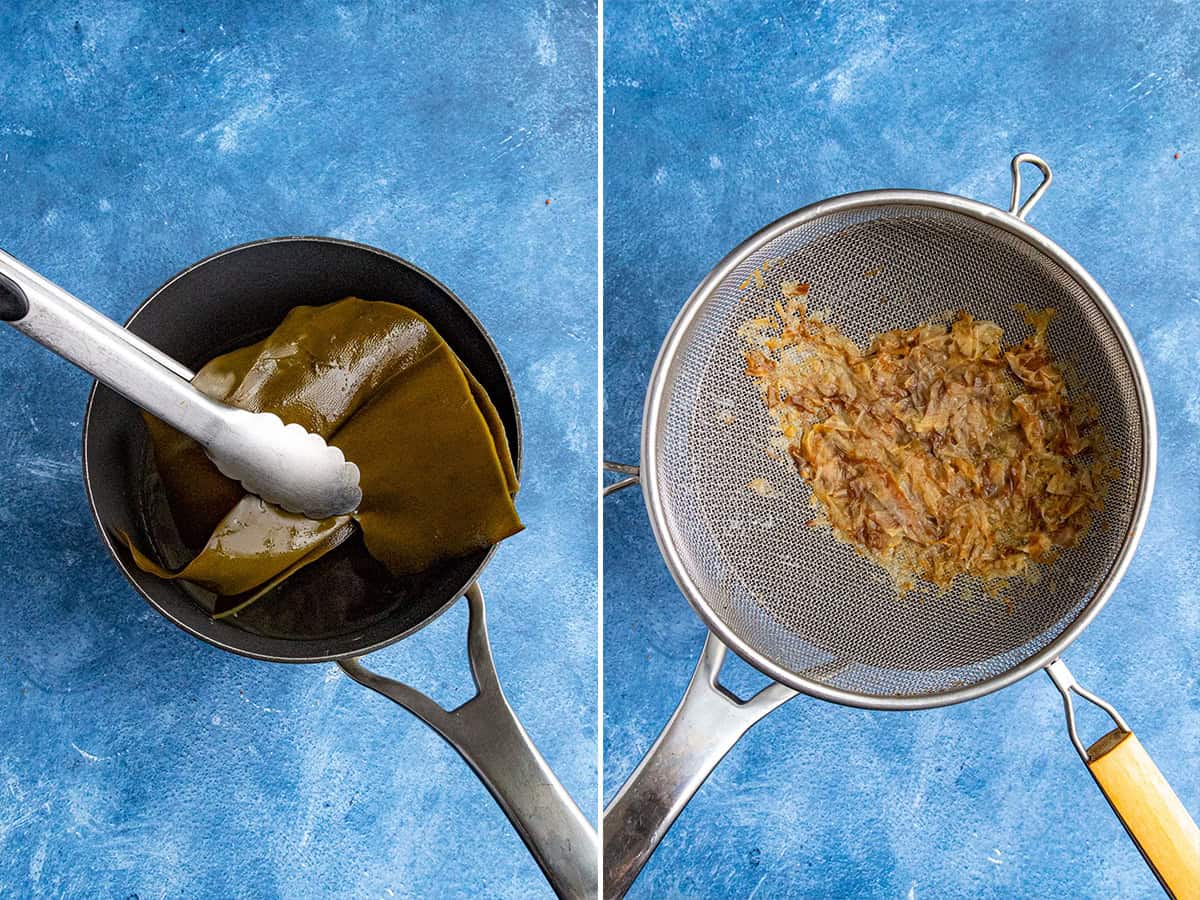
Note: For an easy shortcut, use instant dashi granules or a dashi packet mixed with water instead. For a vegetarian option, make kombu-shiitake dashi (skip bonito and use dried shiitake mushrooms).
Finish the miso soup. Bring the dashi to a gentle simmer. Add tofu and rehydrated wakame and warm for 2 minutes. Dissolve miso in a small bowl with a ladle of hot broth until smooth, then stir it back into the pot. Do not boil after adding miso. Remove from heat, stir in green onions, and serve.
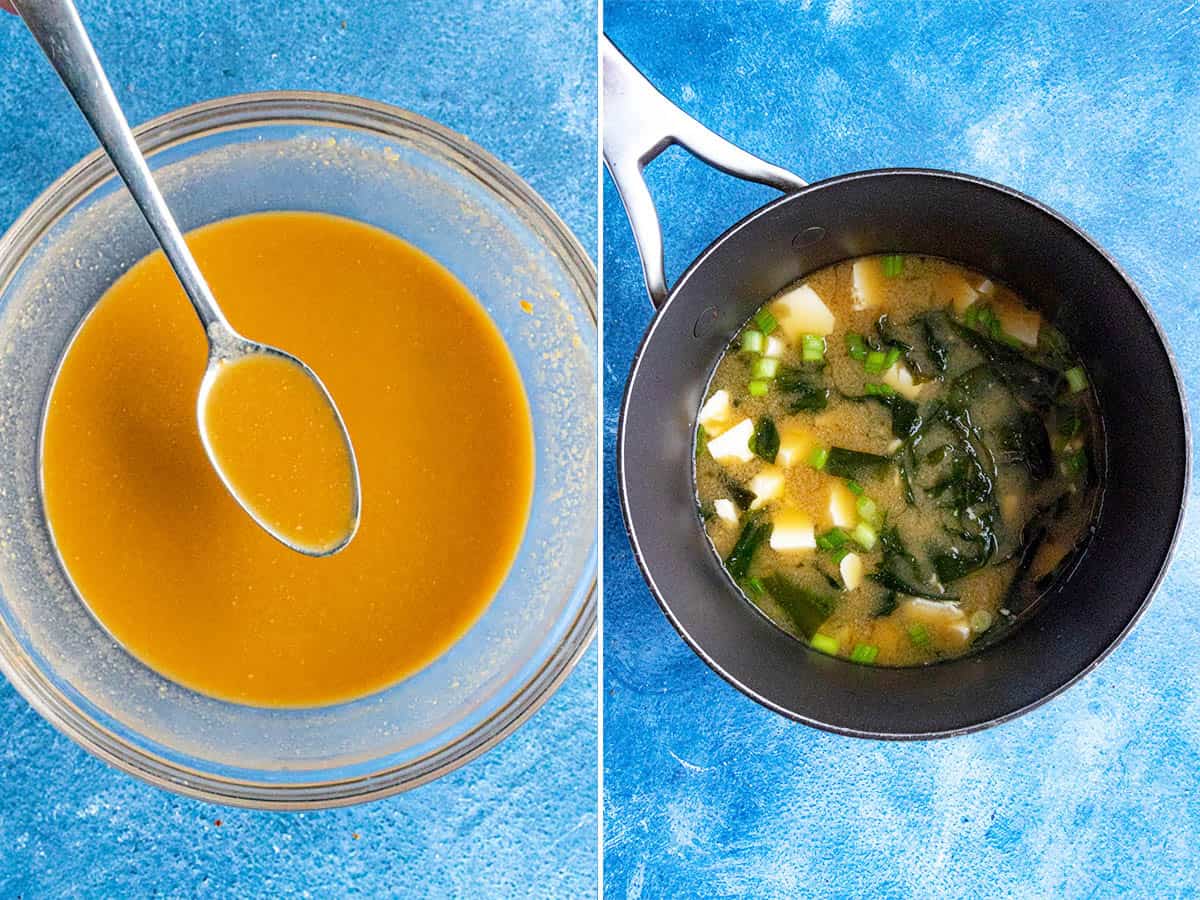
Boom! Done! It's time for miso soup! I hope you're hungry!
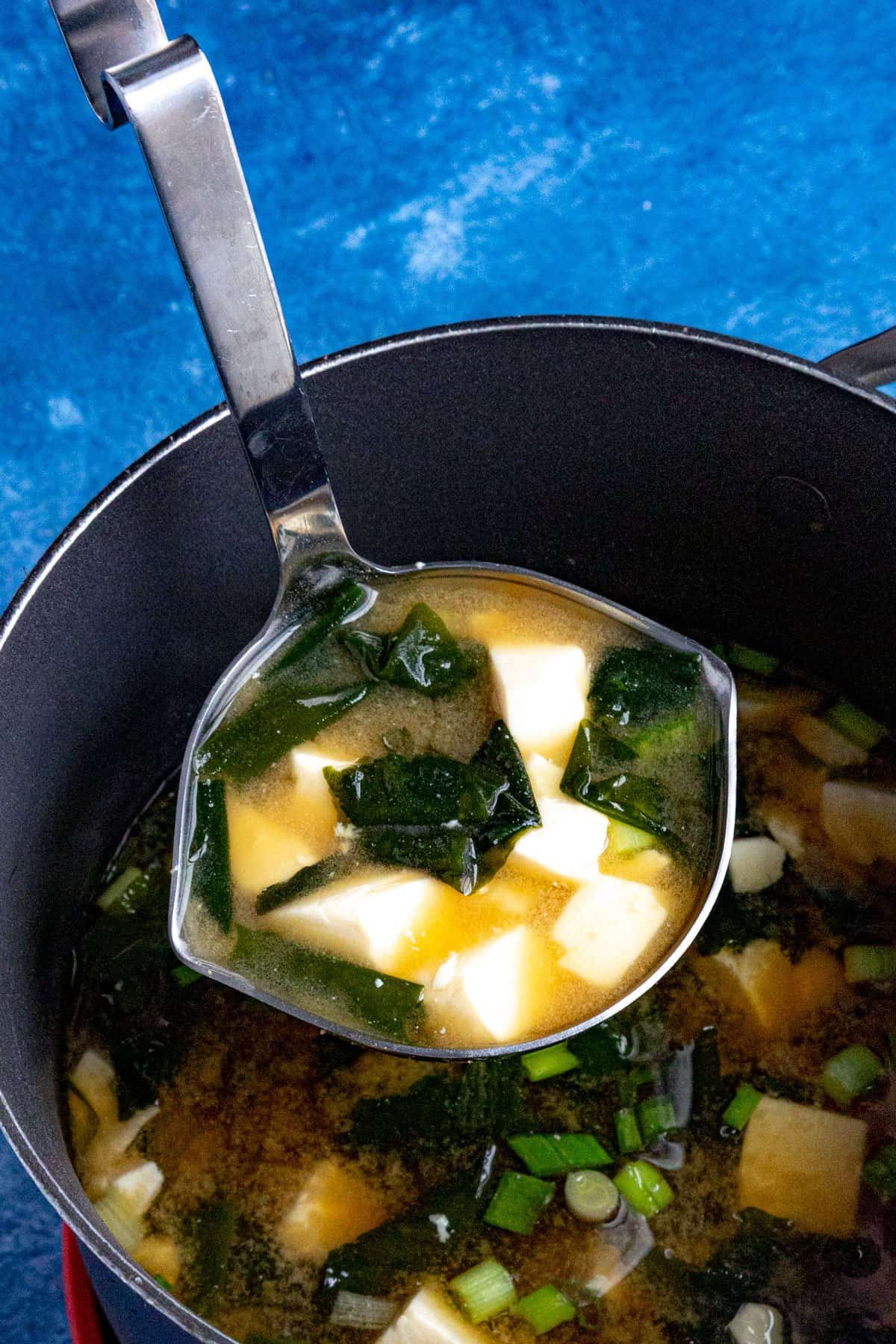
Serving Miso Soup
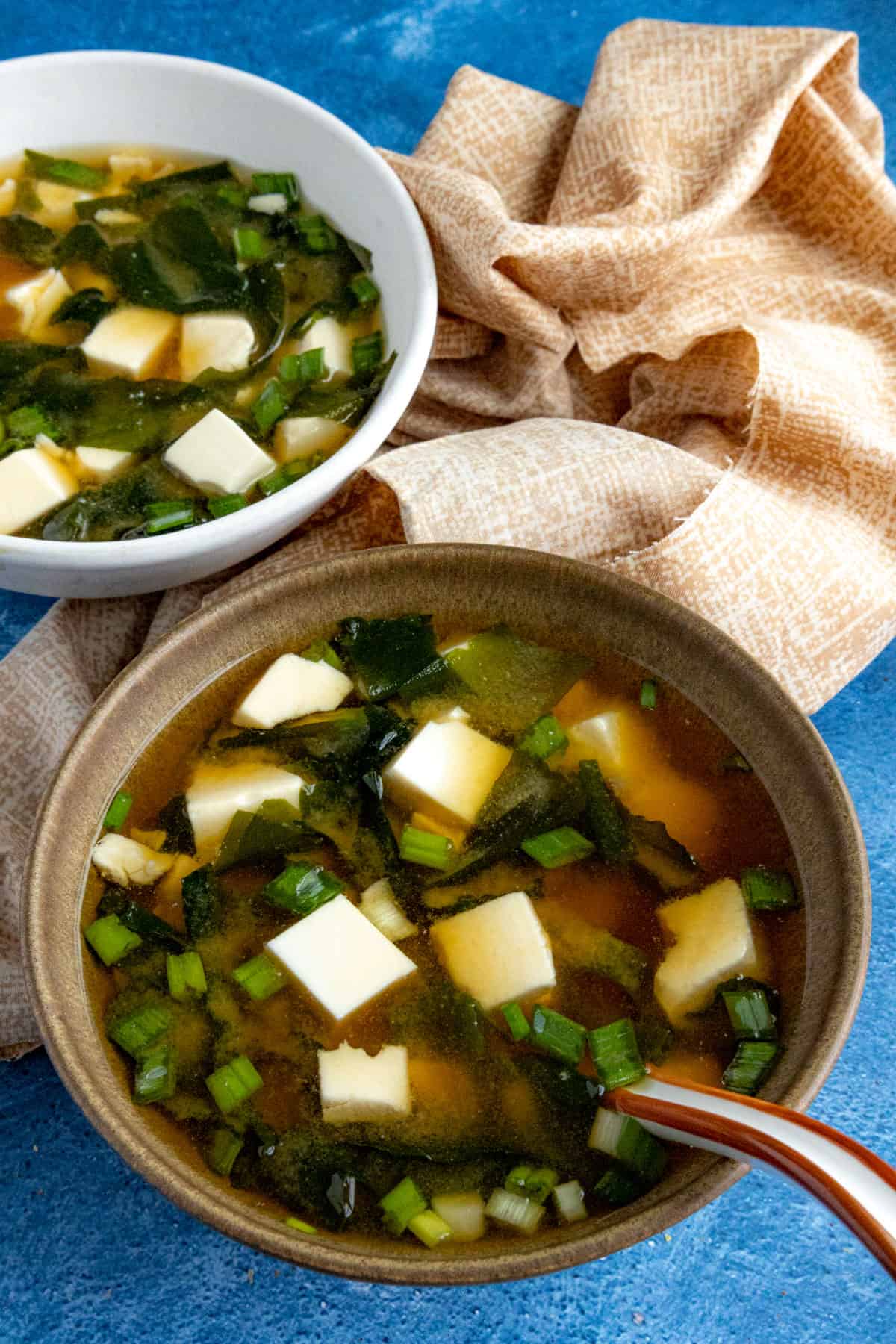
Miso soup is traditionally served hot as a light starter or as a side alongside a Japanese-style meal. It’s perfect with a bowl of rice, grilled fish or chicken, and simple veggie sides, but it also works as an easy, comforting lunch on its own.
Serve it right away after adding the miso (don’t let it boil), then top each bowl with sliced green onions and any extras you like soft tofu, mushrooms, or a little extra wakame.
For a Chili Pepper Madness twist, I like to drizzle in a few spoonfuls of my homemade chili crisp recipe, though a spicy chili oil is also fantastic for adding a gentle heat and extra flavor, like my Japanese chili oil recipe (rayu).
Serve it with Sunomono (Japanese cucumber salad) as a cooling side dish.
Make Ahead, Storage, & Reheating
Make Ahead. Miso soup is best when fresh, but you can prepare the dashi and rehydrate the wakame ahead of time. Store the dashi in the refrigerator for up to 2 days, then reheat gently and add the miso just before serving.
Storage. Store leftover miso soup in an airtight container in the refrigerator for up to 2 days.
Reheating. Reheat gently on the stovetop over low heat or in short bursts in the microwave. Do not boil, as boiling dulls the flavor and can affect the texture of the miso.
That's it, my friends. I hope you enjoy your new favorite miso soup recipe. Let me know how it turned out for you and how you made it your own.

Get FLAVOR MADNESS - The Cookbook!
Have you seen my new cookbook FLAVOR MADNESS? Big Flavor Recipes! You absolutely can't miss it. Check it out!
Related Recipes
If you’re new to cooking with miso, this recipe is a great place to start. You can also explore other Japanese-inspired recipes, chili oils, and umami-rich soups here on Chili Pepper Madness.
Try my Hot and Sour Soup recipe, Egg Drop Soup recipe, Easy Wonton Soup, or Tom Yum Soup recipe next.
Love spicy noodle bowls? Don’t miss my Spicy Ramen Noodles and Chili Oil Noodles next.
Check out more of my Quick and Easy Dinner Recipes.
Did you make this miso soup? I’d love to hear how it turned out - please leave a star rating and a quick comment below. Your feedback helps me keep the FAQs up to date, tells Google that chiliheads love it, and helps more spicy food lovers discover Chili Pepper Madness. Thanks! - Mike H.
Miso Soup Recipe
Ingredients
FOR THE HOMEMADE DASHI
- 4 cups water
- 1 piece kombu about 4x4 inches
- 1 cup loosely packed bonito flakes (katsuobushi)
FOR THE MISO SOUP
- 3-4 tablespoons miso paste (white, red, or mix - see Notes)
- 1 cup tofu diced (soft/silken is traditional)
- 2-3 tablespoons dried wakame (seaweed) rehydrated (instructions below)
- 2 green onions thinly sliced
Instructions
Rehydrate the Wakame
- Place the dried wakame in a small bowl. Cover with cool water and soak for 5 minutes.
- Drain and gently squeeze out excess water. Set aside.
Make the Dashi (Optional Homemade Version)
- Add the kombu and water to a pot.
- Heat gently until just before boiling, then remove the kombu. Don’t boil kombu - boiling can make the broth bitter or slimy.
- Add the bonito flakes. Simmer 30 seconds, then turn off the heat.
- Let steep 5 minutes, then strain.
- Return the strained dashi to the pot.
Make the Miso Soup
- Warm the dashi over medium heat until it reaches a gentle simmer.
- Add the diced tofu and the rehydrated wakame. Simmer 2 minutes to warm through.
- Ladle a scoop of hot broth into a small bowl. Add the miso paste and whisk until completely smooth.
- Pour the dissolved miso back into the pot. Do not boil once miso is added. Keep the heat low to preserve flavor and probiotics.
- Remove from heat, stir in sliced green onions, and serve into bowls.
Notes
- 1-2 teaspoons instant dashi granules (to taste), or 1 dashi packet
- Mix with 4 cups water, bring to a gentle simmer, and proceed with the recipe.
Nutrition Information

Kaz says
Hi Mike from glorious Tasmania. Appropos of nothing but my curiosity...have you tried budae jjigae (Korean army stew). The ingredients sound a little strange, but the dish is nothing short of mmmmmm....YUM!!
Cheers, Kaz
Mike Hultquist says
Hey, Kaz!! Yes, I have! I actually just picked up a can of SPAM to make it. It's on my list to get on the site here. Hopefully soon.
Frank says
This was even better than my favorite local restaurant. Thank you for making it so easy to make at home.
Mike Hultquist says
I love to hear it! Glad you enjoyed it, and THANK YOU for sharing this!