



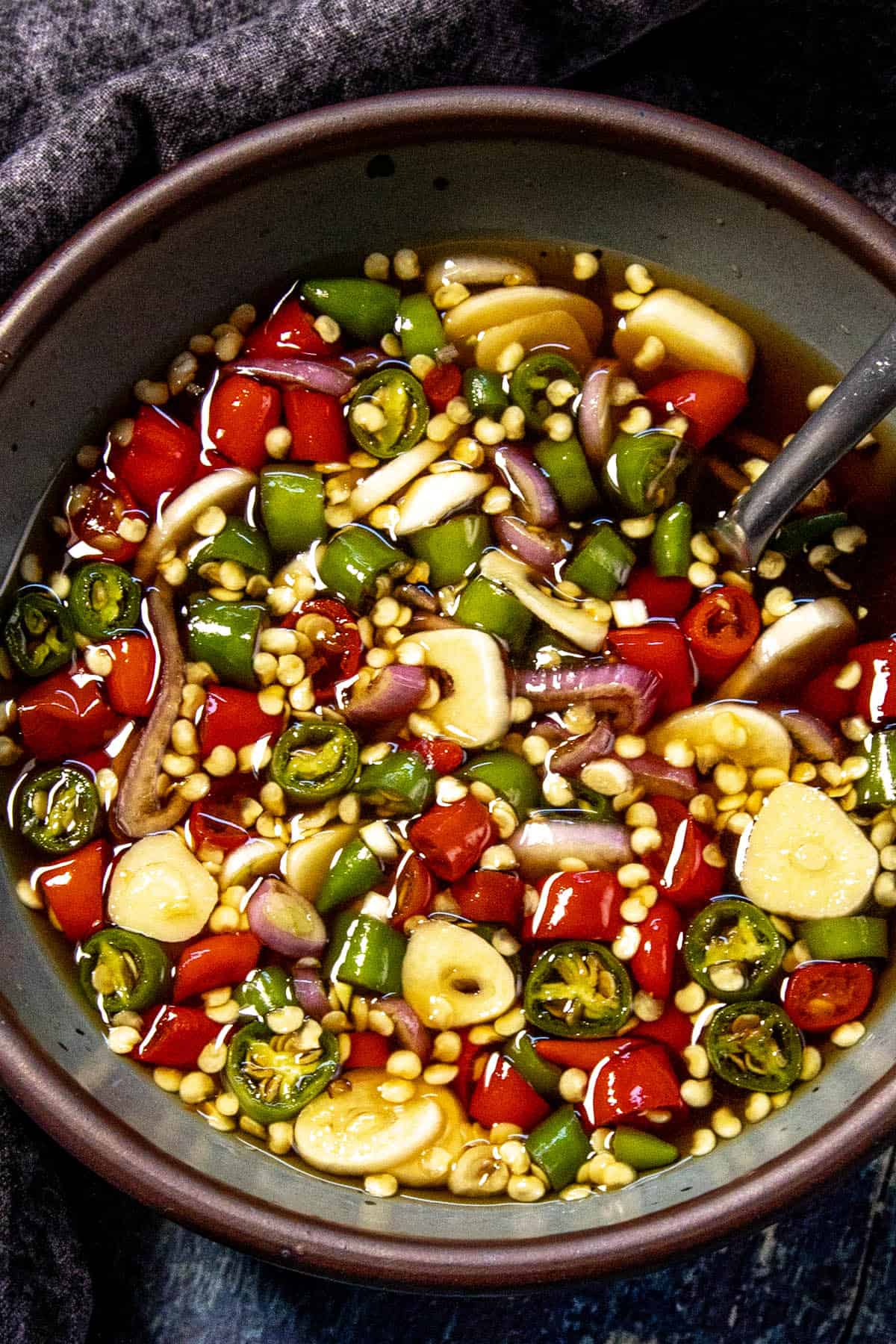
Prik nam pla is the all-purpose Thai chili fish sauce condiment that sits on nearly every table in Thailand. It's salty, spicy, tangy, and ready in 5 minutes.
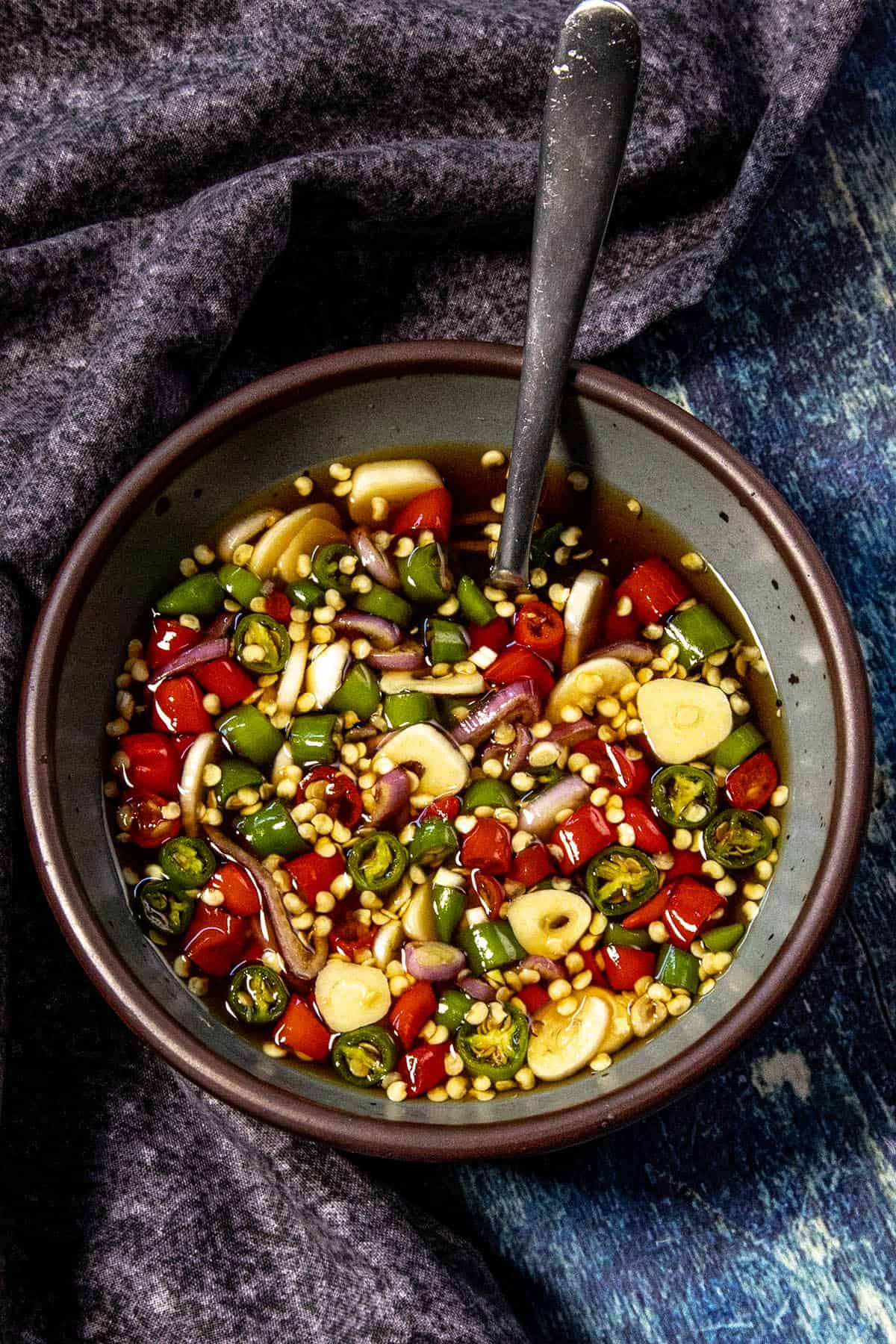
When you see a small bowl of fish sauce with sliced chilies floating in it, you know you're in a Thai restaurant. It's just there, like the salt and pepper shakers in an American diner. It's called prik nam pla, and it's an absolute game changer.
It's often considered a dipping sauce to Americans, associated with dunking spring rolls, but it's really more of a finishing sauce. It's meant to spoon over foods, a little at a time, until the flavor is right where you want it. It's four flavors at once, salty, sour, spicy, umami, ready to wake up any food that needs it.
I love it on rice, fried eggs, grilled foods, anything that needs a pop of flavor. A great friend of mine and his kids all love it with scrambled eggs. It's dangerously good, my friends! It takes five minutes to make with a handful of ingredients, and suddenly, your plain jasmine rice eats like a meal.
Let's talk about how to make it.
What is Prik Nam Pla?
Prik nam pla is an essential condiment from Thailand of chilies steeped in fish sauce. Prik means "chili" and nam pla means "fish sauce", which is the primary ingredient list.
You'll see it referred to as prik nam pla or nam pla prik, depending on the region or cook. Both are correct.
The purist version adds nothing more - only chilies and fish sauce, but as with anything, there are variations, which varies from cook to cook. You'll often find lime juice added for sourness, as well as thin-sliced garlic, and sometimes a few extras.
Ingredients
The full ingredients list with measurements is listed in the printable recipe card at the bottom of the post.
- Fish sauce. The base. Look for a good Thai brand if you can find one. Go for quality over price for this.
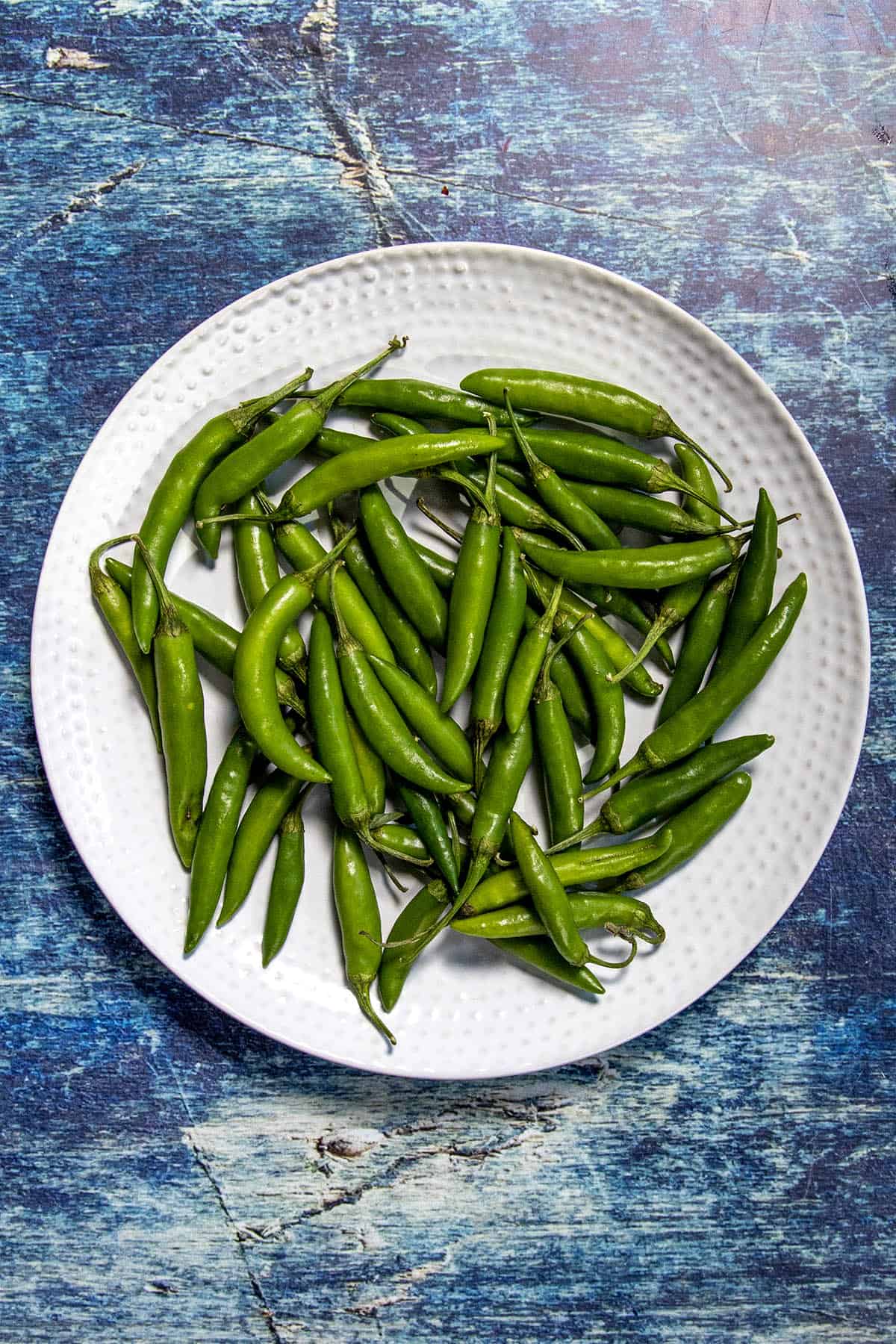
- Thai chilies. Thai chilies, also sold as prik kee noo. They run roughly 50,000 to 100,000 Scoville units, so they're in habanero territory by heat but with a brighter, greener flavor. This recipe will work with just about any chilies, though. Use your favorites for flavor and heat level.
- Garlic. Sliced thin crosswise. Don't mince, or it can cloud the sauce and affect the appearance.
- Lime juice. Fresh squeezed is best. Bottled lime juice is OK, but it's often fairly dull compared to fresh.
- Shallot. Optional, but I like the addition. It softens the final sauce and adds a touch of sweetness without sugar.
- Sugar. Also optional, though it doesn't seem traditional. Some sources include it to balance out bitter flavors and salt.
Sugar or No Sugar?
A lot of recipes online and other sources call for sugar, often palm sugar, including Jet Tila's book, "101 Thai Dishes You Need to Cook Before You Die: The Essential Recipes, Techniques and Ingredients of Thailand" (affiliate link, my friends).
I've heard from Thai cooks that it's more of a Western addition, and most people skip it. My take? Start without it, give it a taste with plain rice, then add a little at a time if you think it needs it. Rice helps, as prik nam pla is strong and salty by itself, and easier to balance with tasted with food.
Some commercial brands of fish sauce are sweetened anyway, so you may not need sugar at all.
How to Make Prik Nam Pla
Slice the chilies and garlic thin. Thin slices release more heat and flavor than big chunks. Combine everything in a small bowl and stir. Let it rest 10 minutes before serving so the garlic and chilies infuse the fish sauce.
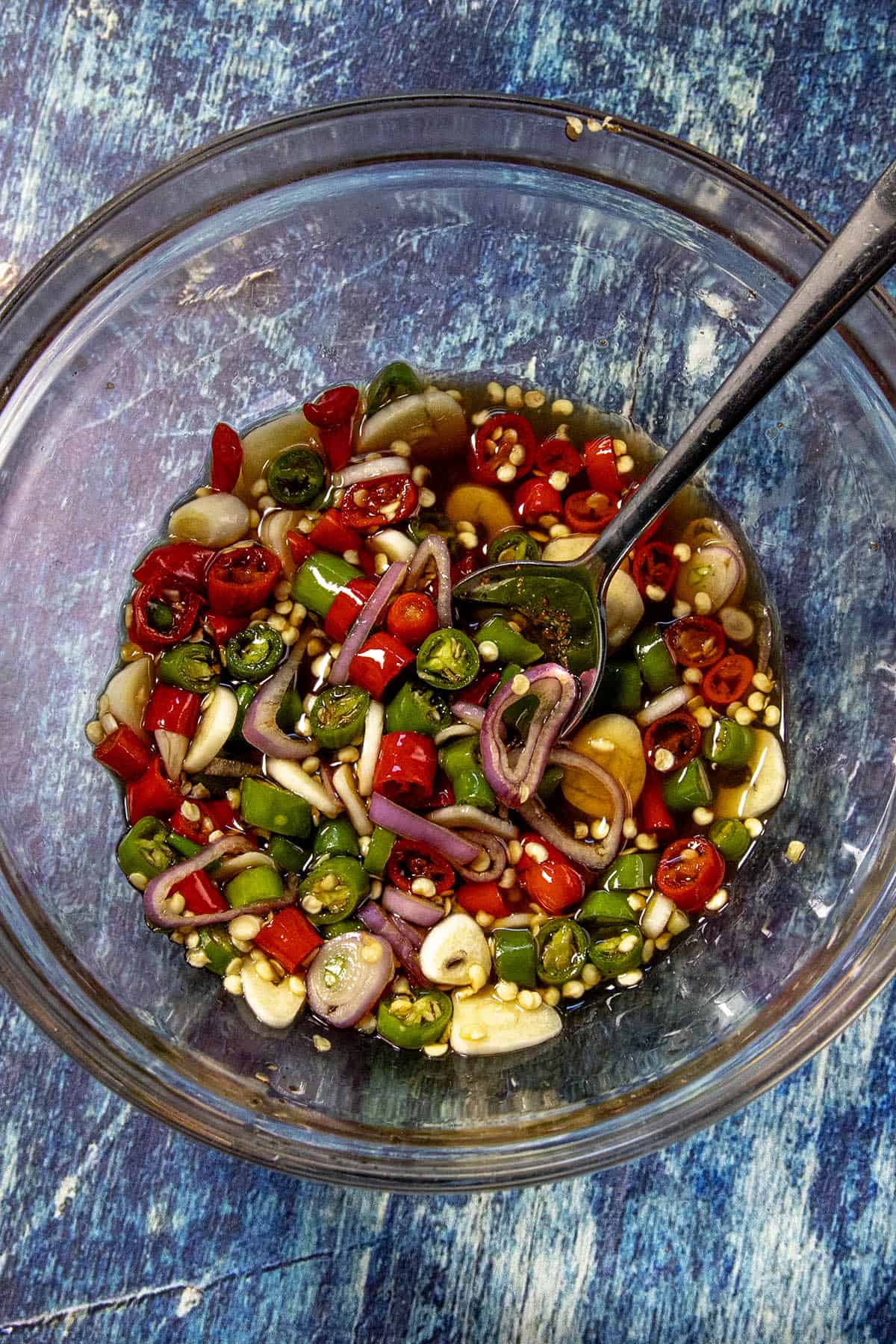
Boom! Done! Your prik nam pla is ready to serve. Easy enough to make, isn't it? No cooking, no blender, no special tools. Some recipes tell you to run this through a food processor, but then it doesn't look as pretty in the bowl. Plus, blended garlic can turn bitter quickly.
Heat Level and How to Adjust It
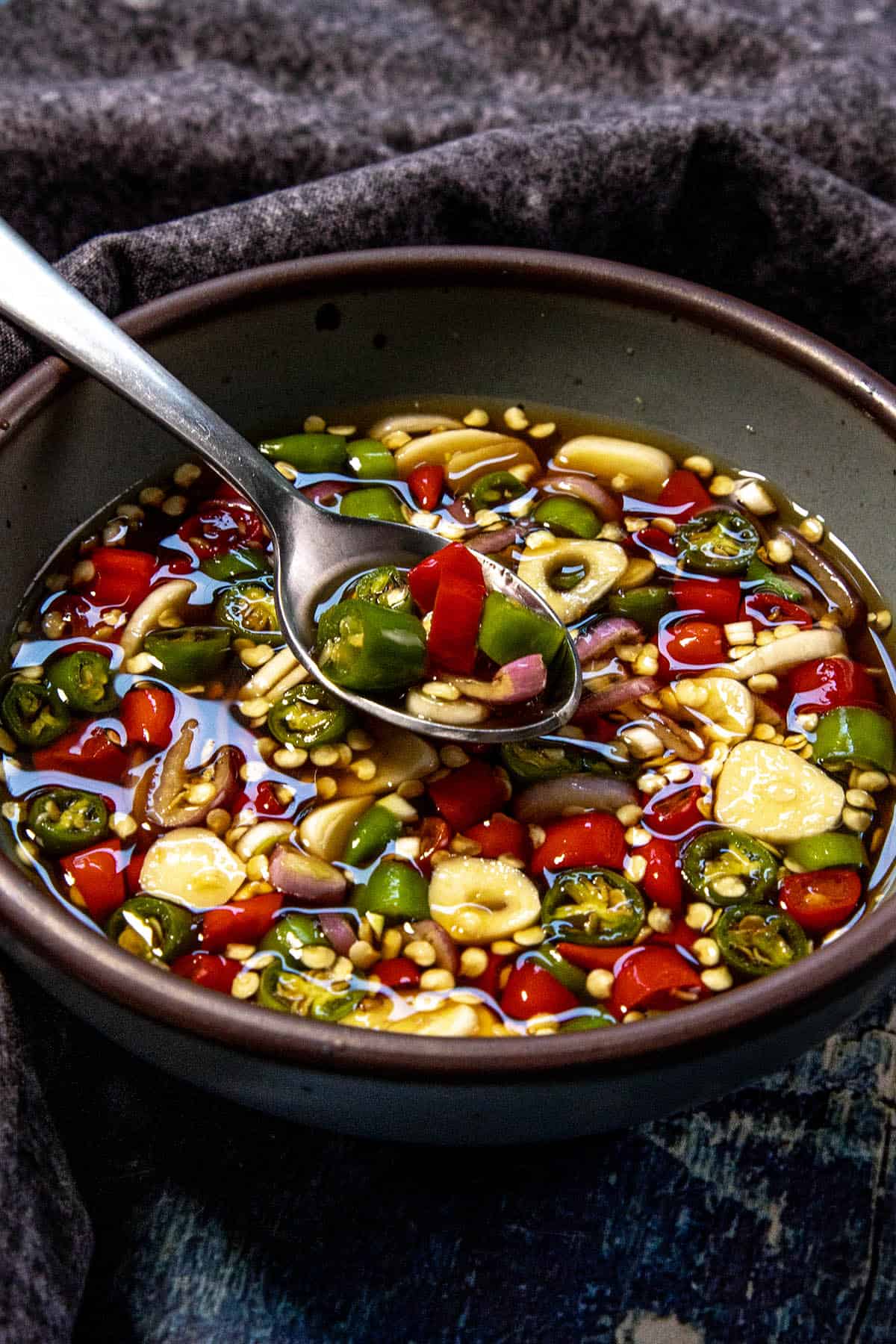
Prik nam pla is a chili condiment first, and the heat level is all about your choice and treatment of those chilies.
- Mild to medium. 4 to 6 Thai chilies, seeds/pith removed. Or swap in milder jalapenos or Fresnos.
- Standard. As written. 6 to 8 Thai chilies, seeds/pith intact.
- Wild. Double the Thai chilies to bring up the heat, or introduce a hotter habanero, Scotch bonnet, or prik kee noo suan, which are wild Thai chilies used in Thai cuisine.
NOTE: The heat grows after a day or two as it steeps, so plan to make it ahead if you're looking for the additional fiery attitude.
How to Use Prik Nam Pla
Spoon it over food to taste at the table. Use a little or a lot. The choice is yours. Here is where it really shines:
- Plain jasmine rice. Pretty much the ultimate experience.
- Fried eggs. You'll love it spooned over a runny fried egg over rice, or over scrambled eggs like my friend loves.
- Fried rice. Season your Thai fried rice with extra flavor.
- Grilled meats. Pork especially. Grilled chicken, grilled shrimp, grilled anything.
- Noodle dishes, stir-fries, and clear soups. You'll love it over Pad Kra Pao, simple Thai Noodles, Pad Kee Mao, or spooned into Tom Yum Soup.
- Steamed or blanched vegetables. Perfect way to jazz them up. We love it with spicy edamame.
It's also fantastic outside Thai food. Try it on roasted broccoli or your next grilled steak and see what happens. Boom.
Storage
Refrigerate it in a small jar with a lid. Realistically, it should last months, but it's best used within 7 days. From my experience, the quality degrades as the chopped ingredients go dull, and the flavor fades.
It's best to make a small batch and use it within the week.
Variations
- Purist version. Thai chilies and fish sauce. Nothing else.
- With cilantro. A tablespoon of chopped cilantro, stirred in fresh.
- Prik nam som. The vinegar version. Chilies in white vinegar, no fish sauce. Perfect with noodles.
- Vegetarian. Swap in a vegan fish sauce, or use 2 tablespoons soy sauce plus 2 tablespoons rice vinegar and a pinch of salt. It won't taste the same, but you get similar flavor notes.
- Lime peel. Add a small piece of lime peel into the jar for extra lime aroma.
That's it, my friends. I hope you enjoy this recipe for prik nam pla. Let me know if you make it. I'd love to hear how it turned out for you, and how you'll be serving yours.
Get FLAVOR MADNESS - The Cookbook!
Have you seen my new cookbook FLAVOR MADNESS? Big Flavor Recipes! You absolutely can't miss it. Check it out!
More Spicy Thai Recipes to Try
Got any questions? Ask away! I’m happy to help. If you enjoy this recipe, I hope you’ll leave a comment with some STARS. Also, please share it on social media. Don’t forget to tag us at #ChiliPepperMadness. I’ll be sure to share! Thanks! — Mike H.
Prik Nam Pla Recipe (Thai Chili Fish Sauce)
Ingredients
- ¼ cup fish sauce
- 1 tablespoon fresh lime juice
- 6-8 Thai chilies thinly sliced (use a mix of red and green)
- 3 cloves garlic thinly sliced crosswise
- 2 tablespoons thinly sliced shallot optional
- ¼ to ½ teaspoon sugar optional, to taste
Instructions
- Thinly slice the Thai chilies and the garlic. Slice the garlic crosswise into thin coins rather than mincing it.
- Combine the fish sauce, lime juice, chilies, garlic, and shallot in a small bowl. If using sugar, stir until it dissolves.
- Let the mixture rest for 10 minutes so the garlic and chilies infuse the fish sauce.
- Serve at the table in a small bowl with a spoon. Spoon it over finished dishes to taste.
Notes
Nutrition Information

FAQs
Is it prik nam pla or nam pla prik?
Both. Prik means chili, nam pla means fish sauce, and Thai speakers use either phrase. You'll also see nam prik pla. They all refer to the same condiment.
Is prik nam pla a dipping sauce?
Not really. It's a table seasoning you spoon over finished food, the way you'd use salt and pepper. You can dip vegetables or grilled meat in it, but its main job is seasoning rather than dipping.
Can I make it without fish sauce?
You can get close with a vegan fish sauce, or with 2 tablespoons soy sauce plus 2 tablespoons rice vinegar and a pinch of salt. The fermented depth of real fish sauce is hard to replace, so it won't be identical.
How long does prik nam pla last?
It stays safe a long time because fish sauce is so salty, but the flavor peaks in the first few days. The lime fades and the garlic goes dull after about a week in the fridge. Best to make small batches.
What's the difference between prik nam pla and nam jim jaew?
Prik nam pla is a simple fish sauce and chili seasoning. Nam jim jaew is a thicker dipping sauce made with dried chili flakes, toasted rice powder, lime, and fish sauce, and it's specifically made for grilled meats.
Can I use dried chilies?
You can, but it isn't traditional and you won't get the freshness of the finished sauce.
Leave a Reply