


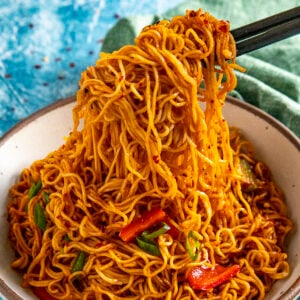
My recipe for spicy gochujang noodles is quick and easy to make, with your favorite noodles tossed in a fiery gochujang sauce, done in about 15 minutes! And very easy to customize with your favorite noodles, vegetables and proteins.
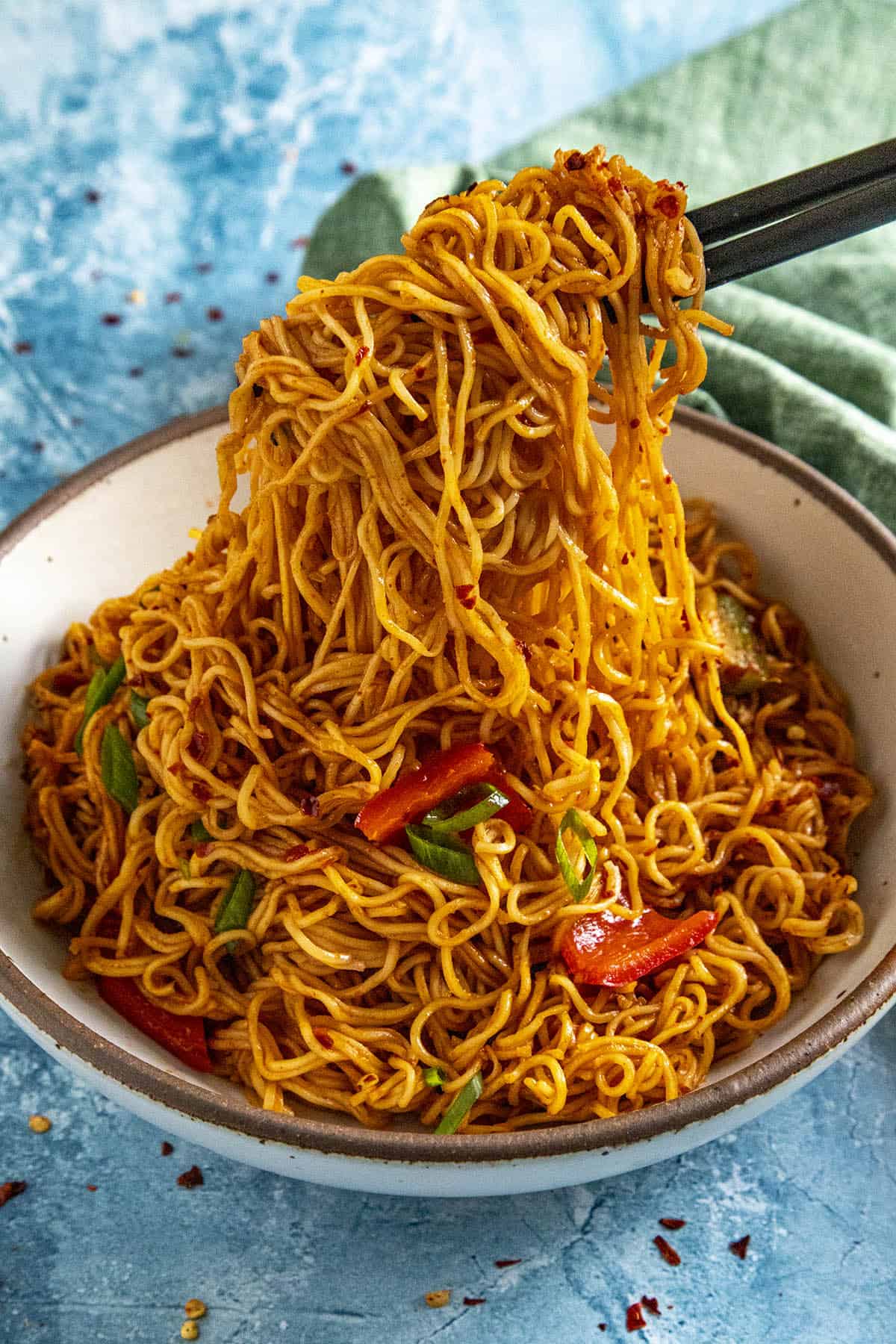
Quick and Easy Gochujang Noodles Recipe
Are you looking for a quick and easy stir fried noodle dish that you can not only have on the table in minutes, but also satisfies that spicy food crave? This is a recipe you're going to love!
We're making Spicy Gochujang Noodles, and I think it may become one of your new favorites.
This recipe focuses on the wonderful flavor of gochujang, the Korean fermented red chili paste I've come to love. It is thick and pungent in flavor, adding a sweet and spicy spin you won't get anywhere else.
You can often find gochujang at your local Asian market, and I'm seeing it much more in local grocery stores, as it is become more and more popular.
With gochujang, you can easily whip this noodle sauce together in minutes, toss with noodles, and boom! You're ready to go. Plus, you can very easily customize this dish with your favorite proteins and vegetables.
Let's talk about how to make gochujang noodles, shall we? Works with any noodles!
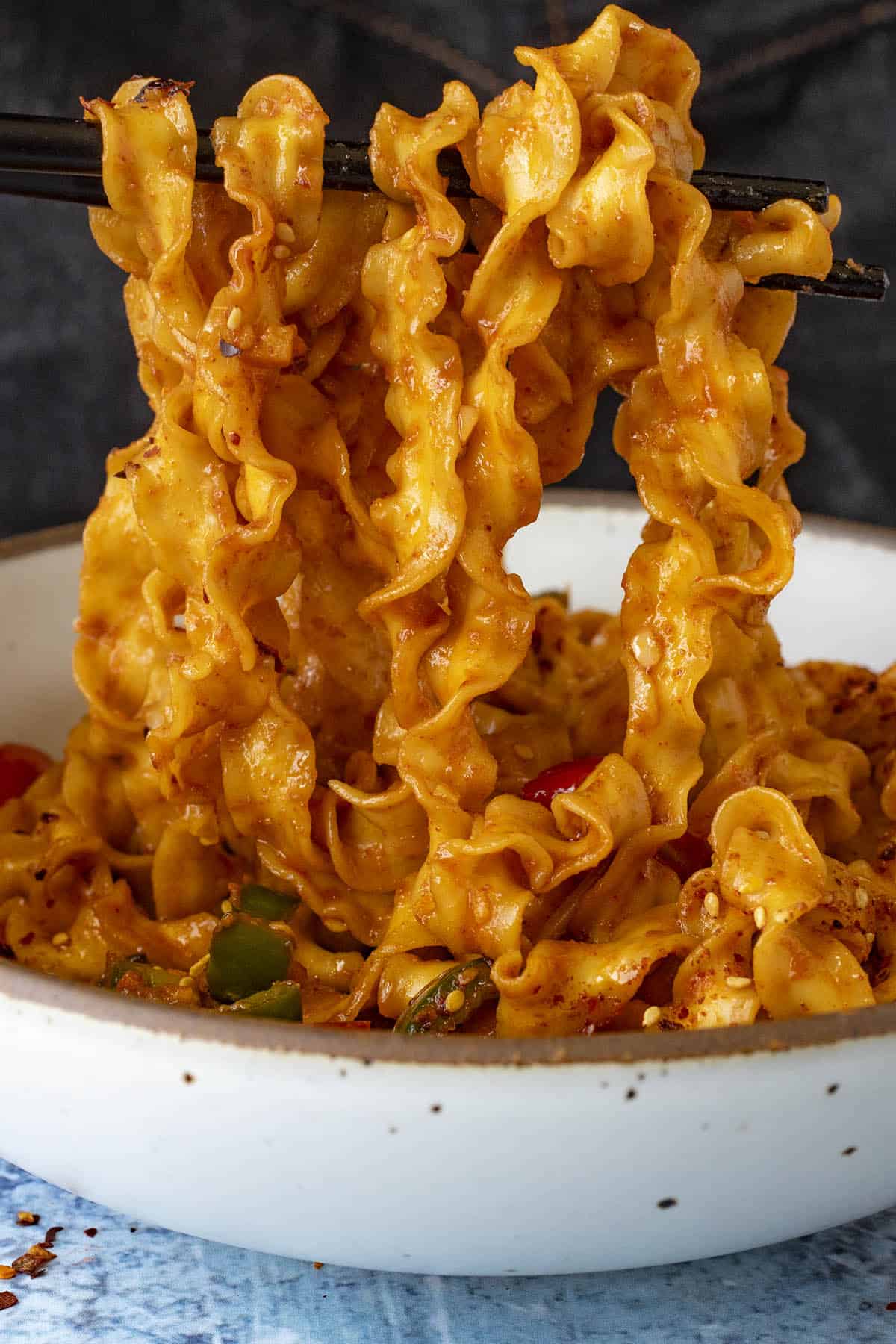
Gochujang Noodles Ingredients
The full ingredients list with measurements is listed in the recipe card at the end of the post.
- FOR THE GOCHUJANG SAUCE
- Gochujang. I am using hot gochujang, but you can use mild if you prefer.
- Soy Sauce. Low sodium soy sauce can be used.
- Sesame Oil.
- Honey. Sugar is a good substitute, optional. You can omit it if you prefer.
- Lime Juice.
- Minced Garlic. Optional, but I love it.
- FOR THE GOCHUJANG NOODLES
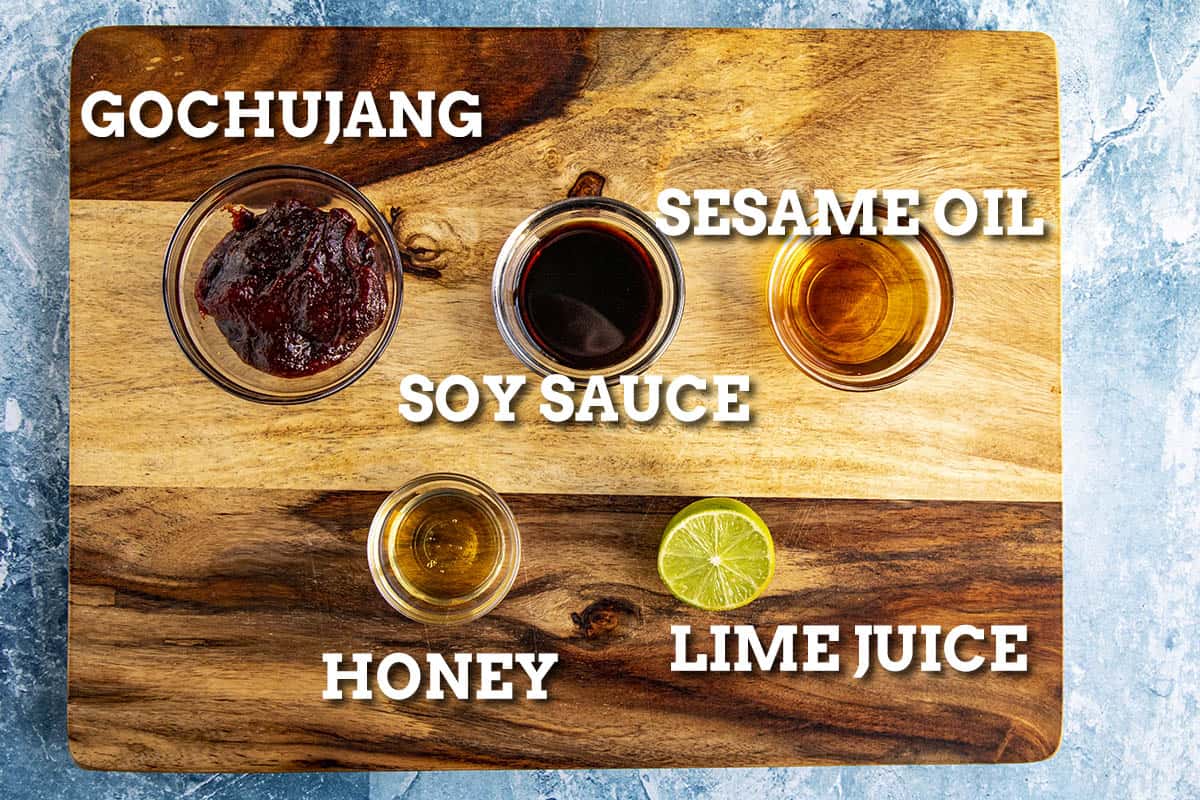
- Noodles. This recipe works with any of your favorite noodles. Use rice noodles, flour, egg, ramen noodles, or udon noodles.
- Vegetable Oil. Or use more sesame oil.
- Peppers. I am using sweet bell peppers and some spicy jalapenos and serranos, but you can use your favorites.
- For Garnish. Fresh chopped scallions/green onion, toasted sesame seeds, red pepper flakes, lime wedges
How to Make Gochujang Noodles (Spicy Korean Noodles) - the Recipe Method
Make the Gochujang Sauce. Whisk together the gochujang sauce ingredients and set the sauce aside.
This sauce is SO EASY to whip together in no time. If you feel it is too thick, add a couple tablespoons of water to thin it out to your desired consistency.
Prep the Noodles. Boil the noodles in hot water per the packaging directions until done, about 4-5 minutes. Drain and set into a lightly oiled bowl.
You can easily prep your noodles while you work on the next recipe steps. Be sure to cook the noodles according to your package instructions, as each product can vary.
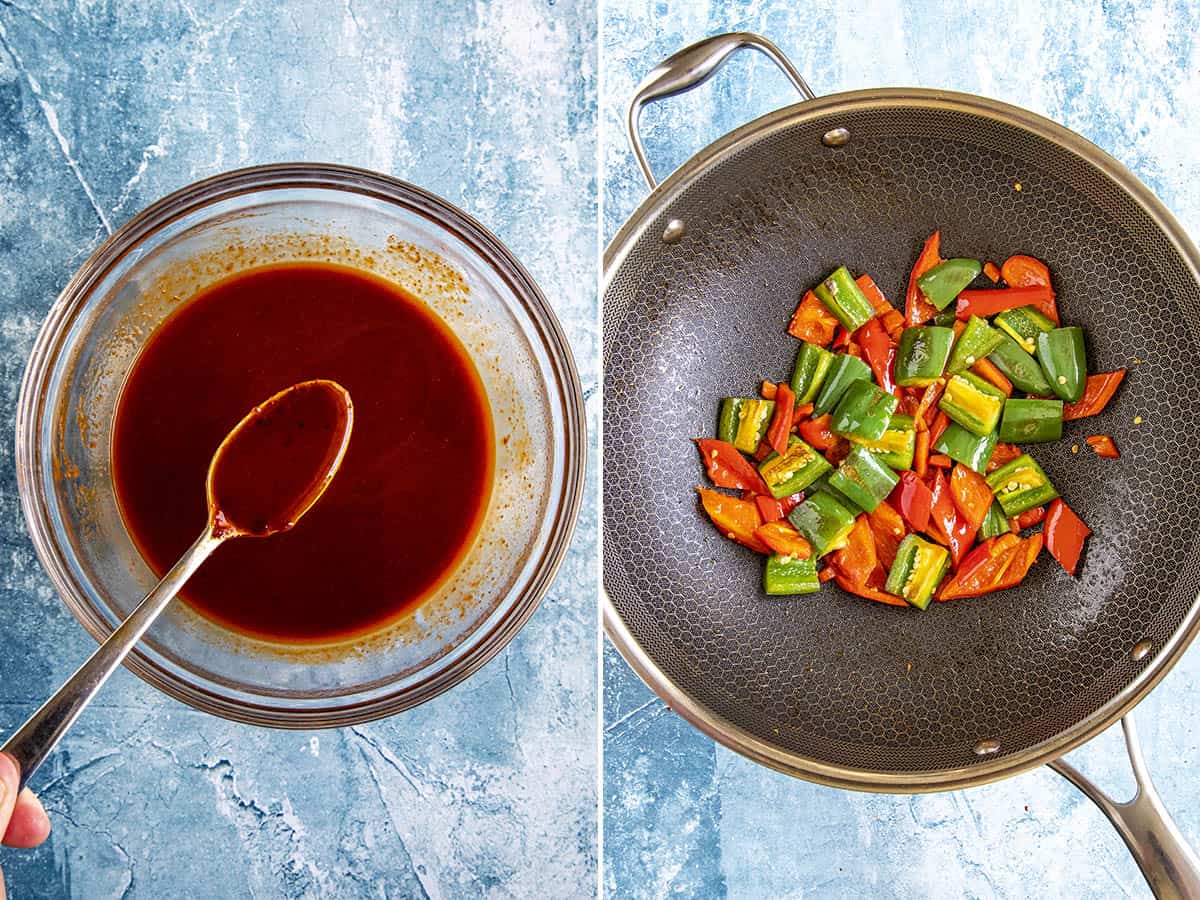
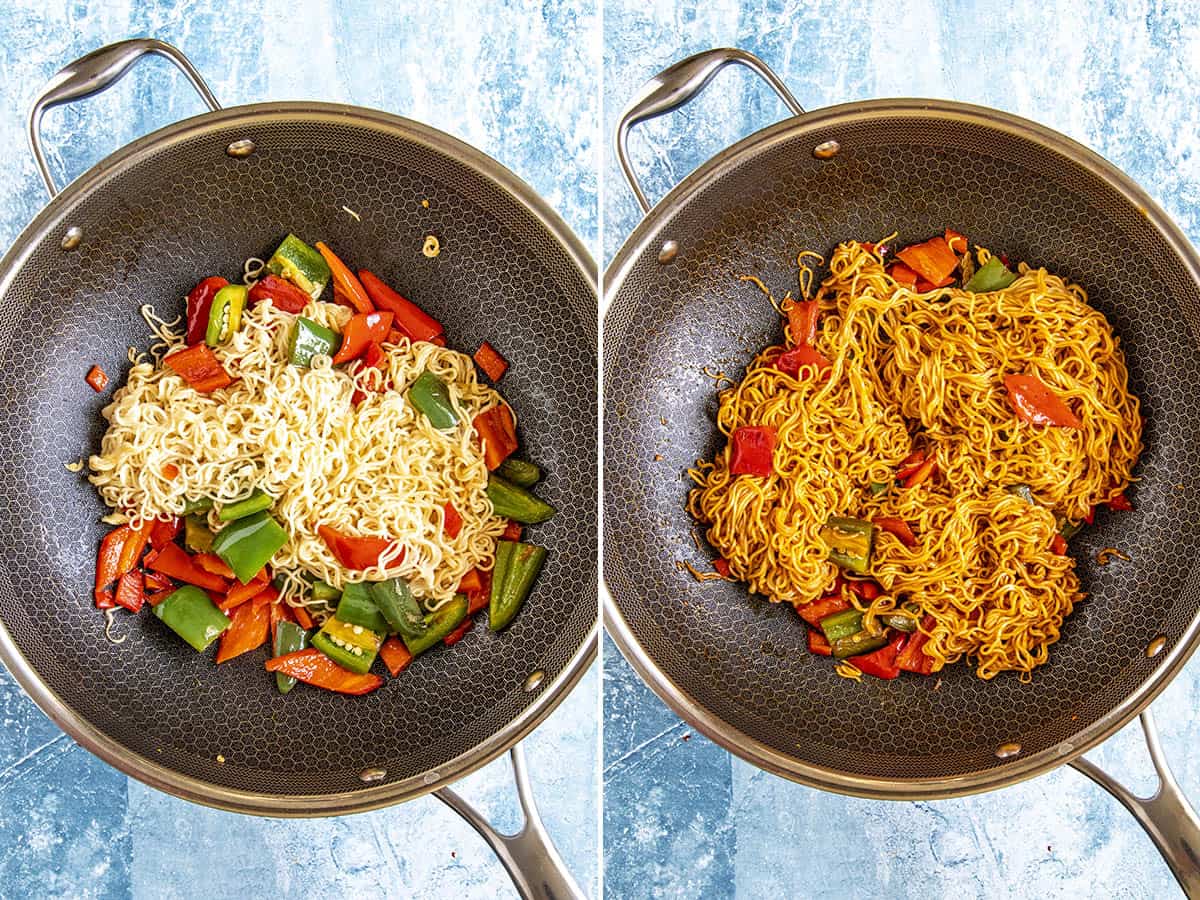
Stir Fry the Peppers. Heat the oil in a wok or large pan over medium heat and add the chili peppers. Cook for 5 minutes to soften.
Stir Fry the Noodles. Add the noodles and stir fry for 1 minute.
Sauce it Up. Stir in the spicy noodles sauce and toss to evenly coat.
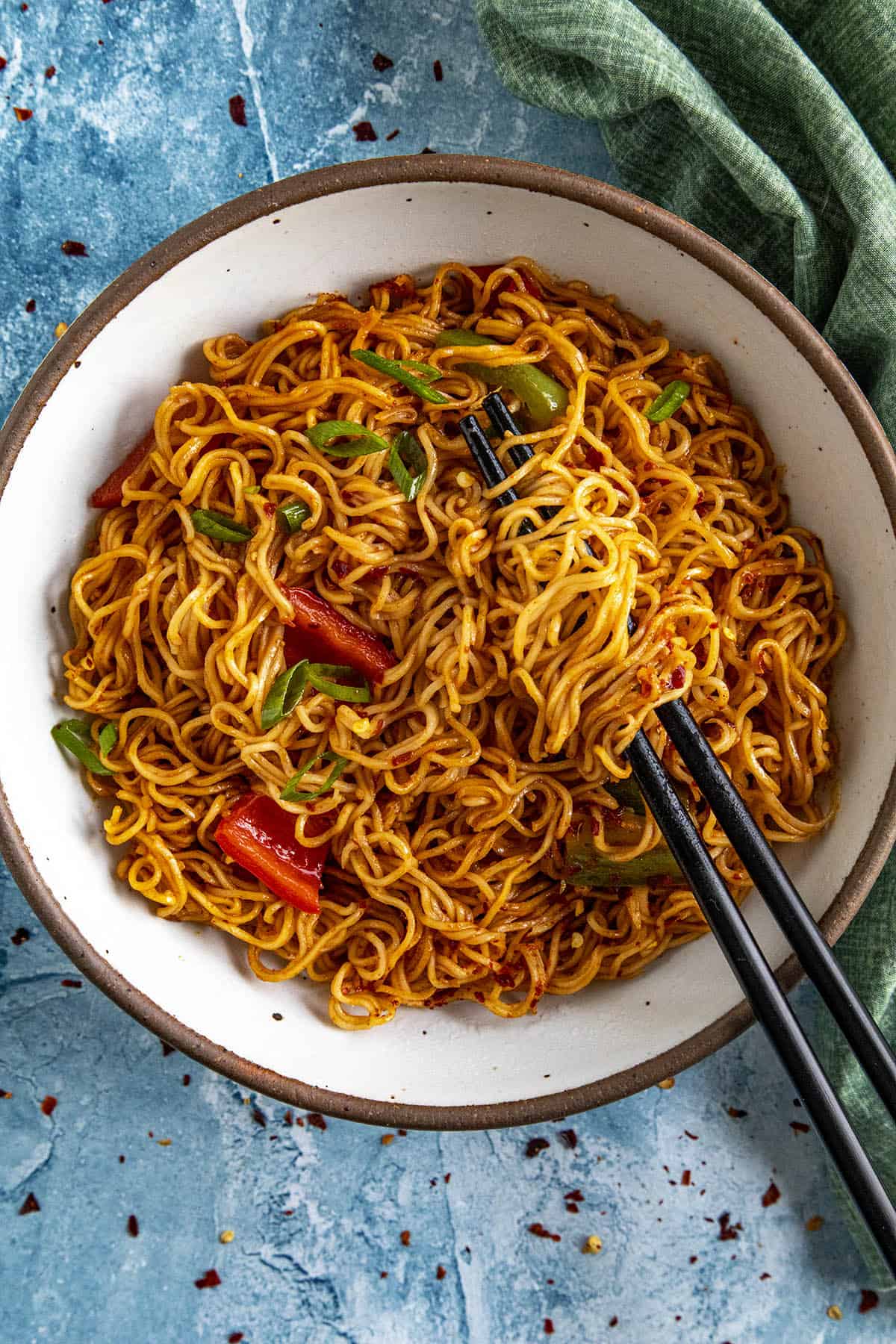
Garnish and Serve. Transfer the saucy gochujang noodles to bowls. Garnish and serve.
Boom! Done! Your gochujang noodles are ready to go! Easy enough to make, isn't it? I love quick and easy recipes, especially with lots of fiery gochujang.
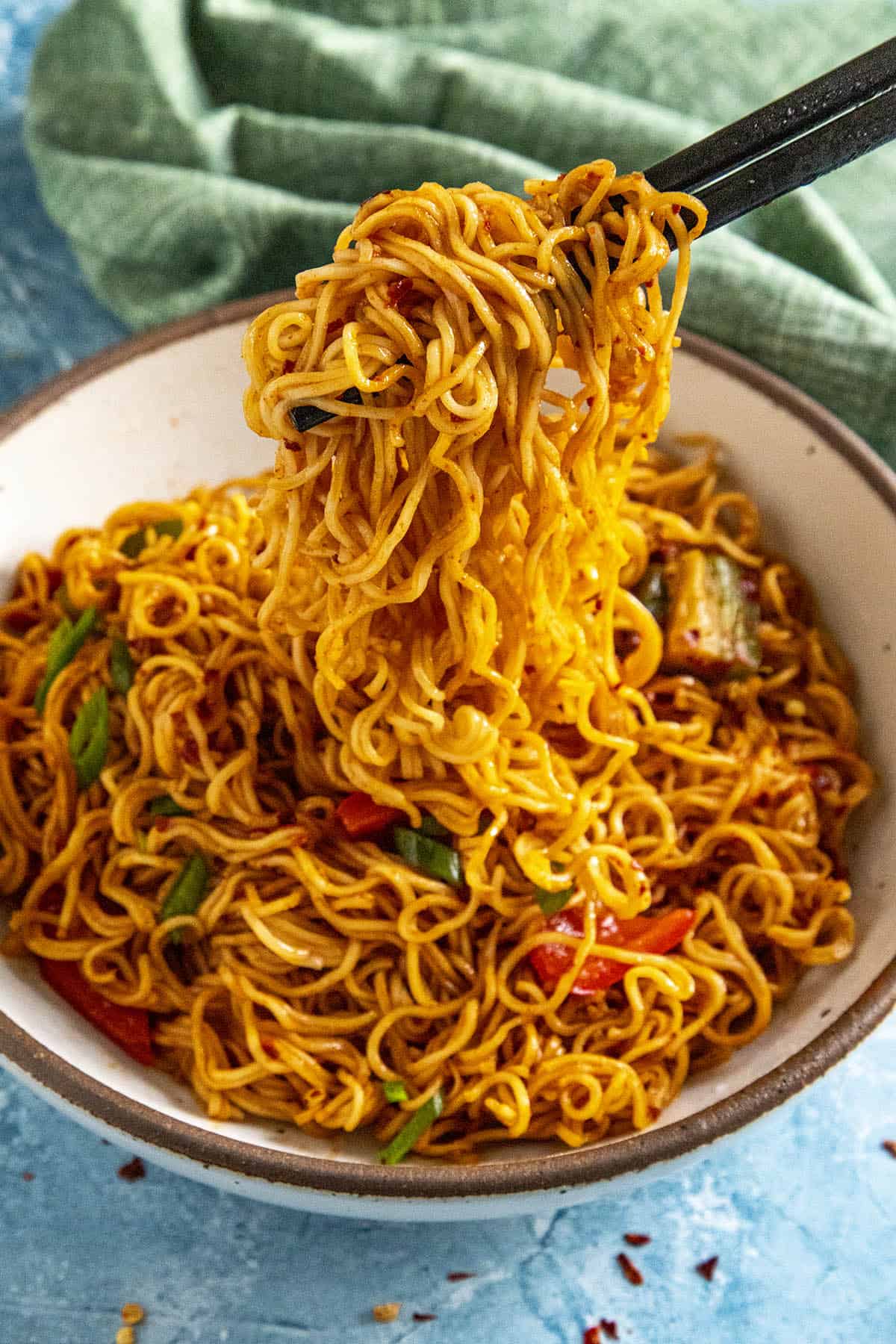
The Gochujang Noodle Sauce
This sauce is the heart of the dish, my friends. It's a simple whisk of gochujang, soy sauce, sesame oil, honey, lime juice and garlic. No cooking needed.
It's built specifically for noodles. I use less soy sauce than in my all-purpose Gochujang Sauce, and I brighten it with lime and fresh garlic, so it coats every strand without making the noodles too salty. For stir fries, rice bowls and dipping, grab that recipe instead.
- Thin it with noodle water. Gochujang is thick. Save a splash of the starchy cooking water before you drain the noodles. A tablespoon or two loosens the sauce and helps it cling.
- Double it for saucier noodles. If you're adding lots of vegetables or protein, make a double batch so everything gets coated.
- Make it ahead. Whisk the sauce together up to a few days ahead and keep it covered in the fridge, and dinner comes together even faster.
The Best Noodles for Gochujang Noodles
This recipe works with just about any noodle in your pantry, which is one reason I make it so often. Here's how the popular choices compare:
- Ramen Noodles. Fresh or instant (toss the seasoning packet). Springy, quick, and probably my go-to.
- Udon Noodles. Thick and chewy, great for grabbing lots of sauce. Frozen udon is excellent here.
- Rice Noodles. Lighter, and naturally gluten-free if you use gluten-free soy sauce or tamari. Don't overcook them, or they'll break apart when you toss.
- Glass Noodles (Dangmyeon). Korean sweet potato starch noodles, the same ones used in japchae. They're chewy and slippery and soak up the sauce beautifully.
- Egg Noodles. Rich and satisfying, especially with a fried egg on top.
- Spaghetti or Linguine. No Asian noodles on hand? Pasta works great in a pinch. See my Gochujang Pasta for a full pasta version.
Whichever you choose, cook the noodles according to the package. Each type and brand varies quite a bit.
Add Protein and Vegetables
These noodles are great on their own, but they also make an easy base for a full meal. Cook the protein first in the wok, set it aside, then add it back with the noodles.
- Chicken. Thinly sliced chicken thighs or breast, stir fried until cooked through.
- Shrimp. Cooks in about 2-3 minutes. Don't overcook it.
- Tofu. Press extra-firm tofu, cube it, and pan-fry until crispy.
- Ground Pork or Beef. Brown it and drain off excess fat.
- Fried Egg. A runny yolk over spicy noodles is pure comfort food.
For vegetables, try bok choy, sugar snap peas, broccoli, shredded carrots, napa cabbage or mushrooms. Add the firmer vegetables with the peppers so they have time to soften. For a cool, crunchy side, serve it with my Korean Cucumber Salad.
How Spicy Are Gochujang Noodles?
As written, these noodles land around medium-hot, with heat from both the hot gochujang and the fresh chilies. Gochujang brings a sweet, slow-building heat rather than a sharp burn, and you can dial it from mild to wild:
- Milder. Use mild gochujang, skip the hot chilies, and stick with bell peppers. You'll still get plenty of flavor.
- As Written. Hot gochujang with jalapenos and serranos. My usual.
- Hotter. Stir in a teaspoon or two of gochugaru (Korean chili flakes), finish with a spoonful of chili crisp, or swap in Thai chilies.
Recipe Tips & Notes
- If the gochujang sauce is too thick, thin it with a splash of noodle water or plain water.
- Feel free to use this gochujang sauce as a base that you can customize. Possible additions include rice vinegar, peanut butter, tahini, or chili crisp.
Storage & Leftovers
Leftover gochujang noodles will last up to 5 days in the refrigerator in a sealed container. To enjoy them again, gently warm them in a pot on the stovetop or in the microwave.
I do not recommend freezing leftover noodles, as it can affect the texture.
That's it, my friends. I hope you enjoy my recipe for Korean spicy noodles (gochujang noodles). Let me know if you make it. I'd love to hear how it turned out for you, and if you decided to spice it up!
Get FLAVOR MADNESS - The Cookbook!
Have you seen my new cookbook FLAVOR MADNESS? Big Flavor Recipes! You absolutely can't miss it. Check it out!
More Noodle Recipes
- Easy Thai Noodles
- Pad Thai Noodles
- Chili Oil Noodles
- Spicy Noodles
- Spicy Ramen Noodles
- Spicy Marisquera Noodles (Seafood Noodles)
- Try my Lo Mein Recipe with soft chewy noodles.
- See all of my Noodles Recipes
Got any questions? Ask away! I’m happy to help. If you enjoy this recipe, I hope you’ll leave a comment with some STARS. Also, please share it on social media. Don’t forget to tag us at #ChiliPepperMadness. I’ll be sure to share! Thanks! — Mike H.
Spicy Gochujang Noodles Recipe
Ingredients
FOR THE GOCHUJANG SAUCE
- ¼ cup Korean gochujang I am using hot gochujang
- 2 tablespoons soy sauce
- 2 tablespoons sesame oil
- 1 teaspoon honey or use sugar, optional
- Juice from ½ lime (~1 tablespoon, or more to taste)
- 2 cloves garlic minced (optional)
FOR THE GOCHUJANG NOODLES
- 8 ounces noodles (use rice, flour, egg, or ramen noodles)
- 1 tablespoon vegetable oil
- 1 large bell pepper chopped
- 3-4 spicy chilies chopped
- For Garnish: Fresh chopped scallions/green onion, toasted sesame seeds, red pepper flakes, lime wedges
Instructions
- Whisk together the gochujang noodles sauce ingredients and set the sauce aside.
- Boil the noodles in hot water per the packaging directions until done, about 4-5 minutes. Drain and set into a lightly oiled bowl.
- Heat the oil in a wok or large pan over medium heat and add the chili peppers. Cook for 5 minutes to soften.
- Add the noodles and stir fry for 1 minute.
- Stir in the spicy noodles sauce and toss to evenly coat.
- Transfer to bowls. Garnish and serve.
Video
Notes
- If the gochujang sauce is too thick, thin it with a few tablespoons of water to your preference. Or save a splash of noodle water to thin the sauce.
- Works with any of your favorite stir fry vegetables.
- Add in a protein like shrimp, chicken, or tofu.
Nutrition Information
Gochujang Noodles FAQ
Are gochujang noodles spicy?
Yes, but it's a warm, slightly sweet heat. This recipe is about medium-hot with hot gochujang and fresh chilies. For a milder bowl, use mild gochujang and skip the chilies.
What noodles are best for gochujang noodles?
Ramen and udon are my favorites because they're chewy and grab the sauce. Rice noodles, glass noodles, egg noodles, and even spaghetti all work.
What is gochujang, and where do I buy it?
Gochujang is a Korean fermented red chili paste made with chili powder, glutinous rice, fermented soybeans and salt. Most large supermarkets in the US, UK, Canada and Australia now carry it in the international aisle, and Korean and Asian markets and online shops have the widest selection. See my guide, What is Gochujang?
How do I thicken or thin the sauce?
To thin it, add a splash of starchy noodle water or plain water. To thicken it, add a bit more gochujang, or let the noodles toss in the hot pan a little longer so the sauce reduces.
Can I make gochujang noodles ahead of time?
Make the sauce ahead and keep it in the fridge for a few days. The finished noodles are best fresh, but leftovers keep up to 5 days in the fridge and reheat well on the stovetop or in the microwave.
Can I freeze gochujang noodles?
I don't recommend it. Freezing softens most noodles and can make them mushy. The sauce on its own freezes fine.
NOTE: This recipe was updated on 10/15/26 with new information, including sections on the noodle sauce, the best noodles to use, proteins and vegetables, heat levels, and a new FAQ. The recipe itself hasn't changed.
Kenrick Fearn says
Super fast, super tasty and a great base for so much experimentation …way to go !
Ric
Mike Hultquist says
Thanks, Ric! Very happy you enjoyed it! Yes!
Kaniz says
I made it today but with japchae (sweet potato vermicelli) and it was soooo good 🙌
Mike Hultquist says
Wonderful! Glad you enjoyed it, Kaniz!
Pearl says
I made it with thin glass noodles it was really good
Mike Hultquist says
Great!! Nice choice of noodles. Thanks, Pearl!! Very happy you enjoyed it.
Stuart says
Having this again tonight. It's my go-to side with a protein, tonight Korean Glazed Drumsticks and added broccoli in the noodles. Fun and healthy for the whole family.
Mike H. says
Love it, Stuart. And thank you for the review!
Angela W says
yum! did it with prawns and stirfry veges
Mike Hultquist says
Perfect additions! I love it!! Thanks so much!
Paul T says
You could do anything with the vegetables added in and the type of noodles too. The sauce is a powerful dominant flavor and it is quite spicy. Be aware if you're prone to adding hot sauces.
Mike Hultquist says
Thanks for sharing, Paul!
Bill says
What can I say about this recipe? It's just one of the top, go to dishes my wife and I love! We love it spicy adding serrano and jalapenos. I've made with onions, bell peppers, bok choy, tofu, shitake mushrooms, the possibilities seem endless. This recipe brings out my creative side for sure! Thanks Chili Pepper Madness for the inspiration, love it!
Mike Hultquist says
Thanks, Bill! Yes, I LOVE how versatile this dish can be! Perfection! I do appreciate it. Glad you and your wife are enjoying it!
Marlo says
What kind of noodles do you use in the video?
Mike Hultquist says
Marlo, not sure, as the label is in Taiwanese. All it says in English is "Guanmiao noodles".