


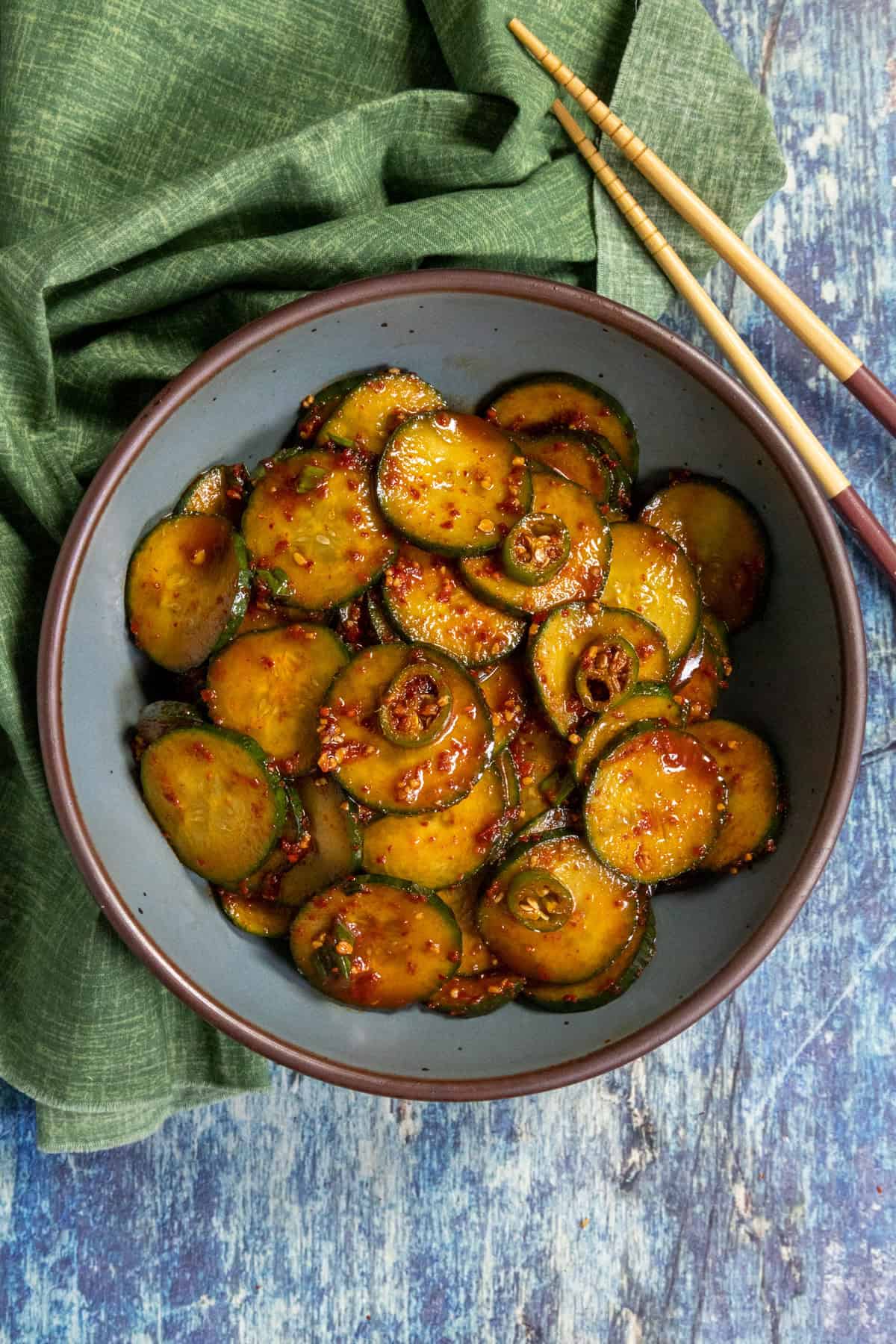
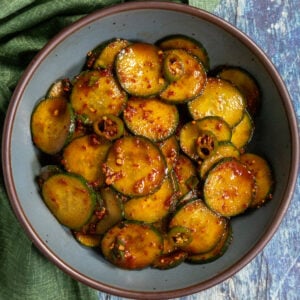
This Korean cucumber salad recipe is crisp, spicy, and packed with bold flavor, made with thinly sliced cucumbers, gochugaru, gochujang, garlic, and sesame oil. Quick, easy, and ready in 20 minutes!
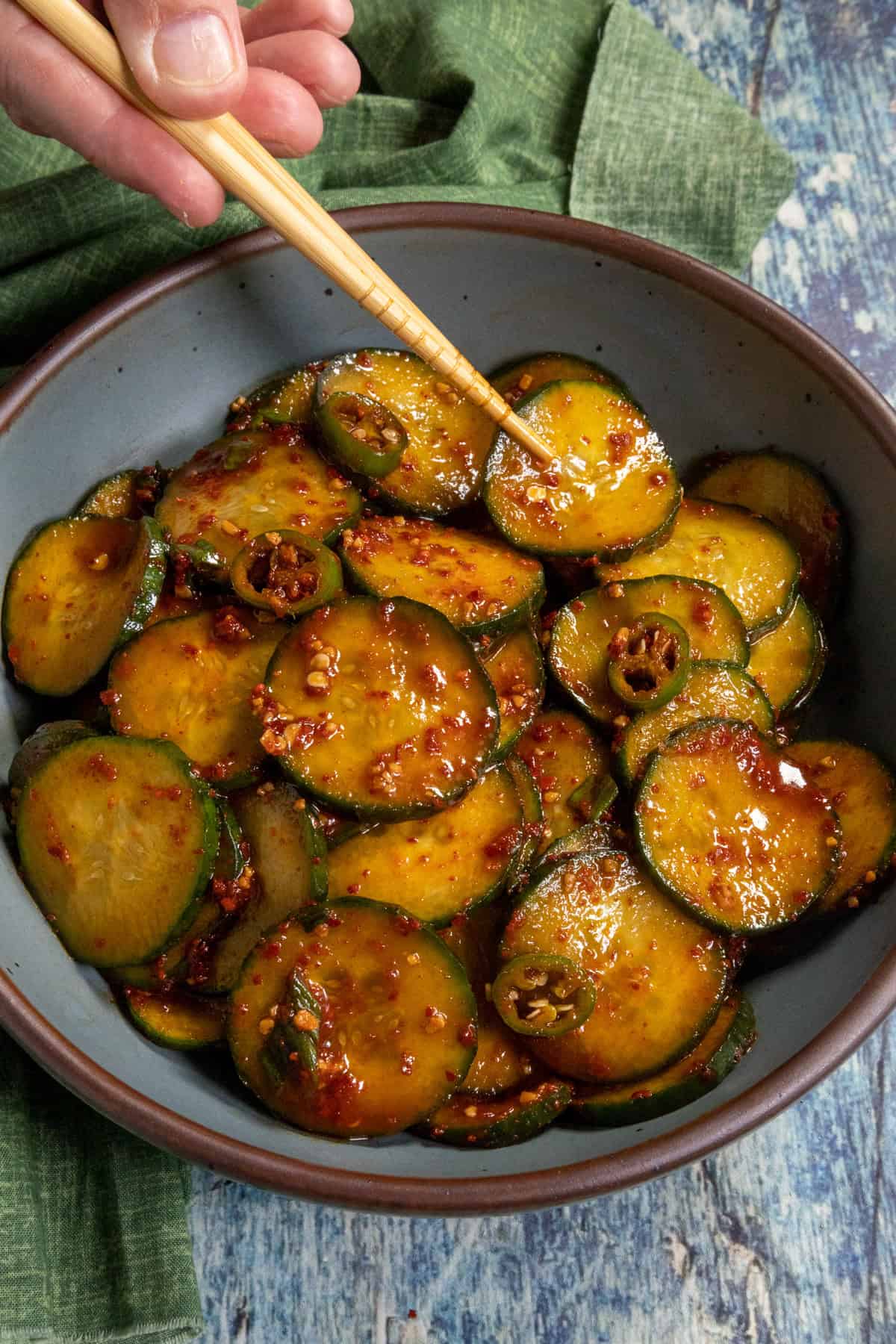
If there’s one side dish you need on every Korean table, this is the one. Korean cucumber salad, called oi muchim, is spicy, tangy, garlicky, and ready in 20 minutes with almost no effort. Once you make it, you'll want to make it over and over again.
In Korean, "oi" means cucumber, and "muchim" means seasoned or tossed with sauce. Together, oi muchim is one of the most popular banchan, the small Korean side dishes served along with rice and a main, and for good reason. It's easy and satisfying with only handful of pantry ingredients, fresh cucumbers, and a dressing that hits all the flavor spots - spicy, savory, tangy, and just a touch sweet.
For this recipe, I’m using both gochugaru (Korean red pepper flakes) and gochujang (fermented Korean chili paste) in the dressing. Most recipes use one or the other. Using both gives you the perfect touch of heat from the gochugaru and that deep fermented flavor from the gochujang. This combination is something the standard recipe just doesn’t have. Toss in plenty of garlic, a good pour of toasted sesame oil, and boom.
Let’s talk about how to make Korean cucumber salad, shall we?
What is Oi Muchim?
Oi muchim (오이무침) is a traditional Korean cucumber side dish, or "banchan". Banchan are small plates served with every Korean meal, typically rice, a main dish, and a selection of small plates that bring freshness, spice, crunch, and contrast to the table. Kimchi is the most famous banchan, but oi muchim is right up there as a typical staple.
Oi muchim isn’t fermented like kimchi. It’s a fresh salad meant to be made and eaten quickly, which is another reason to love it. You get big Korean flavor in the time it takes to slice cucumbers and whisk a dressing. You'll find variations in every Korean household - some mild and light, some heavy on garlic and gochugaru, some with onion or carrot. This is the CPM version, punchy, garlicky, and made for people who love chili peppers.
Korean Cucumber Salad Ingredients
The full ingredients list with measurements is in the printable recipe card at the bottom of the post.
- Cucumbers. Persian or English cucumbers are best - thin-skinned, low-seed, nice and crunchy. Korean cucumbers are traditional and worth finding at a Korean market if you can. Standard garden cucumbers will do in a pinch, but scrape out the seedy center first for the best results.
- Kosher salt. Salt draws out excess moisture before dressing. Don't skip it or you'll get a watery salad.
- Gochugaru (Korean red pepper flakes). Fruity, mildly smoky, and moderately hot, with a subtle sweetness underneath. It gives you a bright, clean heat. Learn more about gochugaru here.
- Gochujang (Korean red pepper paste). Gochujang adds fermented flavor and umami. Just one teaspoon rounds out the dressing like nothing else can. Learn more about gochujang here.
- Soy sauce. Savory, salty, umami perfection. Use tamari for gluten-free.
- Toasted sesame oil. Use toasted, not regular for a rich, silky dressing. The flavor difference is noticeable.
- Rice vinegar. Brightness and tang. Apple cider vinegar works in a pinch.
- Sugar. Just enough to balance the heat and vinegar. Honey works too.
- Garlic. Three to four cloves, or more to taste. Korean cooking is aggressive with garlic, so don't hold back. I love lots of garlic.
- Green onions, toasted sesame seeds, and optional fresh chili pepper. Sliced green onions for freshness and color, sesame seeds for finishing texture, and a sliced serrano or Korean green pepper if you want that extra fresh heat layer on top of the gochugaru.
How to Make Korean Cucumber Salad
This comes together quick and easy. Here’s the full process with helpful details.
Step 1: Slice the Cucumbers. Cut your cucumbers into thin rounds, about 1/8 to 1/4 inch thick. A mandoline makes this fast and easy with uniform slices, but a sharp knife works just as well.
Step 2: Salt and Drain. Place the sliced cucumbers in a colander or bowl, toss with the kosher salt, and let sit for 10 to 15 minutes. You’ll see water pooling at the bottom - this is what you want. After resting, gently pat the cucumber slices dry with paper towels. Don’t squeeze them hard or you’ll bruise the slices and lose the crunch factor.
Why this matters: Salt draws out excess water from the cucumbers. If you skip it, that water dilutes the dressing and you end up with a soggy, watered-down salad instead of a nicely coated one.
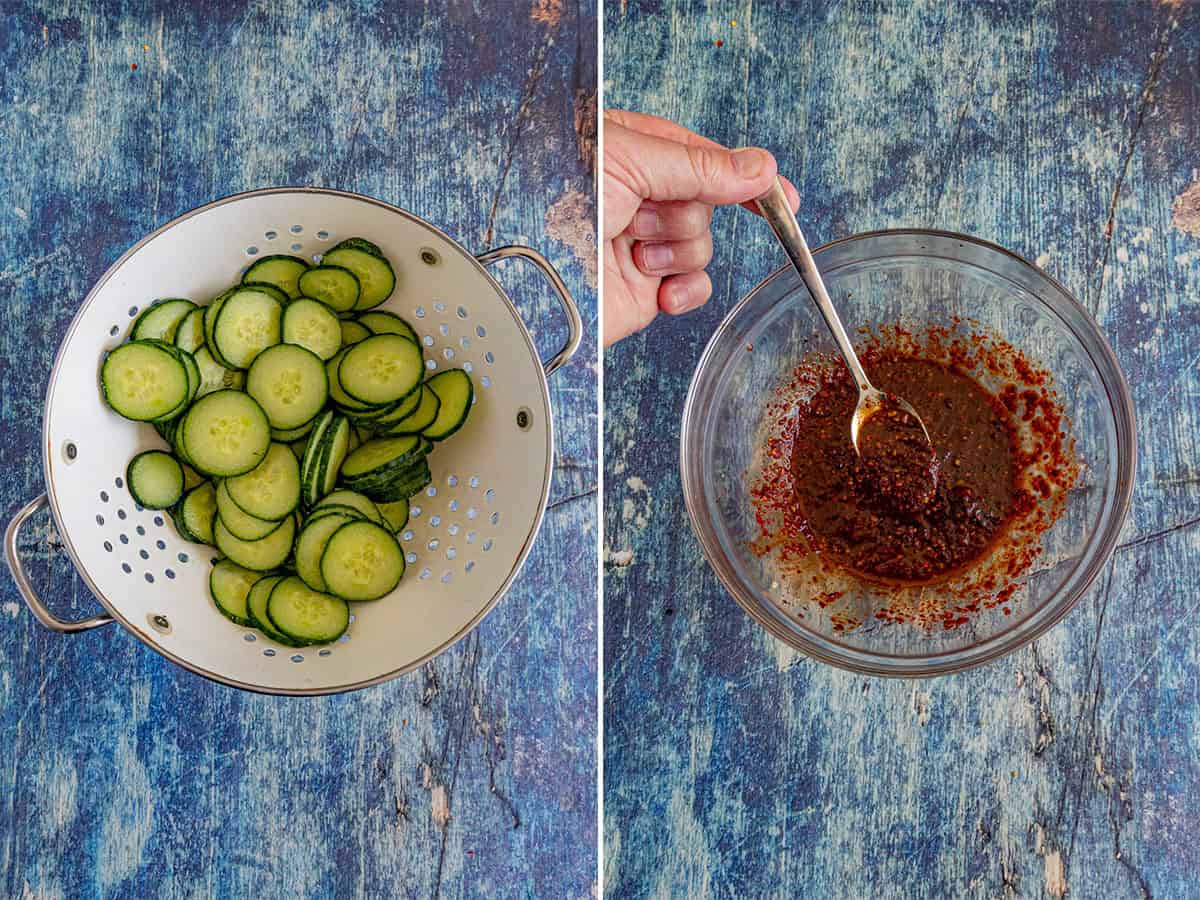
Step 3: Make the Dressing. In a large bowl, whisk together the gochugaru, gochujang, soy sauce, sesame oil, rice vinegar, sugar, and garlic. Gochujang is thick and needs a good whisk to break up.
Step 4: Toss and Coat. Add the cucumbers, sliced green onions, and fresh chili pepper if you’re using it. Toss well until every slice is evenly coated in that deep red dressing. Use your hands or tongs and really work it in.
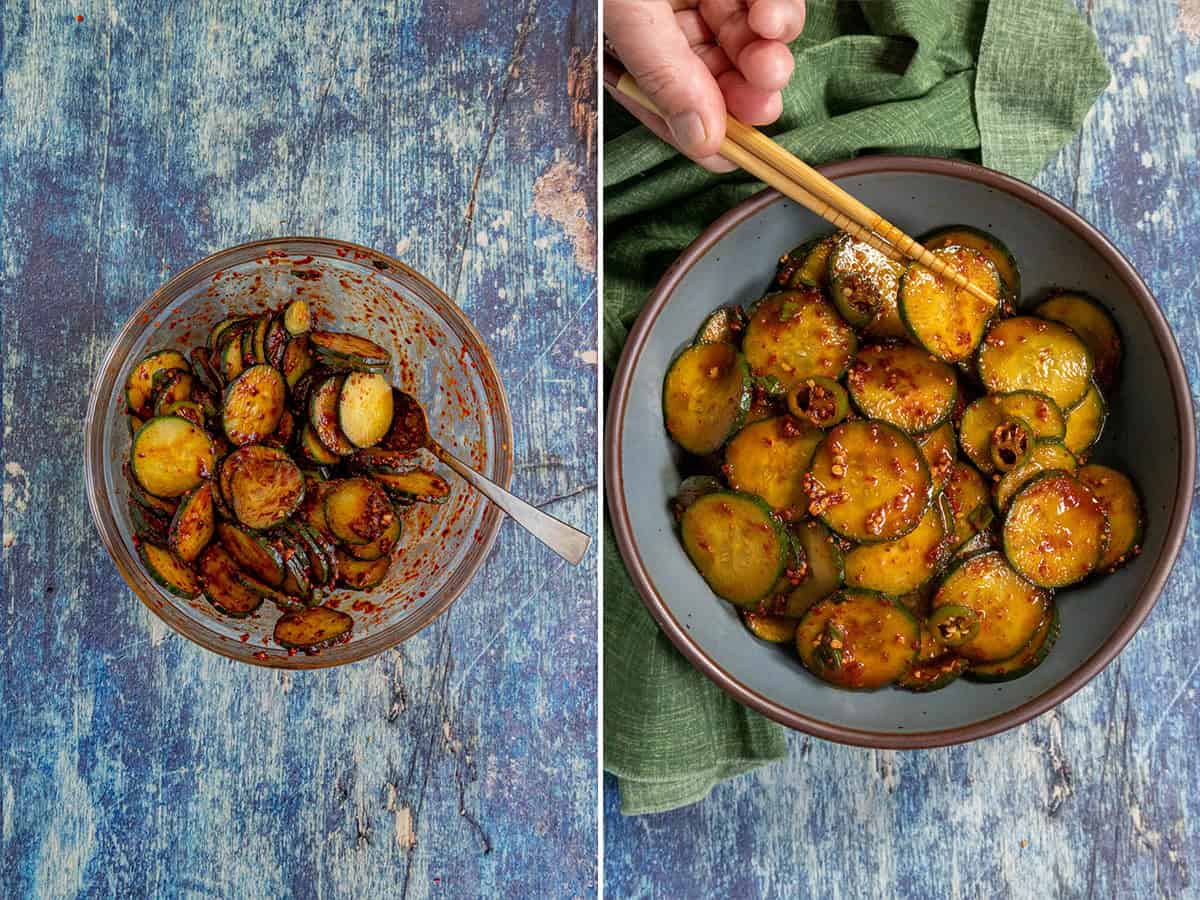
Step 5: Adjust, Garnish, and Serve. Taste it and adjust. More gochugaru if you want more heat. A splash more rice vinegar if it needs a bright acidic pop. A pinch more sugar if the balance is off. Finish with toasted sesame seeds and serve.
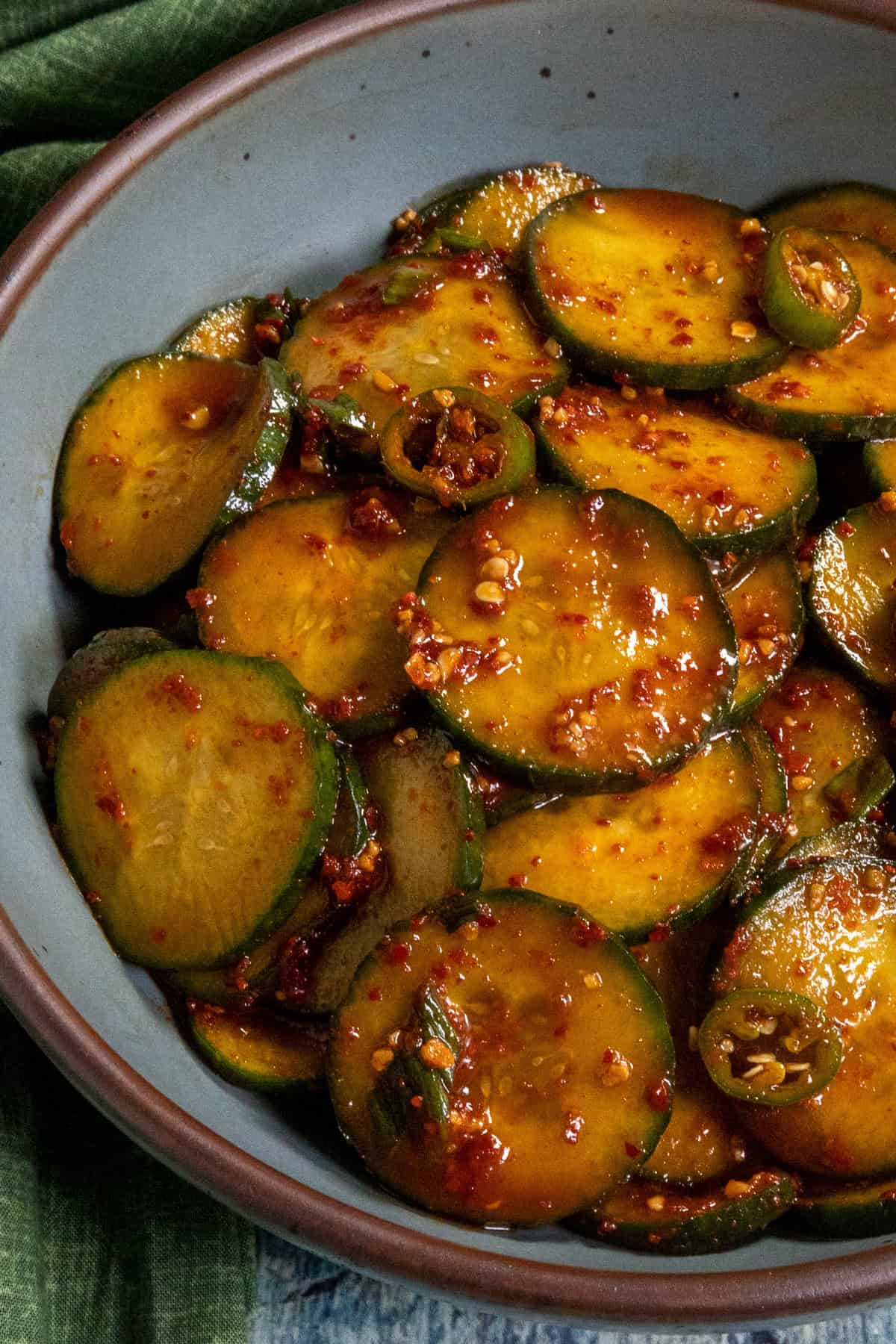
Boom! Done. Best served immediately for max crunch. You can also refrigerate for 10 to 15 minutes to let the flavors deepen a little. Either way, this salad is best eaten the day it’s made.
Recipe Tips & Notes
- Don’t skip the salt-drain step. It’s the difference between crisp and soggy. 10 to 15 minutes is all you need.
- Pat dry after draining. A quick pat with paper towels lets the dressing actually stick.
- Make-ahead option. Drain and dry the cucumbers and make the dressing, then store separately in the fridge. Toss together right before serving for full crunch.
- The smashed cucumber variation. If you prefer a more rustic texture, smash the cucumbers with the flat of a knife instead of slicing. The jagged edges hold dressing just right. For the full smashed version with chili crisp, check out my Asian Cucumber Salad.
Adjust the Heat Factor
Gochugaru runs milder than cayenne, so don't fear the tablespoon measurements. The default recipe rates at a solid medium to medium-low heat, with noticeable warmth with real flavor. Here's how to adjust to your preference.
- Mild: Use 1/2 tablespoon gochugaru for gentle warmth. Use a mild gochujang.
- Medium (default): Keep recipe as-is. Noticeable heat, well balanced with the dressing.
- Hot: Use 2 1/2 tablespoons gochugaru plus hot gochujang brand.
- Extra Hot: Use 2 1/2 tablespoons gochugaru, hot gochujang, plus one sliced serrano or Korean green pepper. Fresh chili heat layered on top of the gochugaru warmth. My kind of salad.
What to Serve with Korean Cucumber Salad
This is the perfect banchan, a Korean side dish served with a main. Pair it with rich, savory proteins because the vinegar and spice in the dressing cut through fat perfectly.
- Bulgogi. A classic pairing. Try my Beef Bulgogi (Homemade Korean BBQ Beef) or my Chicken Bulgogi Recipe (Dak Bulgogi).
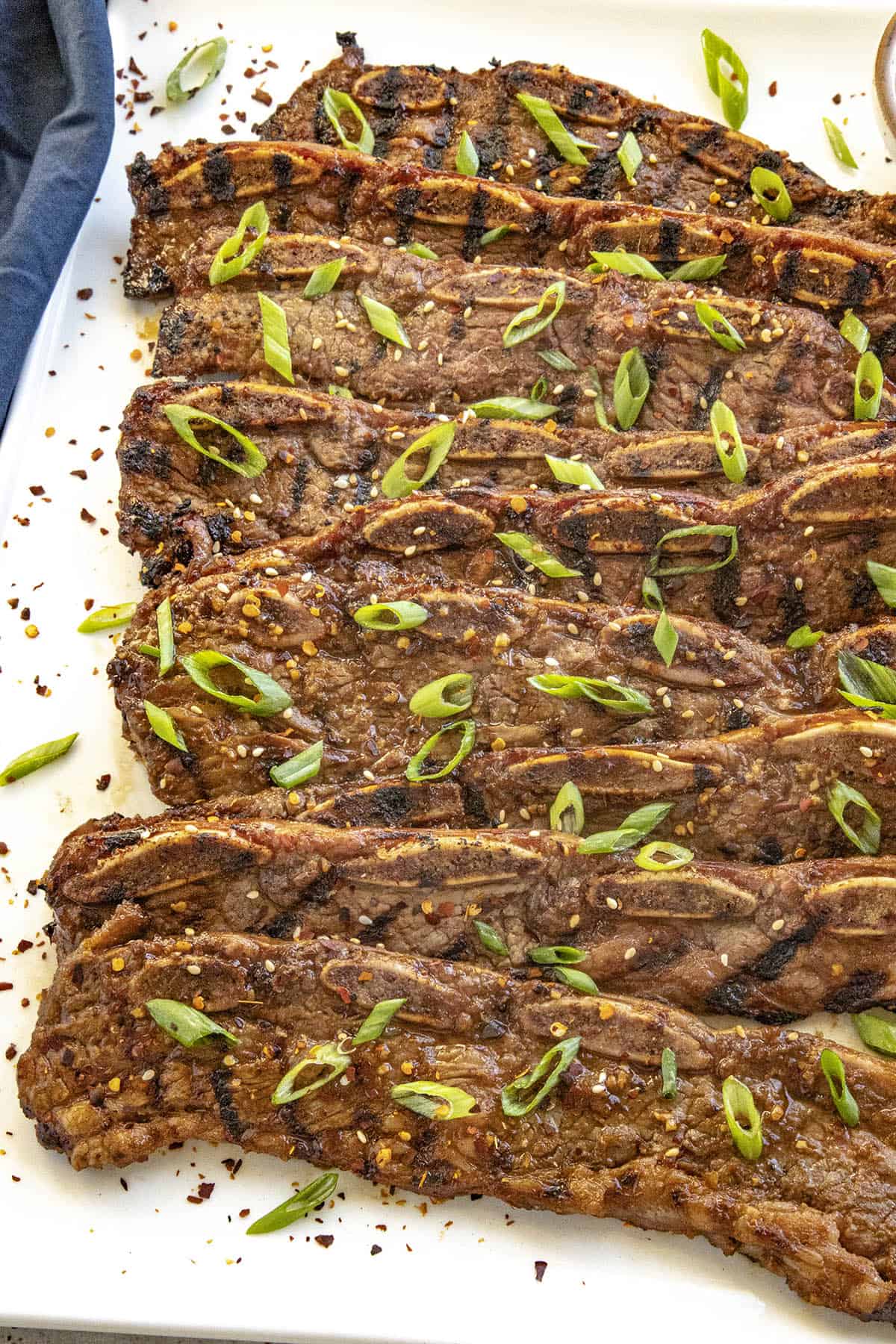
- Galbi (Korean short ribs). This salad is perfect to balance the rich, fatty flavors. Try my Galbi Recipe (Korean BBQ Beef Short Ribs) or Galbi Jjim Recipe (Korean Braised Short Ribs).
- Korean fried chicken. Hot, crispy Korean fried chicken and cold, spicy cucumber is one of those combinations that works just right.
- Bibimbap. Serve on the side or toss right into the bowl.
- Any Korean BBQ spread. Serve it anytime the grill is on.
- Rice bowls and noodle dishes. Great as a fresh, spicy side along with something warm and filling like gochujang noodles, tteokobkki (spicy Korean rice cakes), or kimchi fried rice.
Storage
Korean cucumber salad is best the day it’s made for the best crunch. The cucumbers will soften as the salad sits.
Store leftovers in an airtight container in the refrigerator for 2 to 3 days. You’ll lose some crunch after day one, but the flavor actually deepens as everything marinates together. It’s still very good on day two.
To serve leftovers, drain any excess liquid from the container and add a fresh sprinkle of sesame seeds and sliced green onion to refresh the dish.
Do not freeze. Cucumbers become soft and mushy, and the dressing won’t recover.
That's it, my friends. I hope you enjoy the Korean cucumber salad. Let me know if you make it. I'd love to hear how it turned out for you, and if you decided to spice it up!
Patty's Take
Patty took one bite and said, “Wow, we need this every time we do Korean BBQ.” I agree wholeheartedly. The combo of gochugaru and gochujang seriously rocks, way more flavor depth than a one-note dressing.
Get FLAVOR MADNESS - The Cookbook!
Have you seen my new cookbook FLAVOR MADNESS? Big Flavor Recipes! You absolutely can't miss it. Check it out!
More Korean Recipes to Try
If you love the bold flavors of Korean cooking, here are some of my favorites from the CPM kitchen.
- Tteokbokki - chewy Korean rice cakes tossed in a spicy red pepper sauce.
- Yukgaejang - hearty spicy Korean beef and vegetable soup, rich and deeply flavored.
- Gochujang Ground Beef Bowls - bold Korean-style ground beef over rice, ready in 10 minutes.
- Kimchi Jjigae - a classic Korean stew made with kimchi, pork, and tofu in a hearty, savory broth.
More Spicy Side Dish Recipes to Try
Looking for more bold sides to build a meal around? These are some of my go-to recipes.
- Sichuanese Spiced Cucumber Salad (Qiang Huang Gua) - sliced cucumbers with chilies, Sichuan peppercorns, sesame oil, and chili crisp.
- Chiles Toreados - blistered Mexican chili peppers with soy sauce and lime.
- Candied Jalapeños - sweet, spicy, and impossible to stop eating.
- Mofongo - crispy fried plantains mashed with garlic and pork.
Got any questions? Ask away! I’m happy to help. If you enjoy this recipe, I hope you’ll leave a comment with some STARS. Also, please share it on social media. Don’t forget to tag us at #ChiliPepperMadness. I’ll be sure to share! Thanks! — Mike H.
Korean Cucumber Salad (Oi Muchim)
Ingredients
- 1 pound Persian or English cucumbers thinly sliced into 1/8 to 1/4-inch rounds
- 1/2 teaspoon kosher salt
- 1 1/2 tablespoons gochugaru Korean red pepper flakes, adjust to taste
- 1 teaspoon gochujang Korean red pepper paste
- 1 1/2 tablespoons soy sauce
- 1 tablespoon toasted sesame oil
- 1 tablespoon rice vinegar
- 1 teaspoon sugar
- 3 to 4 cloves garlic minced
- 2 green onions thinly sliced
- 1 teaspoon toasted sesame seeds
- 1 serrano or Korean green pepper thinly sliced (optional)
Instructions
- Slice cucumbers into thin rounds, about 1/8 to 1/4 inch thick. Place in a colander, toss with the kosher salt, and let sit 10 to 15 minutes to draw out excess moisture. Pat dry gently with paper towels.
- In a large bowl, whisk together the gochugaru, gochujang, soy sauce, sesame oil, rice vinegar, sugar, and garlic until the gochujang is fully incorporated.
- Add the drained cucumbers, green onions, and fresh chili pepper if using. Toss well until every slice is evenly coated.
- Taste and adjust - more gochugaru for heat, vinegar for tang, or sugar for balance.
- Garnish with toasted sesame seeds. Serve immediately for best crunch, or refrigerate 10 to 15 minutes for more developed flavor.
FAQs
Oi (오이) is the Korean word for cucumber. Muchim (무침) means to season or toss with sauce. So oi muchim translates roughly to seasoned cucumber, which is exactly what it is.
Both are fresh Korean cucumber side dishes, and the terms are sometimes used interchangeably. Oi muchim typically involves a marinade with soy sauce, gochugaru, and garlic, while oi saengchae is a lighter dish with vinegar and sugar, more like a quick pickle. This recipe is firmly oi muchim.
No, though they’re cousins in the Korean side dish family. Kimchi is fermented for days or weeks to develop that funky, sour flavor. Oi muchim is fresh, made and eaten the same day or within a few days. Think of it as kimchi’s quick, unfussy counterpart for weeknights.
At the default amount (1 1/2 tablespoons gochugaru), this is a solid medium heat, noticeable and warming, but not aggressive. Gochugaru runs milder than cayenne, so don’t let the amount scare you. See the "Adjust the Heat Factor" section above to find your level, and add a sliced serrano pepper for fresh chili heat on top of the gochugaru warmth.
Bill Hickok says
Been making this to go with grilled and smoked meats for the last month. Easy to make and delicious. It's a hit with the whole family, even the grandkids!
Mike Hultquist says
Great! Thanks, Bill! I appreciate the helpful comments. I've been working on adding more side dishes that pair perfectly with spicy foods. Glad this was a hit!
Therese McRae says
This is delicious! I made it pretty much exactly as written, subbing in a bird chili for additional heat. I will make this again but might back off the garlic from 3 to 2 cloves so it doesn't linger so much. I love these quick recipes made from pantry staples!
Mike Hultquist says
Thanks, Therese! Glad you enjoyed it!
Chris says
Another great recipe! Thank you!
Mike Hultquist says
Thanks, Chris! Great to pair with all sorts of spicy dishes!
Phillip A Minor says
Delicious but mighty spicy!
Mike Hultquist says
Definitely got some heat! Thanks, Phillip.