



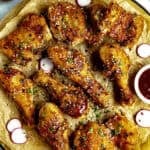
Extra crispy Korean fried chicken, coated in potato starch, double-fried until light and crackly, and tossed in a sticky, sweet and savory gochujang sauce, just like your favorite Korean chicken shop.
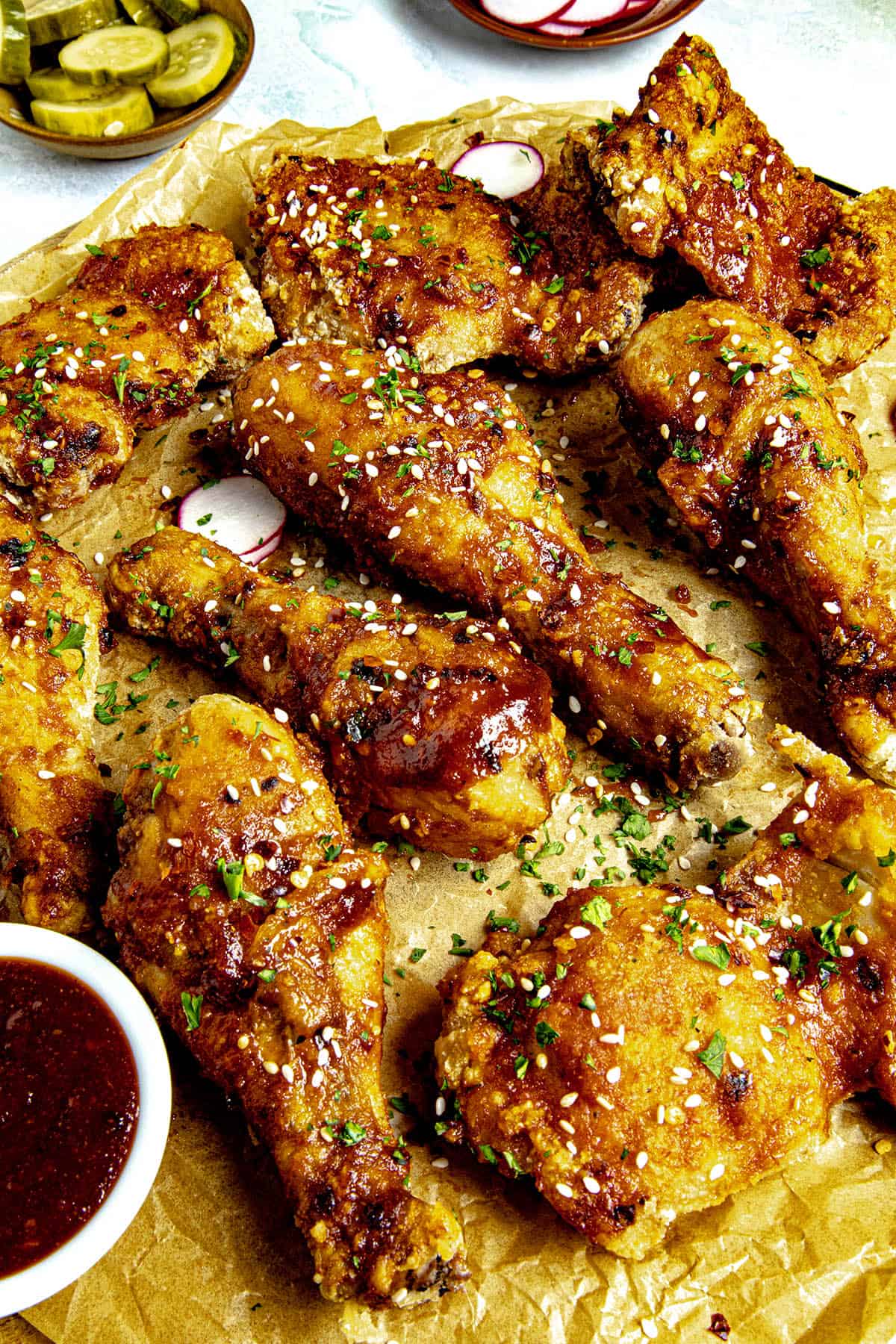
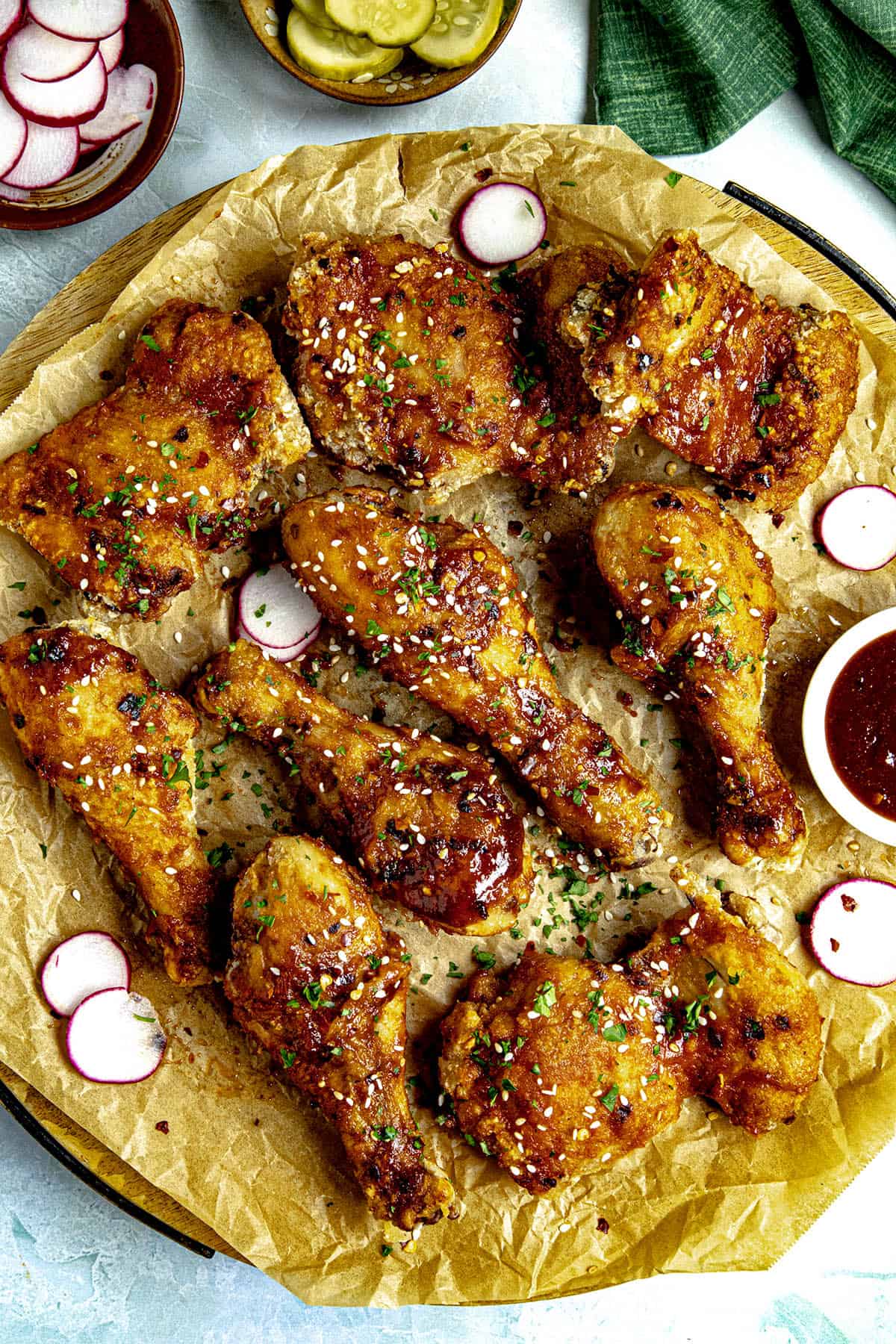
Korean Fried Chicken
Once you try Korean fried chicken, you want it all the time. We have truly fantastic places here in the Charlotte area, and we can't get enough. I make it at home, too, because it's just so dang satisfying.
Korean fried chicken is fried chicken taken to another level, my friends. The crust is thin and crackly instead of thick and bready, and it stays crunchy even after you toss it in a sticky sauce. That's the magic of the double fry.
This is my version of yangnyeom chicken, the sweet, savory and gently spicy style you'll find at Korean chicken shops everywhere. I season the chicken with fresh ginger and garlic, coat it in potato starch, fry it twice, then toss it in a gochujang sauce with ketchup, honey and plenty of garlic. I also give you a soy garlic sauce, so you can go half and half the way I see it in many of the chicken shops.
If you want to dig deeper into Korean cooking, I love Hooni Kim's cookbook My Korea (affiliate link, my friends). His fried chicken wings with two sauces got me thinking about my own half and half version at home.
What is Korean Fried Chicken?
Korean fried chicken is chicken that is seasoned, coated in starch and fried twice for a thin, extra crispy crust. Cooks often toss it in a sauce, most famously yangnyeom, a sticky sweet and spicy glaze made with gochujang, or a savory soy garlic glaze.
Fried chicken is huge in South Korea, and chicken places there serve it by the platter, usually with ice-cold beer. Koreans even have a word for the combo, chimaek, from chikin and maekju (beer). I'm definitely down with the beer!
Compared to Southern-style fried chicken, Korean fried chicken has a much thinner coating that doesn't use a buttermilk dredge. The second fry makes it perfectly extra crispy by pulling more moisture out of the skin and crust. No soggy fried chicken here.
Korean Fried Chicken Ingredients
- Chicken. I use bone-in pieces, like wings, drumsticks and small thighs. Boneless thigh chunks work great too. See the frying chart below.
- Rice Wine, Ginger and Garlic. A quick seasoning that flavors the meat itself. Mirin works in place of rice wine.
- Potato Starch. This is the key to the crispy crust, and it's all you need for the coating. Cornstarch works too, but potato starch fries up lighter and crispier. It's the Korean way.
- Oil for Frying. Peanut oil is great. Canola or vegetable oil work too.
- Gochujang. Korean fermented chili paste and the key ingredient of the sauce. It's savory, a little sweet and only gently spicy.
- Ketchup. Yes, ketchup! It's a classic ingredient in yangnyeom sauce and gives it that tangy sweetness. You can use tomato sauce if you prefer. I've tested this and it does work nicely.
- Honey or Rice Syrup. For sweetness and a sticky glaze. Korean rice syrup is traditional, and corn syrup works too.
- Brown Sugar, Soy Sauce, Rice Vinegar and Sesame Oil. For extra flavor and a nutty finish.
- Gochugaru. Korean chili flakes, for a little extra warmth.
- For Serving. Toasted sesame seeds and sliced green onions.
How to Make Korean Fried Chicken
Season the chicken. Add the chicken to a large bowl with the rice wine, ginger, garlic, salt and pepper. Toss to coat and refrigerate for 30 minutes, or up to overnight. For the crispiest skin, let it air dry on a rack in the fridge (see the tip below).

Coat the chicken. Add the potato starch to a large bowl. Roll the chicken pieces in the starch, then squeeze each piece firmly to press the starch into the skin.

Heat the oil. Heat about 2 inches of oil in a large, heavy pot to 350°F. It's easy with a deep-fry or instant-read thermometer. Fry in small batches. Crowding the pot drops the oil temperature fast, which will affect the crispiness.

First fry. Shake off any excess starch and fry the chicken until pale golden and nearly cooked through, 3 to 4 minutes for wings and 7 to 8 minutes for drumsticks and thighs. Move the pieces to a wire rack set over a sheet pan and let them rest 5 to 10 minutes while you fry the rest. The rest lets steam escape from the crust before the second fry.
Make the sauce. While the chicken rests, heat the oil in a small pot over low heat and cook the garlic for 30 seconds. Stir in the gochujang, ketchup, honey, brown sugar, soy sauce, rice vinegar and gochugaru. Simmer 3 to 5 minutes, until lightly syrupy. Remove from the heat and stir in the sesame oil.

Second fry. Raise the oil to 375°F and fry the chicken again in batches for 3 to 5 minutes, until deep golden and crispy-crackly. Bone-in pieces should reach 175°F inside, with 165°F as the minimum. Drain on the wire rack.

NOTE: I like to use my Thermapen meat thermometer from ThermoWorks (I’m an affiliate) to get the perfect temperature every time. Works great!
Toss and serve. Toss the hot chicken in the warm sauce right before serving. Garnish with sesame seeds and green onions or chopped fresh herbs and dig in while it's crunchy.
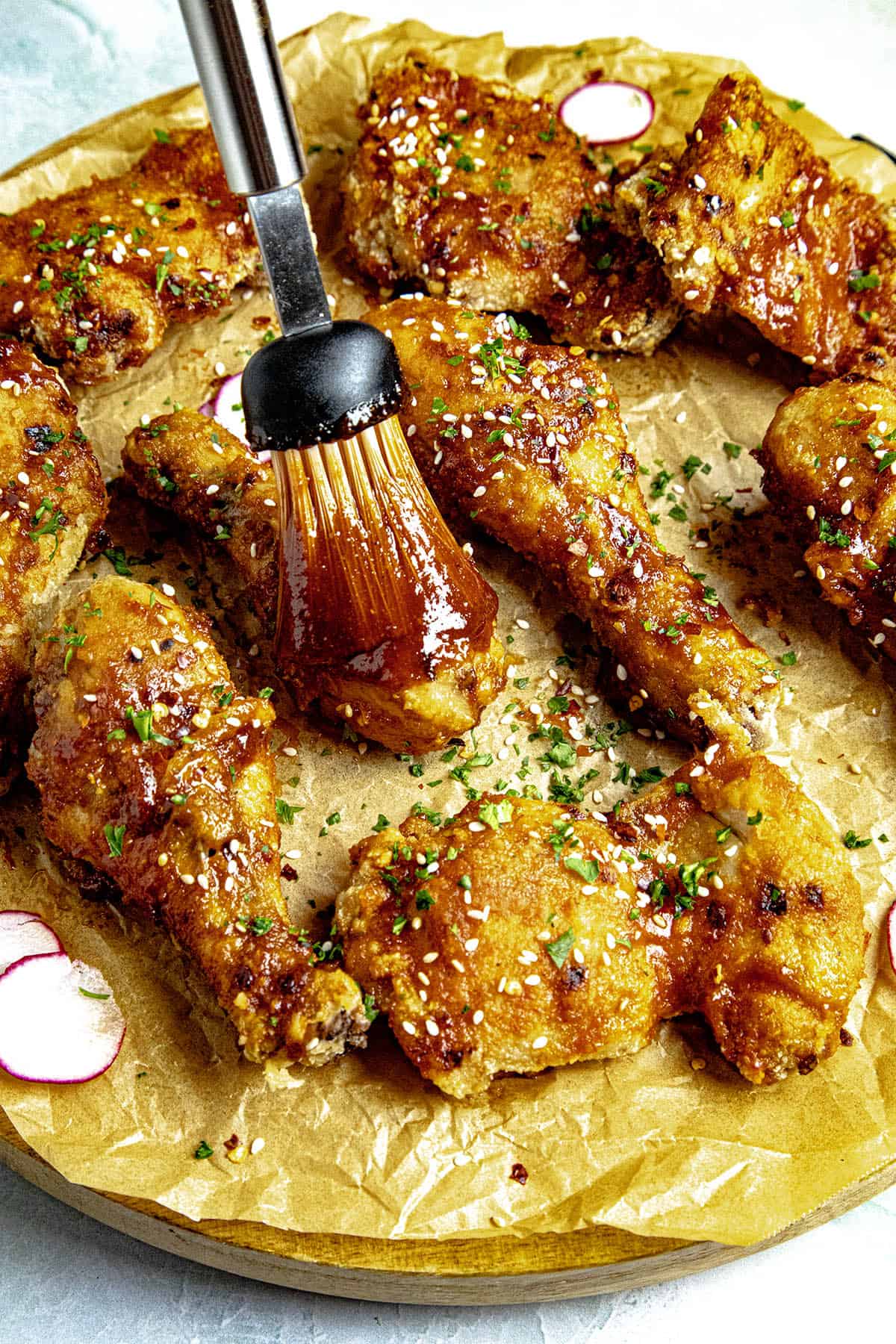
BOOM! That's it, my friends! Crunchy, sticky Korean fried chicken, right in your own kitchen. Every bite is crispy and amazing.
Soy Garlic Sauce (Half and Half)
I see soy garlic chicken served as much as yangnyeom, and you can even order half and half. The soy garlic sauce is savory-sweet and loaded with garlic, with no gochujang at all. This makes enough for the full batch of chicken. It's easy to cut in half.
- 1 tablespoon neutral oil
- 2 tablespoons minced garlic
- 1 teaspoon grated fresh ginger
- 2 to 4 dried red chilies, snipped into pieces (optional)
- ¼ cup soy sauce
- ¼ cup honey (or rice syrup)
- 2 tablespoons brown sugar
- 2 tablespoons water
- 1 tablespoon rice vinegar
- 1 teaspoon toasted sesame oil
To make it, heat the oil in a small pot over low heat and cook the garlic, ginger and dried chilies for 30 seconds. Stir in the soy sauce, honey, brown sugar, water and rice vinegar and simmer 3 to 4 minutes, until lightly syrupy. Remove from the heat and stir in the sesame oil.
Korean Fried Chicken Frying Times
This recipe works with any cut of chicken. Frying times depend on the size of your pieces, as well as bone-in vs boneless, so use these as a guide and trust your thermometer.
- Wings: First fry at 350°F for 3 to 4 minutes. Second fry at 375°F for 3 to 4 minutes.
- Drumsticks and bone-in thighs: First fry at 350°F for 7 to 8 minutes. Second fry at 375°F for 3 to 5 minutes.
- Boneless chunks (1½ to 2 inches): First fry at 350°F for 3 to 5 minutes. Second fry at 375°F for 2 to 3 minutes.
Bone-in dark meat is safe at 165°F but turns more tender at 175°F and up, so don’t be afraid to give it an extra minute. Note that cooking times can vary based on many variables, like the size of your chicken, so it's best to trust your thermometer.
What to Serve with Korean Fried Chicken
Korean fried chicken traditionally comes with chicken mu, cubes of pickled radish that balance the richness of the dish. Here's my quick version.
Quick Chicken Mu (Pickled Radish)
Cut 1 pound of daikon radish into ½-inch cubes. Stir together 1 cup water, ½ cup rice or white vinegar, ⅓ cup sugar and 1 tablespoon kosher salt until dissolved. Pour it over the radish and refrigerate at least 1 hour. Overnight is even better.
I also love it with steamed rice, a crisp Korean Cucumber Salad (Oi Muchim), a bowl of homemade Kimchi, and of course a cold beer or Korean soju.
Recipe Tips & Notes
Why Double Fry?
The first fry cooks the chicken through, and the second fry at a higher temperature makes the crust crisp. The short rest in between lets steam escape, so the second fry turns the crust crispy and crunchy instead of greasy.
Air-Dry the Chicken for Extra Crispy Skin
Here's a great tip from a longtime reader who has made Korean fried chicken in Asia for about 10 years, a trick his Korean friends taught him. After seasoning the chicken, set the pieces on a wire rack and let them air dry, ideally uncovered in the fridge for a few hours or overnight. Drier skin fries up much crispier. Pat away any surface moisture before you coat the chicken. He also squeezes the potato starch onto each piece and lets it sit for a while so it bonds with the skin before frying. Then fry in small batches so the oil stays at temperature.
Potato Starch vs. Cornstarch
Both work. Potato starch gives you a lighter, crisper, more delicate crust, which is why so many Korean cooks use it. Cornstarch makes a slightly harder crunch. Look for potato starch in Asian markets or the baking aisle.
Keep It Crispy
Drain the chicken on a wire rack if you can instead of paper towels, and toss it in sauce right before you serve it. The longer sauced chicken sits, the more the crust softens.
Gochujang and Heat
Gochujang comes in a range of heat levels, from mild to hot, and the one you buy sets the heat of the sauce. As written, this chicken is nicely spiced, not hot. For milder chicken, use mild gochujang and skip the gochugaru. For more heat, use a hot gochujang or add more gochugaru. If you want real fire, try my Buldak (Korean Fire Chicken).
Make Ahead and Reheating
You can do the first fry up to a couple of hours ahead and hold the chicken on a rack, then do the second fry right before serving. To reheat leftovers, bake them on a rack at 400°F until hot and crisp, then toss in warmed sauce. Store leftover sauce separately in the fridge.
I hope you enjoy my Korean Fried Chicken recipe. It's a keeper, and a total crowd pleaser for game day. Enjoy!
More Korean Recipes
If you love Korean flavors as much as I do, try my Buldak (Korean Fire Chicken), Gochujang Chicken, Chicken Bulgogi, Beef Bulgogi, Tteokbokki and Gochujang Sauce.
See all of my Korean Recipes.
Got any questions? Ask away! I’m happy to help. If you enjoy this recipe, I hope you’ll leave a comment with some STARS. Also, please share it on social media. Don’t forget to tag us at #ChiliPepperMadness. I’ll be sure to share! Thanks! — Mike H.
Korean Fried Chicken
Ingredients
FOR THE KOREAN FRIED CHICKEN
- 3 pounds bone-in chicken pieces (wings, drumsticks or small thighs) patted dry
- 2 tablespoons rice wine or mirin
- 1 tablespoon grated fresh ginger
- 4 cloves garlic grated
- 1 1/2 teaspoons kosher salt
- 1/2 teaspoon black pepper
FOR THE COATING
- 1 cup potato starch (or cornstarch)
- 6-8 cups peanut oil for frying
FOR THE KOREAN FRIED CHICKEN SAUCE (YANGNYEOM SAUCE)
- 1 tablespoon neutral oil
- 2 tablespoons minced garlic
- 1/4 cup gochujang
- 1/4 cup ketchup
- 1/4 cup honey or rice syrup
- 2 tablespoons brown sugar
- 1 tablespoon soy sauce
- 1 tablespoon rice vinegar
- 2 teaspoons gochugaru
- 1 teaspoon toasted sesame oil
FOR SERVING
- Toasted sesame seeds
- Sliced green onions
Instructions
- Season. Toss the chicken with the rice wine, ginger, garlic, salt and pepper. Refrigerate 30 minutes, or up to overnight.
- Coat. Roll the chicken in the potato starch, then squeeze each piece firmly to press the starch into the skin.
- First Fry. Heat the oil in a large heavy pot to 350°F. Shake off any excess starch and fry the chicken in small batches until pale golden and nearly cooked through, 3 to 4 minutes for wings or 7 to 8 minutes for drumsticks and thighs. Transfer to a wire rack. Rest 5 to 10 minutes.
- Sauce. Cook the garlic in the oil over low heat for 30 seconds. Stir in the remaining sauce ingredients except the sesame oil. Simmer 3 to 5 minutes, until glossy and lightly syrupy. Remove from the heat and stir in the sesame oil.
- Second Fry. Raise the oil to 375°F. Fry the chicken again in batches for 3 to 5 minutes, until deep golden and crackly. Bone-in pieces should reach 175°F inside (165°F minimum). Drain on the rack.
- Toss and Serve. Toss the hot chicken in the warm sauce. Garnish with sesame seeds and green onions and serve right away.
Notes
- Heat Factor: Medium, nicely spiced but not hot. For milder, use mild gochujang and skip the gochugaru. For more heat, use a hot gochujang or add more gochugaru.
- Soy Garlic Option: For the classic half and half platter, make a half batch of the yangnyeom sauce and a half batch of the soy garlic sauce in the post.
- Boneless: Use 1½ to 2-inch chunks of boneless thigh or breast. First fry at 350°F for 3 to 5 minutes, second fry at 375°F for 2 to 3 minutes.
Nutrition Information
Korean Fried Chicken FAQs
Is Korean fried chicken spicy?
Yangnyeom chicken is sweet, savory and gently spicy, more flavorful than hot. The heat comes from gochujang, which ranges from mild to hot, so you control it with the brand you buy. Soy garlic chicken has little to no heat at all.
What is yangnyeom chicken?
Yangnyeom chicken is Korean fried chicken tossed in a sticky sweet and spicy sauce made with gochujang, garlic, sugar or syrup and often ketchup. Yangnyeom means "seasoning" in Korean.
Why is Korean fried chicken so crispy?
A thin potato starch coating and the double fry. The first fry cooks the chicken, and the second, hotter fry drives out moisture so the crust turns thin, glassy and crunchy.
Can I make Korean fried chicken with boneless chicken?
Yes. Cut boneless thighs or breasts into 1½ to 2-inch chunks. First fry at 350°F for 3 to 5 minutes, then do the second fry at 375°F for 2 to 3 minutes. Thighs stay juicier, and breast meat is best pulled right at 165°F.
Should I use potato starch or cornstarch?
Potato starch gives the lightest, crispiest crust and is my first choice. Cornstarch works fine and makes a slightly harder crunch.
What is chicken mu?
Chicken mu is sweet and tangy pickled radish, cut into cubes and served with Korean fried chicken to cut through the richness. My quick version is in the serving section above.
NOTE: This recipe was updated on 10/29/26 with new information, including FAQs and new tips. It was originally published on 1/15/20.
Miska Knezevic says
WOW!
Mike Hultquist says
Yes! So good!
Richard says
Hi Mike, I'm an American living in Asia and I've been making K F C for about 10 years. There is an extra step that the Korean's taught me. After marinating the chicken, let it air dry on a rack. Some people let it air dry uncovered in the frig. This helps the skin get extra crispy when fried. After rolling in the potato starch (my Korean friends only use potato starch) squeeze the chicken pressing the starch and let it sit for a while to bond with the skin. Make sure you don't overcrowd the pan and keep the oil at 350. Your gochujang sauce is spot on !!!
Mike Hultquist says
Fantastic!! Thanks for sharing this tip. Richard! I do this exact thing with my chicken wings as well.
Ken Z. says
I plan to make this tonight, using my deep fryer. I will be using bone-in chicken thighs. How would you adjust the times for the 2-part frying?
Love your recipes--thanks!
Mike Hultquist says
Ken, cooking time should be the same, but be sure to cook to internal temp. Enjoy!! I appreciate it!!
William Butt says
I did not do the wings in oil, but baked them in the oven... and they were absolutely awesome! Great flavour and heat!!!
Mike Hultquist says
An excellent way to do it! Thanks, William!
Indi says
I was so excited to try this. I finally did. The sauce is great. the oil temp was a 350. The chicken wouldn't cook through until the skin was very dark even though the temp was correct at still beeding. I checked the temperture in different parts of the chicken still blood. I had to finish in the oven. It is great flavor.
GC says
Never have commented on a recipe before. This one is mind blowing. Used chicken wings diled heat back as family is spice adverse. FANTASTIC
Mike Hultquist says
Wow, that's awesome, GC! Glad you enjoyed it that much!
Anna says
Can this be done in an airfryer?
Mike Hultquist says
You can in batches, but it would be ideal to turn them part way through to make sure they get crispy.
Amy says
So, in an air fryer, what temp and for how long? Thanks.
Mike Hultquist says
I have not tested this yet, but if you do, let me know.
Jérémie says
I had already made this recipe, some time ago... t'was OK... But I think I had been lazy, with regard to compliance with measures. This time I was very scrupulous with your recipe and ...LOVED it! Excellent!! this crispy chicken is awesome and the sauce is delicious! Just love korean food. The only freedom taken was to coat the chicken with fresh chopped peter pepper (instead of flakes) and let it marinate for an hour.
Thanks Mike !! nom nom nom!!!
Michael Hultquist - Chili Pepper Madness says
Jérémie, that's really nice to hear. And I love your use of chopped peter peppers in the coating.
Rc says
Appreciate you putting the nutrition facts but what is the serving size.
Michael Hultquist - Chili Pepper Madness says
I calculated 8 ounces per serving, which is very large. FYI.