



I grew loads of peppers in my garden this year just so I could make this fermented hot sauce recipe. It is wonderfully spicy and big on flavor. Drizzle it over anything. Works for any type of peppers.
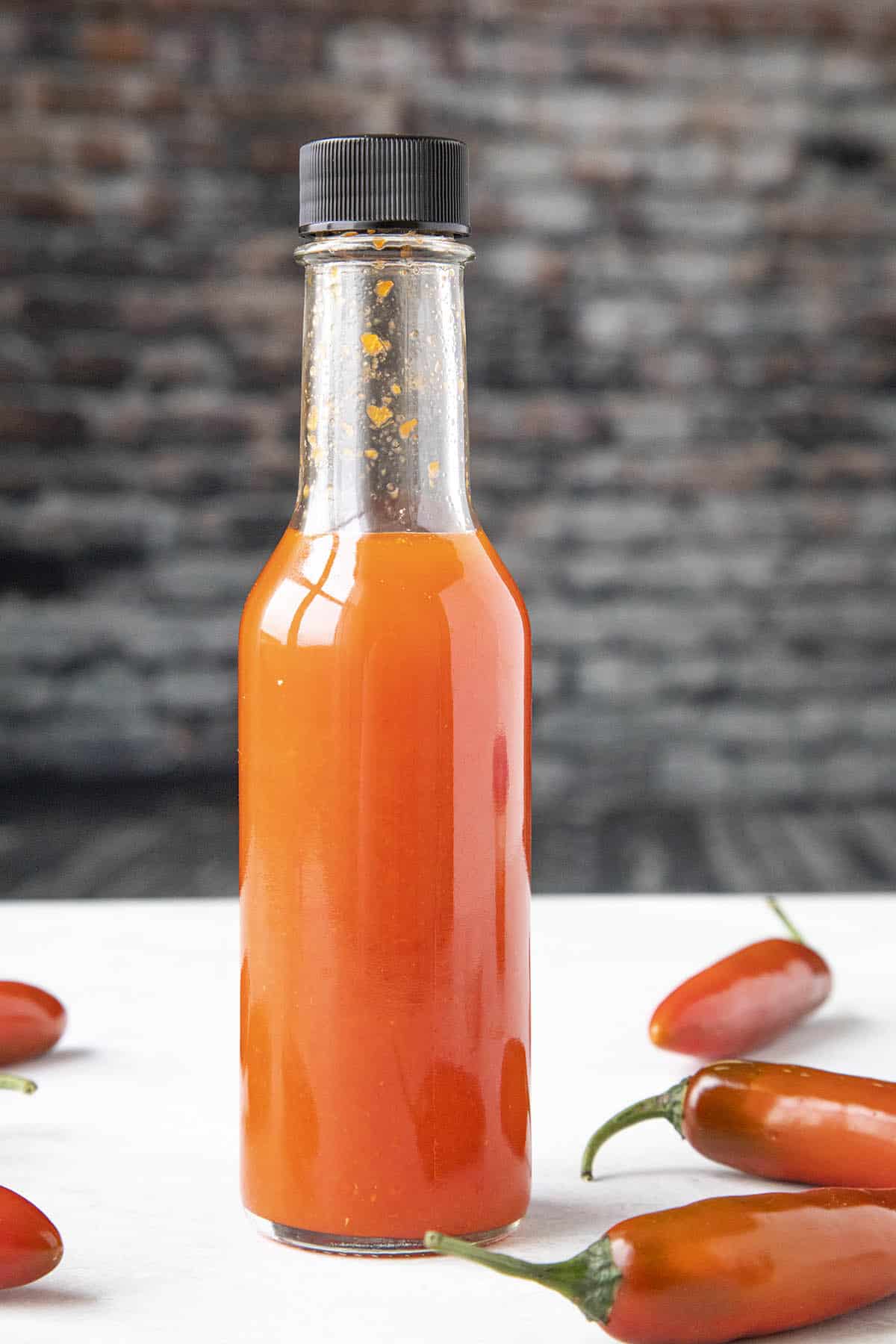
Fermented Hot Sauce Recipe
It's hot sauce making time in the Chili Pepper Madness household again, my friends. You know how much I LOVE my hot sauce. My garden exploded with peppers this year and I'm incredibly happy.
The plants were super productive and I am preserving them in so many different ways.
Food preservation is important. One of my favorite ways to preserve my peppers is to make hot sauce. I have a LOT of different hot sauce recipes here on the site, all with different styles, ingredients, and types of chili peppers.
For this particular hot sauce, I wanted a fermented version, which adds another layer of complexity to the sauce.
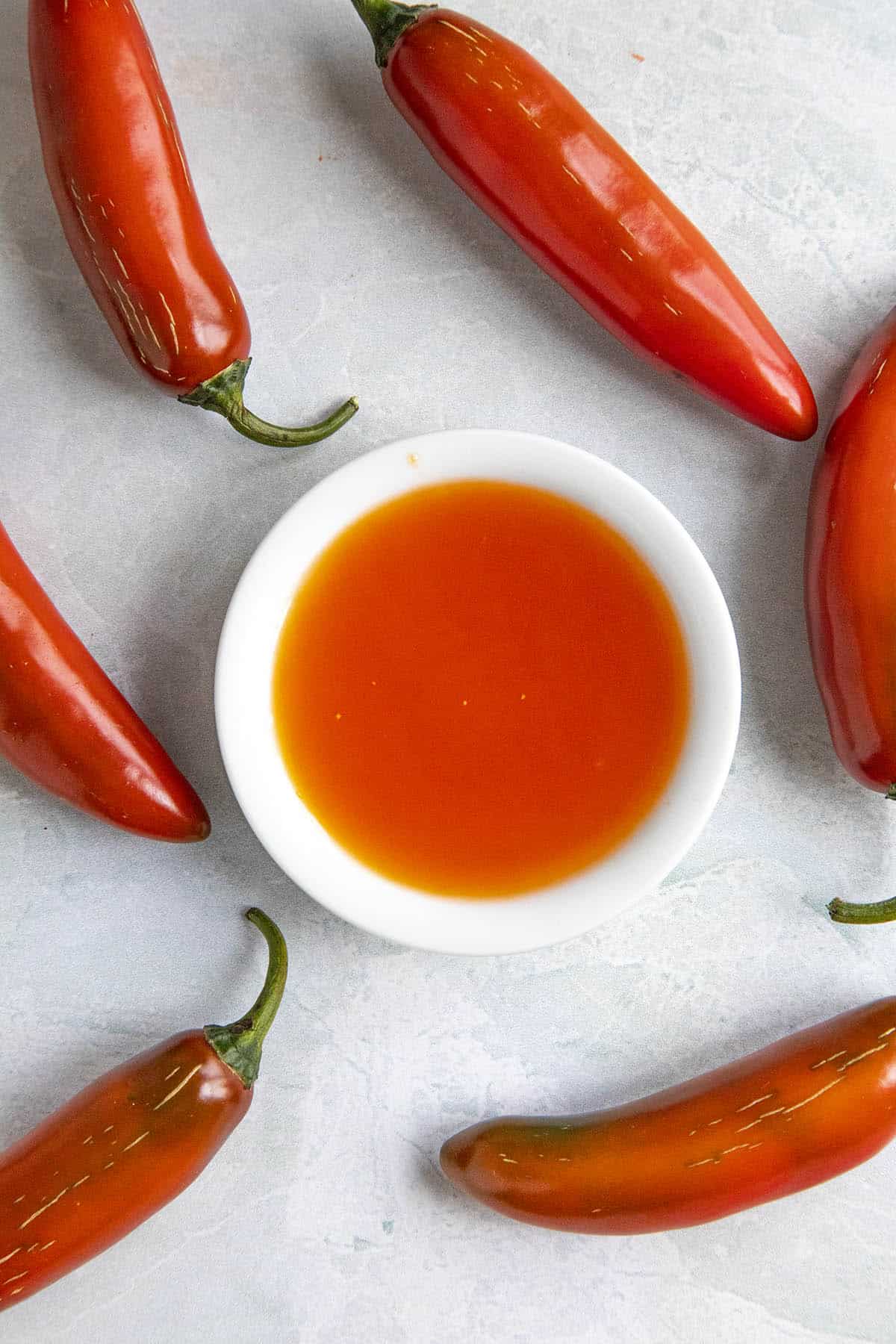
I grew serrano peppers and waited for them to turn red specifically so I could make this sauce. So many serranos! The plant was very productive.
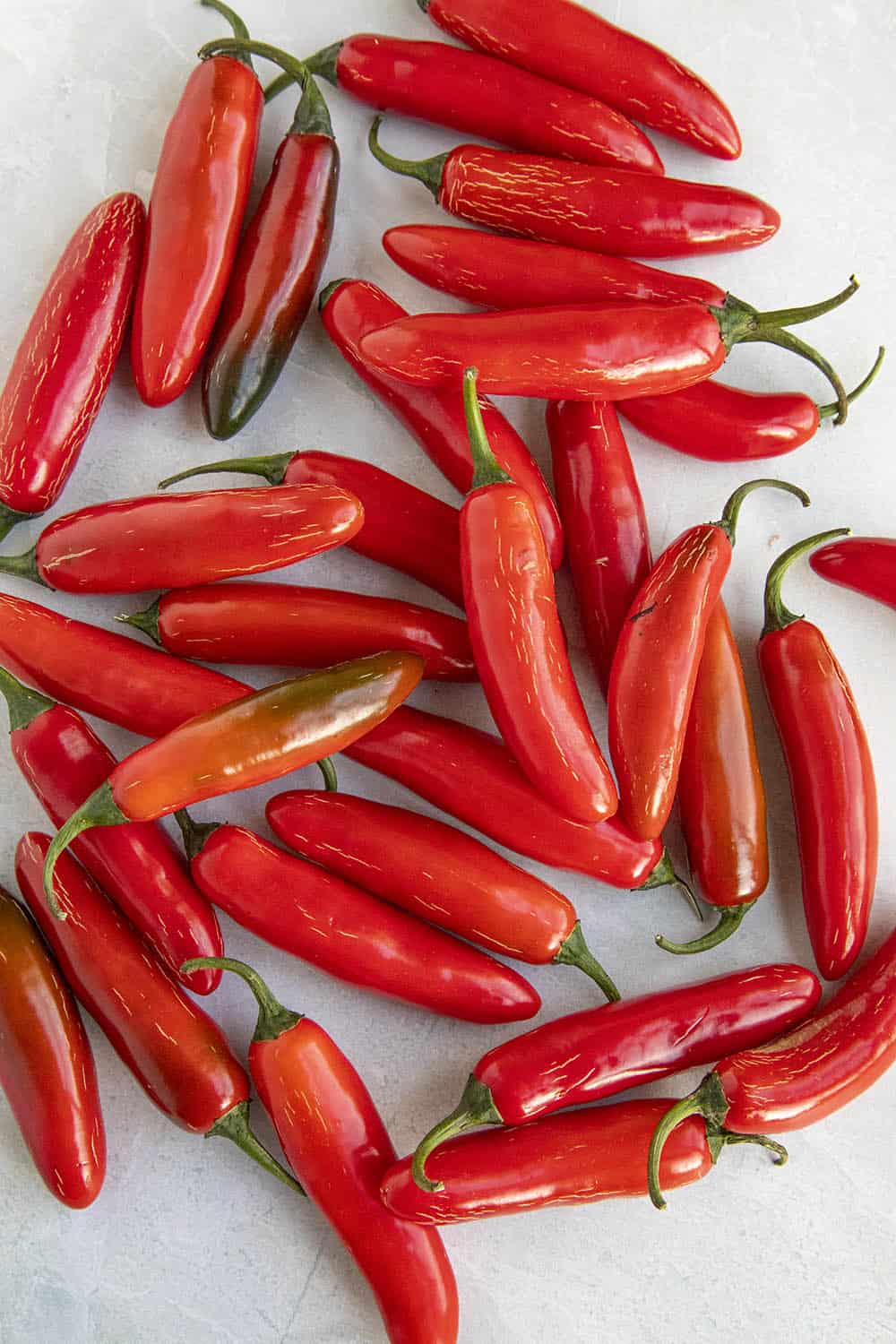
I just love serrano peppers. They're smaller than jalapeno peppers, but quite a bit hotter. In fact, the hottest serrano pepper is about 3 times hotter than the hottest jalapeno pepper.
They measure in at 10,000 to 23,000 Scoville Heat Units on the Scoville Scale. For me, that's a nice level of heat for an every day hot sauce.
You don't have to use serranos, though. This recipe works with any type of chili pepper.
This is a very simple hot sauce recipe, though we're fermenting the peppers first, which may sound complicated, but not at all.
What is Fermentation? And Why is it Good For Hot Sauce?
Fermentation is the decomposition of foods by micro-organisms (Lactic Acid Bacteria) or enzymes. We create an anaerobic (no oxygen) environment for the peppers so that good, beneficial bacteria can survive, and bad bacteria cannot survive.
The good bacteria is natural Lactic acid bacteria, which consumes carbohydrates in the peppers and converts them to acid. After fermenting, the carbohydrates have been predigested, leaving them with more vitamins and flavor than fresh peppers.
Bad bacteria, such as rotting molds, cannot survive in this oxygen-free environment. We create such an environment with salt and brine, which protect the peppers while the good bacteria do their work.
The salt is not actually the preservative. It is the acid produced by the fermentation process that does the preserving.
There are many benefits to fermented foods, including foods that are more digestible and have more developed flavor. When fermenting peppers, the flavors mellow, and peppers change color a bit, and develop a pleasant smell.
Fermentation is one our oldest methods of food preservation. People have preserved foods this way for generations, from wine to cheese to many, many vegetables, including peppers.
Let's talk about how to make a simple fermented hot sauce, shall we? Here is my recipe for fermented hot sauce.
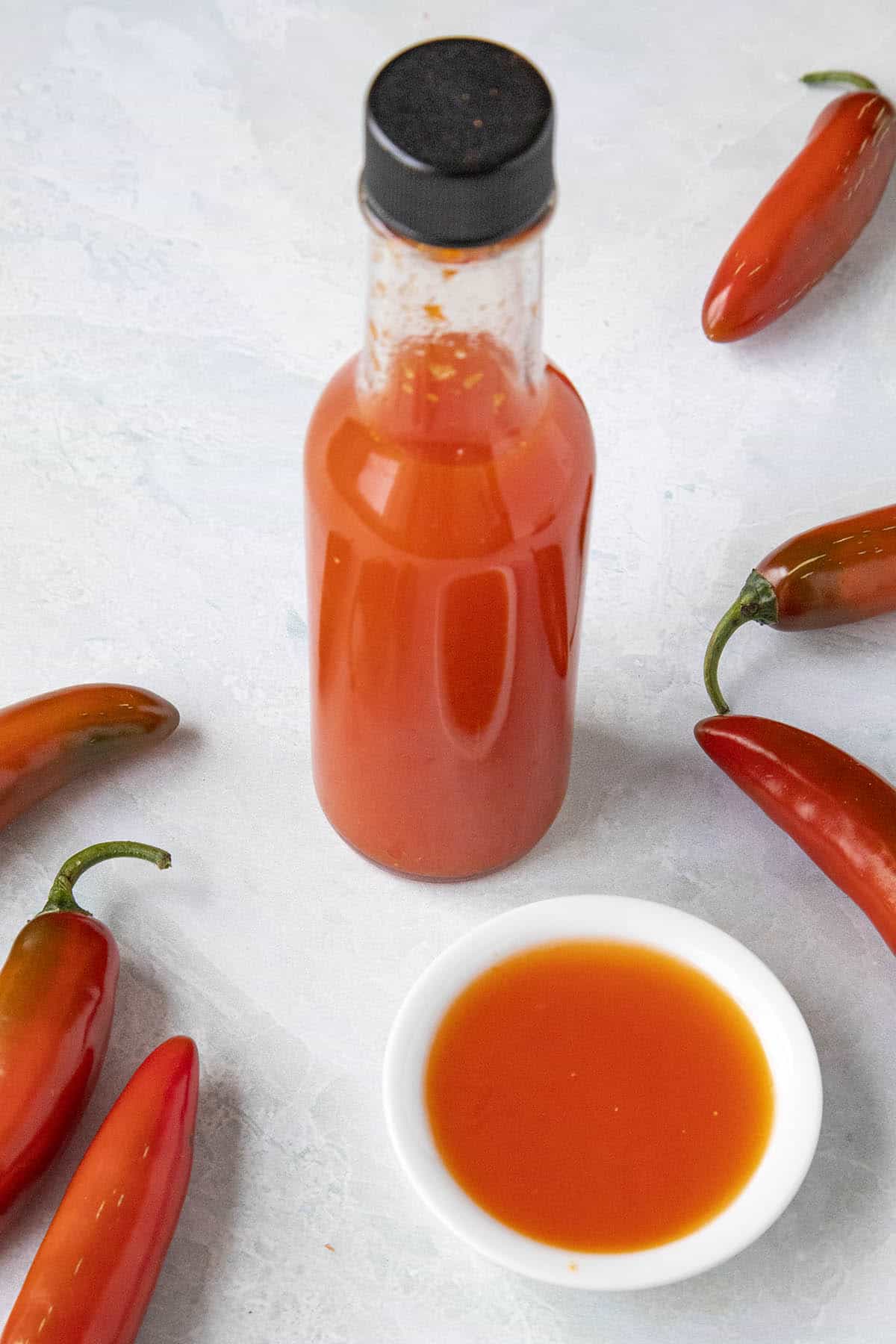
Ingredients Needed to Make Fermented Hot Sauce
- 1 pound chili peppers (stems removed - I'm using red serrano peppers)
- 1 quart unchlorinated water
- 3 tablespoons salt
- ½-1 cup white wine vinegar to your preference (use a good quality vinegar for better quality hot sauce)
How to Make Fermented Hot Sauce - the Recipe Method
First, ferment the chili peppers. Roughly chop the peppers, then pack them into a ball jar, leaving at least 1 inch of head space. The peppers may rise a bit when fermenting.
Mason jars are good to use as fermentation vessels as well.
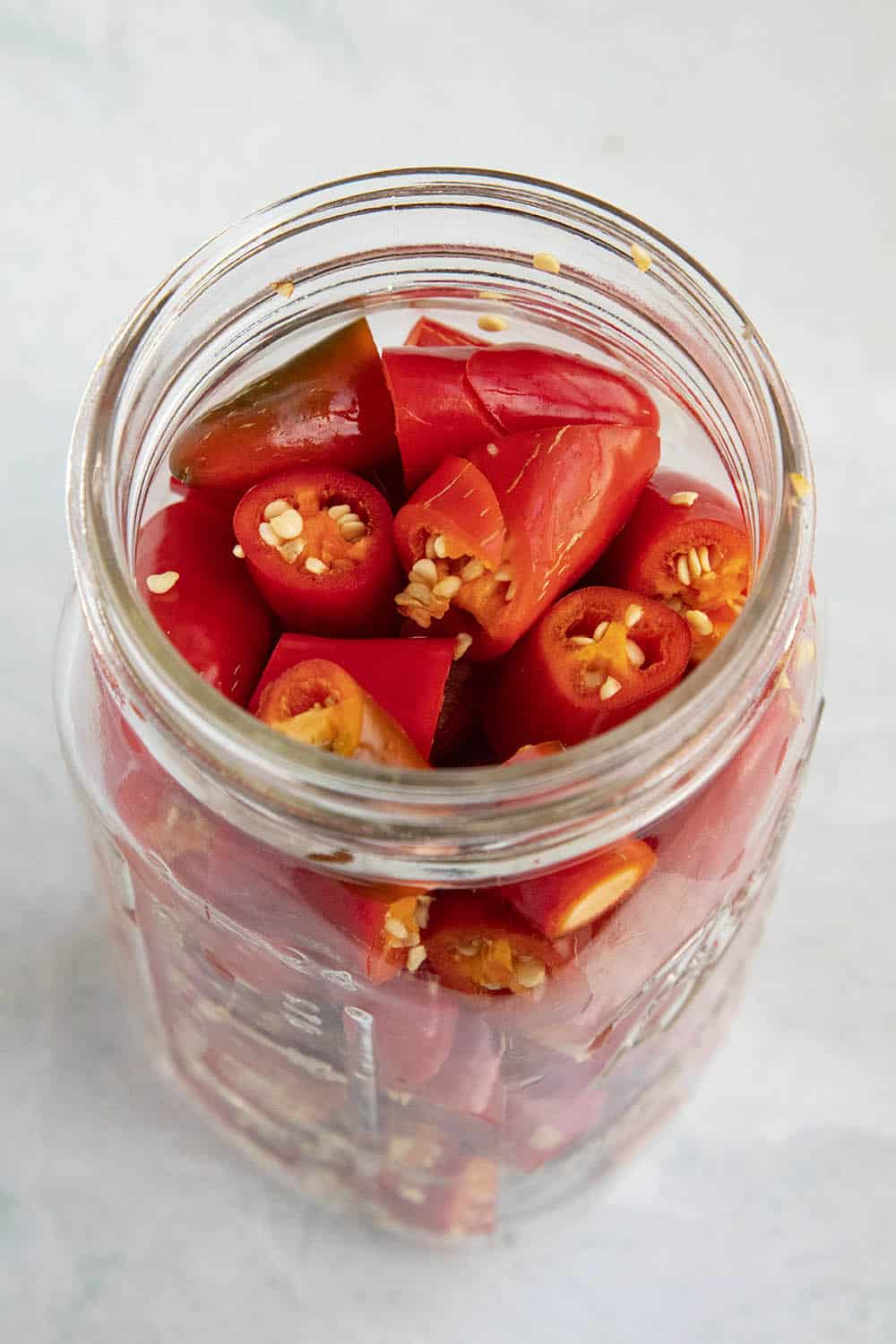
Make the Brine. Next, mix 1 quart unchlorinated water with 3 tablespoons sea salt. Pour just enough brine over the peppers to cover them, pressing them down a bit as you go.
It is important to keep the peppers covered with the salt water brine to avoid spoilage. Check this daily.
HELPFUL TIP: A good method to keep the peppers submerged is to fill a baggie with some water, but not all the way. Stuff the baggie into the top of the jar, forcing the peppers down below the brine.
Screw on the lid and set the jar away from direct sunlight to ferment for at least 1 week. Ideal temperatures are between 55-75 degrees F.
The most active fermentation period is between 1-2 weeks, so be sure to monitor it during this time. “Burp” the jars often by unscrewing the lid a bit to let out some of the accumulating gases.
Or, use an airlock or membrane for easier fermenting. See our page, “How to Ferment Peppers”, for more detailed instruction.
After 1-2 weeks, the fermenting activity will diminish and the brine will turn cloudy and taste acidic, with a slightly sour flavor.
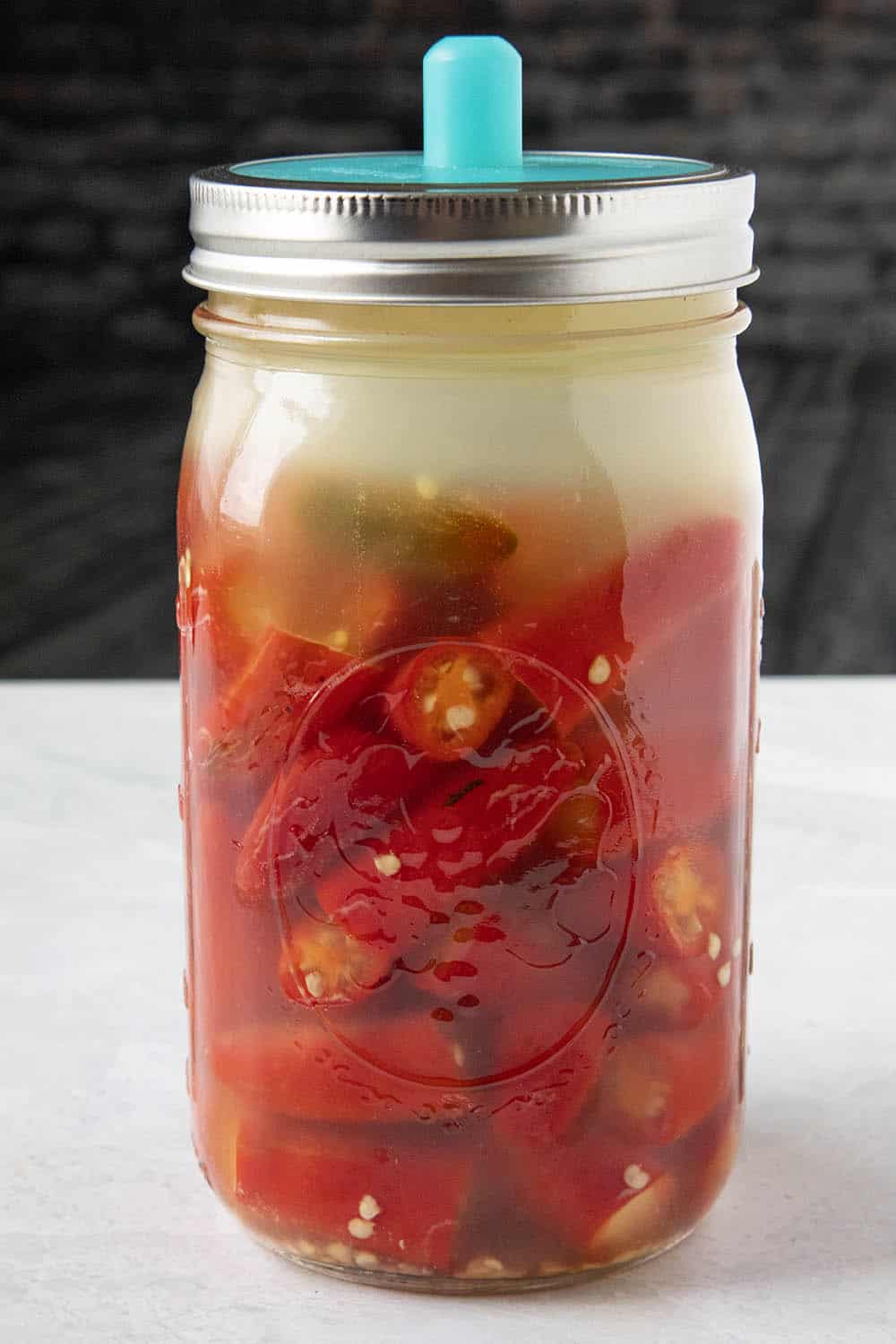
Drain the peppers, but reserve the brine.
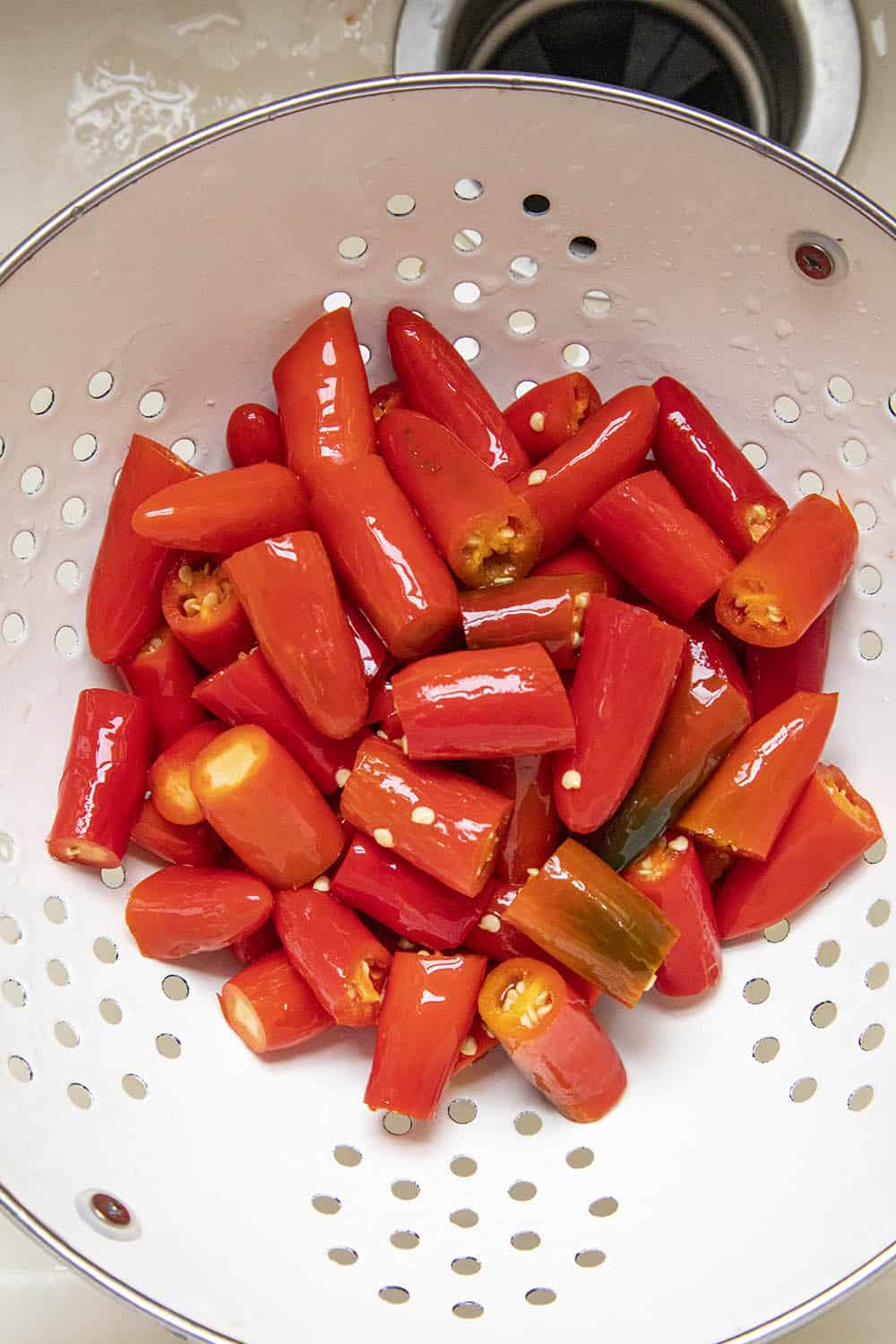
Add the fermented peppers to a food processor or blender, along with 1/2 cup of the brine and 1/2 cup vinegar.
You can add more or less of each as desired to your preference. More brine will have more salty flavor, more vinegar will be more acidic.
Blend until smooth.
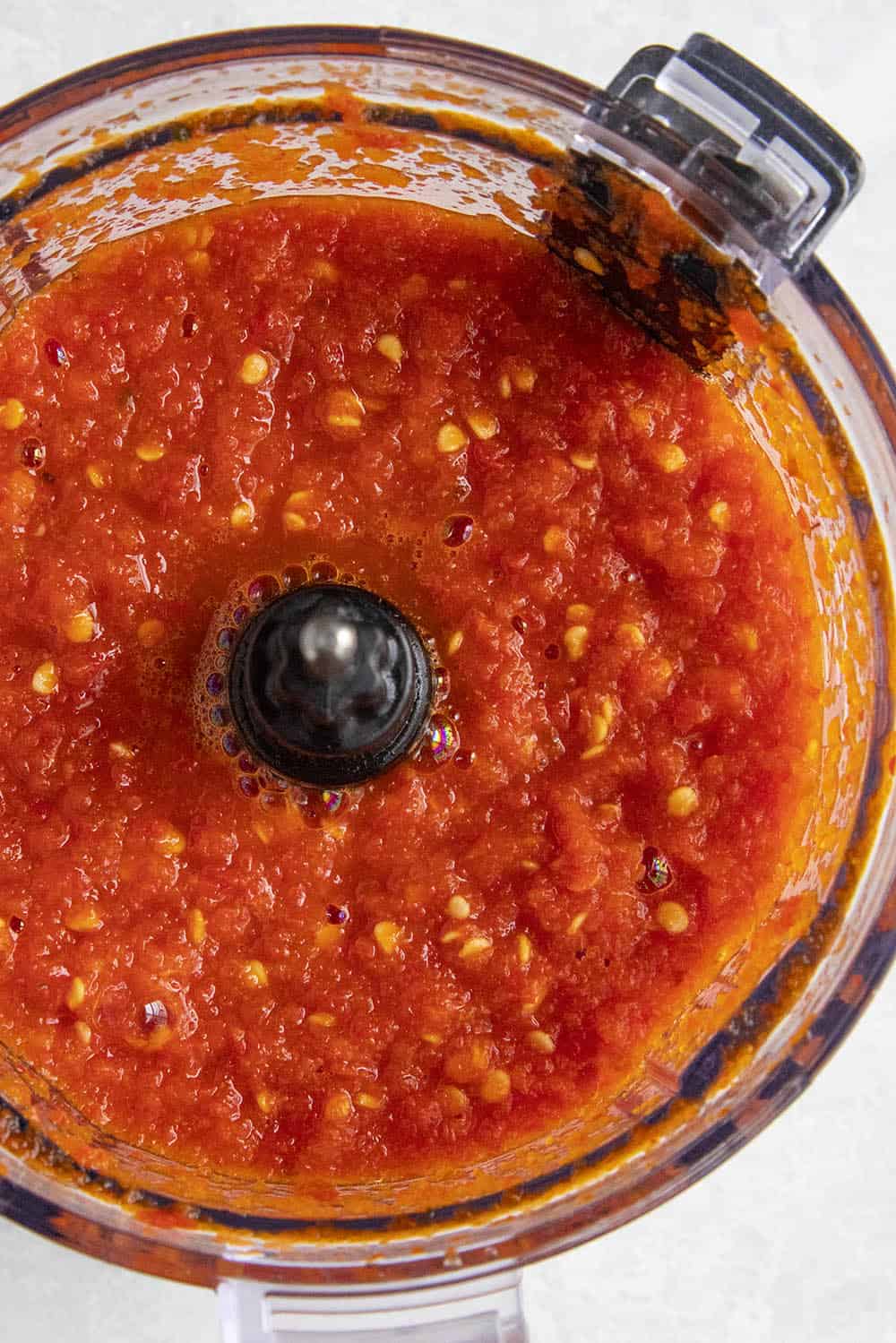
OPTIONAL: Add the fermented hot sauce to a pot and bring to a quick boil. Reduce heat and simmer for 15 minutes. This will stop the fermentation process.
NOTE: You don't have to cook the sauce if you don't want to. Cooking removed the probiotic benefits. It can be used as-is, though you will likely see some continued fermenting activity. If you decide to not cook it, store it in the refrigerator in sealed containers.
You may need to burp them to release gas buildup every now and then, though refrigeration will slow the activity.
Strain the mixture to remove the solids if desired, or use as-is for a thicker hot sauce. Pour into hot sauce bottles and enjoy.
That's it, my friends! Easy, right? Who knew making a fermented hot sauce could be so simple? It's really quite a bit like famous Tabasco Hot Sauce, though made with red serrano peppers instead of tabasco peppers.
Recipe Tips & Notes
Fermentation Time. Feel free to ferment longer if you'd like. Continuing to ferment the peppers will develop even more flavor. I have fermented peppers for 6 months in the past.
Some people ferment for years. 1 week, however, is enough to get a good ferment.
Kahm Yeast. Sometimes you may notice a white film forming on the top of your ferment. It is sour and can form when all of the sugar in your ferment is consumed.
It is not a mold, nor is it harmful. It can affect the flavor of your finished hot sauce, so it is best to be scraped away from your ferment.
Thicker or Thinner Hot Sauce. If you're looking for a thicker hot sauce, only use a combined half cup of brine and vinegar, and do not strain the hot sauce.
For a thinner hot sauce, add more water and/or vinegar a bit at a time until you achieve the consistency you want.
Straining the hot sauce will thin it out considerably.
Other Ingredients. This is a very simple Louisiana Style Hot Sauce recipe, using only peppers, vinegar and salt.
You can easily include other ingredients to build flavor, such as garlic, onion, herbs and other seasonings.
Other Peppers. This method works with any type of chili peppers. Try it with a blend of hot peppers and/or mild peppers.
Frequently Asked Hot Sauce Questions
Here are answers to some of the most common questions I get on other hot sauces.
How long will this sauce keep?
Fermented hot sauce will keep for many months in the refrigerator, or even longer. It's all about the acidity.
To be technical, target level ph for shelf stable foods is below 4.6 ph, but should probably be lower for home cooks, around 3.5 or so, to account for errors.
If you're concerned, add more vinegar to lower the ph. I measured the pH of my finished fermented hot sauce at 3.7, but check with a good pH meter.
The best ph meters that I recommend are from Thermoworks. Get yourself a ph meter from Thermoworks today. I am a happy affiliate.
Fermented hot sauces that are not cooked at the end with vinegar and/or citrus should be refrigerated.
Cooking them stops the fermentation activity and makes them more shelf stable, though they are no longer probiotic.
Where'd you get that sauce bottle?
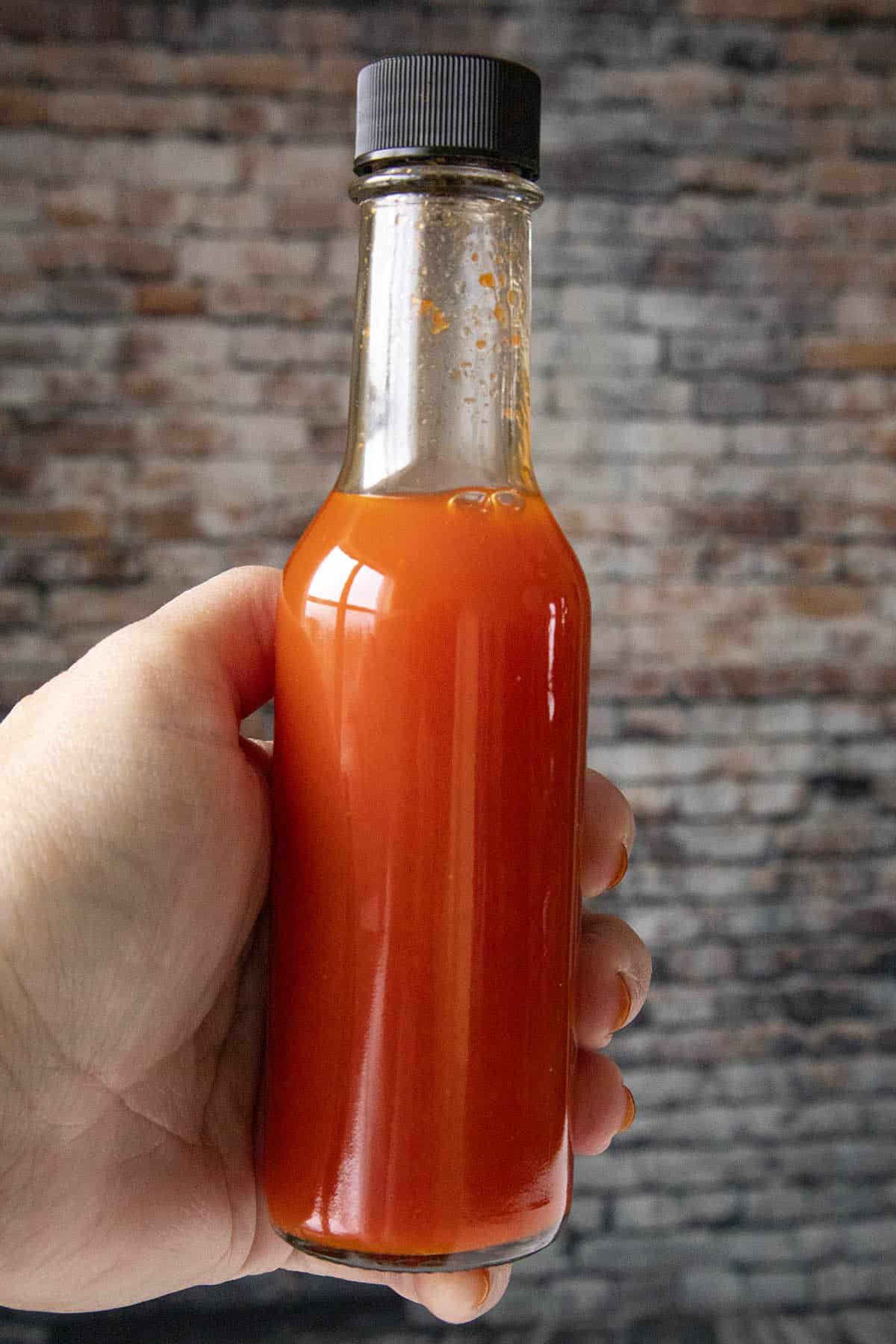
I find them locally sometimes, but I also order through Amazon. Here is a link to some bottles I like (affiliate link, my friends!): Swing Top Glass Bottles, 8.5 Ounce - Set of 4.
If you like the smaller bottles that most hot sauce makers use, here's another link: Hot Sauce Bottles, 5 Oz - 24 Pack.
Can I process this hot sauce for longer storage?
Absolutely. Just be sure to use proper canning/jarring safety procedures. Processing the hot sauce in a water bath stops the bacterial activity, making the hot sauce shelf-stable.
However, it will no longer be probiotic. The National Center for Home Food Preservation provides home canning instructions and many recipes that have been tested for food safety. NCHFP.uga.edu.
Useful Equipment
Aside from jars and your ingredients, I like to use Masontops lids, which include pickling weights and a membrane allowing gases to escape without the need for burping.
You can use them with any wide mouth mason jar. Here is a link to where you can buy them on Amazon. It’s an affiliate link, my friends. FYI!
Buy Masontop Lids for Fermenting Chili Peppers (and More)
I also highly recommend this outstanding book by fermenting experts, Kirsten K. Shockey and Christopher Shockey – “Fiery Ferments: 70 Stimulating Recipes for Hot Sauces, Spicy Chutneys, Kimchis with Kick and Other Blazing Fermented Condiments”. I learned a lot from this book as well as through my own experimentation. Grab a copy today.
Good luck, and happy fermenting! Let me know what you make with your pepper mash.
Try Some of My Other Fermented Hot Sauce Recipes
Here are some of my own recipes that use fermented chili peppers.
- Homemade Sriracha Hot Sauce
- Fermented Aji-Garlic Hot Sauce
- Homemade Louisiana Hot Sauce
- Homemade Tabasco Sauce
- Spicy Serrano Hot Sauce
Check out more Hot Sauce Recipes or learn more about How to Make Hot Sauce.
Got any questions? Ask away! I’m happy to help. If you enjoy this recipe, I hope you’ll leave a comment with some STARS. Also, please share it on social media. Don’t forget to tag us at #ChiliPepperMadness. I’ll be sure to share! Thanks! — Mike H.
Fermented Hot Sauce Recipe
Ingredients
- 1 pound red serrano peppers or use any chili peppers, stems removed
- 1 quart unchlorinated water
- 3 tablespoons sea salt (do not use iodized salt)
- ½-1 cup white wine vinegar to your preference use a good quality vinegar for better quality hot sauce
Instructions
- First, ferment the serrano peppers. Roughly chop the peppers, then pack them into a ball jar, leaving at least 1 inch of head space. The peppers may rise a bit when fermenting.
- Next, mix 1 quart unchlorinated water with 3 tablespoons sea salt. Pour just enough brine over the peppers to cover them, pressing them down a bit as you go. It is important to keep the peppers covered with brine to avoid spoilage. Check this daily.
- Screw on the lid and set the jar away from direct sunlight to ferment for at least 1 week. Ideal temperatures are between 55-75 degrees F. The most active fermentation period is between 1-2 weeks, so be sure to monitor it during this time. “Burp” the jars often by unscrewing the lid a bit to let out some of the accumulating gases. Or, use an airlock or membrane for easier fermenting. See our page, “How to Ferment Peppers”, for more detailed instruction.
- After 1-2 weeks, the fermenting activity will diminish and the brine will turn cloudy and taste acidic.
- Drain the peppers, but reserve the brine.
- Add the fermented peppers to a food processor or blender, along with 1/2 cup of the brine and 1/2 cup vinegar. You can add more or less of each as desired to your preference. More brine will have more salty flavor, more vinegar will be more acidic.
- Process until smooth.
- Optional Step. Add the fermented hot sauce to a pot and bring to a quick boil. Reduce heat and simmer for 15 minutes. This will stop the fermentation process and meld the flavors, but will remove the probiotic benefits.
- Strain the mixture to remove the solids if desired, or use as-is for a thicker hot sauce. Pour into hot sauce bottles and enjoy.
- You can add more vinegar or water to thin out the hot sauce.
Notes
Nutrition Information
Ross Middleton says
Great recipes, great instructions, really helpful and informative.
Thank you
Mike Hultquist says
Thanks, Ross!
Burke says
On your nutritional facts are those numbers for the whole bottle or serving size? What would the serving size be?
Mike Hultquist says
Burke, the serving is 1 TEASPOON. I hope this helps.
Sterling says
I've been making hot sauces for about a year. All of them were amazing and had unique tastes. 4 months ago we moved to Quito, Ecuador with an elevation of 9400 feet. Not sure if altitude is the cause but all of my hot sauces now get that 'brine-ey' taste...no matter the ingredients. Frustrating and vexing.
Any ideas?
Mike Hultquist says
It's hard to say, Sterling. I'm not sure that fermenting in any particular place changes the flavor from another, though there are different strains of lactic acid bacteria, which may vary from place to place and could potentially produce different flavor variations. It would be worth further research. Curious if you find any interesting results.
Sterling says
Thanks for your input. I'm mostly using aji and rocoto peppers as jalapeños are hard to find and expensive. BUT I just found a farmer and bought some beautiful jalapeños (and a great price) and did not have the flavor issue. I did find some beer forums and found that often fermentation is sped up at high altitude by 2 to 3xs! I reduced the fermentation time so perhaps that coupled with those jalapeño beauts did the trick. Enjoy your content; thank you. If you're ever in Ecuador, you're welcome to visit us and our cafe. Cheers!
Mike H. says
Cheers, Sterling! And thanks for the invitation! =)
SB says
Hi Mike,
Can we use canned peopers (jalapeños etc) if we cannot source fresh ones?
S
Mike Hultquist says
It's best to use fresh for fermenting, or dried.
Judith says
can I add sugar to make it a sweet Chilli sauce?
Mike Hultquist says
Absolutely, Judith. Go for it! Honey is nice, too.
Jim says
Awesome! Thanks. I will be working on that this weekend. I have a ton of peppers I grew myself and they have been waiting patiently in the freezer.
Mike Hultquist says
Enjoy, Jim!
Jim says
When fermenting the peppers, can you add garlic and or onions to ferment with them, or is that something that is better to add after the peppers have fermented by themselves?
Mike Hultquist says
You can add them for fermentation, Jim, yes. Some people prefer it. What is better is more a matter of personal taste. You'll get more "funk" factor by fermenting all of it, and more mellow garlic. Enjoy!
Jim says
I just tasted the brine as I have had it fermenting for 2 months now. It is amazing! Making the fully blended sauce this weekend.
Peter says
I'm going to try this. I make many chilli sauces but have always shy'd away from fermenting. In making my other sauces, I have one where I stabilise the pH for longevity. Some I age in bottle for up to 5 years. That's how I make my much loved ghost chilli sauce.
Mike H. says
Go for it, Peter, and please let me know how it goes!
Peter says
Well. I fermented a combination of Carolina Reaper, Trinidad Scorpion Butch T and Ghost Chilli. as they are thi skinned it was hard to keep the top layer below water but a cartouch did the job. This was a dangerous mix. The fumes when you burped the jar were strong. The sauce itself is ultra burn so I have used it to make into other sauces that have turned out great. Thankyou.
Mike Hultquist says
Thanks, Peter. Yes, the fumes can definitely get you with superhots! Glad you're enjoying it!
Jason F says
I come back to this page everytime I make a new batch or multiples at once. thank you for making it easy to make a better sauce than I can get at the supermarket, I came across this page when sririacha started to become scarce and you have inspired me to branch out on your recipe with some fun concoctions with everything from garlic, to pineapple. thanks for putting this out for the general public!
Mike Hultquist says
Awesome! I love to hear it, Jason. Seriously, always happy to help. Happy sauce making!
Jo says
LOVE this recipe. I make it every year with my homegrown habaneros!
Mike Hultquist says
Thanks, Jo!
Harry says
Hi Jo,
out of interest, how did your sauce turn out with using purely Habaneros? I've got some fermenting at the moment but unsure whether using just habaneros for this type of sauce is going to be OTT on the heat side ?
Cait says
hello! I loved this recipe! Thank you.
I found it to be versatile and it taught me about the process of pepper fermentation, which is more open and freewheeling then I expected.
I used five different types of spicy peppers, garlic, shallots, and a bit of onion. And it turned oud deliciously.
Looking forward to trying out more of your recipes!
Mike Hultquist says
Thanks so much for commenting, Cait. I'm always very glad to be helpful. Enjoy!
Michael Hentz says
I've made some very successful hot sauces. A lot of people have tried them and truly enjoy them. I had a batch recently when I open the lid very thick. Smoky gas came out. Is this a bad indication?
Mike Hultquist says
Michael, I've never experience any sort of smoky gas when fermenting. If there is a bad smell or taste, that is bad. Curious.
Will says
Thanks for the great info and tips. I’ve just started my first hot sauce and I’ve read all the comments, I think, but my one issue want really brought up. My peppers have been fermenting for 3 days now. I’ve continually checked thatched are covered in brine. This morning I noticed that some pepper is sticking up above the water. There are no weights, but there is/was plenty of brine. What to do? Should I open and push down and insert a weight or just leave and hope there is now enough CO2? Thanks for the help.
Mike Hultquist says
Will, yes, it is best to ensure the peppers remain below the brine. Use clean hands and utensils, then close it up again.