



I grew loads of peppers in my garden this year just so I could make this fermented hot sauce recipe. It is wonderfully spicy and big on flavor. Drizzle it over anything. Works for any type of peppers.
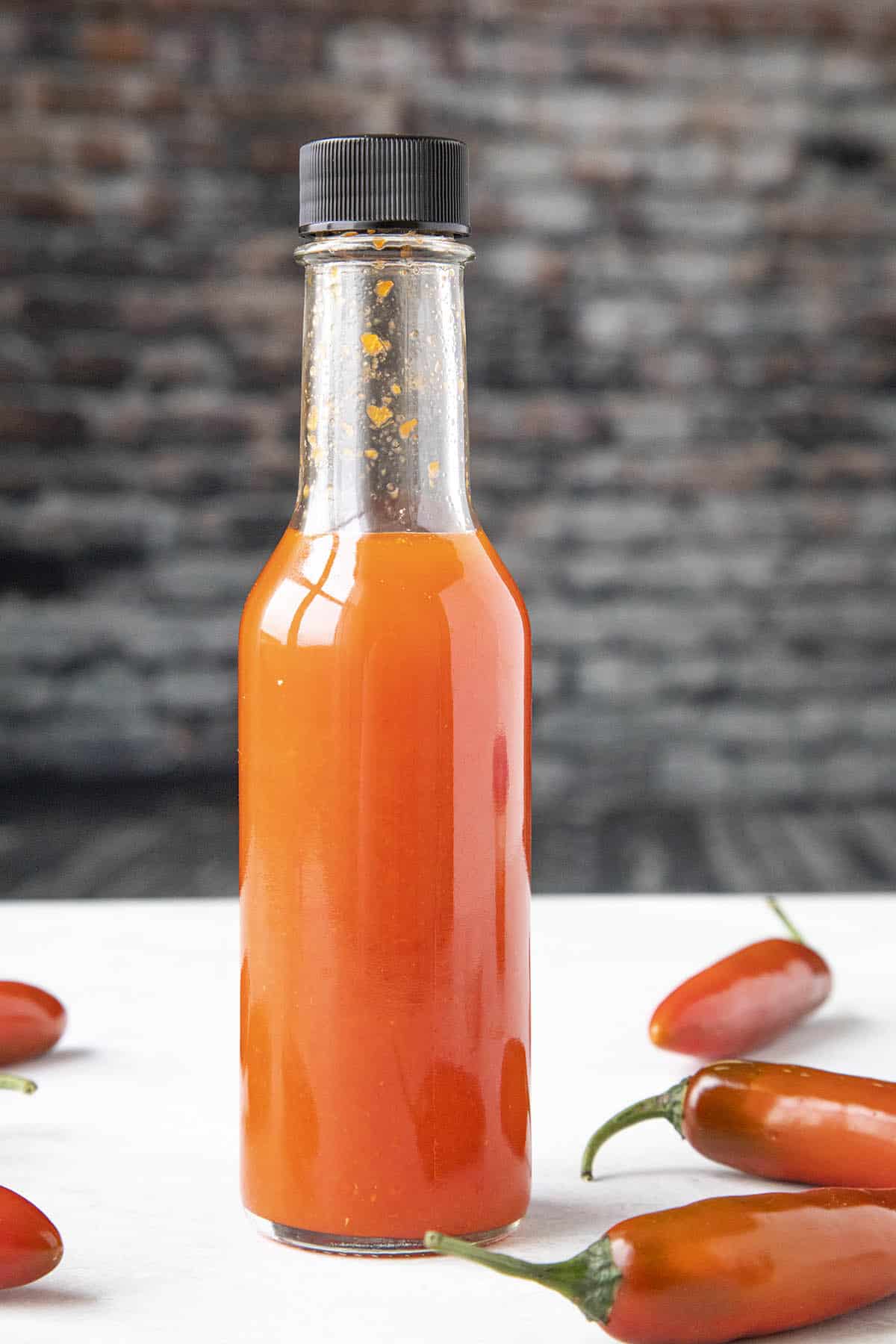
Fermented Hot Sauce Recipe
It's hot sauce making time in the Chili Pepper Madness household again, my friends. You know how much I LOVE my hot sauce. My garden exploded with peppers this year and I'm incredibly happy.
The plants were super productive and I am preserving them in so many different ways.
Food preservation is important. One of my favorite ways to preserve my peppers is to make hot sauce. I have a LOT of different hot sauce recipes here on the site, all with different styles, ingredients, and types of chili peppers.
For this particular hot sauce, I wanted a fermented version, which adds another layer of complexity to the sauce.
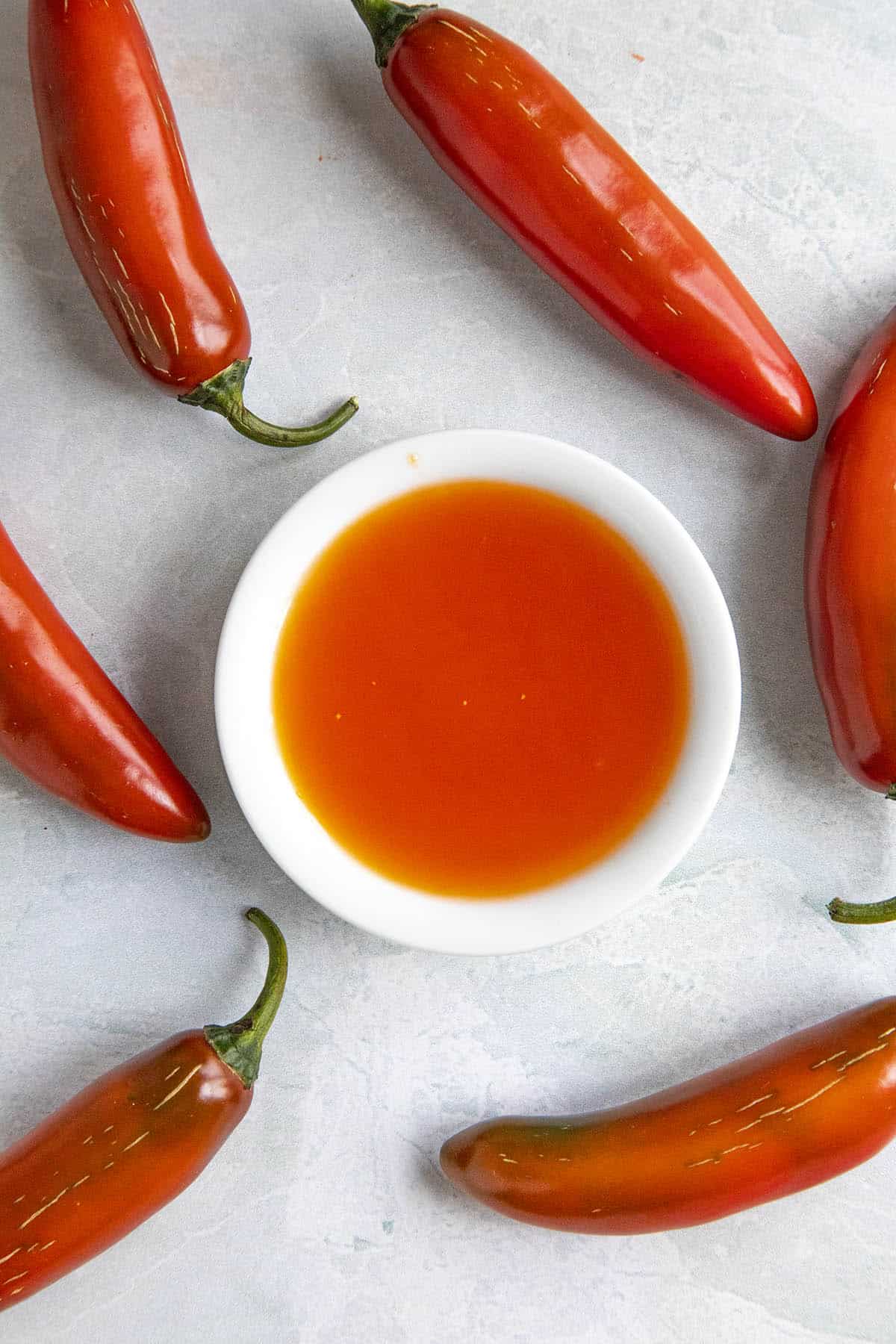
I grew serrano peppers and waited for them to turn red specifically so I could make this sauce. So many serranos! The plant was very productive.
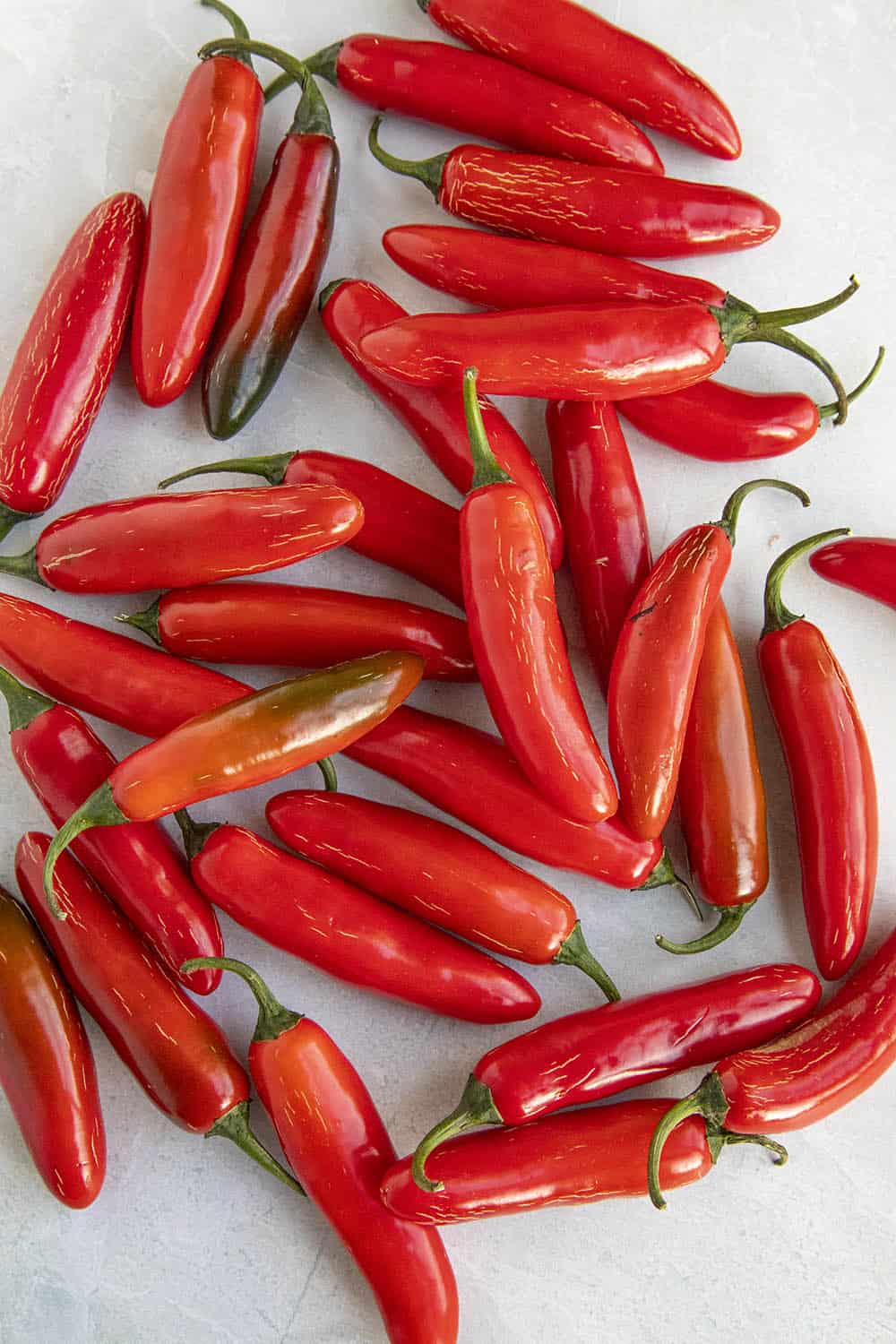
I just love serrano peppers. They're smaller than jalapeno peppers, but quite a bit hotter. In fact, the hottest serrano pepper is about 3 times hotter than the hottest jalapeno pepper.
They measure in at 10,000 to 23,000 Scoville Heat Units on the Scoville Scale. For me, that's a nice level of heat for an every day hot sauce.
You don't have to use serranos, though. This recipe works with any type of chili pepper.
This is a very simple hot sauce recipe, though we're fermenting the peppers first, which may sound complicated, but not at all.
What is Fermentation? And Why is it Good For Hot Sauce?
Fermentation is the decomposition of foods by micro-organisms (Lactic Acid Bacteria) or enzymes. We create an anaerobic (no oxygen) environment for the peppers so that good, beneficial bacteria can survive, and bad bacteria cannot survive.
The good bacteria is natural Lactic acid bacteria, which consumes carbohydrates in the peppers and converts them to acid. After fermenting, the carbohydrates have been predigested, leaving them with more vitamins and flavor than fresh peppers.
Bad bacteria, such as rotting molds, cannot survive in this oxygen-free environment. We create such an environment with salt and brine, which protect the peppers while the good bacteria do their work.
The salt is not actually the preservative. It is the acid produced by the fermentation process that does the preserving.
There are many benefits to fermented foods, including foods that are more digestible and have more developed flavor. When fermenting peppers, the flavors mellow, and peppers change color a bit, and develop a pleasant smell.
Fermentation is one our oldest methods of food preservation. People have preserved foods this way for generations, from wine to cheese to many, many vegetables, including peppers.
Let's talk about how to make a simple fermented hot sauce, shall we? Here is my recipe for fermented hot sauce.
Ingredients Needed to Make Fermented Hot Sauce
- 1 pound chili peppers (stems removed - I'm using red serrano peppers)
- 1 quart unchlorinated water
- 3 tablespoons salt
- ½-1 cup white wine vinegar to your preference (use a good quality vinegar for better quality hot sauce)
How to Make Fermented Hot Sauce - the Recipe Method
First, ferment the chili peppers. Roughly chop the peppers, then pack them into a ball jar, leaving at least 1 inch of head space. The peppers may rise a bit when fermenting.
Mason jars are good to use as fermentation vessels as well.
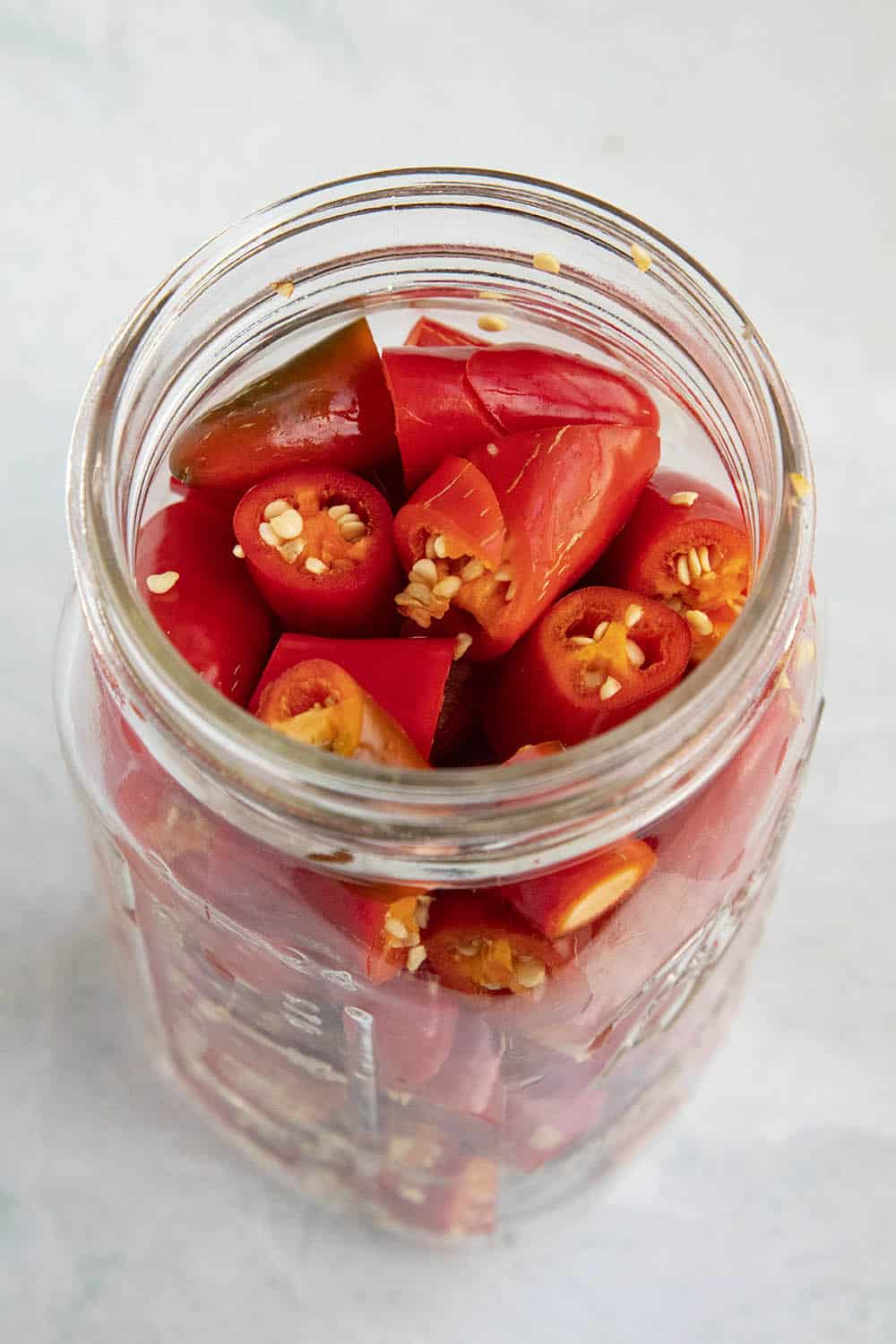
Make the Brine. Next, mix 1 quart unchlorinated water with 3 tablespoons sea salt. Pour just enough brine over the peppers to cover them, pressing them down a bit as you go.
It is important to keep the peppers covered with the salt water brine to avoid spoilage. Check this daily.
HELPFUL TIP: A good method to keep the peppers submerged is to fill a baggie with some water, but not all the way. Stuff the baggie into the top of the jar, forcing the peppers down below the brine.
Screw on the lid and set the jar away from direct sunlight to ferment for at least 1 week. Ideal temperatures are between 55-75 degrees F.
The most active fermentation period is between 1-2 weeks, so be sure to monitor it during this time. “Burp” the jars often by unscrewing the lid a bit to let out some of the accumulating gases.
Or, use an airlock or membrane for easier fermenting. See our page, “How to Ferment Peppers”, for more detailed instruction.
After 1-2 weeks, the fermenting activity will diminish and the brine will turn cloudy and taste acidic, with a slightly sour flavor.
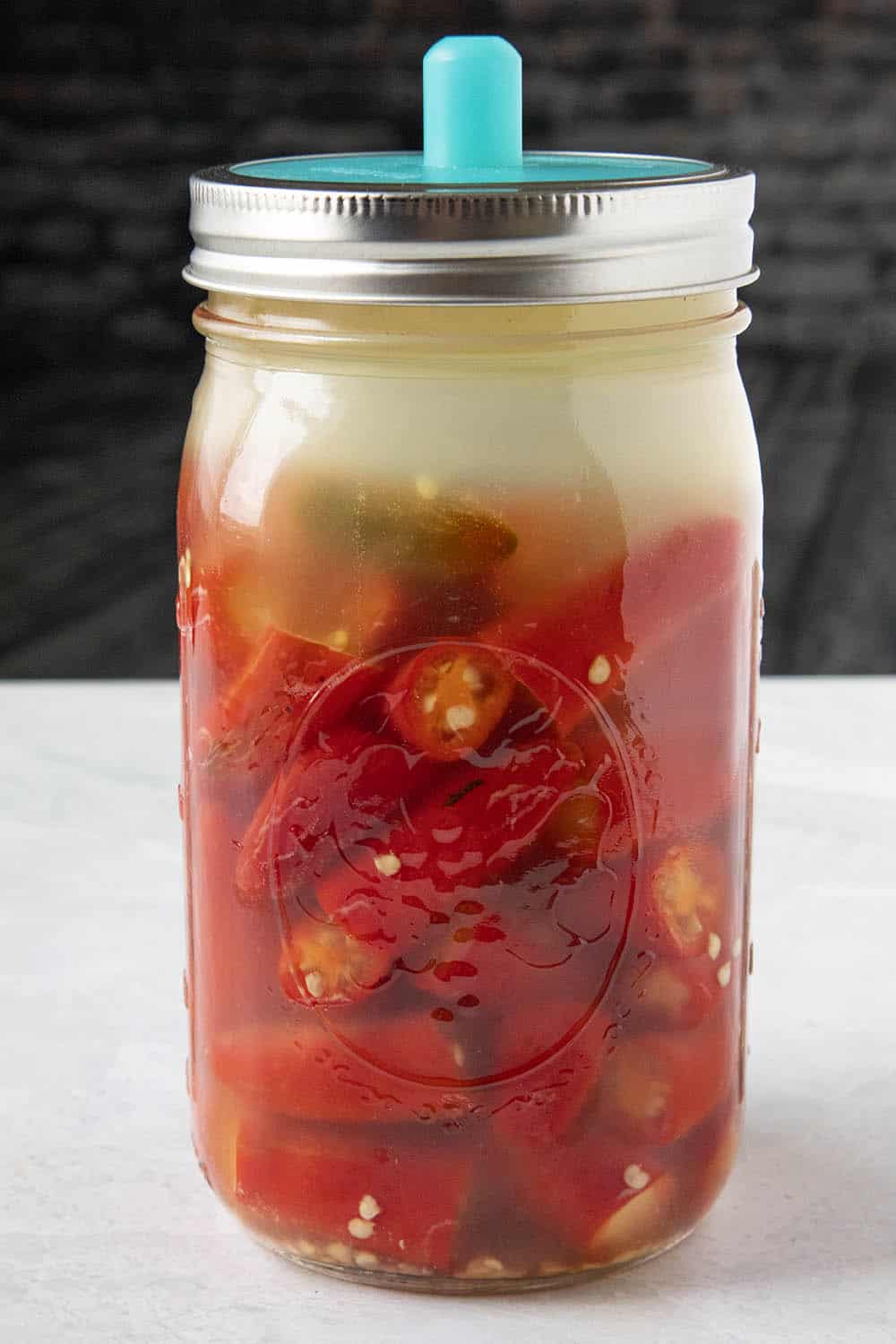
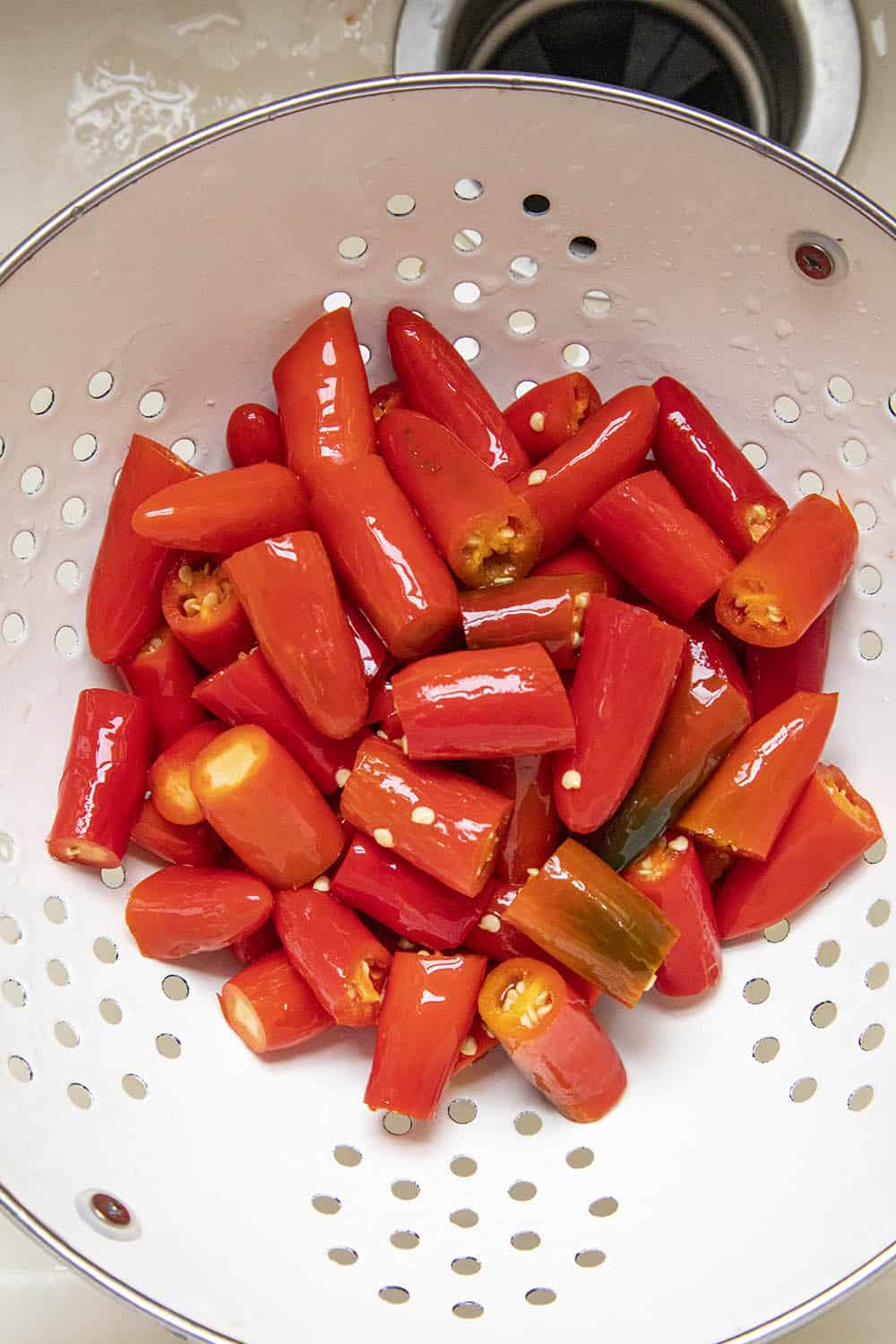
Drain the peppers, but reserve the brine.
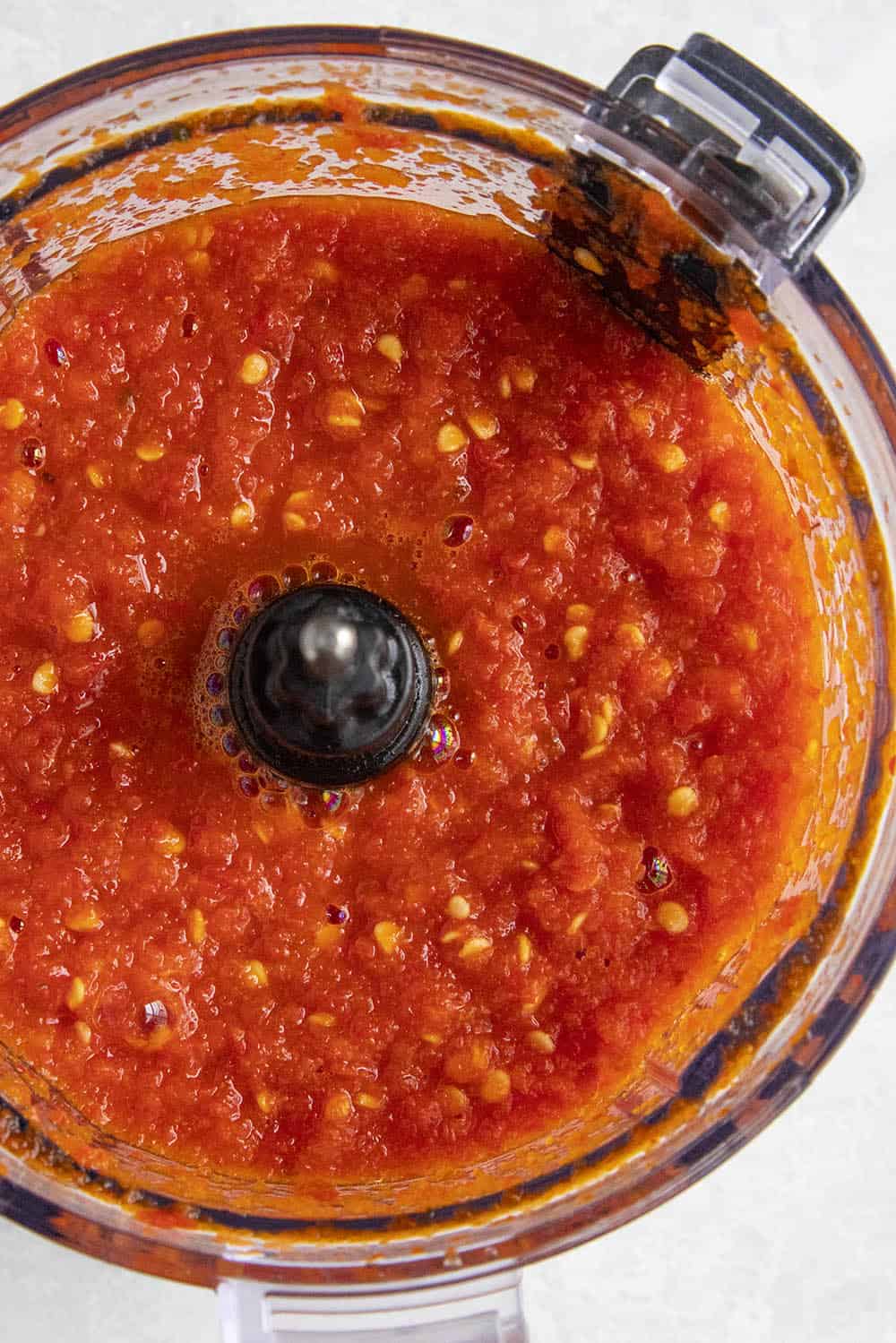
Add the fermented peppers to a food processor or blender, along with 1/2 cup of the brine and 1/2 cup vinegar.
You can add more or less of each as desired to your preference. More brine will have more salty flavor, more vinegar will be more acidic.
Blend until smooth.
OPTIONAL: Add the fermented hot sauce to a pot and bring to a quick boil. Reduce heat and simmer for 15 minutes. This will stop the fermentation process.
NOTE: You don't have to cook the sauce if you don't want to. Cooking removed the probiotic benefits. It can be used as-is, though you will likely see some continued fermenting activity. If you decide to not cook it, store it in the refrigerator in sealed containers.
You may need to burp them to release gas buildup every now and then, though refrigeration will slow the activity.
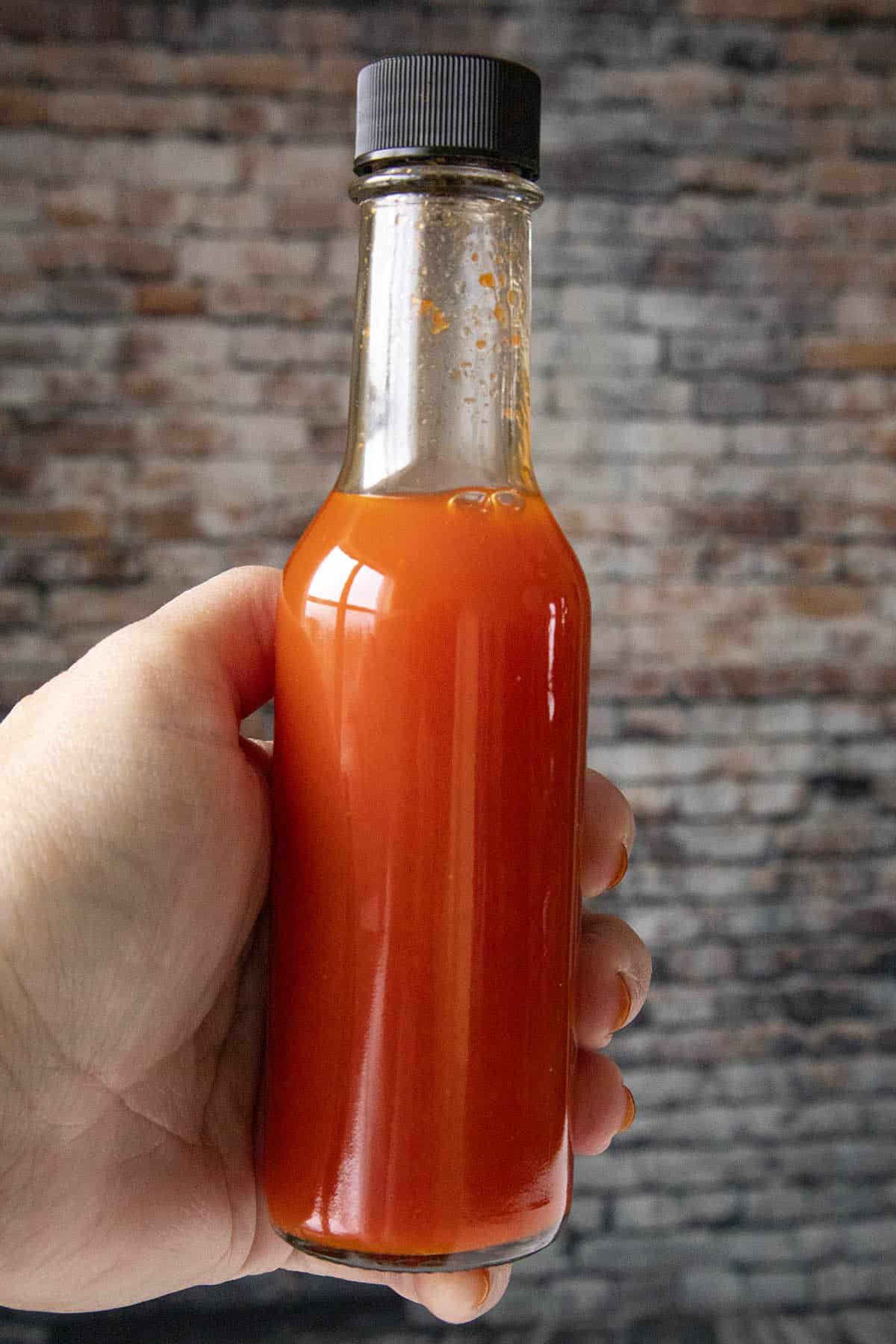
Strain the mixture to remove the solids if desired, or use as-is for a thicker hot sauce. Pour into hot sauce bottles and enjoy.
That's it, my friends! Easy, right? Who knew making a fermented hot sauce could be so simple? It's really quite a bit like famous Tabasco Hot Sauce, though made with red serrano peppers instead of tabasco peppers.
Recipe Tips & Notes
Fermentation Time. Feel free to ferment longer if you'd like. Continuing to ferment the peppers will develop even more flavor. I have fermented peppers for 6 months in the past.
Some people ferment for years. 1 week, however, is enough to get a good ferment.
Kahm Yeast. Sometimes you may notice a white film forming on the top of your ferment. It is sour and can form when all of the sugar in your ferment is consumed.
It is not a mold, nor is it harmful. It can affect the flavor of your finished hot sauce, so it is best to be scraped away from your ferment.
Thicker or Thinner Hot Sauce. If you're looking for a thicker hot sauce, only use a combined half cup of brine and vinegar, and do not strain the hot sauce.
For a thinner hot sauce, add more water and/or vinegar a bit at a time until you achieve the consistency you want.
Straining the hot sauce will thin it out considerably.
Other Ingredients. This is a very simple Louisiana Style Hot Sauce recipe, using only peppers, vinegar and salt.
You can easily include other ingredients to build flavor, such as garlic, onion, herbs and other seasonings.
Other Peppers. This method works with any type of chili peppers. Try it with a blend of hot peppers and/or mild peppers.
Frequently Asked Hot Sauce Questions
Here are answers to some of the most common questions I get on other hot sauces.
How long will this sauce keep?
Fermented hot sauce will keep for many months in the refrigerator, or even longer. It's all about the acidity.
To be technical, target level ph for shelf stable foods is below 4.6 ph, but should probably be lower for home cooks, around 3.5 or so, to account for errors.
If you're concerned, add more vinegar to lower the ph. I measured the pH of my finished fermented hot sauce at 3.7, but check with a good pH meter.
The best ph meters that I recommend are from Thermoworks. Get yourself a ph meter from Thermoworks today. I am a happy affiliate.
Fermented hot sauces that are not cooked at the end with vinegar and/or citrus should be refrigerated.
Cooking them stops the fermentation activity and makes them more shelf stable, though they are no longer probiotic.
Where'd you get that sauce bottle?
I find them locally sometimes, but I also order through Amazon. Here is a link to some bottles I like (affiliate link, my friends!): Swing Top Glass Bottles, 8.5 Ounce - Set of 4.
If you like the smaller bottles that most hot sauce makers use, here's another link: Hot Sauce Bottles, 5 Oz - 24 Pack.
Can I process this hot sauce for longer storage?
Absolutely. Just be sure to use proper canning/jarring safety procedures. Processing the hot sauce in a water bath stops the bacterial activity, making the hot sauce shelf-stable.
However, it will no longer be probiotic. The National Center for Home Food Preservation provides home canning instructions and many recipes that have been tested for food safety. NCHFP.uga.edu.
Useful Equipment
Aside from jars and your ingredients, I like to use Masontops lids, which include pickling weights and a membrane allowing gases to escape without the need for burping.
You can use them with any wide mouth mason jar. Here is a link to where you can buy them on Amazon. It’s an affiliate link, my friends. FYI!
Buy Masontop Lids for Fermenting Chili Peppers (and More)
I also highly recommend this outstanding book by fermenting experts, Kirsten K. Shockey and Christopher Shockey – “Fiery Ferments: 70 Stimulating Recipes for Hot Sauces, Spicy Chutneys, Kimchis with Kick and Other Blazing Fermented Condiments”. I learned a lot from this book as well as through my own experimentation. Grab a copy today.
Good luck, and happy fermenting! Let me know what you make with your pepper mash.
Try Some of My Other Fermented Hot Sauce Recipes
Here are some of my own recipes that use fermented chili peppers.
- Homemade Sriracha Hot Sauce
- Fermented Aji-Garlic Hot Sauce
- Homemade Louisiana Hot Sauce
- Homemade Tabasco Sauce
- Spicy Serrano Hot Sauce
Check out more Hot Sauce Recipes or learn more about How to Make Hot Sauce.
Got any questions? Ask away! I’m happy to help. If you enjoy this recipe, I hope you’ll leave a comment with some STARS. Also, please share it on social media. Don’t forget to tag us at #ChiliPepperMadness. I’ll be sure to share! Thanks! — Mike H.
Fermented Hot Sauce Recipe
Ingredients
- 1 pound red serrano peppers or use any chili peppers, stems removed
- 1 quart unchlorinated water
- 3 tablespoons sea salt (do not use iodized salt)
- ½-1 cup white wine vinegar to your preference use a good quality vinegar for better quality hot sauce
Instructions
- First, ferment the serrano peppers. Roughly chop the peppers, then pack them into a ball jar, leaving at least 1 inch of head space. The peppers may rise a bit when fermenting.
- Next, mix 1 quart unchlorinated water with 3 tablespoons sea salt. Pour just enough brine over the peppers to cover them, pressing them down a bit as you go. It is important to keep the peppers covered with brine to avoid spoilage. Check this daily.
- Screw on the lid and set the jar away from direct sunlight to ferment for at least 1 week. Ideal temperatures are between 55-75 degrees F. The most active fermentation period is between 1-2 weeks, so be sure to monitor it during this time. “Burp” the jars often by unscrewing the lid a bit to let out some of the accumulating gases. Or, use an airlock or membrane for easier fermenting. See our page, “How to Ferment Peppers”, for more detailed instruction.
- After 1-2 weeks, the fermenting activity will diminish and the brine will turn cloudy and taste acidic.
- Drain the peppers, but reserve the brine.
- Add the fermented peppers to a food processor or blender, along with 1/2 cup of the brine and 1/2 cup vinegar. You can add more or less of each as desired to your preference. More brine will have more salty flavor, more vinegar will be more acidic.
- Process until smooth.
- Optional Step. Add the fermented hot sauce to a pot and bring to a quick boil. Reduce heat and simmer for 15 minutes. This will stop the fermentation process and meld the flavors, but will remove the probiotic benefits.
- Strain the mixture to remove the solids if desired, or use as-is for a thicker hot sauce. Pour into hot sauce bottles and enjoy.
- You can add more vinegar or water to thin out the hot sauce.
Notes
Nutrition Information
Sam says
Have you done this with Jalapeños? Mine are doing so well this year.
Michael Hultquist - Chili Pepper Madness says
Absolutely, Sam. Works with any peppers. Let me know how it goes for you. Enjoy.
aaron schmitz says
They all say fermenting is soooo easy, yet every fermenting article I read is different. Most cover jar with cheese cloth, this guy says cover with lid. What is the difference?
Also, do I ferment all the fruits and veggies that are going into the sauce or just the peppers? So confusing.
Michael Hultquist - Chili Pepper Madness says
Aaron, it is rather easy when you learn it, especially when you're just fermenting peppers. As with anything, however, the more you learn, the more you discover. First, see my post on How to Ferment Peppers (https://www.chilipeppermadness.com/cooking-with-chili-peppers/how-to-make-fermented-pepper-mash/). It has a lot of info. You might also buy one of many books available to learn even more. You can use a cheese cloth, but I prefer not to as I feel you can still get an infection. I prefer a lid to keep it as clean as possible. A membrane (like the rubber lip I use) lets built up air out, but not in, so I don't have to burp the jars (which exposes the brine to the air temporarily). You CAN ferment the fruits and veggies with the peppers, but you don't have to. Just add them in later to the sauce. Each way will yield different flavors. Fruits have a lot more sugar, so will ferment more quickly and will need gas release more often (like when I make kombucha).
In short, it IS easy to ferment peppers, but when you introduce other variables, yes, more questions arise. Welcome to the beginning of your journey. Enjoy!!
Tina says
just wondering if any of these recipes could be made with frozen whole peppers. Got a bunch that I need to do something with
Michael Hultquist - Chili Pepper Madness says
Tina, yes, you can make many hot sauces from frozen. If you want to ferment, you MAY need a fermentation starter, but often they will ferment. Let me know how it goes for you.
Saleem says
Awesome guide, I used normal bell peppers I have started 2 weeks ago is it too late to add fruits to the fermentation .
Michael Hultquist - Chili Pepper Madness says
Saleem, you can add more and keep fermenting, or remove the peppers and use the brine to keep going with the fruit.
Phillip says
Hi Mike,
Making yet another batch of fermented chilli sauce which is a permanent staple in my fridge. Have you any suggestions for the flavoursome leftover brine?
Phil
Michael Hultquist - Chili Pepper Madness says
Phillip, you can use it to start another batch of peppers fermenting, or you can use it to enhance dishes like soups and stews or vinaigrettes. Enjoy!
CHEFFZILLA says
I’m working on a recipe plan that includes roasted garlic. I make garlic-infused EVOO, which includes simmering garlic cloves in the oil for a half hour, then resting it for another half hour before straining the garlic solids. Would I be better off adding the garlic solids to the ferment (it would have a bit of EVOO residue), or after ferment, in the blending stage?
Michael Hultquist - Chili Pepper Madness says
You can really do it either way, Jeff. It's up to you for flavor preferences. Everything mellows in the ferment and develops a bit of funk factor, though roasted garlic is already pretty mellowed and richly flavored. No right or wrong here.
Joe Bogdanovich says
Okay, so I have a question for the gurus out there. I am boiling/simmering my sauce right now. I have a LOT of brine left over. What can I do with that?
Michael Hultquist - Chili Pepper Madness says
Joe, you can use some to start another ferment batch going. You can also use some to add some flavor to soup bases, stews, etc. Or just toss it.
Clint says
Great Recipe! I've done 4 batches of this sauce as the peppers ripen. Tip: I do about 3 cups of cut peppers with 2 cups brine in a french press. The plunger keeps your peppers below the brine level...perfect sauce every time! After 1 week fermentation, I cook with one cup vinegar and 2 cups brine...makes a fairly thick sauce...enough to fill five 5oz bottles.
Michael Hultquist - Chili Pepper Madness says
Perfect, Clint! Great tip. Thanks for sharing.
Jack says
How much sauce does this recipe make?
Michael Hultquist - Chili Pepper Madness says
This made me a good 6-7 ounces, though results will vary from straining, and you can adjust amounts with vinegar.
Dave says
Could you process this until it is very smooth in a Nutribullet Pro food extractor after allowing it to cool to refrigerator temperature?
Michael Hultquist - Chili Pepper Madness says
Dave, absolutely! Let me know how it turns out for you! Enjoy.
pclark says
Thanks for your amazing site & recipes! I did a brine ferment with 2 kgs of blitzed reapers. Now fermenting them in my instant pot (turned off of course), and in total I have about 5 liters of mash/brine. Is there a rule of thumb about how much vinegar/lime to add per liters when using the brine method? Thanks!
Michael Hultquist - Chili Pepper Madness says
You're welcome! No rule of thumb, but enough to get the pH down to about 3.5 or lower for home keeping/preserving (though you don't have to), or to your own personal taste. You can skip vinegar/lime altogether, but it won't last as long.
Don says
Hi Mike,
I would like to add fermented tomatoes to this recipe. Do you see any problems with doing that? Any suggestions? Thanks!
Michael Hultquist - Chili Pepper Madness says
Don, no problem at all. Let me know how it turns out for you.
Jason Spratt says
Can I use fruit in a fermented sauce? I was thinking about a superhot pineapple sauce. But Im concerned that the fruit could be problematic. Thoughts?
Michael Hultquist - Chili Pepper Madness says
Jason, absolutely. I do this all the time. Enjoy!