



This easy Pad Thai sauce whisks together in 5 minutes with tamarind, fish sauce, palm sugar and a few pantry staples. Make it ahead, keep it in the fridge, and make Pad Thai mild or spicy any night you want it!

Homemade Pad Thai Sauce
Want to up your homemade Pad Thai game? Start with the sauce. Get the Pad Thai Sauce right and the rest of the dish falls right into place.
This is the exact sauce I use in my Pad Thai recipe, called out here so you can make it ahead. It's sweet, sour, salty and savory, with a little kick from chili-garlic sauce, just the way we like it. It uses only 7 ingredients you likely have in your fridge and pantry, plus a splash of water. No cooking needed. Just whisk and go.
Why make your own? You control the balance. Many bottled Pad Thai sauces are on the sweet side, and once it's bottled, you can't pull back on certain ingredients to your personal taste. With homemade, you taste it and adjust it the way YOU like it.
The recipe makes a little over 1 cup, enough for one batch of my Pad Thai. Double or triple it and keep a jar in the fridge, and Pad Thai night is ready whenever you're in the mood.
What is Pad Thai Sauce?
Pad Thai sauce is a sweet, sour and salty stir fry sauce made with tamarind, fish sauce and palm sugar. It gives Pad Thai its signature tangy flavor and makes noodles glossy and delicious.
Many Thai cooks stick with only those three ingredients and let everyone season the finished dish at the table. For my version, I add oyster sauce and soy sauce for more savory flavor, a splash of rice vinegar for an acidic pop, and chili-garlic sauce for a bit of heat. It comes together very nicely.
Pad Thai itself is a stir fry of rice noodles with shrimp or chicken, tofu, eggs, bean sprouts and peanuts. It exploded in Thailand in the late 1930s and 1940s, when the government promoted it as a national dish. Today you'll find it on the menu at just about every Thai restaurant in the United States.
Let's talk about how to make Pad Thai Sauce, shall we?
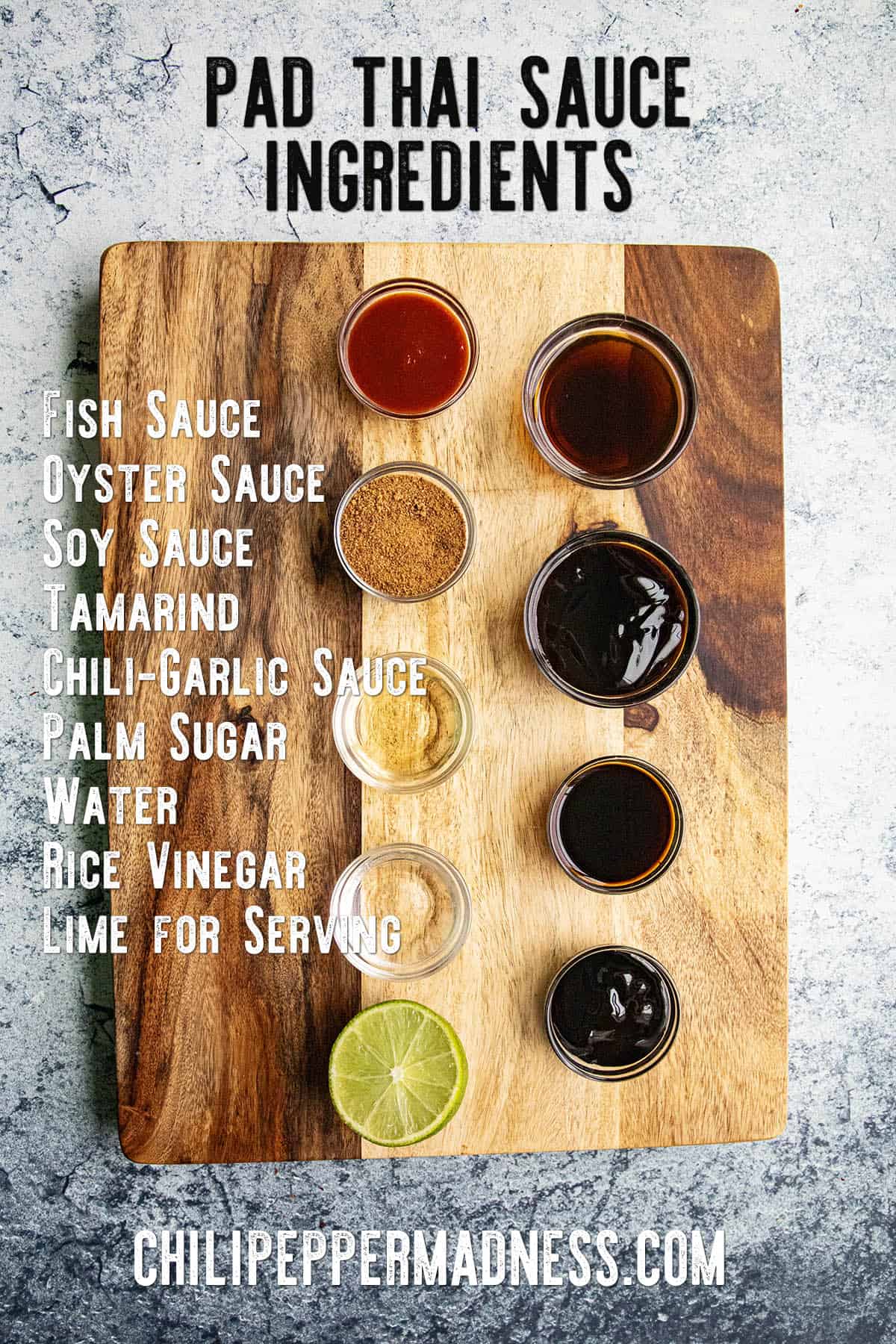
Pad Thai Sauce Ingredients
- Fish Sauce. A key salty ingredient.
- Oyster Sauce. Adds umami and the caramel-like sweetness helps the sauce cling to the noodles. Need a swap? See my list of oyster sauce substitutes.
- Soy Sauce. More savory, salty flavor.
- Tamarind Concentrate. The key sour ingredient. I use the pourable Thai-style concentrate, which is sometimes sold as tamarind paste or puree. If yours is the thick, black Indian-style kind, use half as much. More on that below.
- Chili-Garlic Sauce. Try my homemade chili-garlic sauce recipe, or use sriracha.
- Palm Sugar. Balances out the sour and salty flavors. Brown sugar can be used.
- Rice Vinegar. A little extra bright acidity.
- Water. I use some hot water for thinning.
Tamarind Paste vs. Tamarind Concentrate
You can use either, but the labels are confusing, and the products are NOT the same strength.
- Thai-Style Tamarind Concentrate. Brown and pourable, a bit like a thick sauce. You'll find it in jars or tubs at Asian markets, labeled "tamarind concentrate," "tamarind paste" or "tamarind puree." This is what I use, and you only need 2 tablespoons.
- Indian-Style Tamarind Concentrate. This product is nearly black, thick and sticky, and MUCH more sour. Use half as much, about 1 tablespoon, then taste and adjust if you want more tang.
- Tamarind Pulp Block. This is the compressed block of fruit pulp, seeds and fibers included. Soak a chunk in hot water, mash it with your fingers, then strain it to make your own paste. It has the freshest flavor of these options, but it takes a few extra minutes.
How to Make Pad Thai Sauce - the Recipe Method
Whisk all of the ingredients together in a small bowl.
Taste and adjust. Want it more sour? Add a bit more tamarind. Sweeter? More palm sugar. Saltier? A splash more fish sauce. Make it yours.
Store and refrigerate in a sealed container until ready to use.
Boom! Done! Your pad thai sauce is ready to use. Easy enough to make, isn't it?
Grab some bean sprouts, green onions, lime wedges and all your favorite toppings. It's time to make Pad Thai! Here is my Pad Thai Recipe.
How much to use: One batch (a little over 1 cup) is the right amount for 4 ounces of dried rice noodles, which serves 2. That's the same ratio I use in my Pad Thai recipe. Cooking more noodles? Scale the sauce up to match.
You can also toss this easy-to-make sauce with any Thai noodle dish or stir fry. Dinner on the table in 30 minutes or less.

Recipe Tips & Notes
- Don't Skip the Tamarind. Tamarind is a key ingredient in Pad Thai sauce and gives it a tangy and slightly sweet flavor. You can find tamarind concentrate at most Asian grocery stores, and it's worth seeking out for an authentic Pad Thai sauce.
- Balance the Sweet, Sour, and Salty Flavors. Pad Thai sauce should have a balance of sweet, sour, and salty flavors. Palm sugar or brown sugar add sweetness, rice vinegar or lime juice adds sourness, and fish sauce adds saltiness. Adjust each to your personal tastes.
- Make a Big Batch. Double or triple the recipe and store it in a jar. Give it a good shake before using, since the sugar and tamarind can settle.
- Dissolve the Palm Sugar. Palm sugar comes in hard discs or a soft paste. If yours is hard, grate or finely chop it, or stir it into the hot water first so it dissolves completely.
Heat Factor
Mild-Medium. As written, the chili-garlic sauce gives this sauce a gentle warmth. Pad Thai isn't traditionally a hot dish. In Thailand it usually comes out mild, with a condiment caddy on the table so everyone can season their own plate with sugar, dried chili flakes, fish sauce with chilies, and vinegar with chilies.
For Mild. Cut back on the chili-garlic sauce or skip it entirely.
For Spicy. Add crushed dried Thai chilies or sliced fresh Thai chilies, or stir in a spoonful of my Nam Prik Pao (Thai Chili Paste). I also like to keep some Prik Nam Pla (Thai Chili Fish Sauce) on the side to spoon over the finished noodles.
Pad Thai Sauce Substitutions
- No Tamarind? Honestly, there's no perfect swap. Tamarind is THE flavor of Pad Thai. In a pinch, use fresh lime juice with a little extra brown sugar. It will taste brighter and less fruity, but still good.
- No Fish Sauce? Use more soy sauce, or a vegan fish sauce for a vegetarian version.
- No Oyster Sauce? Vegetarian mushroom "oyster" sauce works great, or use one of the oyster sauce substitutes linked above.
- Gluten Free? Use tamari instead of soy sauce, plus a gluten-free oyster sauce. Check your fish sauce label, too.
- No Palm Sugar? Light or dark brown sugar works great. Coconut sugar works, too.
Ways to Use Pad Thai Sauce
Pad Thai is the obvious one, but don't stop there, my friends.
- Toss it with other noodles, like my Easy Thai Noodles.
- Use it as the sauce for a quick stir fry of chicken, shrimp, tofu or vegetables.
- Splash some into fried rice.
- Use it as a quick marinade for chicken or shrimp before stir frying or grilling.
- Drizzle it over rice bowls.
Storage
Pad Thai sauce will last up to 1 month or longer in the refrigerator in a sealed container. Simply use as desired.
You can also freeze it for 3 months. Freezing is a great way to extend the shelf life of the sauce and preserve its flavor.
That's it, my friends. I hope you enjoy this homemade pad thai sauce recipe. Let me know if you make it. I'd love to hear how you enjoyed it and how you made it your own.

Got any questions? Ask away! I’m happy to help. If you enjoy this recipe, I hope you’ll leave a comment with some STARS. Also, please share it on social media. Don’t forget to tag us at #ChiliPepperMadness. I’ll be sure to share! Thanks! — Mike H.
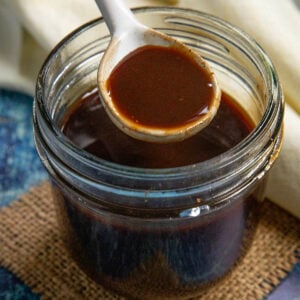
Pad Thai Sauce Recipe
Ingredients
- 3 tablespoons fish sauce
- 3 tablespoons oyster sauce
- 2 tablespoons soy sauce
- 2 tablespoons tamarind concentrate (Thai-style. Use 1 tablespoon if using thick Indian-style)
- 2 tablespoons chili-garlic sauce or use sriracha
- 2 tablespoons palm sugar or use brown sugar
- 2 tablespoons water
- 1 tablespoon rice vinegar
Instructions
- Whisk all of the ingredients together in a small bowl.
- Store and refrigerate in a sealed container until ready to use.
Notes
Nutrition Information
Pad Thai Sauce FAQs
What is in Pad Thai sauce?
Traditional Pad Thai sauce is tamarind, fish sauce and palm sugar. My version also includes oyster sauce, soy sauce, chili-garlic sauce, rice vinegar and a little water.
Is Pad Thai sauce spicy?
Not traditionally. Pad Thai is a mild dish, and people add chili flakes at the table. My version has a gentle kick from chili-garlic sauce, and you can leave it out or turn it way up.
Can I use tamarind concentrate instead of tamarind paste?
Yes. Pourable Thai-style tamarind works at the full 2 tablespoons, whether the label says paste, puree or concentrate. Thick, nearly black Indian-style concentrate is much stronger, so use about half as much (1 tablespoon) and taste.
How much Pad Thai sauce do I need?
One batch of this recipe, a little over 1 cup, is enough for 4 ounces of dried rice noodles, or about 2 servings of Pad Thai.
Can I make Pad Thai sauce without tamarind?
You can, but it won't taste quite the same. Fresh lime juice with a little extra brown sugar gets you a tangy sauce that's brighter and less fruity than the real thing.
How long does homemade Pad Thai sauce last?
Up to 1 month in the refrigerator in a sealed container. You can also freeze it for up to 3 months.
Is Pad Thai sauce gluten free?
Not as written. Soy sauce and most oyster sauces contain wheat. Swap in tamari and a gluten-free oyster sauce, and check your fish sauce label.
NOTE: This recipe was updated on October 28, 2026 with new information, including heat level and substitution notes, batch sizing, ways to use the sauce, and FAQs. The recipe itself hasn't changed.
Celeste says
on this Pad Thai Sauce recipe, do you have a favorite tamarind paste that you use?
Mike Hultquist says
Celeste, I do not have a specific brand. Use your favorite! Enjoy!
Audrea says
This is the recipe I’ve been needing! Forgive my ignorance but do you happen to know how long this will keep in the fridge? I’m guessing a good while but wanted to see if you’ve got a reliable time frame?
I’m making this tonight!
Mike Hultquist says
Thanks, Audrea! Yes, this should last a week or so in a container in the fridge. Have fun!
Dave Powley says
What do you recommend to substitute for the fish sauce?
Mike Hultquist says
It's best to use something with good umami, like soy sauce, anchovies, or shiitake mushrooms.
LIZ says
Made a double batch today, so I can have it on hand for all my Thai recipes. Very tasty. I added lots more heat to it. I love it hot.
Mike H. says
Love hearing it, Liz. Enjoy!
Brett says
How much tamarind concentrate should be used if I can't find the paste? Concentrate being concentrate, I imagine I shouldn't use the same amount as of the paste.
Mike Hultquist says
Brett, use 1 tablespoon.
Peter Dyck says
I made this today after adjusting for sodium levels to accommodate my CHF. I brought the sodium down to approx 700 mgs and the flavor is still great. My wife is happy as we will have her favorite Thai dish, Pad Thai this evening. Thank you for the ideas.
Mike Hultquist says
Great! Glad you both enjoyed it, Peter! Thanks for sharing this.
Rita says
I made this the other day for pad Thai, and have used it in two other dishes since. Thank you so much for all your wonderful recipes. This one is DELICIOUS and just what I need to have in the fridge for a quick meal for one. I didn't have oyster sauce so used Hoisin sauce instead, which I'm sure gives it a different flavor but it's wonderful to me.
Mike Hultquist says
Thanks so much, Rita! YEs, I agree, GREAT for having at the ready for quick meals! We love it.
Alex says
I love these kinda sauces that allow you to make ahead and whip up a dish later on in no time. Especially since working from home is an accepted thing i do it a lot for lunches. With a thai holy basis stir fry as favorite which i can whip up in 10 minutes with all the prep done ahead. So thanks for another recipe to use this way!
I also have one request for the site, is it possible to make a section with all your cookbook recommendations? I have been skipping through a lot of you recipes to find them. But i could not find a place on the site where these are all gathered.
Love all your chilli recipes, thanks and keep up the good work!
Mike Hultquist says
I appreciate it, Alex. Yeah, I'll have to think about getting a Cookbook Recommendation page online for simplicity.
Eric Buchannan says
So my wife is deathly allergic to seafood so fish sauce and oyster sauce are out of the question, do you know of a substitute. We use Worcestershire sauce instead of fish sauce is there a substitute for oyster sauce? My wife can eat so much hotter food than I can!!! That started after our third child was born and she never looked back!
Mike Hultquist says
Eric, I have a page on that here: https://www.chilipeppermadness.com/ingredients/oyster-sauce-substitutes/. I typically recommend more soy sauce with a touch of brown sugar. You can also try hoisin sauce. I hope this helps!
Bo Wood says
Hi Mike, Love your info on hot stuff! Made my own habanero/Carolina Reaper hot sauce recently based off one of your recipes. Good stuff, and all for me as no one else will touch it! :>)
On the Pad Thai sauce, I'm assuming the nutrition info is per serving. It's showing "Sodium: 4727mg". Got to be a typo right? If not, it needs a warning label! If you ate 2 servings (which I probably would), that would be about 4 days of recommended sodium, or almost 7 days worth on a recommended low sodium diet for a male. Too rich for my blood!
Thanks!
Mike Hultquist says
Thanks, Bo. It's the Fish Sauce, which is very high in sodium. Check your label, though, as these are only estimates. However, you can seek out a low sodium fish sauce, or use more soy sauce (low sodium, of course) as an alternative. Thanks!