



This pebre recipe makes Chile's favorite salsa, pebre chileno, with fresh tomato, cilantro, onion, garlic and chilies in olive oil and vinegar. It takes 5 minutes, and I put it on everything!

We're making Pebre today, my friends, the Chilean condiment made with chili peppers, olive oil, garlic, cilantro and more.
It is very fresh and works in so many ways, as a sauce, a dip, a spread and more. Think of it as Chile's answer to Mexican pico de gallo, but with more cilantro and a tangy oil and vinegar base.
You'll find pebre everywhere in Chile, in homes and restaurants. It is usually served with fresh bread before the meal, and you'll find it at backyard asados, especially during Fiestas Patrias in September.
The name comes from the Catalan word for pepper. As with any regional condiment, every cook makes it a little differently. In far northern Chile, for example, pebre looks more like a smooth sauce.
At its core, though, pebre is a mixture of tomato, cilantro, garlic, onion, olive oil and fresh chili peppers, traditionally a Chilean ají, which I love.
Let's talk about how to make pebre, shall we?
Pebre Ingredients

- Oil, Vinegar and Water. Use 1/4 cup olive oil or a neutral oil with 1/4 cup water and 2 tablespoons white wine vinegar. Red wine vinegar is good, too.
- Tomato. 1 large ripe tomato, chopped. Skip it for the green version (see variations below).
- Peppers. Use 4 to 5 aji chili peppers, chopped. I used Aji Amarillos. In Chile, cooks usually reach for a fresh green Chilean ají like the Aji Cristal. Jalapeño peppers or serrano peppers work great, too.
- Onion. 1/2 small to medium-sized onion.
- Scallions. Use 1/4 cup of the white part and 1 inch of the green parts.
- Garlic. 4 cloves garlic, smashed to release their flavors.
- Cilantro. Use 1/2 to 1 cup chopped cilantro, depending on your preference. Cilantro is the classic choice. Some Chilean cooks mix in a little parsley.
- Salt and Pepper. Use salt and pepper to your personal taste.
Some optional additions include lemon juice and red chili flakes for some heat. Although non-traditional, you can also add in some sort of hot sauce, like sriracha, for added zing.
How to Make Pebre - the Recipe Method
Whisk. First, whisk together the oil, water, vinegar and smashed garlic in a large bowl until the mixture thickens up a bit.
The Vegetables. Next, finely chop up your tomato, peppers, onion, scallions and cilantro.
Combine. Toss the chopped onion, tomato, and vegetables into the oil mixture and mix to combine.

Season and Refrigerate. Season with salt and pepper to your personal tastes, then transfer the mixture to a bowl. Cover and refrigerate to let the flavors mingle.
You can serve it right away, but I like to wait 2 hours to mellow.
Boom! Done! Pebre in the house! What do you think? So good, isn't it? I love pebre. So good.

About the Peppers
"Aji" is the common name for chili peppers in much of South America and parts of the Caribbean, so "aji pepper" can mean a lot of different chilies.
Chilean cooks typically use a fresh green ají for pebre, such as the Aji Cristal. Those can be tough to find outside of Chile, so I made mine with Aji Amarillos, the sunny Peruvian aji. They bring a nice fruity heat.
If you can't find any ajis, jalapeño peppers or serrano peppers are easy swaps. Jalapeños keep it on the milder side, while serranos add more bite.
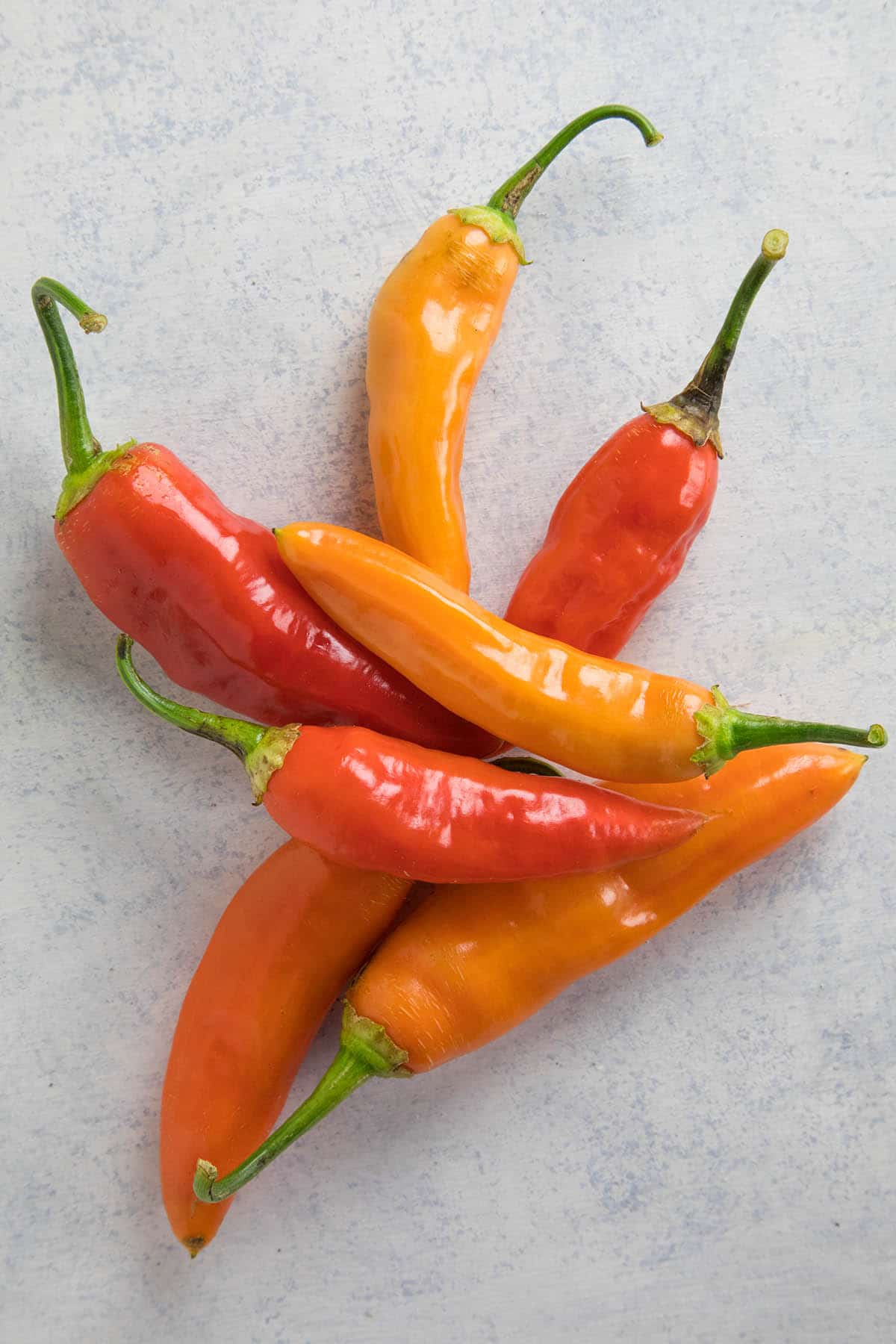
Learn more about Aji Peppers, including the many different types. Also, learn more about the Scoville Scale here.
How Spicy Is Pebre? Mild to Wild
Most Chileans keep their pebre fairly mild and use the ají sparingly, so it stays fresh and herby instead of fiery. You can push it either way.
- Mild. Use 1 or 2 jalapeños with the seeds and membranes removed, or swap in a little green bell pepper.
- Medium. Go with the full amount of aji amarillos or serranos, as written.
- Hot. Keep the seeds in, or add a pinch of red chili flakes or a spoonful of merkén.
- Wild. Add a chopped habanero or Scotch bonnet. Not traditional, but oh so good, my friends.
Recipe Variations
Pebre de Cilantro. Some like to skip the tomatoes for a green version of the recipe, called Pebre de Cilantro.

Pebre de Merkén. Stir in about 1 teaspoon of merkén, the smoky Chilean chili seasoning, for a deeper, smokier pebre.
Lemon Instead of Vinegar. Many Chilean cooks use fresh lemon juice in place of some or all of the vinegar for a brighter flavor.
Chancho en Piedra. If you make this in a molcajete or with a mortar and pestle and mash it well, you will have another popular Chilean salsa called Chancho en Piedra, a smoother cousin of pebre.
Give it a try. Delicious!

Consistency. Process it to a consistency you prefer, either smooth or chunky. You can always splash in a bit of cold water to thin it out if you'd like.
Most people make it chunkier, like a pico de gallo salsa, but some prefer a smoother Chilean pebre sauce, which is more popular in Northern Chile.
It looks more like a red chili sauce this way.
What to Serve with Pebre
Pebre can spice up just about anything. Here is how it is often served in Chile, plus a few of my favorites.
- Fresh Bread. The classic. In Chile it comes to the table with crusty marraqueta rolls before the meal.
- Sopaipillas. Chilean fried pumpkin flatbreads and pebre are a famous pairing.
- Empanadas. Spoon it over baked or fried empanadas.
- Asado and Grilled Meats. Steak, chicken, pork chops and sausages. Try it on Choripán, too.
- Potatoes. Spoon it over boiled potatoes for some zing.
- Arepas. I love it with Arepas!
How to Store Pebre
Store your pebre in a sealed container in the refrigerator for up to a week. It tastes best within the first few days, while the cilantro is bright. Give it a stir before serving. I don't recommend freezing it, since the tomato and herbs turn mushy.
Cookbook Recommendation
I've been learning a lot about South American cooking from several different cookbooks. Here is a link to one of my favorites. Definitely recommended. Affiliate link, my friends!
- The South American Table, by Maria Baez Kijac

If you enjoy this recipe, I hope you'll leave a comment with some STARS. Also, please share it on social media. Don't forget to tag us at #ChiliPepperMadness. I'll be sure to share! Thanks! -- Mike H.

Pebre Recipe
Ingredients
- 1/4 cup neutral oil (Olive oil is good, too)
- 1/4 cup water optional
- 2 tablespoons white wine vinegar
- 4 cloves garlic smashed
- 1 large tomato chopped
- 4-5 Aji Peppers chopped (we used Aji Amarillos - or use jalapenos or serranos)
- 1/2 small onion chopped
- 1/2 cup chopped cilantro (use 1 cup for more defined cilantro flavor)
- 1/4 cup chopped scallions white part and 1 inch of the green
- Salt and pepper to taste
Instructions
- Whisk together the oil, water and vinegar with the garlic in a bowl until it thickens a bit.
- Stir in the remaining ingredients until well combined.
- Refrigerate about 2 hours to allow flavors to mingle, or serve immediately.
Video
Notes
- Pepper Note: Use Chilean aji cristal if you can find them. I used aji amarillos, or use jalapeños or serranos.
- Pebre de Merkén: For a smoky version, stir in about 1 teaspoon of merkén, the smoky Chilean chili seasoning. Start with less and add more to taste.
- Lemon Option: Many Chilean cooks use fresh lemon juice in place of some or all of the vinegar for a citrusy flavor.
- Optional Additions: Consider adding cumin, paprika, or balsamic or red wine vinegars.
Nutrition Information

Pebre FAQ
What is pebre?
Pebre is a fresh Chilean salsa made with chopped tomato, cilantro, onion, garlic and chili peppers in olive oil and vinegar. Chileans serve it with bread, sopaipillas, empanadas and grilled meats.
What is the difference between pebre and pico de gallo?
They look similar, but pico de gallo is tomato-forward and seasoned with lime, with no oil. Pebre leans heavier on cilantro and gets an olive oil and vinegar base, so it is a bit saucier and tangier.
Is pebre the same as chimichurri?
No. Argentine chimichurri is mostly parsley, oregano, garlic, oil and vinegar, with no tomato. Pebre uses cilantro and usually tomato and fresh chilies. Both are great on grilled meats, though.
Is pebre made with cilantro or parsley?
Cilantro is the classic herb for pebre. Some cooks mix in a little parsley, especially if they find cilantro too strong.
Is pebre spicy?
Usually just a little. Chilean pebre tends to be mild, with the chilies adding flavor more than fire. You control the heat with the type and amount of peppers you use.
NOTE: This recipe was updated on 10/27/26 to include new storage tips, serving ideas, and FAQs. It was originally published on 5/1/2014 and updated on 11/7/22 with new photos.
Jeremy Hill says
nice recipe. a couple of suggestions. chop all of the ingredients finer. for the onion, slice super fine, soak in water with or without salt. then dice the onion slices and add to the rest. salud!
Mike Hultquist says
Chop as you wish, Jeremy! This is a pretty customizable recipe. Thanks! And salud!
Sara says
I made this yesterday and it was delicious. I did a variation to use local, seasonal ingredients. (I'm in Alabama.) I used freshly picked strawberries in place of tomatoes along with a locally produced pecan oil and it was out of this world! Thank you!
Mike H. says
You are very welcome, Sara! I am very glad that you enjoyed it!
Boo says
This was most excellent, made it all the ways you suggested to try it out. The Chancho en piedra style was used to finish off some grilled pork chops and to flavor my chicken soup, in my picadio con papas.. So many ways to use it, tomato or not, with lime and cumin, what a nice sauce/dip. Friends and family really loved it.
Thanks so much Mike
Mike Hultquist says
Thanks, Boo!
Miska Knezevic says
EXCELLENT!
Brett Ashford says
I lived in Chile for 5 years. The Chileans love Pebre, It is served in most restaurants with fresh bread. One thing... the do not like it to be very spicy, so they will use the Aji sparingly. They also often use lemon or lime juice in place of the vinegar. I normally added a dash of "Salsa Inglesa" to my Pebre and my Chilean friends wanted to know what I did that made my Pebre taste so good... they could not believe that a "Gringo" could make Pebre so well.
- Note - "Salsa Inglesa" is Worcestershire sauce.
Mike Hultquist says
Great tips, Brett! I love it! Thanks so much for sharing your experience!
Elaine V says
This is NOT Chilean Pebre. Not the traditional. This looks more like a chimichurri. And while most households in Chile add their own variance to the recipe, the key ingredient is a tomato base. Don’t know where you got this recipe from but it’s NOT pebre!
Michael Hultquist - Chili Pepper Madness says
Elaine, I've updated this recipe to include the tomatoes this time. There is quite a bit of argument even in Chile how to make it. When I included tomatoes in the recipe the first time, I got a lot of feedback that it was NOT pebre, but "Chancho en Piedra", which I have included in the post, but which is more sauce-like. The book I reference and used to adapt the recipe is listed in the post. Thank you for underscoring the amount of disagreement on pebre. Cheers.
Chilling Mac says
What’s with the HIGHER CASE you knob.
Mike Hultquist says
Her comment was meant for my "Pebre de Cilantro" version, which I had as the hero shot before.
Pedro says
Unfortunately you left out a key ingredient, chopped tomatoes!!
Michael Hultquist - Chili Pepper Madness says
Pedro, tomatoes are discussed in the recipe post and notes of the actual recipe. I have updated the recipe to include them. I appreciate the feedback.
Maria Trinidad says
Pedro and Elaine are right. I'm chilean. Pebre it's made with tomatoes. The recipe you made its how pebre was made in times of colony (s. XVII- s.XIX) Chancho en piedra its another dish, that has nothing to do with pebre, wich name refers to the mortero o chancho de greda, both plates use to make and serve the dip from Talca's city. Nowadays, since s.XX, the pebre it's made with tomatoes. I'm 42 years old and I'm a chef, and never in my life have seen a pebre made with no tomatoes. In Chile, that dish it's call salsa verde and it's serve with seafood, like machas, mussels or clams. Another thing, both, pebre and salsa verde, are chop, not grounded. You have to see the pieces of vegetables. Chancho en piedra it's grounded, but we use a mortero for that, not a machine.
I hope you dont take this the wrong way, but pebre it's part of our tradition and an importan dish, that we eat all year along, with everything: barbecue, longaniza, prieta, beans, caldillo, potatoes salad, potatoes chips, sopaipillas, hot dogs or even bread.
I invite you to visit Chile, and enjoy our traditional cuisine. We also love spicy food. Greetings.
Mike Hultquist says
Maria, thank you for the information, and I have updated the recipe to include tomatoes for better accuracy. I greatly appreciate the feedback.
Matt M says
made this tonight, perfect freshness for the inferno that is California. I served it on top of grilled chicken breasts (marinated in lime, avocado oil, chipotle powder, salt, pepper, cilantro). Used a couple serranos and jalapenos from the garden - next time I will use a habanero as well, the heat was perfect for the kids, but too mild for me (and Mike). Family loved it. Thanks, as always Mike!
Michael Hultquist - Chili Pepper Madness says
Awesome, Matt! The chicken sounds quite outstanding! Thanks for sharing, my friend.
Norman Johnston says
Can you suggest a substitute for Aji as we do not have any chillis by that name in South Africa
Michael Hultquist - Chili Pepper Madness says
Norman, you can also try other peppers, such as the yellow bell pepper for a no heat version. If you do want some heat, use a mix of peppers, such as a yellow bell along with part of or a whole habanero or Scotch Bonnet. Let me know if this helps.
Norman Johnston says
Thanks Mike, will give it a try.
Regards.
Norman Johnston
Halima says
If I could lick my screen I would.... But my boss would frown upon drooling all over the work computers... I would kill for some of this right now. Thank you for sharing
Need to find me some Aji in South Africa... ?
Michael Hultquist - Chili Pepper Madness says
Haha, yes! Don't get in trouble with the boss.