

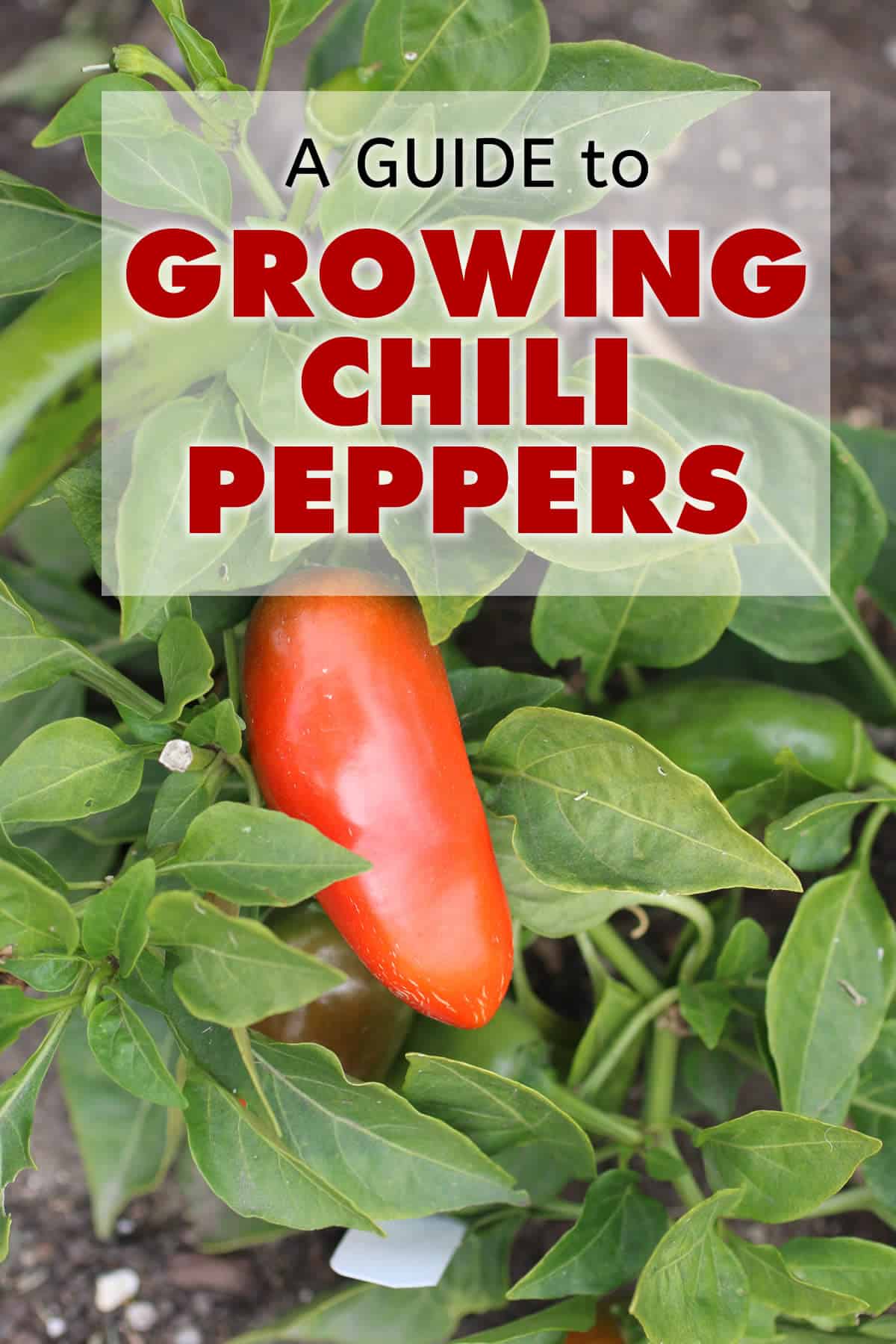
This guide will show you how to grow chili peppers of all types in your own home garden and includes answers to many of your growing questions, such as pepper plant spacing, sun needs, length of growing season, chili pepper growing tips and more.
Let's talk about growing chili peppers. Chili peppers start off a bit slow, so it is helpful to start to grow your plants indoors a few weeks (anywhere from 8-12 weeks) before transferring them outside. Keep the early soil and budding plants constantly moist, but do not over water.
Keep them warm (80 -85 degrees F is best) and in a sunlit place. If this is your first time growing your chili peppers from seeds, learn more about growing chili peppers from seed.
Once there is no worry of frost, you can plant your pepper plants to your garden or chosen spot. Choose a location with full sunlight, as chili peppers LOVE the sun. Mix in some mushroom compost or other organic compost to make the soil fertile and moist.
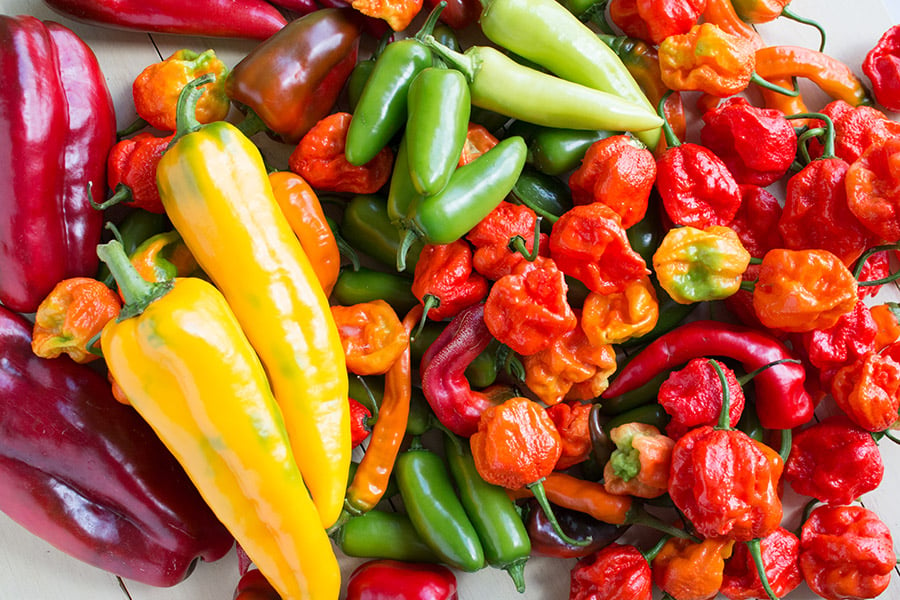
How much space do peppers need to grow?
Space the chili pepper plants 18 - 36 inches apart with about 2 -3 feet between rows. The plants will eventually grow to nearly 3 feet high.
Water! Keep the soil constantly moist, but not soaking wet. Chili peppers love water as much as they love sun, but you don't want to inundate the plants, or you run the risk of rotting. Water every other day or every third day. Include a good plant food product. Learn more about growing chili peppers in the ground or garden.
Keep your chili pepper garden well weeded. You don't want nasty weeds stealing the water from your chili peppers.
Learn more about growing and harvesting chili peppers through the links below, including:
Best Soil for Growing Chili Peppers
Choose a good quality soil or potting mix for growing your pepper that allows for good drainage. Add compost or manure before planting if you’d like.
Watering Your Pepper Plants
As with growing chili peppers in general, keep the soil moist but do not overwater them. For pepper plants in pots or containers, do not let the soil dry out completely. When peppers start to grow, cut back on your watering schedule a bit, but again, do not let the soil dry out.
Optimal Growing Temperature for Growing Chili Peppers
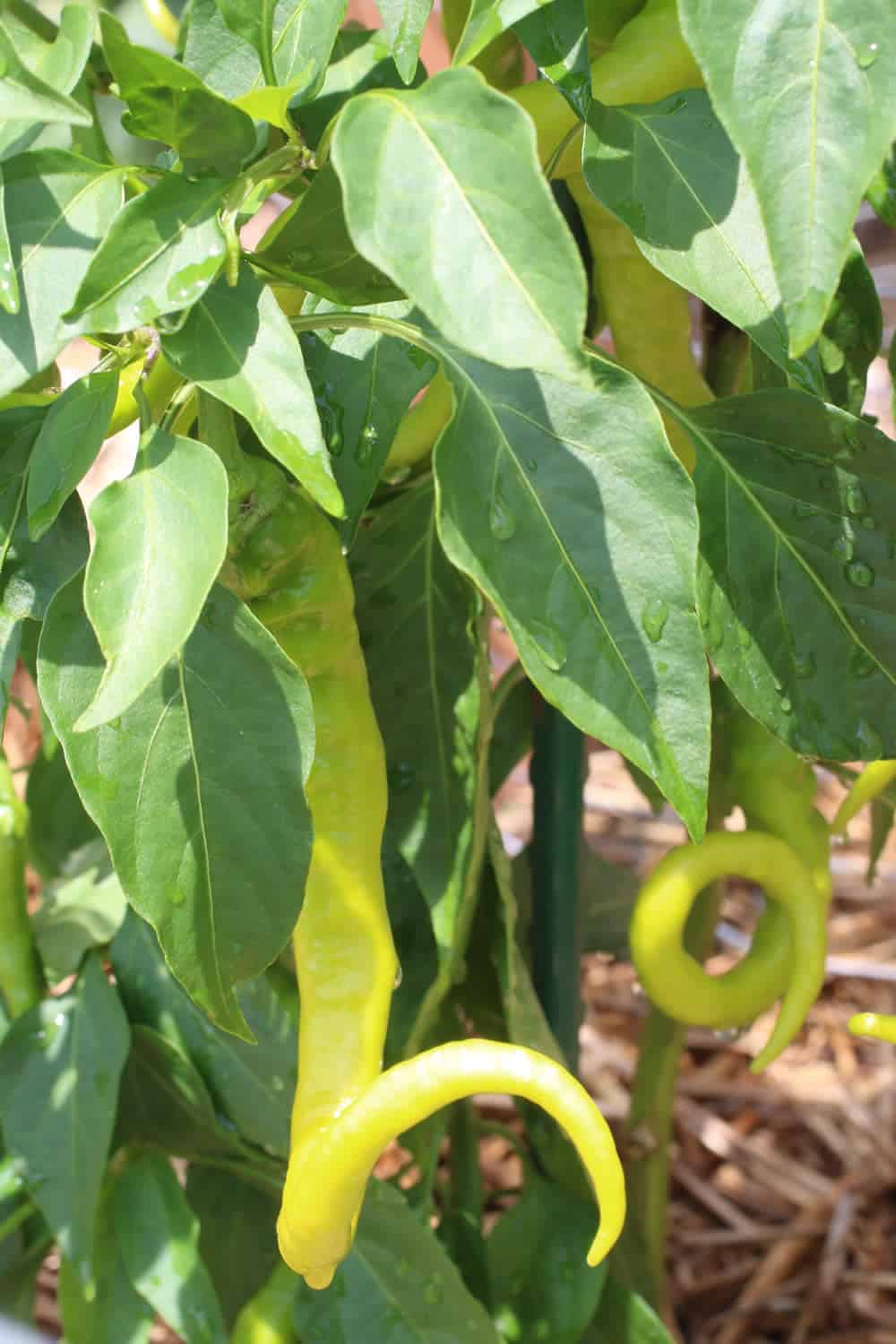
The ideal growing temperature for chili pepper plants is between 70-90 F (21-32 C).
Best Fertilizer for Growing Chili Peppers
Tomato fertilizers work well for chili pepper plants, as do compost and well-rotted manure. A good 5-10-10 fertilizer is usually sufficient for peppers. Work it into the soil before transplanting, about 3 pounds per 100 square feet. We use a solution of fish emulsion and seaweed.
Once the peppers begin to appear, fertilize one more time. You can also use manure or compost, which releases more slowly into the soil. Much, however, is affected by your soil, so you may want to consider a soil test if you are having issues.
Diseases and Pests That Affect Pepper Plants
Stay vigilant with your pepper plants. Keep a constant eye out for common diseases like bacterial spot, mildew or rotting. Pests like aphids or spiders are common as well, so watch out for them.
Frequently Asked Questions about Growing Chili Peppers
I get a lot of questions about growing chili peppers. Here are some of the most frequent.
Do chili plants need sun or shade?
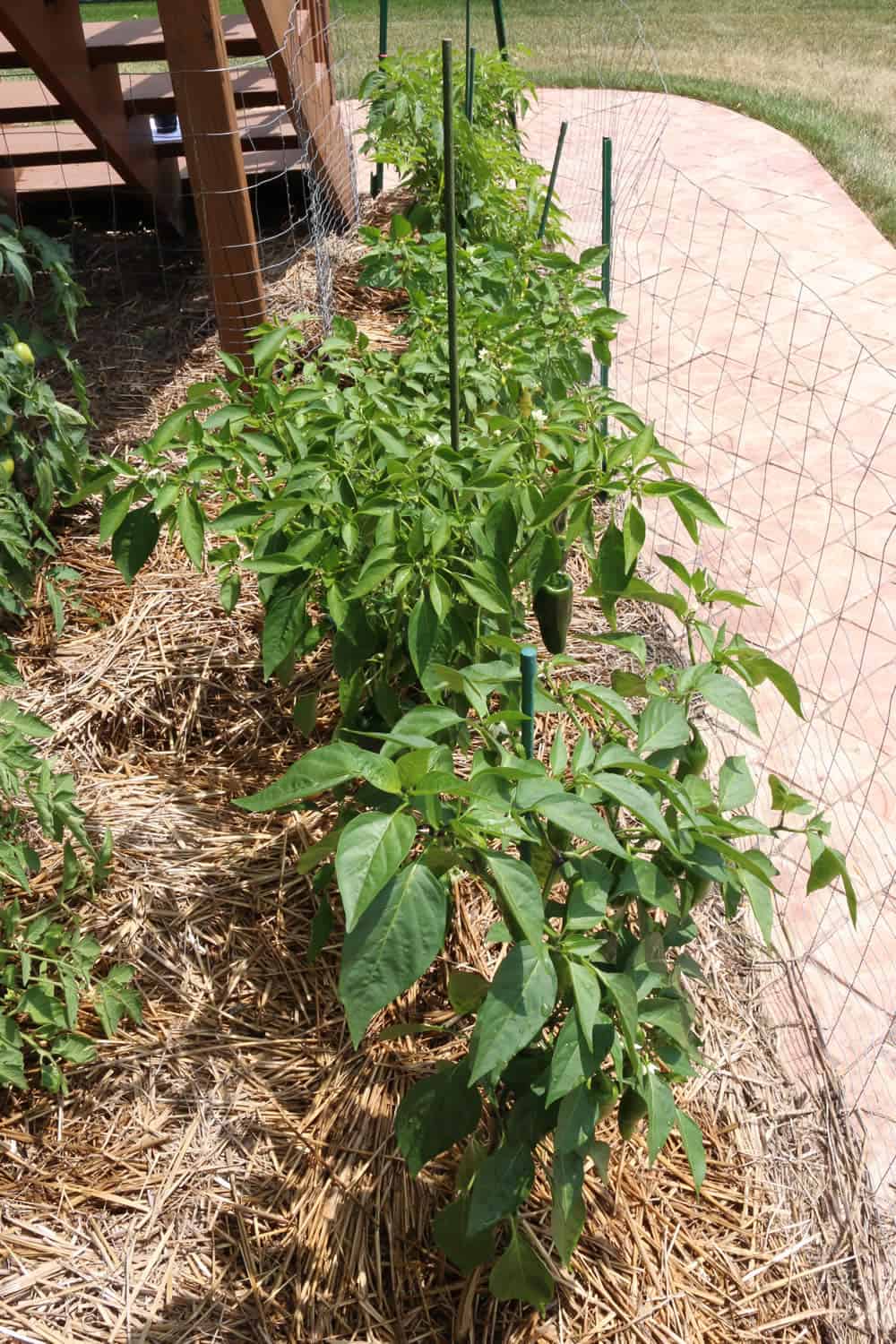
Chili peppers grow nicely in full sun. They will grow in partial shade, but they won't be as productive. A sunny spot is best. I have very successfully grown many varieties of chili peppers under my backyard deck, which is about 12 feet high. There is partial shade, but the garden gets a good dose of sunlight, so they grow very well.
How long does it take to grow peppers?
The length of growing time for chili peppers varies from pepper to pepper, though most mature in 60-150 days, which is a big range. Sweeter peppers typically mature in 60-90 days, with hotter peppers taking longer.
Consider, though - the number of days to maturity noted on seed packets means h the days after transplanting until the pepper plant bears mature peppers. It does not take into consideration the time it takes from planting seeds to growing into a seedling that you can transplant, which is about 8-10 weeks, so keep this in mind.
How long does a pepper plant take to bear fruit?
The length of time for chili pepper plants to start bearing peppers varies from pepper to pepper, though most mature in 60-150 days, which is a big range. Sweeter peppers typically mature in 60-90 days, with hotter peppers taking longer, up to 150 days.
What is the best food for chili pepper plants?
A good 5-10-10 fertilizer is usually sufficient for peppers. Work it into the soil before transplanting, about 3 pounds per 100 square feet. We use a solution of fish emulsion and seaweed.
Once the peppers begin to appear, fertilize one more time. You can also use manure or compost, which releases more slowly into the soil. Much, however, is affected by your soil, so you may want to consider a soil test if you are having issues.
How long can you keep chili plants?
Most chili pepper plants will only last a season in your garden, but if you transplant them and bring them indoors, and treat them to good conditions, you can keep them through the year and possibly longer. Some people have reported keeping their pepper plants for 3 years or longer.
Can you save seeds from your chili pepper plants and use them to grow plants later?
Absolutely! As a chili pepper grower, you may want to save the seeds from your current batch of chili peppers rather than purchase new seeds each year. Saving seeds also saves money, and ensures your harvest will include your very favorite peppers from season to season.
Luckily for us, chili peppers lend themselves to easy seed saving. Harvesting the seeds is a simple process, and they require very little effort to dry and store.
Learn how to save seeds from fresh peppers to grow later.
Chili Pepper Growing Tips
For successfully growing peppers, keep these growing tips in mind.
Do Not Over Water Your Pepper Plants
Pepper plants love their water, of course, and they need a steady supply, but peppers won't grow well in overly saturated soil. It waterlogs their roots. Use soil that retains moisture yet has proper drainage. Mulch is useful to prevent water evaporation.
If you are uncertain about watering, don't. Never over-water. Most diseases and growing problems are due to overwatering.
Do Not Overfertilize Your Pepper Plants
Using a lot of fertilizer may help the pepper plant to develop bright leaves and flowers, but hinders pepper production. A good 5-10-10 fertilizer is usually sufficient for peppers. Work it into the soil before transplanting. We use a solution of fish emulsion and seaweed.
Pinch Your Pepper Plants for Bushier Plants
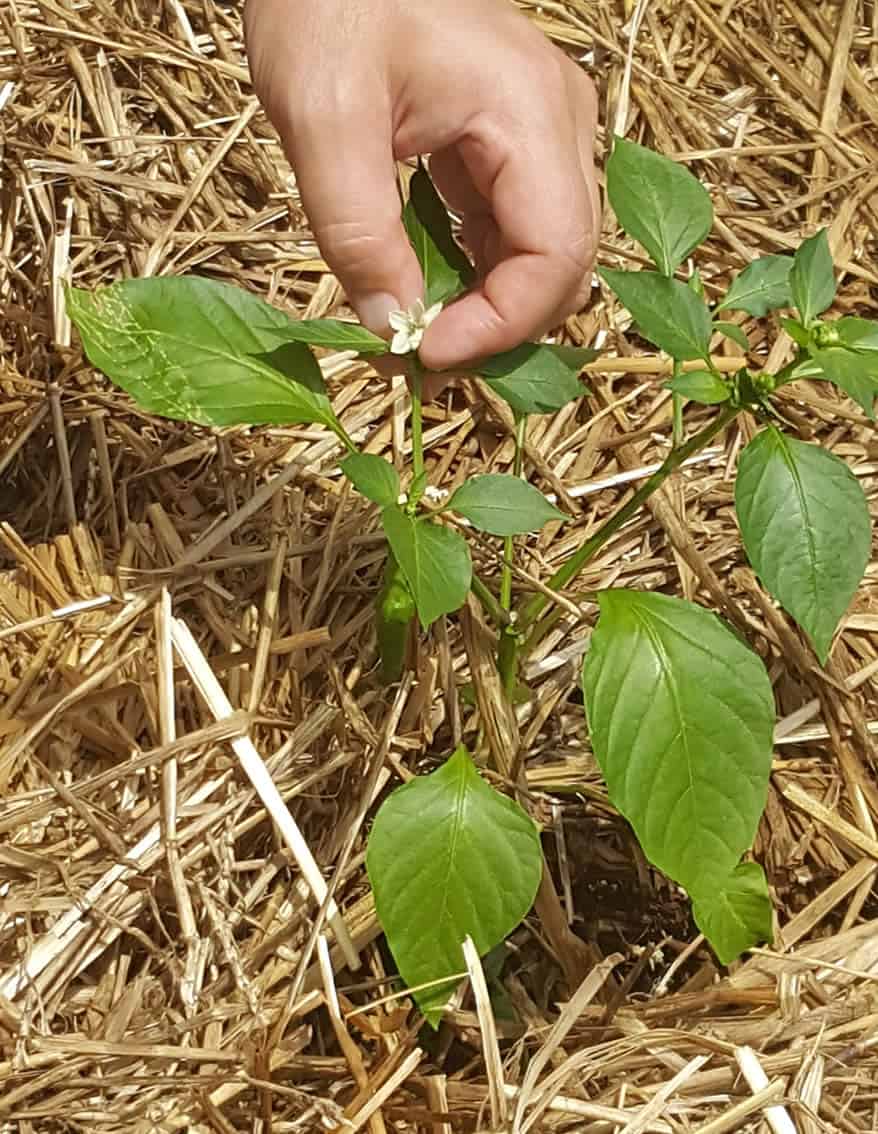
When the pepper plant is about six inches high, clipping the growing tip will result in a bushier plant. Remove any flowers that appear early, as the early flowers diminish the plants overall energy.
Got any further questions? Ask away! I'm happy to help. Feel free to contact me anytime and I will do my best to answer your questions. -- Mike H.
Sallie says
One of my plants has green leaves but the fruits are turning yellow on just this plant. Any idea why and are they ok to eat?
All my others have turned red after the green phase
Thanks
Mike Hultquist says
Sallie, what type of pepper? Some peppers do turn yellow in color naturally. If they are firm, not soft or showing any signs of rot or withering, they could be just fine.
Erin says
My poblano plants are covered with peppers, but they seem to have stopped growing at about 2-3 inches. They've been the same size for about a month. The plants look healthy, but the peppers just aren't getting any bigger and some appear to be turning reddish.
Mike Hultquist says
Erin, when they turn reddish, they are maturing and will eventually need to be picked. Some plants don't produce large pods. A lot depends on the growing conditions.
Joko Prihanto says
very good tips
Millette says
How do you treat the bugs that appear on your chili plants? I have a very young plant and it appears that it has aphids or a small white insect on the stems.
Mike Hultquist says
A popular way to deal with aphids on your pepper plants is to mix dish soap with water in a spray bottle, then gently spray the plants every few days. This will help keep them away.
JOSEPH KARIUKI says
I miss pepper farming
John says
To all of you who have flowers but no fruit, i just wanted to say, even if peppers are self pollinating and pollinate very easily, if they grow in pots, they need blow from a fan or light shaking to get pollen from pistil to stigma, else very few of them will fruit.
Jagdish says
Hi mike,
I love to grow Aji Sivri chili pepper ,but where I can get the authentic seeds ?
Please let me know.
I will appreciate it.
Thank you
jagdish
Mike Hultquist says
Check out my seed resources page on the site: https://www.chilipeppermadness.com/resources/chili-seeds/
Selina says
Hi, I grew my plants in an Aerogarden but both times once the plant had flowered it died, do I need to pollinate the flowers like a cucumber?
Mike Hultquist says
Selina, no, the issue is likely caused by a lack of nutrients for the plants.
Zvi Goldstein says
Hi Mike.
I have just bought a bush full with peppers. Would I get another harvest from the same bush, after using the current ones. I placed the plant in a full sun area, and the plant was transplanted into a pot.
Thank you
Zvi
Anaheim CA.
Mike Hultquist says
It's possible if you keep the plant alive. It could potentially start producing again next season.
Joey says
why is my red hot chili pepper plant only producing one (1) fruit? It is growing straight up, with dark green leaves, and I'm only seeing one pepper that is growing. Thank you in advance for the response.
Joey
Oak Ridge, NC
Mike Hultquist says
Joey, it's possibly weather related if temps/conditions aren't steady, or a nutrient issue. You might test your soil, consider adding more phosphorus and potassium, or spraying with some Epsom salt for magnesium, which aids blooming.
Joey says
hi again Mike, I added Epsom salts and my plant has grown with additional branching. I'm in zone 7B and it's already mid-late September 2022. Should I expect any more pepper to emerge? Or, is now the time to transplant the entire plant into a pot and bring it inside for the fall/winter season here in NC. Thank you,
-Joey
Mike Hultquist says
Joey, you should still see some activity through October, as the plants should be pretty active in Zone 7B, really until we start getting frost.
Russell says
Hi. In full sunlight, the leaves on my chilli plants drupe really quickly, is this natural? This is my first attempt, so sorry if that’s a stupid question. I am growing a Trinidad Scorpio Plant.
Mike Hultquist says
Russell, usually that means they need more water/moisture.
David says
Hi Mike!
Great article with lots of very useful information. I noticed in your pictures that you stake your plants but I didn't see mention of it in the article. Can you give us some staking tips? What's your preferred stake and what do you use to tie off to the plant for support?
Thanks for the help!
Michael Hultquist - Chili Pepper Madness says
No special tips, really. Lately I've been using larger composite stakes for stability with clips that hold them together, surrounding the plants. I use them more for tomatoes, as most of my pepper plants are good on their own. Garden tape is useful as well.
CJJ says
I HAVE A QUESTION ABOUT CHILI PEPPERS I AM GROWING THEM IN POTS ON BALCONY AND THEY ARE GROWING WELL BUT NOTICED YESTERDAY 2 OF MY LEAVES HAVE HOLES IN IT PLEASE LET ME KNOW WHATS WRONG AND WHAT IS THE REMEDY
THANK YOU
Michael Hultquist - Chili Pepper Madness says
CJJ, pests are a common cause of holes in pepper leaves. You might look into a pesticide for the plants.