


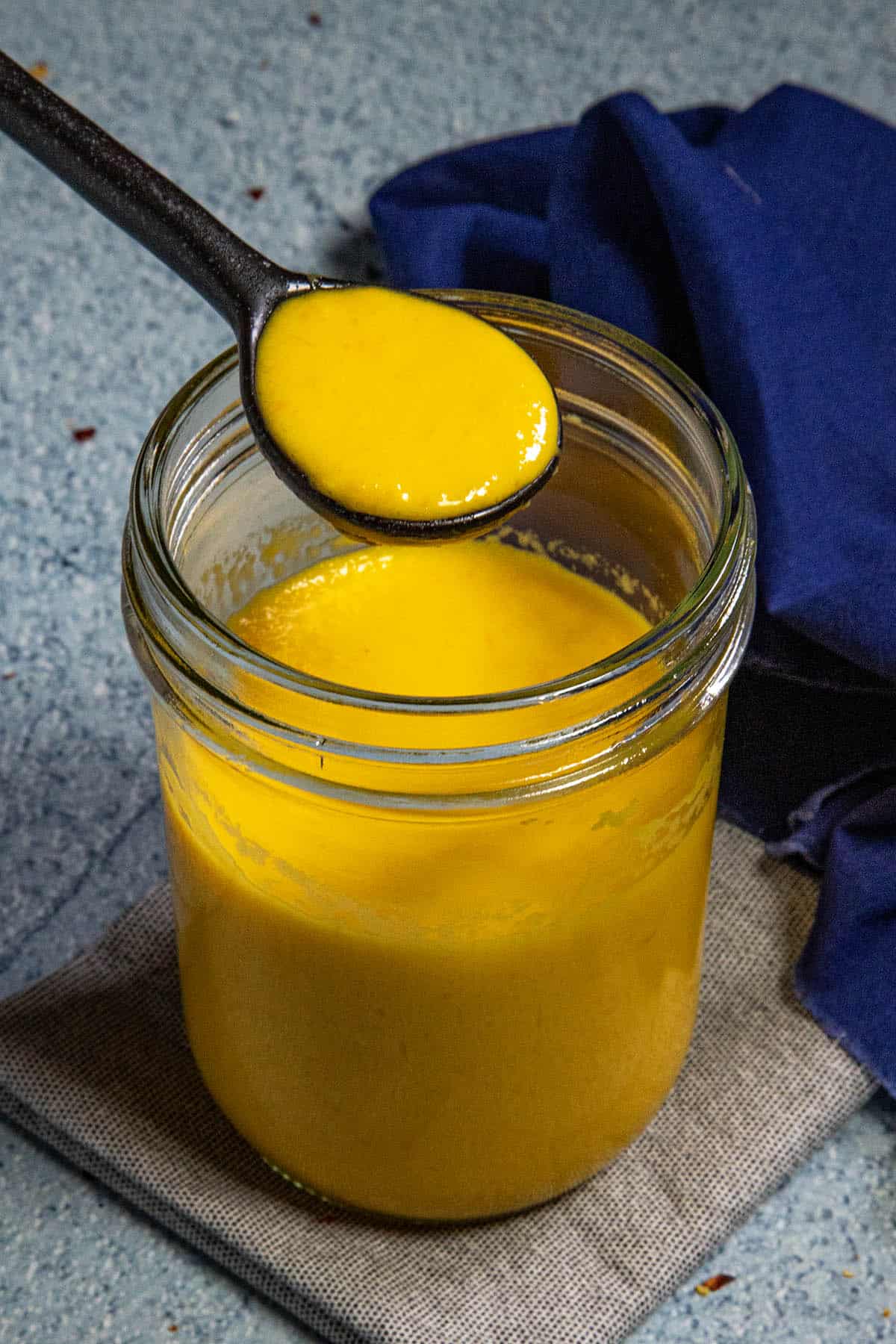
Aji Amarillo Paste is widely used in Peruvian cooking. You can buy Aji Amarillo Paste commercially, but here is a recipe to make it at home with fresh Aji Amarillo chili peppers.
I grew Aji Amarillo peppers this year in my garden again and DANG were they productive. The plants produced a huge harvest for me, so I've been cooking with Aji Amarillo peppers like crazy this summer and now into fall.
Aji Amarillo peppers have a good level of heat - in the 30,000 - 50,000 Scoville Heat Units range. That's about 6-10 times hotter than your average jalapeno pepper. Not bad! Learn more about the Scoville Scale here.
The Ají Amarillo is grown in all areas of Peru. Used by the Incas, it is still the most common and popular pepper in that country.
Learn more about Aji Amarillo Chili Peppers.
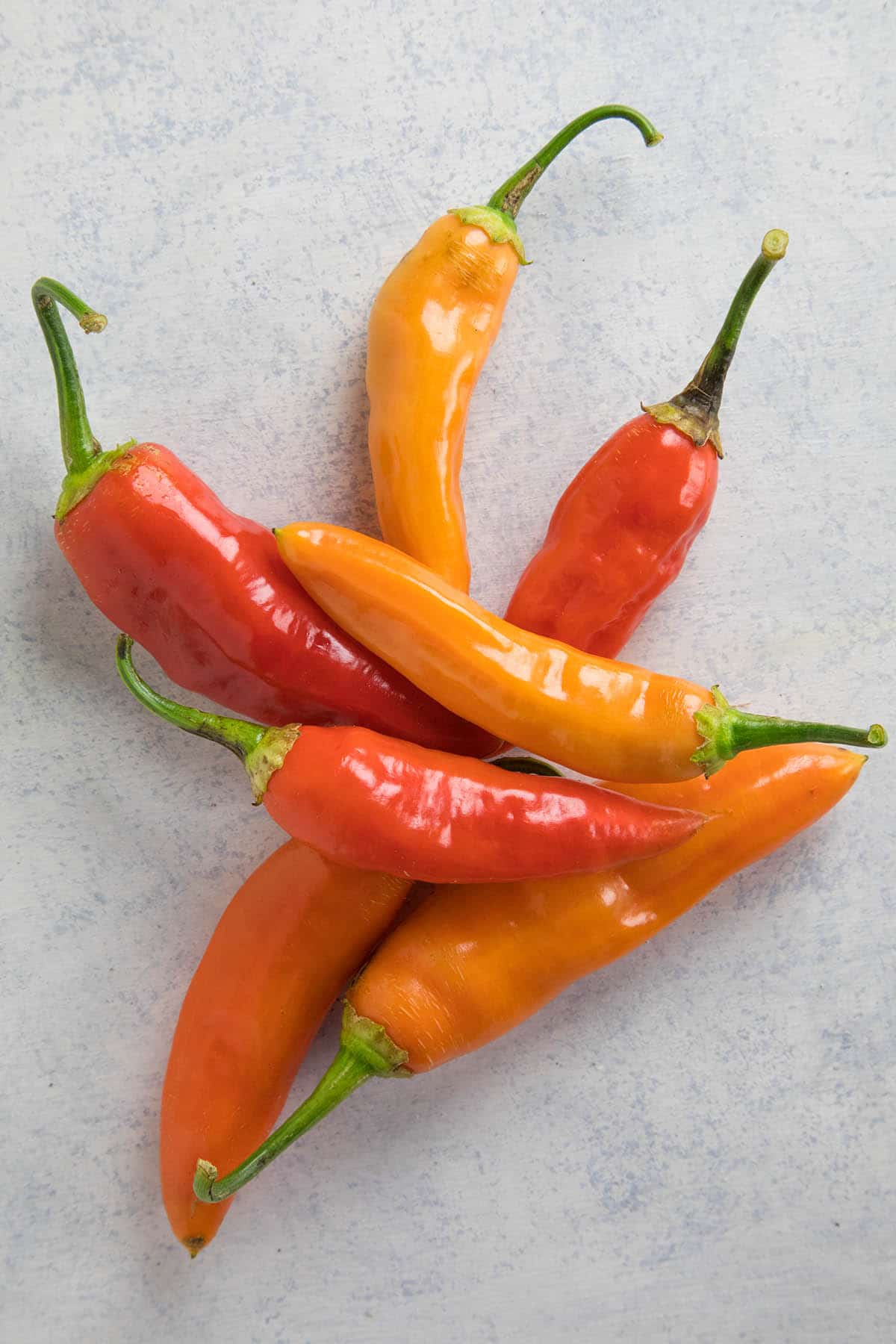
If you're a fan of Peruvian cuisine, you most likely need to purchase Aji Amarillo peppers in dried or paste form, which is totally great.
But if you're able to get your hands on fresh Aji Amarillo peppers, they're so worth it.
Aji Amarillo Paste is one of the most popular ways to cook with them, particularly for making Aji Amarillo Sauce. Check out my Aji Amarillo Sauce Recipe here.
The paste is mixed with other ingredients, including mayo, crema, tomato paste and more to make a simple table or dipping sauce.

Let's talk about how to make Aji Amarillo Paste, shall we?
Aji Amarillo Paste Ingredients
- Amarillo Peppers. Fresh aji amarillo chilies are ideal, though they can be difficult to find unless you grow them. You can use frozen. See below for alternatives.
- Salt.
- Olive Oil.
- OPTIONAL ADDITIONS
- Onion. Chopped.
- Garlic Clove. Chopped.
For a traditional Peruvian-style base paste, use only the peppers and enough oil or water to blend. I like adding a little onion and garlic for extra flavor, especially when using the paste as a foundation for sauces. Commercial brands do not include them.
How to Make Aji Amarillo Paste - The Recipe Method
Slice the aji amarillo chilies in half and remove the stems and inner membrane with seeds, then lightly chop. The heat is in this inner membrane, which is why aji amarillo paste is typically mild.
Bring 2 cups of water to a boil in a small pot. Add the chopped chilies (along with optional onion and garlic) and simmer for 10 minutes to soften.
Drain and peel the skins, if desired. Peeling the skins will give you a smoother paste.
Add the blanched chilies to a blender or strong food processor along with the oil and a pinch of salt. Process 1-2 minutes to form a chili paste.
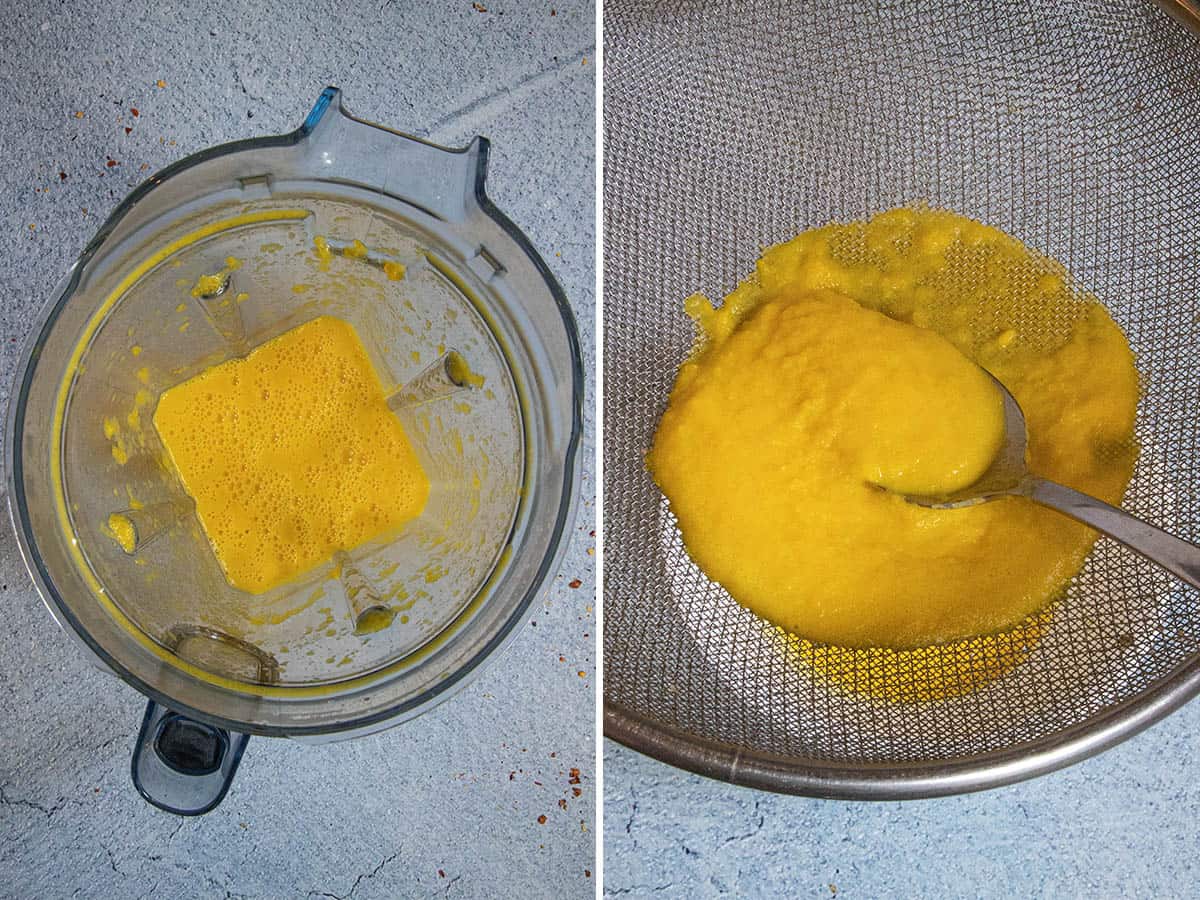
You can thin it out a bit with water or a bit more oil if you need to, but it is best nice and thick as you'll be using it as a flavoring component.
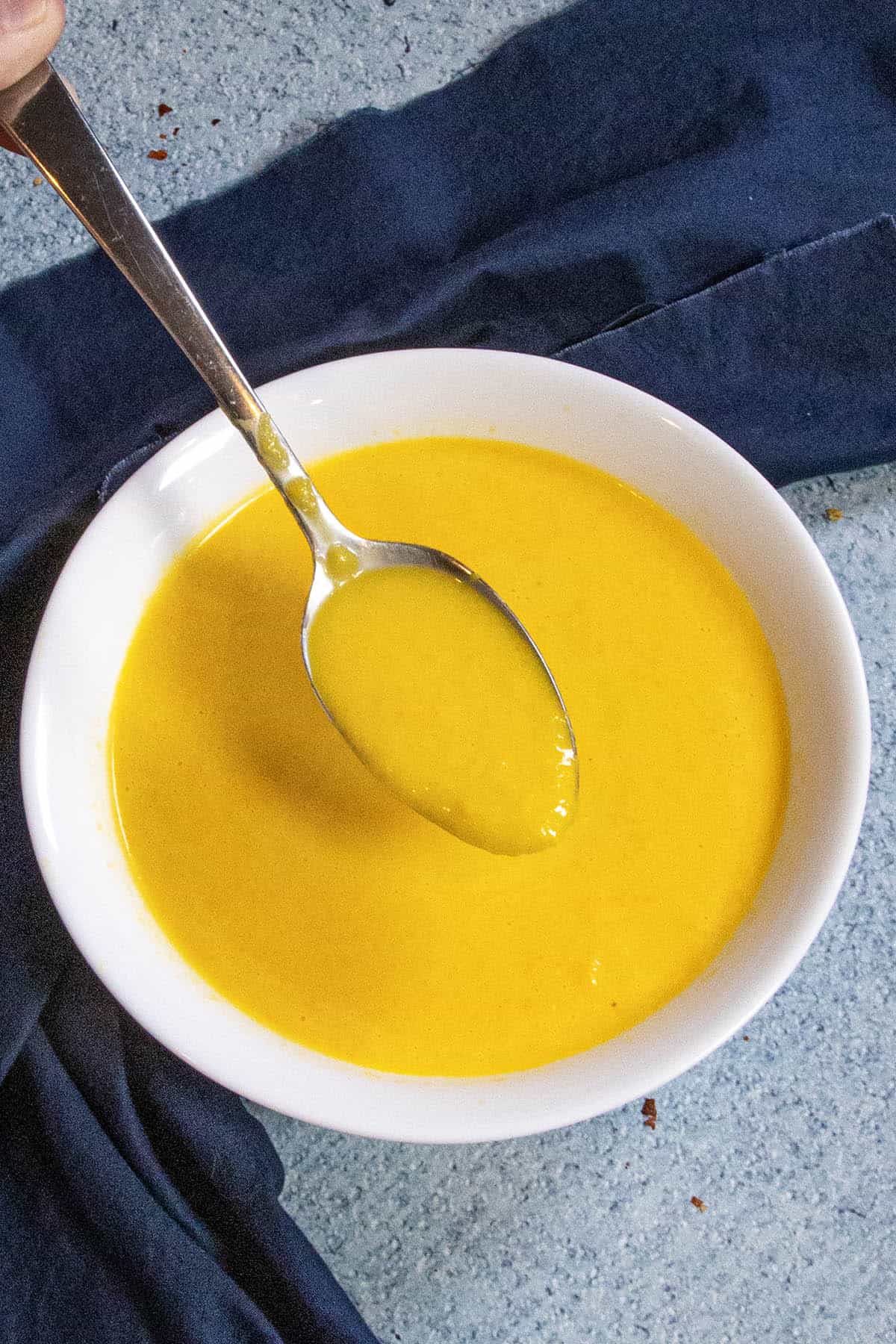
Learn more about how to make chili paste with fresh peppers.
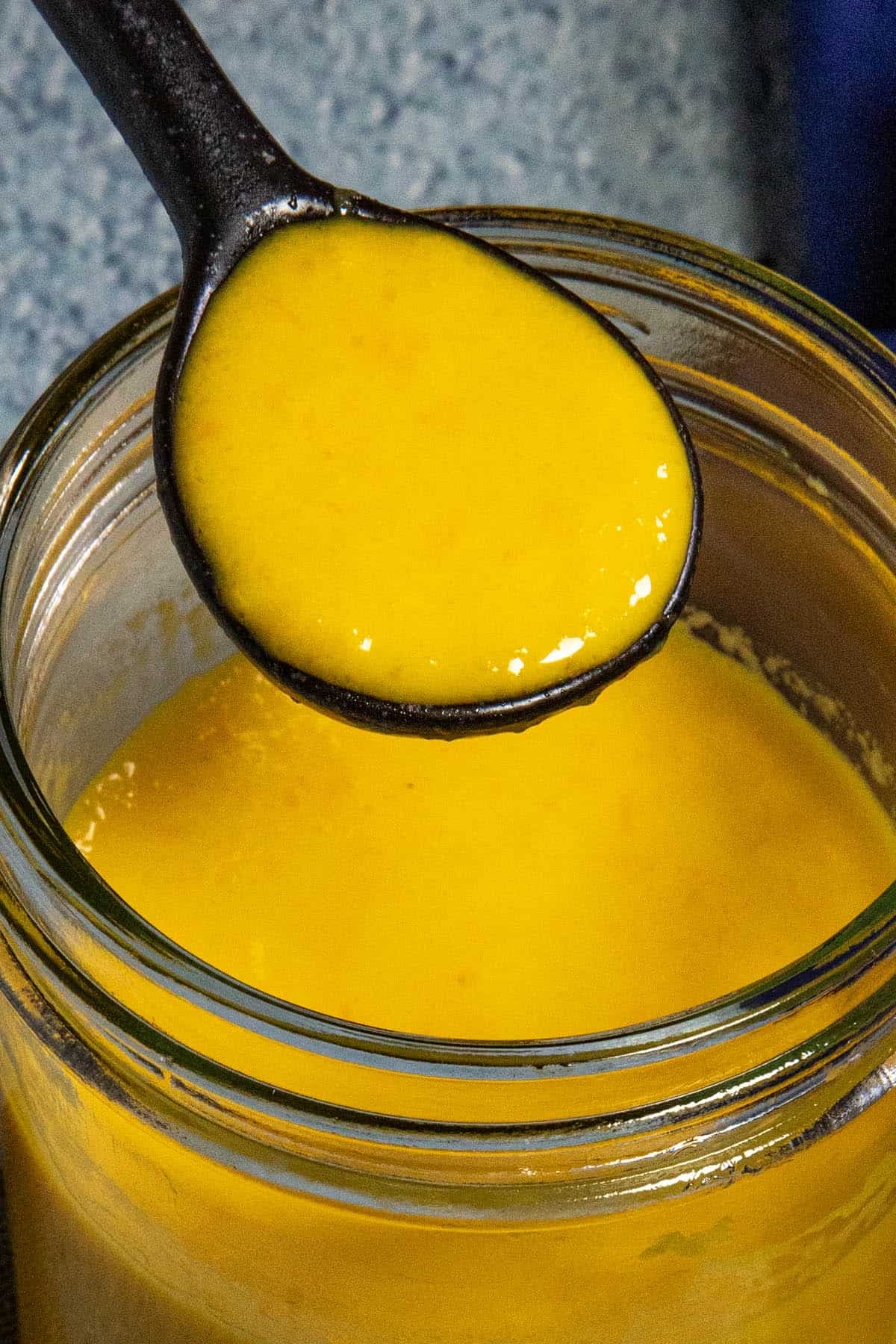
This is what the paste looks like less processed, more rustic and unstrained. The color will vary based on the ripeness and color of your chilies.

That's it, my friends! I hope you enjoy the recipe!
Recipe Tips & Notes
- Variations and Pepper Substitutions. I used fresh aji peppers, here, though you can pan cook them or roast them first for a different flavor. You can also try other peppers, such as other aji peppers, or consider the yellow bell pepper for a no heat version. If you do want some heat, use a mix of peppers, such as a yellow bell along with part of or a whole habanero or Scotch Bonnet.
- Frozen Ajis. Frozen chilies work great with this recipe. They can be easier to find and ordered online, or found in specialty stores. They're also a great option if you freeze your harvest, which I often do.
- Peeling the Peppers. Peeling is commonly recommended for a smoother, less fibrous texture. You can skip it for a more rustic paste that isn't quite as smooth, or simply strain the paste after processing. The flavor is still the same.
- Purchase Aji Amarillo Paste Online at Amazon (Affiliate link, my friends).
Storage & Leftovers
Store your Aji Amarillo Paste in an airtight container in the fridge in an airtight container for up to 1 week.
You can also freeze this paste in a freezer container, or use an ice cube tray for larger batches. This works great for freezing the paste in single portions. Freezing is the best option when making larger batches, which I like to do when harvesting many chilies.
Recipes to Make with Aji Amarillo Paste
- Aji de Gallina (Creamy Peruvian Chicken Stew)
- Peruvian Squash Stew (Locro de Zapallo)
- Arroz Chaufa (Peruvian Fried Rice)
- Aji Amarillo Cheese Dip (Pimento Cheese Twist!)
Try Some of My Other Chili Paste Recipes
If you try this recipe, please let us know! Leave a comment, rate it and tag a photo #ChiliPepperMadness on Instagram so we can take a look. I always love to see all of your spicy inspirations. Thanks! -- Mike H.
Homemade Aji Amarillo Paste Recipe
Ingredients
- 2 aji amarillo peppers chopped (seeds and membranes removed for milder)
- 1 tablespoon chopped onion (optional)
- 1 garlic clove chopped (optional)
- Pinch salt
- 1 tablespoon olive oil (or more as desired)
Instructions
- Bring 2 cups of water to a boil in a small pot. Add the aji amarillo chilies with onion and garlic and simmer for 10 minutes to soften. Drain and peel if desired.
- Add the chilies to a blender or food processor with salt, and oil. Process to form a chili paste. Add more oil or water while the processor is running to achieve a smoother paste, if desired.
- Strain for a smoother paste. Adjust for salt and pepper and serve!
Notes
Nutrition Information
PETER says
Mike, I come here often and appreciate all the time and effort you have put into this.
I have a ton of Aji Charapitas this year, and have made a lot of sauces yearly, but I would like to make the paste that is typical in Peruvian cooking with these little bombshells. Is running through a food mill to expel the seeds a good idea for making the paste not overly hot and more flavorful, or will it be too thin and lack substance? Cutting them in half and taking out the seeds is out of the question, since I am planning on making a larger amount to give away.
Any suggestions?
Mike Hultquist says
Thanks, Peter! I know, coring that many peppers is a lot of work. Issue is most of the heat is in the inner pith, that when you grind it up, you'll still get a lot of that heat, even with running through a food mill. Best way to calm the heat is to mix them with milder peppers, even yellow bell, which would preserve the color and flavor but dilute the heat. Let me know if this helps. Happy to toss around more ideas.
Trent says
Family is Peruvian and we love this and I also love the jarred stuff when my plants are not producing--I assume the jarred paste is fermented no? Trying to recreate that and also the panca one but my luck with panca peppers is not as good.
Mike Hultquist says
Trent, I'm not sure if the jarred paste is fermented, though it may be. I know it is very heavily pureed and I do love the flavor. You can try fermenting, then puree, and see how you enjoy it.
Shawn says
Hi there, (from Canada)
I was in Peru last November and brought back seeds and grew them this year and got a ton of peppers.
My question is , can I make the paste and can/bottle it so it is shelf stable. (Pressure canning) Wife is Peruvian and just loves this stuff
Mike Hultquist says
Shawn, making foods like this shelf stable requires a certain level of acidity. It's best to make a very simple puree like this one, and add enough vinegar or citrus (acid) to bring the pH to 3.5 or lower. 4.6 is shelf stable, but best to account for errors. Unless you are looking into pressure canning, which is different and does not require the acidity. I don't have much info on that process. A lot of aji amarillo pastes I've had are made with oil. I LOVE them, but those only last a week or so. I hope this helps!