

Learn how to make tabasco hot sauce with this homemade tabasco sauce recipe, using garden grown tabasco peppers, vinegar and salt. Fermented and non-fermented versions.
Homemade Tabasco Sauce Recipe
If you've ever considered making your own Tabasco hot sauce at home, I have the perfect recipe for you right here.
I've been making my own hot sauces for years, and I grew tabasco peppers in my garden this year just so I could make this sauce.
I'm a big fan of Tabasco Sauce. Some people in the chilihead community bash Tabasco Sauce because of its vinegary flavor and its low level of heat compared to other hot sauces on the market, but I personally have a huge amount of respect for the Tabasco brand and McIlhenny Company, as they've been around since 1868 on Avery Island, Louisiana, founded by Edmund Mcilhenny.
They practically started the hot sauce industry by bringing it to the masses.
Any company with such longevity and unquestioning popularity deserves respect in my book. Besides, I personally enjoy vinegary hot sauces, so here we are, making some at home.
Join me, will you?
I'll show you how to make it two different ways - fermented and non-fermented versions.
Let's discuss how to make homemade tabasco hot sauce at home, shall we?
Tabasco Sauce Ingredients
- FOR FERMENTED TABASCO SAUCE
- 5 ounces tabasco peppers, roughly chopped
- 2-2.5 tablespoons sea salt (.67 ounce or 19 grams by weight) (+ 1/4 teaspoon salt, if draining your brine)
- 1 quart unchlorinated water
- 1 cup white wine vinegar
- FOR NON-FERMENTED TABASCO SAUCE
- 5 ounces tabasco peppers
- 1/4 teaspoon salt
- 1 cup white wine vinegar
How to Make Tabasco Sauce - the Recipe Method
FOR THE FERMENTED VERSION
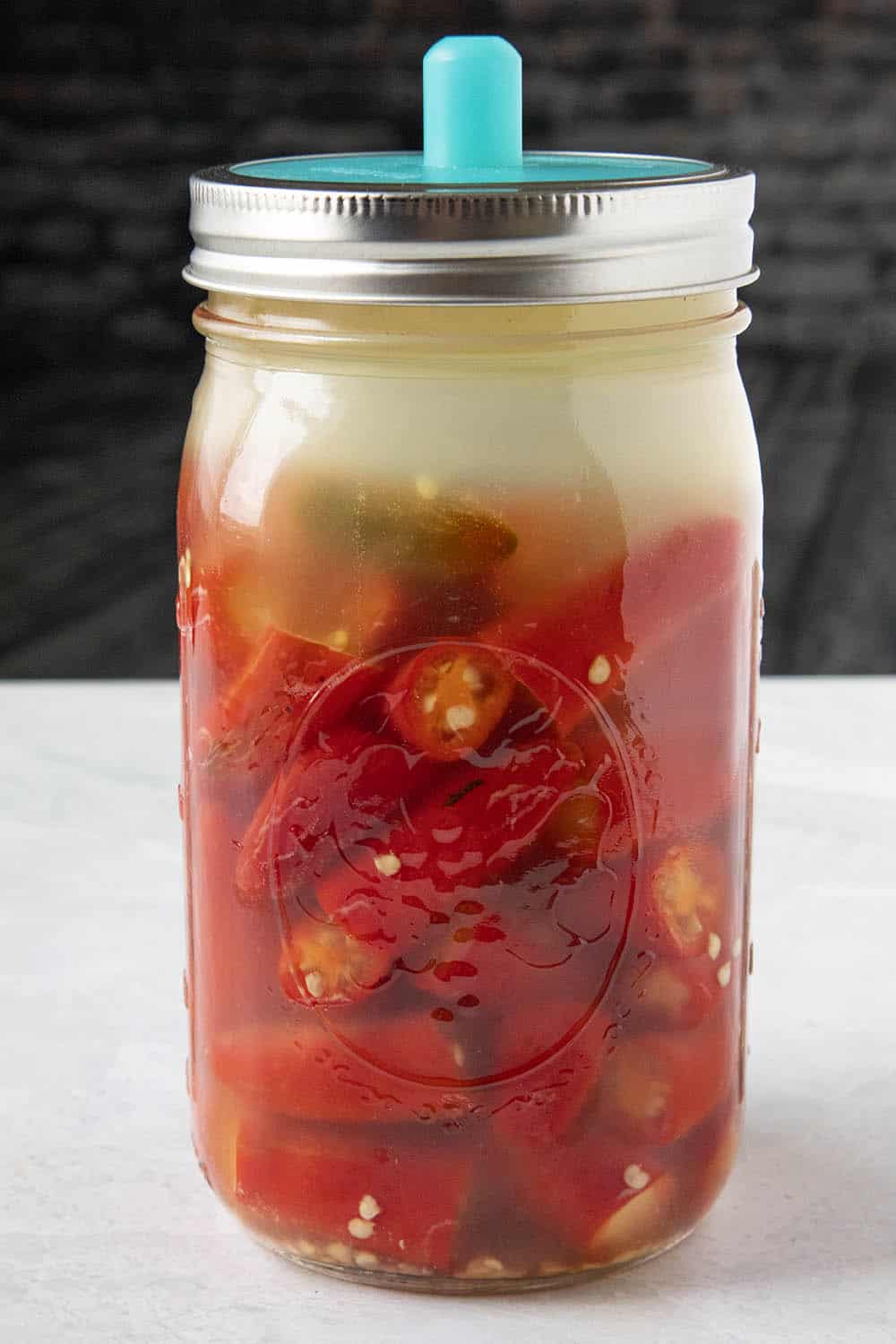
First, ferment the tabasco peppers. You can process them to coarsely chop them or rough chop them with a knife. Pack them into a jar, leaving at least 1 inch of head space.
The peppers may rise a bit when fermenting.
Next, mix 1 quart unchlorinated water with 2 tablespoons sea salt. Pour just enough brine over the peppers to cover them, pressing them down a bit as you go.
It is important to keep the peppers covered with brine to avoid spoilage. Check this daily.
Screw on the lid and set the jar away from direct sunlight to ferment for at least 1 week. Ideal temperatures are between 55-75 degrees F.
The most active fermentation period is between 1-2 weeks, so be sure to monitor it during this time. “Burp” the jars often by unscrewing the lid a bit to let out some of the accumulating gases.
Or, use an airlock or membrane for easier fermenting. See our page, “How to Make Fermented Pepper Mash”, for further instruction.
After 1-2 weeks, the fermenting activity will diminish and the brine will turn cloudy and taste acidic.
Pour the fermented tabasco peppers, including brine, into a pot along with vinegar.
Alternatively, you can strain and toss the brine, then add the solids to a pot with vinegar and 1/2 cup water or more as desired + 1/4 teaspoon salt.
Or use only a part of the brine for a thicker sauce. More brine = more salty. Bring to a quick boil. Reduce heat and simmer for 15 minutes.
Cool slightly then add to a food processor. Process until smooth.
Strain the mixture to remove the solids. Pour into hot sauce bottles and enjoy. You can adjust the volume with additional water and/or vinegar.
FOR THE NON-FERMENTED VERSION
Add the tabasco peppers, vinegar and ¼ teaspoon salt to a small pot.
Bring the mixture to a quick boil, then reduce the heat and simmer for 15 minutes to soften.
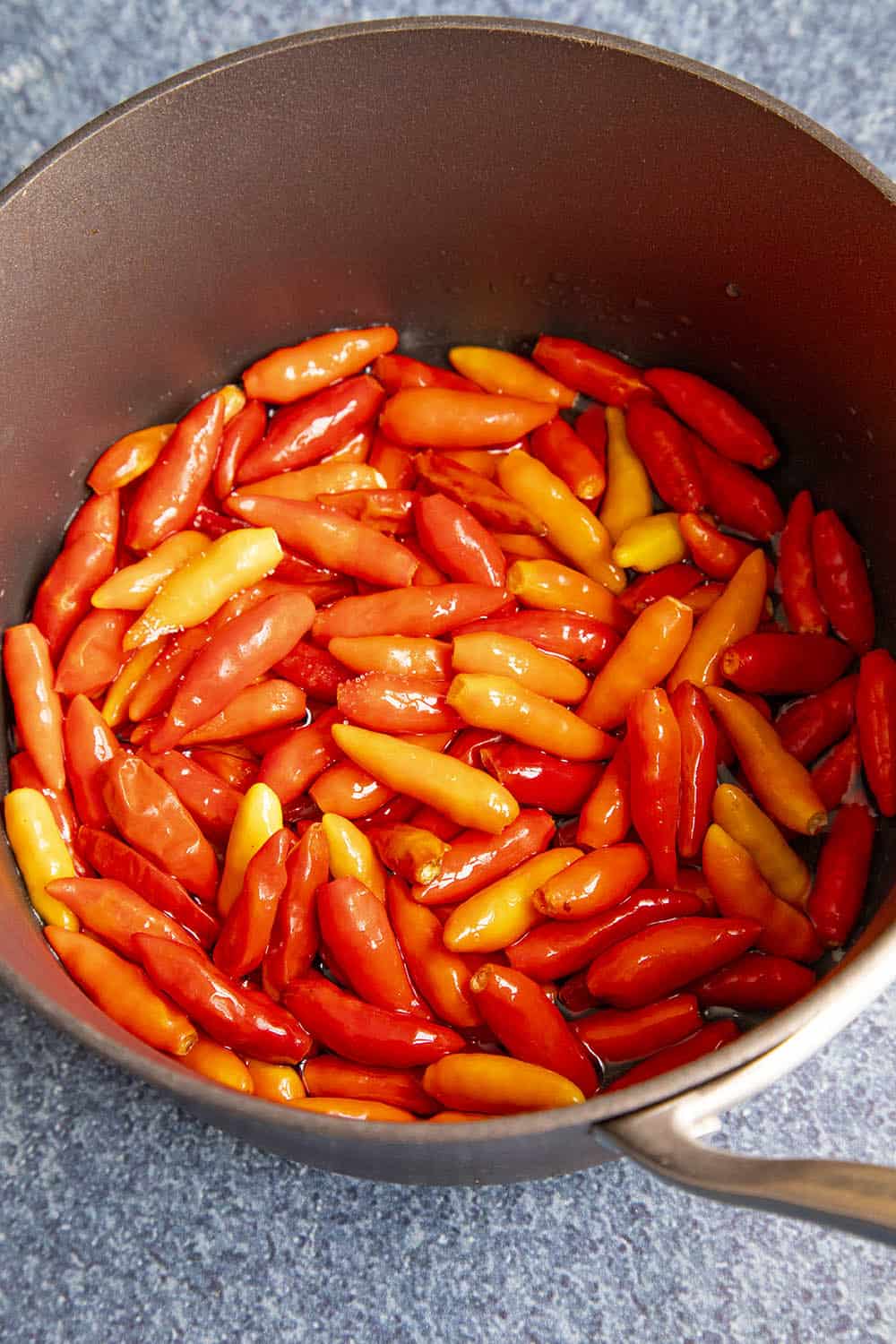
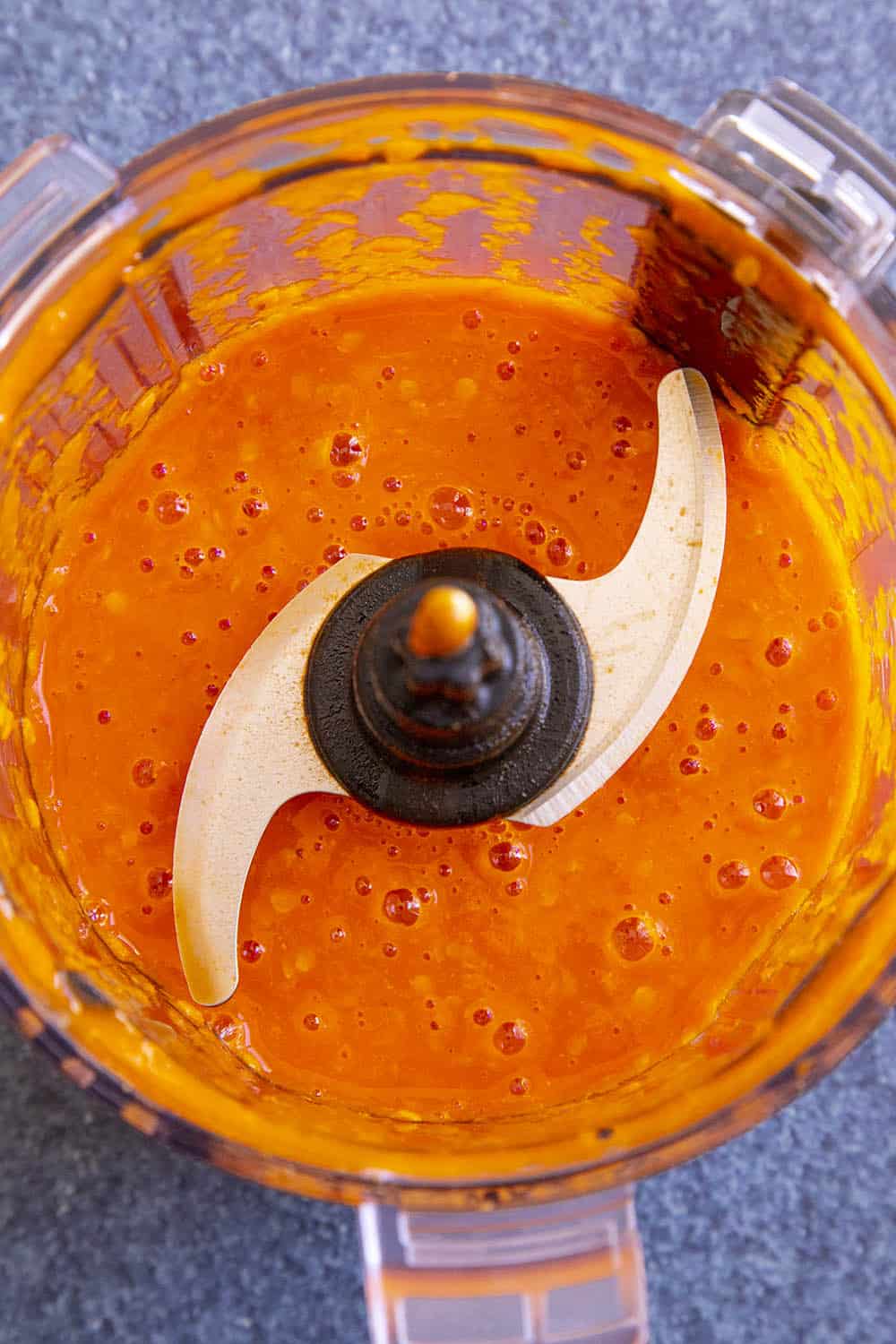
Cool slightly, then add to a food processor. Process until smooth.
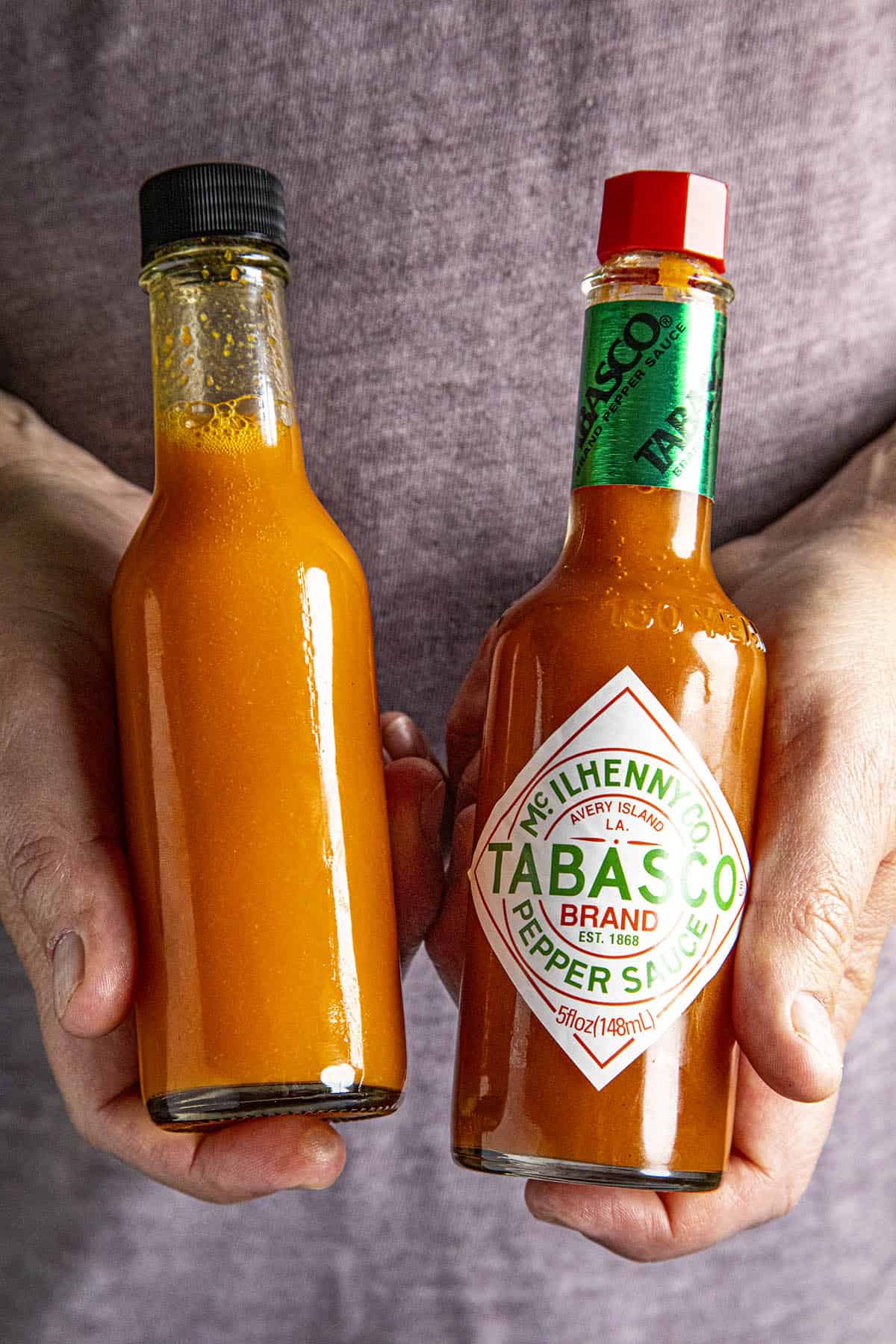
Gorgeous red pepper sauce right there already, much like the Tabasco original red sauce, but brighter in color.
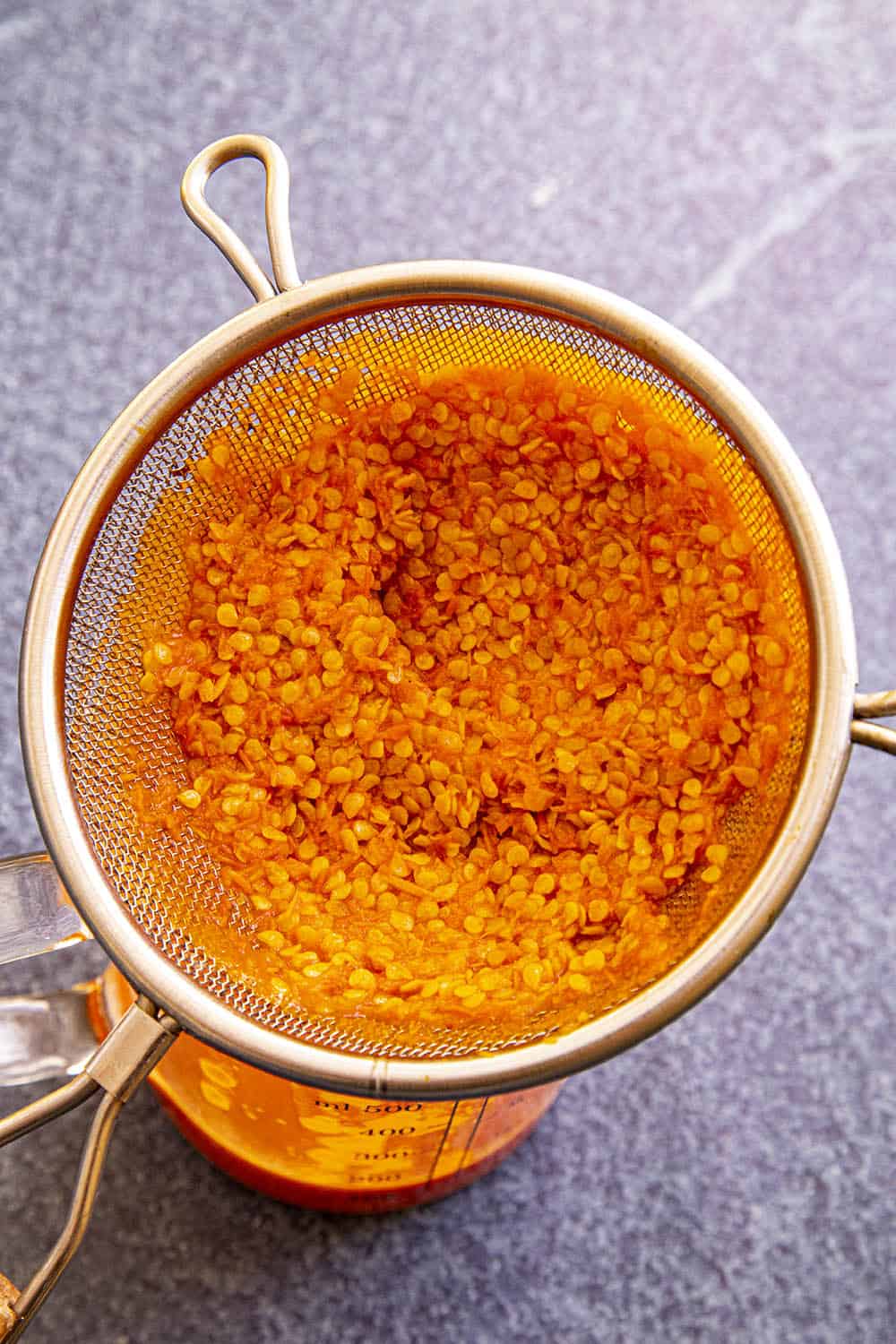
Strain the pepper seeds and pulp mixture to remove the solids. Look at how much of the seeds and pulp remains.
You don't need to seed the peppers first, as we're straining the hot sauce.
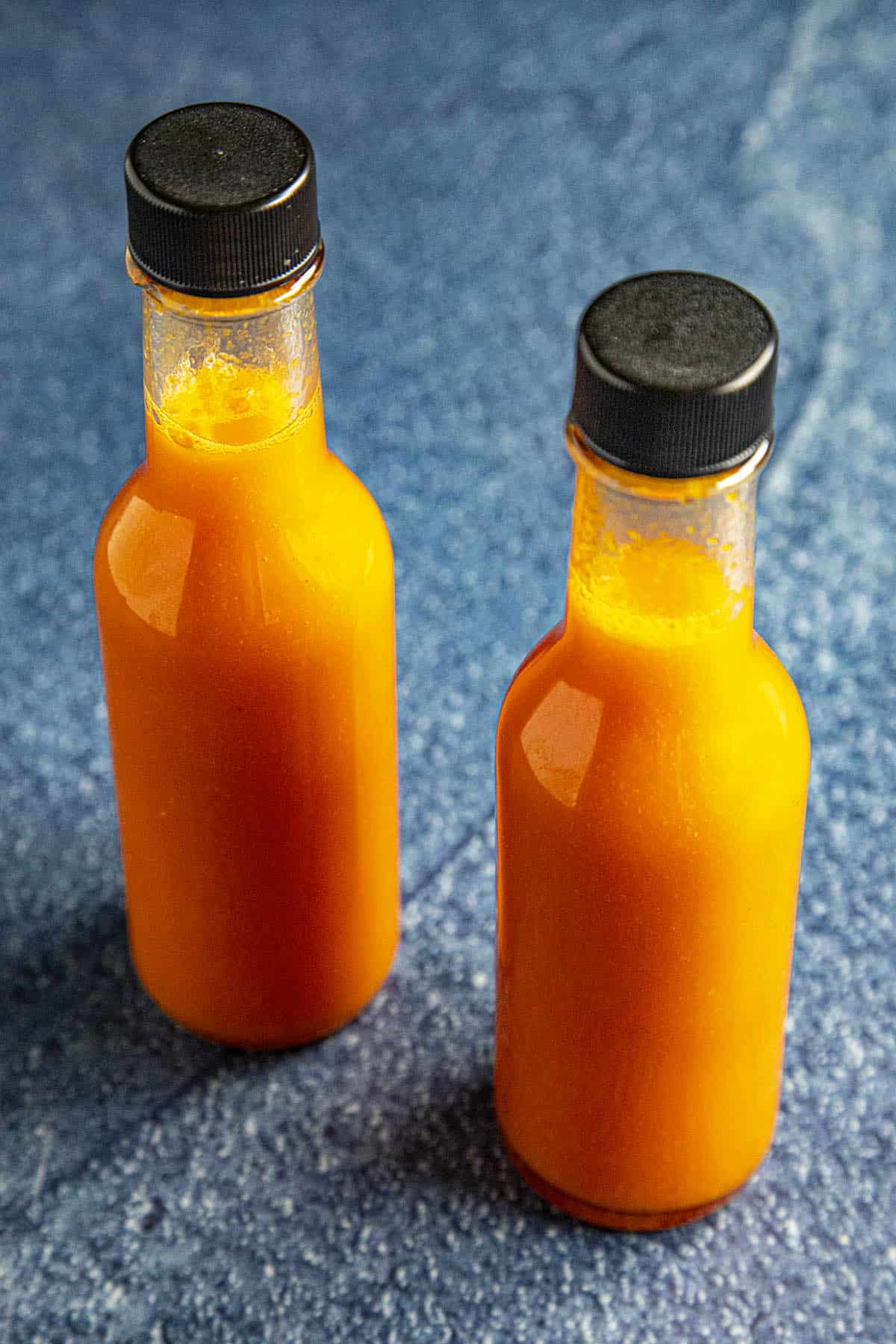
Pour into hot sauce bottles and enjoy. You can adjust the volume with additional water and/or vinegar.
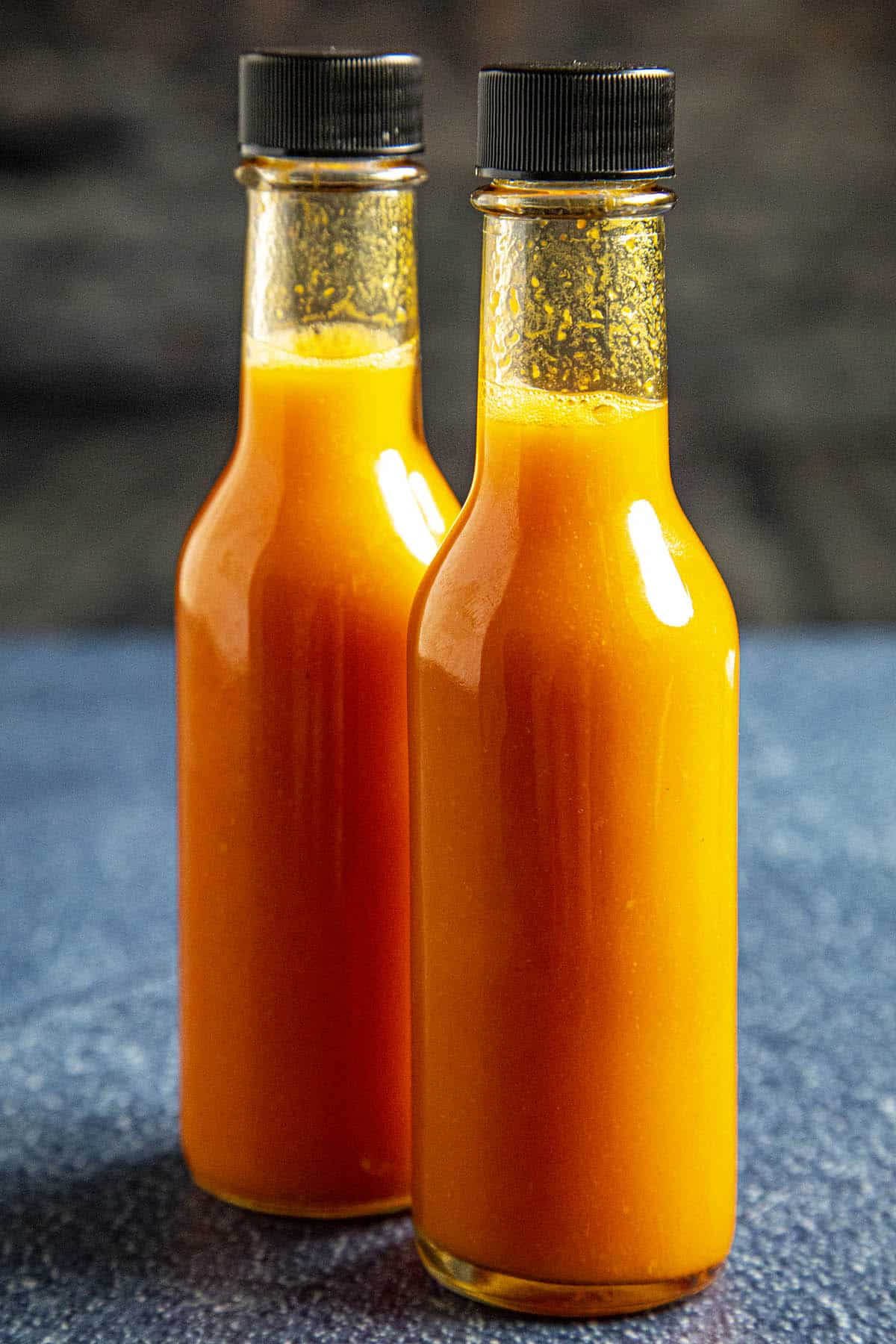
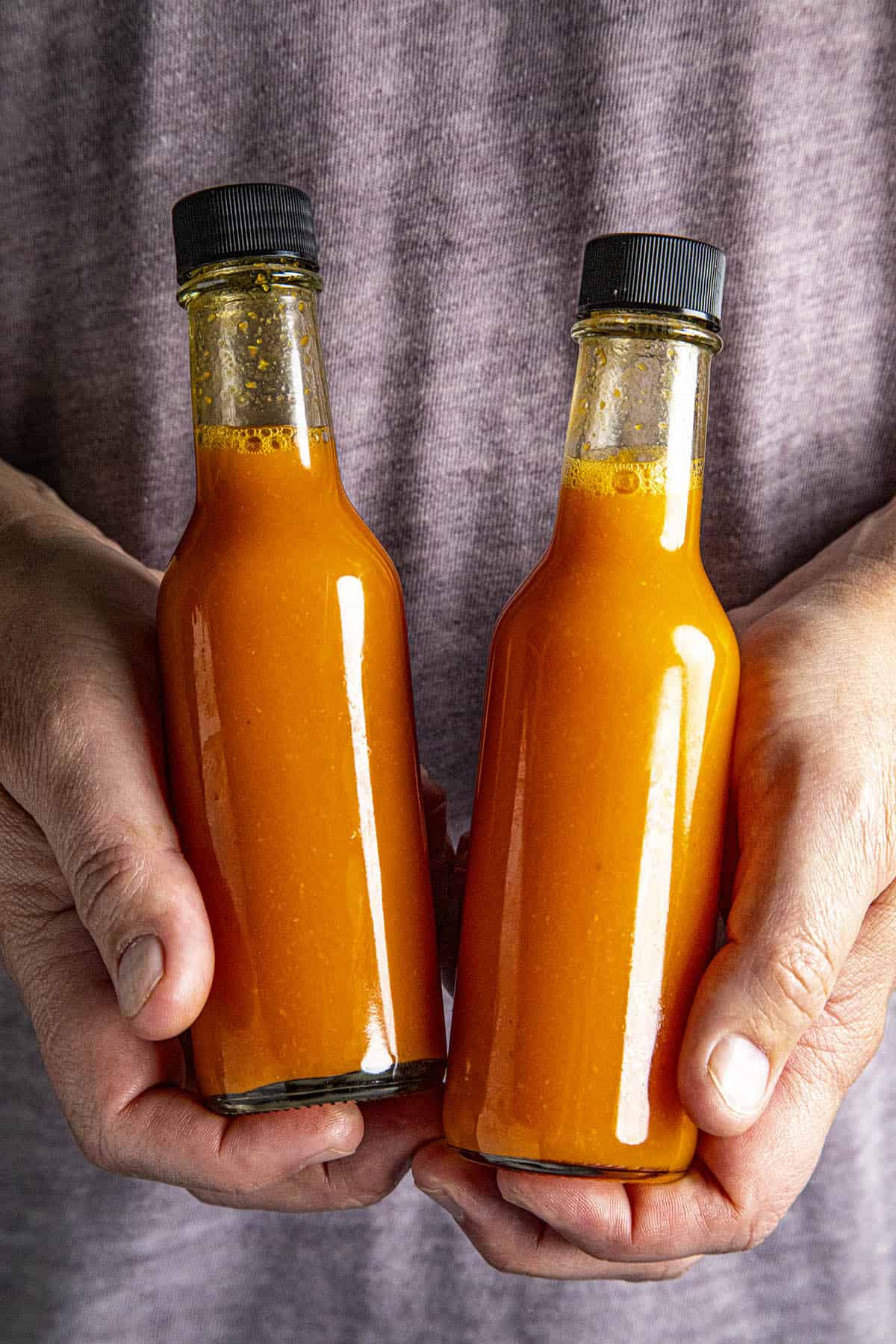
NOTE: Each version makes about 1 cup unstrained and ½ cup strained. I added in more vinegar to fill up 2+ woozy bottles and get the consistency more like original Tabasco hot sauce.
Boom! That's it, my friends. Now you have your very own homemade tabasco sauce, ready to drizzle and splash over all of your favorite foods.
Add a bit of spice to your lives! I hope you enjoy it.
Recipe Tips & Notes
Making hot sauce in general is easy, but there are a number of factors that can affect the overall quality and flavor of your finished hot sauce.
If you want to make tabasco hot sauce at home, consider some of these factors.
Fermented vs. Non-Fermented Tabasco Sauce
McHilleny Company ferments tabasco peppers for their original Tabasco Sauce brand in white oak barrels for up to 3 years. The longer you ferment, the more the flavor develops.
You'll have a difficult time duplicating the exact flavor of Tabasco without time, oak barrels, and trade secrets.
However, it is still worth making a fermented version at home.
The fermented version is quite a bit mellower than the non-fermented version. Fermenting breaks down the peppers chemically.
Essentially, lactic acid bacteria breaks down the carbohydrates in peppers and converts them to acid. It is a bit like a controlled decay process, and there are numerous benefits to fermentation, including more digestible foods, more vitamins, and more desirable flavors.
The non-fermented version, however, is much easier to make and tastes wonderful as well.
Comparatively, it has a stronger flavor with a bit more bite. Plus, you don't have to wait a week or more for fermenting. You can have it ready in less than half an hour.
Don't ask me to choose which version I enjoy more. I love them both!
The Vinegar
Your choice of vinegar will make a big difference in your resulting flavor. The key is choosing a good quality vinegar, and especially one of which you enjoy the flavor.
Using a cheap white vinegar will give you a cheaper tasting hot sauce.
Can I Make Tabasco Sauce without Tabasco Peppers?
You can make this recipe with any type of chili pepper you like. The original Tabasco Hot sauce, however, uses tabasco peppers, so using other peppers won't give you the same flavor.
If you use other peppers, you're technically making a Louisiana Style Hot Sauce, which is a larger category of hot sauces.
But go for it! I make hot sauces with different peppers, and also mix and match them, all the time with great results.
Learn more about tabasco peppers (capsicum frutescens) here.
Customizing Your Homemade Tabasco Sauce
Consider this a base recipe. It tastes great with only 3 ingredients - peppers, vinegar and salt.
After that, you can customize it to your own preferences with other ingredients.
Consider adding other flavors like garlic or onion, fruits like pineapple, mango or papaya, as well as herbs and seasonings such as cilantro, basil, chili powder or cumin.
You can also introduce other peppers for more flavor and heat, like the smoky chipotle pepper or fiery ghost pepper.
How Hot is Tabasco?
Even though tabasco peppers are very hot, actual Tabasco Hot Sauce is not quite as hot as the actual peppers, measuring in at 2,500–5,000 Scoville Heat Units. That is about as hot as a mild to medium-heat jalapeno pepper.
That's it, my friends. I hope you enjoy the sauce. If you make it, shoot me a pic or post it on social. I'd love to take a look!
Try Some of My Other Hot Sauce Recipes
- Homemade Sriracha Hot Sauce
- Homemade Cayenne Pepper Sauce
- Aji-Garlic Hot Sauce
- Datil Pepper Sauce
- Fermented Hot Sauce
- Ghost Pepper Hot Sauce
- Carolina Reaper Hot Sauce (Very Hot!)
- Habanero Hot Sauce
- Spicy Serrano Hot Sauce
- How to Make Hot Sauce from Chili Powders
Check out more Hot Sauce Recipes or learn more about How to Make Hot Sauce with lots of answer to frequently asked questions, such as pH and acidity, processing, and where to buy hot sauce woozy bottles.
Grab a couple bottles of tabasco sauce!
Got any questions? Ask away! I’m happy to help. If you enjoy this recipe, I hope you’ll leave a comment with some STARS. Also, please share it on social media. Don’t forget to tag us at #ChiliPepperMadness. I’ll be sure to share! Thanks! — Mike H.
Homemade Tabasco Sauce Recipe
Ingredients
FOR THE FERMENTED VERSION
- 5 ounces tabasco peppers roughly chopped
- 2 tablespoons sea salt (.67ounce - 19 grams)
- 1 quart unchlorinated water
- 1 cup white wine vinegar or more as desired
FOR THE NON-FERMENTED VERSION
- 5 ounces tabasco peppers
- 1/4 teaspoon salt
- 1 cup white wine vinegar or more as desired
Instructions
FOR THE FERMENTED VERSION
- First, ferment the tabasco peppers. You can process them to coarsely chop them or rough chop them with a knife. Pack them into a jar, leaving at least 1 inch of head space. The peppers may rise a bit when fermenting.
- Next, mix 1 quart unchlorinated water with 2 tablespoons sea salt (4% brine solution). Pour just enough brine over the peppers to cover them, pressing them down a bit as you go. Discard or save any unused brine. It is important to keep the peppers covered with brine to avoid spoilage. Check this daily.
- Screw on the lid and set the jar away from direct sunlight to ferment for at least 1 week. Ideal temperatures are between 55-75 degrees F. The most active fermentation period is between 1-2 weeks, so be sure to monitor it during this time. “Burp” the jars often by unscrewing the lid a bit to let out some of the accumulating gases. Or, use an airlock or membrane for easier fermenting. See our page, “How to Make Fermented Pepper Mash”, for further instruction.
- After 1-2 weeks, the fermenting activity will diminish and the brine will turn cloudy and taste acidic.
- Pour the fermented tabasco peppers, including brine, into a pot along with vinegar. Alternatively, you can strain and toss the brine, then add the solids to a pot with vinegar and 1/2 cup water or more as desired + 1/4 teaspoon salt. Or use only a part of the brine for a thicker sauce. More brine = more salty. Bring to a quick boil, reduce heat and simmer for 15 minutes.
- Cool slightly then add to a food processor. Process until smooth.
- Strain the mixture to remove the solids. Pour into hot sauce bottles and enjoy. You can adjust the volume with additional water and/or vinegar.
FOR THE NON-FERMENTED VERSION
- Add the tabasco peppers, vinegar and ¼ teaspoon salt to a small pot.
- Bring the mixture to a quick boil, then reduce the heat and simmer for 15 minutes to soften.
- Cool slightly, then add to a food processor. Process until smooth.
- Strain the mixture to remove the solids. Pour into hot sauce bottles and enjoy. You can adjust the volume with additional water and/or vinegar.
Video
Notes
Nutrition Information
NOTE: This post was updated on 10/6/23 to include new information and video. It was originally published on 1/27/20.
Amanda says
Hey what's the longest you've left the fermented sauce on the shelf before consuming?
Mike Hultquist says
Amanda, I usually finish mine within a few months. It never lasts long. It should last a good long while, though.
Aron says
Novice fermenter here. Have made Tabasco pepper hot sauce for years but always ended up tossing a lot of late season and late harvest poppers.
I am thrilled to try this and will be fermenting for about 5-6 weeks in a mason jar with fermenting vent/lid. I assume there is no exact right amount of brine required as long as the peppers are covered. And I scooped out a few of the seeds that floated to the top after the weight was put in to keep the peppers submerged.
Here is a question. I will be adding some garlic (also from the gsrden to the final product. In the stovetop method I always added when boiling/simmering the peppers. Should I add garlic to the brine or wait till the simmering stage again? Also any ratio of garlic for your recipe? I had 5oz of tabascos.
Thank you. Can’t wait to try this out.
Mike H. says
Hi, Aron. You're absolutely right - there's no exact amount of brine required as long as the peppers are fully submerged, and it's great that you're keeping them weighted down. As for the garlic, it's usually best to add it during the simmering stage rather than to the brine, to avoid any off flavors that can develop from fermenting garlic for too long. With that said, it really depends on how bold you want the garlic flavor. Fermenting will give a more mellow flavor, while adding it at the end will result in a stronger taste.
Susie Rayburn says
We have one bottle left on the shelf from last year, and it’s totally fine. Almost exactly a year old.
Ramona Pedemonte says
After an early bumper crop of tabasco peppers from one plant (our first time growing them), I looked online for fermented tabasco sauce recipes and settled on yours. I followed it exactly, and WOW it's excellent. We have been enjoying the results tremendously! I am in the process of following your recipe for Serrano pepper hot sauce as well, still fermenting. I have a couple of questions: why does the Serrano recipe call for 3 TBSP salt and the tabasco only 2 TBSP in a quart of water? And for the non-boiled version of the sauces mentioned in the notes, do I follow the recipe as noted with the vinegar and then just blend it without cooking? The vinegar doesn't stop the fermentation or the probiotics? I'm intrigued about not losing the probiotic benefit. Thank you so much for sharing these recipes!
Mike Hultquist says
Thanks, Ramona. The brine percentage of salt will work with either 2 or 3 tablespoon salt - it's within a certain range. See my post on Fermenting Peppers/How to Make Fermented Pepper Mash for more specifics: https://www.chilipeppermadness.com/cooking-with-chili-peppers/how-to-make-fermented-pepper-mash/.
For the non-boiled version, you can really just ferment the peppers and puree only that (with some of the brine or just a little plus fresh water for less salty). Some people do that, as it's already acidic enough, though it might keep fermenting and can explode your bottles if you don't burp them. You can also add vinegar - try apple cider vinegar with the mother, which contain probiotics and prebiotics. I hope this helps.
Ramona Pedemonte says
Thanks for your feedback, Mike. I just blended the sriracha (LOL, I thought they were Serranos but the tag said sriracha) without cooking with half brine/half vinegar and OH MY! So delicious. I got ph test strips and it was already at 3.5 acidity without the vinegar. Now to blend my mixed pepper hot sauce. I'm so happy I found your website and I appreciate your very approachable expertise.
Mike Hultquist says
Great! Glad to help, Ramona!
Shelley Jo Caldwell Mitchiner says
I've made this many times last year and this year. My last batch turned out really thick and separated in the bottles. Thinking about straining again and adding more vinegar, water, brine???? hate to wast all those peppers. Thanks in advance. Shelley
Mike Hultquist says
Shelley, first, you can shake the bottles and they will come back together, no problem. Separation is normal. But, you can always add more vinegar or even water to thin it out, or make another thinner batch and combine them. Let me know how it goes. Definitely no need to waste.
Mike says
Have you ever smoked the peppers on a pellet grill? Then follow the recipe for the hot sauce.
Mike Hultquist says
I have smoked peppers for hot sauces, Mike. I don't have a pellet grill, but anyway to get smoke on them is great! I love the added flavor.
Debra Vaughn says
great stuff, but, I was wondering if there is a way to seal the bottle for a longer shelf life?
Mike H. says
Thanks! And yes, you can process it in a water bath, Debra. Very easy to do, and great way to keep it in storage before opening.
Jim Finn says
I grew a bunch of Tabasco peppers and made this sauce as your recipe directed and it smelled the house up so bad! Next time I doubled the ingredients and put it in a crock pot OUTDOORS! Much better. Thanks for this recipe, I love it.
Mike H. says
You are very welcome, Jim. Thank you for the review!
Sharon Zepeda says
I love this recipe! I've made it a few time already. I'd like to add garlic, so do I add it while fermenting or after?
Mike Hultquist says
Thanks, Sharon! You can do either, it just depends on how pronounced you want the garlic flavor. Ferment it for more mellow flavor, or add it at the end for stronger flavor.
Kim Woodhouse says
Have you every tried adding tequila to your tabasco sauce recipe?
Mike Hultquist says
Kim, I have used tequila and other alcohols (like bourbon, whiskey, rum) to sauces and hot sauces and I think it's great.
Tana says
How much do you use?
Mike Hultquist says
Tana, it varies, but with a recipe like this (non-fermented version), you can replace some of the vinegar, anywhere from 1 tablespoon to 1/2 cup, then see how you like the final result. I usually don't use that much.
Mike says
I used apple cider vinegar so it had a slightly fruity taste, and there was a slightly smoke flavor I liked. I think I need to simmer it a little longer it was not as smooth as i was wanteding. not time i'm useing white wine and more pepper's . I did try your hot pepper relish loved it !
A big thanks to you !!
Mike Hultquist says
Glad you enjoyed it, Mike! Thanks!
Meg says
I want to can the hot sauce. Can I make the non-fermented version and then use a hot water bath process in a sterile, sealed jar for long term storage at room temperature?
Mike Hultquist says
Yes, Meg, you can do that. There should be plenty of acidity from the vinegar. Shoot for a pH of 3.5 for home preserving. Enjoy!
Chip says
Hi Mike,
I picked lots of fresh tabacos this morning. Can I use apple cider vinegar to make the hot sauce?
Mike Hultquist says
Hi, Chip. Yes, you can use apple cider vinegar. It adds a nice tangy flavor. Let me know how it goes! Enjoy!
Charles Mccrory says
yum
Mike Hultquist says
Thanks, Charles!
Shelley Jo Caldwell Mitchiner says
Have you ever infused blackberries?
Mike Hultquist says
With tabasco sauce? I have not, but let me know if you try it. I have used them to infuse alcohol, though.