


Learn how to make tabasco hot sauce with this homemade tabasco sauce recipe, using garden grown tabasco peppers, vinegar and salt. Fermented and non-fermented versions.
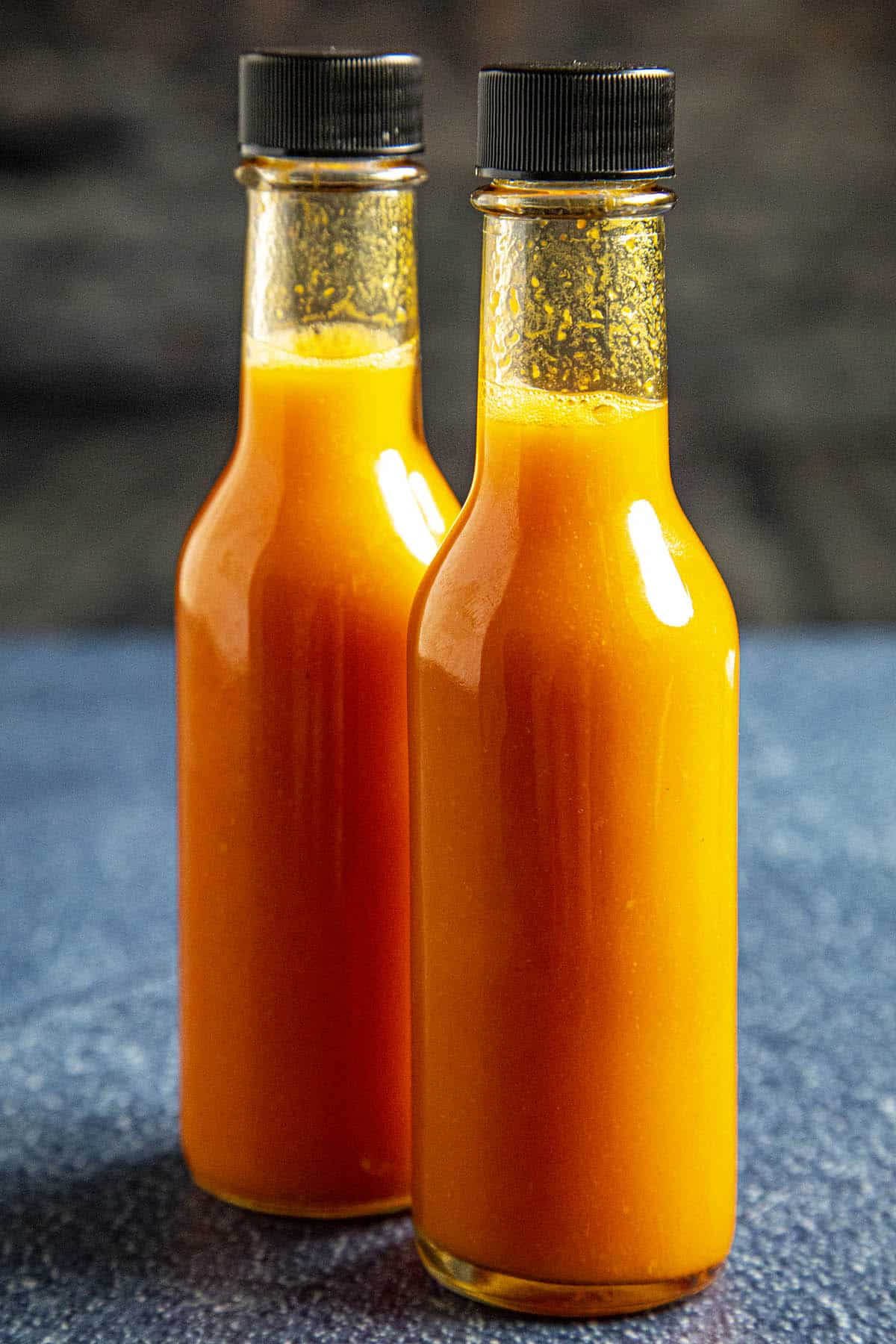
Homemade Tabasco Sauce Recipe
If you've ever considered making your own Tabasco hot sauce at home, I have the perfect recipe for you right here.
I've been making my own hot sauces for years, and I grew tabasco peppers in my garden this year just so I could make this sauce.
I'm a big fan of Tabasco Sauce. Some people in the chilihead community bash Tabasco Sauce because of its vinegary flavor and its low level of heat compared to other hot sauces on the market, but I personally have a huge amount of respect for the Tabasco brand and McIlhenny Company, as they've been around since 1868 on Avery Island, Louisiana, founded by Edmund Mcilhenny.
They practically started the hot sauce industry by bringing it to the masses.
Any company with such longevity and unquestioning popularity deserves respect in my book. Besides, I personally enjoy vinegary hot sauces, so here we are, making some at home.
Join me, will you?
I'll show you how to make it two different ways - fermented and non-fermented versions.
Let's discuss how to make homemade tabasco hot sauce at home, shall we?
Tabasco Sauce Ingredients
- FOR FERMENTED TABASCO SAUCE
- 5 ounces tabasco peppers, roughly chopped
- 2-2.5 tablespoons sea salt (.67 ounce or 19 grams by weight) (+ 1/4 teaspoon salt, if draining your brine)
- 1 quart unchlorinated water
- 1 cup white wine vinegar
- FOR NON-FERMENTED TABASCO SAUCE
- 5 ounces tabasco peppers
- 1/4 teaspoon salt
- 1 cup white wine vinegar
How to Make Tabasco Sauce - the Recipe Method
FOR THE FERMENTED VERSION
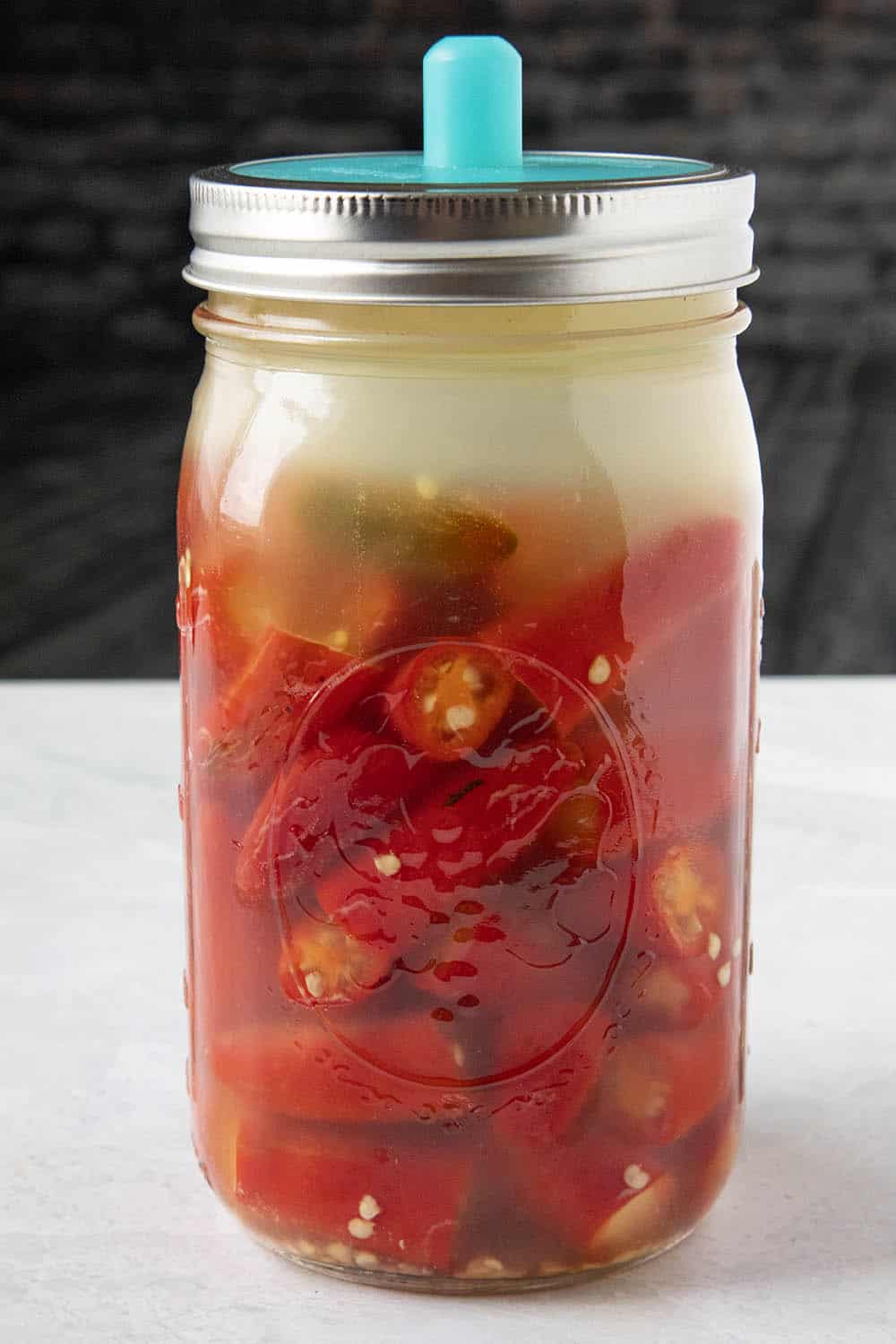
First, ferment the tabasco peppers. You can process them to coarsely chop them or rough chop them with a knife. Pack them into a jar, leaving at least 1 inch of head space.
The peppers may rise a bit when fermenting.
Next, mix 1 quart unchlorinated water with 2 tablespoons sea salt. Pour just enough brine over the peppers to cover them, pressing them down a bit as you go.
It is important to keep the peppers covered with brine to avoid spoilage. Check this daily.
Screw on the lid and set the jar away from direct sunlight to ferment for at least 1 week. Ideal temperatures are between 55-75 degrees F.
The most active fermentation period is between 1-2 weeks, so be sure to monitor it during this time. “Burp” the jars often by unscrewing the lid a bit to let out some of the accumulating gases.
Or, use an airlock or membrane for easier fermenting. See our page, “How to Make Fermented Pepper Mash”, for further instruction.
After 1-2 weeks, the fermenting activity will diminish and the brine will turn cloudy and taste acidic.
Pour the fermented tabasco peppers, including brine, into a pot along with vinegar.
Alternatively, you can strain and toss the brine, then add the solids to a pot with vinegar and 1/2 cup water or more as desired + 1/4 teaspoon salt.
Or use only a part of the brine for a thicker sauce. More brine = more salty. Bring to a quick boil. Reduce heat and simmer for 15 minutes.
Cool slightly then add to a food processor. Process until smooth.
Strain the mixture to remove the solids. Pour into hot sauce bottles and enjoy. You can adjust the volume with additional water and/or vinegar.
FOR THE NON-FERMENTED VERSION
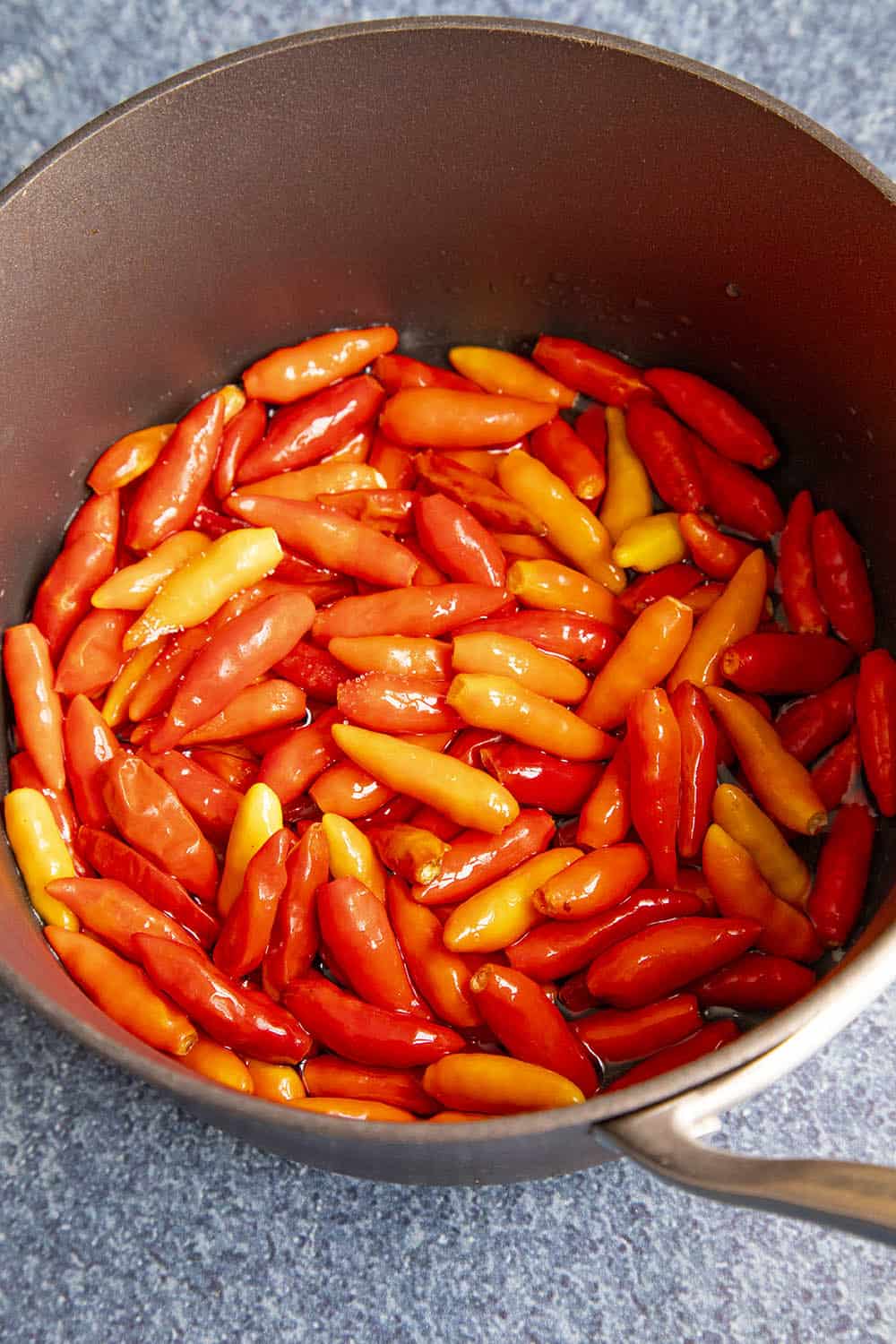
Add the tabasco peppers, vinegar and ¼ teaspoon salt to a small pot.
Bring the mixture to a quick boil, then reduce the heat and simmer for 15 minutes to soften.
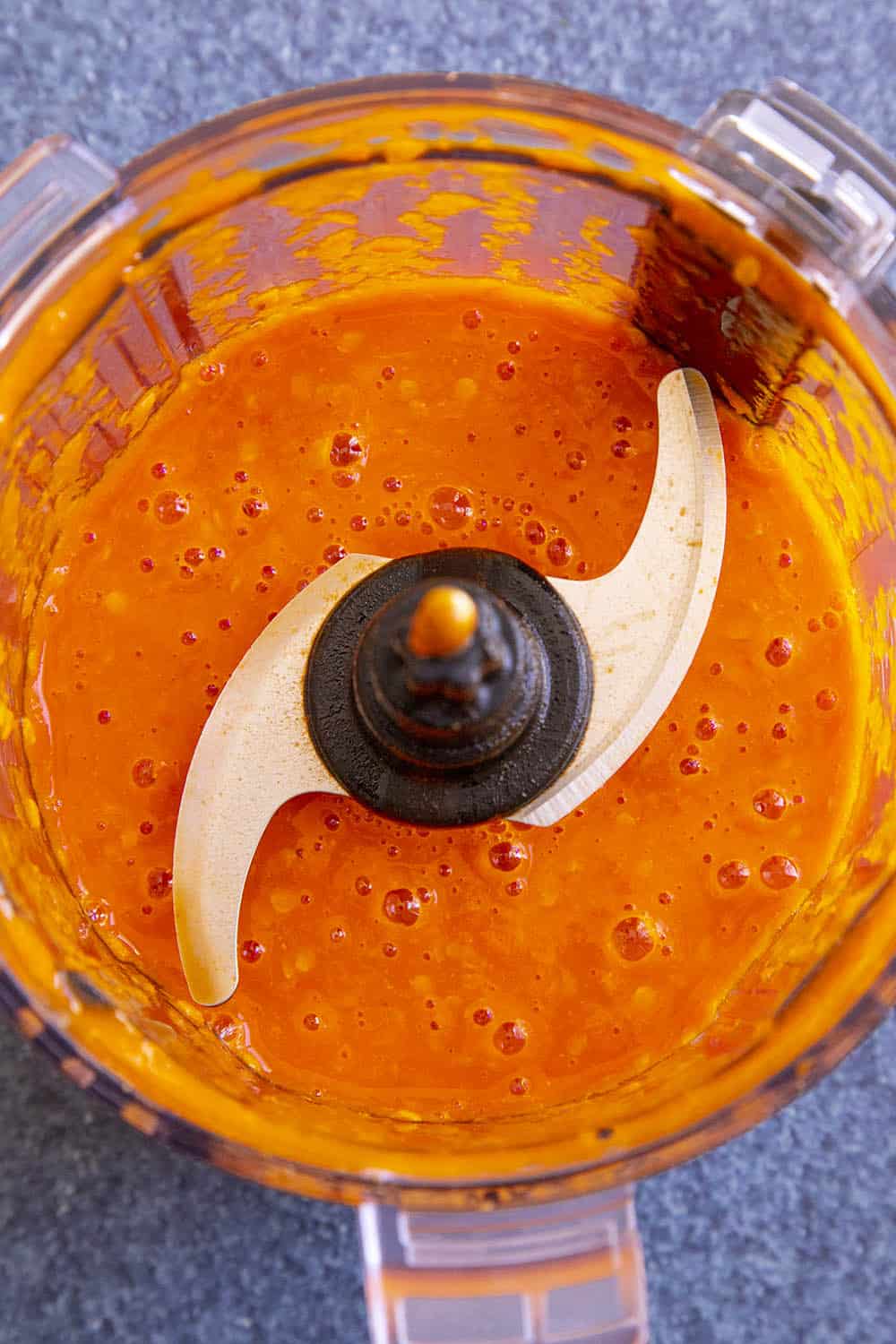
Cool slightly, then add to a food processor. Process until smooth.
Gorgeous red pepper sauce right there already, much like the Tabasco original red sauce, but brighter in color.
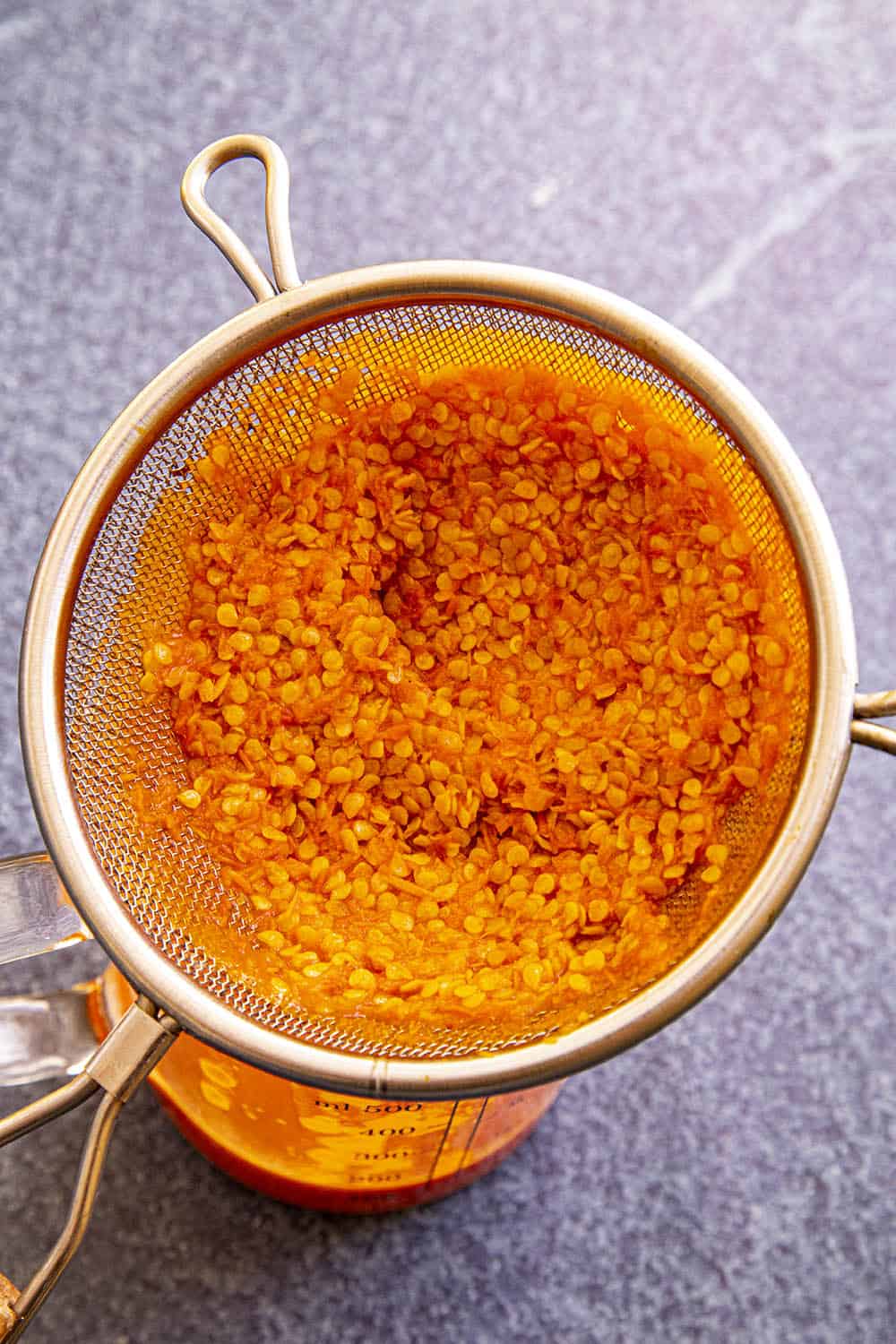
Strain the pepper seeds and pulp mixture to remove the solids. Look at how much of the seeds and pulp remains.
You don't need to seed the peppers first, as we're straining the hot sauce.
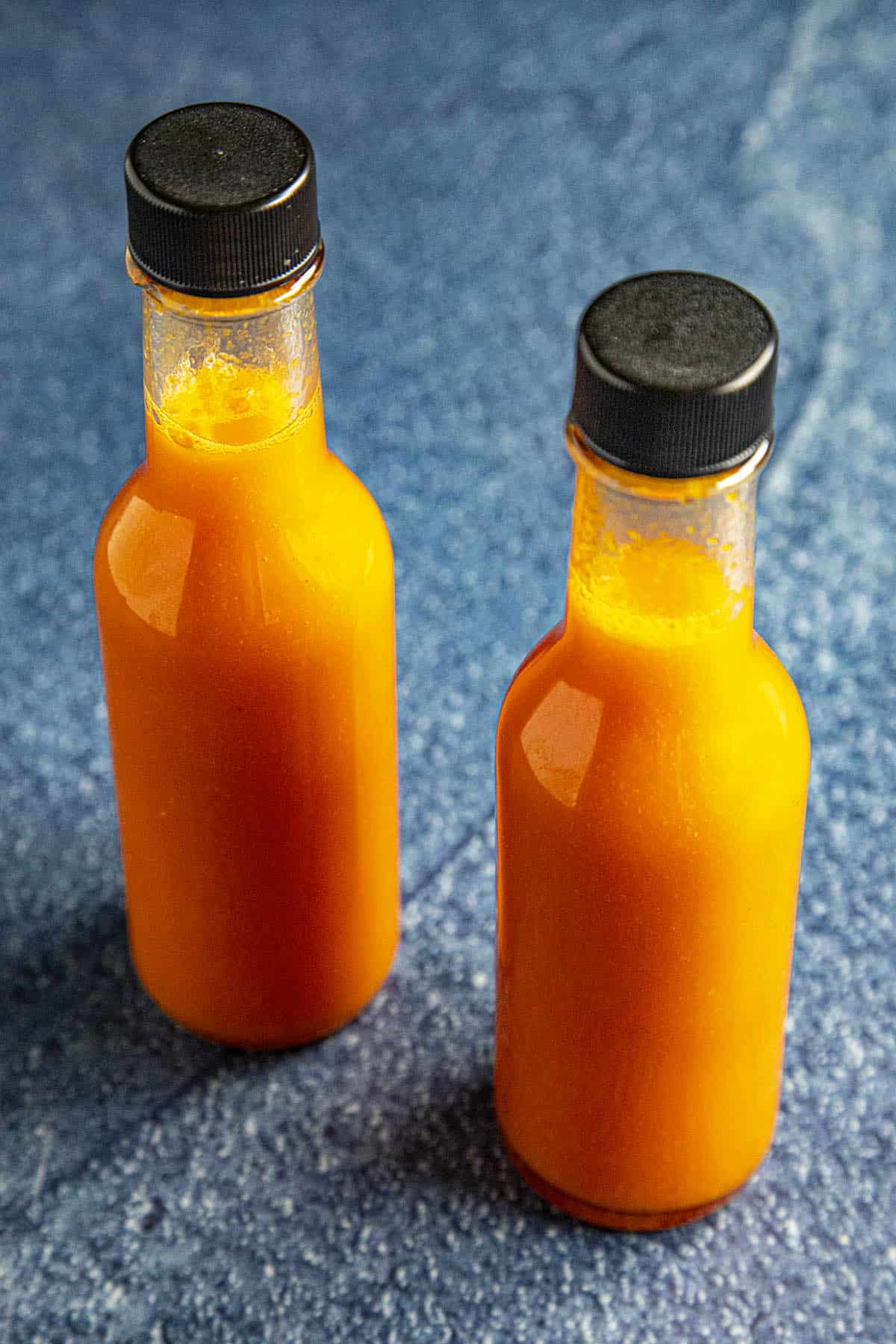
Pour into hot sauce bottles and enjoy. You can adjust the volume with additional water and/or vinegar.
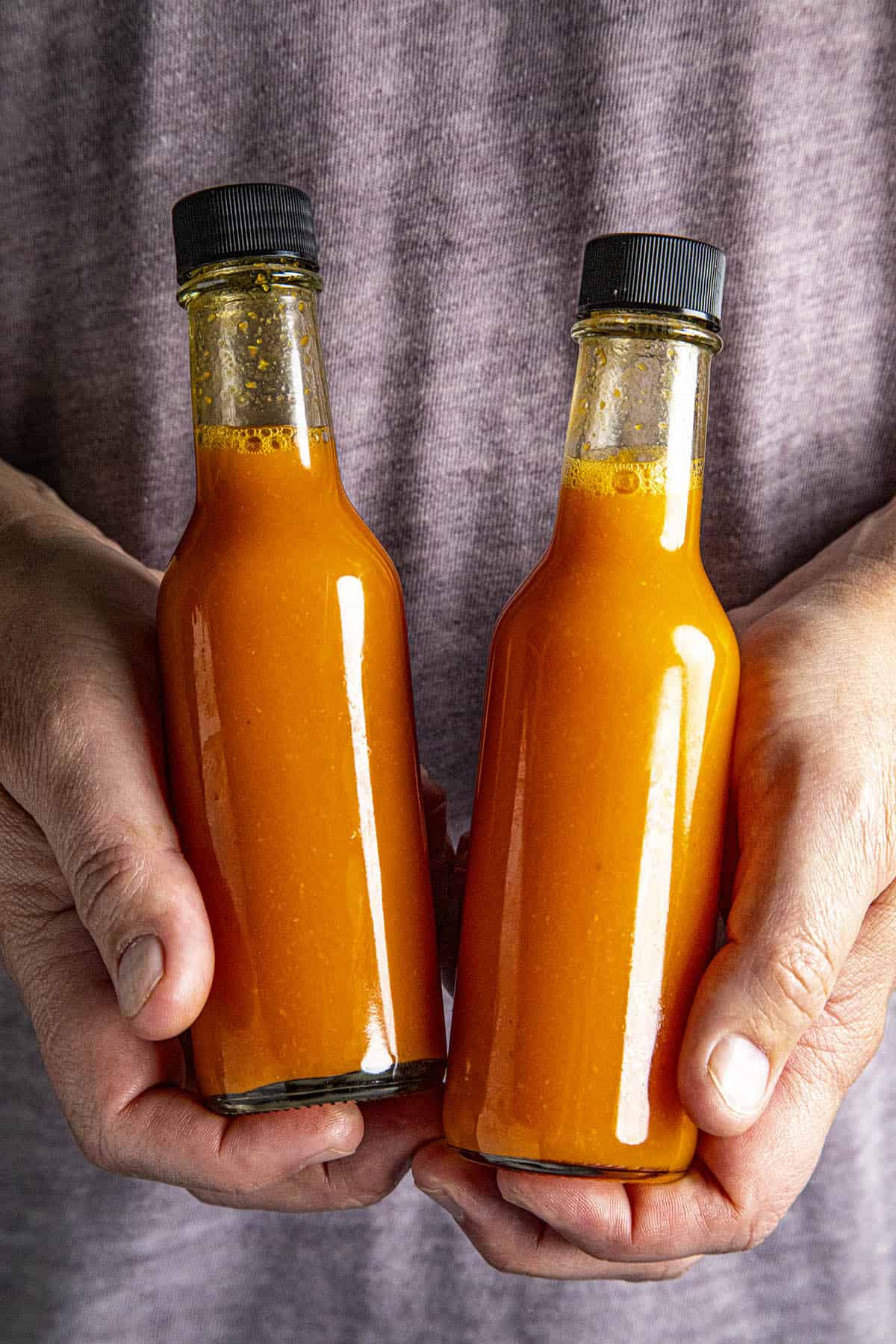
NOTE: Each version makes about 1 cup unstrained and ½ cup strained. I added in more vinegar to fill up 2+ woozy bottles and get the consistency more like original Tabasco hot sauce.
Boom! That's it, my friends. Now you have your very own homemade tabasco sauce, ready to drizzle and splash over all of your favorite foods.
Add a bit of spice to your lives! I hope you enjoy it.
Recipe Tips & Notes
Making hot sauce in general is easy, but there are a number of factors that can affect the overall quality and flavor of your finished hot sauce.
If you want to make tabasco hot sauce at home, consider some of these factors.
Fermented vs. Non-Fermented Tabasco Sauce
McHilleny Company ferments tabasco peppers for their original Tabasco Sauce brand in white oak barrels for up to 3 years. The longer you ferment, the more the flavor develops.
You'll have a difficult time duplicating the exact flavor of Tabasco without time, oak barrels, and trade secrets.
However, it is still worth making a fermented version at home.
The fermented version is quite a bit mellower than the non-fermented version. Fermenting breaks down the peppers chemically.
Essentially, lactic acid bacteria breaks down the carbohydrates in peppers and converts them to acid. It is a bit like a controlled decay process, and there are numerous benefits to fermentation, including more digestible foods, more vitamins, and more desirable flavors.
The non-fermented version, however, is much easier to make and tastes wonderful as well.
Comparatively, it has a stronger flavor with a bit more bite. Plus, you don't have to wait a week or more for fermenting. You can have it ready in less than half an hour.
Don't ask me to choose which version I enjoy more. I love them both!
The Vinegar
Your choice of vinegar will make a big difference in your resulting flavor. The key is choosing a good quality vinegar, and especially one of which you enjoy the flavor.
Using a cheap white vinegar will give you a cheaper tasting hot sauce.
Can I Make Tabasco Sauce without Tabasco Peppers?
You can make this recipe with any type of chili pepper you like. The original Tabasco Hot sauce, however, uses tabasco peppers, so using other peppers won't give you the same flavor.
If you use other peppers, you're technically making a Louisiana Style Hot Sauce, which is a larger category of hot sauces.
But go for it! I make hot sauces with different peppers, and also mix and match them, all the time with great results.
Learn more about tabasco peppers (capsicum frutescens) here.
Customizing Your Homemade Tabasco Sauce
Consider this a base recipe. It tastes great with only 3 ingredients - peppers, vinegar and salt.
After that, you can customize it to your own preferences with other ingredients.
Consider adding other flavors like garlic or onion, fruits like pineapple, mango or papaya, as well as herbs and seasonings such as cilantro, basil, chili powder or cumin.
You can also introduce other peppers for more flavor and heat, like the smoky chipotle pepper or fiery ghost pepper.
How Hot is Tabasco?
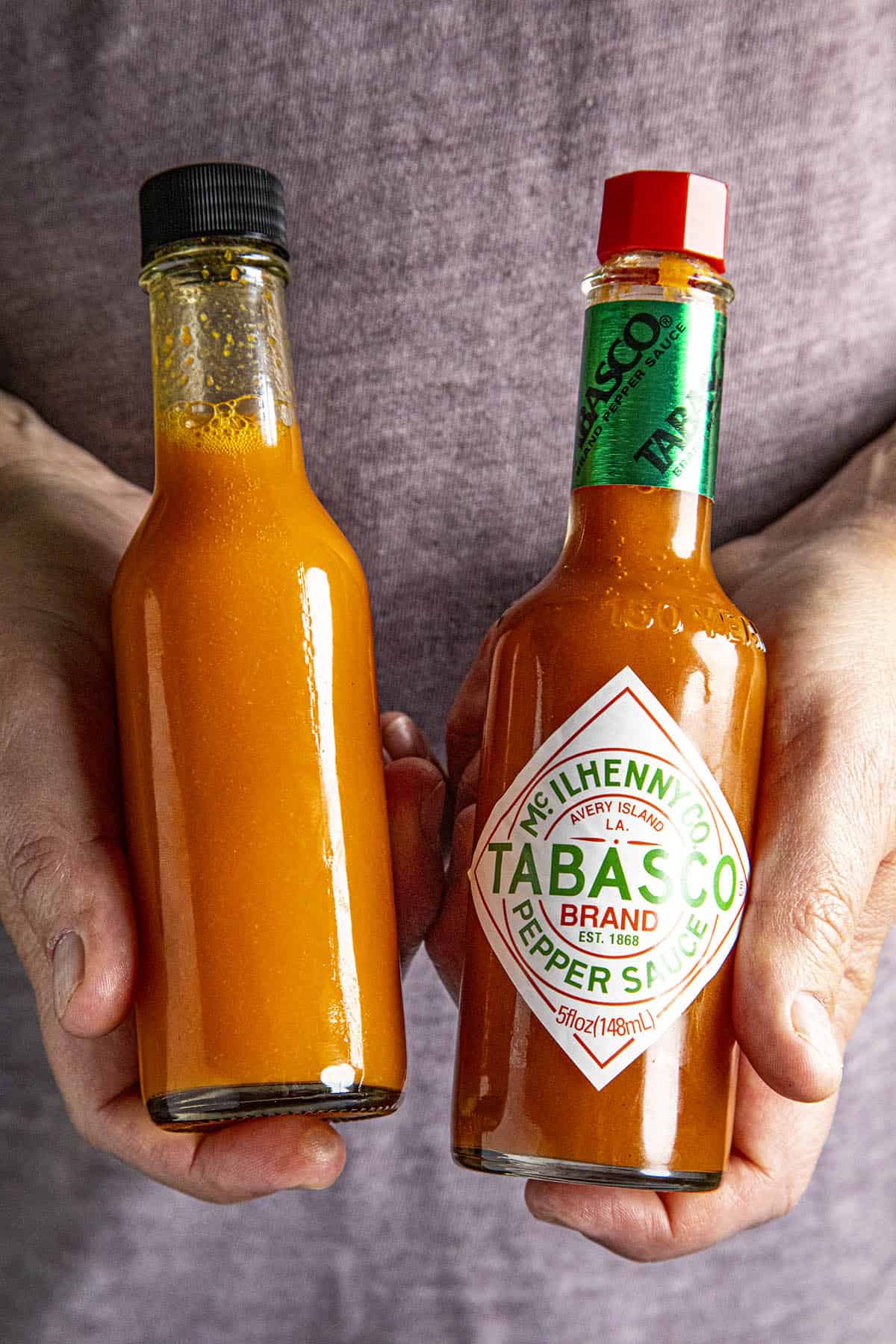
Even though tabasco peppers are very hot, actual Tabasco Hot Sauce is not quite as hot as the actual peppers, measuring in at 2,500–5,000 Scoville Heat Units. That is about as hot as a mild to medium-heat jalapeno pepper.
That's it, my friends. I hope you enjoy the sauce. If you make it, shoot me a pic or post it on social. I'd love to take a look!
Try Some of My Other Hot Sauce Recipes
- Homemade Sriracha Hot Sauce
- Homemade Cayenne Pepper Sauce
- Aji-Garlic Hot Sauce
- Datil Pepper Sauce
- Fermented Hot Sauce
- Ghost Pepper Hot Sauce
- Carolina Reaper Hot Sauce (Very Hot!)
- Habanero Hot Sauce
- Spicy Serrano Hot Sauce
- How to Make Hot Sauce from Chili Powders
Check out more Hot Sauce Recipes or learn more about How to Make Hot Sauce with lots of answer to frequently asked questions, such as pH and acidity, processing, and where to buy hot sauce woozy bottles.
Grab a couple bottles of tabasco sauce!
Got any questions? Ask away! I’m happy to help. If you enjoy this recipe, I hope you’ll leave a comment with some STARS. Also, please share it on social media. Don’t forget to tag us at #ChiliPepperMadness. I’ll be sure to share! Thanks! — Mike H.
Homemade Tabasco Sauce Recipe
Ingredients
FOR THE FERMENTED VERSION
- 5 ounces tabasco peppers roughly chopped
- 2 tablespoons sea salt (.67ounce - 19 grams)
- 1 quart unchlorinated water
- 1 cup white wine vinegar or more as desired
FOR THE NON-FERMENTED VERSION
- 5 ounces tabasco peppers
- 1/4 teaspoon salt
- 1 cup white wine vinegar or more as desired
Instructions
FOR THE FERMENTED VERSION
- First, ferment the tabasco peppers. You can process them to coarsely chop them or rough chop them with a knife. Pack them into a jar, leaving at least 1 inch of head space. The peppers may rise a bit when fermenting.
- Next, mix 1 quart unchlorinated water with 2 tablespoons sea salt (4% brine solution). Pour just enough brine over the peppers to cover them, pressing them down a bit as you go. Discard or save any unused brine. It is important to keep the peppers covered with brine to avoid spoilage. Check this daily.
- Screw on the lid and set the jar away from direct sunlight to ferment for at least 1 week. Ideal temperatures are between 55-75 degrees F. The most active fermentation period is between 1-2 weeks, so be sure to monitor it during this time. “Burp” the jars often by unscrewing the lid a bit to let out some of the accumulating gases. Or, use an airlock or membrane for easier fermenting. See our page, “How to Make Fermented Pepper Mash”, for further instruction.
- After 1-2 weeks, the fermenting activity will diminish and the brine will turn cloudy and taste acidic.
- Pour the fermented tabasco peppers, including brine, into a pot along with vinegar. Alternatively, you can strain and toss the brine, then add the solids to a pot with vinegar and 1/2 cup water or more as desired + 1/4 teaspoon salt. Or use only a part of the brine for a thicker sauce. More brine = more salty. Bring to a quick boil, reduce heat and simmer for 15 minutes.
- Cool slightly then add to a food processor. Process until smooth.
- Strain the mixture to remove the solids. Pour into hot sauce bottles and enjoy. You can adjust the volume with additional water and/or vinegar.
FOR THE NON-FERMENTED VERSION
- Add the tabasco peppers, vinegar and ¼ teaspoon salt to a small pot.
- Bring the mixture to a quick boil, then reduce the heat and simmer for 15 minutes to soften.
- Cool slightly, then add to a food processor. Process until smooth.
- Strain the mixture to remove the solids. Pour into hot sauce bottles and enjoy. You can adjust the volume with additional water and/or vinegar.
Video
Notes
Nutrition Information
NOTE: This post was updated on 10/6/23 to include new information and video. It was originally published on 1/27/20.
Mike says
Hi Mike. I'm new to making hot sauce, but can't wait to try this recipe ! . I'm going to try some Thia pepper's and Cayenne pepper's. The Cayenne pepper's are green and are 8-10 inches long and about 1/2 inches round. I have never seen Cayenne that big before lol but they are hot ! , and I'm going to smoke the Cayenne first !
Mike H. says
=) Hi, Mike, welcome to the CPM world! So much to explore LOL Enjoy and let me know how it goes please!
Sammy says
hi Mike. if i wanted to add liquid smoke, at which stage would I do this? I will be using green chilies
thanks so much
Samantha
Mike Hultquist says
Hi, Samantha. Add it before you boil/cook it. Enjoy the smoky flavor!
Susan Cuthbert says
I enjoyed trying the different recipes, both fermented and not - I do quite a bit of fermenting anyway. They looked gorgeous with their bright red colour.
I went away for a week and found that the non-fermented bottle was fine but the fermenting jars had mould on the top. I skimmed that off and boiled them, blended them and bottled them (I didn't want to throw away any solids), but hope to avoid the mouldy phase in future! Any tips?
Mike H. says
Hi, Susan. Fermenting can be tricky sometimes, but it's great to hear you're experimenting with it! Mold can be a common issue, but there are a few things you can do to minimize the chances of it occurring in the future: keep everything clean, use quality ingredients and make sure they are fully submerged in the liquid, keep the air out, monitor them regularly, make sure the temps are consistent and... be patient - sometimes mold can develop during the initial stages of fermentation but will dissipate as the fermentation process progresses. Share an update with me later on please!
Tim Fields says
Hi Mike. This recipe calls for 5 oz peppers while your Fermented Hot Sauce recipe calls for 1 lb. Each calls for 1 qt water and 1/2 - 1 C vinegar. Curious about the difference in pepper weights.
Mike Hultquist says
Tim, it just depends on how much hot sauce you want at the end, and how thick.
Claire L says
I was wondering if you could keep it out on the counter at room temperature? Also love this recipe I use it all the time. Very spicy!
Mike Hultquist says
You can leave it out, Claire, though it will typically last longer in the fridge. See my post on: Does Hot Sauce Need To Be Refrigerated? - https://www.chilipeppermadness.com/frequently-asked-questions/refrigerating-hot-sauce/
Joseph Gerant says
Loved reading about Tabasco and the processes. Thank you.
Mike Hultquist says
Thanks, Joseph!
Ken Webb says
I used this recipe three years ago to make my own sauce at home. I've tweaked it a bit but am still using it for my own home sauce. Thank you for the inspiration.
Mike Hultquist says
Great to hear, Ken! Glad to help! I love this recipe.
Renee M. says
Super easy recipe! I made the non-fermented version with our tabasco peppers from our garden. But...HELP! This is so spicy we can't eat it. Is there a way to dilute or tone it down? I don't want to throw this out. (And we are in Louisiana and love spicy food!)
Thanks so much!
Mike H. says
Thank you, Renee. And the best way to tone it down is through dilution, so adding other ingredients, or making another batch with other peppers that are mild, then combining.
Matteo says
Hi, thanks for this yummy recipe! I planning to be preposterous and make it with habaneros.
I'm used to making homemade kimchi which also requires fermenting, but I ferment it in the fridge. This takes longer, at least two weeks, but tastes better imo. It's also great if you're lazy and just want to throw it in a dark fridge until it's done!
I was wondering, do you think that would work for this sauce? Do you think that the vinegar will prevent the process from starting?
Also, have you ever tried adding fresh garlic and onion?
Mike Hultquist says
Enjoy, Matteo. It's GREAT with habanero, actually. You can do it in the fridge, but yes, might not get started. Or just let it go awhile. Yes, I add onion and garlic sometimes for fermenting. Works great. Enjoy!
Kylie says
How do you make it without the cooking smell burning your eyes and throat??
Mike H. says
Hy Kylie. Thanks for asking. I handle those fumes well, so it's not a big deal for me. But if it is for you, there are a few different things you could do to protect yourself. Firstly, ventilation - make sure your kitchen is well-ventilated. Always wear protective gear - consider safety goggles or something simpler, like a bandana, for example, to cover your nose and mouth. Or use both goggles and bandana for the most protection =) Keep a safe distance, use a lid (when possible) and turn on an air purifier (if you have one) among other things. Well, that's plenty, so hope it helps!
Nancy Buckley Murphy says
Great.
Mike Hultquist says
Glad you're enjoying it!
Greg says
Awesome recipe, made this again yesterday, family and friends keep asking me for refills on their bottles!
Mike Hultquist says
Awesome to hear, Greg! You're their new go-to hot sauce guy!
Bill Thomas says
I'm just finding your sight. I am finding some great info on your sight, as a matter of fact, I am currently going down the Rabbit Hole of your sight and the info within.
I have been fermenting peppers and making sauces for years, but i am finding some new ideas with and info here.
Last year I fermented some Tabasco peppers, Onions and Garlic for just over a year. Probably one of the best pepper sauces i have ever made.
Thanks for creating and maintaining this sight, i will be trying a lot of your recipes.
Mike Hultquist says
Thanks so much, Bill. Glad you found me. I appreciate it, and hope you find many recipes you enjoy.