


Learn how to make tabasco hot sauce with this homemade tabasco sauce recipe, using garden grown tabasco peppers, vinegar and salt. Fermented and non-fermented versions.
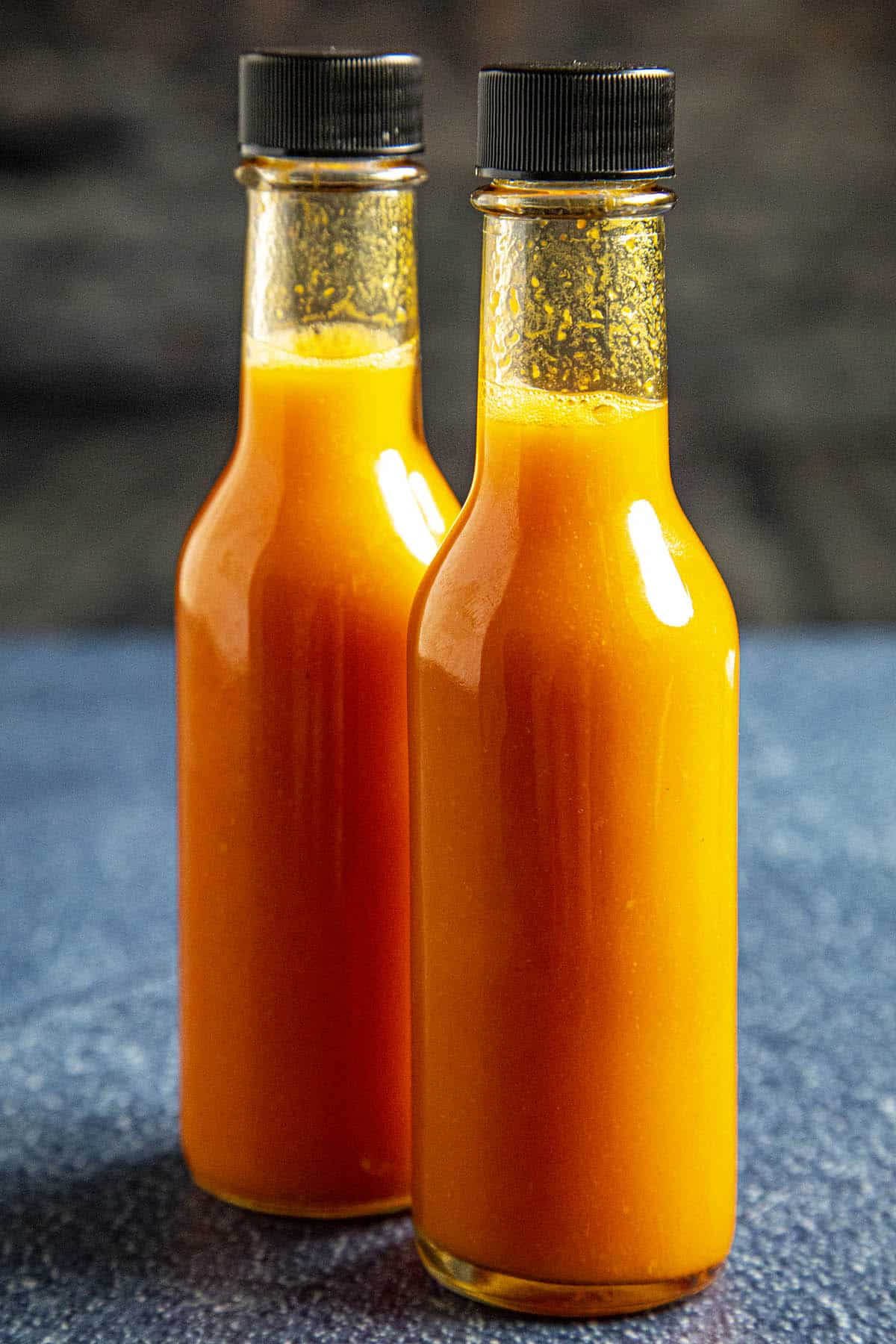
Homemade Tabasco Sauce Recipe
If you've ever considered making your own Tabasco hot sauce at home, I have the perfect recipe for you right here.
I've been making my own hot sauces for years, and I grew tabasco peppers in my garden this year just so I could make this sauce.
I'm a big fan of Tabasco Sauce. Some people in the chilihead community bash Tabasco Sauce because of its vinegary flavor and its low level of heat compared to other hot sauces on the market, but I personally have a huge amount of respect for the Tabasco brand and McIlhenny Company, as they've been around since 1868 on Avery Island, Louisiana, founded by Edmund Mcilhenny.
They practically started the hot sauce industry by bringing it to the masses.
Any company with such longevity and unquestioning popularity deserves respect in my book. Besides, I personally enjoy vinegary hot sauces, so here we are, making some at home.
Join me, will you?
I'll show you how to make it two different ways - fermented and non-fermented versions.
Let's discuss how to make homemade tabasco hot sauce at home, shall we?
Tabasco Sauce Ingredients
- FOR FERMENTED TABASCO SAUCE
- 5 ounces tabasco peppers, roughly chopped
- 2-2.5 tablespoons sea salt (.67 ounce or 19 grams by weight) (+ 1/4 teaspoon salt, if draining your brine)
- 1 quart unchlorinated water
- 1 cup white wine vinegar
- FOR NON-FERMENTED TABASCO SAUCE
- 5 ounces tabasco peppers
- 1/4 teaspoon salt
- 1 cup white wine vinegar
How to Make Tabasco Sauce - the Recipe Method
FOR THE FERMENTED VERSION
First, ferment the tabasco peppers. You can process them to coarsely chop them or rough chop them with a knife. Pack them into a jar, leaving at least 1 inch of head space.
The peppers may rise a bit when fermenting.
Next, mix 1 quart unchlorinated water with 2 tablespoons sea salt. Pour just enough brine over the peppers to cover them, pressing them down a bit as you go.
It is important to keep the peppers covered with brine to avoid spoilage. Check this daily.
Screw on the lid and set the jar away from direct sunlight to ferment for at least 1 week. Ideal temperatures are between 55-75 degrees F.
The most active fermentation period is between 1-2 weeks, so be sure to monitor it during this time. “Burp” the jars often by unscrewing the lid a bit to let out some of the accumulating gases.
Or, use an airlock or membrane for easier fermenting. See our page, “How to Make Fermented Pepper Mash”, for further instruction.
After 1-2 weeks, the fermenting activity will diminish and the brine will turn cloudy and taste acidic.
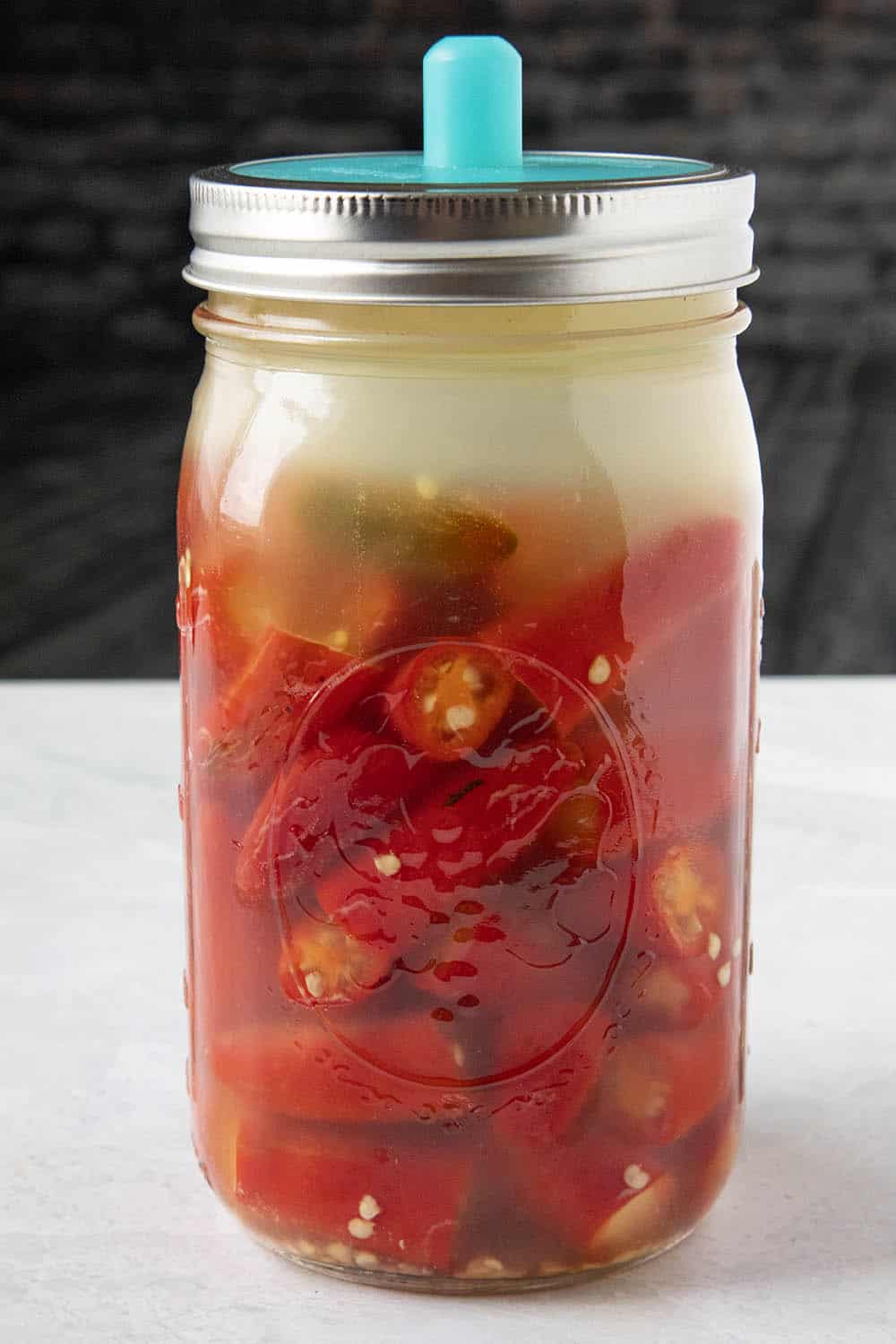
Pour the fermented tabasco peppers, including brine, into a pot along with vinegar.
Alternatively, you can strain and toss the brine, then add the solids to a pot with vinegar and 1/2 cup water or more as desired + 1/4 teaspoon salt.
Or use only a part of the brine for a thicker sauce. More brine = more salty. Bring to a quick boil. Reduce heat and simmer for 15 minutes.
Cool slightly then add to a food processor. Process until smooth.
Strain the mixture to remove the solids. Pour into hot sauce bottles and enjoy. You can adjust the volume with additional water and/or vinegar.
FOR THE NON-FERMENTED VERSION
Add the tabasco peppers, vinegar and ¼ teaspoon salt to a small pot.
Bring the mixture to a quick boil, then reduce the heat and simmer for 15 minutes to soften.
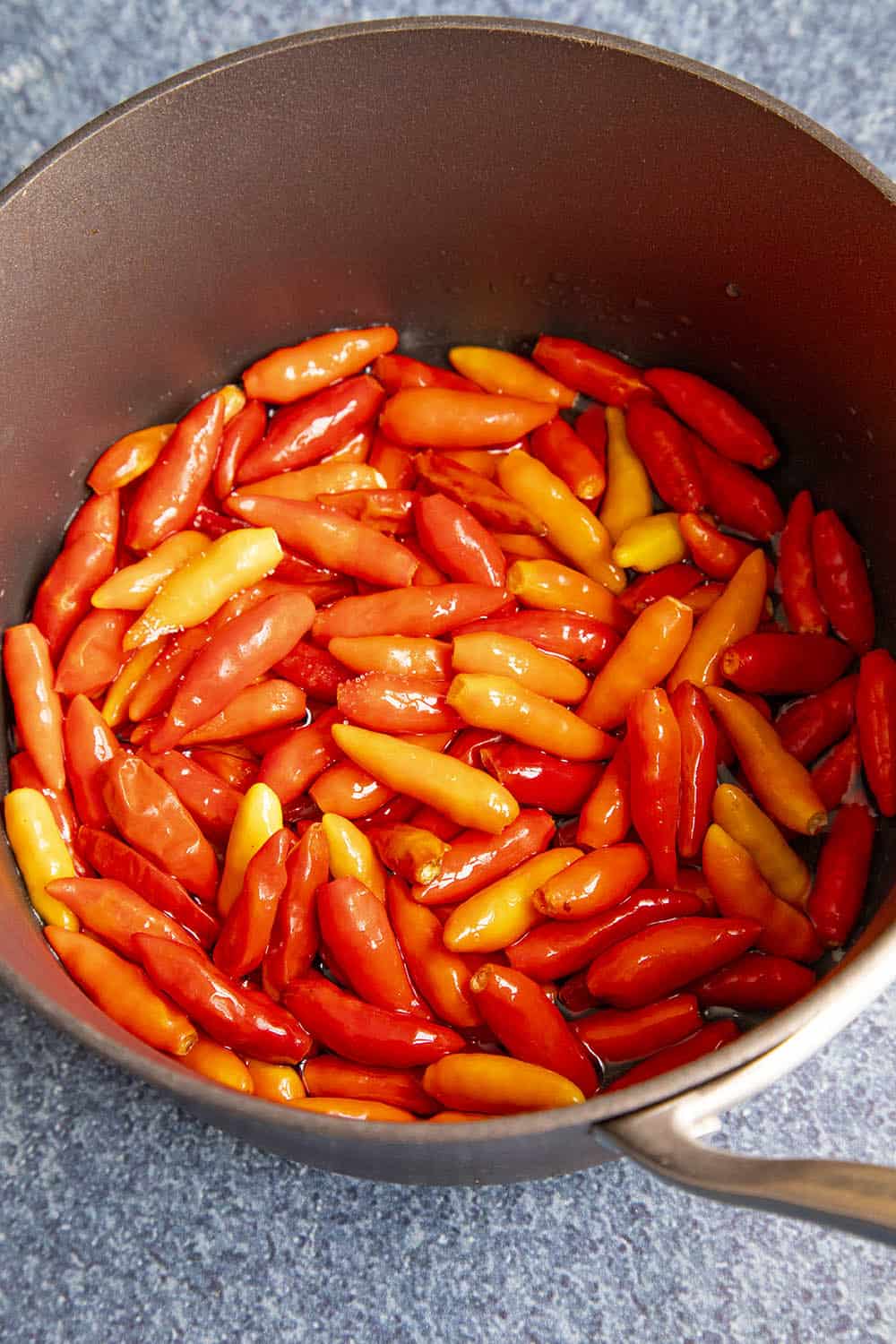
Cool slightly, then add to a food processor. Process until smooth.
Gorgeous red pepper sauce right there already, much like the Tabasco original red sauce, but brighter in color.
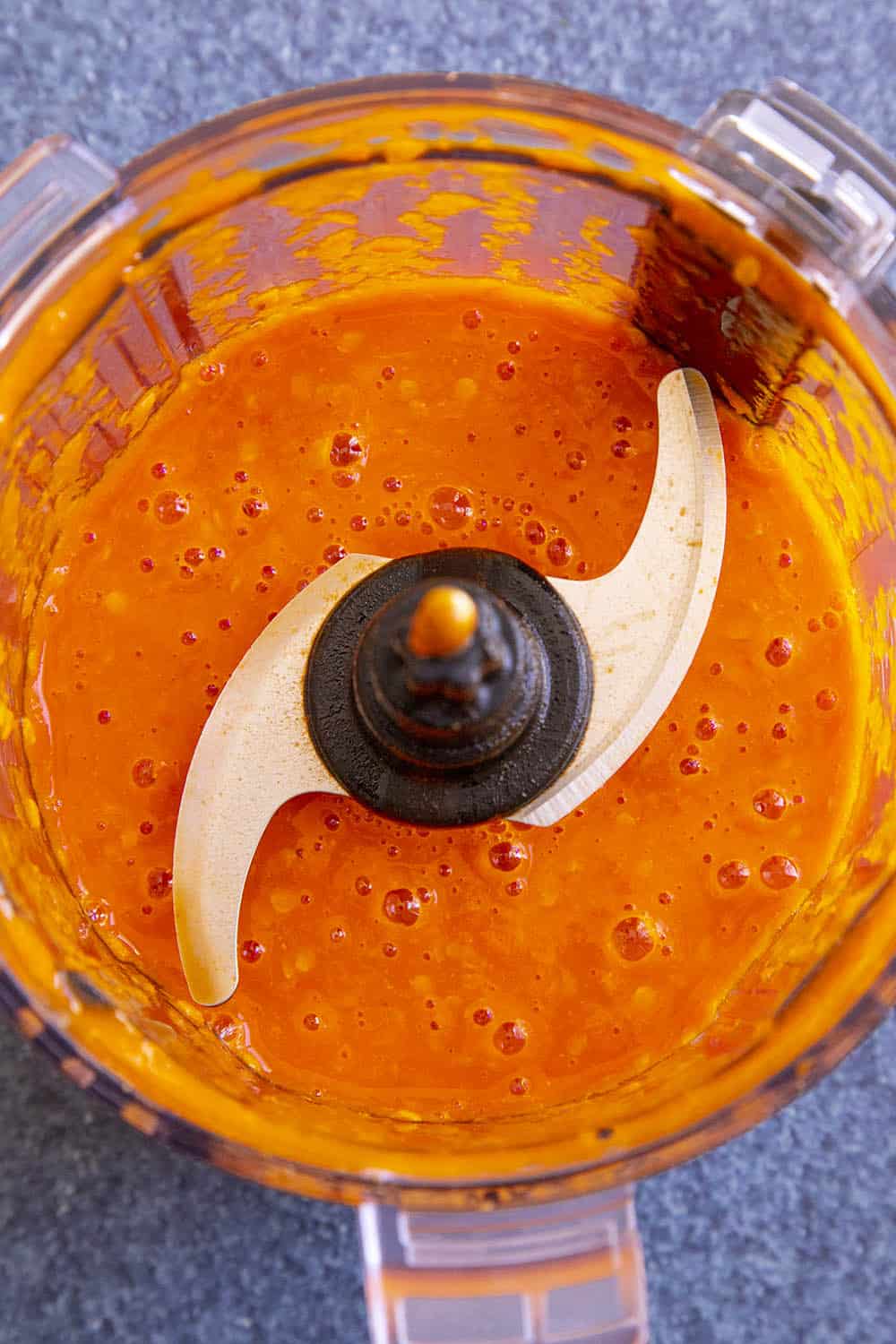
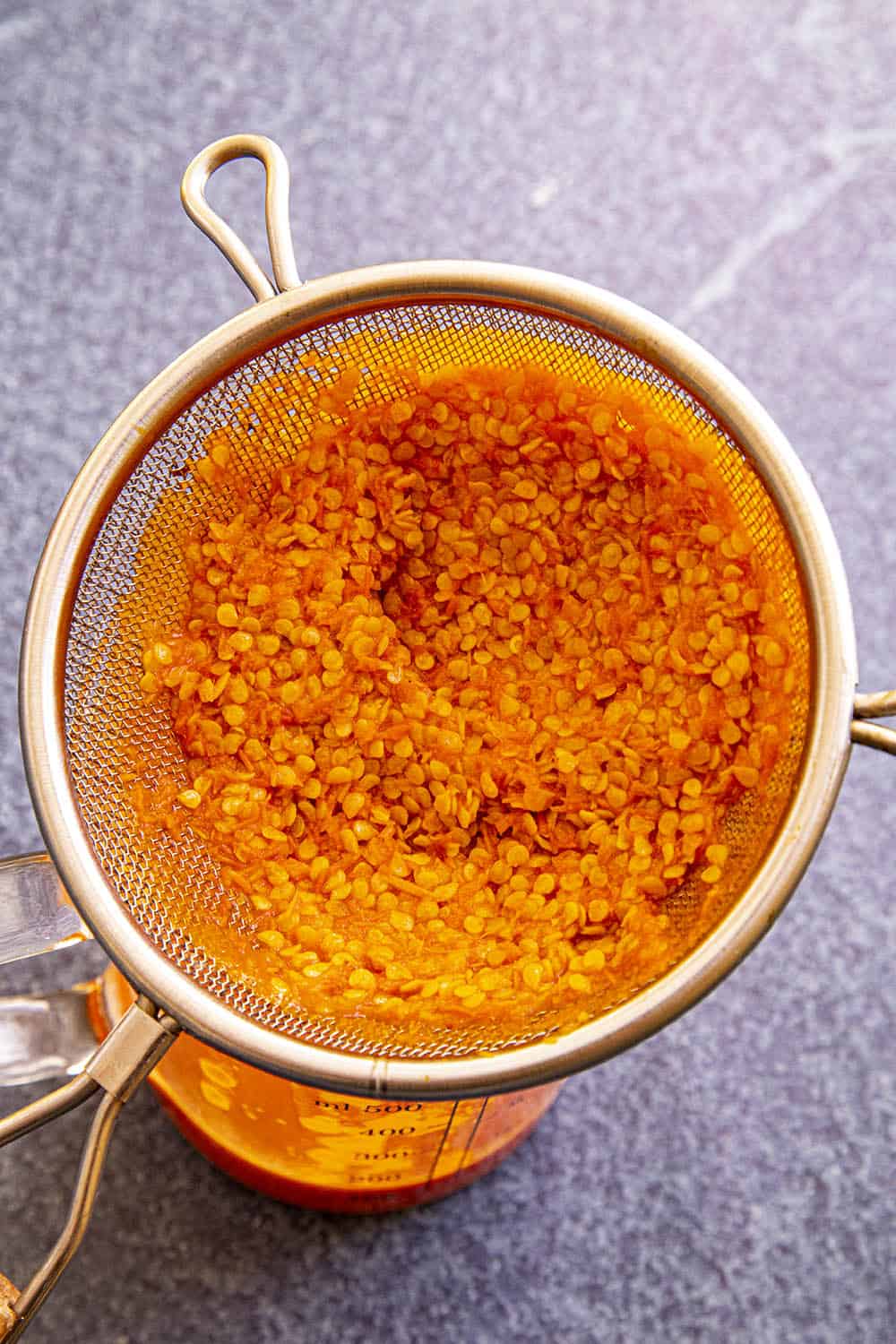
Strain the pepper seeds and pulp mixture to remove the solids. Look at how much of the seeds and pulp remains.
You don't need to seed the peppers first, as we're straining the hot sauce.
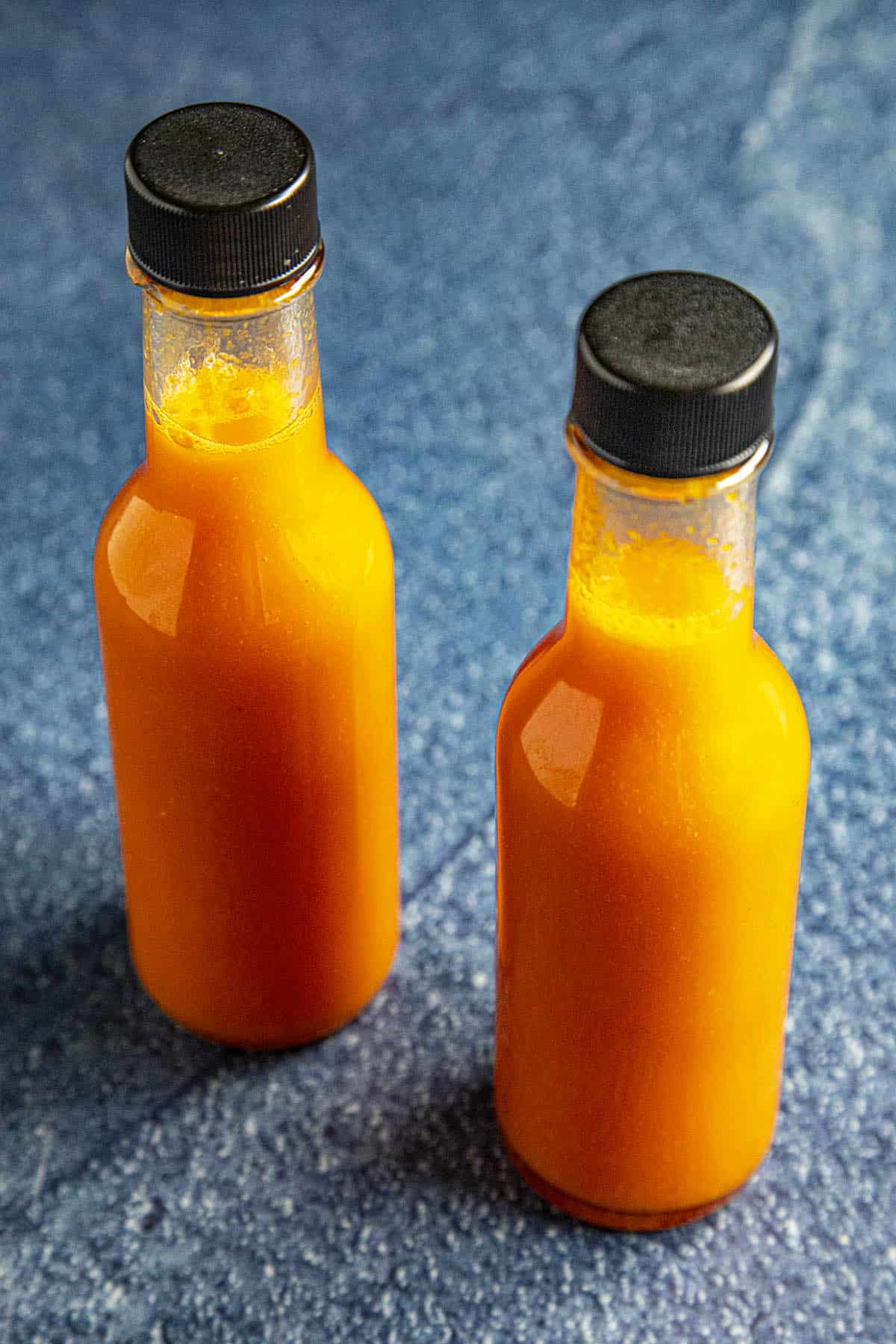
Pour into hot sauce bottles and enjoy. You can adjust the volume with additional water and/or vinegar.
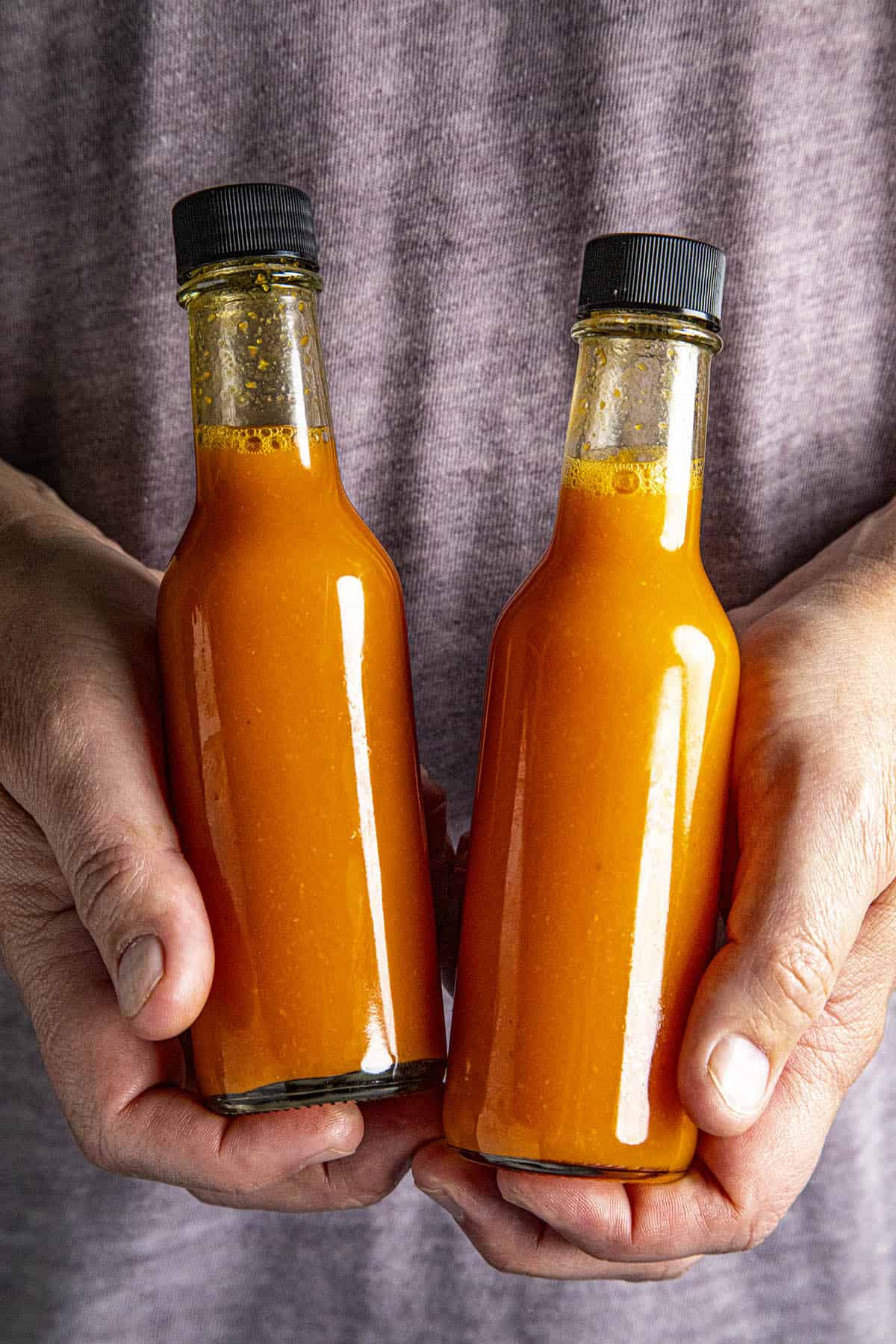
NOTE: Each version makes about 1 cup unstrained and ½ cup strained. I added in more vinegar to fill up 2+ woozy bottles and get the consistency more like original Tabasco hot sauce.
Boom! That's it, my friends. Now you have your very own homemade tabasco sauce, ready to drizzle and splash over all of your favorite foods.
Add a bit of spice to your lives! I hope you enjoy it.
Recipe Tips & Notes
Making hot sauce in general is easy, but there are a number of factors that can affect the overall quality and flavor of your finished hot sauce.
If you want to make tabasco hot sauce at home, consider some of these factors.
Fermented vs. Non-Fermented Tabasco Sauce
McHilleny Company ferments tabasco peppers for their original Tabasco Sauce brand in white oak barrels for up to 3 years. The longer you ferment, the more the flavor develops.
You'll have a difficult time duplicating the exact flavor of Tabasco without time, oak barrels, and trade secrets.
However, it is still worth making a fermented version at home.
The fermented version is quite a bit mellower than the non-fermented version. Fermenting breaks down the peppers chemically.
Essentially, lactic acid bacteria breaks down the carbohydrates in peppers and converts them to acid. It is a bit like a controlled decay process, and there are numerous benefits to fermentation, including more digestible foods, more vitamins, and more desirable flavors.
The non-fermented version, however, is much easier to make and tastes wonderful as well.
Comparatively, it has a stronger flavor with a bit more bite. Plus, you don't have to wait a week or more for fermenting. You can have it ready in less than half an hour.
Don't ask me to choose which version I enjoy more. I love them both!
The Vinegar
Your choice of vinegar will make a big difference in your resulting flavor. The key is choosing a good quality vinegar, and especially one of which you enjoy the flavor.
Using a cheap white vinegar will give you a cheaper tasting hot sauce.
Can I Make Tabasco Sauce without Tabasco Peppers?
You can make this recipe with any type of chili pepper you like. The original Tabasco Hot sauce, however, uses tabasco peppers, so using other peppers won't give you the same flavor.
If you use other peppers, you're technically making a Louisiana Style Hot Sauce, which is a larger category of hot sauces.
But go for it! I make hot sauces with different peppers, and also mix and match them, all the time with great results.
Learn more about tabasco peppers (capsicum frutescens) here.
Customizing Your Homemade Tabasco Sauce
Consider this a base recipe. It tastes great with only 3 ingredients - peppers, vinegar and salt.
After that, you can customize it to your own preferences with other ingredients.
Consider adding other flavors like garlic or onion, fruits like pineapple, mango or papaya, as well as herbs and seasonings such as cilantro, basil, chili powder or cumin.
You can also introduce other peppers for more flavor and heat, like the smoky chipotle pepper or fiery ghost pepper.
How Hot is Tabasco?
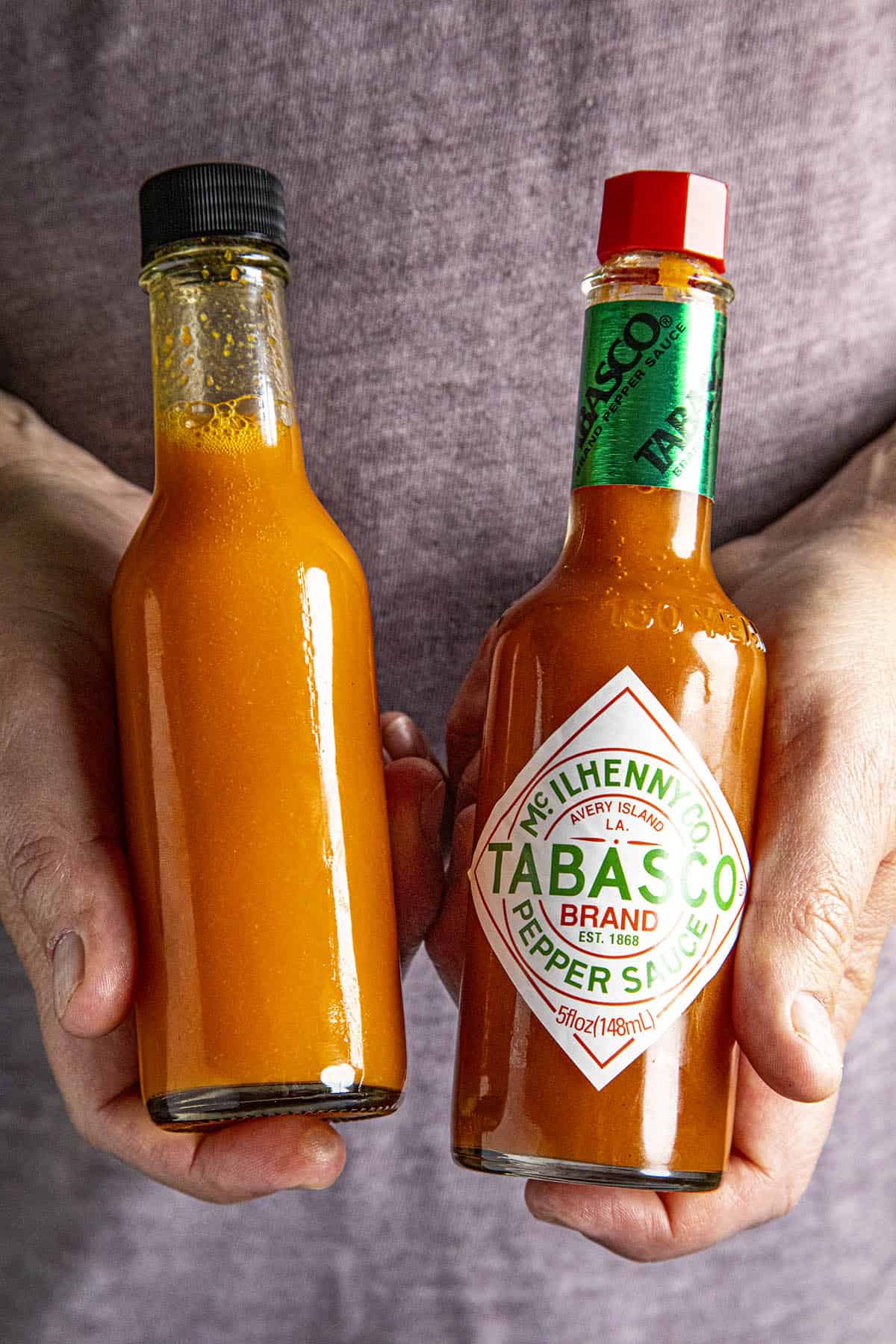
Even though tabasco peppers are very hot, actual Tabasco Hot Sauce is not quite as hot as the actual peppers, measuring in at 2,500–5,000 Scoville Heat Units. That is about as hot as a mild to medium-heat jalapeno pepper.
That's it, my friends. I hope you enjoy the sauce. If you make it, shoot me a pic or post it on social. I'd love to take a look!
Try Some of My Other Hot Sauce Recipes
- Homemade Sriracha Hot Sauce
- Homemade Cayenne Pepper Sauce
- Aji-Garlic Hot Sauce
- Datil Pepper Sauce
- Fermented Hot Sauce
- Ghost Pepper Hot Sauce
- Carolina Reaper Hot Sauce (Very Hot!)
- Habanero Hot Sauce
- Spicy Serrano Hot Sauce
- How to Make Hot Sauce from Chili Powders
Check out more Hot Sauce Recipes or learn more about How to Make Hot Sauce with lots of answer to frequently asked questions, such as pH and acidity, processing, and where to buy hot sauce woozy bottles.
Grab a couple bottles of tabasco sauce!
Got any questions? Ask away! I’m happy to help. If you enjoy this recipe, I hope you’ll leave a comment with some STARS. Also, please share it on social media. Don’t forget to tag us at #ChiliPepperMadness. I’ll be sure to share! Thanks! — Mike H.
Homemade Tabasco Sauce Recipe
Ingredients
FOR THE FERMENTED VERSION
- 5 ounces tabasco peppers roughly chopped
- 2 tablespoons sea salt (.67ounce - 19 grams)
- 1 quart unchlorinated water
- 1 cup white wine vinegar or more as desired
FOR THE NON-FERMENTED VERSION
- 5 ounces tabasco peppers
- 1/4 teaspoon salt
- 1 cup white wine vinegar or more as desired
Instructions
FOR THE FERMENTED VERSION
- First, ferment the tabasco peppers. You can process them to coarsely chop them or rough chop them with a knife. Pack them into a jar, leaving at least 1 inch of head space. The peppers may rise a bit when fermenting.
- Next, mix 1 quart unchlorinated water with 2 tablespoons sea salt (4% brine solution). Pour just enough brine over the peppers to cover them, pressing them down a bit as you go. Discard or save any unused brine. It is important to keep the peppers covered with brine to avoid spoilage. Check this daily.
- Screw on the lid and set the jar away from direct sunlight to ferment for at least 1 week. Ideal temperatures are between 55-75 degrees F. The most active fermentation period is between 1-2 weeks, so be sure to monitor it during this time. “Burp” the jars often by unscrewing the lid a bit to let out some of the accumulating gases. Or, use an airlock or membrane for easier fermenting. See our page, “How to Make Fermented Pepper Mash”, for further instruction.
- After 1-2 weeks, the fermenting activity will diminish and the brine will turn cloudy and taste acidic.
- Pour the fermented tabasco peppers, including brine, into a pot along with vinegar. Alternatively, you can strain and toss the brine, then add the solids to a pot with vinegar and 1/2 cup water or more as desired + 1/4 teaspoon salt. Or use only a part of the brine for a thicker sauce. More brine = more salty. Bring to a quick boil, reduce heat and simmer for 15 minutes.
- Cool slightly then add to a food processor. Process until smooth.
- Strain the mixture to remove the solids. Pour into hot sauce bottles and enjoy. You can adjust the volume with additional water and/or vinegar.
FOR THE NON-FERMENTED VERSION
- Add the tabasco peppers, vinegar and ¼ teaspoon salt to a small pot.
- Bring the mixture to a quick boil, then reduce the heat and simmer for 15 minutes to soften.
- Cool slightly, then add to a food processor. Process until smooth.
- Strain the mixture to remove the solids. Pour into hot sauce bottles and enjoy. You can adjust the volume with additional water and/or vinegar.
Video
Notes
Nutrition Information
NOTE: This post was updated on 10/6/23 to include new information and video. It was originally published on 1/27/20.
Stephanie says
Hi Michael, I made your unfermented recipe, oh my goodness it is delicious, but much hotter than Tabasco brand. I used my homegrown Tabasco peppers , any suggestions on how to tone it down?
And when you dehydrate the the seeds and pulp do you then remove the seeds?
Your suggestions are greatly appreciated .
Michael Hultquist - Chili Pepper Madness says
Thanks, Stephanie. The best way to tone this down is to dilute it with other mild ingredients, like combining it with another sauce made from mild peppers, or adding ingredients like tomato. Or, just use it very sparingly. For dehydrating, I usually do not remove the seeds, but you can let them shake out. It's hard to get them all with the pulp. They can add a bitter flavor sometimes, so keep that in mind.
Janice says
Approx. what is the measure of 5oz?
Can the sauce be used without straining?
Michael Hultquist - Chili Pepper Madness says
Janice, it is a bit more than 1/4 cup. Yes, you can skip the straining. Enjoy.
Mpishi says
I'll be trying this with home-grown red serrano peppers.
Tom, if you're interested in pineapple, I bet pineapple vinegar would be an interesting tweak to the recipe. I've made my own pineapple vinegar, before, to make encurtido and it was delicious.
Michael Hultquist - Chili Pepper Madness says
Sounds wonderful!
Joe says
Can you recommend a hot sauce bottle that comes with shaker or dripper top you can apply? When I use Tabasco I can always shake just the right amount of heat to the recipe. With the bottles I am using it gets sort of clumsy and I can easily add too much. Thanks.
Michael Hultquist - Chili Pepper Madness says
Joe, check out my post on How to Make Hot Sauce. There is a section with links to my hot sauce bottle recommendations: https://www.chilipeppermadness.com/recipes/how-to-make-hot-sauce
Joe says
In the fermented recipe, what is the purpose of burping the jar? It would seem to me that letting oxygen in the jar would increase the possibility of spoilage. I'm at 5 days without burping (the jar that is!) - hopefully I didn't mess this up and have to start over. So your insight will be helpful. Thanks.
Michael Hultquist - Chili Pepper Madness says
Joe, as fermentation occurs, gases are released, which can build up pressure inside the sealed jar. If you do not burp it, it could potentially explode. This happens to people and their hot sauce bottles quite often. You are correct about exposing the batch during burping, which is why I recommend using some sort of an airlock filter or a membrane. I use a membrane from Masontop Lids that work great for me. Here is a link to Buy Masontop Lids at Amazon (it's an affiliate link, FYI): https://amzn.to/2wDZPP8
Matt says
whats the best way to preserve or store the sauce once done? Im doing the non fermented version. Also how long is it good for before going bad?
Thanks
Michael Hultquist - Chili Pepper Madness says
Matt, this will last quite a long time, but you can process it through a water bath for much longer term storage, or use a pressure canner.
Angela Gasper says
How do you change this recipe to make the green Tabasco sauce.
Michael Hultquist - Chili Pepper Madness says
Angela, just use green tabasco peppers. Or, you can use other green peppers, like the jalapeno or serrano. Let me know how it goes for you.
Ady B says
Hi Mike,
I was wondering if you could share the details of the Hot Water Bath process. Temps, durations etc.
I have some chilli plants (type unknown as my son started them off at school) and am hoping to make my first batch of fermented sauce using the boil / simmer process. I would like to Hot Bath the bottles to increase the shelf life further.
Or is the Hot Bath process not required if I boil / simmer at the end?
I have bought Chocolate Habanero seeds and Tabasco seeds for next year's crop.
Many thanks Ady.
P.S. Great site bTw
Michael Hultquist - Chili Pepper Madness says
Ady, check out my post on Canning and Jarring Peppers, which will apply to sauces as well: https://www.chilipeppermadness.com/preserving-chili-peppers/canning-or-jarring-chili-peppers/
Allison Buder says
This was so easy to follow and did not disappoint. Thank you for sharing your recipe and responses to all the comments.
This has such a nice spice.
Michael Hultquist - Chili Pepper Madness says
Thanks, Allison! Super you happy you enjoyed it.
Jordan says
Dose it need to be refrigerated when finished or can it sit out. Unfreminted.
Michael Hultquist - Chili Pepper Madness says
Jordan, this is debated widely in the hot sauce community. The acidity acts as a strong preservative, so many people leave it out. However, anything can go bad eventually, so some like to refrigerate. I prefer to refrigerate.
Michael Houston says
Hey Mike!
Man.. I ended up after 3 days in the brine to finish withe the unfermented method, but dumping the brine in with the peppers. I was sure I had messed up a whole lb. of peppers... I used rice wine vinegar for 1 batch & white wine vinegar for the other batch. The rice wine batch is my favorite... sweet, hot & spicy. I've never tasted anything like it before. So d@mn good! Thanks so much for sharing your recipes.
Michael Hultquist - Chili Pepper Madness says
Awesome. Thanks, Michael. Super happy how it turned out for you, sir.
Kortney S says
Mike,
What’s the best way to dilute this? Love the flavor but it’s way too hot for me (non fermented).
Thanks,
Kortney
Michael Hultquist - Chili Pepper Madness says
Kortney, the best way is to bring in other ingredients. You can try making the exact same recipe with sweet (no heat) peppers, then combine them, or try it out with something like carrots or even garlic, or a combination, then combine them. I hope this helps.
Michael H. says
Hi Michael! I planted 10 tobasco pepper bushes this year. I harvested a lb. Of peppers last night and went with the fermented method. Question: I pureed the peppers in my food processor and now the pepper mash I'd floating to the top. Are they going to spoil? Should I just go ahead with the unfermented method instead?
Michael Hultquist - Chili Pepper Madness says
Hey, Michael! You'll need to keep the peppers beneath the brine, or they do run the risk of spoiling. Try using a baggie with some water in it. Stuff it down into the jar and seal it. This can help keep everything submerged. If you are concerned, you can try the non-fermented method. Let me know how it goes. Take care.