


Learn how to make tabasco hot sauce with this homemade tabasco sauce recipe, using garden grown tabasco peppers, vinegar and salt. Fermented and non-fermented versions.
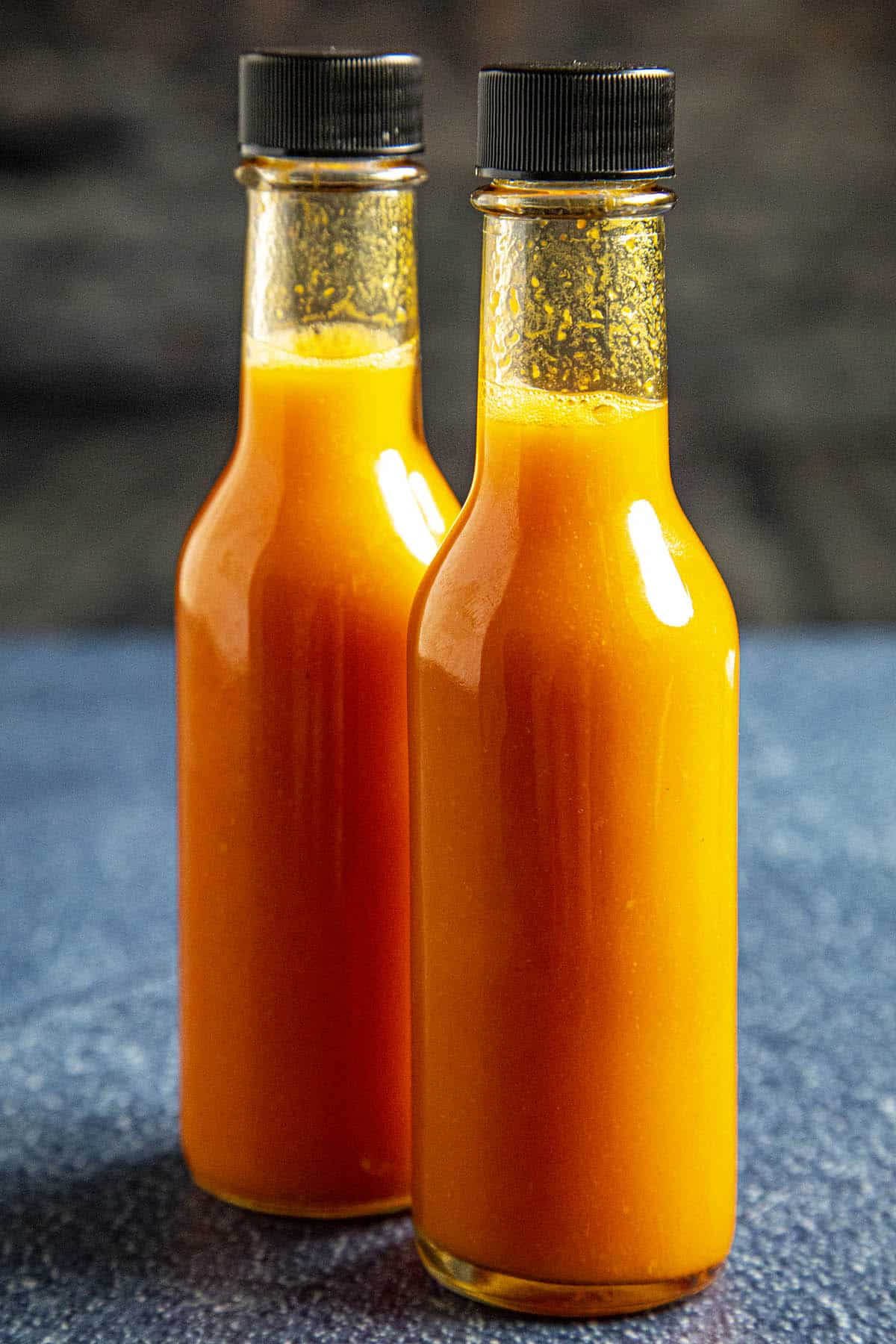
Homemade Tabasco Sauce Recipe
If you've ever considered making your own Tabasco hot sauce at home, I have the perfect recipe for you right here.
I've been making my own hot sauces for years, and I grew tabasco peppers in my garden this year just so I could make this sauce.
I'm a big fan of Tabasco Sauce. Some people in the chilihead community bash Tabasco Sauce because of its vinegary flavor and its low level of heat compared to other hot sauces on the market, but I personally have a huge amount of respect for the Tabasco brand and McIlhenny Company, as they've been around since 1868 on Avery Island, Louisiana, founded by Edmund Mcilhenny.
They practically started the hot sauce industry by bringing it to the masses.
Any company with such longevity and unquestioning popularity deserves respect in my book. Besides, I personally enjoy vinegary hot sauces, so here we are, making some at home.
Join me, will you?
I'll show you how to make it two different ways - fermented and non-fermented versions.
Let's discuss how to make homemade tabasco hot sauce at home, shall we?
Tabasco Sauce Ingredients
- FOR FERMENTED TABASCO SAUCE
- 5 ounces tabasco peppers, roughly chopped
- 2-2.5 tablespoons sea salt (.67 ounce or 19 grams by weight) (+ 1/4 teaspoon salt, if draining your brine)
- 1 quart unchlorinated water
- 1 cup white wine vinegar
- FOR NON-FERMENTED TABASCO SAUCE
- 5 ounces tabasco peppers
- 1/4 teaspoon salt
- 1 cup white wine vinegar
How to Make Tabasco Sauce - the Recipe Method
FOR THE FERMENTED VERSION
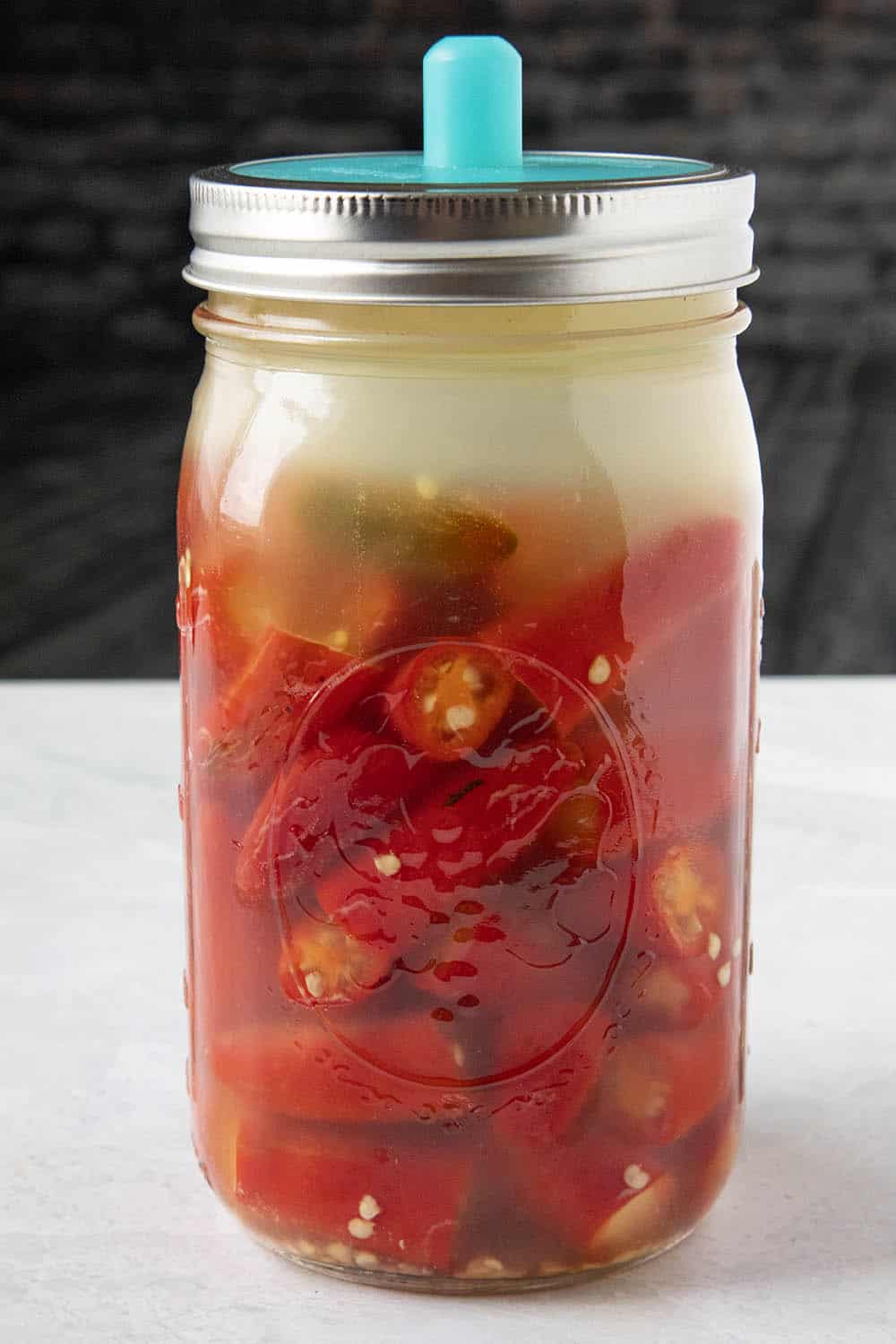
First, ferment the tabasco peppers. You can process them to coarsely chop them or rough chop them with a knife. Pack them into a jar, leaving at least 1 inch of head space.
The peppers may rise a bit when fermenting.
Next, mix 1 quart unchlorinated water with 2 tablespoons sea salt. Pour just enough brine over the peppers to cover them, pressing them down a bit as you go.
It is important to keep the peppers covered with brine to avoid spoilage. Check this daily.
Screw on the lid and set the jar away from direct sunlight to ferment for at least 1 week. Ideal temperatures are between 55-75 degrees F.
The most active fermentation period is between 1-2 weeks, so be sure to monitor it during this time. “Burp” the jars often by unscrewing the lid a bit to let out some of the accumulating gases.
Or, use an airlock or membrane for easier fermenting. See our page, “How to Make Fermented Pepper Mash”, for further instruction.
After 1-2 weeks, the fermenting activity will diminish and the brine will turn cloudy and taste acidic.
Pour the fermented tabasco peppers, including brine, into a pot along with vinegar.
Alternatively, you can strain and toss the brine, then add the solids to a pot with vinegar and 1/2 cup water or more as desired + 1/4 teaspoon salt.
Or use only a part of the brine for a thicker sauce. More brine = more salty. Bring to a quick boil. Reduce heat and simmer for 15 minutes.
Cool slightly then add to a food processor. Process until smooth.
Strain the mixture to remove the solids. Pour into hot sauce bottles and enjoy. You can adjust the volume with additional water and/or vinegar.
FOR THE NON-FERMENTED VERSION
Add the tabasco peppers, vinegar and ¼ teaspoon salt to a small pot.
Bring the mixture to a quick boil, then reduce the heat and simmer for 15 minutes to soften.
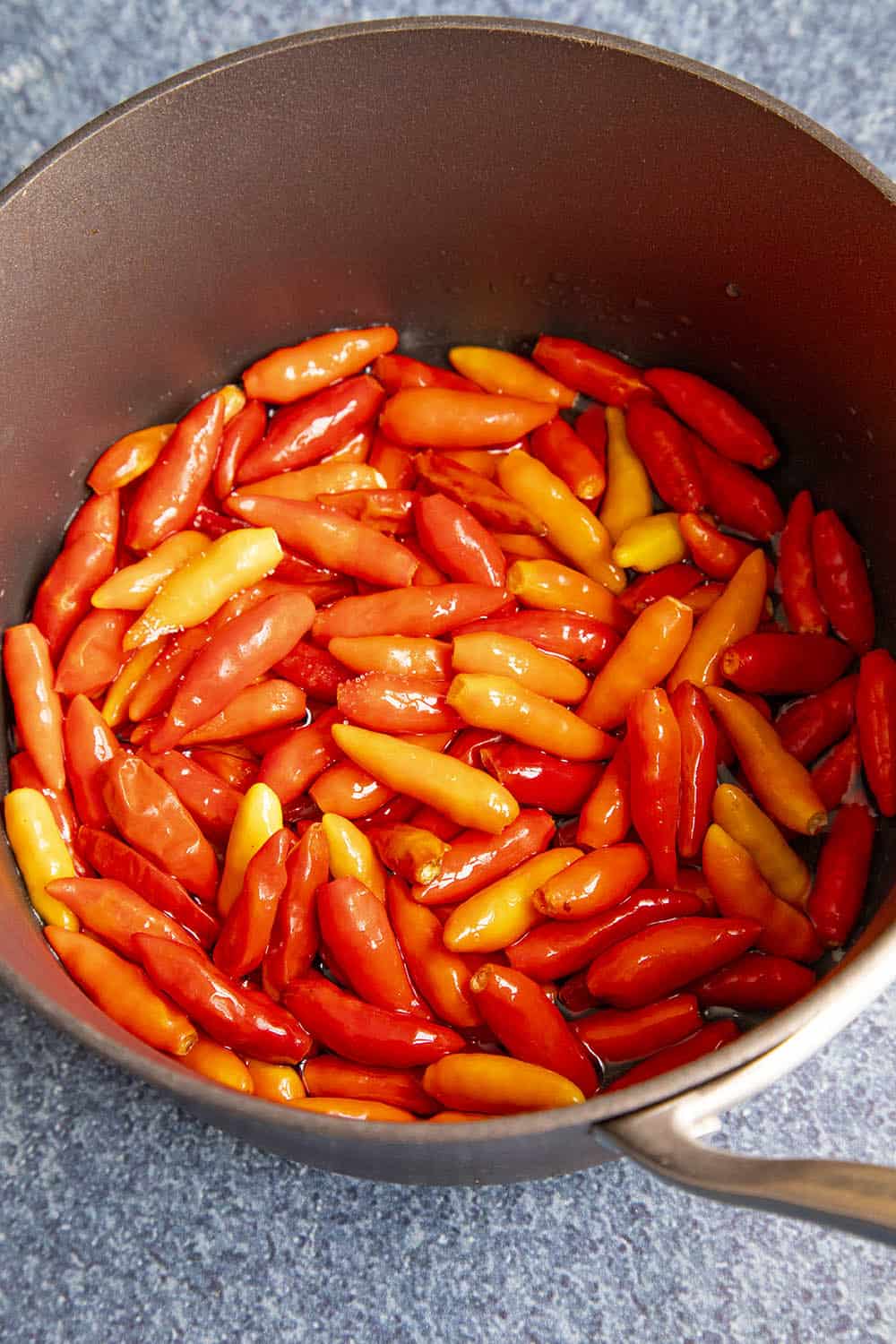
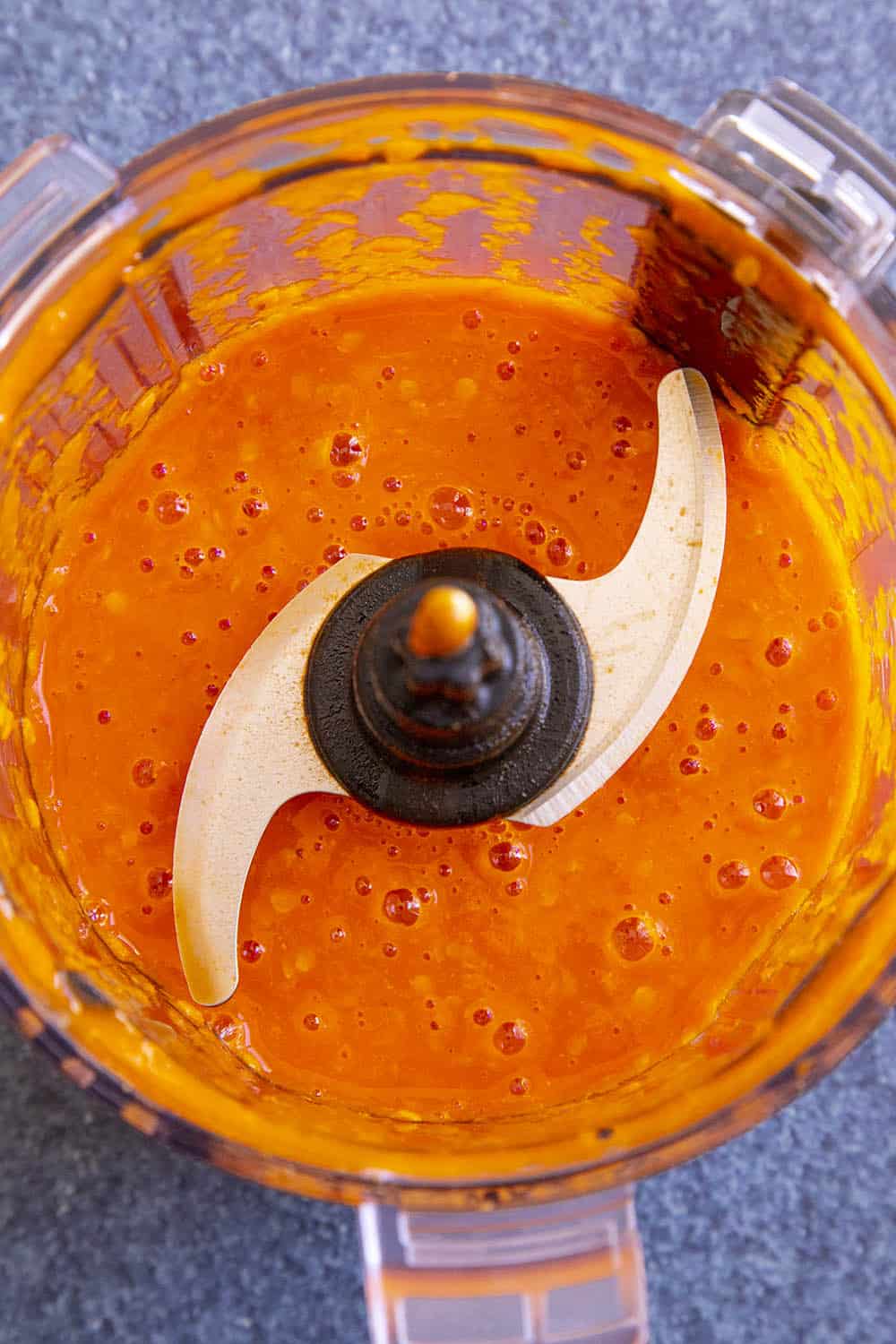
Cool slightly, then add to a food processor. Process until smooth.
Gorgeous red pepper sauce right there already, much like the Tabasco original red sauce, but brighter in color.
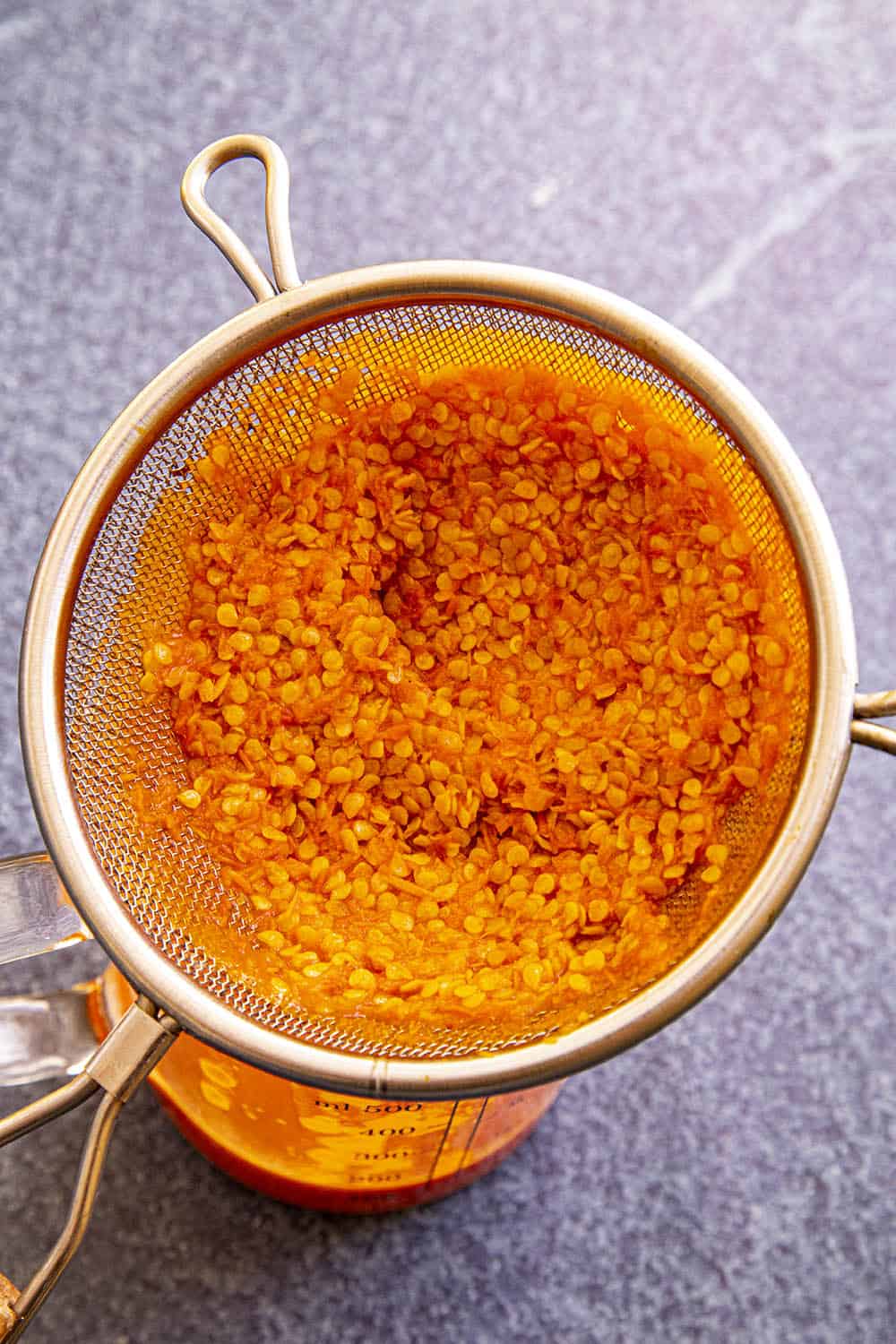
Strain the pepper seeds and pulp mixture to remove the solids. Look at how much of the seeds and pulp remains.
You don't need to seed the peppers first, as we're straining the hot sauce.
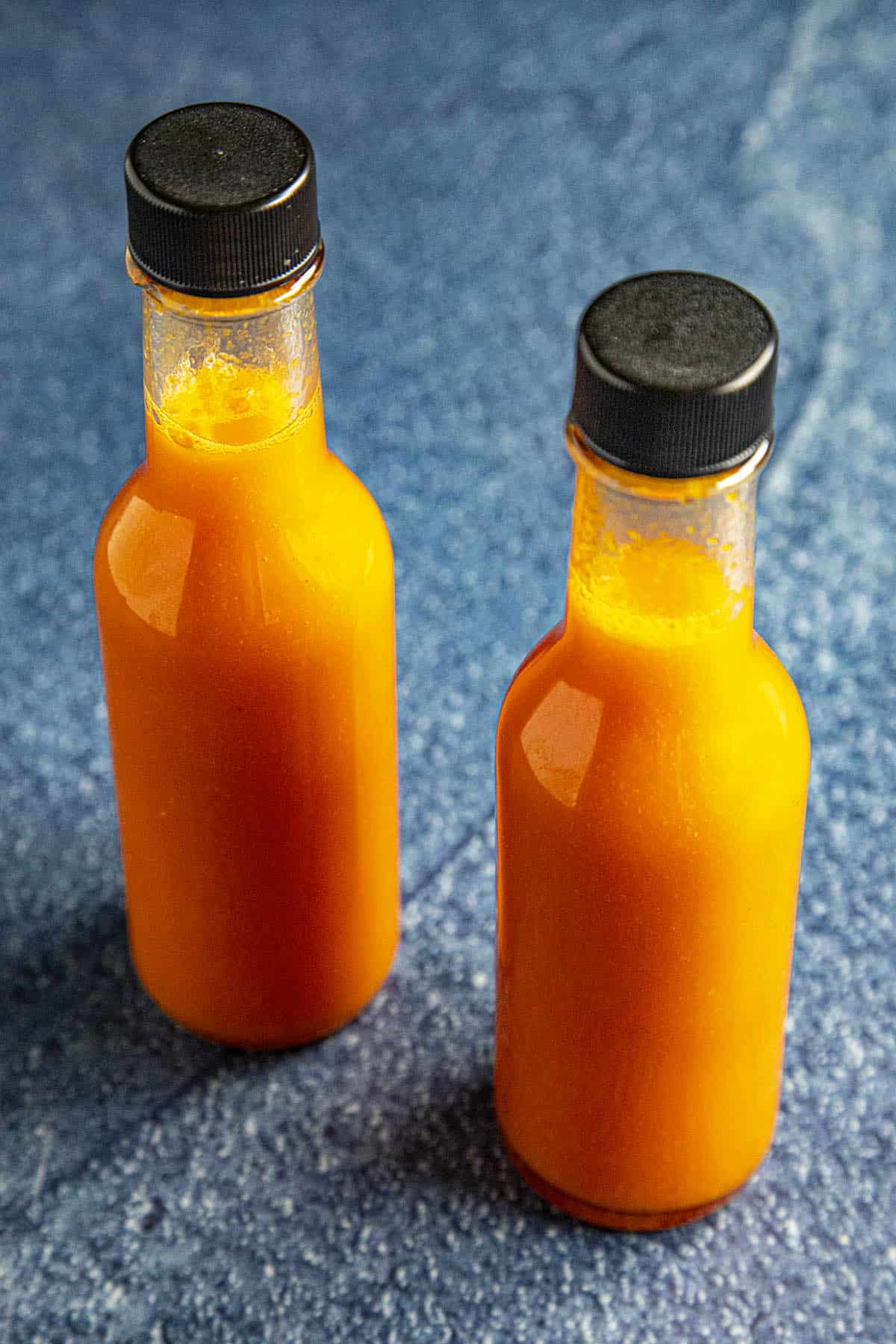
Pour into hot sauce bottles and enjoy. You can adjust the volume with additional water and/or vinegar.
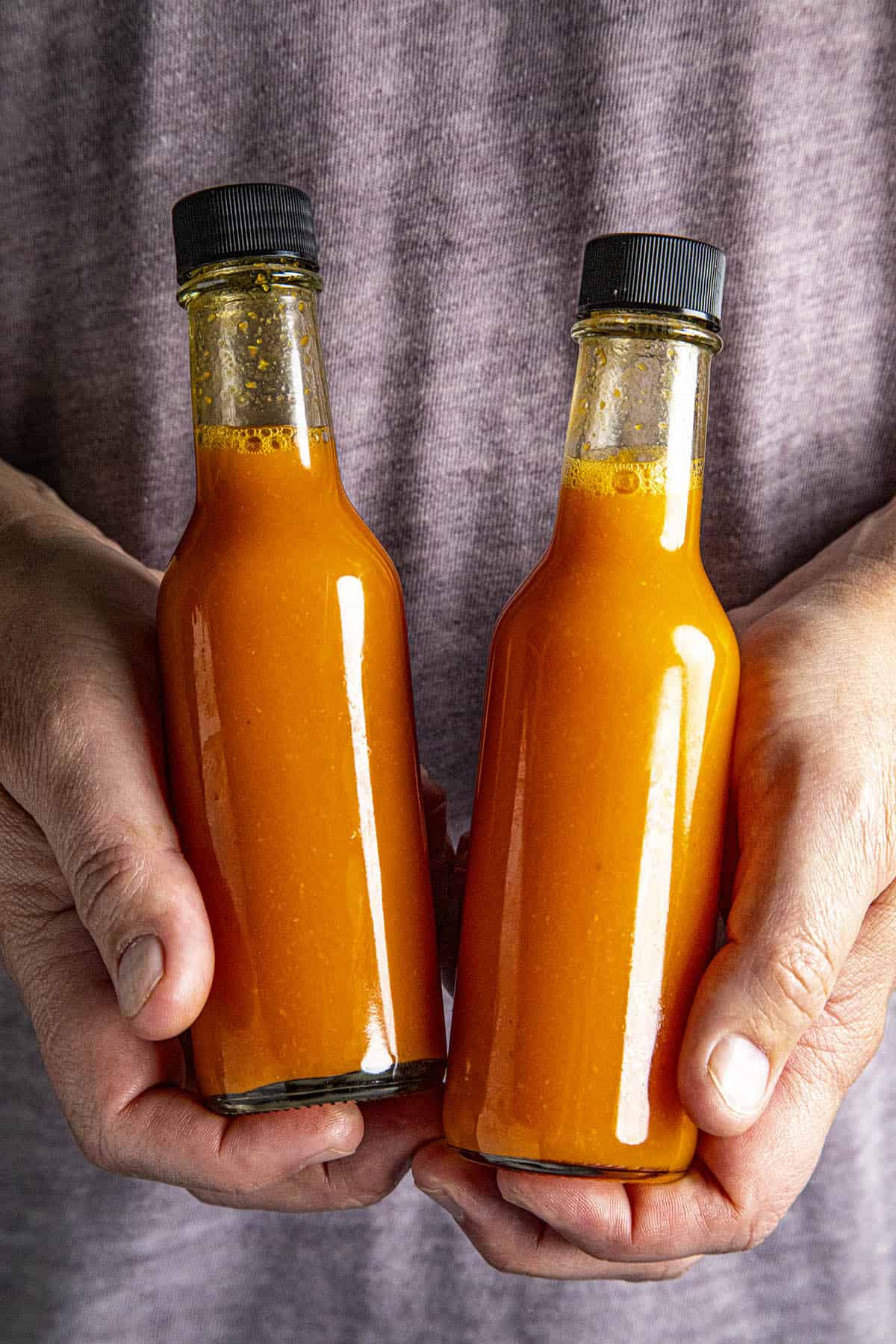
NOTE: Each version makes about 1 cup unstrained and ½ cup strained. I added in more vinegar to fill up 2+ woozy bottles and get the consistency more like original Tabasco hot sauce.
Boom! That's it, my friends. Now you have your very own homemade tabasco sauce, ready to drizzle and splash over all of your favorite foods.
Add a bit of spice to your lives! I hope you enjoy it.
Recipe Tips & Notes
Making hot sauce in general is easy, but there are a number of factors that can affect the overall quality and flavor of your finished hot sauce.
If you want to make tabasco hot sauce at home, consider some of these factors.
Fermented vs. Non-Fermented Tabasco Sauce
McHilleny Company ferments tabasco peppers for their original Tabasco Sauce brand in white oak barrels for up to 3 years. The longer you ferment, the more the flavor develops.
You'll have a difficult time duplicating the exact flavor of Tabasco without time, oak barrels, and trade secrets.
However, it is still worth making a fermented version at home.
The fermented version is quite a bit mellower than the non-fermented version. Fermenting breaks down the peppers chemically.
Essentially, lactic acid bacteria breaks down the carbohydrates in peppers and converts them to acid. It is a bit like a controlled decay process, and there are numerous benefits to fermentation, including more digestible foods, more vitamins, and more desirable flavors.
The non-fermented version, however, is much easier to make and tastes wonderful as well.
Comparatively, it has a stronger flavor with a bit more bite. Plus, you don't have to wait a week or more for fermenting. You can have it ready in less than half an hour.
Don't ask me to choose which version I enjoy more. I love them both!
The Vinegar
Your choice of vinegar will make a big difference in your resulting flavor. The key is choosing a good quality vinegar, and especially one of which you enjoy the flavor.
Using a cheap white vinegar will give you a cheaper tasting hot sauce.
Can I Make Tabasco Sauce without Tabasco Peppers?
You can make this recipe with any type of chili pepper you like. The original Tabasco Hot sauce, however, uses tabasco peppers, so using other peppers won't give you the same flavor.
If you use other peppers, you're technically making a Louisiana Style Hot Sauce, which is a larger category of hot sauces.
But go for it! I make hot sauces with different peppers, and also mix and match them, all the time with great results.
Learn more about tabasco peppers (capsicum frutescens) here.
Customizing Your Homemade Tabasco Sauce
Consider this a base recipe. It tastes great with only 3 ingredients - peppers, vinegar and salt.
After that, you can customize it to your own preferences with other ingredients.
Consider adding other flavors like garlic or onion, fruits like pineapple, mango or papaya, as well as herbs and seasonings such as cilantro, basil, chili powder or cumin.
You can also introduce other peppers for more flavor and heat, like the smoky chipotle pepper or fiery ghost pepper.
How Hot is Tabasco?
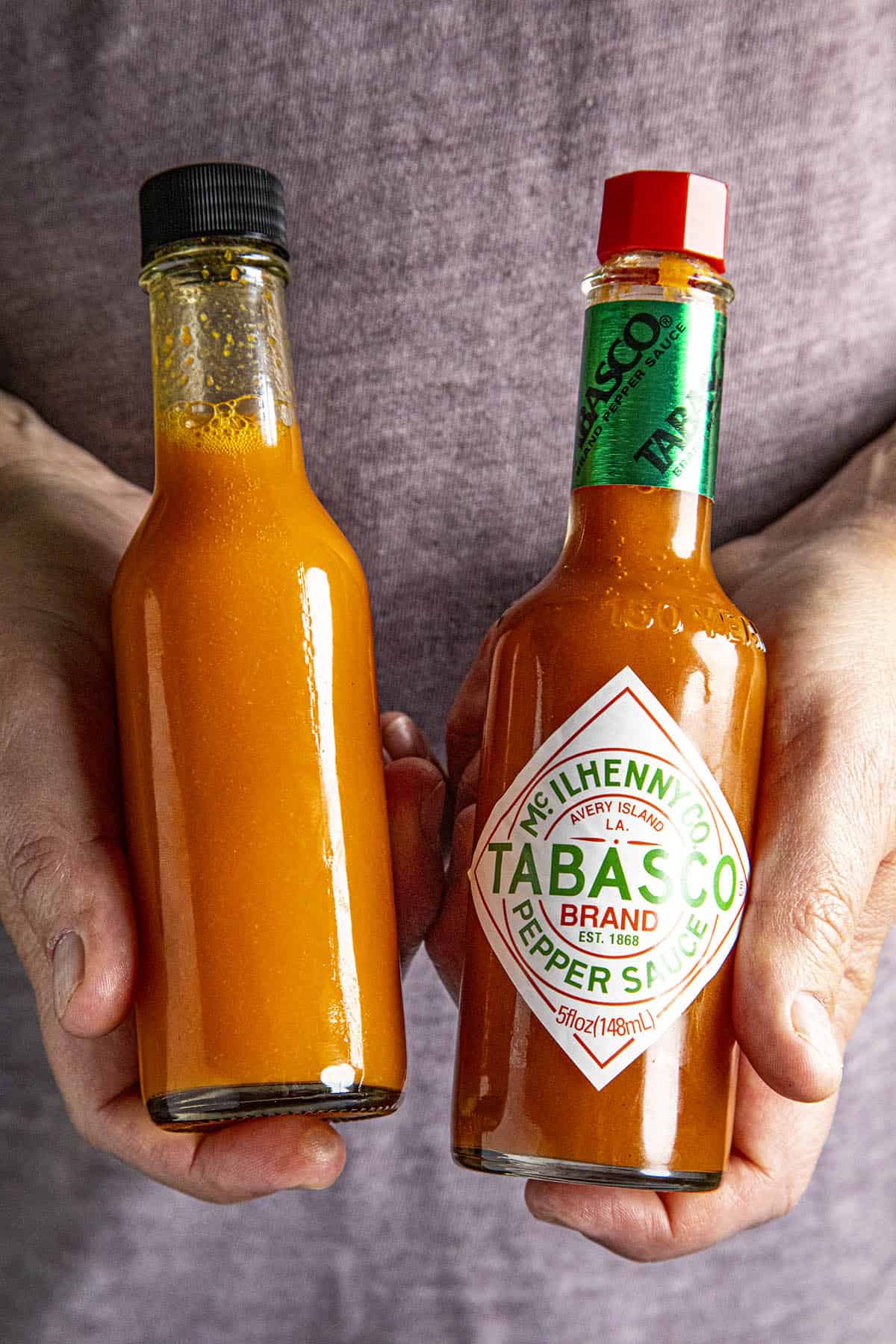
Even though tabasco peppers are very hot, actual Tabasco Hot Sauce is not quite as hot as the actual peppers, measuring in at 2,500–5,000 Scoville Heat Units. That is about as hot as a mild to medium-heat jalapeno pepper.
That's it, my friends. I hope you enjoy the sauce. If you make it, shoot me a pic or post it on social. I'd love to take a look!
Try Some of My Other Hot Sauce Recipes
- Homemade Sriracha Hot Sauce
- Homemade Cayenne Pepper Sauce
- Aji-Garlic Hot Sauce
- Datil Pepper Sauce
- Fermented Hot Sauce
- Ghost Pepper Hot Sauce
- Carolina Reaper Hot Sauce (Very Hot!)
- Habanero Hot Sauce
- Spicy Serrano Hot Sauce
- How to Make Hot Sauce from Chili Powders
Check out more Hot Sauce Recipes or learn more about How to Make Hot Sauce with lots of answer to frequently asked questions, such as pH and acidity, processing, and where to buy hot sauce woozy bottles.
Grab a couple bottles of tabasco sauce!
Got any questions? Ask away! I’m happy to help. If you enjoy this recipe, I hope you’ll leave a comment with some STARS. Also, please share it on social media. Don’t forget to tag us at #ChiliPepperMadness. I’ll be sure to share! Thanks! — Mike H.
Homemade Tabasco Sauce Recipe
Ingredients
FOR THE FERMENTED VERSION
- 5 ounces tabasco peppers roughly chopped
- 2 tablespoons sea salt (.67ounce - 19 grams)
- 1 quart unchlorinated water
- 1 cup white wine vinegar or more as desired
FOR THE NON-FERMENTED VERSION
- 5 ounces tabasco peppers
- 1/4 teaspoon salt
- 1 cup white wine vinegar or more as desired
Instructions
FOR THE FERMENTED VERSION
- First, ferment the tabasco peppers. You can process them to coarsely chop them or rough chop them with a knife. Pack them into a jar, leaving at least 1 inch of head space. The peppers may rise a bit when fermenting.
- Next, mix 1 quart unchlorinated water with 2 tablespoons sea salt (4% brine solution). Pour just enough brine over the peppers to cover them, pressing them down a bit as you go. Discard or save any unused brine. It is important to keep the peppers covered with brine to avoid spoilage. Check this daily.
- Screw on the lid and set the jar away from direct sunlight to ferment for at least 1 week. Ideal temperatures are between 55-75 degrees F. The most active fermentation period is between 1-2 weeks, so be sure to monitor it during this time. “Burp” the jars often by unscrewing the lid a bit to let out some of the accumulating gases. Or, use an airlock or membrane for easier fermenting. See our page, “How to Make Fermented Pepper Mash”, for further instruction.
- After 1-2 weeks, the fermenting activity will diminish and the brine will turn cloudy and taste acidic.
- Pour the fermented tabasco peppers, including brine, into a pot along with vinegar. Alternatively, you can strain and toss the brine, then add the solids to a pot with vinegar and 1/2 cup water or more as desired + 1/4 teaspoon salt. Or use only a part of the brine for a thicker sauce. More brine = more salty. Bring to a quick boil, reduce heat and simmer for 15 minutes.
- Cool slightly then add to a food processor. Process until smooth.
- Strain the mixture to remove the solids. Pour into hot sauce bottles and enjoy. You can adjust the volume with additional water and/or vinegar.
FOR THE NON-FERMENTED VERSION
- Add the tabasco peppers, vinegar and ¼ teaspoon salt to a small pot.
- Bring the mixture to a quick boil, then reduce the heat and simmer for 15 minutes to soften.
- Cool slightly, then add to a food processor. Process until smooth.
- Strain the mixture to remove the solids. Pour into hot sauce bottles and enjoy. You can adjust the volume with additional water and/or vinegar.
Video
Notes
Nutrition Information
NOTE: This post was updated on 10/6/23 to include new information and video. It was originally published on 1/27/20.
David England says
You mention 5 oz. of peppers. Is this by volume or a weight measurement? Thank you.
Michael Hultquist - Chili Pepper Madness says
David, by weight.
Gavin says
I'm now making this for a second time. I use the tabasco from our garden, and it tastes a m a z i n g! Thank you for the recipe!
Michael Hultquist - Chili Pepper Madness says
Awesome, yes! Harvesting my tabasco peppers now for this very thing! I love it.
Susan todd says
I love very hot and the tobacco pepper is fiery goodness. Can I leave some seeds in the non fermented sauce to increase the heat?
Michael Hultquist - Chili Pepper Madness says
You surely can, Susan. Let me know how it goes for you.
Annie says
In the article you mention rough chopping the peppers, but in the link page about making the pepper mash you mention putting them in a processor before filling the jar with airlock. Please explain.. what are the differences. Thank you!
Michael Hultquist - Chili Pepper Madness says
Annie, you can do either. You can fit more into the jar with more processing, as the pieces are much smaller. However, the smaller pieces tend to float to the top of the brine more and are harder to keep submerged. For that, larger pieces are easier to keep down. It's more of a personal preference, as long as you can fit them in the jar and beneath the brine. Let me know how it goes for you.
Niclas says
Hi Tom
I live in Laos and I plan on making your Fermented version using a 70/30 mix of Lao ladyfinger chilis and birds-eye chilis. My two questions to you: 1) if I make 15 ounces of chilis, should I just triple all ingredients like salt, water and vinegar accordingly? 3) if I want a more garlicky flavour should i add fresh garlic to the fermentation stage, or later?
Very excited to try this, many thanks for your input !
Nic
Michael Hultquist - Chili Pepper Madness says
Nic, yes, you can easily triple the ingredients. You may want to watch the amount of vinegar. Also, yes, add in more garlic as desired, either fermenting or fresh. You can do it either way. You'll get more pronounced garlicky flavor with fresh added garlic. Please note that you don't need to triple the BRINE elements. Just make sure all peppers are submerged beneath the brine concentration.
Henriëtte Krüger says
Awesome recipe, thanks! A friend gave me some yellow Carolina Reapers, so I used those along with some milder Habanero and Cayenne. Lovely flavor and very hot!
Michael Hultquist - Chili Pepper Madness says
Very nice! That'll bring some wonderful heat!
Bonnie says
I noticed you have your hot sauce in glass bottles. Do they have to go through a water bath canner? And do they have to be refridgerated?
Thank You!
Michael Hultquist - Chili Pepper Madness says
Bonnie, I just wash them in very hot water, but mine aren't meant for longer term storage. If you want to water bath them for shelf keeping, I would sterilize them first. I refrigerate my sauces, as anything can go bad eventually, but many people do not, as there is a lot of vinegar, which is a strong preservative.
Abiola says
How do i preserve my chiili sauce. Is it complusory to refrigerate
Michael Hultquist - Chili Pepper Madness says
Abiola, this is a big discussion in the hot sauce community - refrigerate nor not refrigerate. Realistically, most hot sauces, and this one in particular, are high in acid, which preserves them. They can last a long time outside of the refrigerator. However, anything can go bad eventually, so I personally prefer to keep mine in the refrigerator, though I do have some that I keep out, as I prefer them at room temp. But I don't keep them around very long, as I consume them quickly. Sorry if my answer is a non-answer, but end of day, it's really up to your personal preference.
Lucie Maxwell says
Hi, i have made your fermented recipe a few times. Its awesome, but i cant find where the additional 1/4 salt comes into play. Would u please explain that a little further?
Michael Hultquist - Chili Pepper Madness says
Lucie, thanks. The 1/4 teaspoon salt is only needed if you drain the brine and make your sauce with fresh water and vinegar only. If you choose to keep the brine and process it with the peppers, you won't need it. Thanks for calling that to my attention. I made and update to clarify this.
Adir says
Thanks for the detailed explanation. I am curious to know if there is a specific reason to simmer the fermented peppers with vinegar instead of with the salted brine? Is it for the taste or you use vinegar because it has some kind of an effect? also, is it necessary to simmer the peppers?
BTW, Hi from Israel 🙂
Michael Hultquist - Chili Pepper Madness says
Adir, you can simmer with the brine if you'd like, though vinegar will assist in preservation but also flavor, more like Tabasco sauce, which uses a lot of vinegar. No, simmering isn't necessary, though it does help to develop and blend flavor. I hope this helps.
Dan says
Trying the fermented version and some of the pepper remnants float to the top and start to mold after 1 day. Guess I need to forget this batch and start over? Was a bit surprised the mold started so quickly and understand now to keep them under the water at all times - but having difficulty since they rise to the top.
And a warning when boiling the peppers and processing them. Might want to use a mask of some sort and eye protection cause that stuff is HOT and you will be coughing for a while if you breathe in the fumes. Good flavor but this has to be the hottest sauce I have ever had. Be warned 🙂
Michael Hultquist - Chili Pepper Madness says
Thanks for the input, Dan. Yes, very important to keep the batch below the brine. You can scrape off that early top layer usually as long as there is no rot or overall bad smell. Use a baggie filled with water to help keep the mash down. Good tip about the fumes. They can get ya!
Alice says
Hi. Thanks very much for this recipe. I want to add lemon to my hot sauce - would you suggest swapping out some of the vinegar for lemon juice or adding some zest in? And at what stage of the process. Thanks very much!
Michael Hultquist - Chili Pepper Madness says
Hi, Alice. Yes, you can swap that in. I would add it, taste, and then adjust with vinegar to your preference (if desired). Once all added, I would simmer a bit to meld. Let me know how it goes. Enjoy!
Fleischman says
Michael,
Very nice article, very informative!
I have three questions I’d like to know what you think about:
1. Have you tried the non-fermented version with zero added salt?
2. What do think of making the non-fermented version with only red crushed peppers (same weight as you suggest for tabasco peppers) and vinegar?
3. What about with just cayenne powder and vinegar? What cayenne weight would use for the same amount of vinegar you recommend?
Thank you!
F
Michael Hultquist - Chili Pepper Madness says
Thanks, Fleischman. To answer -- 1. You can skip the salt. I would use a salt alternative for flavor. 2. You can ferment dried peppers. You may need a fermentation starter. Dried is typically 1/4 the weight of fresh. 3. Yes, doable. 1 pound of fresh chili peppers will yield about 4 ounces dried pods. Ground down, it should yield 3/4 cup chili powder. You should be able to convert from there.
Use the following pages as references:
How to Make Hot Sauce from Dried Peppers: https://www.chilipeppermadness.com/recipes/how-to-make-hot-sauce-from-dried-peppers/
How to Make Hot Sauce from Powders: https://www.chilipeppermadness.com/recipes/how-to-make-hot-sauce-from-chili-powders