


The chiltepin pepper is a tiny, round or oval shaped chili pepper grown wild throughout much of the U.S. and Mexico. It is quite spicy, measuring up to 100,000 Scoville Heat Units. Learn More.
SCOVILLE HEAT UNITS: 50,000 to 100,000 SHU
Capsicum Annuum
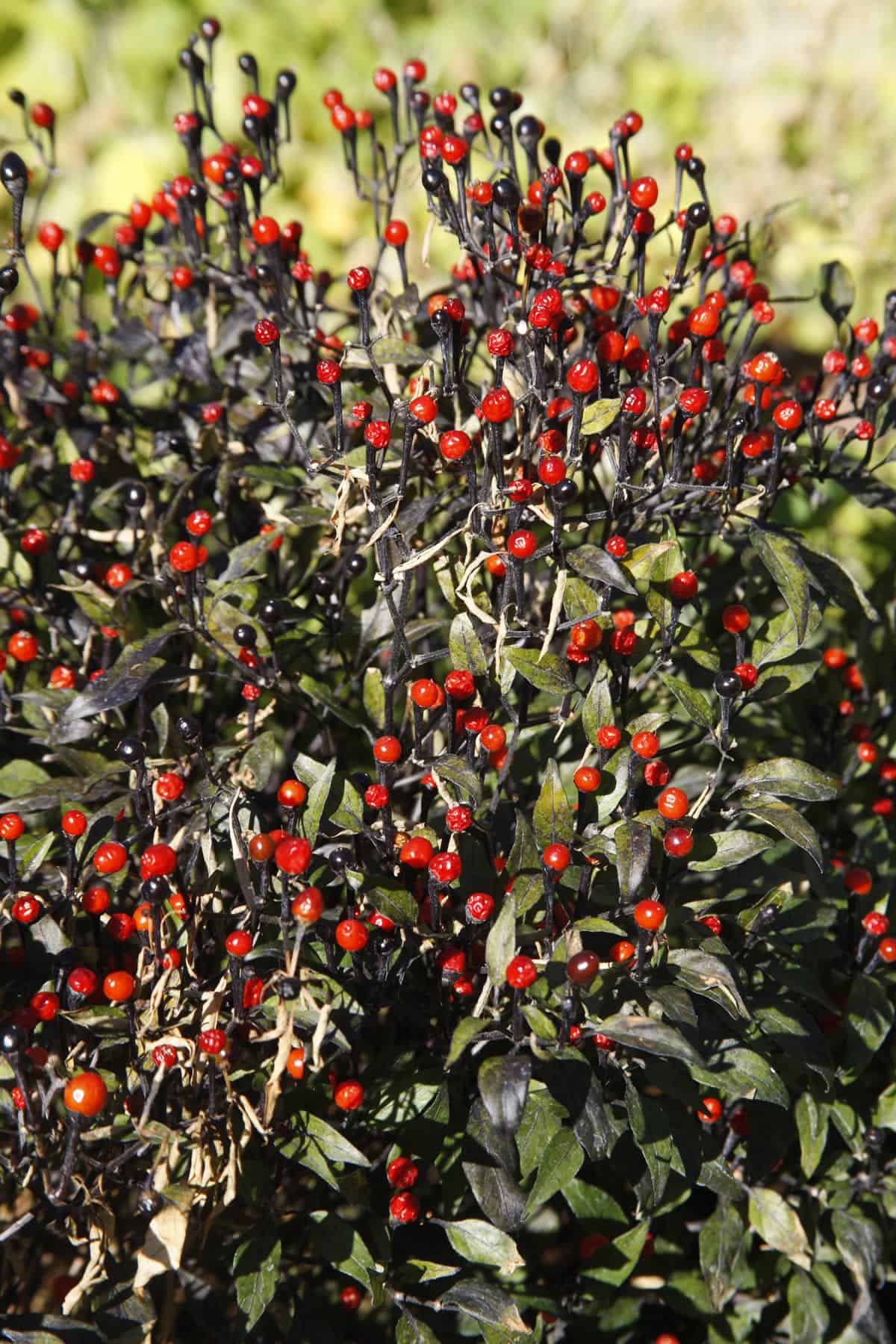
The Chiltepin pepper, "chile tepin", or "Chiltepine", is a tiny, round or oval shaped, red to orange-red chile, measuring about .8 cm in diameter. It has grown in the wild throughout much of Northern Mexico and Southern United States for generations, and there is much folklore and history involving the plant in the US/Mexico Borderland areas.
It is the only wild native chili pepper in the United States, sometimes referred to as "The Mother of All Peppers".
Efforts to grow the wild plants on farms have led to the development of the Chile Piquin, which is grown commercially in Mexico and Texas.
In fact, Texas named the chiltepin the state’s “official native pepper” in 1997.
They are also called “bird peppers” because they are eaten and spread by wild birds, or "bird's eye peppers" because of their size.
History of the Chiltepin
The pepper has been widely used as not only a food, but as a medicine (because of the capsaicin content), for generations, even rising to mythic status. Even today, many locals hold iconic rituals where families come together to harvest wild chiltepins through the mountainous region. You can collect quite a few during the wild harvest.
It is said no home should be without a collection of the dried pods. It is even used as a preservative for meats.
Chiltepin peppers are protected in the US in Coronado National Forest, Big Bend National Park and Organpipe Cactus National Monument.
It has a rich history in the Native American culture and remains highly significant today to not only the people of the Sonoran region, but to the United States. It is definitely worth exploring and enjoying if you're a chilihead or spicy food lover.
How Hot is the Chiltepin Pepper?
The Chiltepin is quite hot, and in Mexico, the heat of the pepper is considered “arrebatado” which means “rapid” or “violent” because the intense heat is not long lasting, unlike many chili peppers that have a slower and more enduring effect.
The heat measures up to 100,000 Scoville Heat Units on the Scoville Scale, which is quite hot. Compare that to an average jalapeno pepper, which averages about 5,000 Scoville Heat Units, making the pepper up to 20 times hotter than a jalapeno.
A serrano pepper measures up to 23,000 SHU, so the Chiltepin can be more than 4 times hotter.
However, a chemical study made in 2015 measured these peppers at a range of 50,000 - 1,628,000 SHU, which would place them in the realm of the superhot chili peppers.
Eating Chiltepin Peppers
Chiltepin peppers are often dried and crushed for spices and seasoning, and used in soups, stews and bean dishes. The pepper has a distinctively smoky flavor. Sun-dried chiltepins is a favorite way to dehydrate them.
The green fruit can also be used in salsas to bring in a nice level of heat, or are sometimes pickled with other ingredients and spices for a relish-like condiment that can accompany any number of dishes.
They're also great for making hot sauce from them, though admittedly, you'll need a lot of them.
The peppers are a big part of Sonoran cuisine, as they are native to the area.
How to Dry Chiltepin Peppers
You can easily dry these peppers with a dehydrator by cleaning them, then drying them whole on dehydrator sheets in your dehydrator at 135-140 degrees F. You can also dry them in an oven if your temperatures can go that low.
Dry them whole, or you can attempt to sun dry them in the open air, but beware of moisture in the air. Otherwise, the peppers will rot.
Where Can You Buy Chiltepin Peppers?
You can usually purchase the dried pods online, or purchase seeds through online resources for growing in your own garden. Here are a couple affiliate links to help get you started.
Have any questions? Contact me anytime! Happy to help you learn more. -- Mike H.
NOTE: This post was updated on 12/22/20 to include new information. It was originally published on 10/3/13.
Brian says
I just picked 2 cups worth of the Chiltepins off the bushes in my backyard, how do I store them or should I dehydrate them right away?
Mike Hultquist says
I have information here on how to store peppers, Brian: https://www.chilipeppermadness.com/preserving-chili-peppers/how-to-store-peppers/. You can refrigerate for a bit, but they're small and rot more quickly. You might freeze or start dehydrating in small batches.
Brian says
I'm in New Braunfels and discovered them in a corner of my backyard, is there a way to harvest them other than picking them off one at a time? I must have about a dozen plants about 3' high.
Mike Hultquist says
Hi, Brian. I don't know of any other way to harvest than to pick them off. You can try shaking it, but that probably won't do a lot. I'm not sure if others have had a different experience.
Brian says
Thanks. I thought of cutting the plant near the base and letting them dry out wrap them in a sheet and shake the hell out of it and see if that works.
Paul says
You might try a cranberry harvesting tool, you can probably make one.
Sam R Keller says
I was introduced to this little gem while visiting the Alamo back in 1963. We were walking through the garden area, when we noticed an elderly man picking small red fruit from small plants. I asked him what they were, and he replied "These are 'topics, very hot and very flavorful. 1 pepper will flavor a whole hotdog. " So my dad picked several and put them in the cellophane off a cigarette pack.
And that started me lifelong love of these little treats.
Mike Hultquist says
I love it. Thanks for sharing, Sam.
James Rodney Plummer says
What is the best way to help wild plants grow? Is there any fertilizer that is good to use to make them grow better?
Mike Hultquist says
I love fish emulsion for early growth!
Sherry says
Is the Chiltepin pepper plant a perinnial plant?
Mike Hultquist says
They are perennial plants, provided the roots don't freeze, which will kill the plants.
Jeffrey says
As I left Hermosillo in Sonoran Desert, I found a wonderful hand carved wooden chiltepin grinder. It was in the shape of an owl.
I grew a crop and they are looking great. Can't wait to cook some.
Mike Hultquist says
Nice!
Jessica Hanson says
Thanks for the info. I’m excited to have found your page. I worked in Guatemala for many years where I would regularly enjoy these spicy little peppers. Now stateside, I’m successfully growing my own chiltepe plants for the first time! I’m up north so I’m attempting to overwinter my plants inside.
JAMES PLUMMER says
U can put them in a bottle and fill the bottle with vinger and then use the juice as pepper sauce. When the vinger gets low just add more and enjoy. Here where I live in Texas we enjoy this on a daily bases.
Leslie says
I'm so glad to have found this article. My father-in-law has been growing this plant for years, and continues to propagate from plants passed down in his family. I didn't see this mentioned, but pickled chiltepin hot sauce (just peppers in vinegar) is the absolute best for sautéed greens. I can't eat mustard or turnip greens without it, no flavor. It's also terrific when you add a splash to your bowl of gumbo.
Michael Hultquist - Chili Pepper Madness says
Awesome, Leslie! Glad to hear it. Thanks for the input!
William says
Wow, they look amazing. Fresh or pickled I bet the are so good on a pizza
Merry Christmas everyone.
jimAND ROSE nashwinter says
ours are growing like trees?Blooming now as our habs. and ghost peppers?We are in so.east Ga.We have them in pots?So when cold we bring inside?It smells like a pepper factory?Use them in everything;I pop them in my mouth when eating a hamburger?Soooo gooddd
Michael Hultquist - Chili Pepper Madness says
Wonderful!
Paulina says
thanks so much. I have a 3 pound pork roast in the fridge! Thank you for emailing the brisket recipe. I am in SW Texas and brisket is a favorite treat. I will also experiment making chocolate baked treats with a touch of the pepper powder... which I will make from the red peppers.
Paulina says
This Thanksgiving, I found 3 volunteer chiltepin plants with both green and red peppers. I will definitely try your salsa recipes. I love to slow cook roasts (beef, pork) on the stove in large cast iron pots. Can I make a few pockets in a 3 pound pork roast and put one green chiltepin pepper in each pocket? the roast will slow cook on the stove for 4 hours. Will the pork meat be seasoned nicely or will the meat be too hot (pepper hot) to eat?
Michael Hultquist - Chili Pepper Madness says
Absolutely, Paulina. Sounds wonderful, actually! Enjoy the heat!
Brent DeDear says
I have a plant that has done extremely well this year. It is currently covered in green peppers. It is now October 4th. How long does it take the peppers to turn red?
Michael Hultquist - Chili Pepper Madness says
Brent, ripening times can vary but they should ripen up soon, I believe. If they don't before the coming frost, you'll need to pick them as-is.