



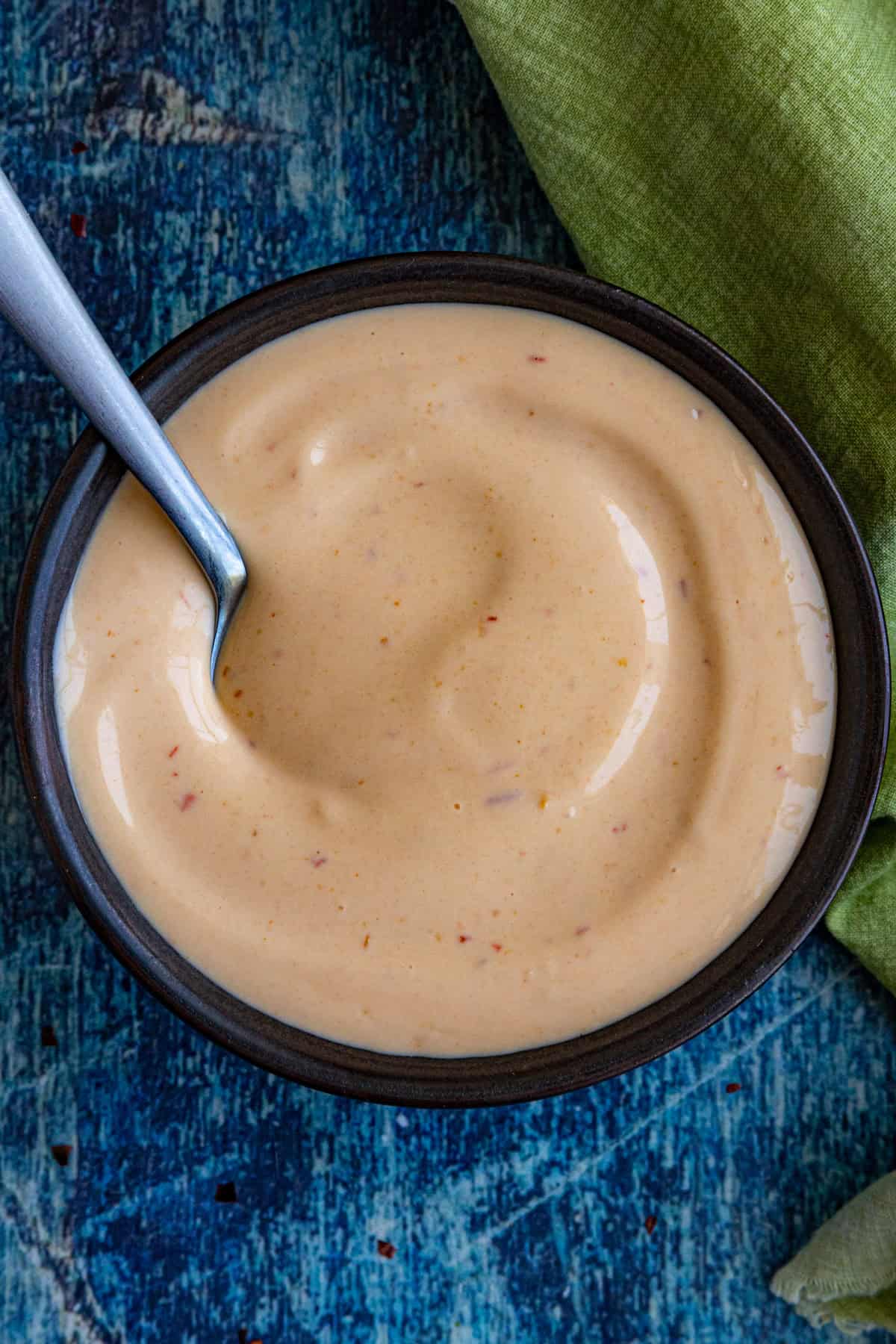
Spicy mayo takes 5 minutes and four ingredients. This is the sushi restaurant version with Kewpie mayo, sriracha, sesame oil and lime juice. Better than anything from a bottle.
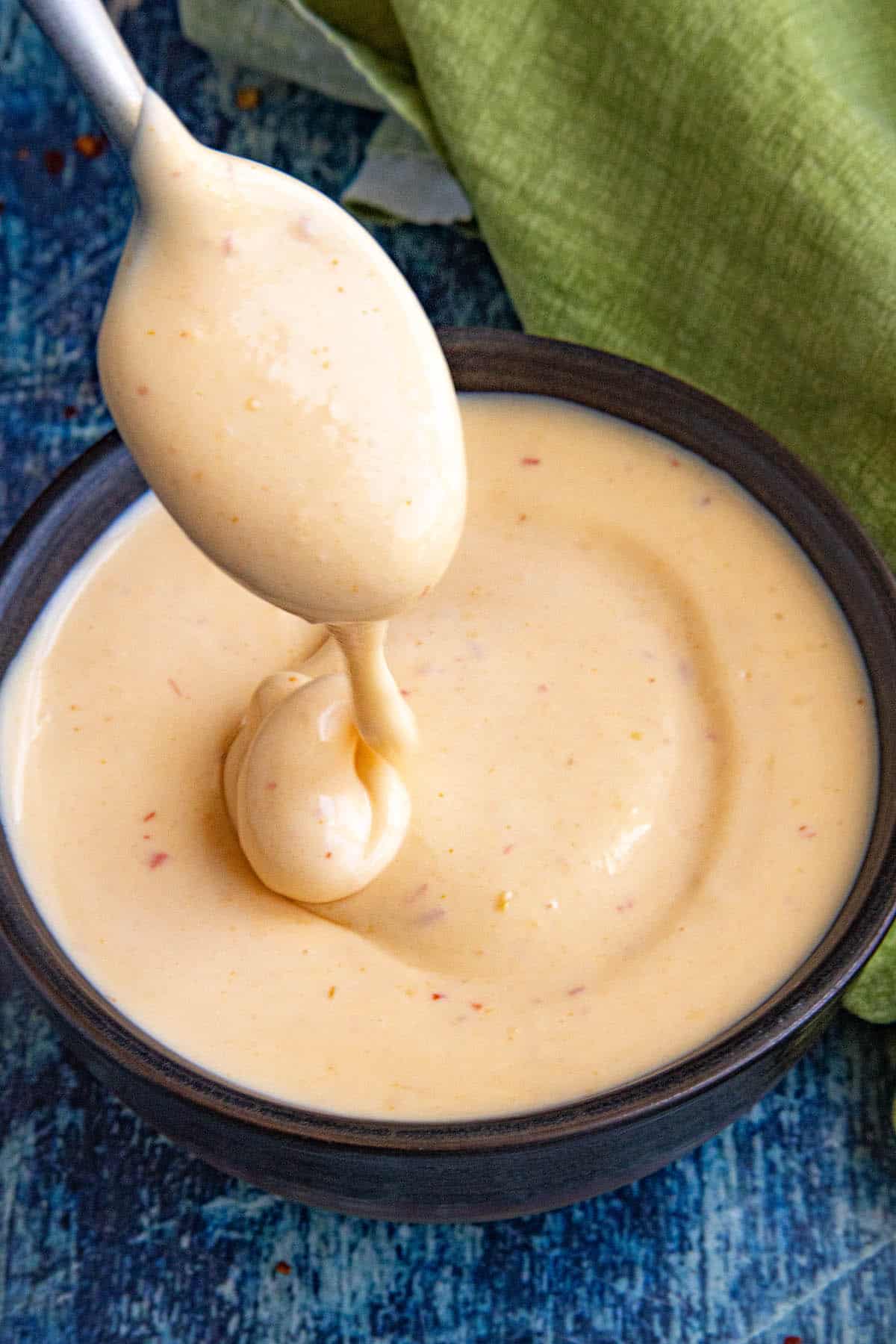
Spicy mayo is one of those sauces that belongs in everyone's refrigerator. It takes about 5 minutes to make, uses ingredients you probably already have, and makes everything it touches taste better. Once you start making it at home, you'll stop buying the bottled stuff for good.
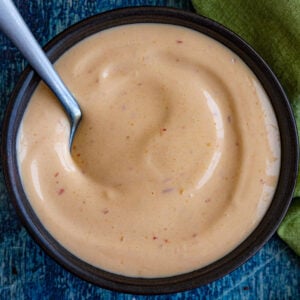
This is the sushi restaurant version, made with Kewpie mayo, sriracha, a little sesame oil, and a splash of lime juice. Rich, creamy, and just spicy enough. I'll also show you how to customize it to your own taste and when to reach for one of the many variations.
What Is Spicy Mayo?
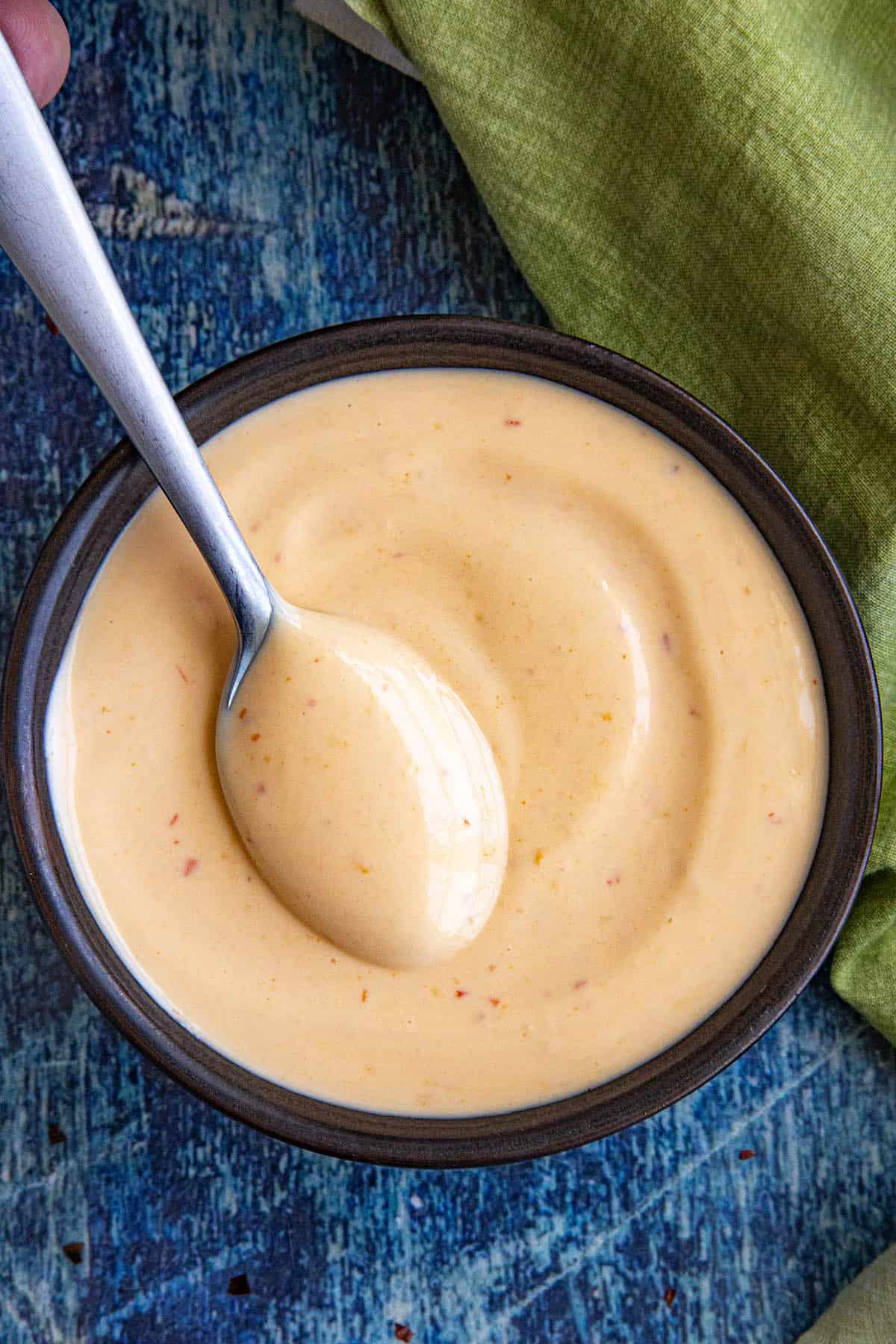
Spicy mayo is a creamy sauce made from mayonnaise and a hot sauce or chili paste. That's the core of it. What separates a great spicy mayo from a mediocre one is the quality of your mayo, the heat source you choose, and the small finishing touches that round out the flavor.
The version most people know comes from Japanese-American sushi restaurants, where it's drizzled over rolls, spooned onto poke bowls, and used as a dipping sauce. It typically uses Japanese Kewpie mayo and sriracha. That's the style I'm making here.
Ingredients
The full ingredients list with measurements is listed in the printable recipe card at the bottom of the post.
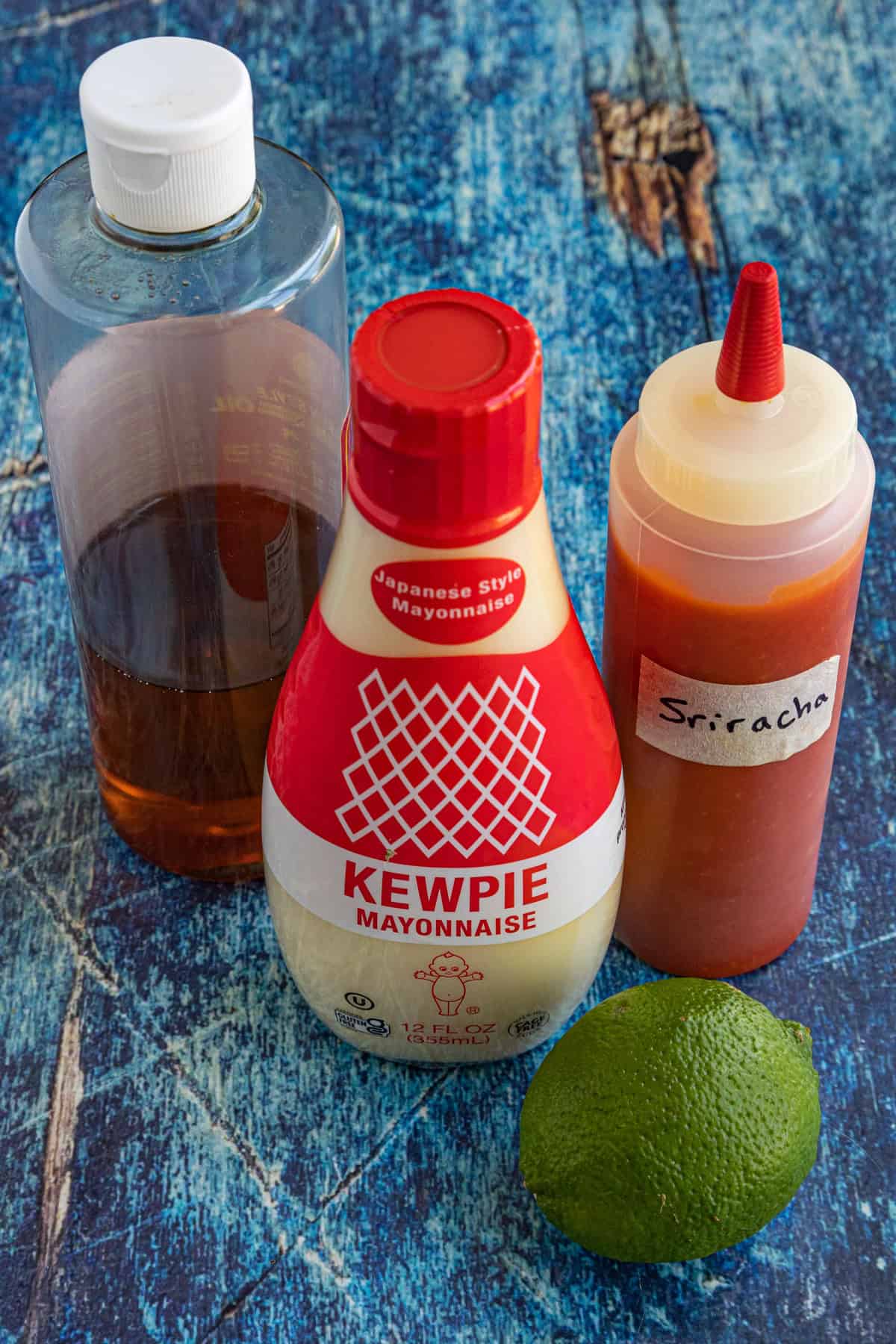
- Kewpie mayonnaise. This is the key ingredient for the sushi-bar version. Kewpie is made with egg yolks instead of whole eggs, which makes it richer and slightly tangier than regular American mayo. It also has a touch of MSG, which adds a savory quality you'll notice right away. You can find it at Asian grocery stores, most Walmart locations, or online. If you can't get Kewpie, Duke's Mayo is my next choice, which is also made with egg yolks. Regular mayo works. Just add a little extra lime juice to compensate for the milder flavor.
- Sriracha. Sriracha is the classic for this style. It gives you a clean heat with a little garlic sweetness. The recipe is flexible. Swap in any hot sauce you prefer and the ratio stays the same. Try it with my homemade sriracha recipe.
- Toasted sesame oil. Just half a teaspoon, but it matters. Toasted sesame oil adds nutty notes that make this taste like restaurant spicy mayo instead of something thrown together at home. The toasted version has much more flavor than plain.
- Fresh lime juice. One teaspoon makes the condiment pop without making it taste citrusy. Fresh only. Bottled lime juice tastes flat generally.
How to Make Spicy Mayo
All you need is a small bowl and a spoon. That's it.
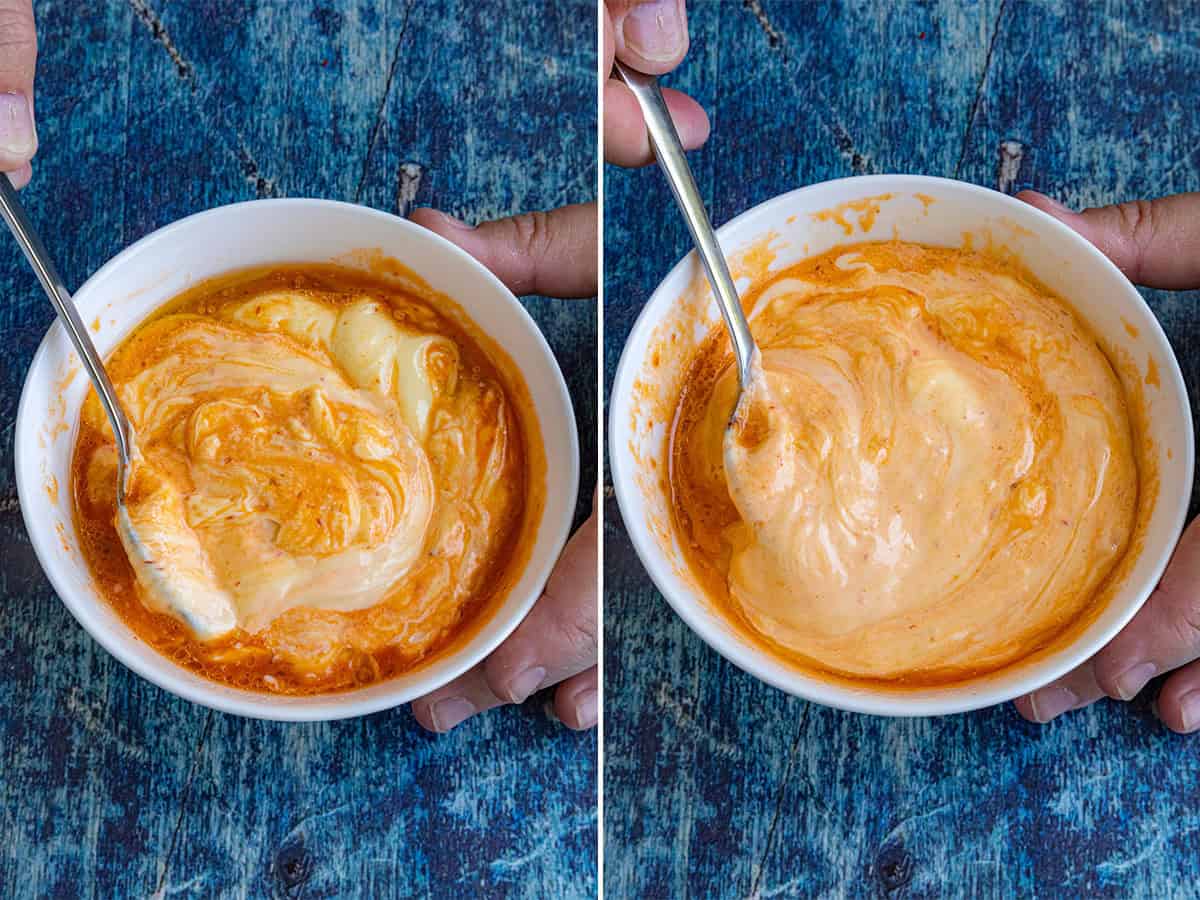
Add the Kewpie mayo, sriracha, sesame oil, and lime juice to the bowl. Stir until smooth and fully combined. Taste and adjust from there. More sriracha for heat, more lime juice for the acidic pop, a touch more sesame oil for nuttiness.
Done in 5 minutes.
Recipe Tips & Notes
- Go easy on the sesame oil. Half a teaspoon is the right amount for this recipe. Too much and it overpowers everything else, unless you really like the flavor. Add it gradually if you're adjusting.
- Taste before you serve. Heat levels vary between hot sauce brands and even between bottles. Always taste and adjust before you serve it to others.
- Make a bigger batch. The recipe scales easily. A full cup of mayo with proportional adjustments keeps for a week in the fridge and is worth having on hand. I do this constantly.
- For less heat, add more mayo. Don't dilute with water or acid, just add more mayo a tablespoon at a time until it's where you want it.
Spicy Mayo Variations
The base recipe is the starting point. The biggest variable is your heat source. Sriracha gives you a clean, garlicky heat. Chipotle gives you smoke. Gochujang gives you fermented funk. Swap the chili element and you get a completely different sauce. There are so many ways to spin this.
A few directions worth exploring:
- Sriracha Mayo. My full sriracha mayo recipe takes this version even further, with garlic and lemon for a creamier, more versatile all-purpose sauce. If sriracha is your go-to, that's the one to bookmark.
- Chipotle Mayo. Smoky, slightly sweet, with Tex-Mex vibes. Great on burgers, tacos, and anything grilled. Created around chipotle peppers in adobo instead of sriracha. See my Chipotle Mayo recipe for more info.
- Samurai Sauce. The Belgian original. This is the spicy mayo served with frites at Belgian fry shops, definitely worth knowing about. See my Samurai Sauce recipe to learn more.
Spicy Mayo vs. Spicy Aioli
People use these terms interchangeably, but they're not the same thing.
Spicy mayo is mayonnaise-based. The emulsification is done for you, you're seasoning a finished product.
Traditional aioli is an emulsion of egg yolk and olive oil, whisked together until thick and creamy, sometimes finished with a little lemon. It's essentially a homemade garlic mayonnaise - richer, more intensely flavored, and more labor-intensive. The real distinction between spicy mayo and spicy aioli isn't the technique, it's the garlic. Aioli focuses on garlic as its primary flavor. Spicy mayo is not.
If you want something more intensely garlicky, my aioli recipes go in that direction:
- Sriracha Aioli. Garlic-forward and sriracha-spiked, with a more Mediterranean spin.
- Chipotle Aioli. Smoky and rich, with just the right amount of chipotle heat and tanginess.
If you want fast, creamy, and flexible, spicy mayo is the one to reach for.
How to Use Spicy Mayo
Spicy mayo goes with almost anything. Here's where it really shines.
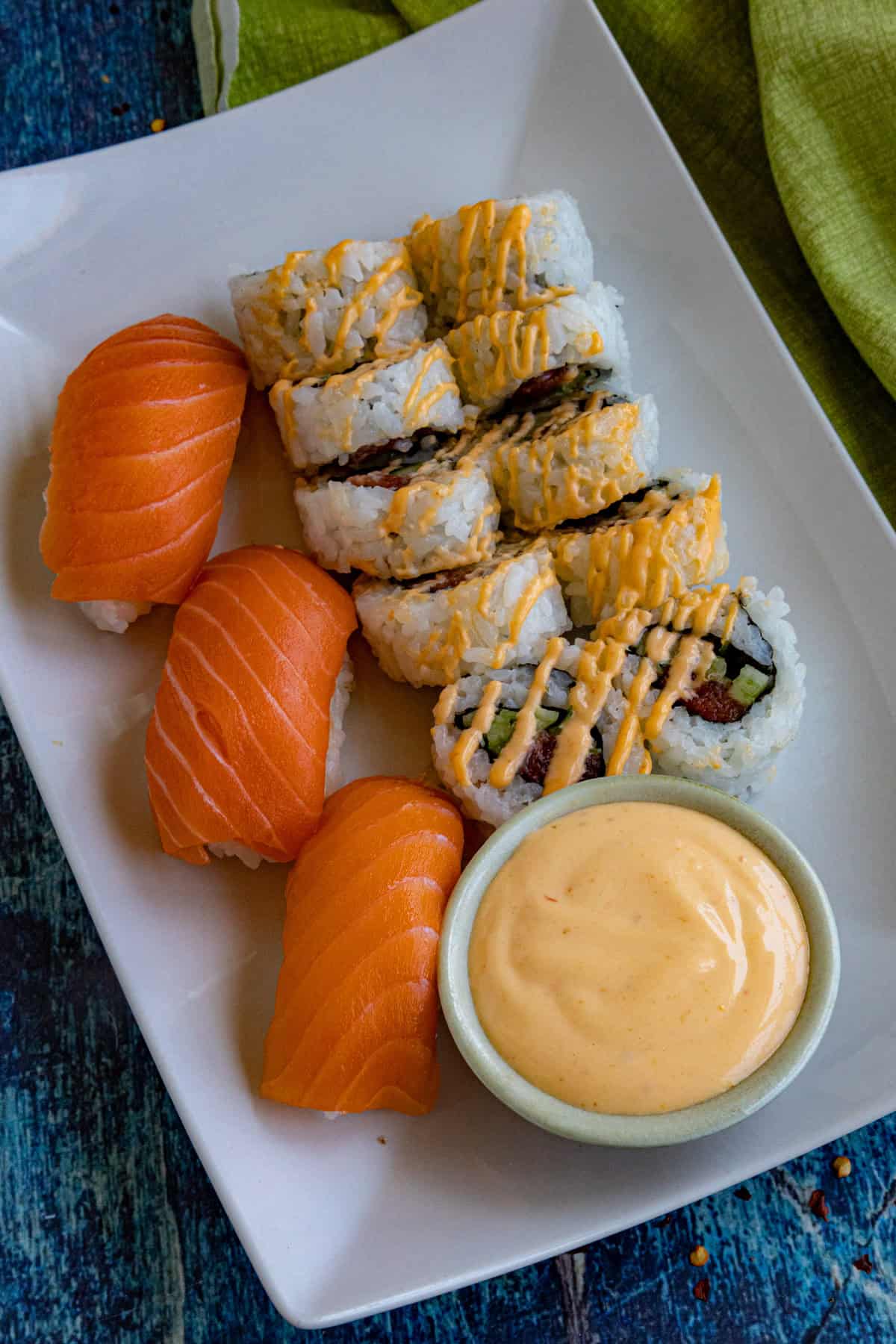
- Sushi and poke. This is where most people first try it, and it's still the best use. Drizzle it over sushi rolls, stir it into a poke bowl, or use it as a dipping sauce on the side.
- Burgers and sandwiches. Spread it on the bun in place of regular mayo. It works especially well on fish sandwiches, chicken sandwiches, and anything with avocado.
- Tacos. Drizzle it over fish tacos, Baja fish tacos, shrimp tacos, or any taco that wants a creamy-spicy finish.
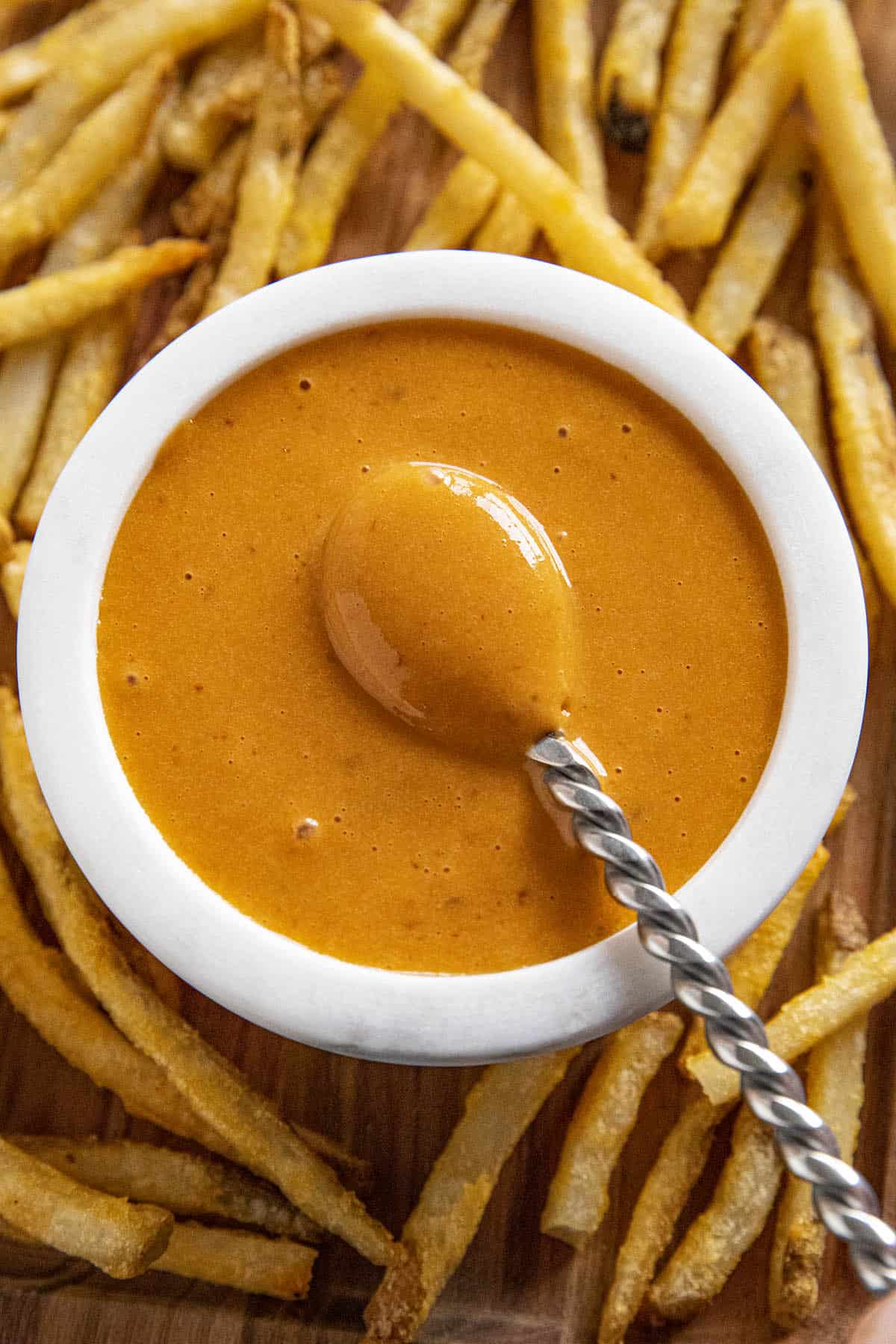
- Fries and dipping. Sweet potato fries, regular fries, onion rings, fried shrimp, spicy mayo does it all. See also my Spicy Fry Sauce for a version made specifically for dipping.
- Wings. Drizzle it over baked or fried wings instead of traditional hot sauce. Richer, creamier, still plenty spicy.
- Grain and rice bowls. A spoonful stirred in ties everything together fast.
- Eggs. On scrambled eggs, fried eggs, or in deviled eggs. It works better than you'd expect.
How to Store Spicy Mayo
Store it in an airtight container in the refrigerator for up to one week. Give it a quick stir before using if it separates slightly.
Don't freeze it. Mayo-based sauces separate when frozen and turn grainy when thawed.
That's it, my friends. I hope you enjoy this spicy mayo recipe and all the possible variations. Let me know if you make it. I'd love to hear how you made it your own.
Get FLAVOR MADNESS - The Cookbook!
Have you seen my new cookbook FLAVOR MADNESS? Big Flavor Recipes! You absolutely can't miss it. Check it out!
Got any questions? Ask away! I’m happy to help. If you enjoy this recipe, I hope you’ll leave a comment with some STARS. Also, please share it on social media. Don’t forget to tag us at #ChiliPepperMadness. I’ll be sure to share! Thanks! — Mike H.
Spicy Mayo Recipe
Ingredients
- 1/2 cup Kewpie mayonnaise or regular mayo
- 1 tablespoon sriracha or your preferred hot sauce
- 1 teaspoon fresh lime juice
- 1/2 teaspoon toasted sesame oil
- Pinch of salt or to taste
Instructions
- Add the Kewpie mayo (or regular mayo), sriracha, lime juice, toasted sesame oil, and salt to a small bowl. Stir until smooth and fully combined.
- Taste and adjust to your liking. Add more hot sauce for heat, more lime juice for brightness, or a touch more sesame oil for nuttiness. NOTE: If using regular mayo instead of Kewpie, add a small extra squeeze of lime juice to help compensate for the milder flavor.
- Use immediately or transfer to an airtight container. Keeps in the refrigerator for up to 1 week.
Notes
- Mayo. Kewpie is the best for this recipe. It's richer, slightly tangy, made with egg yolks, and it's what gives sushi restaurant spicy mayo its distinct flavor. Duke's mayo is the next best thing. Regular mayo works fine if that's what you have.
- Spicy Element. Sriracha is the classic for this style, but swap in any hot sauce and the ratio stays the same.
- Sesame oil. Use toasted sesame oil, not plain. The toasted version is what adds that nutty, savory depth. A little goes a long way. Don't skip it.
- Scaling. Doubles or triples easily. Make a bigger batch and keep it in the fridge all week.
Nutrition Information
FAQs
It's creamy, slightly tangy, with a mild heat that builds as you eat. The Kewpie version is richer than regular mayo. The sesame oil adds a nutty background note. It's more complex than a 4-ingredient sauce has any right to be.
No. Yum yum sauce is a different Japanese-American sauce from hibachi restaurants. It uses tomato paste or ketchup, butter, garlic, and paprika - sweeter and milder than spicy mayo. I have a full Yum Yum Sauce recipe here.
Yes. Any hot sauce works. Tabasco, Frank's, gochujang, sambal oelek, or a finely minced fresh chili. The ratio stays the same. The flavor changes with whatever you use.
Kewpie for the sushi-style version, no contest. Duke's Mayo is my next choice. For a more all-purpose sauce with more acid and garlic, regular mayo is great. My sriracha mayo recipe uses regular mayo and it's a completely different but excellent result.
Add more mayo a tablespoon at a time until the heat level is where you want it. It dilutes the heat without throwing off the rest of the sauce.
Up to one week refrigerated in an airtight container.
Most of the time yes. Mayo and sriracha are typically gluten-free, but check your specific brands if you have a sensitivity.
Leave a Reply