



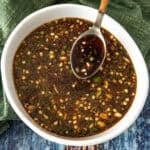
This homemade teriyaki marinade is sweet, savory, and made with a spicy kick that sets it apart from every store-bought bottle. Ready in 5 minutes, perfect for chicken, steak, shrimp, salmon, and more.
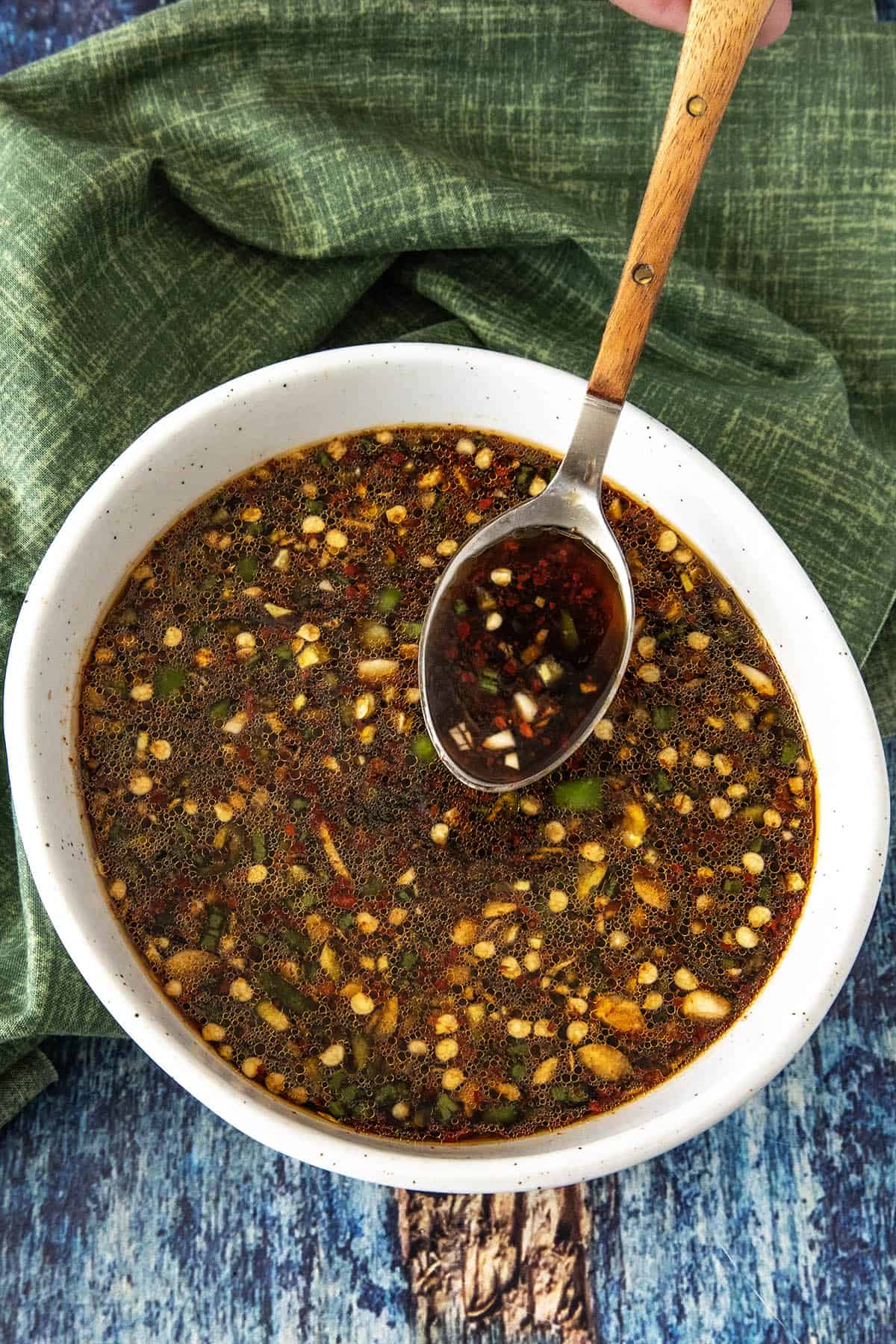
If you've ever shaken a bottle of store-bought teriyaki marinade and thought "it's fine, but it's missing something," this recipe is for you. This homemade teriyaki marinade comes together in about 5 minutes, uses fresh ingredients you probably already have, and has a sweet-and-spicy depth that no bottle on a shelf is going to match.
Most teriyaki marinades you'll find online are built for speed: five ingredients, five minutes, done. They're fine, but fine isn't why you're here. This one takes the same five minutes and adds fresh jalapeño, green onion, real ginger, garlic, and chili flakes to build layers of flavor that a stripped-down recipe simply can't match. Sweet, savory, spicy, and deep, this is what teriyaki marinade is supposed to taste like.
Use it on chicken, pork, steak, shrimp, or salmon. Use it as a dipping sauce. Marinate overnight or throw it together 30 minutes before dinner. It works every time.
Why You'll Love This Recipe
- Ready in 5 minutes with pantry and fridge staples
- Genuinely spicy and sweet, not just a little bit of heat, but adjustable to your level
- Better flavor depth than store-bought thanks to fresh ginger, garlic, and jalapeño
- Works as both a marinade AND a sauce (see below)
- Easy to make gluten-free with one simple swap
Teriyaki Marinade Ingredients
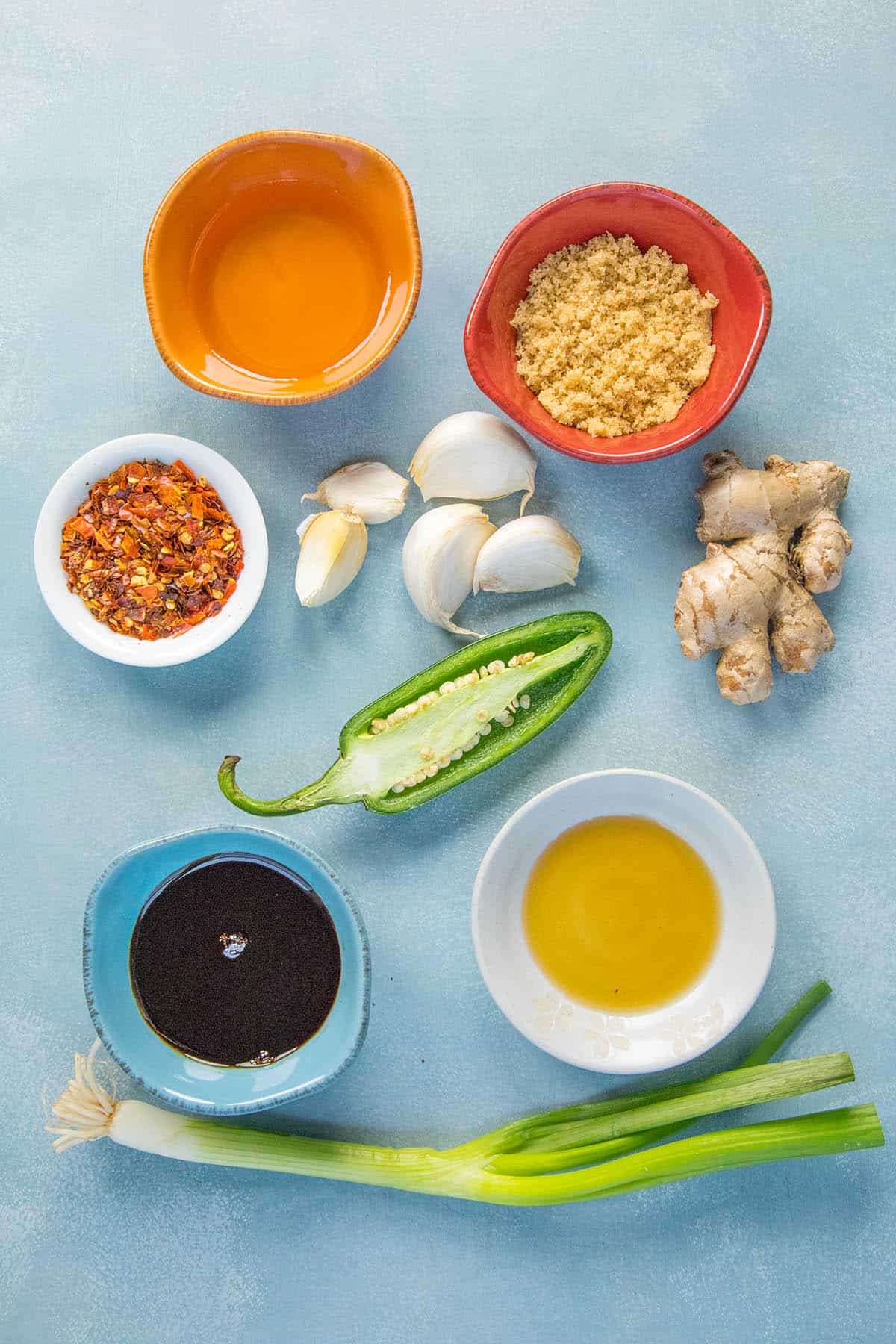
Here's what you need to make this:
- Soy sauce. The backbone of any teriyaki. Use low-sodium if you prefer to control the salt level. Swap in tamari or coconut aminos for a gluten-free version.
- Water. For thinning the marinade to coat everything evenly.
- Brown sugar. For sweetness, but also helps with caramelization when you cook.
- Honey. Optional, but it does adds a nice floral sweetness on top of the sugar. Definitely recommended.
- Green onion. For a fresh flavor pop.
- Garlic. Fresh minced garlic only, not powder. You'll taste the difference.
- Fresh ginger. Same deal. Fresh ginger has a bright flavor that the powdered stuff doesn't quite match. However, if you only have ground ginger, use about 1/4 teaspoon in place of 1 teaspoon fresh.
- Sesame oil. A little goes a long way. This adds that nutty, toasty flavor that makes teriyaki what it is.
- Rice vinegar. Acidity to balance the sweetness.
- Jalapeño pepper. Fresh, chopped, for the spicy version. Core it out if you want less heat. Skip it entirely if you want no heat.
- Chili flakes. The second layer of spice, more of a slow burn than the fresh jalapeño. Skip if you don't want extra heat.
Gluten-free note: To make this gluten-free, swap the soy sauce for tamari (same amount, same flavor) or use coconut aminos. Coconut aminos are sweeter and less salty, so you may want to reduce the brown sugar slightly and taste as you go.
How to Make Teriyaki Marinade
This is a one-bowl recipe. No cooking required.
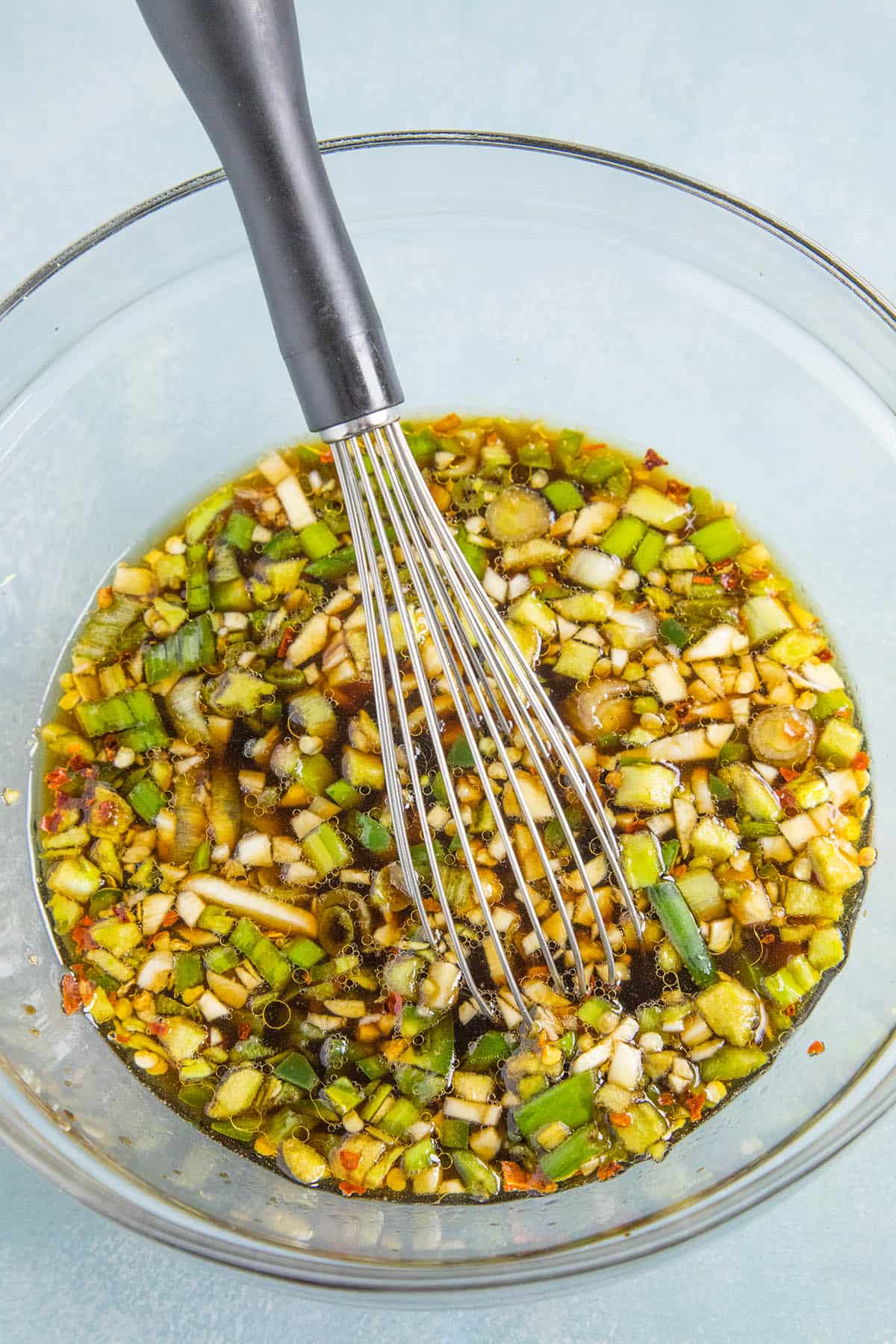
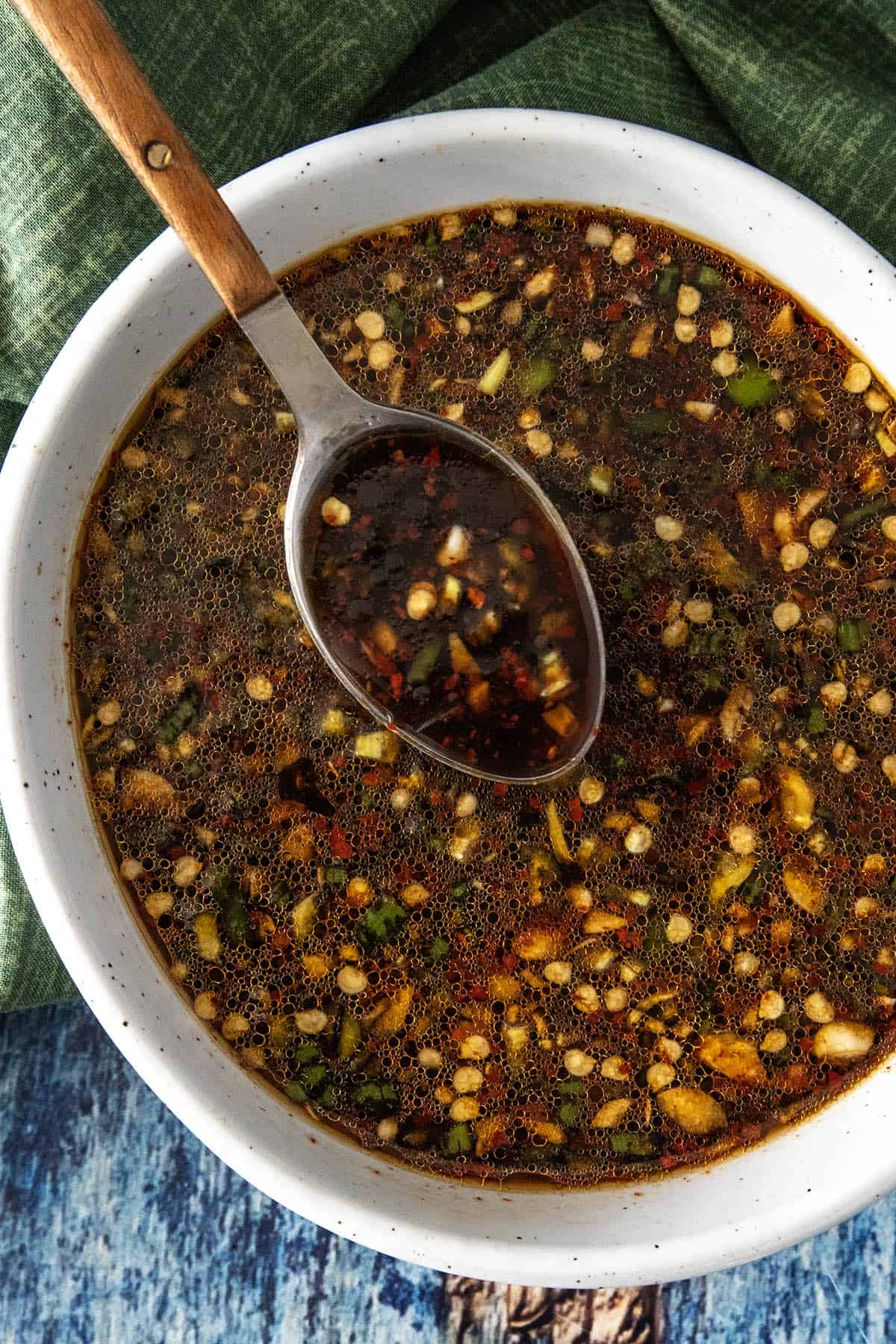
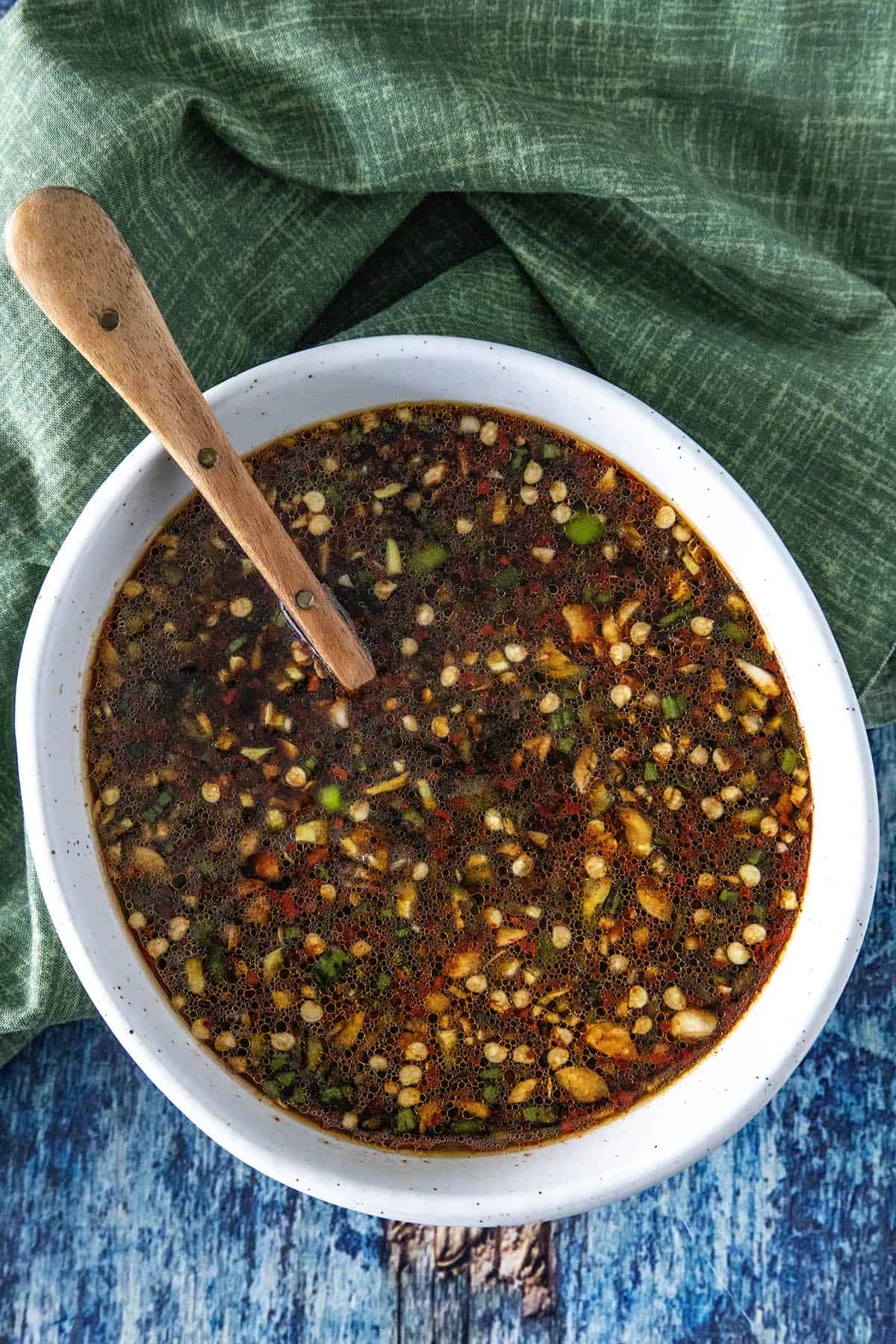
Step 1: Combine everything. Add all of the ingredients to a large bowl - soy sauce, water, brown sugar, honey, green onion, garlic, ginger, jalapeño, chili flakes, sesame oil, and vinegar. Whisk until the sugar dissolves and everything is well combined.
Step 2: Marinate. Submerge your protein or vegetables completely in the marinade, or add everything to a zip-lock bag and seal it. Marinate in the refrigerator until you're ready to cook. See below for exact timing by protein.
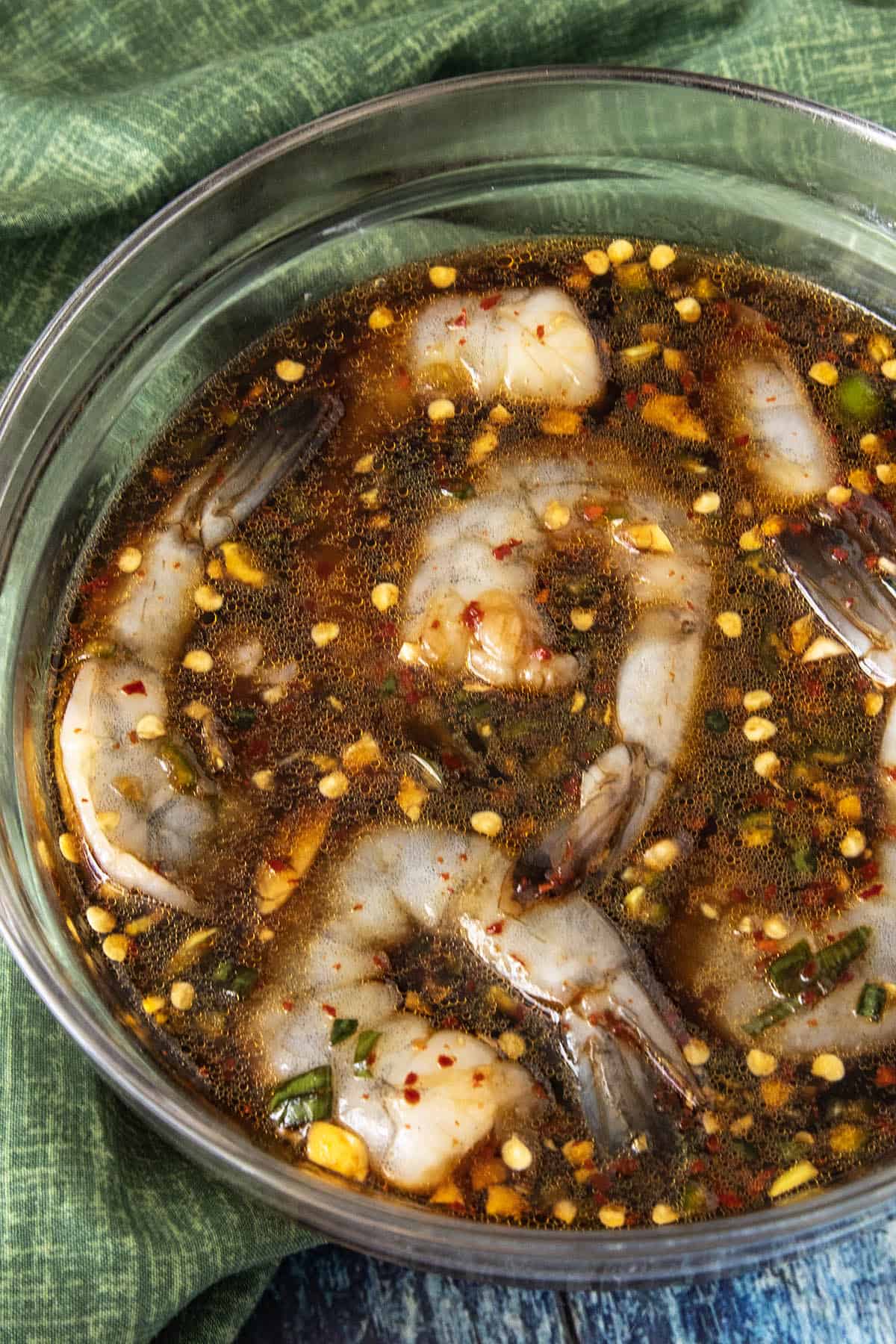
That's it. The marinade is ready to use immediately, or you can make it ahead and refrigerate it for up to 5 days before using.
How to Turn This Into a Teriyaki Sauce
The same ingredients make a great sauce, too.
Here's how to do it:
- Mix 2 teaspoons of cornstarch into 1/4 cup of cold water until dissolved.
- Whisk all of the marinade ingredients together in a small saucepan.
- Heat over medium, then stir in the cornstarch mixture.
- Simmer, stirring, for 3 to 4 minutes until the sauce thickens.
- Use it to drizzle over grilled chicken, pork chops, shrimp, or as a dipping sauce.
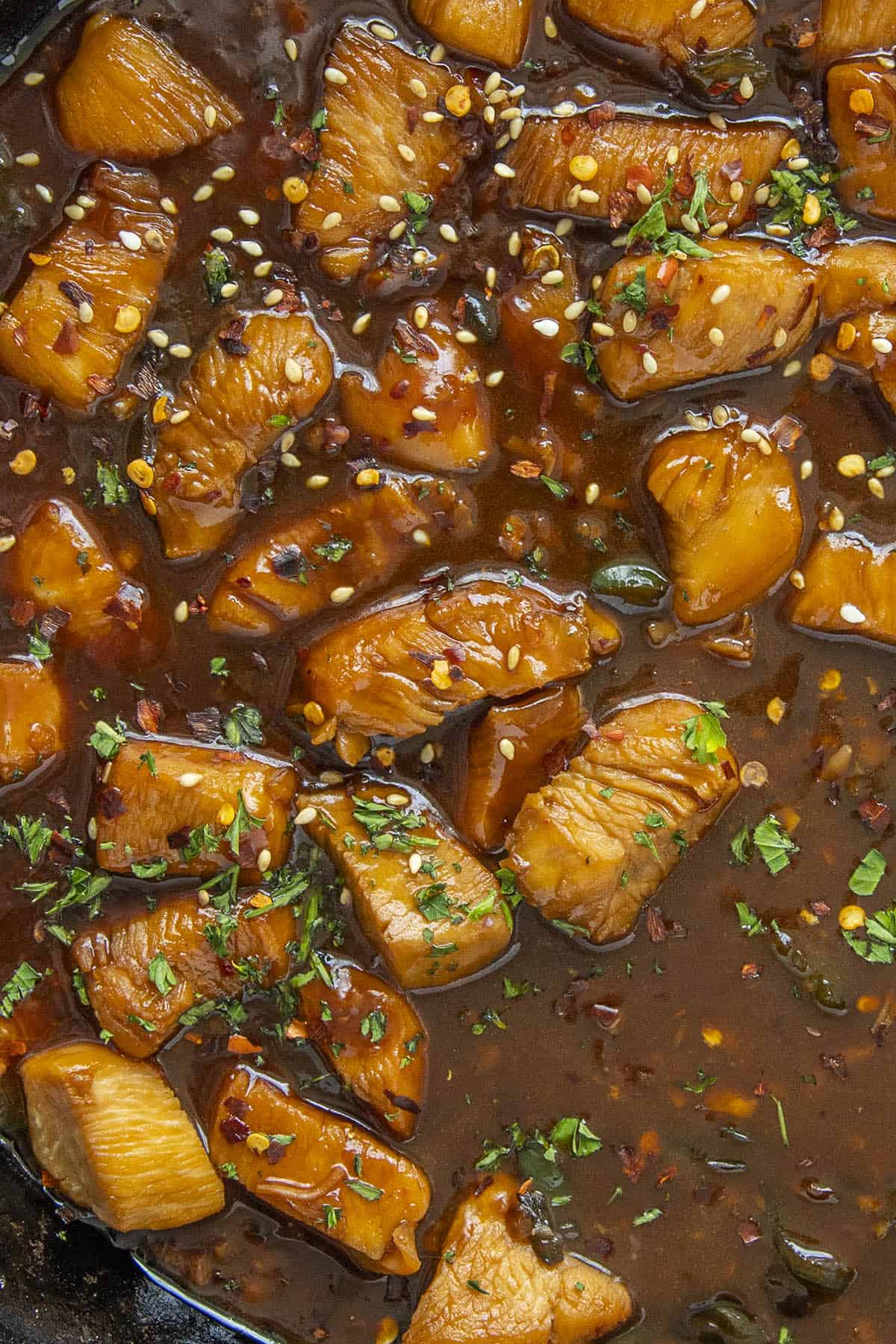
The sauce is also great for stir fry. Just add it at the end and toss everything together. I also like to strain out the onion, pepper, and ginger bits if I want a smoother sauce, but leave them in for the marinade where the texture doesn't matter.
See my Sweet and Spicy Teriyaki Sauce Recipe for a printable recipe and ways to use it, like my Sweet & Spicy Teriyaki Chicken Recipe.
The Spicy Factor - How Hot Is It, and How to Adjust
This is where this teriyaki marinade separates itself from the rest. The combination of fresh jalapeño and chili flakes gives it a real kick, not overpowering, but definitely there. Here's how to dial it up or down.
As written: Medium heat. The heat is noticeable but totally approachable for most people who enjoy spicy food.
To reduce the heat:
- Core out the jalapeño before chopping to remove most of the seeds and membrane, where the majority of the capsaicin lives.
- Cut the chili flakes in half or skip them entirely.
- Or skip the jalapeño altogether and use just a small pinch of chili flakes for a mild warmth.
To increase the heat:
- Swap the jalapeño for a hotter serrano pepper. Serranos bring a sharper, cleaner heat.
- Go with a habanero or scotch bonnet if you want serious heat with a fruity undertone. These are many times hotter than a jalapeño, so start with half a pepper and taste.
- Ghost peppers and beyond. Yes, you can go there. A small piece of ghost pepper (or a pinch of ghost pepper powder) will get your attention. If you're a chilihead, you know what you're doing here.
- Double the chili flakes for more of that slow background heat without changing the fresh pepper flavor.
For more on working with heat levels, check out my guide to chili pepper heat levels.
HOW LONG SHOULD YOU MARINATE?
Marinating time depends on the protein. Here's a quick reference:
- Chicken (breast, thighs): 2 hours minimum, 6 to 12 hours ideal, up to 24 hours
- Pork (chops, loin, tenderloin): 2 hours minimum, 6 to 12 hours ideal, up to 24 hours
- Beef (steak, flank, skirt): 1 hour minimum, 4 to 8 hours ideal, up to 12 hours
- Salmon: 15 minutes minimum, 30 minutes ideal, 1 hour maximum
- Shrimp: 15 minutes minimum, 20 to 30 minutes ideal, 45 minutes maximum
- Vegetables: 30 minutes minimum, 1 to 2 hours ideal, up to 4 hours
A few things to keep in mind:
Chicken and pork benefit from a longer marinate. Overnight in the fridge gives you the most flavor penetration, especially for thicker cuts. Just don't go past 24 hours or the texture can start to break down.
For fish and shrimp, the acidity in the marinade will start to chemically "cook" the protein if you leave it too long, which ruins the texture. 30 minutes is the sweet spot for salmon. For shrimp, check on them at 20 minutes.
For beef, it depends on the cut. Thin cuts like flank or skirt steak only need an hour or two. A thicker ribeye or sirloin benefits from longer.
Variations and Swaps
Use pineapple juice instead of water. This adds a tropical sweetness and extra acidity that works great with chicken and pork. Just don't overdo it. Too much fresh pineapple juice and the enzyme bromelain starts to break down the protein fibers, especially with longer marinating times. This is not an issue with canned pineapple juice.
Add a splash of mirin. If you want a more traditionally Japanese flavor, swap the rice vinegar for an equal amount of mirin, a sweet Japanese rice wine. It is softer, sweeter, and a touch less acidic.
Make it smoky. Add 1/2 teaspoon of smoked paprika or a dash of liquid smoke for a grilled-and-smoky flavor before it even hits the grill.
Storage
Leftover marinade (unused, not the kind that's been sitting with raw meat) keeps well in an airtight container in the refrigerator for up to 1 to 2 weeks. Make a big batch and keep it on hand through grilling season.
If you've used the marinade with raw meat, you can still convert it to a sauce. Just bring it to a full boil and simmer for the full 3 to 4 minutes first. Never use it uncooked.
Can I freeze teriyaki marinade? Yes. Pour it into a freezer-safe container or zip-lock bag and freeze for up to 3 months. Thaw in the refrigerator overnight before using.
Try These Marinades Next
If you love this one, here are a few more worth trying:
- Jerk Marinade - a very popular marinade on this site, and for good reason
- Carne Asada Marinade - punchy, citrus-forward, ready for the grill
- Flank Steak/Skirt Steak Marinade - makes the best flank steak and skirt steak when grilled
- Salmon Marinade
- BBQ Chicken Marinade
- Zingy Pork Chop Marinade
- Pork Tenderloin Marinade
- See all of my Spicy Marinade Recipes
If you make this recipe, please let us know! Leave a comment, rate it and tag a photo #ChiliPepperMadness on Instagram so we can take a look. I always love to see all of your spicy inspirations. Thanks! -- Mike H.
Teriyaki Marinade Recipe
Ingredients
- ½ cup soy sauce
- ½ cup water
- ¼ cup brown sugar
- 1 jalapeno pepper chopped
- 1-2 green onions chopped
- 2 teaspoons minced garlic
- 1 teaspoon minced fresh ginger
- 1 tablespoon chili flakes omit if you don't want extra spicy
- 1 tablespoon honey optional for extra sweet
- 1 teaspoon sesame oil
- 3 tablespoons rice vinegar
Instructions
- Whisk all of the ingredients together in a large bowl.
- For marinating, submerge your protein or vegetables completely in the marinade, or seal them with the marinade in a plastic bag. Marinate in the refrigerator until ready to cook.
Notes
Nutrition Information
Frequently Asked Questions
What is teriyaki marinade made of?
Classic teriyaki marinade is made with soy sauce, a sweetener (usually sugar or honey or both), fresh ginger, and garlic. Most versions also include sesame oil and some form of acidity. This version adds green onion, jalapeño, and chili flakes for more complexity and heat.
What's the difference between teriyaki marinade and teriyaki sauce?
The ingredients are essentially the same, though they are used differently. A marinade is used before cooking to flavor and tenderize the protein. A sauce is cooked, thickened (usually with cornstarch), and used after cooking as a glaze or drizzle. You can convert this marinade into a sauce. See the sauce section above.
Can I use this as a teriyaki dipping sauce?
Yes, but make it fresh. Don't use marinade that's already had raw meat in it. It makes a great gyoza dipping sauce.
Can I marinate chicken in teriyaki sauce overnight?
Yes, overnight (8 to 12 hours) is ideal for chicken. Just don't exceed 24 hours or the texture can start to soften too much from the acidity and salt.
Is teriyaki a Japanese or American dish?
Teriyaki as a cooking technique is Japanese. The word refers to the method of grilling or broiling with a sweet soy-based glaze. The version most Americans think of, with a heavier, sweeter marinade, evolved from Japanese immigrants in Hawaii and became what we know today as Hawaiian-style teriyaki.
NOTE: This recipe was updated on 4/21/26 to include new information, including FAQs and more.
Jonie says
Have you tried using this as a marinade for jerky?
Mike Hultquist says
Jonie, yes, I used it in my Spicy Dehydrator Cookbook (out of print now) and it works great. Skip the sesame oil, though, as oily foods do not dehydrate well. Enjoy!
Jeremy says
Simple, delicious, both as a marinade and a sauce. I am sure it would last for quite a while if we didn't devour it so quickly!
Mike Hultquist says
Yes!! Thanks, Jeremy! I appreciate it! Very happy you enjoyed it.
Marcy says
I am the world's biggest recipe tweaker. That being said, I am continually amazed at Mike's spot-on recipes. He nails the proportions of ingredients every time for every recipe. (Okay, okay, I used two jalapenos, but they were really small...)
Another go-to marinade. Thanks, Mike.
Mike Hultquist says
Haha, Boom! Glad you enjoyed it, Marcy! I appreciate the kind words. =) Thanks for sharing!
Jenny Rairigh says
This is our GO TO for marinating a flat iron steak or similar. Will have to try it with chicken. It is delicious!!
Mike Hultquist says
Awesome! Glad you like it, Jenny!
Tyler Robinson says
I don’t know what the creator of this recipe was thinking when creating this! OMG, so delicious, I marinate my chicken in this for a couple hours and throw it on the grill. I plan on trying it on my shrimp next. Thank you
Mike Hultquist says
Absolutely! So good, right? Glad you enjoyed it, Tyler. Very versatile.
Severina says
This is a great marinade! I used serrano peppers since they are more consistent heat wise than jalapenos and the spice level was perfect. I used this recipe to marinate large shell on shrimp, grilled them up and everyone was happy!
Mike Hultquist says
Glad you enjoyed it, Severina! I love this with shrimp. Having some tonight!
ChiliHead In Mexico says
Hola Mike,
I usually use my marinade to make it into a sauce after, I just add some more water, blend then cook down. As long as it comes up to food safe temps. I don't see any health hazards here. Even if starting with raw chicken.
Mike Hultquist says
Yep, many recipes are done this way.
Andrea says
Made it, loved it, making it again!
Michael Hultquist - Chili Pepper Madness says
Excellent!