


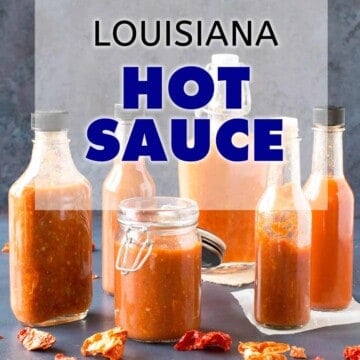
Learn how to make classic Louisiana hot sauce at home, either with fresh or fermented chili peppers. Louisiana style hot sauce is the best, and so easy to make!
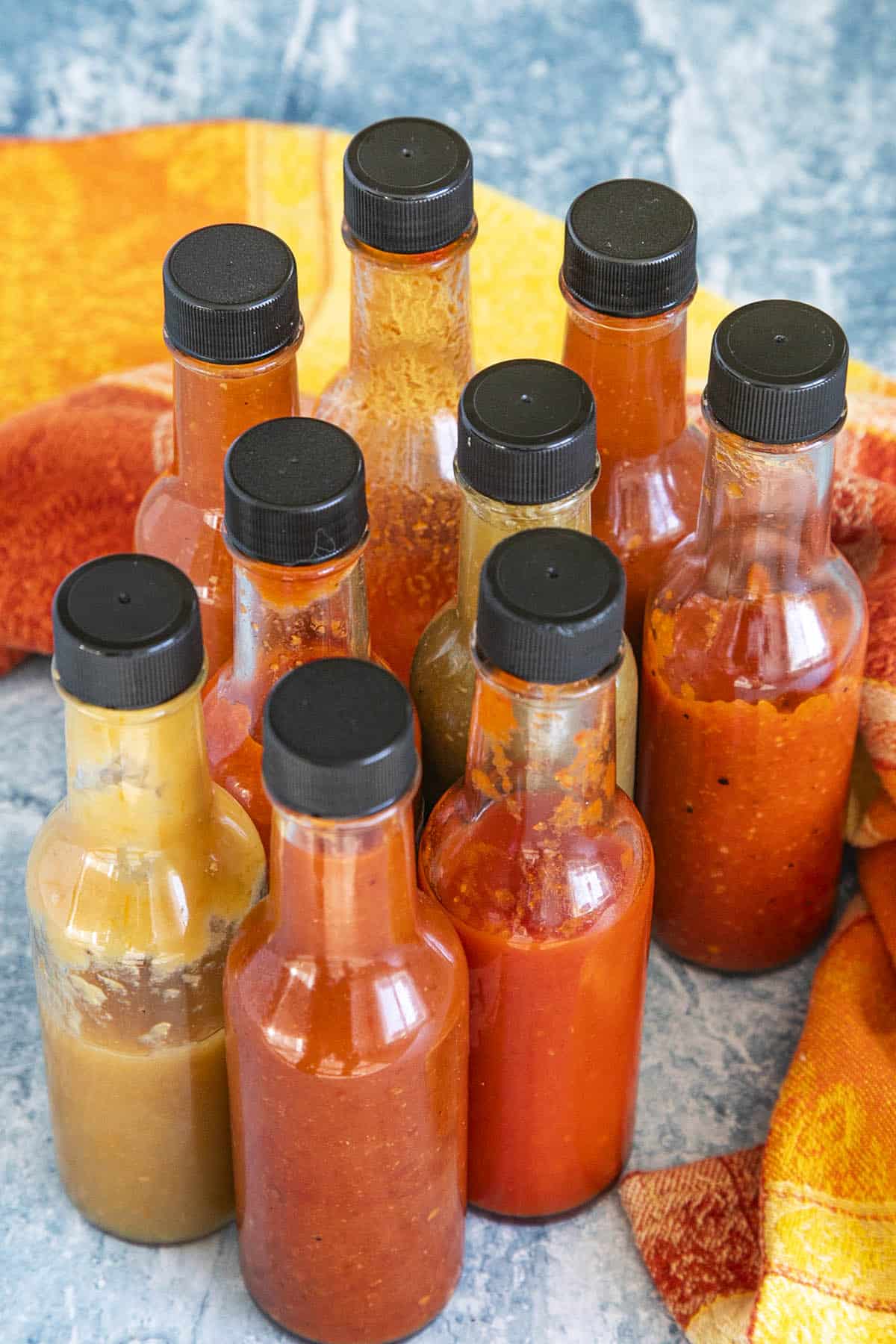
Homemade Louisiana Hot Sauce Recipe
There are many Louisiana hot sauces on the market. You probably have your favorite brand.
There are numerous artisan blends from smaller brand hot sauce makers, along with the big names like Texas Pete’s, Crystal Hot Sauce, Valentina, Melinda’s, Frank’s, and the biggest name of all when it comes to Louisiana Hot Sauce – Tabasco.
You can usually find them in grocery stores.
If you’ve dabbed the original Tabasco onto your food, you’ve tasted Louisiana hot sauce. It’s a gorgeous thing really, simplicity in its finest form, deliciousness delivered with only 3 ingredients – Chili Peppers, Vinegar, and Salt.
With those 3 simple ingredients, however, there are numerous variations, as you’ve most likely tasted.
- What types of chili peppers will you use?
- What type of vinegar?
- How much salt?
- What is your ratio of these 3 ingredients?
- How about a blend of peppers?
- Using more than one vinegar?
- What if we introduce other ingredients?
- What if we ferment it? Age it?
This is where your creativity comes into play, as well as your taste buds. Original Louisiana brand hot sauce used cayenne peppers, though Tabasco uses tabasco peppers, from which it coined its moniker.
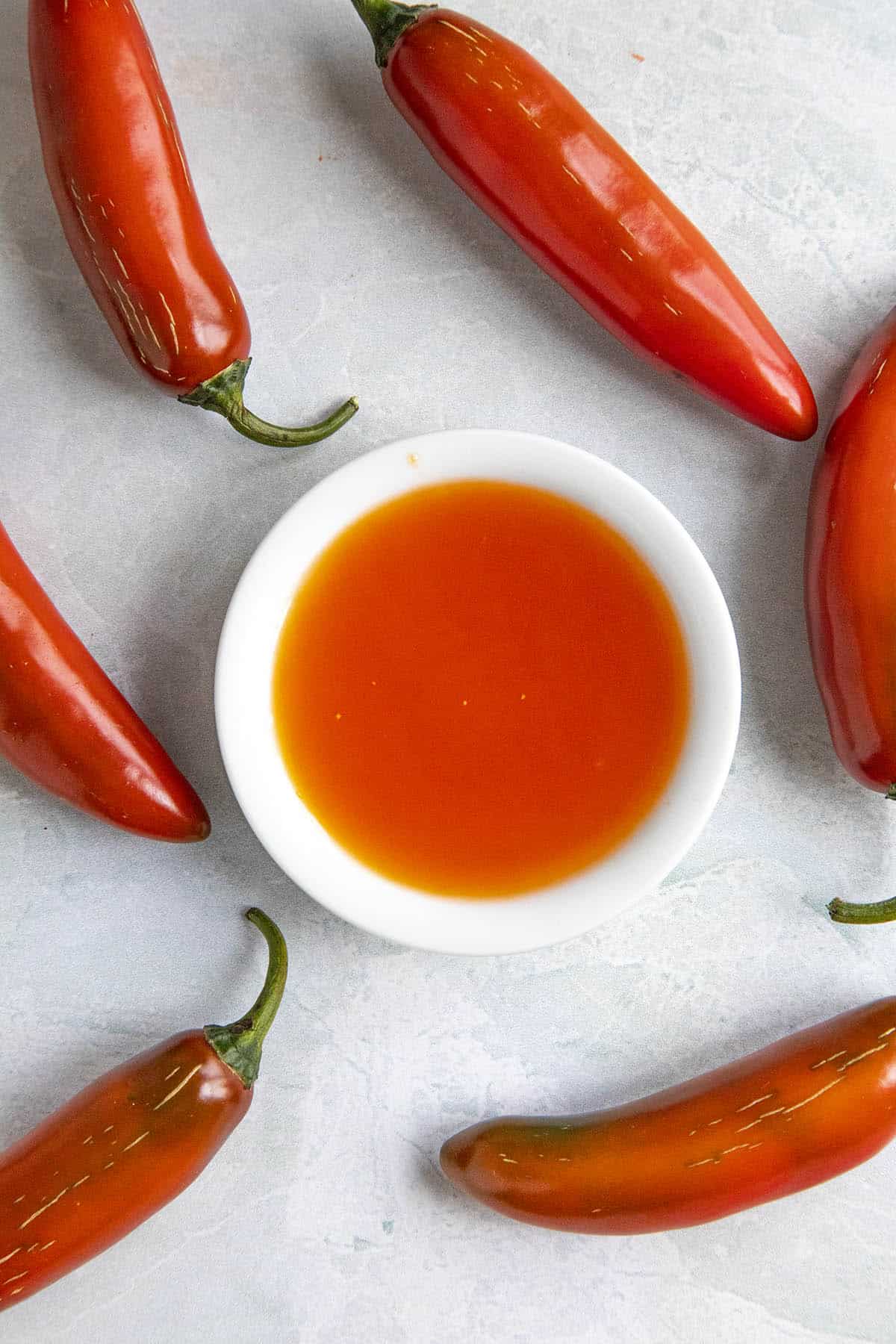
You are free to use any peppers you’d like, though red peppers are ideal to retain the enticing red color. Consider red jalapeno peppers or red serrano peppers, which I can tell you from personal experience make EXCELLENT Louisiana hot sauce.
Let’s talk about the biggest factors that will affect the outcome of your Louisiana hot sauce.
Which Vinegar Should I Use to Make Hot Sauce?
This is the question with ANY hot sauce, as there are many choices, and each will compliment your chili pepper choice in different ways. Most common is Distilled White Vinegar, which is inexpensive and strong in flavor.
Use this if you are seeking to mimic the flavors of the larger commercial brands. White Wine Vinegar is a bit more mellow, and Rice Vinegar even more so, with a touch more sweetness.
Red Wine Vinegar is made from fermented red wine, which will introduce a slightly fruity flavor to your sauce.
Apple Cider Vinegar is quite fruity, and preferred for when you’re seeking a fruity sweetness. Malt Vinegar has a strong, distinctive flavor from its barley ale beginnings, and well worth experimentation.
There are others to consider, such as balsamic vinegar, coconut vinegar, raisin vinegar and more. Experiment to your personal tastes.
What Peppers Should I Use to Make Louisiana Hot Sauce?
As mentioned, traditional peppers include cayenne, tabasco, and red jalapeno peppers, though this style recipe can be made with ANY chili pepper. Carefully selected long cayenne peppers are great.
I have made Louisiana Hot Sauce from superhots and was quite happy with the results. Talk about heat!
Just consider that your end flavor, color and heat will be affected by your chili pepper choices.
To Ferment or Not to Ferment for Making Louisiana Hot Sauce
This is a big factor. Original Louisiana Hot Sauce is made with fermented peppers. Tabasco is famous for this. They ferment their peppers in oak barrels for up to 3 years before mixing the resulting mash with vinegar and salt. I have made Louisiana Hot Sauce with both fermented and fresh chili peppers and can tell you there is a noticeable difference in the final flavor.
Louisiana Hot Sauce made from fermented peppers is mellower and has more fully developed flavor.
That said, Louisiana Hot Sauce made from fresh peppers has a bit more bite to it, and doesn’t take nearly as long to make. I encourage you to make it both ways and see which way you prefer.
Because of this, I am including both ways for you to make simple Louisiana Hot Sauce, with fermented peppers and fresh peppers.
Fermented Louisiana Hot Sauce Ingredients
- Red Chili Peppers. 1 pound (use cayenne, tabasco, red jalapeno or others), chopped.
- Unchlorinated Water. 1 quart.
- Salt. 3 tablespoons.
- White Wine Vinegar. ½-1 cup, to your preference.
How to Make Fermented Louisiana Hot Sauce - the Recipe Method
First, ferment the chili peppers. Chop the peppers then pack them into a jar, leaving at least 1 inch of head space. The peppers may rise a bit when fermenting.
Next, mix 1 quart unchlorinated water with 3 tablespoons sea salt. Pour just enough brine over the peppers to cover them, pressing them down a bit as you go. It is important to keep the peppers covered with brine to avoid spoilage. Check this daily.
Screw on the lid and set the jar away from direct sunlight to ferment for at least 1 week. Ideal temperatures are between 55-75 degrees F. The most active fermentation period is between 1-2 weeks, so be sure to monitor it during this time. “Burp” the jars often by unscrewing the lid a bit to let out some of the accumulating gases. Or, use an airlock or membrane for easier fermenting. See our page, “How to Make Fermented Pepper Mash”, for further instruction.
After 1-2 weeks, the fermenting activity will diminish and the brine will turn cloudy and taste acidic.
Pour the fermented peppers, including brine, into a pot along with the vinegar. Bring to a quick boil. Reduce heat and simmer for 15 minutes. Alternatively, you can strain out the fermented peppers and discard the brine, then boil the peppers with 1 cup vinegar and 1/2-1 teaspoon salt. Some people prefer to use the brine.
Cool slightly then add to a food processor and process until smooth.
Strain the mixture to remove the solids. Pour into hot sauce bottles and enjoy.
Non-Fermented Louisiana Hot Sauce Ingredients
- Red Chili Peppers. 1 pound (use cayenne, tabasco, red jalapeno or others), chopped.
- Salt. 1/2 - 1 teaspoon
- White Wine Vinegar. 1 cup, to your preference.
How to Make Non-Fermented Louisiana Hot Sauce - the Recipe Method (with fresh peppers only)
Add the chili peppers, 1 cup vinegar and 1/2-1 teaspoon salt to a pot and bring to a quick boil. Be sure you are only using 1 teaspoon of salt.
Reduce heat and simmer for 10 minutes to soften everything up.
Cool slightly then add to a food processor and process until smooth. If it is too thick, add water a tablespoon at a time and process until smooth.
Strain the mixture to remove the solids. Pour into hot sauce bottles and enjoy.
Frequently Asked Hot Sauce Questions
Here are answers to some of the most common questions I get on other sauces:
How long will this sauce keep?
It should keep a few months easily in the fridge, or even longer. It's all about the acidity. Target level ph for shelf stable foods is below 4.6 ph, but should probably be lower for home cooks, around 3.5 or so, to account for errors. If you're concerned, add more vinegar to lower the ph.
The best ph meters that I recommend are from Thermoworks. Get yourself a ph meter from Thermoworks today. I am a happy affiliate.
See my post on "Does Hot Sauce Need to be Refrigerated?"
Where'd you get that sauce bottle?
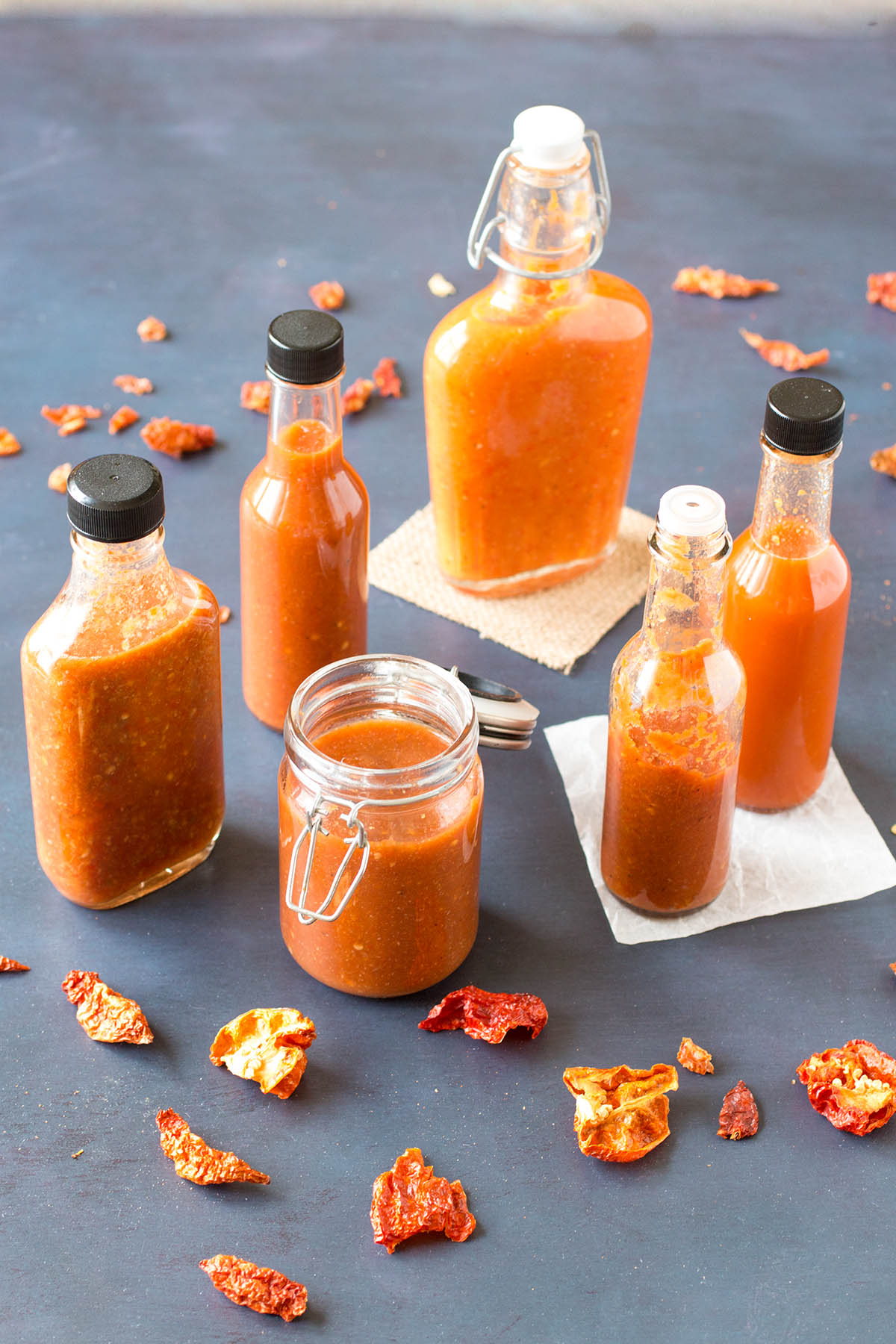
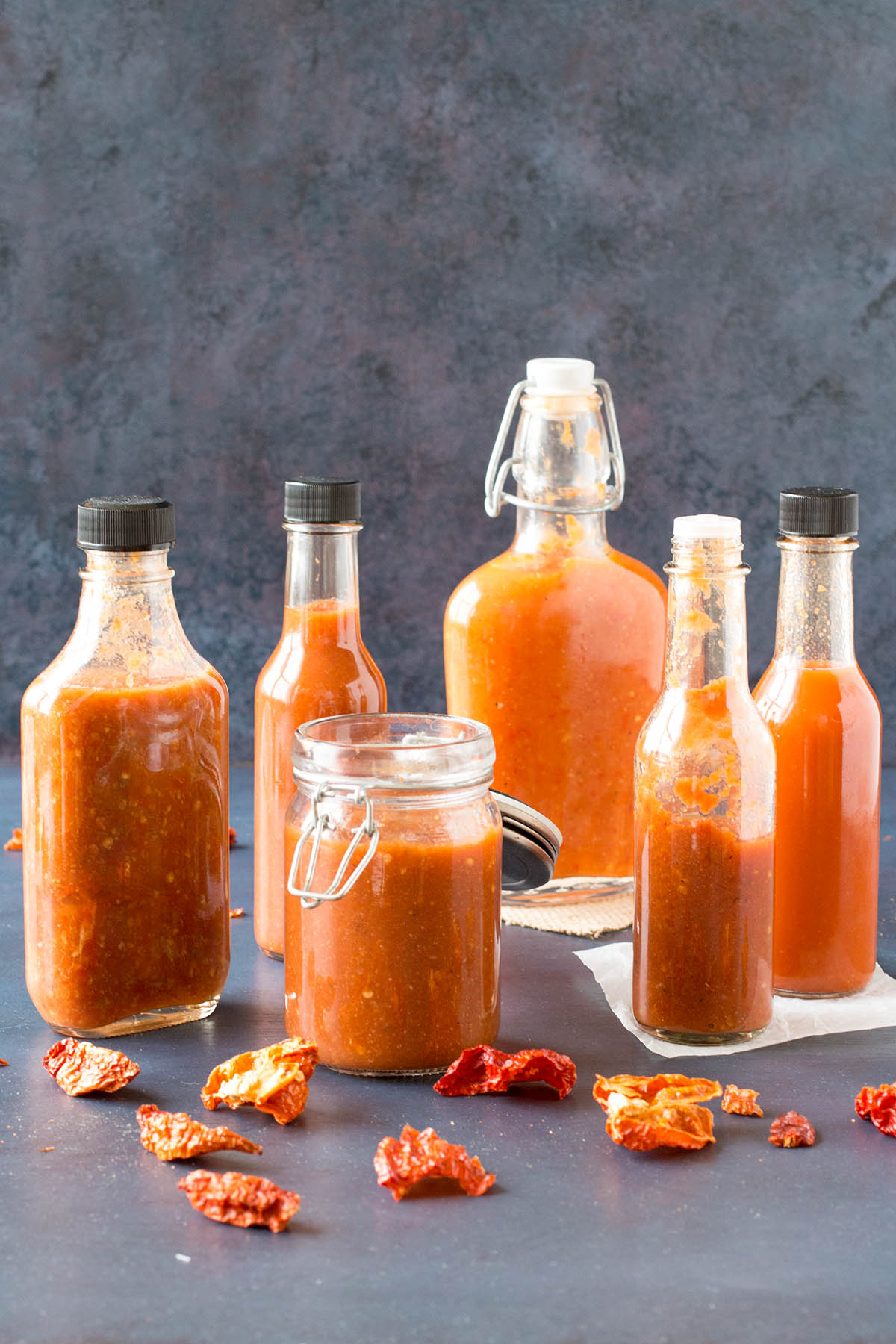
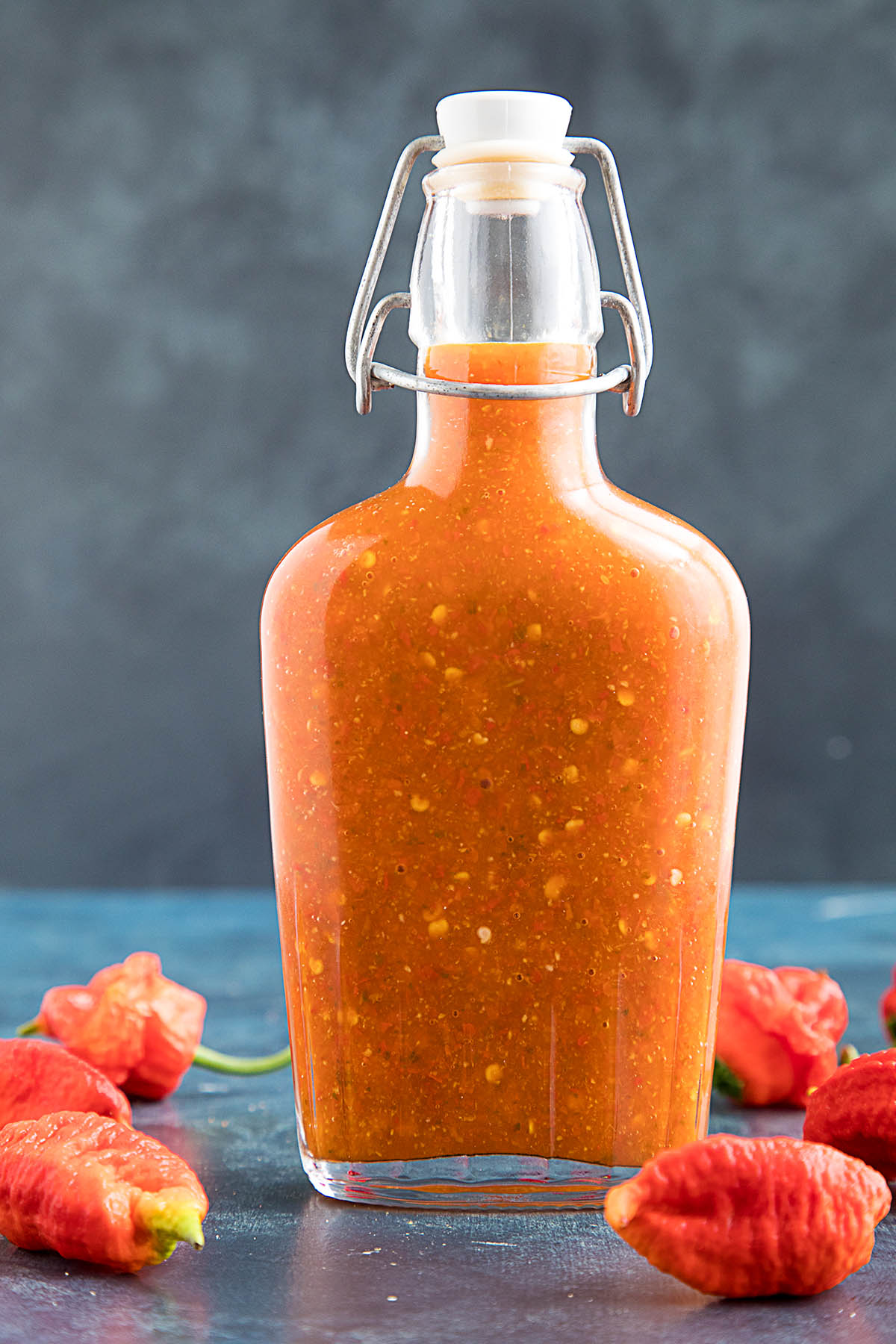
I find them locally sometimes, but I also order through Amazon. Here is a link to some bottles I like (affiliate link, my friends!): Swing Top Glass Bottles, 8.5 Ounce - Set of 4. If you like the smaller bottles that most hot sauce makers use, here's another link: Hot Sauce Bottles, 5 Oz - 24 Pack.
Can I process this hot sauce for longer storage?
Absolutely. Just be sure to use proper canning/jarring safety procedures.
Why did my hot sauce separate?
Separation is normal for hot sauces. Just give it a good shake and it will come back together. A very good blender helps, but those will still separate eventually. You can look into thickeners as well, like xanthan gum, when making your hot sauce.
Check out These Related Recipes:
- Sweet Habanero Chili Sauce
- Pineapple-Jalapeno Hot Sauce
- Caribbean Style Mango-Habanero Hot Sauce
- Pineapple-Mango Ghost Pepper Hot Sauce
- Homemade Caribbean-Style Sweet Chili Sauce
- Sweet Pepper Chili Sauce
- Hawaiian Chili Pepper Water
- Homemade Sriracha
- Homemade Cayenne Pepper Sauce
- Homemade Tabasco Sauce
- How to Cook with Hot Sauce
You can also mix it with butter to make a great wing sauce. See my Homemade Buffalo Sauce recipe.
Check out more Hot Sauce Recipes or learn more about How to Make Hot Sauce.
If you try this recipe, please let us know! Leave a comment, rate it and tag a photo #ChiliPepperMadness on Instagram so we can take a look. I always love to see all of your spicy inspirations. Thanks! -- Mike H.
Homemade Louisiana Hot Sauce Recipe (fermented and non fermented)
Ingredients
- 1 pound red chili peppers chopped (use cayenne, tabasco, red jalapeno or others)
- 1 quart unchlorinated water (for fermented version only)
- 3 tablespoons salt (for the non-fermented version, use only 1/2 to 1 teaspoon salt, to your preference)
- ½-1 cup white wine vinegar to your preference
Instructions
FOR FERMENTED LOUISIANA STYLE HOT SAUCE
- First, ferment the chili peppers. Chop the peppers then pack them into a jar, leaving at least 1 inch of head space. The peppers may rise a bit when fermenting.
- Next, mix 1 quart unchlorinated water with 3 tablespoons sea salt. Pour just enough brine over the peppers to cover them, pressing them down a bit as you go. It is important to keep the peppers covered with brine to avoid spoilage. Check this daily.
- Screw on the lid and set the jar away from direct sunlight to ferment for at least 1 week. Ideal temperatures are between 55-75 degrees F. The most active fermentation period is between 1-2 weeks, so be sure to monitor it during this time. “Burp” the jars often by unscrewing the lid a bit to let out some of the accumulating gases. Or, use an airlock or membrane for easier fermenting. See our page, “How to Make Fermented Pepper Mash”, for further instruction.
- After 1-2 weeks, the fermenting activity will diminish and the brine will turn cloudy and taste acidic.
- Pour the fermented peppers, including brine, into a pot along with the vinegar. Bring to a quick boil. Reduce heat and simmer for 15 minutes. Alternatively, you can strain out the fermented peppers and discard the brine, then boil the peppers with 1 cup vinegar and 1/2-1 teaspoon salt. Some people prefer to use the brine.
- Cool slightly then add to a food processor and process until smooth.
- Strain the mixture to remove the solids. Pour into hot sauce bottles and enjoy.
FOR NON-FERMENTED LOUISIANA STYLE HOT SAUCE
- Add only the chili peppers, 1 cup vinegar and 1 teaspoon salt to a pot and bring to a quick boil. Be sure you are only using 1 teaspoon of salt.
- Reduce heat and simmer for 10 minutes to soften everything up.
- Cool slightly then add to a food processor and process until smooth. If it is too thick, add water a tablespoon at a time and process until smooth.
- Strain the mixture to remove the solids. Pour into hot sauce bottles and enjoy.
Video
Notes
Nutrition Information
Homemade Louisiana Hot Sauce with Fresh Peppers – Recipe
Ingredients
- 1 pound red chili peppers use cayenne, tabasco, red jalapeno or others
- 1/2-1 teaspoon salt or to your personal taste
- ½-1 cup white wine vinegar to your preference
Instructions
- Roughly chop the chili peppers and add them to a pot with the salt and vinegar.
- Bring to a quick boil, then reduce heat and simmer for 15 minutes.
- Cool, then add to a food processor. Process until smooth.
- Strain the solids out through a strainer and discard (or keep them for dehydrating – they make great seasonings).
- Pour into bottles and use as desired.
Notes
Nutrition
NOTE: This post was updated on 2/19/21 to include new information. It was originally published on 9/29/17.
CJ Cooke says
I have been making my own hot sauces now from the peppers that I grow in my backyard garden for about 7 years now. Cayenne, tabasco, jalapenos and scotch bonnet are my favorites. My basic recipes are similar to a lot of the ones I've seen on this website. I do use some of the hottest of the hots also that I grow and people who really love my sauces do have problems consumimg those! Lol! My friends and family really love my sauces and are always in great anticipation of me making them. some suggest that I sell them, but I just keep giving them away. I try and make mine by FDA rules and regulations to have a longer shelf life and not have problems with bacterias. I make about 12-15 cases of 8oz bottles at the end of the season every year. What I usually do is freeze my peppers as I harvest them until the end of the growing season and then make my sauces. I have also dehydrated peppers for making pure pepper powders and seasonings. My question is, am I losing any flavor or heat from my peppers by freezing them? The sauces taste really good but do you recommend freezing this way and making sauces?
REPLY: Awesome to meet you, CJ! We are definitely kindred folk. I also freeze and dry a lot of peppers for the same purposes. The only issue I havenoticed with freezing is if they are frozen for a very long time, like a year. You might start to notice some flavor degredation. Best is to vacuum seal them to keep them as long as possible, and as fresh as possible. Fresh will always be best, but frozen pods are GREAT as are dried. They all work for me! I hope this helps a little. -- Mike from Chili Pepper Madness.
Bert says
Is the 3 tlbs salt set in stone or can you use more salt?
REPLY: Bert, no problem if you want to use more salt. Feel free. -- Mike from Chili Pepper Madness.
Jazzfess says
What if I only have a 1/2 lb of peppers - should I half the recipe?
REPLY: Yes, I would cut it in half. -- Mike from Chili Pepper Madness.
Jennet says
I followed the directions to make the mash. It's been a week. No fermentation. It's the right temperature. This is the second time this has happened. What could be wrong?
REPLY: Jennet, there are several possible reasons a ferment doesn't start. Did you use nonchlorinated water? You might need to use a culture starter. -- Mike from Chili Pepper Madness.
Jennet says
Hi. I followed the directions but my pepper mash isn't fermenting. This is the second time I've tried this and it hasn't fermented. What could the problem be?
REPLY: Jennet, sorry to hear. Is your water chlorinated? That would negate the process. You might need to add a culture starter. -- Mike from Chili Pepper Madness.
Nancy says
I made this with the fresh chili’s and it was great! I didn’t process it enough though and have a lot of solids left over (at least a cup!). Can I make the solids into a chili paste? Thanks!!
REPLY: Nancy, yes! Those solids still have life in them. Consider them for a paste, for swirling into soups or stews, or for dehydrating to make seasonings. -- Mike from Chili Pepper Madness.
Melanie says
Can I use thawed peppers that I have frozen? I just started fermenting the first pound of peppers and want to see how it turns out before I make another, but the peppers keep coming.
REPLY: Melanie, yes, you can use thawed peppers, though you might need to use a culture starter if the ferment doesn't start. -- Mike from Chili Pepper Madness.
Ann says
A starter is not necessary. Cabbage ferments readily (think sauerkraut and kimchi) so just add some pieces of it. Remove once the fermentation gets started. You won't get a cabbage flavor. Btw, I lacto-ferment my own very spicy kraut by adding lots of hot peppers. Great as a side, on sandwiches, etc and very healthy.
Rob says
Can i smoke my jalapeno's first, and make a chipotle hot sauce?
REPLY: Rob, absolutely. -- Mike from Chili Pepper Madness.
Liz says
How much sauce does this recipe make?
REPLY: Liz, 1 pound of peppers will yield about 2 cups of hot sauce. -- Mike from Chili Pepper Madness.
Harriet says
I can't wait for my husband to make some!
Jeanette Marie says
Thanks so much for posting this recipe. It is difficult to find real Louisiana hot sauce (apart from Tabasco) in South Africa. So, I am definitely giving this a try!!
Shotgun Sam says
I once read somewhere that the FDA requires for commercial use of any hot sauce that it is required that the sauce be brought to a boil for a short time (5 min) and then simmered (20 min) to kill any other harmful bacteria such as Botulinum toxin (BTX). Botulinum is the most acutely lethal toxin known. Infection with the bacterium causes the disease botulism. I can be wrong on the times but the toxin is real.
Brian says
One could also dry brine the peppers for fermenting (I often do it this way).
Why is it necessary to heat up the peppers and vinegar after fermenting?
REPLY: Brian, it isn't necessary, actually, to heat it through with vinegar. You can stop before that step, provided your ph is 4.0 or below. It will continue to ferment a bit, even in the fridge, which you may want. The heating with vinegar stops the process and keeps the mash as-is at that time. When making the hot sauce, though, the heating is part of the recipe. -- Mike from Chili Pepper Madness.