


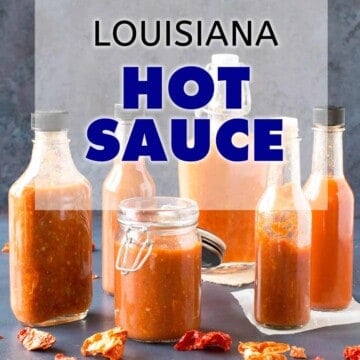
Learn how to make classic Louisiana hot sauce at home, either with fresh or fermented chili peppers. Louisiana style hot sauce is the best, and so easy to make!
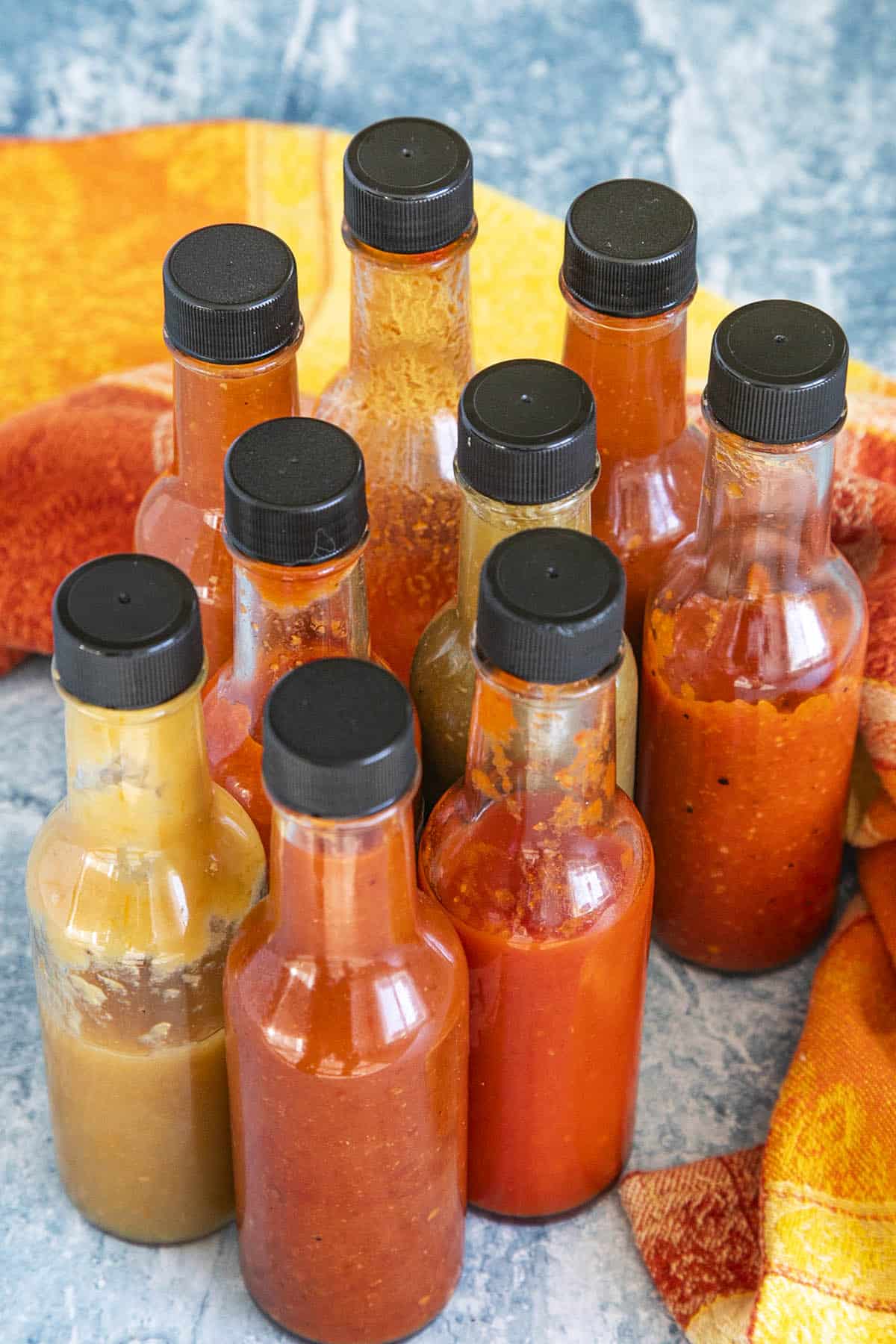
Homemade Louisiana Hot Sauce Recipe
There are many Louisiana hot sauces on the market. You probably have your favorite brand.
There are numerous artisan blends from smaller brand hot sauce makers, along with the big names like Texas Pete’s, Crystal Hot Sauce, Valentina, Melinda’s, Frank’s, and the biggest name of all when it comes to Louisiana Hot Sauce – Tabasco.
You can usually find them in grocery stores.
If you’ve dabbed the original Tabasco onto your food, you’ve tasted Louisiana hot sauce. It’s a gorgeous thing really, simplicity in its finest form, deliciousness delivered with only 3 ingredients – Chili Peppers, Vinegar, and Salt.
With those 3 simple ingredients, however, there are numerous variations, as you’ve most likely tasted.
- What types of chili peppers will you use?
- What type of vinegar?
- How much salt?
- What is your ratio of these 3 ingredients?
- How about a blend of peppers?
- Using more than one vinegar?
- What if we introduce other ingredients?
- What if we ferment it? Age it?
This is where your creativity comes into play, as well as your taste buds. Original Louisiana brand hot sauce used cayenne peppers, though Tabasco uses tabasco peppers, from which it coined its moniker.
You are free to use any peppers you’d like, though red peppers are ideal to retain the enticing red color. Consider red jalapeno peppers or red serrano peppers, which I can tell you from personal experience make EXCELLENT Louisiana hot sauce.
Let’s talk about the biggest factors that will affect the outcome of your Louisiana hot sauce.
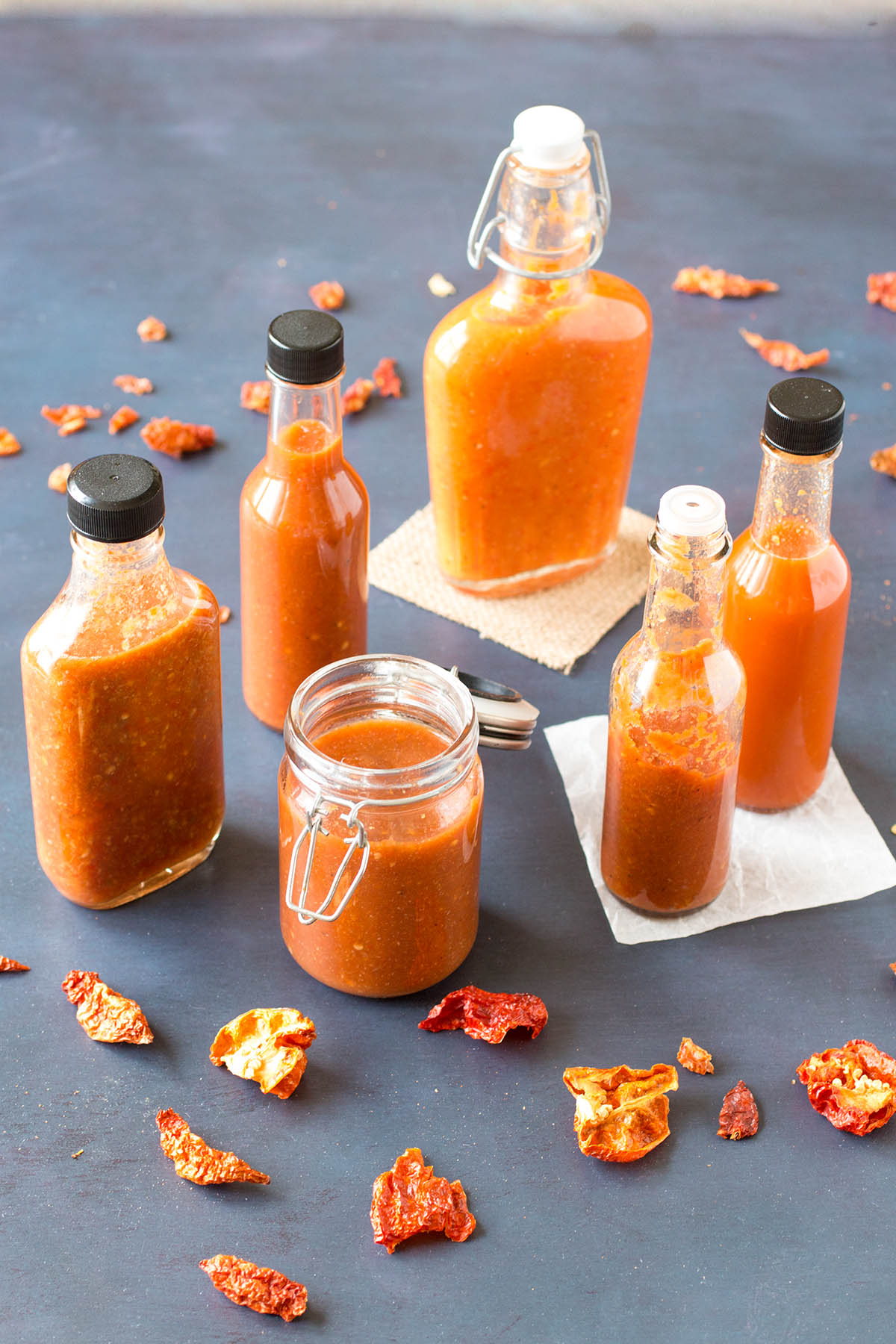
Which Vinegar Should I Use to Make Hot Sauce?
This is the question with ANY hot sauce, as there are many choices, and each will compliment your chili pepper choice in different ways. Most common is Distilled White Vinegar, which is inexpensive and strong in flavor.
Use this if you are seeking to mimic the flavors of the larger commercial brands. White Wine Vinegar is a bit more mellow, and Rice Vinegar even more so, with a touch more sweetness.
Red Wine Vinegar is made from fermented red wine, which will introduce a slightly fruity flavor to your sauce.
Apple Cider Vinegar is quite fruity, and preferred for when you’re seeking a fruity sweetness. Malt Vinegar has a strong, distinctive flavor from its barley ale beginnings, and well worth experimentation.
There are others to consider, such as balsamic vinegar, coconut vinegar, raisin vinegar and more. Experiment to your personal tastes.
What Peppers Should I Use to Make Louisiana Hot Sauce?
As mentioned, traditional peppers include cayenne, tabasco, and red jalapeno peppers, though this style recipe can be made with ANY chili pepper. Carefully selected long cayenne peppers are great.
I have made Louisiana Hot Sauce from superhots and was quite happy with the results. Talk about heat!
Just consider that your end flavor, color and heat will be affected by your chili pepper choices.
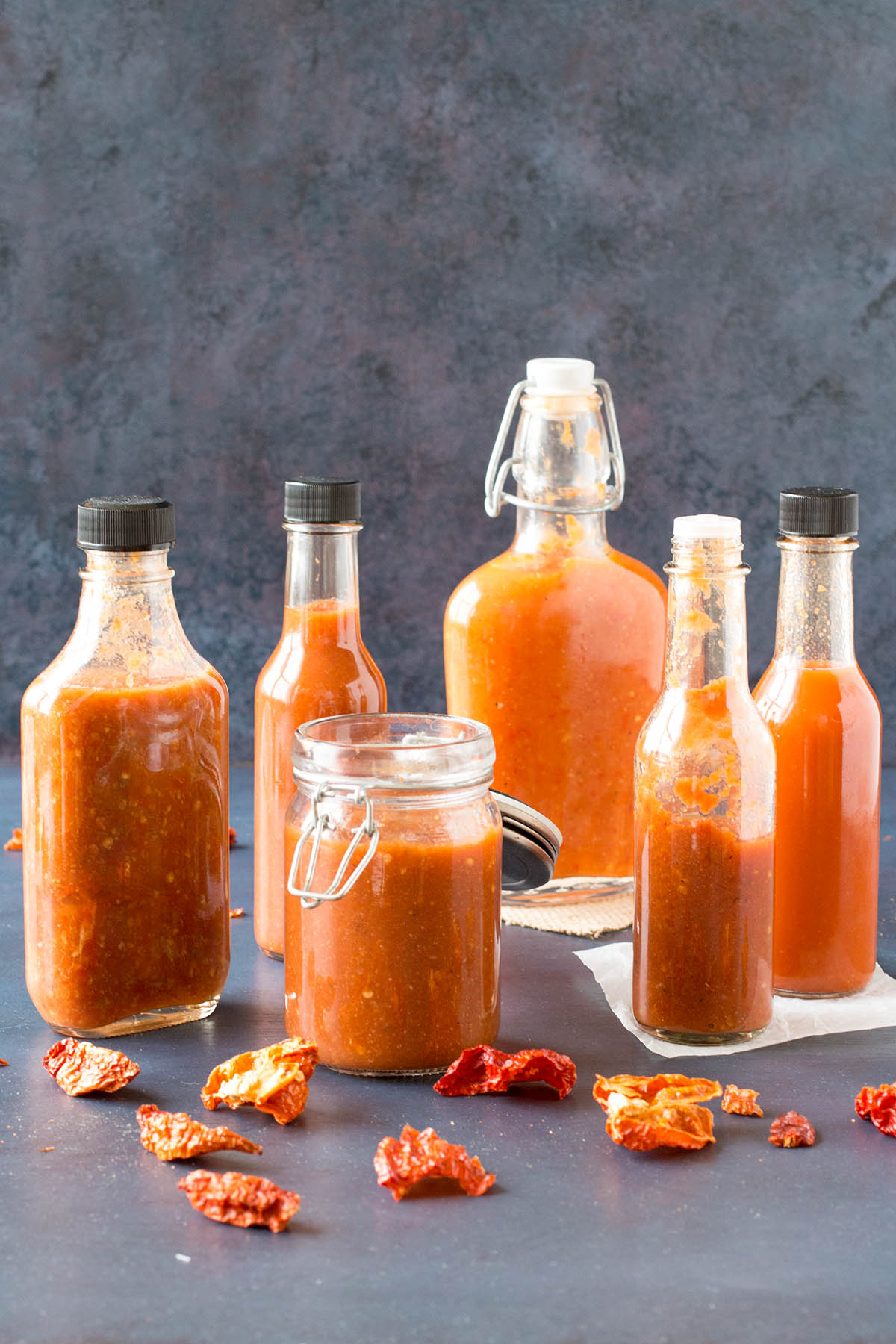
To Ferment or Not to Ferment for Making Louisiana Hot Sauce
This is a big factor. Original Louisiana Hot Sauce is made with fermented peppers. Tabasco is famous for this. They ferment their peppers in oak barrels for up to 3 years before mixing the resulting mash with vinegar and salt. I have made Louisiana Hot Sauce with both fermented and fresh chili peppers and can tell you there is a noticeable difference in the final flavor.
Louisiana Hot Sauce made from fermented peppers is mellower and has more fully developed flavor.
That said, Louisiana Hot Sauce made from fresh peppers has a bit more bite to it, and doesn’t take nearly as long to make. I encourage you to make it both ways and see which way you prefer.
Because of this, I am including both ways for you to make simple Louisiana Hot Sauce, with fermented peppers and fresh peppers.
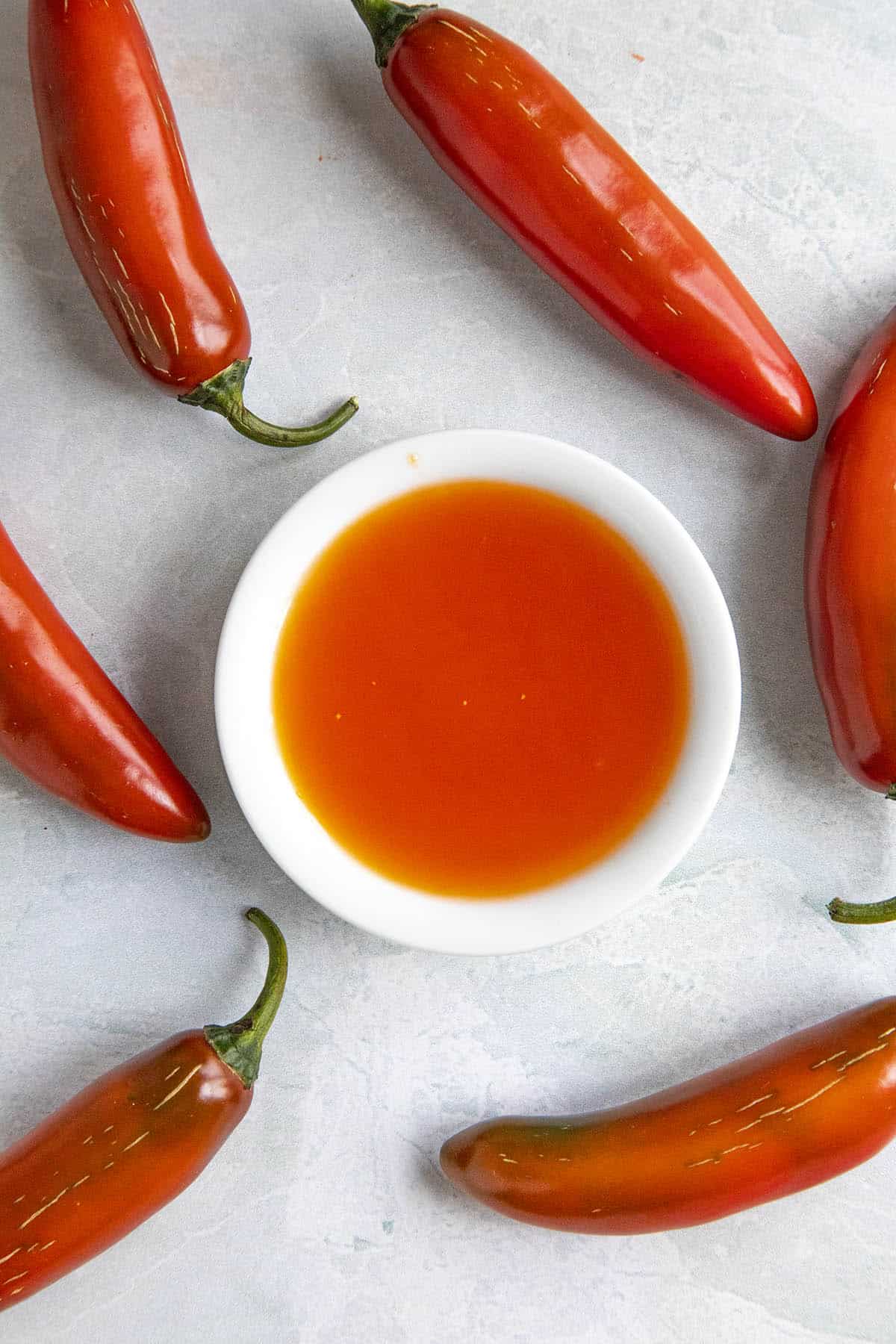
Fermented Louisiana Hot Sauce Ingredients
- Red Chili Peppers. 1 pound (use cayenne, tabasco, red jalapeno or others), chopped.
- Unchlorinated Water. 1 quart.
- Salt. 3 tablespoons.
- White Wine Vinegar. ½-1 cup, to your preference.
How to Make Fermented Louisiana Hot Sauce - the Recipe Method
First, ferment the chili peppers. Chop the peppers then pack them into a jar, leaving at least 1 inch of head space. The peppers may rise a bit when fermenting.
Next, mix 1 quart unchlorinated water with 3 tablespoons sea salt. Pour just enough brine over the peppers to cover them, pressing them down a bit as you go. It is important to keep the peppers covered with brine to avoid spoilage. Check this daily.
Screw on the lid and set the jar away from direct sunlight to ferment for at least 1 week. Ideal temperatures are between 55-75 degrees F. The most active fermentation period is between 1-2 weeks, so be sure to monitor it during this time. “Burp” the jars often by unscrewing the lid a bit to let out some of the accumulating gases. Or, use an airlock or membrane for easier fermenting. See our page, “How to Make Fermented Pepper Mash”, for further instruction.
After 1-2 weeks, the fermenting activity will diminish and the brine will turn cloudy and taste acidic.
Pour the fermented peppers, including brine, into a pot along with the vinegar. Bring to a quick boil. Reduce heat and simmer for 15 minutes. Alternatively, you can strain out the fermented peppers and discard the brine, then boil the peppers with 1 cup vinegar and 1/2-1 teaspoon salt. Some people prefer to use the brine.
Cool slightly then add to a food processor and process until smooth.
Strain the mixture to remove the solids. Pour into hot sauce bottles and enjoy.
Non-Fermented Louisiana Hot Sauce Ingredients
- Red Chili Peppers. 1 pound (use cayenne, tabasco, red jalapeno or others), chopped.
- Salt. 1/2 - 1 teaspoon
- White Wine Vinegar. 1 cup, to your preference.
How to Make Non-Fermented Louisiana Hot Sauce - the Recipe Method (with fresh peppers only)
Add the chili peppers, 1 cup vinegar and 1/2-1 teaspoon salt to a pot and bring to a quick boil. Be sure you are only using 1 teaspoon of salt.
Reduce heat and simmer for 10 minutes to soften everything up.
Cool slightly then add to a food processor and process until smooth. If it is too thick, add water a tablespoon at a time and process until smooth.
Strain the mixture to remove the solids. Pour into hot sauce bottles and enjoy.
Frequently Asked Hot Sauce Questions
Here are answers to some of the most common questions I get on other sauces:
How long will this sauce keep?
It should keep a few months easily in the fridge, or even longer. It's all about the acidity. Target level ph for shelf stable foods is below 4.6 ph, but should probably be lower for home cooks, around 3.5 or so, to account for errors. If you're concerned, add more vinegar to lower the ph.
The best ph meters that I recommend are from Thermoworks. Get yourself a ph meter from Thermoworks today. I am a happy affiliate.
See my post on "Does Hot Sauce Need to be Refrigerated?"
Where'd you get that sauce bottle?
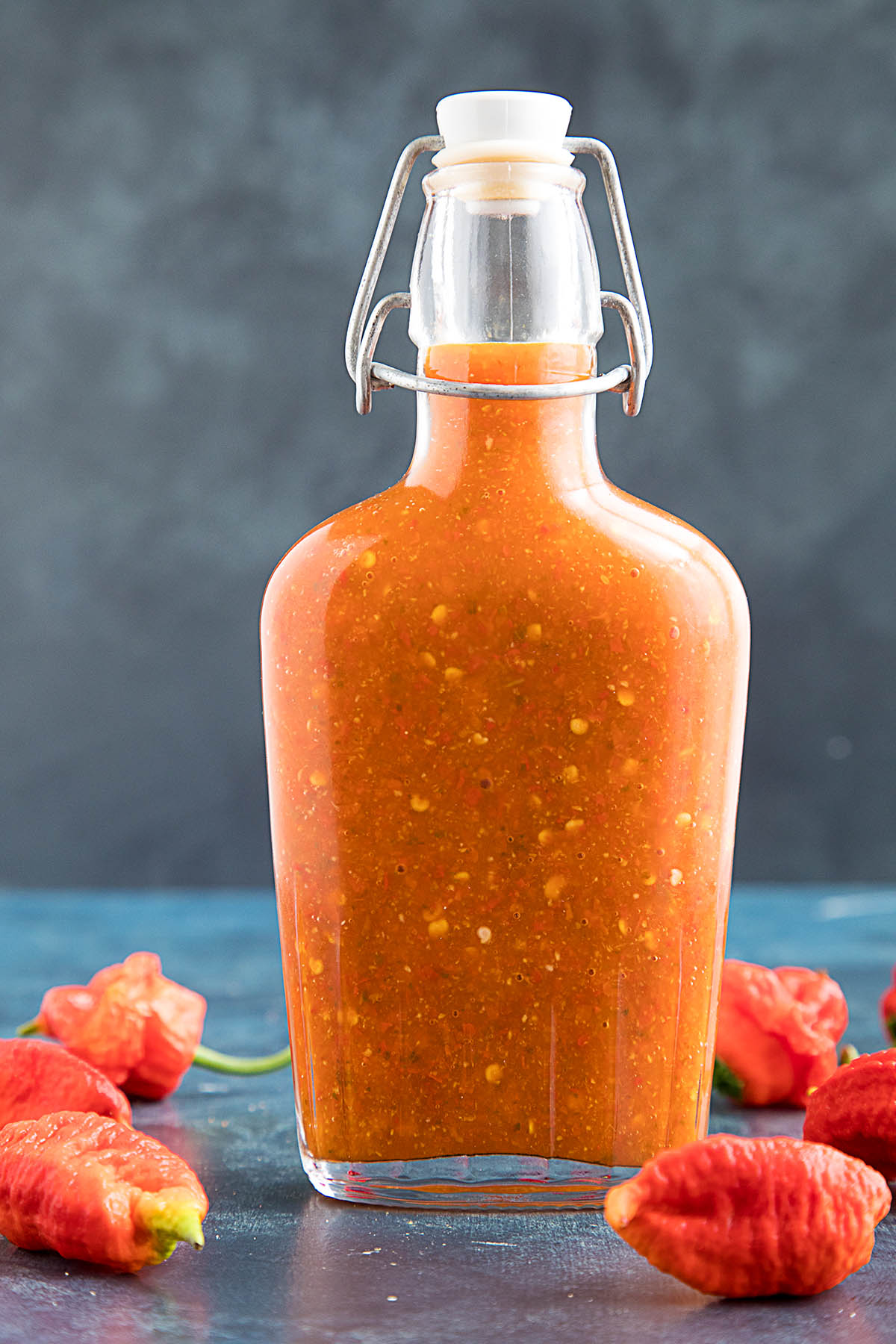
I find them locally sometimes, but I also order through Amazon. Here is a link to some bottles I like (affiliate link, my friends!): Swing Top Glass Bottles, 8.5 Ounce - Set of 4. If you like the smaller bottles that most hot sauce makers use, here's another link: Hot Sauce Bottles, 5 Oz - 24 Pack.
Can I process this hot sauce for longer storage?
Absolutely. Just be sure to use proper canning/jarring safety procedures.
Why did my hot sauce separate?
Separation is normal for hot sauces. Just give it a good shake and it will come back together. A very good blender helps, but those will still separate eventually. You can look into thickeners as well, like xanthan gum, when making your hot sauce.
Check out These Related Recipes:
- Sweet Habanero Chili Sauce
- Pineapple-Jalapeno Hot Sauce
- Caribbean Style Mango-Habanero Hot Sauce
- Pineapple-Mango Ghost Pepper Hot Sauce
- Homemade Caribbean-Style Sweet Chili Sauce
- Sweet Pepper Chili Sauce
- Hawaiian Chili Pepper Water
- Homemade Sriracha
- Homemade Cayenne Pepper Sauce
- Homemade Tabasco Sauce
- How to Cook with Hot Sauce
You can also mix it with butter to make a great wing sauce. See my Homemade Buffalo Sauce recipe.
Check out more Hot Sauce Recipes or learn more about How to Make Hot Sauce.
If you try this recipe, please let us know! Leave a comment, rate it and tag a photo #ChiliPepperMadness on Instagram so we can take a look. I always love to see all of your spicy inspirations. Thanks! -- Mike H.
Homemade Louisiana Hot Sauce Recipe (fermented and non fermented)
Ingredients
- 1 pound red chili peppers chopped (use cayenne, tabasco, red jalapeno or others)
- 1 quart unchlorinated water (for fermented version only)
- 3 tablespoons salt (for the non-fermented version, use only 1/2 to 1 teaspoon salt, to your preference)
- ½-1 cup white wine vinegar to your preference
Instructions
FOR FERMENTED LOUISIANA STYLE HOT SAUCE
- First, ferment the chili peppers. Chop the peppers then pack them into a jar, leaving at least 1 inch of head space. The peppers may rise a bit when fermenting.
- Next, mix 1 quart unchlorinated water with 3 tablespoons sea salt. Pour just enough brine over the peppers to cover them, pressing them down a bit as you go. It is important to keep the peppers covered with brine to avoid spoilage. Check this daily.
- Screw on the lid and set the jar away from direct sunlight to ferment for at least 1 week. Ideal temperatures are between 55-75 degrees F. The most active fermentation period is between 1-2 weeks, so be sure to monitor it during this time. “Burp” the jars often by unscrewing the lid a bit to let out some of the accumulating gases. Or, use an airlock or membrane for easier fermenting. See our page, “How to Make Fermented Pepper Mash”, for further instruction.
- After 1-2 weeks, the fermenting activity will diminish and the brine will turn cloudy and taste acidic.
- Pour the fermented peppers, including brine, into a pot along with the vinegar. Bring to a quick boil. Reduce heat and simmer for 15 minutes. Alternatively, you can strain out the fermented peppers and discard the brine, then boil the peppers with 1 cup vinegar and 1/2-1 teaspoon salt. Some people prefer to use the brine.
- Cool slightly then add to a food processor and process until smooth.
- Strain the mixture to remove the solids. Pour into hot sauce bottles and enjoy.
FOR NON-FERMENTED LOUISIANA STYLE HOT SAUCE
- Add only the chili peppers, 1 cup vinegar and 1 teaspoon salt to a pot and bring to a quick boil. Be sure you are only using 1 teaspoon of salt.
- Reduce heat and simmer for 10 minutes to soften everything up.
- Cool slightly then add to a food processor and process until smooth. If it is too thick, add water a tablespoon at a time and process until smooth.
- Strain the mixture to remove the solids. Pour into hot sauce bottles and enjoy.
Video
Notes
Nutrition Information
Homemade Louisiana Hot Sauce with Fresh Peppers – Recipe
Ingredients
- 1 pound red chili peppers use cayenne, tabasco, red jalapeno or others
- 1/2-1 teaspoon salt or to your personal taste
- ½-1 cup white wine vinegar to your preference
Instructions
- Roughly chop the chili peppers and add them to a pot with the salt and vinegar.
- Bring to a quick boil, then reduce heat and simmer for 15 minutes.
- Cool, then add to a food processor. Process until smooth.
- Strain the solids out through a strainer and discard (or keep them for dehydrating – they make great seasonings).
- Pour into bottles and use as desired.
Notes
Nutrition
NOTE: This post was updated on 2/19/21 to include new information. It was originally published on 9/29/17.
Penny says
Hi,
I've made the unfermented recipe a couple of times now. Love it, but my family finds that it could be hotter. I'm wondering if I can either skip the vinegar (or cut way back) and use water instead?
Love your website btw!
Michael Hultquist - Chili Pepper Madness says
Hi, Penny. You can use water instead or a combination of water/vinegar. However, it won't last as long if the pH is too high. Shoot for at least 4.0 for home keeping, but if not, you can still use it within a week or so. Or, try adding in a hotter pepper or include a touch of spicy chili powder or flakes. That is really the best way to get more heat. Let me know how it goes!
Jeanne says
Hey, I would like to try your recipe as I just got some red cayene and jalapeno peppers from a friend. I have made pickled peppers using kosher salt and am wondering if that could be used as opposed to the sea salt in your recipe?
Jeanne
Michael Hultquist - Chili Pepper Madness says
Hi, Jeanne. Yes, you can use kosher salt for this recipe. Let me know how it turns out for you. Enjoy!
Ted Brooks says
Hi Mike,
I make lots of fermented hot sauce every fall ( like right now) as my back yard garden produces lots of peppers. My problem is always straining the seeds from the sauce. What do you use to strain the sauce? On your advice. I do dehydrate those seeds and the make a chile spice, but I'm afraid I'm still losing too much of the precious sauce.
Michael Hultquist - Chili Pepper Madness says
Ted, I use different strainers depending on the consistency I'm looking for. I have a small strainer which only takes out large solids. I have a food mill, which really breaks things down and takes out a lot of the solids. Sometimes I use both. You can always try scooping out some of the seeds beforehand as well, though yeah, that could remove much of the innards, and therefore heat.
Marty says
I picked 1/4 pound of Tabasco peppers from the garden and tried your fresh pepper recipe. Since it calls for 1 pound of peppers - I cut the recipe by 1/4. However, this didn't seem like enough vinegar to simmer the peppers, so I splashed in a bit more. When I put it in the food processor, I had to add quite a bit of water to get it thin enough. Could I have added more vinegar to the peppers when simmering?
Michael Hultquist - Chili Pepper Madness says
Marty, yes, you can add more vinegar and/or water when simmering. No problem.
Raimo Tarkkonen says
Hello, Mike! Can i just chop the peppers roughly before fermenting or should i run them in food processor?
Michael Hultquist - Chili Pepper Madness says
Hello, Raimo. A rough chop is totally fine. It will help keep them from floating above the brine. Enjoy!
Jérémie says
Great explanations here, Mike, for a permanent must-have! Made this recipe with several different chili peppers and -of course- in the fermented version!
Michael Hultquist - Chili Pepper Madness says
Thanks, Jeremie! I appreciate it!
James N says
I have a soda bottle full of habanero peppers (stems on) and vinegar. I have used the vinegar occasionally and keep it topped off. Is there anything that can be made from the pickled peppers? They have been marinading for a couple of years at least.
Michael Hultquist - Chili Pepper Madness says
James, many people make recipes exactly like this, such as Hawaiian Chili Water (https://www.chilipeppermadness.com/chili-pepper-recipes/hot-sauces/hawaiian-chili-pepper-water/) or Puerto Rican Pique (https://www.chilipeppermadness.com/chili-pepper-recipes/hot-sauces/pique-puerto-rican-hot-sauce/). Great stuff. Most people just use the vinegar as a quick sauce, but you can eat the pickled peppers on pretty much anything. Use them to top burgers, dogs, etc. Or work them into different recipes.
Don says
Mike, there seems to be lots of confusion over the amount of salt for the fresh version. I think the confusion comes from the fact that the recipe card for the "Fresh" version at the bottom of your post specifically says 3 tablespoons salt. You might want to do an edit and fix that.
Michael Hultquist - Chili Pepper Madness says
Don, you are absolutely correct. I have made that update. Thank you for alerting me to my mistake.
Ton says
Hi. I would love to try your recipe. I just wanted to ask, would it be okay to add a little Citric Acid(Powder) before bottling? I wanted to make one with long shelf life. Thank you.
Michael Hultquist - Chili Pepper Madness says
Hi, Ton. Yes, that would be OK. Acid will help lower the pH and preserve the sauce. There is enough vinegar usually to do so, but adding citrus would be a nice flavor builder.
Erin M Gallardo says
Hello,
I am just about finished with the fermentation process for my sauce. I was wondering if you can describe the smell I should smell from the jar before I boil the peppers with the brine and vinegar. I am just worried if it is spoiled and can cause any illness.
Michael Hultquist - Chili Pepper Madness says
Erin, the smell is somewhat sour, almost a BIT like milder body odor, though not in an unpleasant way. It might be intense if you are not using an airlock mechanism and just burping the jars, though that will dissipate. If it smells really bad, like a rotting sewer, it has probably been infected and/or your brine isn't strong enough.
Jamie Parisi says
Quick Question. What if the peppers have been dried? Can these be used in some way.?
Michael Hultquist - Chili Pepper Madness says
Jamie, yes, you can make sauce from dried peppers. I JUST shot a video for this today. All you need to do is rehydrate the peppers in hot water and/or vinegar, then proceed with the recipe. Let me know how it turn out for you.
Jacob Jameson says
MIke,
Do you still use a quart of water for the unfermented version? I am seeing recipes out there that don't even use water at all, only vinegar. Just curious, it seems like a low vinegar/water ratio, 1:4.
Michael Hultquist - Chili Pepper Madness says
Jacob, no, use only the peppers, vinegar and salt. I updated the recipe card and added further instructions to the page to make this more clear. I apologize for the confusion. Please let me know if you have any other questions. I'm happy to help.
Mario says
Just a quick note that i just finished a small batch of fermented hot sauce based on the posted recipe and all I can say is WOW. Forget about Tabasco and sriracha sauces, this beats them by an exponential factor. I am just sorry I just made a small batch. Will surely make a much larger one next year.
Thanks a bunch for sharing such an awesome recipe.
Michael Hultquist - Chili Pepper Madness says
Thanks so much, Mario! I love making many sauces this way, too. I just finished a batch of fermented red serrano hot sauce. Great stuff!!!