



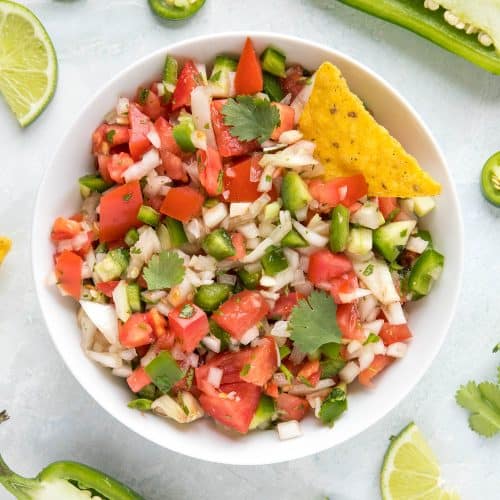
This easy Pico de Gallo recipe, or 'Rooster's Beak' salsa, is the classic fresh Mexican salsa made with ripe tomatoes, white onion, serranos or jalapeños, cilantro and lime juice. No cooking, no blender, just a sharp knife and a few minutes.
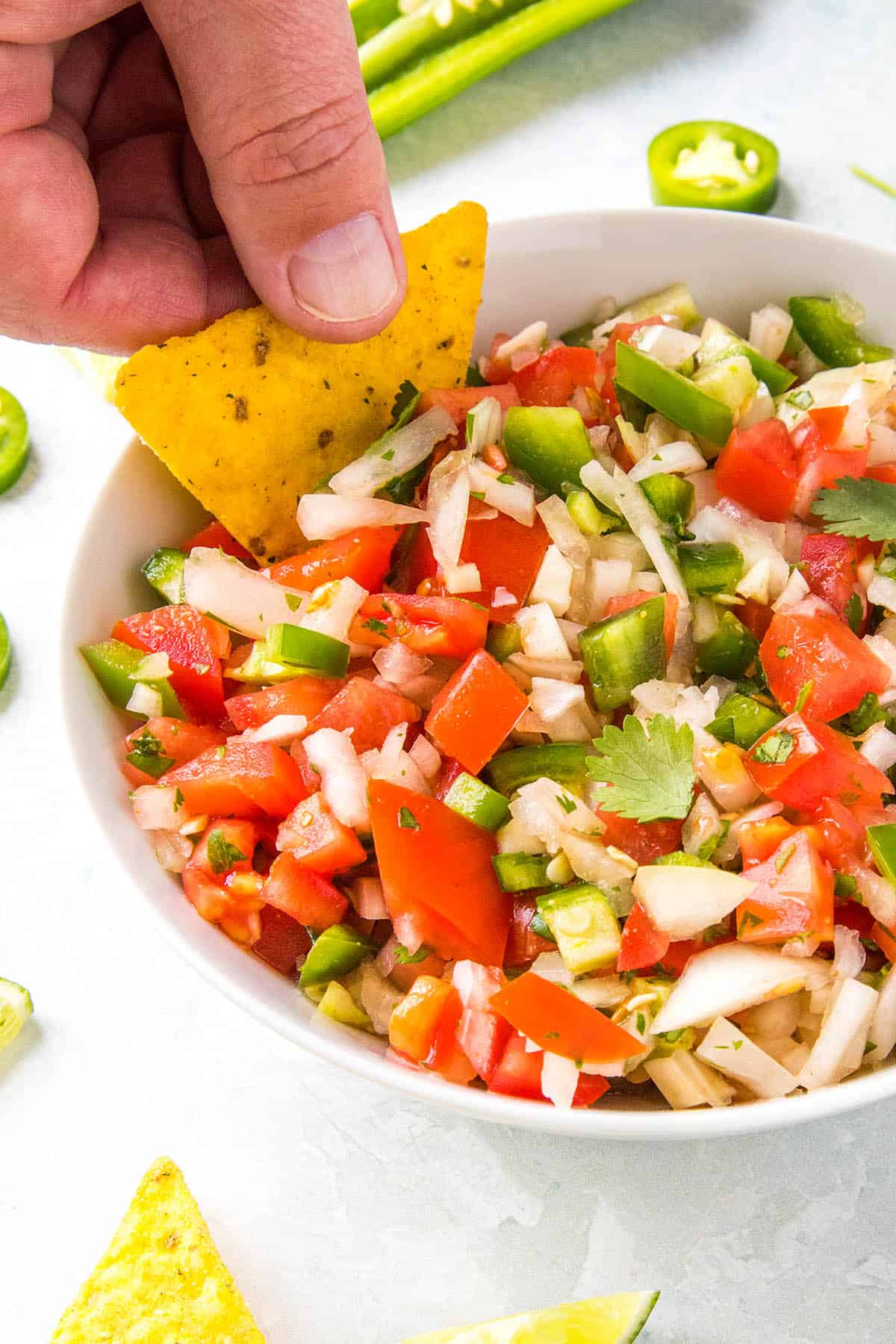
Homemade Pico de Gallo
When it comes to Mexican salsas, it doesn't get any more traditional than Authentic Pico de Gallo. It's the uber salsa, the ultimate party salsa, the perfect mouthwatering bite, especially on a chip. I'm always disappointed when my local Mexican restaurant doesn't bring it out. Bring out the pico, please!
It's also one of the easiest recipes you'll ever make. Tiny details make it amazing - ripe tomatoes, a fine, even dice, and the right balance of lime and salt. All of this is discussed below, including how to keep your pico from turning watery, which is the number one pico problem.
And yes, I've taken this one into wild territory. I once made a batch with ghost peppers for a neighborhood party, and even though it was crazy spicy, people loved it. More on dialing in the heat below. First, let's get some of the questions out of the way.
What is Pico de Gallo?
Pico de Gallo is a fresh Mexican salsa made from a mixture of finely chopped tomato, onion, cilantro, jalapeno or serranos, and lime juice. It is an unprocessed salsa, left chunky from the chopped ingredients.
It is also a fresh salsa, or salsa fresca (also salsa cruda), meaning the ingredients are uncooked, a bit like classic homemade salsa.
It's a salsa, but it's a little different from what most people picture when they hear the word. Here's how.
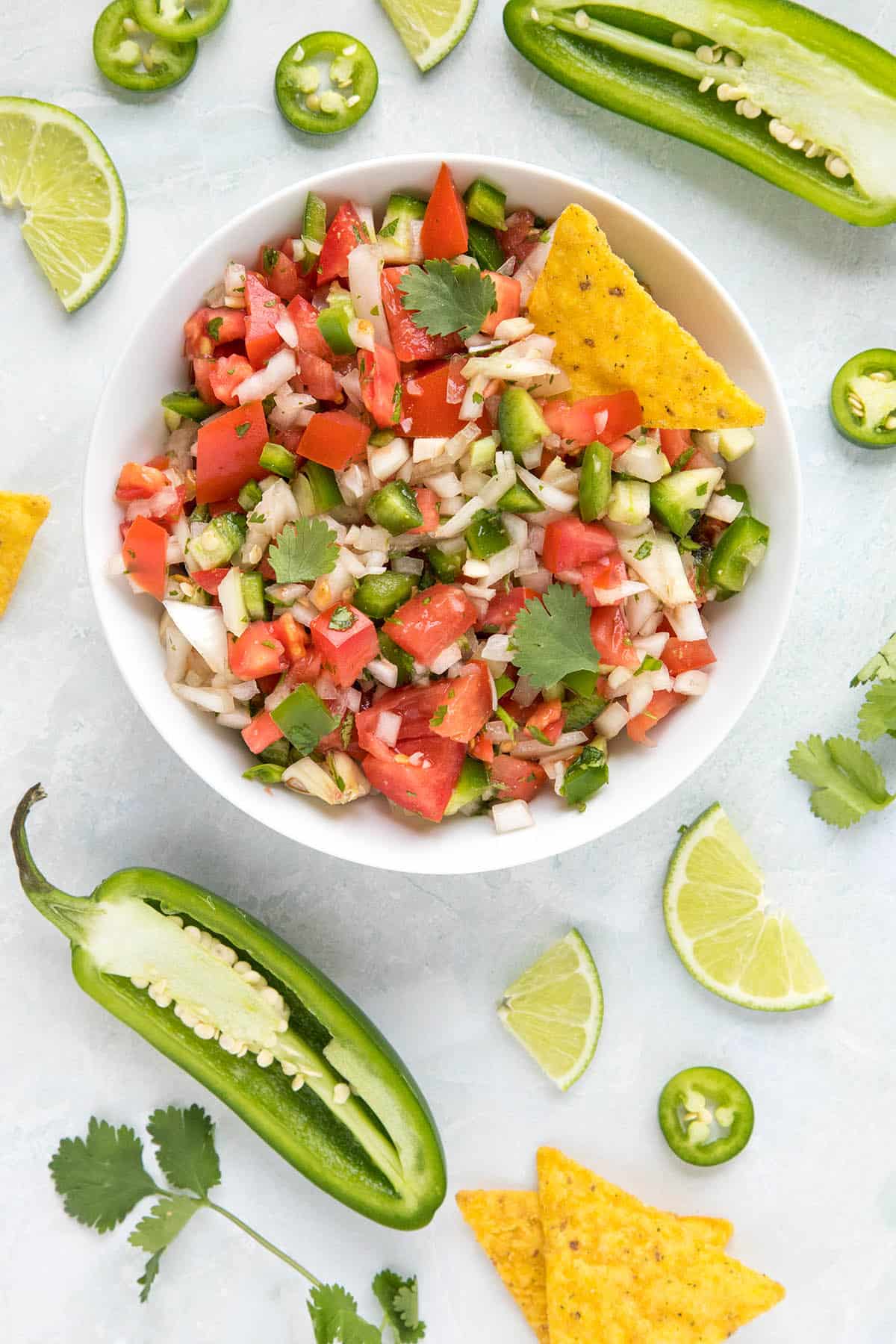
Pico de Gallo vs. Salsa
- Texture. Pico is chopped and chunky, with every ingredient still distinct. Most jarred and restaurant-style salsas are blended or pureed.
- Raw vs. Cooked. Pico is always raw. Many salsas use roasted, charred or cooked tomatoes and chilies.
- Less Liquid. Good pico is fairly dry, which makes it perfect for spooning onto tacos and eggs, where a thinner salsa can be drippy.
- Other Names. You'll also see it called salsa fresca, salsa cruda or salsa Mexicana, since its red, white and green colors match the Mexican flag.
Why is it called "Pico de Gallo"?
The name "pico de gallo" translates from Spanish to "beak of the rooster", or "rooster's beak". The name is said to have derived from the colors of the salsa, which resemble that of a rooster.
There are other historical speculations to the name, including the shape of the peppers used to make it resembling a rooster's beak, or the rooster-like way of eating it by pecking at the salsa with your fingers.
Let's talk about how to make pico de gallo. Much like authentic guacamole, there are different ways to make it, but this one is fairly simple and just plain tasty.
Traditional Pico de Gallo Ingredients
- Ripe Tomatoes. Use vine ripened tomatoes. Roma (plum) tomatoes are especially good here because they're meaty, with fewer seeds and less juice. Grape tomatoes work, too.
- Chilies. Use jalapeños for mild-medium heat, or serranos for a spicier, more traditional Mexican kick. Go with habaneros for extra spicy. See the Heat Factor section below.
- White Onion. The traditional choice. It's sharper and crunchier than red onion.
- Fresh Cilantro. Use as much as you like. I start with a few tablespoons, but many cooks go up to a full cup.
- Lime Juice. Fresh squeezed, not bottled.
- Salt. To taste.
- Optional Additions. I like a little minced garlic, a touch of cumin and some black pepper in mine (see the recipe notes). Check out the Variations section below for more ideas.
How to Make Pico de Gallo - the Recipe Method
First, finely dice the tomatoes and place them into a large mixing bowl. Aim for a small, even dice, about 1/4 inch, so every scoop gets a little of everything. If your tomatoes are very juicy, see my tips below for keeping pico from getting watery.
Next, stem the serrano peppers and finely chop them. Add them to the bowl. Finely chopped ingredients are key to the final texture.
Mince the onion and cilantro. Into the bowl they go.
Add the lime juice and salt. This is also when I add a bit of minced garlic, a touch of cumin and some black pepper, though they're optional.
Mix well. Taste and adjust for lime juice and salt.
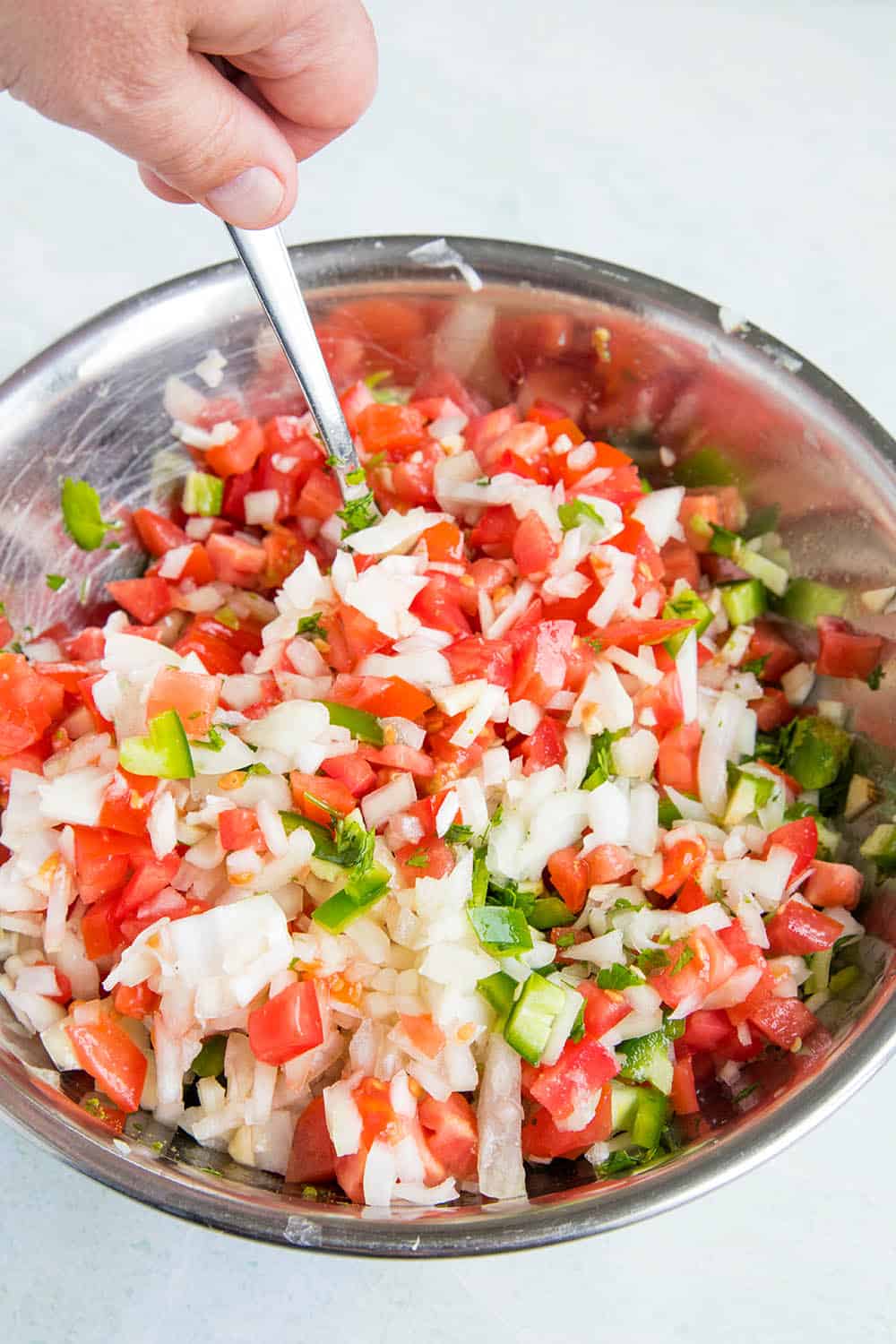
Cover and let the flavor mingle for a good hour or so, though you can serve it right away if you're in a hurry.
BOOM! DONE! I love-love-love a quick and easy salsa recipe. Serve it up with tortilla chips, ideally homemade tortilla chips. Tortilla chips are essential.
How to Keep Pico de Gallo from Getting Watery
Tomatoes are mostly water, and once you dice and salt them, that water starts pooling in the bottom of the bowl. A little liquid is normal, but here's how to keep it in check.
- Choose Meaty Tomatoes. Romas have thicker walls and less juice than big slicing tomatoes.
- Seed Juicy Tomatoes. If your tomatoes are on the juicy side, scoop out the seeds and watery gel before dicing.
- Salt and Drain. For really juicy tomatoes, toss the diced tomatoes with a pinch of salt and let them drain in a colander for 10 to 15 minutes before mixing. Go a little easier on the salt later.
- Use a Sharp Knife. A dull knife crushes tomatoes instead of slicing them, and crushed tomatoes weep.
- Drain Before Serving. Tip out any liquid that collects, or serve it with a slotted spoon.
Recipe Tips & Notes
- Tame the Onion. If raw onion is too sharp for you, rinse the diced onion under cold water and shake it dry before adding it. It keeps the crunch but softens the bite.
- Make It Ahead. You can prep the onion, chilies and cilantro up to a day ahead and keep them covered in the fridge. Dice the tomatoes and mix everything together when you're ready.
- Taste, Then Adjust. Tomatoes vary a lot. Give it a taste after mixing and add more lime or salt until it pops.
Pico de Gallo Variations
Once you've got the classic down, it's easy to play around. A few ideas:
- Habanero Pico de Gallo. Fruity and fiery. Here's my habanero pico de gallo recipe.
- Add Fruit. Diced mango or pineapple makes a sweet and spicy pico. Also see my fresh mango salsa.
- Add Avocado. Fold in diced avocado right before serving for a chunky pico that's halfway to guacamole.
- Extra Crunch. Try diced cucumber, radish or jicama.
- Chilean Pebre. Chile's own fresh salsa, loaded with herbs and finished with a little oil. Try my Chilean pebre.
Serving Pico de Gallo
Keep pico de gallo on hand as a simple salsa that you can serve with chips, but we like it for tossing onto dishes, like classic Huevos Rancheros or Spicy Breakfast Tacos, or spooned onto recipes like Carne Asada or over scrambled eggs.
It's also perfect for street tacos, fish tacos, steak fajitas, chicken fajitas and burrito bowls. Set it out next to a bowl of guacamole and you've got a party.
Storage Info
Store pico de gallo in the refrigerator in a sealed container and use within 5 days. You can freeze it, but freezing will change the texture, making the ingredients soft, losing their crunch factor. Thawed pico is still great stirred into soups, chili, rice or eggs. Drain off any liquid before serving leftovers.
Heat Factor
Mild-Medium. You can dial back the heat by using bell peppers, or remove the seeds and innards of the jalapeno peppers for milder heat.
In Mexico, cooks often like to use serrano peppers and sometimes habanero peppers for spicier versions. Fresno peppers are another good swap, with heat close to a jalapeño and a bright red color.
I have made a version with ghost peppers for parties in my neighborhood, and even though it's crazy spicy, people love it!
That's it, my friends! I hope you enjoy this classic pico de gallo recipe! Go throw a party just so you can make some of these. It will help you win friends and influence people. We love this recipe.
Try Some of My Other Popular Salsa Recipes
- Salsa Ranchera
- Salsa Macha
- Picante Salsa
- Xni-Pec (Fresh Habanero Salsa)
- Salsa Roja
- Chile de Arbol Salsa
- Salsa Verde
- Fresh Cranberry Salsa
- Chiles Toreados (Mexican Blistered Peppers)
- Habanero Pico de Gallo
- Chilean Pebre
- Fresh Mango Salsa
- Salsa Recipes
Also see my post on How to Make Salsa, with lots of tips and tricks for different types of salsa recipes.
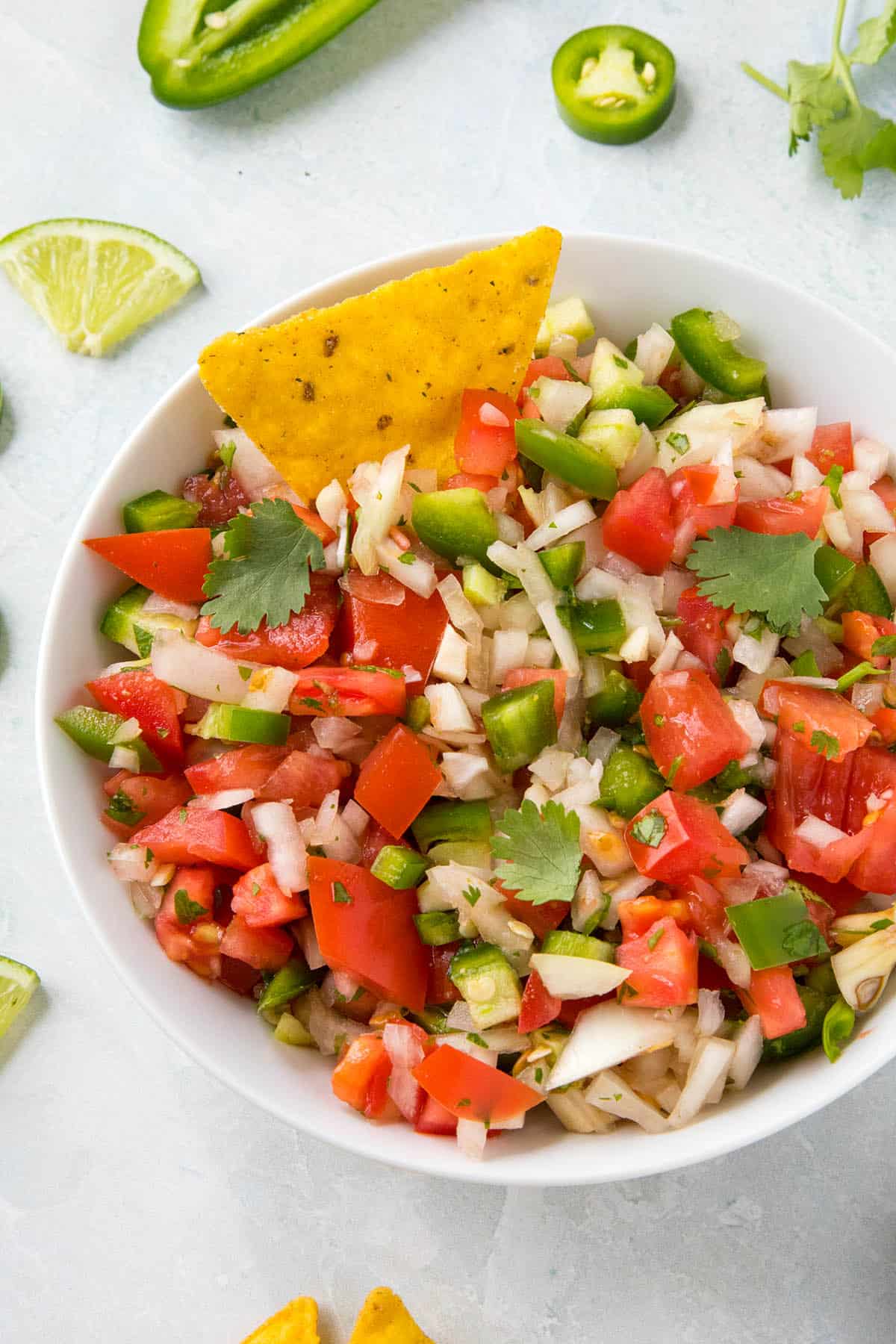
Got any questions? Ask away! I’m happy to help. If you enjoy this recipe, I hope you’ll leave a comment with some STARS. Also, please share it on social media. Don’t forget to tag us at #ChiliPepperMadness. I’ll be sure to share! Thanks! — Mike H.
Authentic Pico de Gallo Recipe (Fresh Mexican Salsa)
Ingredients
- 1 pound vine ripened tomatoes diced
- 2 serrano peppers diced (use jalapenos for milder)
- 1 small white onion diced
- 3 tablespoons cilantro cleaned and stemmed - add up to 1/2 to 1 cup, to your preference
- Juice from 1 lime about 3 tablespoons
- Salt to taste
Instructions
- Add the tomatoes, serranos (or jalapenos), onion, and cilantro to a mixing bowl.
- Add the lime juice and salt. Mix to combine.
- Taste and adjust for salt and lime.
- Cover and let the flavor mingle for a good hour or so, though you can serve it right away if you're in a hurry.
Video
Notes
Nutrition Information
Pico de Gallo FAQs
Is pico de gallo spicy?
Made with jalapeños, it's mild to medium. For milder pico, remove the seeds and inner membranes from the jalapeños or swap in bell pepper. For spicier pico, use serranos or habaneros.
How long does pico de gallo last?
Up to 5 days in a sealed container in the refrigerator. It will release more liquid as it sits, so drain it before serving.
Can you freeze pico de gallo?
You can, but the tomatoes and onions turn soft once thawed, so it won't work as a fresh salsa. Use frozen pico in cooked dishes like soups, chili, rice or scrambled eggs.
Can I use canned tomatoes for pico de gallo?
Not for pico. Canned tomatoes are cooked and soft, and pico is all about fresh, raw crunch. Save canned tomatoes for a blended restaurant-style salsa.
Should I use red onion or white onion?
White onion is traditional. It's sharper and crunchier. Red onion works fine, too. It's a bit sweeter and adds nice color.
What's the difference between pico de gallo and salsa?
Pico de gallo is a type of salsa, but it's always raw, chopped and chunky, with very little liquid. Most other salsas are blended and often cooked.
NOTE: This recipe was updated on 10/28/2026 with new information, including tips for keeping pico from getting watery, a pico de gallo vs. salsa section, variations, more serving ideas and FAQs. The recipe itself hasn't changed. It was originally published on 11/30/2014.
Wanda Jackson says
I like to add garlic, cumin and Mexican oregano to mine also!
Mike Hultquist says
So good! Thanks, Wanda!
Kevin says
I've made Pico for years and it matches your recipe, except I add 2-3 avocados diced up. It adds a creaminess and helps hold it together. I also use granulated garlic. It seems to distribute more evenly.
Mike Hultquist says
A nice addition for sure, Kevin! Great way to mix it up!
Cindy Lloyd says
If you don't mind a question first. How much minced garlic do you add to yours? I saw that you wrote that you like to add it and black pepper. I can't wait to find out!
Mike Hultquist says
Cindy, garlic and black pepper are not traditional, but I sometimes add it. I usually do 2-4 garlic cloves, and just a few grinds of black pepper. It's all really to taste. Enjoy!
Donna Lane says
Hey there Mike I have a question for you?
I have SLE Lupus and spicey and I don't agree on your Pico recipe which mild pepper can I substitute for the jalapeno?
Mike Hultquist says
Donna, you can core the jalapenos for less heat, or use green bell peppers for ZERO heat, but to keep the similar flavor.
Nancyo says
Huge thumbs up! I didn't have enough cilantro in my garden (starting to bolt) 🙁 but was so fresh and clean with our hot banana peppers. I ate the whole thing myself. Boyfriend didn't stand a chance however, I also made the hot pepper relish and he said it was the best he'd ever had. Will be sure to review that properly; didn't want to come across as a total pig. 🙂
Mike Hultquist says
Haha, thanks, Nancyo! This is definitely a favorite in our kitchen. Thanks so much!!