


Jalapeños are medium-heat chili peppers with a bright, grassy “green pepper” flavor and a manageable kick. They usually land at 2,500-8,000 SHU, and you’ll see them most often green, though they turn red when fully ripe.
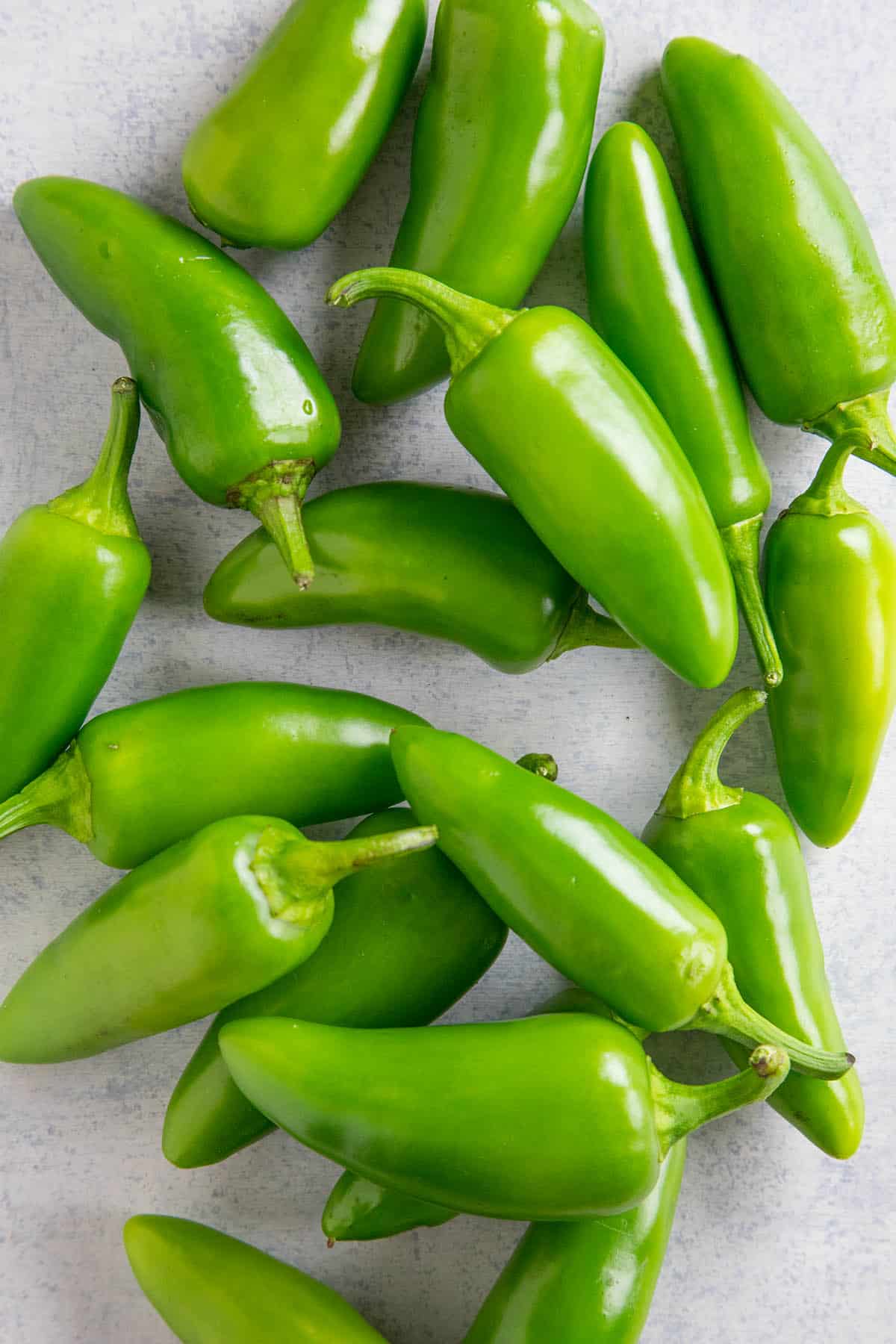
Scoville Heat Units: 2,500 - 8,000 SHU
Origin: Mexico.
How to Store Jalapeños
- Store dry and unwashed in the fridge (moisture speeds soft spots).
- Best used within 1-2 weeks for crunch and freshness.
- If they soften, use them in cooked dishes or sauces.
Can You Freeze Jalapeños?
Yes. Freeze whole or sliced. They’ll soften after thawing, so they’re best for soups, sauces, stews, roasting, and sautéing rather than fresh salsa.
Best Jalapeño Substitutes
- Serrano peppers (closest swap, usually hotter)
- Fresno peppers (similar size/shape - often comparable heat, a bit fruitier)
- Anaheim peppers (milder - use more)
- Bell pepper + pinch of cayenne pepper (for flavor + controlled heat)
The Jalapeño Pepper: America’s Favorite Chile Pepper
Jalapeños are one of the most commonly used chili peppers in the U.S. and beyond, thanks to their thick flesh, bright green flavor, and manageable heat. They’re usually picked green, but if left to fully ripen they turn red, becoming a bit sweeter while the heat can still vary from pepper to pepper.
Jalapeños originated in Mexico, where they’re a staple ingredient in everyday cooking. Compared to other popular peppers, jalapeños are generally milder than serrano peppers, which makes them an easy “go-to” for adding heat without overpowering a dish.
What is a Jalapeño Pepper?
A jalapeño pepper is the fruit of the Capsicum annuum plant (the same species as many other common chili peppers). Most jalapeños measure about 2-3.5 inches long, though some grow larger depending on variety and conditions.
They’re now grown worldwide, prized for their fresh, vegetal flavor and medium heat level, typically falling in the 2,500-8,000 Scoville Heat Units (SHU) range. You’ll most often see them sold green, but fully ripe red jalapeños are just as flavorful, often a touch sweeter, and excellent for sauces, pickling, and roasting.
The Meaning of Jalapeño
The name "jalapeno" is Spanish for "Jalapa" (or Xalapa), the capital of Veracruz, Mexico. Jalapenos were originally grown there, hence the name.
Other Names for Jalapeño
- Huachinango - the ripe red jalapeno
- Chile Gordo - "Fat Chili Pepper"
- Cuaresmeño
- Chipotle Pepper - a smoked jalapeno pepper
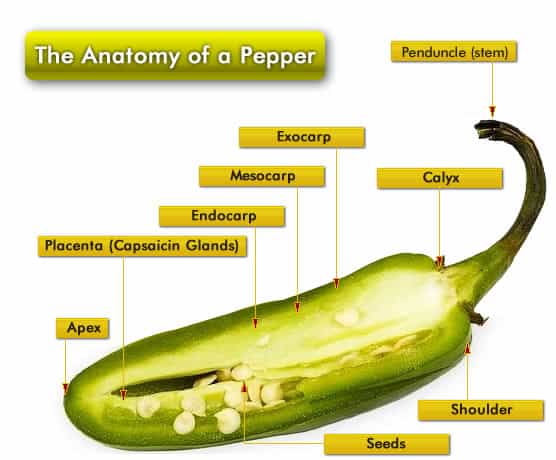
Anatomy of a Jalapeño Pepper
Growing Jalapeno Peppers
Growing jalapeno peppers is fairly easy because the plants are pretty forgiving. Jalapenos start off a bit slow, so it is helpful to start to grow your plants indoors a few weeks (anywhere from 8-12 weeks) before transferring them outside. Keep the early soil and budding plants constantly moist, but do not over water.
Learn more about growing jalapenos and other chili peppers here.
Or, check out this Guide to Growing Chili Peppers for helpful information.
About the Jalapeno Plants
A mature jalapeno pepper plant measures 2-3 feet in height and will typically produce around 30-40 jalapeno pepper pods. If you grow them in your own garden, pick them regularly, as the plant will continue to produce.
How Hot are Jalapeno Peppers? The Jalapeno Pepper Scoville Scale Rating
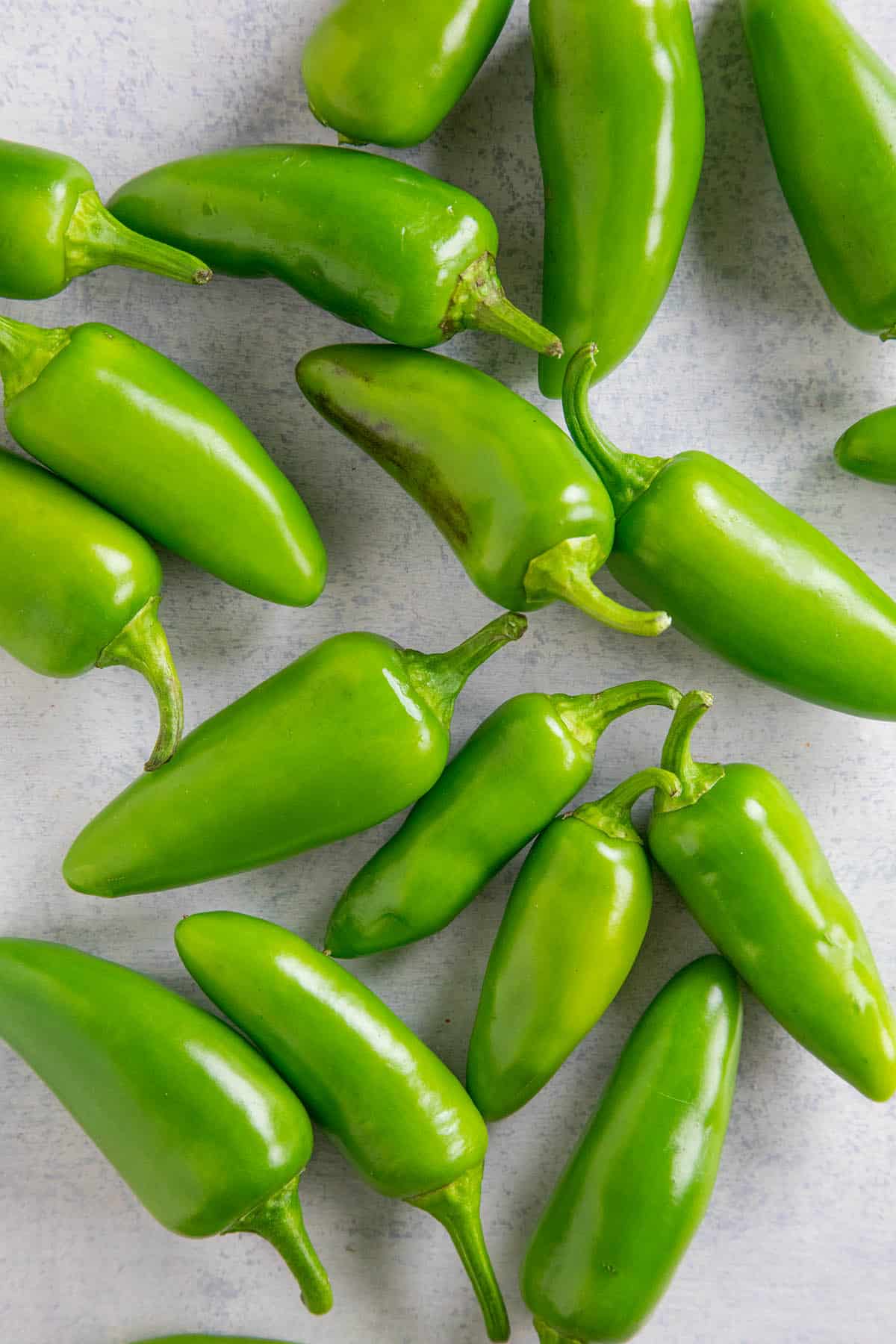
Since jalapeno peppers range between 2,500 and 8,000 Scoville Heat Units (SHU), they can be notably spicy, but they are not TOO spicy, depending on your tolerance.
If you compare the jalapeno pepper to the Hottest Peppers in the World, particularly the Hottest Pepper in the World - The Carolina Reaper, you'll find that jalapeno peppers are actually quite low on the Scoville Heat Scale.
Also see - Why Do Jalapenos Vary in Heat Level?
Related Peppers
The Health Benefits of Jalapeno Peppers
Jalapeños are a nutrient-dense pepper for their size, especially when it comes to vitamin C. A single raw jalapeño (about 14g) provides roughly 16-17 mg of vitamin C, which is about 18% of the Daily Value. (And ounce-for-ounce, many chili peppers can be excellent sources of vitamin C.)
Jalapeños also contain capsaicin, the compound responsible for their heat. Research suggests capsaicin may have a small, modest effect on things like energy expenditure, fat oxidation, and appetite for some people, but it’s not a magic switch for weight loss.
If your goal is better health (or weight management), the best approach is still the basics: overall calorie balance, quality food choices, and regular activity. Jalapeños can be a flavorful way to make meals more satisfying, especially when they help you rely less on heavy sauces or extra added fat.
As always, check with your doctor if you have specific health concerns or dietary restrictions (especially if spicy foods irritate your digestive system).
What Do Jalapeno Peppers Taste Like?
Jalapeño peppers taste very much like a serrano pepper, only with less heat, or a bell pepper with a kick.
I characterize the flavor of fresh jalapenos as bright, vegetable and very green, with a slight level of heat. Roasted jalapenos peppers are richer, slightly smoky, earthy with good heat.
FAQs
How hot are jalapeños (Scoville range)? Most jalapeños range 2,500–8,000 SHU.
What do jalapeños taste like? Bright, green, vegetal flavor with a clean heat. Roasted jalapeños become richer and lightly smoky.
Are red jalapeños hotter than green? Red jalapeños are fully ripe and often taste a bit sweeter. Heat can vary pepper to pepper.
Why do jalapeños vary in heat level? Growing conditions, stress, variety, and ripeness can all change heat.
How do I make jalapeños less spicy? Remove the ribs/inner membrane (where most heat concentrates) and rinse out seeds. Cooking also mellows and spreads heat.
What’s the best jalapeño substitute? Serrano is the closest swap (usually hotter), or use Fresno/Anaheim depending on your heat preference.
What is chipotle? Chipotle is a smoked jalapeño pepper.
Cooking with Jalapeno Peppers
Jalapeno peppers are by far one of my very favorite chili peppers. For me, they're an everyday pepper. They're not too hot, and contain just the right amount of heat for everyday use.
My wife has ZERO trouble eating foods made with jalapeno peppers. It's basically a gateway pepper. You get the right amount of spice with them, but then soon you find yourself craving hotter and spicier foods. Excellent!
When cooking with them, use them as you would use a bell pepper. Remove the stem, chop them, then use them as the recipe calls for.
You can core the jalapenos to reduce the overall heat if you'd like. I like to leave the innards intact for that extra bit of kick.
Jalapenos are also wonderful when roasted. You can roast them over an open flame until the skins char and bubble, then peel them off. Or you can broil or bake them to roast them.
Learn how to roast chili peppers.
I cook jalapenos into just about everything. Seriously, I love them so.
Below is a list of recipes to try that feature or incorporate jalapeno peppers.
Jalapeno Pepper Recipes
- Candied Jalapenos (Cowboy Candy)
- Jalapeno Jelly
- Bacon Wrapped Jalapeno Poppers
- Baked Cream Cheese Jalapeno Poppers
- Grilled Jalapeno Poppers
- Jalapeno Bottle Caps (Breaded and Fried Jalapeno Peppers)
- Creamy Jalapeno Sauce
- Jalapeno Cheddar Chicken Wings
- Kiwi Jalapeno Jam
- Ancho-Jalapeno Hot Sauce
- Pickled Jalapeno Peppers
- Taqueria-Style Pickled Jalapenos and Carrots
Want to learn more about the Jalapeno?
This post was updated on 1/29/26 to include new information and photos. It was originally published on 9/22/2013.
Linda grant says
I have a pepper plant i think its a jalepone, the pepper was green and has suddenly gone yellow!! Help i don't have a clue whats going on with it!!
Michael Hultquist - Chili Pepper Madness says
Hard to say, Linda. It might not be a jalapeno, but something like a jaloro pepper.
Nick G says
I have two Jalapeno plants and both are producing well. I'm aware that they will turn red if they remain on the plant long enough. However, I have a small newly emerged pepper on the plant that was originally dark, even purple, and that by the end of the day was bright red. But still quite small. It basically emerged red on a plant whose other peppers are of course green. What do I make of this?
Michael Hultquist - Chili Pepper Madness says
It's likely still edible, Nick. I wouldn't be concerned. As long as it feels firm and shows no signs of rot.
Ken Robinson says
Michael
I am just starting to grow some Jalapenos in a small hydroponic unit, 3 plants about a foot high and starting to flower in sub-tropical Australia, should I pinch off some flowers at this stage or let them grow out?
I will be planting more and plan on pickling, sauce making and poppers using your recipes and following your updates with gratitude and thanks.
Ken
Michael Hultquist - Chili Pepper Madness says
Ken, if the plants are still growing, pinching off some of the flowers will let the plant focus energy on continuing to grow rather than supporting peppers. Could be a good idea. Good luck!
Paul says
Im trying to find out roughly how many seeds are in 1 jalapeño. ..do u have any idea...im wanting to know as looking at saving some seed.thnx
Michael Hultquist - Chili Pepper Madness says
Paul, that's a great question, one I never bothered to measure! Now I'm curious!
garry boettger says
How to store peppers.
Michael Hultquist - Chili Pepper Madness says
Gary, I have a page that you can review - How to Store Peppers. I hope this helps.
Steve Bacon says
I am growing peppers in my garden and need to know how best to store them,
Thanks
Michael Hultquist - Chili Pepper Madness says
Steve, check out my post on How to Store Peppers (https://www.chilipeppermadness.com/preserving-chili-peppers/how-to-store-peppers/). Good luck with your jalapenos!