
Chili Pepper Madness - spicy chili pepper recipes and info on all things chili peppers Own the Jalapeno Madness Cookbook Now!
   

Name:

Email:

Referred by:

Welcome

Chili Pepper Types

Chili Pepper Recipes

CHILI PEPPER COOKBOOKS!

Growing Chili Peppers

Preserving Chili Peppers

Hot Sauces

Chili Pepper Resources

Chili Pepper FAQs

Chili Pepper Products

Cooking Tips

Chili Pepper Health Benefits

Fun Videos

Newsletter

Contact Us

The Madness Web Sites

Site Map/Links

Types of Chili Peppers

Types of Chili PeppersThere are many, many varieties of chili peppers, and they often have different names depending on region. But, we're compiling information on chili peppers for you to learn more.

Anatomy of a Chili Pepper - An illustration of the innards of a chili pepper.

Our Chili Pepper List

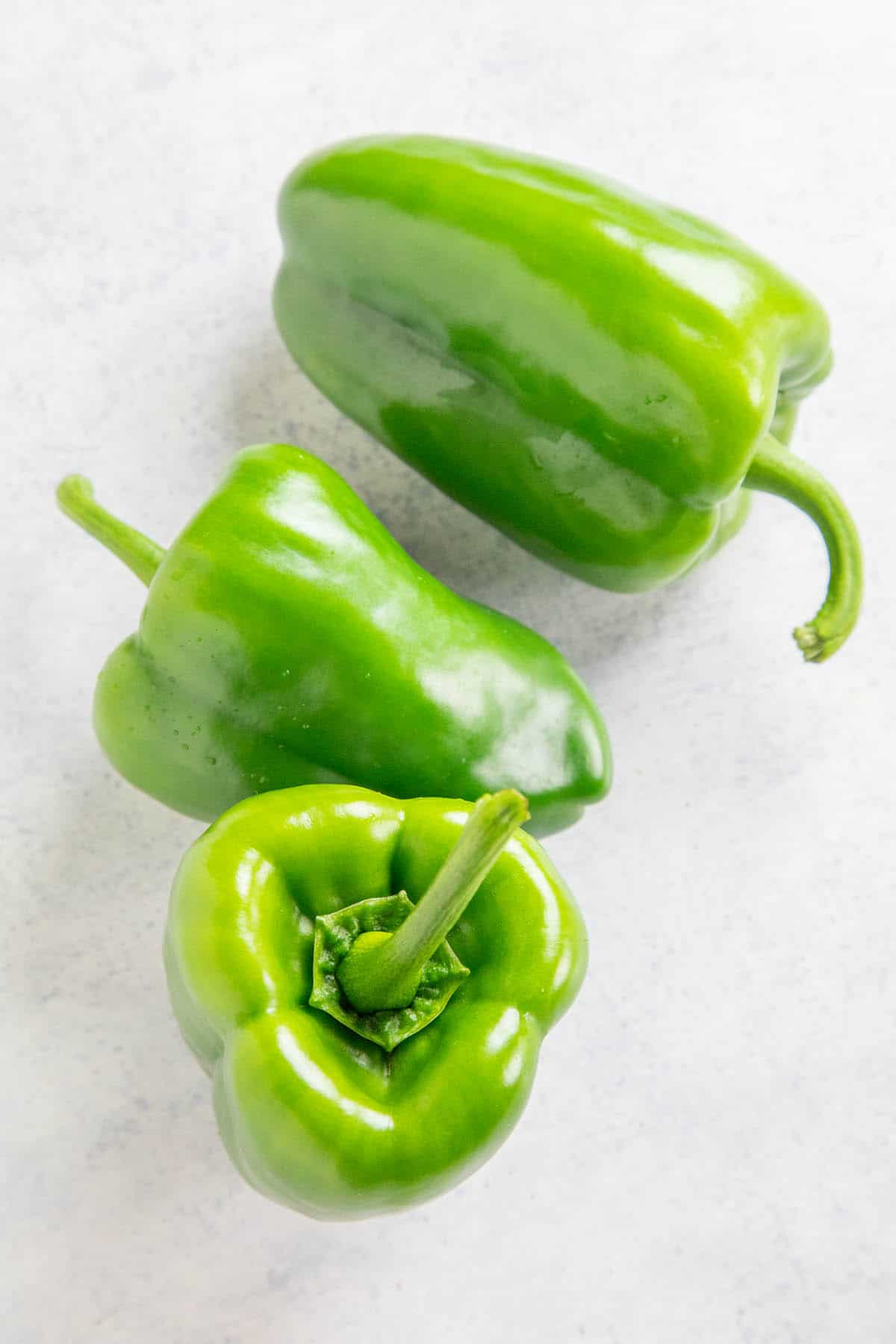
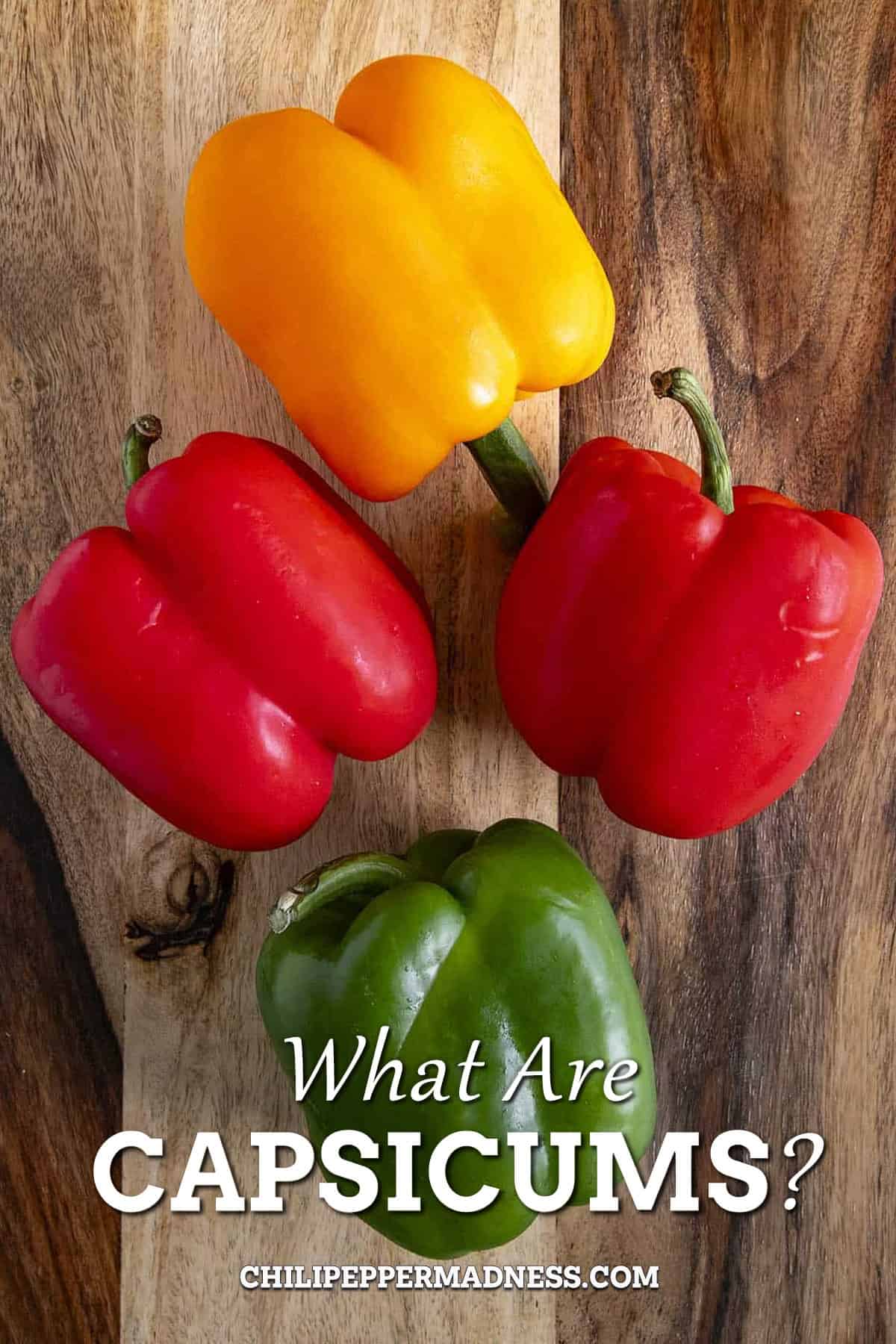
Sweet bell pepper: 0 Scovilles. The typical green bell pepper, about the size of a large fist. Very mild.

Pimento (or Pimiento) chili pepper: 100 - 500 Scovilles. Not just for stuffing olives. Pimiento is the Spanish word for "pepper".

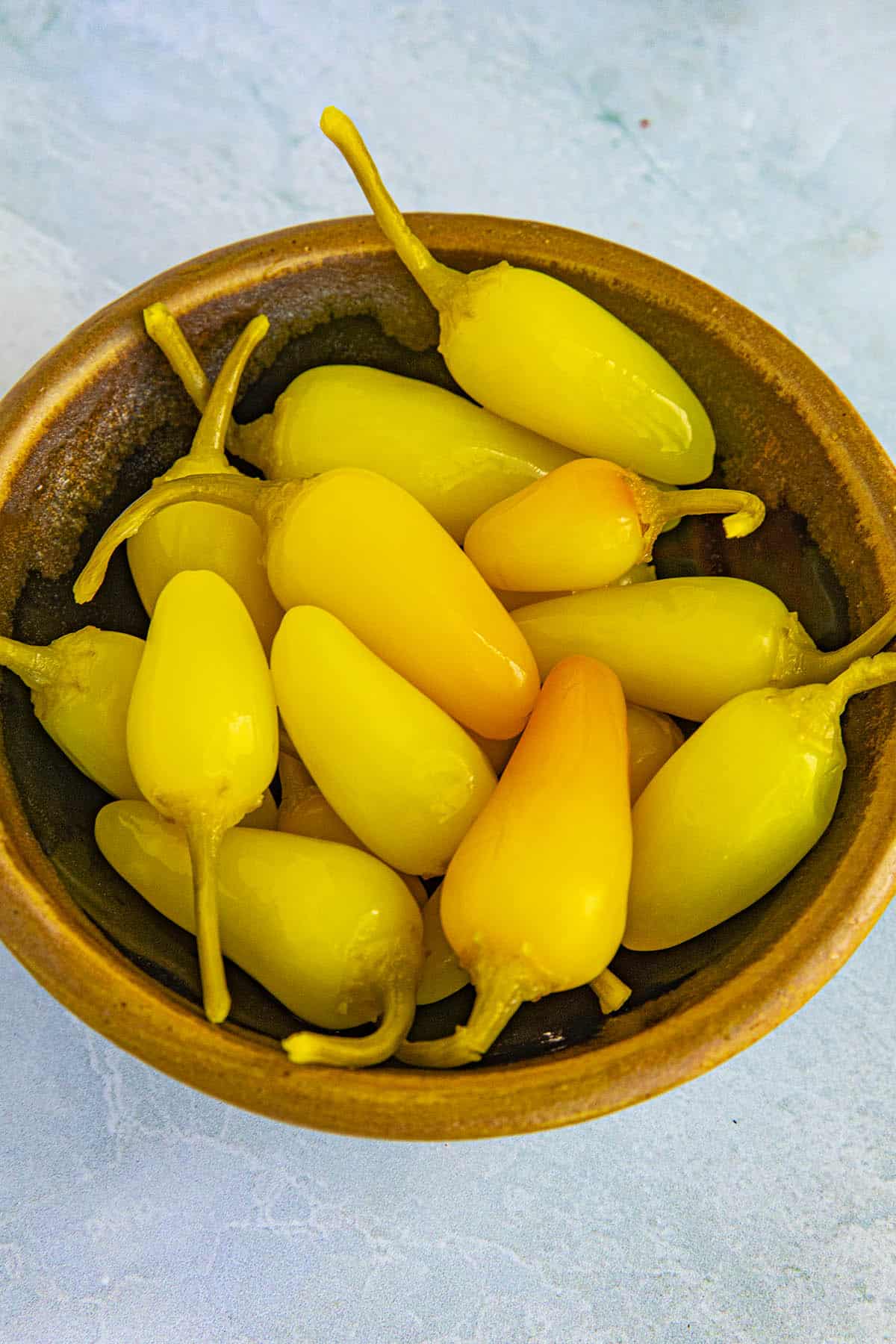
Pepperoncini chili pepper: 100-500 Scovilles: Also known as Tuscan Peppers. These sweet, mild chili peppers are found in Italy and Greece.


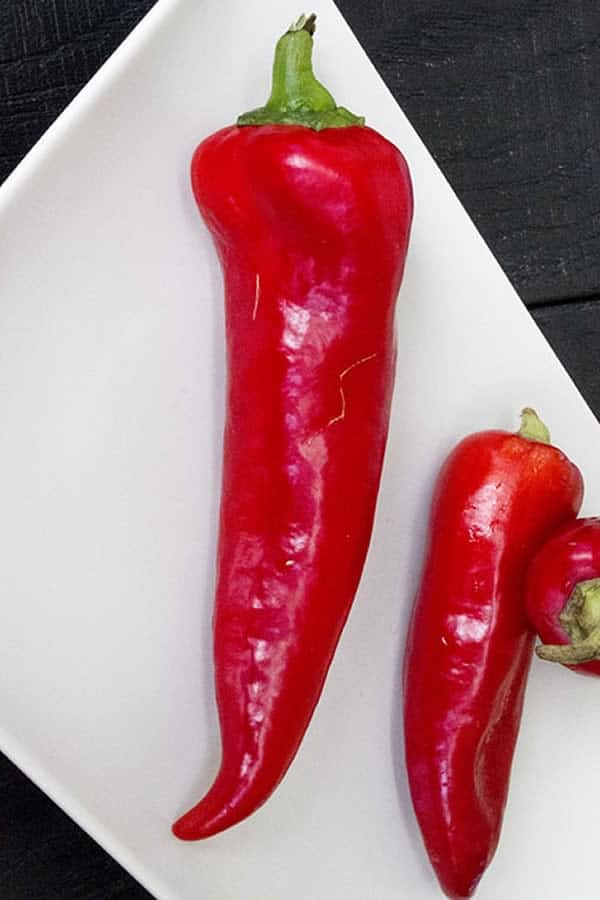
Paprika chili pepper: 250 - 1000 Scovilles. A large, cone-shaped chili pepper. It is dried and ground to make the more familiar powdered spice.

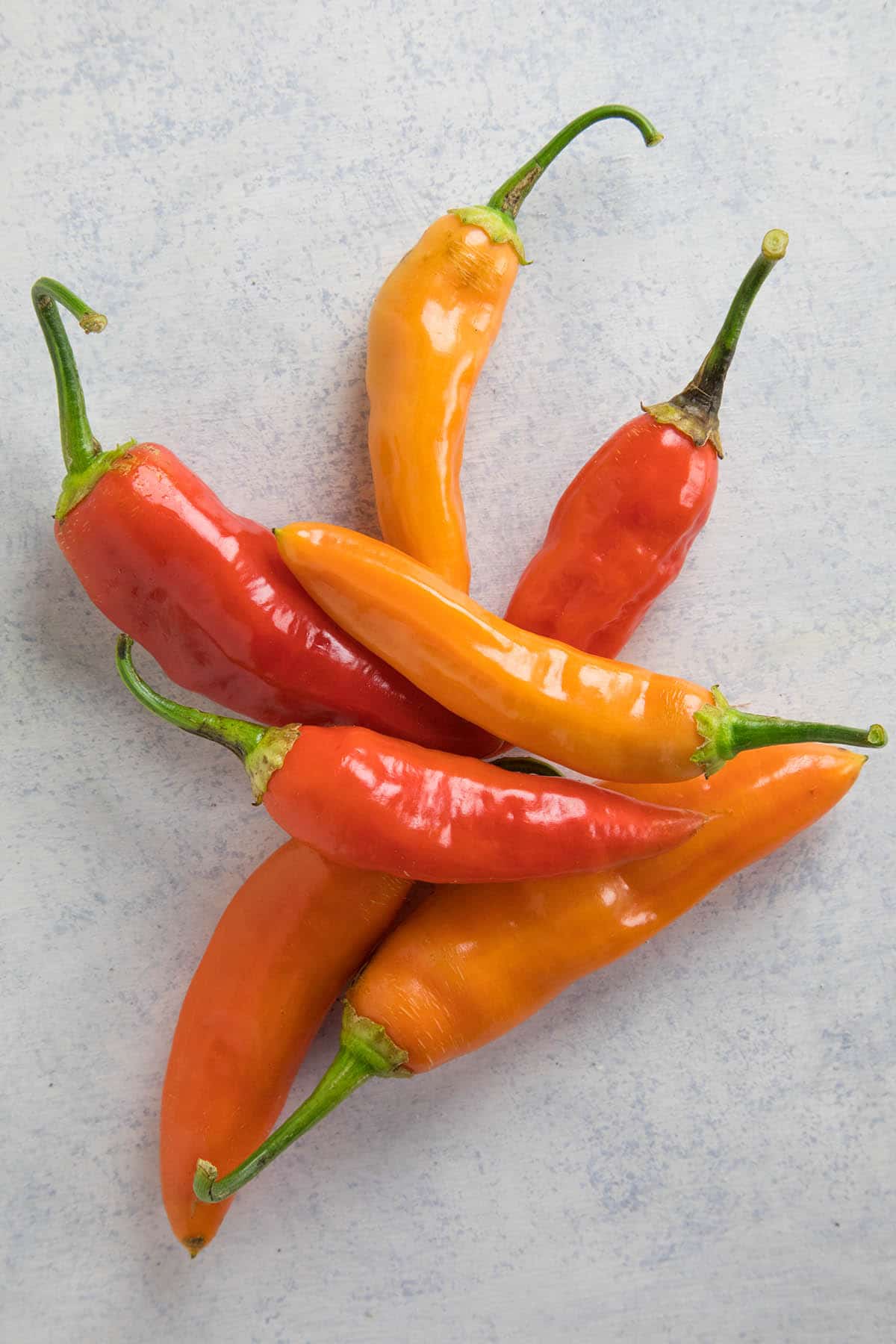
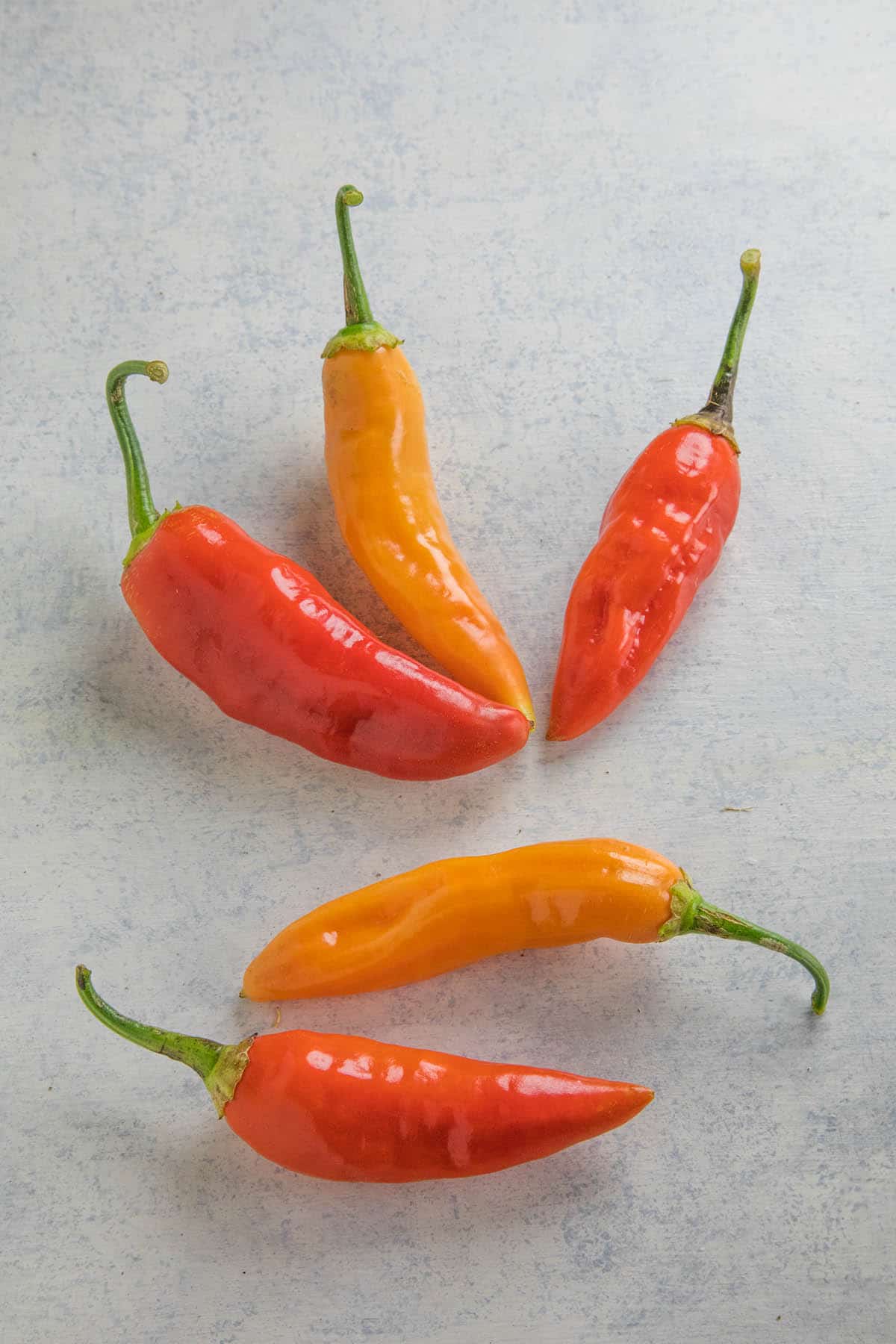
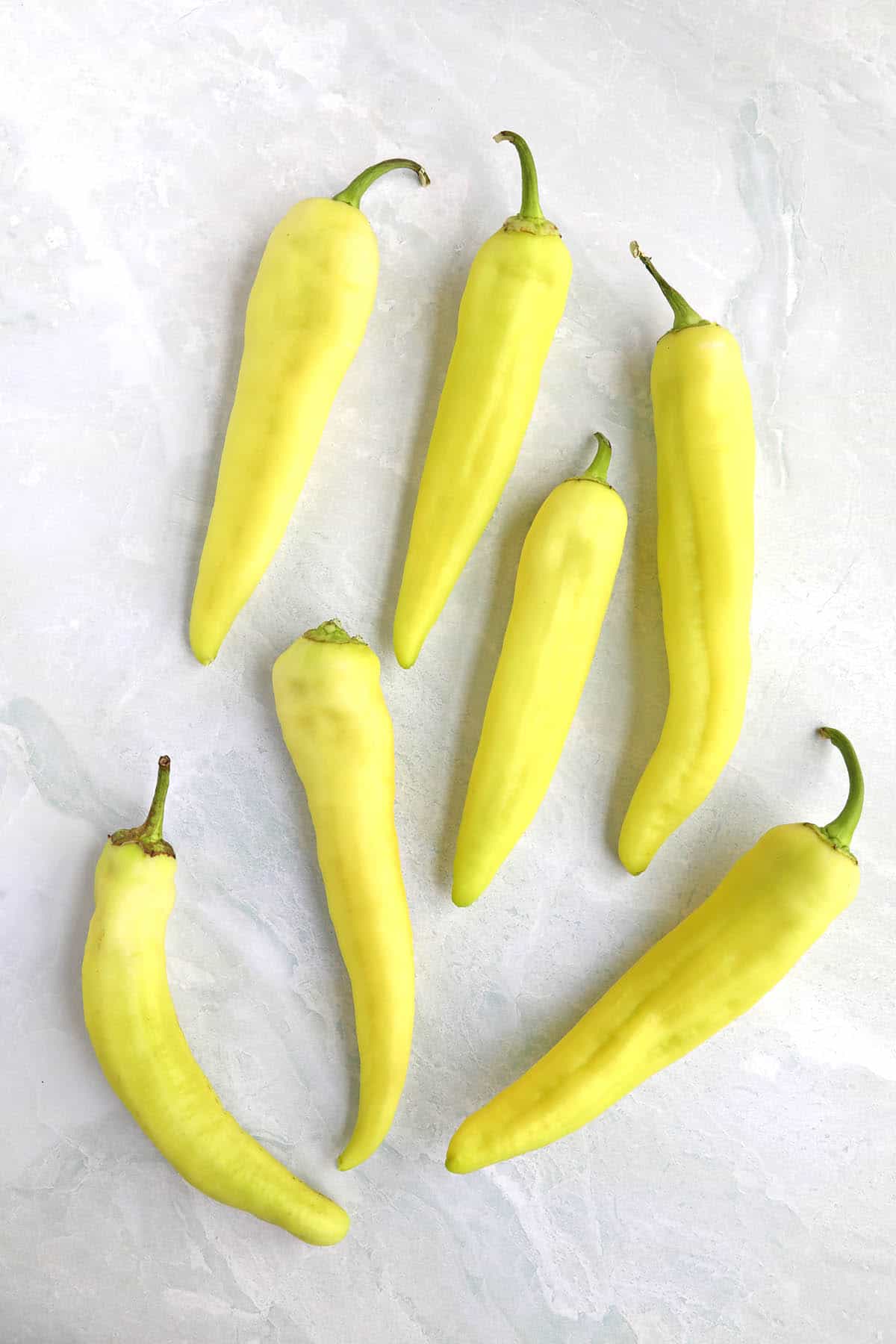
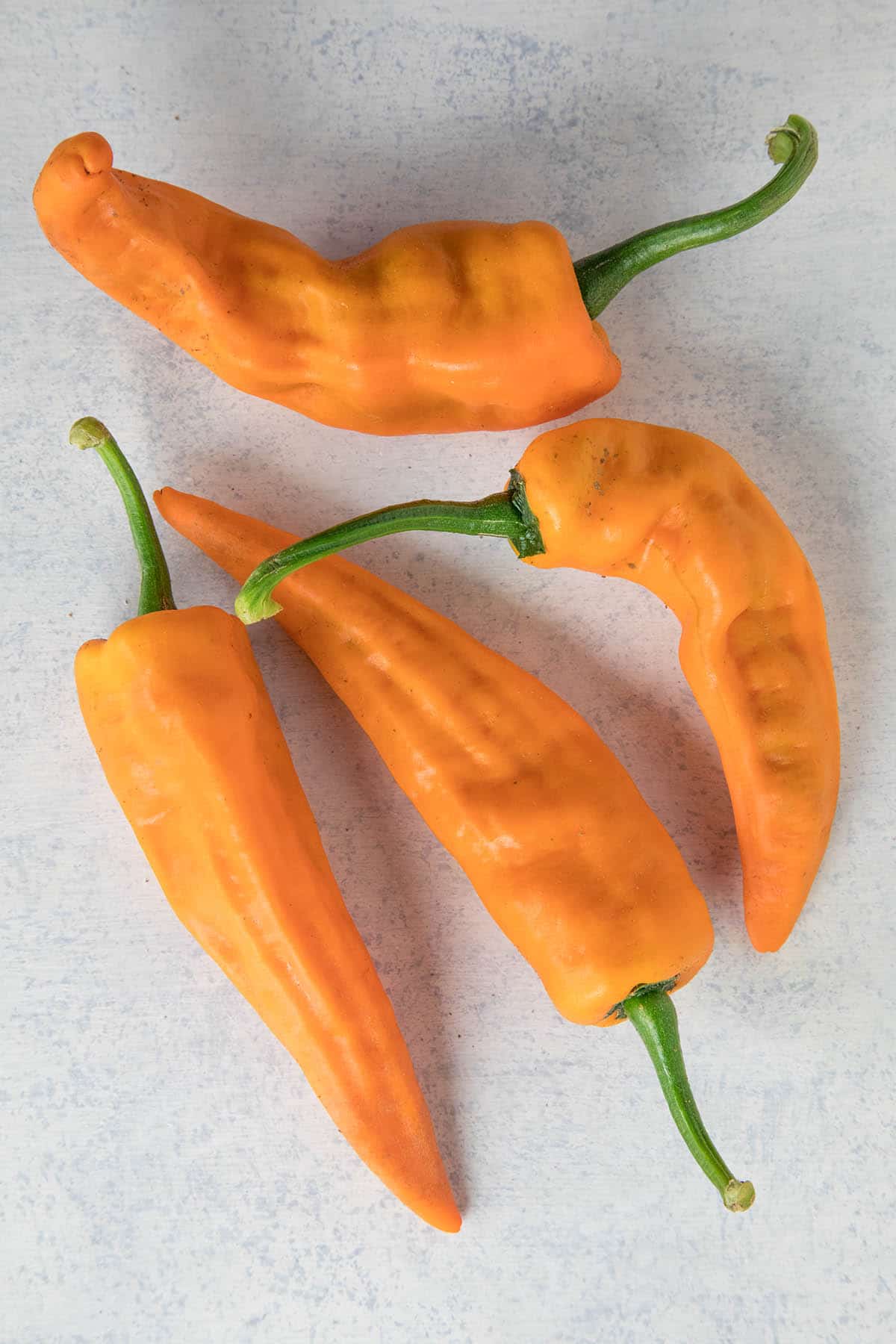
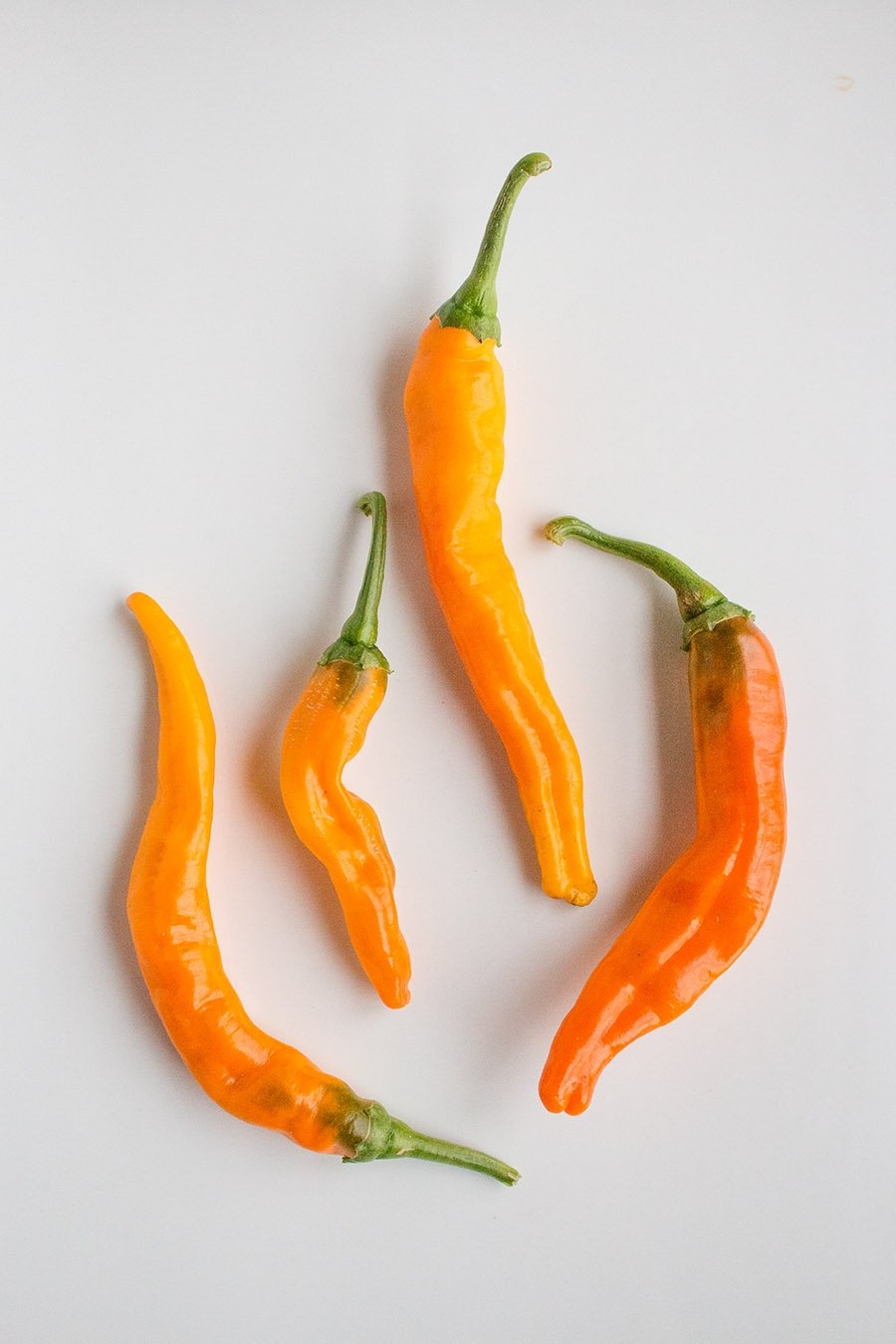
Santa Fe Grande chili pepper: 500 - 700 Scovilles. Also known as the yellow hot chile and the guero chile. Approximately 5 inches long and ripen from greenish-yellow, to orange-yellow to red.

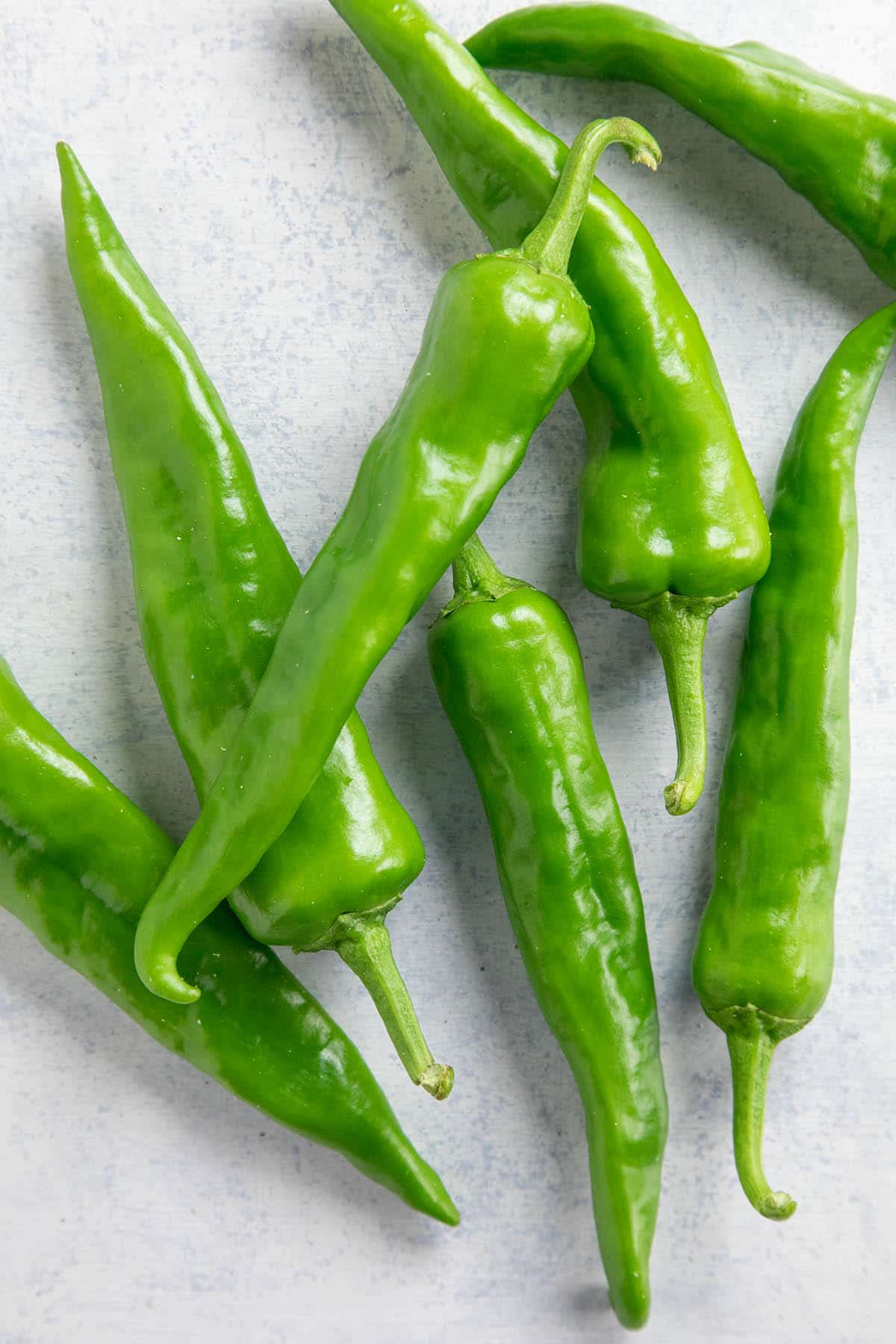
Anaheim chili pepper: 500 - 1,000 Scovilles. Also known as the yellow hot chile and the guero chile. Approximately 5 incheslong and ripen from greenish-yellow, to orange-yellow to red.

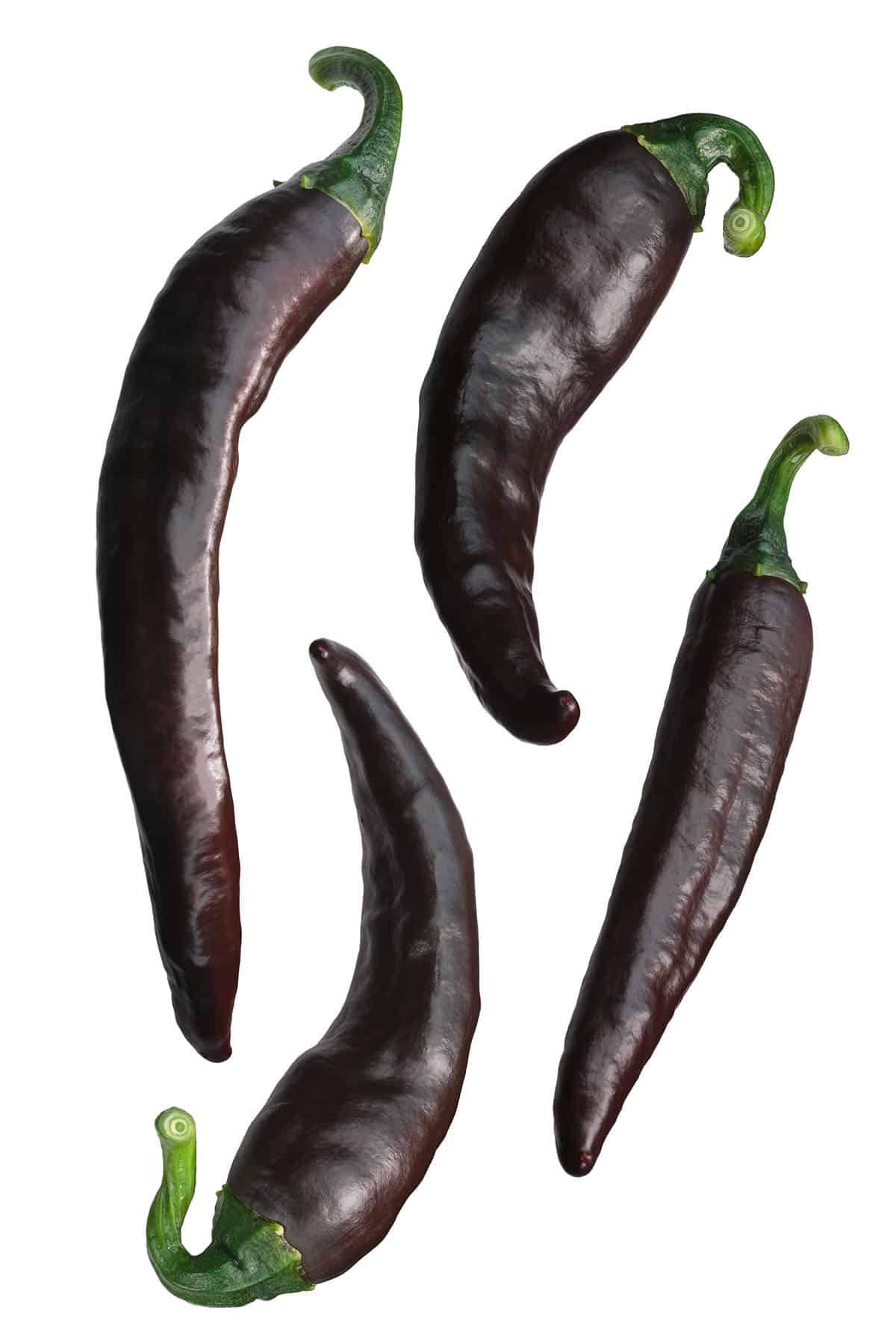
Poblano chili pepper: 1,000 - 2,000 Scovilles. The poblano is an extremly popular chili peppers. 4 inches long, very dark green in color, ripening to dark red or brown.

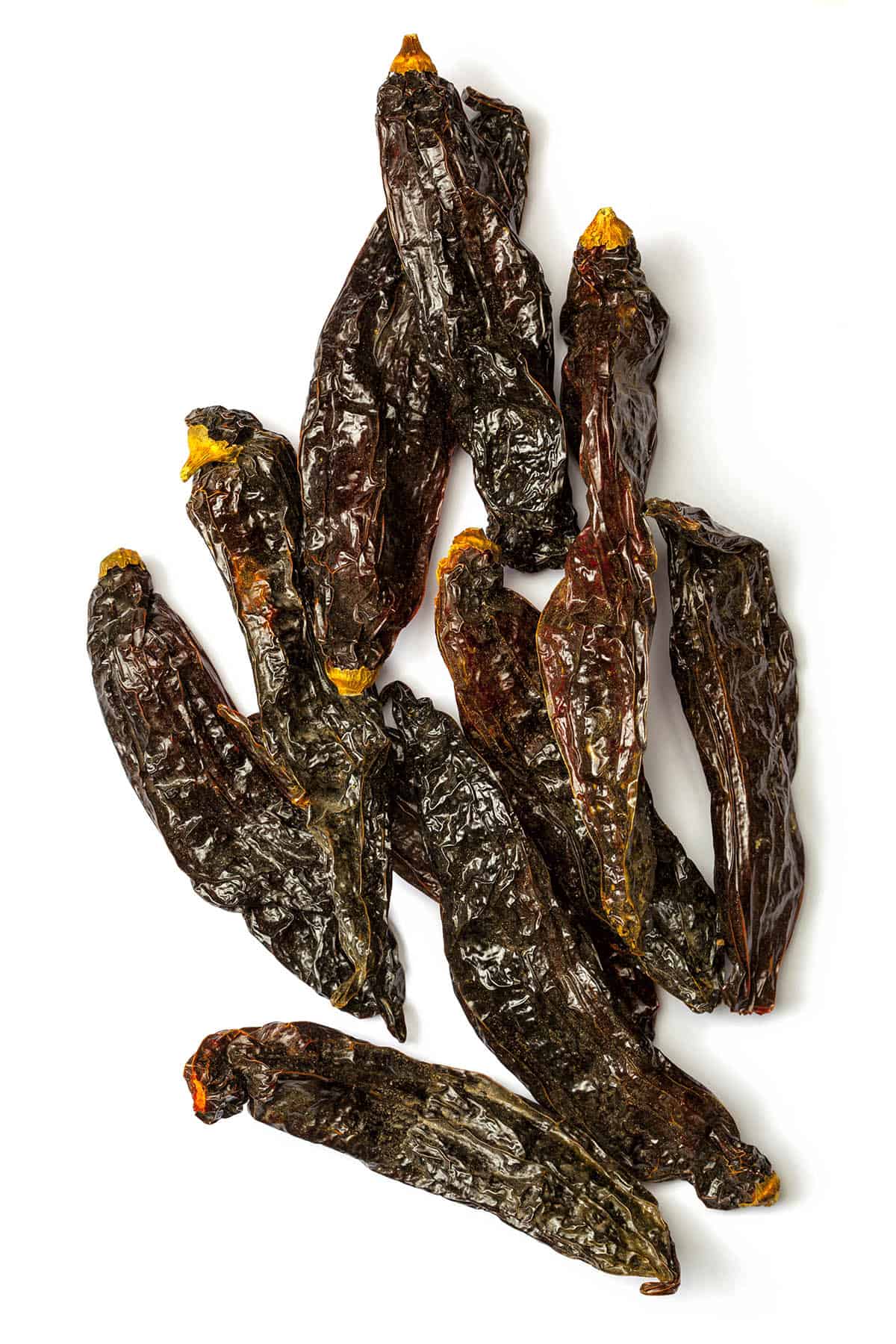
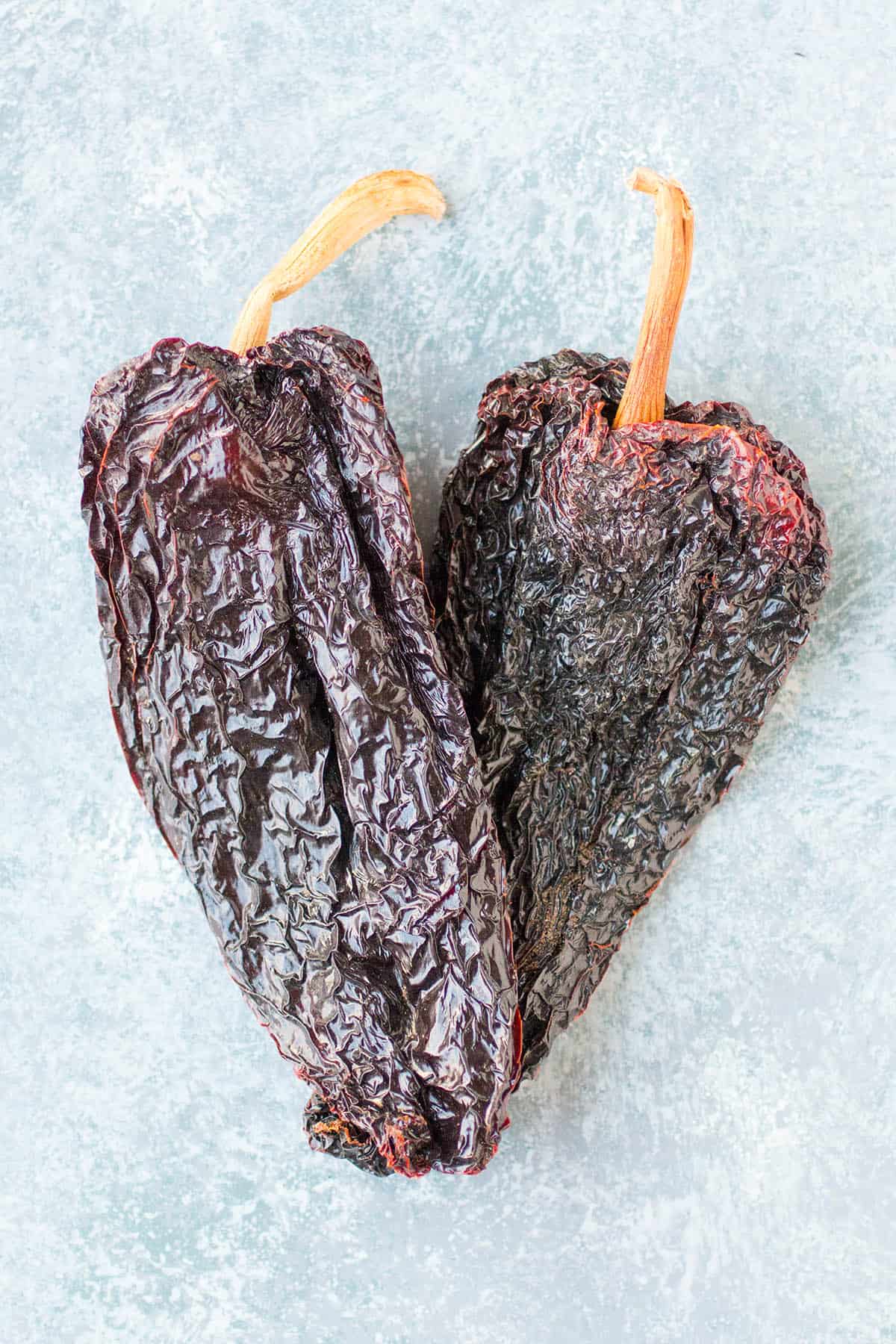
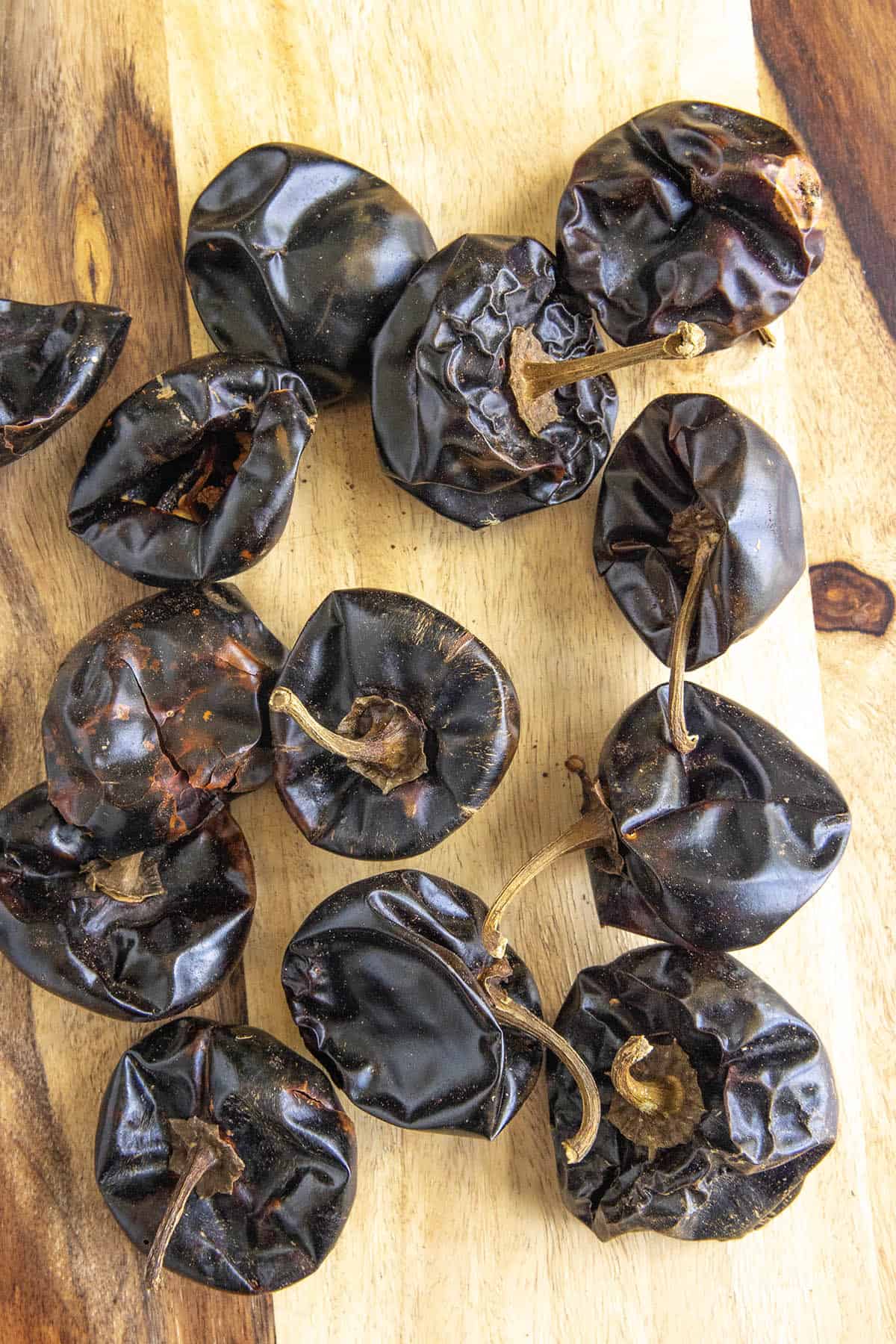
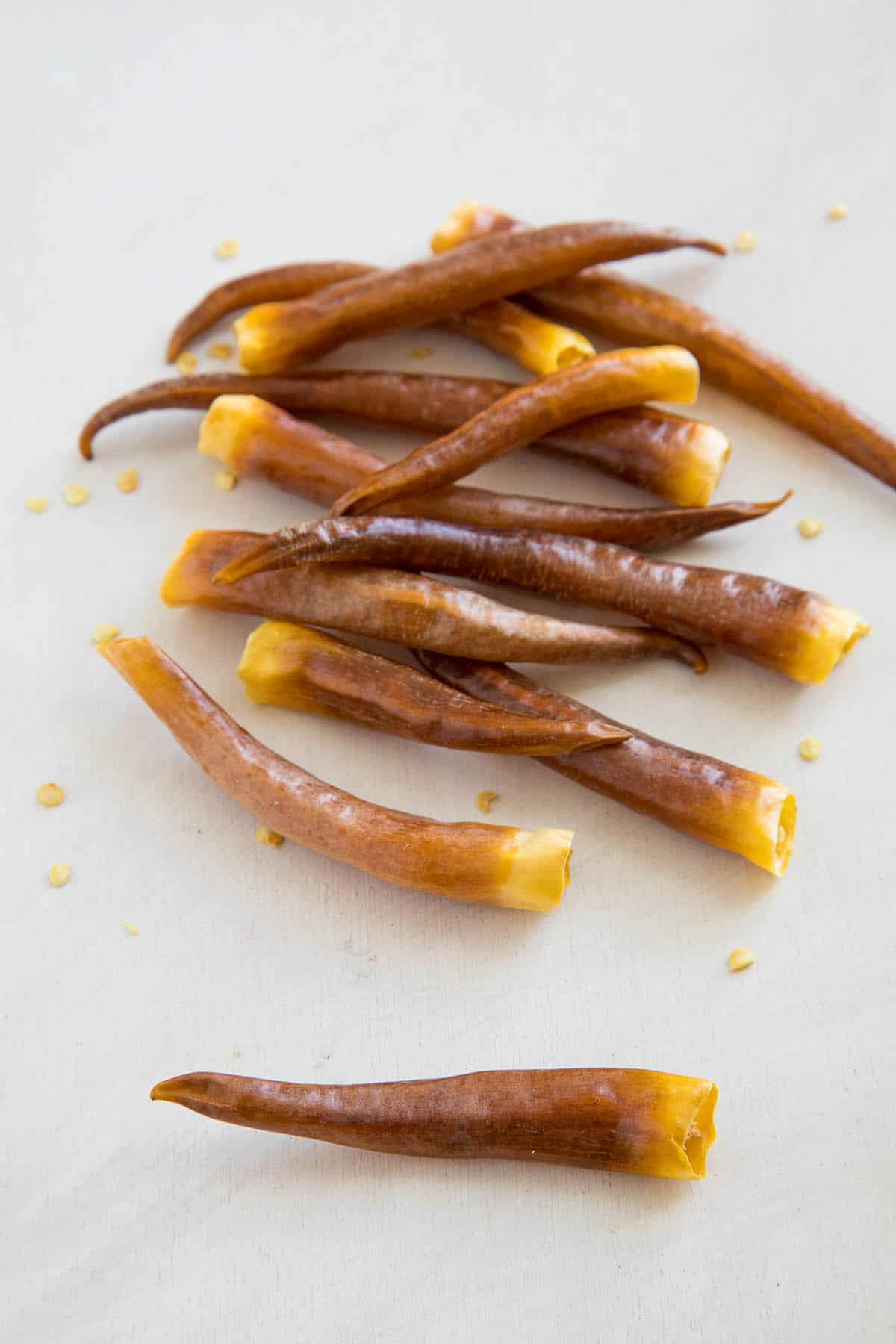
Ancho chili pepper: 1,000 - 2,000 Scovilles. An Ancho pepper is dried form of the poblano chili pepper.

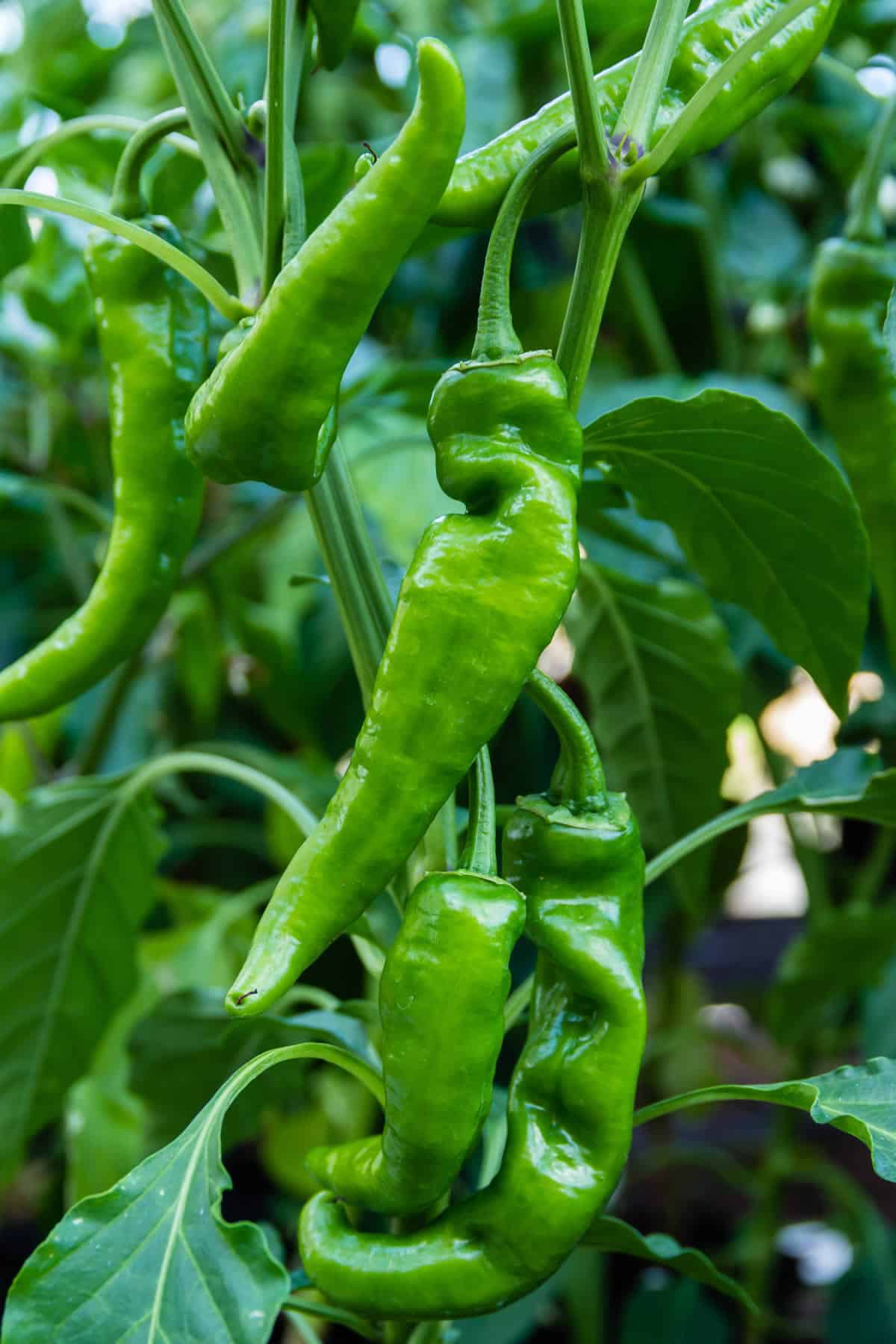
Hatch chili pepper: 1,000 - 2,500 Scovilles. Hatch chili peppers are grown and harvested in Hatch Valley, New Mexico. They are harvested in late July and early August and have a mild to medium flavor. The peppers are long and curved, much like the Anaheim chili pepper, and are perfect for stuffing.

Jalapeno Pepper: 2,500 - 8,000 Scovilles. The world's most popular chili pepper! Harvested when they are green or red if allowed to ripen, about 4-6 inches long. A chipotle is a smoked jalapeno chili pepper. Learn more about Jalapeno Peppers here at Jalapeno Madness!

Chipotle Pepper: 2,500 - 8,000 Scovilles. A chipotle is a smoked jalapeno chili pepper. You'll notice the distinctive smoky flavor of certain foods like salsas that have been prepared with chipotle peppers. Very delicious.

Morita Chili Pepper: 2,500 - 8,000 Scovilles. A smoked red jalapeno, similar to a chipotle pepper.

Serrano pepper: 5,000 - 23,000 Scovilles. A smaller version of the jalapeno, similar in color, but smaller, about 1 to 2 inches long, 1/2 inch wide. Dark green to redish in color. Getting spicier!

Tabasco pepper: 30,000 - 50,000 Scovilles. Yep, this is the chili pepper used in Tabasco sauce. The fruit is tapered and under 2 inches long. The color is usually creamy yellow to red.

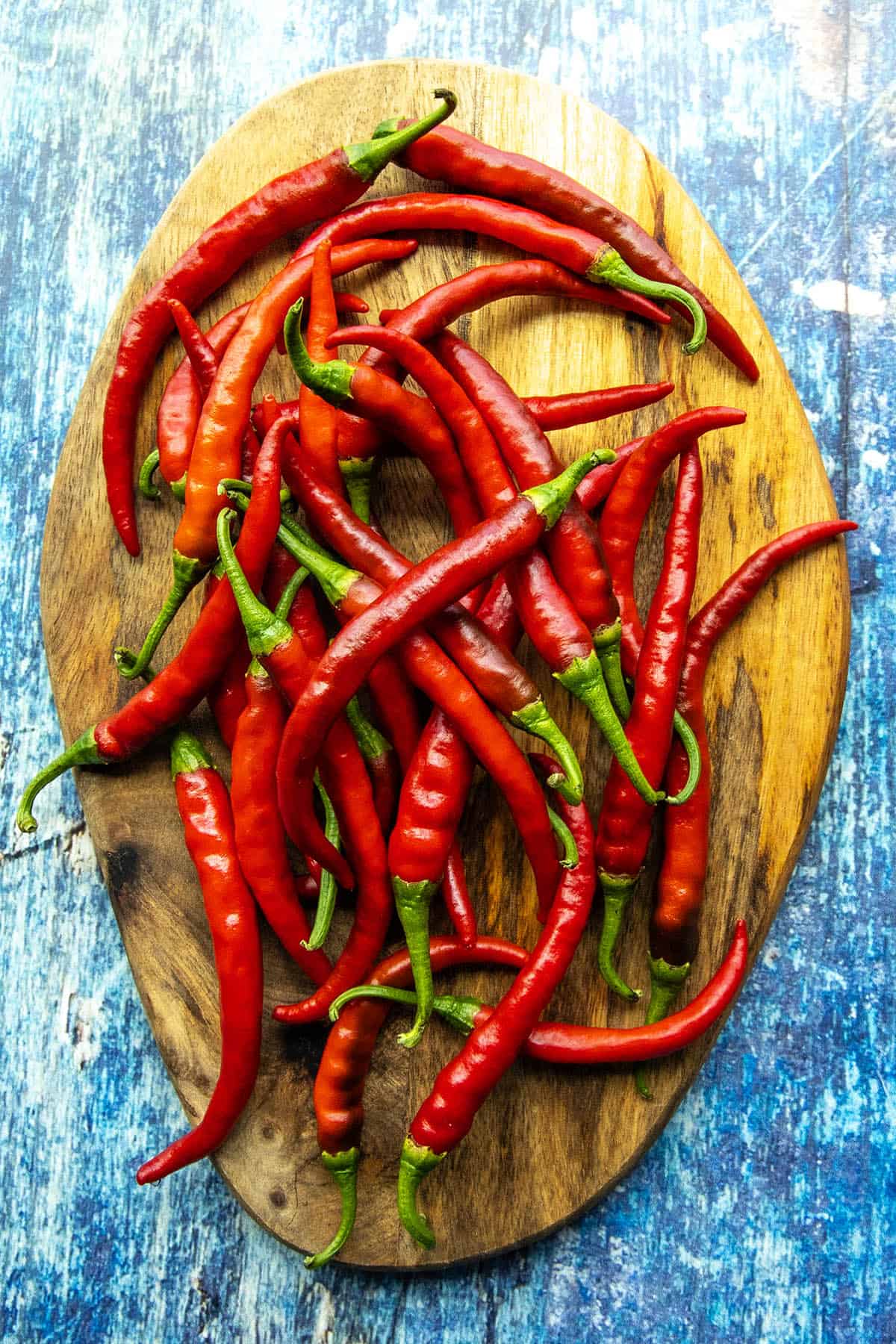
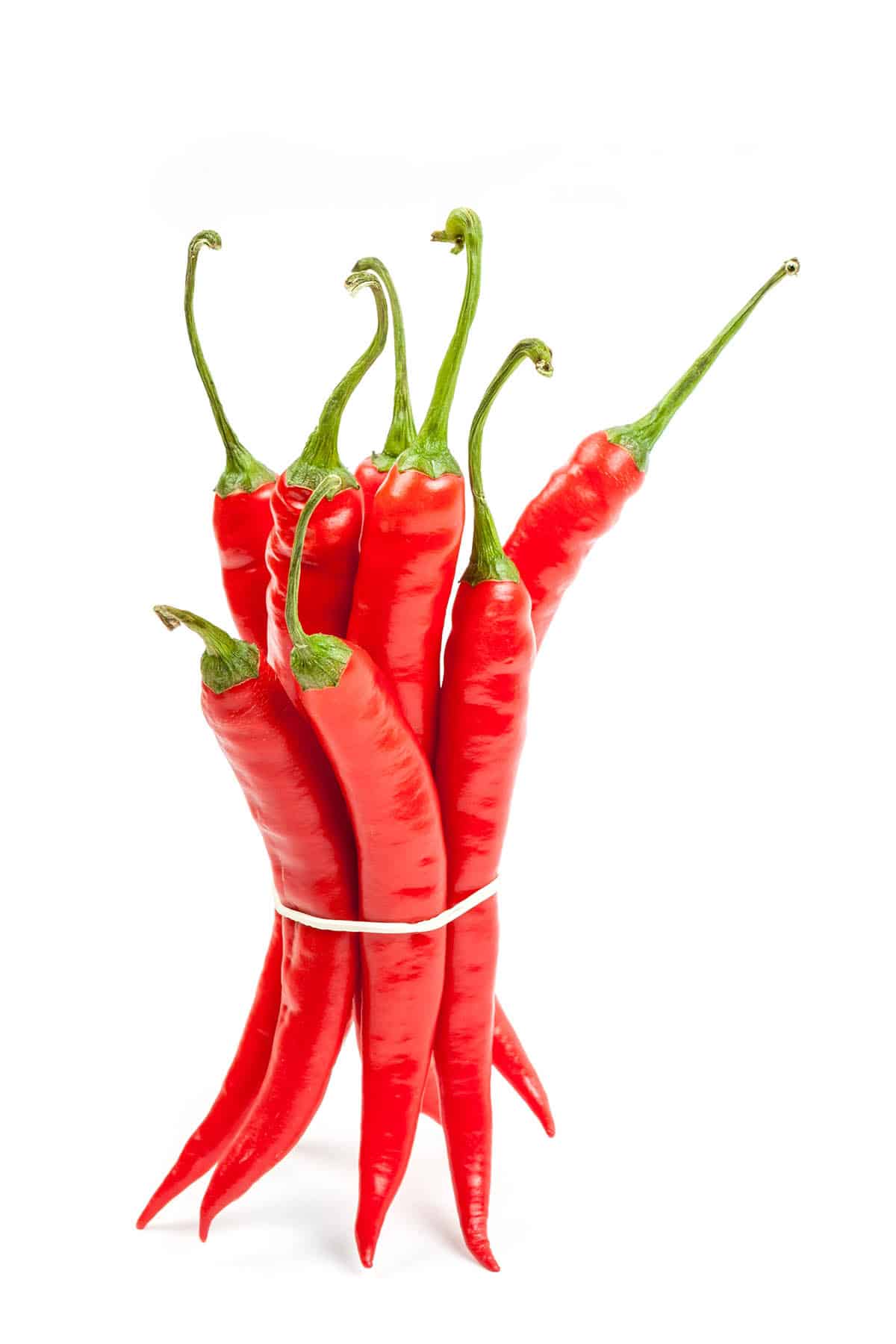
Cayenne pepper: 30,000 - 50,000 Scovilles. A thin chile pepper, green to red in color, about 2 to 3 inches long. The "cayenne pepper" spice you use is the dried, ground version of this pepper.

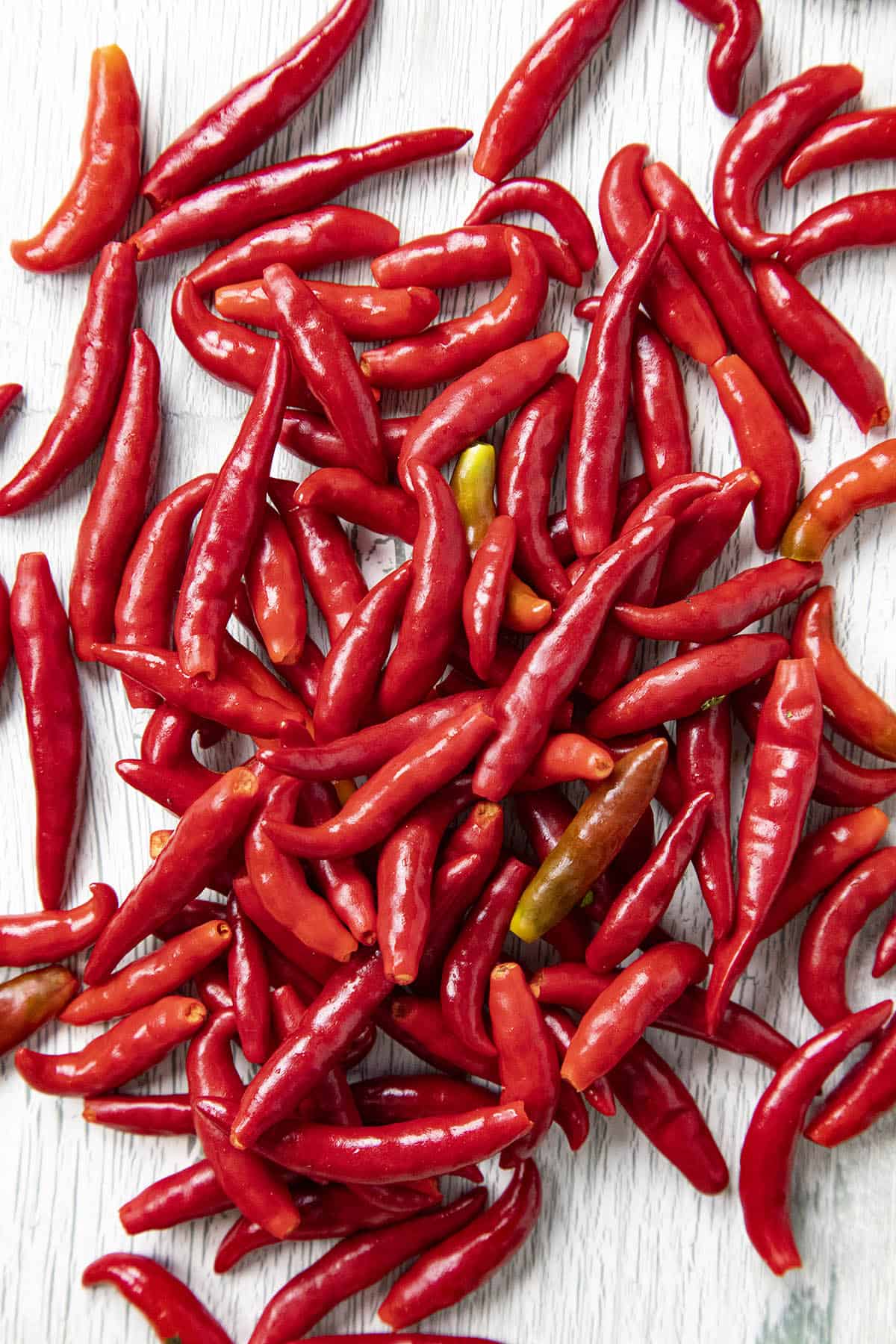
Tien Tsin Pepper: 50,000 - 75,000 Scovilles. Popular in Asian fare. Very hot, bright red in color, 1 to 2 inch Chinese pods. You'll find these in Kung Pao chicken.

Rocoto Pepper: 50,000 - 100,000 Scovilles. AKA the Manzano pepper. This chili pepper is normally found in South America. It is among the oldest of domesticated chili peppers, and was grown up to as much as 5000 years ago. It is probably related to undomesticated chili peppers that still grow in South America.

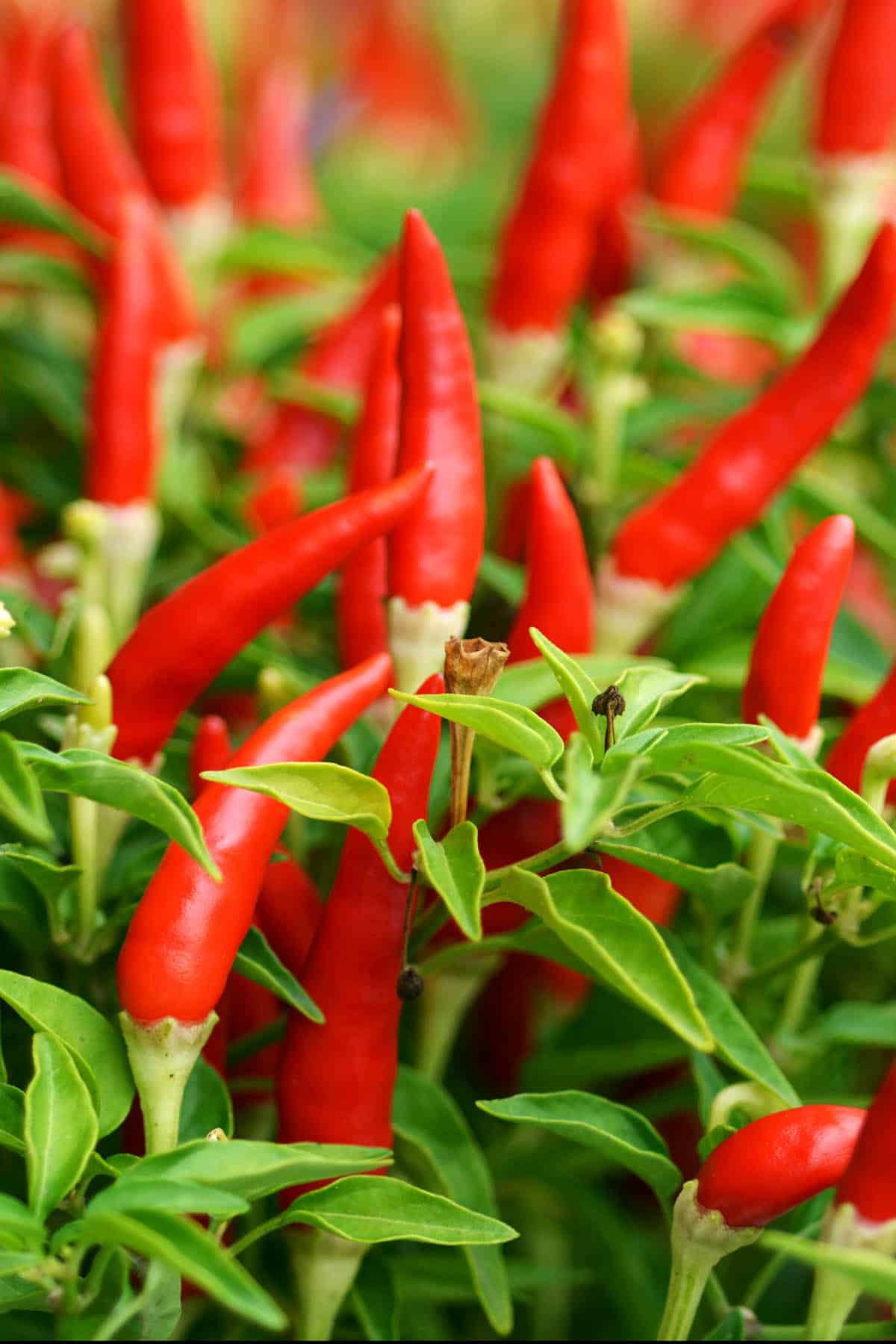
Thai chili pepper: 50,000 - 100,000 Scovilles. These chili peppers seldom grow larger than 1 to 3 inches long. They are normally less than 1/2 inch wide, but pack a heck of a punch! These chili peppers are bright red or deep green, and end in a sharp point.

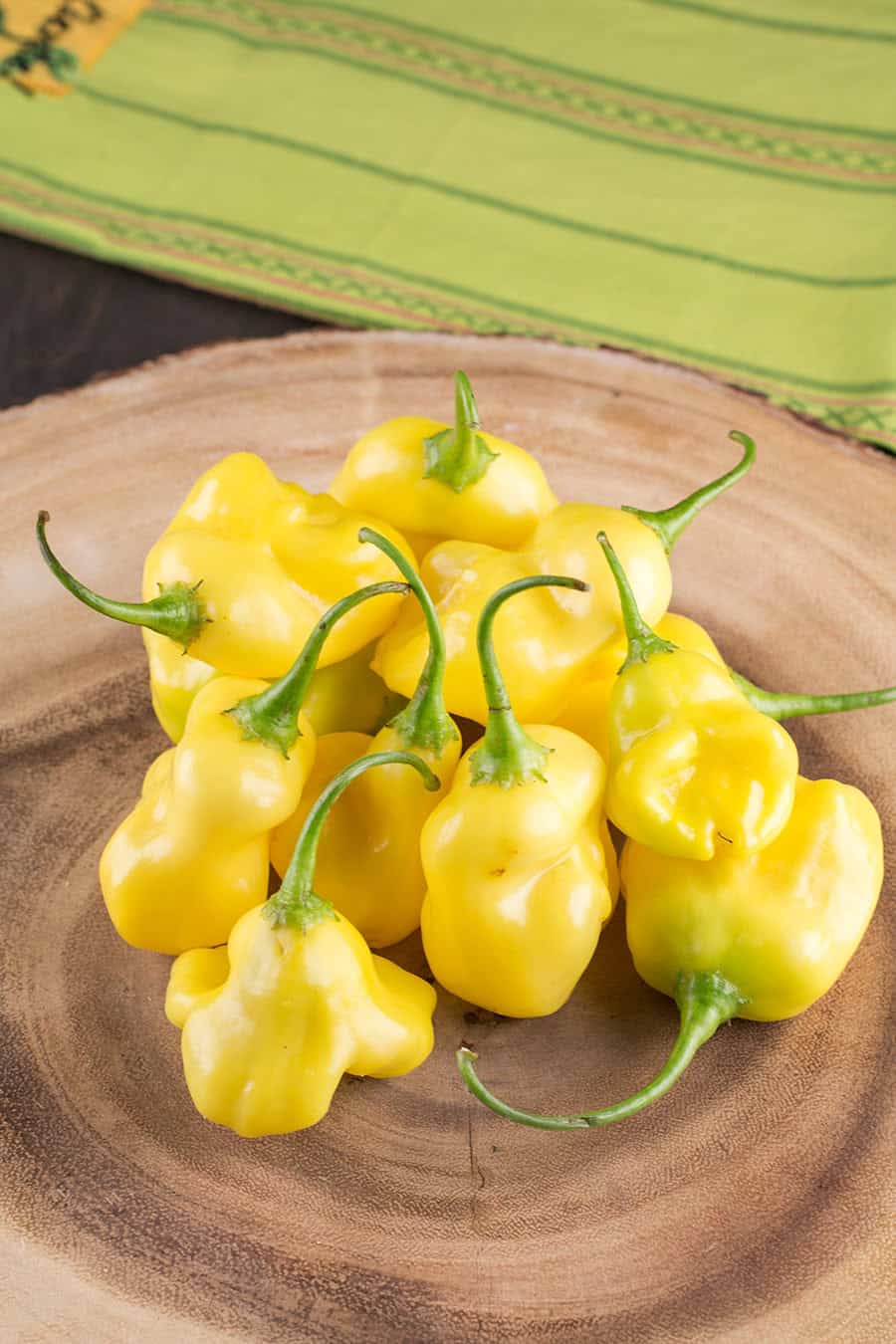
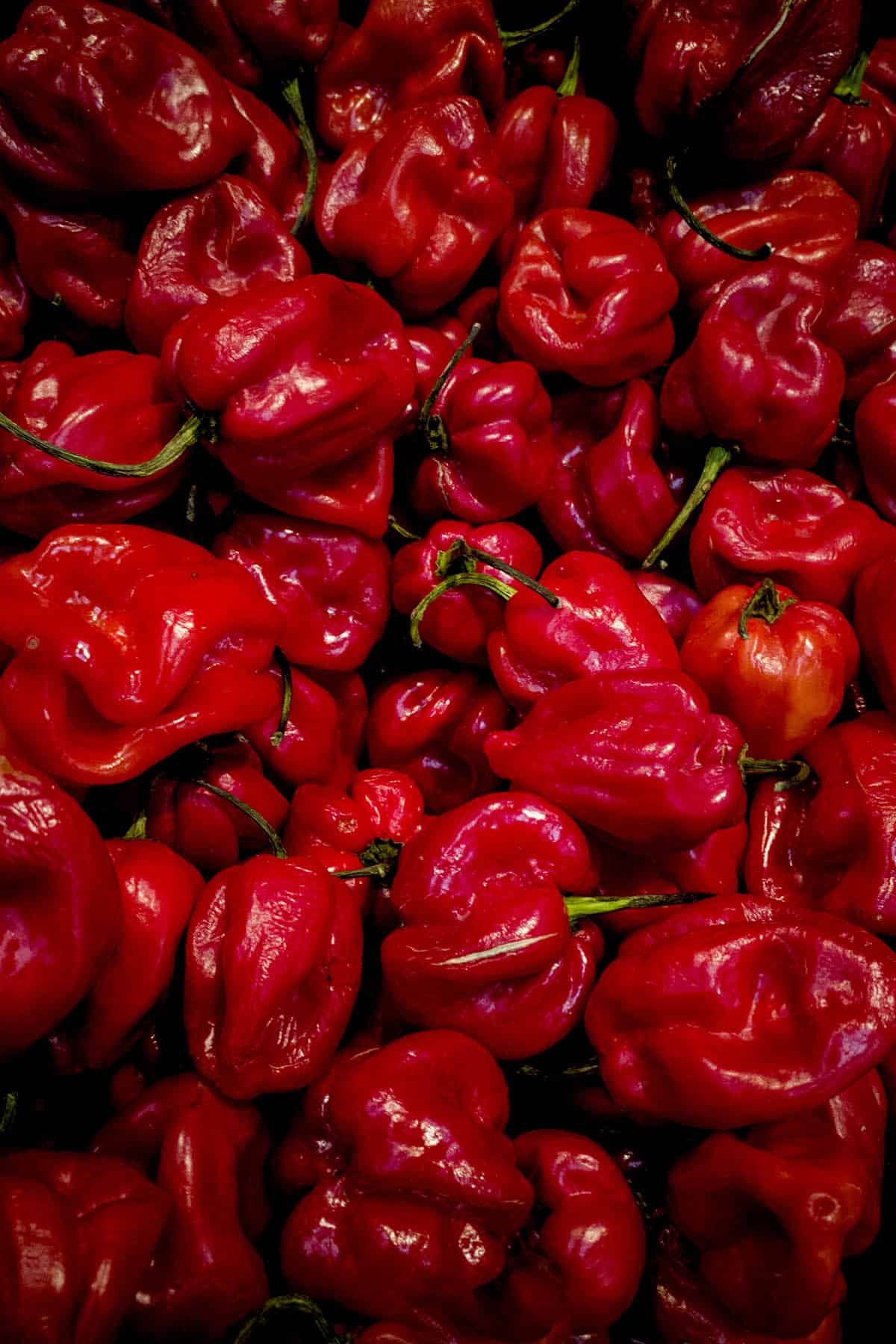
Scotch bonnet: 100,000 - 325,000 Scovilles. This is probably the cultivar of chili pepper that Christopher Columbus tried. Tam-shaped and found in the Caribbean. Other names for these chili peppers include booney peppers, bonney peppers, and goat peppers. They are usually red or yellow at maturity

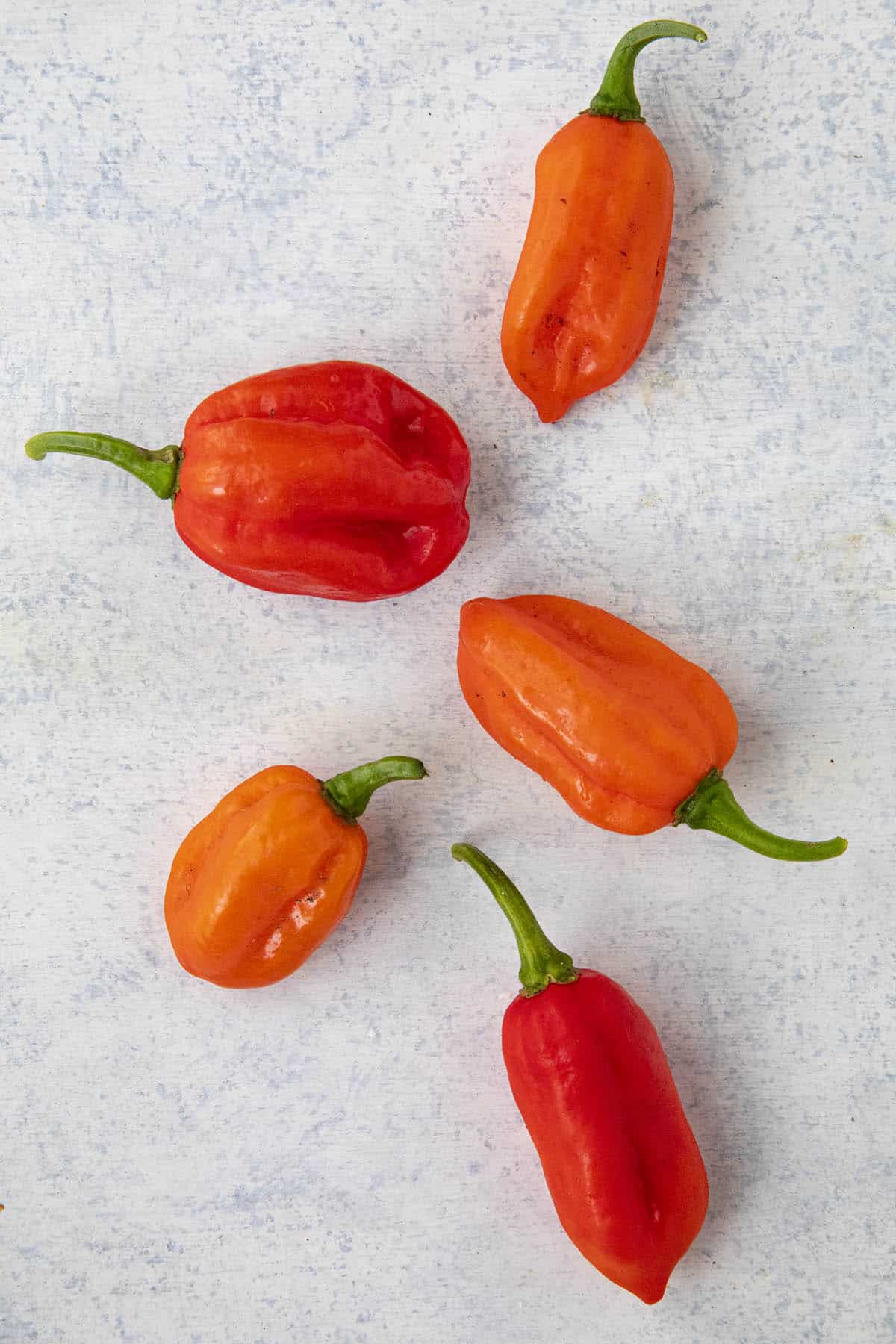
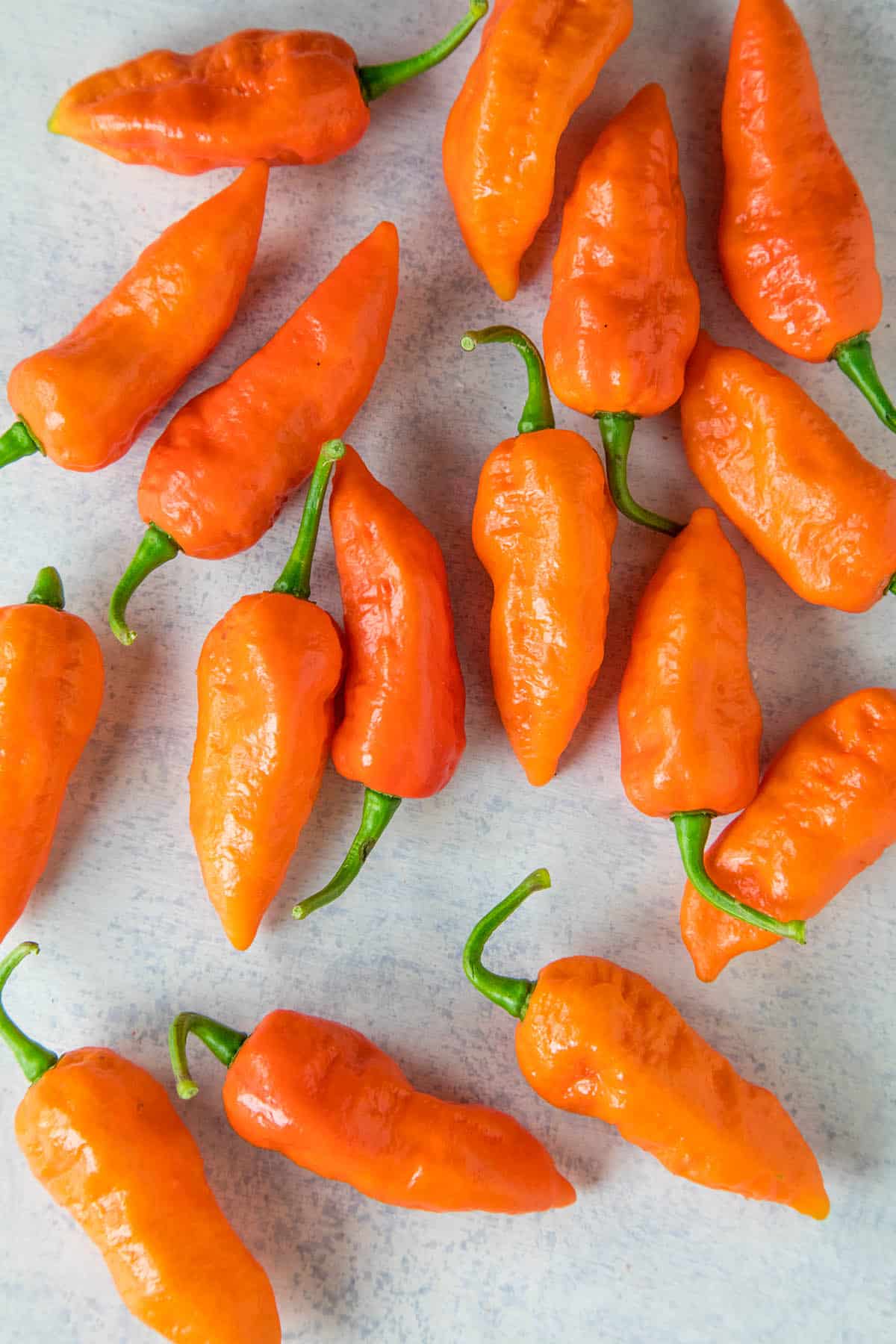
Habanero chili pepper: 100,000 - 350,000 Scovilles. Related to the Scotch Bonnet. This one is the granddaddy of all the hot peppers in terms of heat level. Grown mainly on the Yucatan Peninsula in Mexico, its coloring is yellow-orange, orange or bright red, depending upon when it's harvested. Average Size 1 to 2 1/2 inches long and 1 to 2 inches diameter and tam-shaped.

Caribbean Red Habanero: 475,000 Scovilles. This spicy creation grows to about 1 inch in diamater and 1 1/2 inch in length. It's about twice as hot as a regular habanero, matures in as little as 90 days, and is suited to northern climates.

Red Savina Habanero: 350,000 - 580,000 Scovilles. The hottest chili pepper on record, until the Bhut Jolokia came along!

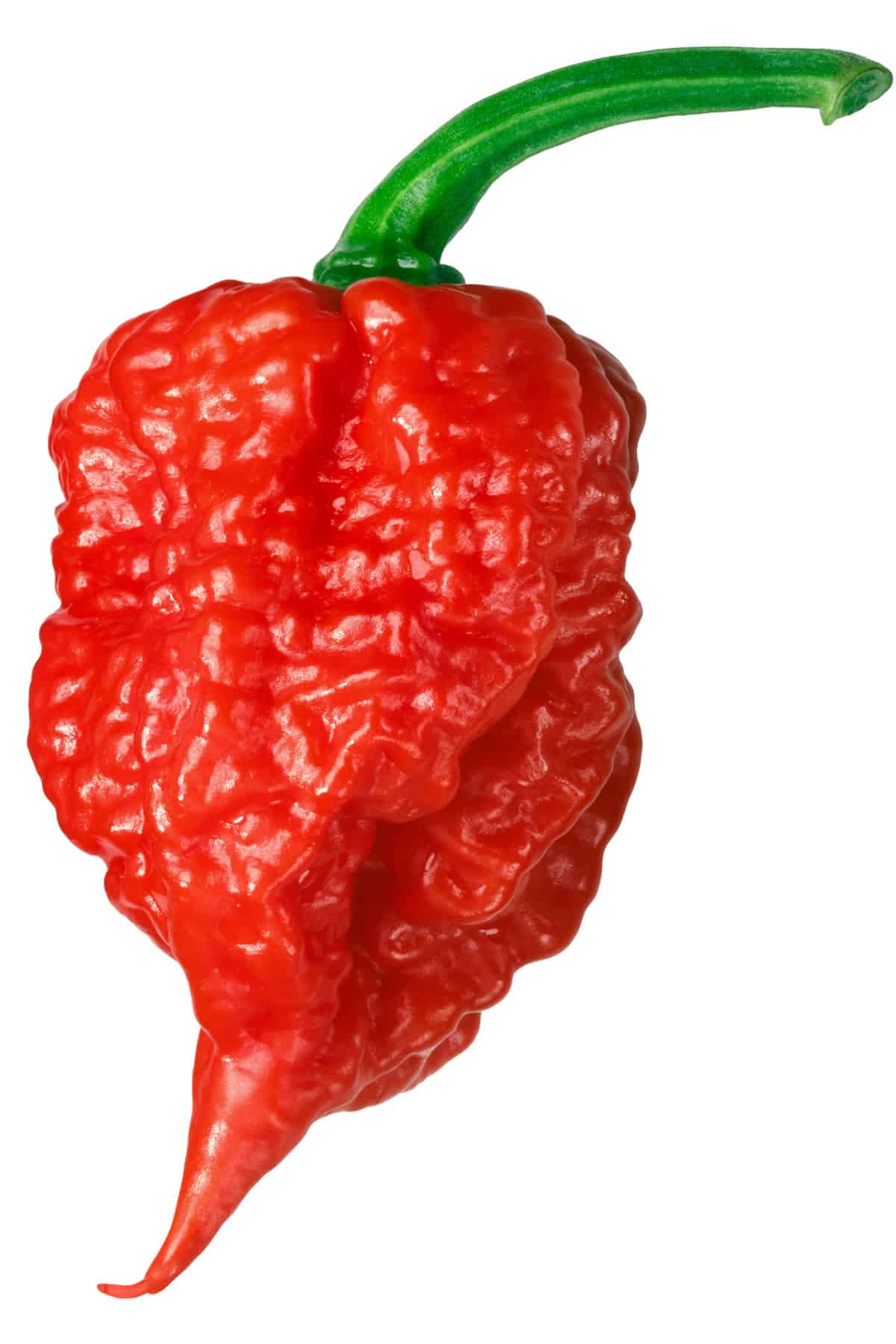
Bhut Jolokia: 1,001,304 Scovilles. Now, truly the hottest chili pepper around!


More Chili Pepper Information

Got a huge harvest of fresh chilis this year? Here are some great resources on preservations methods:

Here's some interesting Jalapeño information. This is all from the Jalapeno Madness cookbook, so if you like what you see and would like more information, including dozens and dozens of recipes from breakfast, lunch, dinner, snacks and more, order a copy today.

Chili Head gear - t-shirts, mugs, hats, mousepads, and more

How the Chile Got Its Name

Our great American history finds Christopher Columbus on a long and arduous quest for spices. Food has long been a traditional and powerful reason to traverse the expanses of our world and different cultures. One of the great foods Columbus returned with was “aji”, or “child” as it is translated.

On his return to Europe, the “aji” was renamed the “Calcutta Pepper” by Leonard Fuchs, a German botanist who believe that Columbus had found India. And thus it began.

Also, interestingly enough, the original word for chile peppers in the Mexican Indian language, Nahuatl, is “chilli.”

America’s Favorite Chile

America’s Favorite Chile pepper is by far the jalapeño, a thick-fleshed pepper about 3 inches long (give or take). It’s a bright green little guy that can be lovingly incorporated into just about anything, from soups to Lemonade.

The majority of our jalapeños come from Mexico, where the natives eat them as snack foods, plucking them in droves from sidewalk carts and fields. The red variety of the jalapeño is a bit milder than the green variety, and sweeter as well. They are also milder than their cousin, the serrano, another popular chile pepper, though not as widely known as our favorite, the jalapeño.

What makes peppers hot?

Most of us love the jalapeño (and other beautiful peppers) because of the little “kick” we get when we take a bite of one. Sure, as far as taste is concerned, jalapeños are delicious, but that blast of spiciness that bursts in your mouth and ravishes your tongue is a powerfully added bonus, making hot peppers among the greatest flavors in the world.

That spiciness we all love and crave comes from a compound called capsaicin that is found in all hot peppers. Interestingly enough, capsaicin is found in no other plant than the chile pepper. A single drop of this substance combined with 100,000 parts water is still noticeably spicy. Isn’t that great!

Capsaicin itself is tasteless and odorless and is produced by the glands in the chile pepper’s placenta, found at the top portion of the pepper below the stem.

Note: The placenta is about sixteen times hotter than the rest of the pepper and is usually removed along with the seeds (another hot part of the pepper) when preparing food. If you’re looking for a good kick with your dishes, leave it in (along with the seeds), and see what you get. Oh yeah!

Scientists have observed that many rodents and other small mammals do not particularly like the jalapeño, possibly an evolutionary advantage developed through the generations to protect the peppers from evildoers. Birds, however, seem to be unaffected by the pepper heat. This, of course, is an advantage to our friend, the chile, because when birds eat the peppers, they disperse the seeds through their droppings all across the land, thus perpetuating that thing we all love so much (though admittedly in a rather gross manner).

Trying to Beat the Heat

Have you ever put a hot, spicy pepper into your mouth on a wild whim and then suddenly realize that “Argh! This is too hot!” Of course this shouldn’t happen with the jalapeño, but it can happen with some of the other, hotter varieties of chiles, like the habanero.

What to do?

One bit of advice: Don’t Drink The Water! Pure capsaicin is soluble in alcohol but not soluble in cold water. Hence, instead of dousing the raging flame on your tongue, the water will only spread the spices around in your mouth and make the situation worse. Instead, try sugar or milk to curb that luscious heat (if you can’t take it, that is).

After time, you can build up a tolerance to the heat by continuing to eat hot peppers in small doses, but you’ll always have the initial burst of spicy flavor with our friend, the jalapeño.

Additionally, when handling chile peppers, you should always wear rubber gloves to avoid contact with the pepper oils. The oils can cause a burning sensation on the skin. In a pinch you can use the yellow rubber gloves that many people use while washing dishes, but thin latex gloves work wonderfully for maneuverability. It’s really a lot easier to cut and handle the peppers with these types of gloves.

Safety Reminder:
Wear Gloves When Cutting Up Hot Peppers!

How Do You Measure Jalapeño Heat?

Since capsaicin is the heat producing substance found in peppers, it is only natural to measure pepper heat by measuring the amount of capsaicin within the pepper. But how?

In 1912, a pharmacologist named Wilbur Scoville invented a standard for measuring the capsaicin in peppers, and subsequently the power of that pepper heat.

He called the test, interestingly enough, the “Scoville Organoleptic Test.” Now there’s a name for you. How did it work?

Scoville ground chile peppers into a mixture of sugar water and alcohol. He then had five tasters sip the mixture and grade it for hotness. Since then, we’ve come up with more sophisticated methods for grading the hotness of peppers into units called “Scoville Units” in honor of the man who took on such a proud and wonderful task.

Today, peppers range from 0 Scoville Units for the regular bell pepper to upwards of 200,000 to 300,000 Scoville Units for the extremely hot habanero. Talk about hot! And what a range! Jalapeños are about 5,000 Scoville Units, smack dab in the perfect spot for hotness and taste.

Taking Advantage of that Chile Pepper Heat

Peppers can be used as a weapon. Imagine this: you’re about to be mugged when suddenly you take the attacker by surprise and hurl a dozen or so hot peppers at him, poking him in the eye and causing him to slip and fall…

Seriously, many pepper sprays use the chemical, capsaicin, to ward off attackers and promote safety. Pepper sprays are marketed to women and police, and even to hunters who can use the power of the pepper to ward off grizzly bears in the woods. It’s even been said that pepper spray is even more effective than tear gas!

Hot Pepper Nutritional Information

Serving size 1 pepper (45g)
Calories 20
Total Fat 0g
Sodium 10mg
Total Carbohydrate 3g
Dietary Fiber 0g
Protein 1g

% of U.S. RDA
Vitamin A 80%
Calcium 0%
Vitamin C 170%
Iron 0%

The following is a hotness ranking of peppers (though far from an exhaustive list) from mildest to hottest.

  • El Paso (Very mild)
  • Anaheim
  • Jalapeño
  • Hidalgo
  • Serrano
  • Cayenne
  • Tabasco
  • Red Chile
  • Chiltecpin
  • Tabiche
  • Bahamian
  • Kumataka
  • Habanero (One of the hottest grown - 30 to 50 times hotter than a jalapeño)

The pepper we all know and love

You can go practically anywhere and find jalapeños as part of the local dishes, and when the jalapeño is not spicing up some favorite dish, it’s premiering as a dish all by itself.

Here’s a small sampling:

  • Nachos
  • Jalapeño Cookies
  • Jelly
  • Chile Pepper Potato Chips
  • Jalapeños on a Stick
  • Hot Sauce
  • Lemonade
  • Vodka

How diverse can you get?

Hot Peppers and Nobel Prizes – An Interesting Combination
Did you know that the Nobel Prize was awarded to Hungarian scientist Albert Szent-Gyorgyi in 1937 for his work with chile peppers? It’s true!

Gyorgyi discovery that chiles are a rich source of vitamin C, are high in vitamins A and E, potassium, and folic acid. He also noted (as a side bar) that chile peppers are incomparable for clearing sinuses and cleansing pores.

Got a cold? Break out the peppers!

You’ll find capsaicin in its chemical form of guafenesin in commercial expectorants like Sudafed and Robitussin.

How to Roast Dried Jalapeños

Dried peppers should be wiped clean with a damp cloth or paper towel before roasting. Place in a dry skillet over medium-low heat and keep turning until fragrant, 2-4 minutes. Be careful not to blacken or the chiles will turn bitter.

How to Roast Fresh Jalapeños

Fresh peppers can be roasted directly on a gas burner or under the broiler. Cook until charred all over and then transfer to a plastic bag to sweat. Seal the bag and let steam 10 minutes or longer. Remove blackened skins with fingertips or carefully scrape with a paring knife. Do not place under running water to peel or you will lose flavor as the oils wash off.

Chile’s Roots

The original chile plant, classified as a fruit, not a vegetable, hails from either Peru or Bolivia, depending on which anthropologist you ask, circa 7000 B.C. The tiny, pungent red fruit was most widely cultivated in Mexico, where it was deemed important enough to serve as currency as well as food. Seeds were carried by birds throughout Central, South, and southern North America. Modern Mexico still produces the greatest variety of chile peppers, about 140 types at last count.


New Cookbook

Jalapeno Recipes Galore!

250+ Jalapeno Pepper Recipes - PRINT EDITION
Learn More

Buy the Jalapeno Madness Cookbook

Downloadable Cookbooks!
So Many Recipes!

eDelivery!

Chili Pepper Grill

Grill Your Peppers Tonight!
Happy Jalapeno and
Chili Pepper Grill

Welcome | Chili Pepper Types | Chili Pepper Recipes | CHILI PEPPER COOKBOOKS! | Growing Chili Peppers | Preserving Chili Peppers
Hot Sauces | Chili Pepper Resources | Chili Pepper FAQs | Chili Pepper Products | Cooking Tips | Newsletter | Contact Us | Site Map/Links

Get the Jalapeno Madness: The Hottest Little Jalapeno Cookbook Here

Get your jalapeno pepper and other chili pepper gear here, including t-shirts, mugs, hats, buttons, posters, and more.

Chili Pepper Madness - spicy chili pepper recipes and info on all things chili peppers
Visit The Ring of Fire Home Page
A service of
netRelief, Inc.

This site is a member of The Ring Of Fire
A linked list of Chile websites

Next - Skip Next - Next 5 - Prev - Skip Prev - Random Site

Join the ring or browse a complete list of The Ring Of Fire members
If you discover problems with any of The Ring Of Fire sites,
please notify the Ringmaster